Survey of Biblical Theology - Lesson 13
Works of Jesus
Through John, you see Jesus’ saving work as his “lifting up” and “glorification”—the cross, resurrection, and ascension—fulfilling Isaiah 52:13 and the Passover Lamb/new Exodus. Grasp how life comes by believing: receiving, coming, hearing, drinking, eating, entering, abiding, following. Although, false belief, love of darkness, and human glory are barriers. Jesus’ signs that fulfill Scripture: Cana wine, true temple, Spirit as living water, true Sabbath, true bread, light, vine, and shepherd.

I. Introduction
A. From identity to saving work
B. John’s distinct focus
II. Death of Jesus
A. “Lifted up” as cross & triumph
B. Death as glorification (Isaiah 52:13)
III. Jesus as Passover Lamb
A. Takes away sin
B. True Exodus deliverance
IV. Going to the Father
A. Fulfilled through cross
B. Prepares place, sends Spirit
V. Bread of Life
A. Life through flesh & blood
B. Eating/drinking = believing
VI. Prophecy of Caiaphas
A. Political intent
B. Divine purpose
VII. The Hour
A. Refers to death under God’s timing
B. Death as glorification
VIII. Believing in Jesus
A. Central theme of John
B. Described as receiving, coming, drinking, hearing, abiding
IX. Obstacles to Belief
A. Love of darkness
B. Seeking human glory
X. False Belief
A. Based only on signs
B. Some reject Jesus’ word
XI. Fulfillment in John
A. Cana: new wine
B. True temple
C. Spirit as living water
D. True vine & shepherd
So now we want to talk some, I think I'm going to skip down on my notes a little bit too, but we want to talk about, we've talked about who Jesus is and now we want to talk about what Jesus does. What does he do to save his people in John? And John, not surprisingly, I think John was written to supplement and complement the synoptics. He puts things a different way.
He, I think accurately reflecting what Jesus said, but he picks up different emphases. And one of the terms he uses for Jesus' death is that Jesus is lifted up. You know, as Moses lifted up the serpent in the wilderness, so the son of man will be lifted up on the cross.
Or he says in John 8, 28, when you have lifted up the son of man, then you'll know that I am. We just saw that I am, right? When you lift him up. And when I am lifted up from the earth, I will draw all people to myself, Jesus says.
So that's one term. Now here's what's interesting about the lifting up. The lifting up refers to the cross, but also to the ascension, right? John kind of puts the two together.
He views Jesus' cross as his triumph. So lifting up, yeah, lifting up on the cross, but lifting up can also refer to the ascension. And I would argue, and a lot of people argue this, John has both in mind.
It's his triumph. The same thing is true with this word glorified. Glorifying John also often refers to Jesus' death.
So we're told the disciples didn't understand what Jesus was saying until he was glorified. Of course, that's his resurrection. But it's also his death because when his death comes, he says the hour has come for the son of man to be glorified, to die.
Well, when Judas leaves in John 13, right? Now the son of man has glorified. Now's the time for me to die. In John 17, right before his death, what did he say? The father, the hour has come.
Glorify your son. Glorify your son in his death. Now here's a very, this is a very fascinating thing to me.
When we look at Isaiah 52 and three, the great passage on the servant of the Lord, right? Who dies, you're all familiar with this passage, right? Who bore our sicknesses, carried our pains. Verse six, right? We all went astray like sheep. We have all turned our own way and the Lord has punished him for the iniquity of us all.
But here's a very interesting thing. My servant will be successful and he will be, in Greek, that word, is the word he will be lifted up. So there it is.
So I think he's, I think John's drawing on this text. This is a very well-known text, right? And in English, it says he'll be greatly exalted, but the Greek word and he'll is, he'll be glorified exceedingly. So you see those two words John uses, lifted up and glorified come right from Isaiah 52, 13.
So yes, Jesus, in Jesus' death, John says in a sense, in Jesus' death, Jesus' death is on the way to his resurrection, right? It's his, it's his triumph, ultimately his death. So that I find that very fascinating. In a sense, he beautifies Jesus' death, right? He emphasizes, there's a sense in which the death is his exaltation or, or maybe another way to put it is he merges together his death and his ascension, right? And his, his, his death, resurrection and ascension so that he conceives of Jesus' death as his victory.
The other gospels have, and I don't think John is denying this, but the other gospels have already emphasized the pain and suffering of his death. John doesn't deny that, but that's not what he wants to emphasize. He wants to emphasize that it's the lifting up.
It's the glorifying of, of Jesus. Of course, John 1 29, very famous verse where the Baptist says, he's the lamb of God who takes away the sin of the world. And we, John's, Jesus' death and John is connected with the Passover.
So it seems John is especially drawing a link between Jesus and the Passover lambs. But okay, let's connect it with our class. What's the Passover? The Exodus.
Here's the new Exodus, right? The new Exodus is the deliverance of God's people. Here's the, the, the first Exodus points to the new Exodus. The new Exodus is fulfilled in Jesus.
And he is the true Passover lamb who forgives us of our sins forever. So that's very interesting. John also speaks of Jesus going to the father.
He uses two different Greek words, hubago and poor you and my there. I think they're pretty much synonyms. So we see a lot of texts that talk like this.
I'm going to him who sent me right. I'm going away. He had come from God was going back to God.
He says to the disciples where I'm going, you can't come where I'm going. You cannot follow me now. You know the way to where I'm going.
I'm going away. Now I'm going to the one who sent me. I go to the father.
I'm going to the father. So all those statements. Okay.
Yes, yes, yes. But he's going to the father via the cross, right? So this is just no ordinary going. Yeah.
Yes. Of course he's going. But when he says, I'm going away, how's he going away? And the same with poor you John 14, I go to prepare a place for you, but how through the cross.
So I think that's significant. And again, we, we see a lot of these statements. Well, he says it's to your advantage and I go away because he's going to send the spirit, right? So again, I think, you know, that seems very simple.
I'm going to the father. Yeah, we got it. We got it.
But I think John wants us to reflect on how's he going is going to go through the cross. Again, the bread of life discourse, Jesus is the bread of life, the eternal life. And he says, I'm the living bread that came down from heaven.
If anyone eats of this bread, you will live forever. There's our eternal life theme, right? And the bread that I will give for the life of the world is my flesh. So that's a very important verse, isn't it? How's the world going to have life through my death, my flesh.
And then Jesus begins to say, you've got to eat my flesh and drink my blood, right? Which would be very repugnant to the Jews, probably repugnant to anyone, but especially repugnant to the Jews, especially the idea of consuming blood, which is forbidden in the Old Testament. But that's a very graphic way of saying what you must, you must believe in my death to be saved, right? You must partake of my flesh and blood. You must believe in me as the crucified one.
So that John puts it in very realistic ways. Of course, some, you know, the Roman Catholics have understood this to refer to the Lord's supper, but I don't think it directly refers to the Lord's supper, but to Jesus' death. Augustine, the great church father said, believe and you have eaten.
I like that. Believe and you have eaten of his flesh and of his blood, but another expression of his death. Then Caiaphas, who was high priest, but one of them who was high priest that year, by the way, Caiaphas was high priest from 18 to 36 AD.
So when he says that year, he doesn't mean he was only high priest one year. He means that, that most significant year in human history, right? John knew he was high priest more than one year. So we could interpret that.
Oh, he was only high priest that year. No, that's not what he's saying. He's high priest that year.
Caiaphas said to them, you know, nothing at all, which I think those are good words to begin every church business meeting. Don't you guys? So just kind of a way to win over the audience. But yeah, Caiaphas was kind of an interesting leader.
You wonder, did they like him? This is how he begins. So he says to his friends, you guys know nothing, but actually God is speaking through him, not in that statement, but what he's about to say, nor do you understand that it is better for you that one man should die for the people, not that the whole nation should perish. So this is a very interesting verse also on divine sovereignty.
Caiaphas is saying just what he wants to say. He's not a puppet. He's not a robot, right? He means what he says.
Let's kill Jesus. Let's save our nation. That's what I think we should do.
So in one sense, he said it on his own, but in another sense, he did not say this of his own accord, but being high priest that year, he prophesied that Jesus would die for the nation and not for the nation only, but also to gather into one the children of God who are scattered abroad, which I think what John is saying there is Caiaphas spoke better than he knew. God so intended that the words Caiaphas spoke as high priest would express what is true about Jesus, that Jesus would die for the sake of his people. So that's the most interesting prophecy.
He died for the Jews, but not for the Jews only, but also for the scattered children of God, the Gentiles who would be gathered in and believe. I should have moved this, but I think we should look at, because we're talking about Jesus' death, I think we should look at these verses right here really quickly and some of them we've already done. Jesus' death is also spoken of as of his hour.
So this is, I don't know if I fully understand this, but when Mary at the wedding of Cana tells Jesus, they don't have any wine and Jesus says, well, my hour has not yet come. Well, the hour is the hour of his death. I mean, it's kind of a puzzling answer, right? I'm not asking you to, not that Mary understood, but if she didn't understand, she could have said, well, I'm not asking you to die.
I'm just asking you to provide the wine. But maybe, I think this is hard to interpret. Maybe because the wine is flowing, Jesus is interpreting this in light of what we saw in Joel 3, 318.
Remember this? When the new age comes, what? The mountains will drop, will drip with sweet wine. And maybe Jesus is saying to Mary, you want me to bring in the end of history? We can't do that yet. Who knows what's going, that is a very, that's a very interesting passage.
But then he speaks an hour is coming and now is when everyone will worship the Father in spirit and truth. And an hour is coming and now is when the dead shall hear the voice of the Son of God and live. So that's true now.
An hour is coming for those in the tomb, but mainly hour is used for Jesus' death. They tried to arrest Jesus, but they couldn't because his hour had not yet come. God's in control, right? They want to put Jesus to death.
You can't take him before that hour. But then in chapter 12, the hour has come for Jesus to be glorified and see the connection. Hour, Jesus' death and his death is described as glorification.
And then he says, save me from this hour. And then, no, no, you're not going to save me. This is my destiny.
The hour had come that he should pass from the world to the Father. So the hour is clearly referring to his death. The hour has come, glorify your Son.
There the death and glorification are very closely tied together. And other expressions for his death. I already talked about the first one and the Caiaphas, but I didn't mention this, right? The good shepherd lays down his life for the sheep.
So that's a beautiful image of Jesus' death. He lays down his life for our sake and our salvation. We see the anointing for burial and the grain of wheat must die.
So let's see, where have we been? The gospel of John says the new age has arrived. There's eternal life in Jesus. Who's Jesus? He's the Son of God.
He's the Logos. He's the great I am. He's the path to life.
How does the life come? Through his death, really his resurrection as well. And then where are we? Well, what do we need to do? We need to believe. And that's what we're going to talk about next.
And that's a theme we've seen, that those who enjoy God's presence, they believe. John uses the verb believe, pisteo in Greek, 98 times. He always uses the verb.
By the way, when we get to 1 John, he uses the noun pistis as well. But in the gospel, he never uses the noun, always the verb. I don't want to press this too hard, but there's an emphasis on actively, actively believing, right? So we see that word over and over again.
What does it mean to receive eternal life? The focus isn't on work, but believe. So here's just one example. They say, what can we do? John 6, 28.
This is in the bread of life discourse. What can we do to perform the works of God? What can we do to work the works of God? Jesus replied, this is the work of God, that you believe in the one who he sent. So I think that's a very interesting text, right? He doesn't call upon them to work for God, but to believe in God, right? He doesn't call on them to perform, but to trust.
You're not surprised that Martin Luther's favorite gospel was the gospel of John, because there's this great emphasis on believing. For John, that believing is not just intellectually believing, right? There's a fullness to that believing. There's a breadth and depth to it.
If you've told me, do you believe the city of Perm is in Russia? I believe it, but I've never been there. And I don't think I'll ever end up going there. And it's not of great interest to me, right? I don't know anybody who lives there, but I believe it.
My son's been there actually. So I believe it's there, but he's not there now. And that's not the kind of believing we're talking about.
But I think one helpful way to fill out what believing entails is to look at John's other words for what it means to believe. So here we go. Believing, another way of talking about believing is receiving, right? It's a very famous verse.
I haven't memorized, but I don't know if I can dredge it up on the spot now, right? He was in the world and the world was made through him, and the world did not know him. And he came to his own and his own did not receive him, right? But as many as received him, welcomed him, he gave to them the right to be the children of God, to those who believed on his name. Notice the receiving and the welcoming are described also as believing.
So what does it mean to believe? Well, it means to welcome him into our lives, right? To receive him. You know, it's not wrong to say, I've actually heard people say, we ought not to talk about receiving or accepting Christ, but I think that's fine language, receiving. As long as you understand it, words always have to be understood.
What does it mean? You receive him, you welcome him, you accept him. Unbelievers don't accept him. They don't receive him.
They don't welcome him. Another way of talking about believing or the opposite of believing, I guess, is this word that can be translated here, rejecting. The one who believes in the son has eternal life, but the one who rejects the son will not see life.
This word, apotheo, can be described as disobeying, right? Rejecting. So the opposite of believing is rejecting something. Here's a very beautiful image.
This is a sensory image, but believing is described in terms of drinking. I think that's very beautiful. Some of the most famous passages.
But whoever drinks from the water that I will give him will never get thirsty again. In fact, the water I will give him will become a well of water springing up in him for eternal life. So believing is described in a sense as ingesting something into yourself.
As when you drink something, that's a way of receiving, believing, but drinking of him, right? Bringing him into your life. And of course, we see that as well in John 7, 37, where Jesus says, if anyone is thirsty, let him come to me and drink. Of course, that's a beautiful evangelistic invitation.
And Augustine said, we think of if you're thirsty, our souls are restless, right? Famous line, our souls are restless until they rest in thee. And really, that's the first page of the Confessions, isn't it? And then we have this idea of, we've already talked about this, but you must drink his blood, right? What are you believing in? His death for you, right? You must eat his flesh and drink his blood, he says. But that's a way of describing believing.
Or another image is hearing. 525, those who hear the voice of the Son of God will live. That's an interesting verse, isn't it? Because a lot of people hear, but this is people who hear and really hear.
I was at a basketball game, just a silly analogy, and when our son was playing basketball, and one of the mothers was yelling something out to her son, and he, maybe he was just ignoring her, but he wasn't acknowledging her. It was a small crowd, like a seventh grade game, you know? And she turned to us and said, he doesn't hear my frequency anymore. So, well, yeah, you can hear and not hear, right? You can screen out, but this is a hearing that really hears.
Or in John 10, right? The sheep, Jesus' sheep, not God, Jesus' sheep will listen to his voice. My sheep hear my voice. So, there are unbelievers, they hear the word of the gospel, but they don't really hear it, right? Because this is talking about a believing hearing.
There's a hearing. I think we've all experienced this. You're listening to a sermon and all of a sudden you're really hearing it.
And you're hearing God's word. Well, this is what happens when we're safe. So, this is a hearing that brings life.
That's part of what it means to believe. Or you can use the language of coming. Those who believe in Jesus come to Jesus.
He says, you refuse to come that you may have life. Or John 6, 35, whoever comes to me shall not hunger, and whoever believes in me shall not thirst. Do you see come and believing together there? If you come to me, you will not hunger.
If you believe in me, you shall not thirst. So, coming and believing are two different ways of describing the same reality. John 6, 65, no one can come to me unless it has been granted to him by the Father.
And then John 7, 37, we already looked at this verse. If anyone thirsts, let him come to me and drink. We talked about drink, but now what does it mean to believe? It means to come to Jesus.
It's not just believing in your head, right? It means you come to him when you believe. Or 6, 40, everyone who looks at the Son and beholds him shall have eternal life. This is kind of like hearing, right? It's a sensory metaphor, seeing.
Here, if you see him, and believe in him, you'll have life. We talked about drinking, eating's the same, right? This is the bread that came down from heaven that one may eat of it and not die. And we saw this, eating his flesh and drinking his blood.
So, that's another ingesting metaphor, right? Sensory, a lot of these metaphors are sensory, right? Hearing, seeing, now eating, very tactile. So, that's just different images and pictures of what it means to believe. Then we have the idea we saw coming, then entering.
If anyone enters by me, he will be saved and will go in and go out and find pasture. So, another picture of what it means. We can talk about abiding or remaining, but I'm not going to spend as much time on that one here, or going to him.
One of my favorite passages, when Jesus speaks of eating his flesh and drinking his blood in John 6, you remember many of his disciples departed from him. Many of his disciples no longer followed him. They said, this is teaching is hard, who can accept it? Jesus said, does this offend you? Then what if you were to observe the Son of Man ascending to where he was before? I think that verse means, does that offend you? I'm ascending to God through the cross.
That may be, my victory comes through suffering. So, he says, if that offends you, you don't understand the cross. Then, not surprisingly, he says, well, it's the Spirit who gives life.
But then he says to his disciples, well, do you guys want to go away too? And Peter says, Lord, to whom shall we go? You have the words of eternal life, a beautiful response. We have come to believe and know that you're the Holy One of God. Well, there's believing and going.
What does it mean to believe? It means to enter, it means to come, it means to go. It means to know, and we just saw that verse, right? We have believed and have come to know that you are the Holy One of God. So, that's another picture of it.
It means our eyes are open. We've already seen a visual metaphor. It means to follow.
We've seen entering, coming, going. The sheep follow him. Belief and obedience go together, right? We've seen abide.
We didn't talk about that one long, but it means to remain in him, abide in him, follow him. My sheep hear my voice, and I know them, and they follow me. It means you hate one's life.
It means you're drawn. We'll come back to that. A nice picture of forgiveness of sins is the washing of feet, right? I love that little image in John 13.8. This isn't so much what we do, but Peter says, you'll never wash my feet.
Jesus replied, if I don't wash you, you have no part. That word there is, where is it? Meros. You have no inheritance with me.
If I don't wash your feet, you don't belong to me. Now, of course, he's just washing his feet, but Jesus is speaking at another level. If I don't cleanse you, Peter, you're not part of the people are gone.
Jesus picks up on this again. John 15.3, he says, you are already clean because of the word I've spoken to you. You're washed now.
You're clean. That's what it means to be a believer. The one who loves keeps Jesus' word, another expression.
Then we have the word keeping and then knowing God, right? So all of this is to say, belief is a very full, profound concept, isn't it? Why don't people believe? They love the darkness more than the light. So that's one reason John gives us. People don't want to be exposed to the light.
They don't want their evil to show. We can all relate to that even as believers, but we know there's something healing. There's something freeing.
There's something beautiful about admitting our sin, right? But an unbeliever, they don't come because they don't want to expose themselves to the light. But twice John gives us another reason. They received glory from one another and did not seek the glory that comes from the only God.
They believed, but they love the glory that comes from man more than the glory that comes from God. I'll return to they believe, but I think that is very interesting because one reason people don't believe is they want praise from their contemporaries. They want other people to like them at the end of the day.
They want praise from people. They want to maintain their status, maybe their friendships. Again, we can understand, can't we? But that prevents people from believing.
Fundamentally, the problem isn't intellectually, it's moral. Jesus says that, doesn't he? John 7, 17. If anyone wants to do God's will, he will know whether the teaching is from God or whether I'm speaking on my own.
The fundamental reason people don't believe, they don't want to. They don't want to for whatever reason they don't want to. The fundamental reason is never intellectual.
That doesn't mean we don't answer intellectual questions, but at least I used to believe when I was young. I used to believe, well, if I can talk to someone long enough, I can convince them. But I don't believe that anymore because I've had so many failures.
And I realized, no, I can't do that. And yes, it's good to answer intellectual questions, but we all know that's really not. The intellectual questions, they're really not at the heart of what's going on, even though we respectfully answer them.
And one of the reasons is they want glory from people. Then another very interesting thing is there's a kind of belief that isn't real. And I think we see that here, right? There is a kind of belief that isn't true belief.
And we have two texts that teach that. The first one is here. While he was in Jerusalem during the Passover festival, many believed in Jesus' name when they saw the signs he was doing, but Jesus would not entrust himself to them since he knew them all and because he did not need anyone to testify about man for he himself knew what was in man.
And I think that text is saying that belief was not finally saving belief. Why? Jesus did not entrust himself to them because their belief was based on signs alone and wasn't finally a genuine faith. Now that can only be discerned in context, but whether belief is not finally genuine, but I don't think that faith is genuine.
And here's our other passage. And this one is quite fascinating. We'll do it fast.
Jesus spoke to the Jews who believed in him. If you continue in my word, you're really my disciples. I mean, it sounds like they're believers, right? They believed in him.
Continue in my word, abide in my word, right? He says, you'll know the truth and the truth will set you free. But immediately an argument ensues, right? They say, what are you talking about? What do you mean we'll be free? We're the children of Abraham. We've never been slaves, which is kind of crazy when you think of Israel's history, right? They've been under foreign powers many times and they're under Rome now.
Even if you speak politically, what in the world are they talking about? But anyway, that's what they say. Jesus says, well, if you're a sinner, you're a slave of sin. A slave doesn't remain in the house forever.
I think he means a slave won't be saved. A son remains forever. So if the son sets you free, you will be free indeed.
You'll really be free. Isn't that a beautiful verse? If the son sets you free, you'll be free. And then Jesus says, I know, I know you're children of Abraham, but then Jesus, this is rather shocking, isn't it? These are the people who believed in him.
They believed. He said, now you're trying to kill me because my word has no place in you. And he says, you're doing what you heard from your father.
And they're like, what are you talking about? Our father is Abraham. Well, he says, no, Abraham's not your father because of Abraham, your father, you would do what Abraham did, believe and trust in me, right? But now you're trying to kill me. So all of a sudden these people who believed in him, Jesus is saying, you're trying to kill me.
And I'm just telling you the truth that Abraham didn't do that. You're doing what your father does. Well, they say, look, you're now you're saying we're bastards, right? You're saying we're not true children, but we weren't born of sexual immorality.
God's our father. Jesus says, I'm paraphrasing this. No, he's not.
He's not your father. I came from God. Yeah.
You did not. Your father is actually the devil. These are the people who believed in him, right? The devil's a murderer.
There's no truth in him. He's a liar. You're not listening to me because you're not from God.
Now that you say that these are the Jews who believed in him. You're a Samaritan. You have a demon.
Jesus says, I don't have a demon. I glorify God. I'm seeking God's glory.
And then we have this whole conversation about Abraham, which we've already seen. And it culminates with Jesus saying, I am, and they try to kill him. All that's to say, just looking at that super fast, there's a kind of belief that isn't a saving faith, right? It looked like it was belief.
So belief has to be discerned. A true belief welcomes Jesus, welcomes his word. A true belief becomes a disciple of Jesus.
And these people weren't Jesus' disciples. So John is not simplistic about what belief is. There's a profundity in it.
So what have we seen so far? Eternal life, right? The life of the age to come, fulfillment of all the promises through Jesus, the Son of God, the Logos, right? The King, the Messiah. It's by believing, welcoming Jesus that you receive these things. And then we'll say really quickly, and we'll take a little break after this, some fulfillment themes in the gospel.
So you have the miracle at Cana, where Jesus turns the water into wine. What is going on in that story? I think what's going on in that story, it's an anticipation of the eschaton. So I already mentioned this to you.
We saw it in Joel, but it's also in Amos. When the day of the Lord is coming at the end, the mountains will drip with sweet wine and all the hills will flow with it. So I think at the wedding of Cana, Jesus is saying in an already not yet fashion, that sweet wine is beginning to flow.
It's coming in my ministry. And I'm fulfilling what's in the New Testament, right? You have those stone water pots there with water, the water of, so to speak, Judaism in the Old Testament. Now there's a new wine flowing.
There's a fulfillment that's coming. Second fulfillment, Jesus is the true temple. Jesus in John 2, he cleanses the temple.
He removes those selling and buying from the temple. He speaks of that temple that was 46 years and being built, right? He says, destroy this temple and in three days I'll raise it. And they're like, what? What are you talking about? Well, he says, he spoke of the temple of his body and the disciples did not understand that until after the resurrection.
No one understood what he was saying. But there's the fulfillment again, right? The temple. So we talked about this a lot.
The garden is a sanctuary temple for Adam and Eve, then the tabernacle and the temple, one of the key symbols in Judaism. But now Jesus is the temple, just as Jesus is the true Israel. He's the true temple.
And so he can say to the Samaritan woman, basically he says the Samaritan woman salvation is of the Jews. Because by the way, the Samaritans had their own temple on Mount Gerizim, which was burned down in the 100s BC by one of the Maccabean Kings. He burned it down so they didn't have it then.
But the Samaritans believed in worshiping at the other temple. And he says to the woman, you know, the Jews were right, you were wrong, but it doesn't matter anymore. Because that's a past issue.
Now I'm the temple. Now the fulfillment has come. Now it's not a matter of whether it's Gerizim or Jerusalem, neither of them matter anymore, because I'm the temple.
So there's the fulfillment again, right? So if you get caught up in the physical temple, I think that can even happen today. People have different views on whether the temple will be rebuilt. I don't think so personally, but whatever you believe on that, the focus of the Bible is that the temple is Jesus and his people.
Then we have this idea of the Holy Spirit being the living water. The water that I give will become a spring of water welling up to eternal life. So I think that's referring back to Isaiah 44.3. God promises, I will pour water on the thirsty land, streams on the dry ground.
I will pour my spirit on your descendants and my blessing on your offspring. I think the water, the streams and the blessing and the spirit are all the same entity. So the water that Jesus is speaking of is, I think, the spirit.
Well, I think we know that from John, even apart from Isaiah. If anyone is thirsty, let him come to me and drink. The one who believes in me, as the scripture has said, will have streams of living water flow from deep within him.
He said this about the spirit. So the water, the spirit fulfills that. The Sabbath, Jesus heals on the Sabbath to show he's the true Sabbath.
True rest is in Jesus. So the Jews, again, got rather fixated on the Sabbath. The Sabbath was a good thing, but the Sabbath always was pointing to Christ.
We saw that in Matthew. Come to me, all you who are weary and heavy laden, and I will give you rest. So yes, it's good to rest in our lives.
We'd all agree on that. Well, I hope we'd all agree on that. Maybe not everybody agrees, but it's good to have rest.
Really, it's imperative to have rest. But the Sabbath, it isn't so much now about the Sabbath as about Jesus. Jesus is the true man.
He's the true bread. Because in the wilderness, they say to Jesus, we would like breakfast every day or lunch or dinner, right? Or probably all of them. And Jesus says, you know, the true bread isn't physical food, right? I'm the true bread.
The manna in the wilderness ultimately pointed to a spiritual food that is far more important than a physical food. Then, well, we've already seen this. At the Feast of Tabernacles, there was a water pouring, right? And they marched around with lights.
Jesus supplies that living water in the Spirit, and he's the light of the world. And we've already said Jesus is the true vine, and Jesus is the good shepherd. So from here, we'll take a little break, but our next topic is to talk about divine sovereignty in John, which is a very interesting subject.
- Explore how biblical theology developed through figures from Irenaeus to Bultmann, learning how debates over history, reason, and revelation shaped its methods, authority, and lasting influence on theology and the church.0% Complete
- Study how biblical theology traces God’s revelation historically while systematic theology organizes doctrine, seeing how both disciplines work together with presuppositions of faith to interpret Scripture as God’s authoritative Word.0% Complete
- Creation, covenant, and conflict reveal humanity’s sin and God’s judgment, showing the garden as sanctuary, Adam’s priest-king role, the serpent’s opposition, and God’s plan to bring salvation and victory through His promises.0% Complete
- God’s covenant with Abraham promises land, offspring, and blessing to all nations, showing both unconditional divine fulfillment and conditional obedience, while God preserves His plan through threats and fulfills His promises in surprising ways.0% Complete
- The Exodus shows God redeeming Israel by grace, giving the law and sacrifices, and dwelling in the tabernacle, all pointing to Christ’s final sacrifice and God’s presence with His people in the new creation.0% Complete
- Watch Israel’s unbelief, partial fulfillment of God’s promises, the cycle of sin without a king, and the rise of David as God’s chosen ruler who anticipates the true king to lead His people.0% Complete
- God’s covenant with David points to an eternal King, Israel’s failure reveals the need for renewal, and the prophets promise a new covenant, Exodus, creation, and David—all fulfilled in Jesus, the true King bringing worldwide blessing.0% Complete
- Israel’s identity forms through unfulfilled promises, foreign domination, Jewish factions, and rising messianic hopes, which fuel anticipation of a Messiah and set the stage for the New Testament.0% Complete
- Matthew shows Jesus as Emmanuel, true Israel, Son of David, and Son of God, fulfilling promises through a new Exodus, atonement, and divine authority, so that all God’s covenants find their fulfillment in him.0% Complete
- Dr. Schreiner reveals Jesus as the divine Son, true Israel, greater Moses, and eternal King who fulfills God’s promises, reveals the kingdom in hidden yet present power, and builds his church as the new people of God drawn from all nations.0% Complete
- Mark proclaims Jesus as the Son of God and true King whose suffering secures forgiveness, while discipleship means following his example of humility and obedience despite weakness.0% Complete
- John portrays Jesus as the eternal Logos and Son whose I AM sayings and signs grant believers the present possession of eternal life through faith.0% Complete
- John presents Jesus’ work as his lifting up and glorification, fulfilling Scripture. Life comes through true believing—receiving, coming, hearing, drinking, eating, entering, abiding—while false belief, darkness, and human glory block it.0% Complete
- Dr. Schreiner highlights divine sovereignty: the Father gives believers to the Son, the Spirit gives life, and all who truly believe are preserved, and glorifies Christ, showing Jesus’ death and resurrection as God’s sovereign plan.0% Complete
- In John’s epistles, he teaches that assurance rests on the apostolic witness, confession of sin, obedience, love, and doctrinal truth, while false teachers deny Christ.0% Complete
- Acts shows God’s plan through Christ and the Spirit, fulfilling covenant promises, spreading the gospel, empowering witnesses, and forming the church as restored Israel united in salvation.0% Complete
- Paul’s “already but not yet” theology shows God’s promises fulfilled in Christ yet awaiting completion, shaping Christian life, doctrine, and practice in areas like adoption, redemption, sanctification, and practical living.0% Complete
- In this lesson, Paul shows that Spirit-led believers still need commands, which guide holiness and love without legalism, uniting word and Spirit to shape Christian life, protect love from distortion, and call for discernment in obedience.0% Complete
- Learn how the New Perspective reinterprets Judaism and Paul, how Sanders and Stendhal shifted focus from justification to covenant and inclusion, and how Paul’s own words confirm his Damascus road conversion.0% Complete
- Paul uses “works of the law” to mean all deeds of the law, not just Jewish boundary markers, and teaches that justification comes by faith in Christ because human disobedience makes works powerless to save.0% Complete
- Learn that justification is God’s declarative act of counting believers righteous through Christ’s atonement, not human works, and see why imputation, not transformation, secures assurance and preserves the heart of the gospel.0% Complete
- Hebrews teach the Son as God’s final revelation and superior Melchizedekian priest whose one sacrifice fulfills typological promise.0% Complete
- James emphasizes authentic faith that produces obedience, wisdom, and care for others, showing that faith without works is dead while affirming God’s goodness and calling believers to endurance, humility, and practical godliness.0% Complete
- In 1 Peter, see how believers as exiles endure suffering with hope, live as God’s priestly people, rest in Christ’s atoning work and victory, and anticipate the inheritance of the new creation as fulfillment of God’s promises.0% Complete
- Revelation’s symbolism portrays Satan, the beast, false religion, and Babylon while teaching to persevere in suffering, trust God’s sovereignty, and hope in Christ’s victory and the new creation.0% Complete
- Dr. Schreiner teaches how Revelation portrays Christ’s full deity, the Lamb’s redeeming work, with victory grounded in the cross and fellowship with God as the ultimate goal.0% Complete
Lessons
- Explore how biblical theology developed through figures from Irenaeus to Bultmann, learning how debates over history, reason, and revelation shaped its methods, authority, and lasting influence on theology and the church.0% Complete
- Study how biblical theology traces God’s revelation historically while systematic theology organizes doctrine, seeing how both disciplines work together with presuppositions of faith to interpret Scripture as God’s authoritative Word.0% Complete
- Creation, covenant, and conflict reveal humanity’s sin and God’s judgment, showing the garden as sanctuary, Adam’s priest-king role, the serpent’s opposition, and God’s plan to bring salvation and victory through His promises.0% Complete
- God’s covenant with Abraham promises land, offspring, and blessing to all nations, showing both unconditional divine fulfillment and conditional obedience, while God preserves His plan through threats and fulfills His promises in surprising ways.0% Complete
- The Exodus shows God redeeming Israel by grace, giving the law and sacrifices, and dwelling in the tabernacle, all pointing to Christ’s final sacrifice and God’s presence with His people in the new creation.0% Complete
- Watch Israel’s unbelief, partial fulfillment of God’s promises, the cycle of sin without a king, and the rise of David as God’s chosen ruler who anticipates the true king to lead His people.0% Complete
- God’s covenant with David points to an eternal King, Israel’s failure reveals the need for renewal, and the prophets promise a new covenant, Exodus, creation, and David—all fulfilled in Jesus, the true King bringing worldwide blessing.0% Complete
- Israel’s identity forms through unfulfilled promises, foreign domination, Jewish factions, and rising messianic hopes, which fuel anticipation of a Messiah and set the stage for the New Testament.0% Complete
- Matthew shows Jesus as Emmanuel, true Israel, Son of David, and Son of God, fulfilling promises through a new Exodus, atonement, and divine authority, so that all God’s covenants find their fulfillment in him.0% Complete
- Dr. Schreiner reveals Jesus as the divine Son, true Israel, greater Moses, and eternal King who fulfills God’s promises, reveals the kingdom in hidden yet present power, and builds his church as the new people of God drawn from all nations.0% Complete
- Mark proclaims Jesus as the Son of God and true King whose suffering secures forgiveness, while discipleship means following his example of humility and obedience despite weakness.0% Complete
- John portrays Jesus as the eternal Logos and Son whose I AM sayings and signs grant believers the present possession of eternal life through faith.0% Complete
- John presents Jesus’ work as his lifting up and glorification, fulfilling Scripture. Life comes through true believing—receiving, coming, hearing, drinking, eating, entering, abiding—while false belief, darkness, and human glory block it.0% Complete
- Dr. Schreiner highlights divine sovereignty: the Father gives believers to the Son, the Spirit gives life, and all who truly believe are preserved, and glorifies Christ, showing Jesus’ death and resurrection as God’s sovereign plan.0% Complete
- In John’s epistles, he teaches that assurance rests on the apostolic witness, confession of sin, obedience, love, and doctrinal truth, while false teachers deny Christ.0% Complete
- Acts shows God’s plan through Christ and the Spirit, fulfilling covenant promises, spreading the gospel, empowering witnesses, and forming the church as restored Israel united in salvation.0% Complete
- Paul’s “already but not yet” theology shows God’s promises fulfilled in Christ yet awaiting completion, shaping Christian life, doctrine, and practice in areas like adoption, redemption, sanctification, and practical living.0% Complete
- In this lesson, Paul shows that Spirit-led believers still need commands, which guide holiness and love without legalism, uniting word and Spirit to shape Christian life, protect love from distortion, and call for discernment in obedience.0% Complete
- Learn how the New Perspective reinterprets Judaism and Paul, how Sanders and Stendhal shifted focus from justification to covenant and inclusion, and how Paul’s own words confirm his Damascus road conversion.0% Complete
- Paul uses “works of the law” to mean all deeds of the law, not just Jewish boundary markers, and teaches that justification comes by faith in Christ because human disobedience makes works powerless to save.0% Complete
- Learn that justification is God’s declarative act of counting believers righteous through Christ’s atonement, not human works, and see why imputation, not transformation, secures assurance and preserves the heart of the gospel.0% Complete
- Hebrews teach the Son as God’s final revelation and superior Melchizedekian priest whose one sacrifice fulfills typological promise.0% Complete
- James emphasizes authentic faith that produces obedience, wisdom, and care for others, showing that faith without works is dead while affirming God’s goodness and calling believers to endurance, humility, and practical godliness.0% Complete
- In 1 Peter, see how believers as exiles endure suffering with hope, live as God’s priestly people, rest in Christ’s atoning work and victory, and anticipate the inheritance of the new creation as fulfillment of God’s promises.0% Complete
- Revelation’s symbolism portrays Satan, the beast, false religion, and Babylon while teaching to persevere in suffering, trust God’s sovereignty, and hope in Christ’s victory and the new creation.0% Complete
- Dr. Schreiner teaches how Revelation portrays Christ’s full deity, the Lamb’s redeeming work, with victory grounded in the cross and fellowship with God as the ultimate goal.0% Complete
Class Resources
Recommended Books
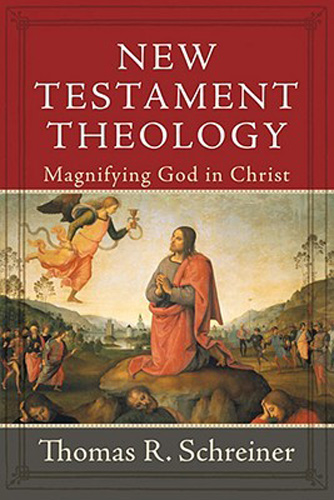
New Testament Theology: Magnifying God in Christ
In this substantial volume, Thomas Schreiner takes up the study of New Testament theology, looking for the themes that emerge from a detailed reading of the whole rather...
Downloads
About BiblicalTraining®
BiblicalTraining® wants every Christian to experience a deep and loving relationship with Jesus by understanding the life-changing truths of Scripture. To that end, we provide a high-quality Bible education at three academic levels taught by a wide range of distinguished professors, pastors, authors, and ministry leaders that moves from content to spiritual growth, all at no charge. We are a 501(c)(3) non-profit funded by gifts from our users. We currently have over 180 classes and seminars, 2,300 hours of instruction, registered users from every country in the world, and in the last two years 1.4 million people watched 257 terabytes of videos (11 million lectures).
Our goal is to provide a comprehensive biblical education governed by our Statement of Faith that leads people toward spiritual growth.