Survey of Biblical Theology - Lesson 9
Gospel of Matthew
In Matthew you see Jesus revealed as Emmanuel, God with us, the Son of David, and the promised offspring of Abraham. He fulfills Israel’s story through typology, bringing a new Exodus, embodying the true Israel and obedient King, and giving his life as a ransom. As Son of Man and Son of God, he holds divine authority to forgive sins, fulfills the covenants, and establishes the atonement, showing that all God’s promises reach their climax in him.

I. Introduction
A. Emmanuel to “I am with you” bookends
B. Genealogy: Son of Abraham, David
C. Fulfillment of covenants
II. Jesus’ Identity
A. Messiah confessed by Peter, crowds, outsiders
B. Ends exile, fulfills promises
C. Savior from sin, atonement through cross
III. Fulfillment of Scripture
A. Emphasis on fulfillment formulas
B. Examples: virgin birth, Bethlehem, Egypt, Nazarene
C. Typology: Hosea 11, new Exodus in Christ
IV. Sonship & Servanthood
A. True Israel and Davidic King
B. Eternal Son of God
C. Servant of the Lord: obedient, sacrificial
D. Blood of covenant; ransom for many
V. Son of Man
A. Rooted in Daniel 7
B. Representative of God’s people
C. Authority to forgive, heal, rule Sabbath
D. Suffers, dies, future glory
VI. Conclusion
A. Jesus fulfills Israel’s covenants
B. True Israel, Messiah, Son of God, Son of Man
C. Fulfillment in surprising ways
We come to the New Testament, and I'm going to look at really the individual authors and try to tie it together with the story we've been telling so far. But when we come to the New Testament, we're trying to look at the theology of the New Testament as a whole, but also of each author. So we begin with Matthew, and as we see in Matthew, Matthew is bookended from the beginning, right? We see that in chapter 1, verse 23, Jesus is called Emmanuel, God with us.
And then at the end of the book, I am with you always until the end of the day. So here is God's answer. God's answer, it's a surprise, isn't it? The King who is coming is God himself.
If you read a lot of history, especially from the 1600s on, there have been a lot of Unitarians. I mean, how can you read the New Testament that way? I mean, it so emphasizes that Jesus is divine. And of course, we see that in Matthew.
However, when we look at the story, Matthew begins with the genealogy. Sometimes that's rather strange. If someone's not a Christian, you start reading the New Testament, they begin with the genealogy, and they're like, this is really dull.
But of course, this is a very Jewish book, and it begins, right? He begins, perhaps we should even look at this verse, by saying, an account of the genealogy of Jesus Christ, the son of David, the son of Abraham. Well, of course, that's highly significant, isn't it? Jesus is fulfilling the covenants made with David and Abraham. So this is not merely a genealogy.
If you know the Old Testament, this is history. This is fulfillment of the promise. He's the one through whom the promise of offspring, land, and blessing given to Abraham will be fulfilled.
He's the king. He's the Messiah. He's the Christ.
He is the promised offspring that we see there. By the way, I won't talk about everything in my notes. Some of that's just there for you to look at.
But we see that he's the son of David, the Messiah. Remember, Peter confesses him as such in that dramatic moment in Matthew 16, where he says, who do you say that I am? And they say, some people say you're Jeremiah or Elijah or one of the prophets. And Peter says, you're the Christ.
You're the Messiah. And Jesus says, that's been revealed to you by God himself. And actually, often Matthew, in his editorial comments, describes Jesus as the Christ or the Messiah as well.
Not many people call Jesus the Messiah in the book, but it's interesting to see who does call him the Messiah. The blind, call him the son of David. The Canaanite woman, she recognizes he's the son of David.
The crowds, children, but not the religious leaders. So isn't that fascinating? So, if we think of our history, what's going on? They probably thought, what did the religious leaders think? This is kind of like Judas and the throngies again, right? Here we go again. The common people, some of these people, they're thinking very highly of this person, but we've been through this before.
And look, it just creates trouble. The Romans come in, it's going to be a problem. He can't be the Messiah, but it fits with what we read elsewhere in the Bible.
God has revealed himself to the foolish of the world, right? To the weak, to the nobodies of the world. And they are the ones who see who Jesus is. In that famous passage in Matthew 22, Jesus asked the religious leaders, quoting Psalm 110.
We actually looked at that verse for a second yesterday. Quoting Psalm 110, he asked how the Messiah can be David's son and also his Lord. This is the declaration of the Lord to my Lord.
Sit at my right hand until I make your enemies your footstool. That's one of the most important verses in scripture. And of course, Jesus is saying he's both, isn't he? He's both the Messiah and the Lord.
We've seen Israel is in exile, so to speak. And Matthew emphasizes in that genealogy that Israel went into exile, and that exile lasted really until the coming of Jesus Christ. So, we do have an indication the land promise is going to be fulfilled in Jesus.
However, fulfilled in a kind of surprising way. And very significant is chapter one, verse 21. He will save his people from their sins.
What's the problem in Israel? What's been the problem for 2,000 years? The problem has been sin. He is the one who is going to save Israel from their sins. So, the atonement is talked about in Matthew.
And it's not like Paul is told in a narrative. But the atonement right from the beginning is very important because we know how is he going to save his people from their sins. It's through the cross, isn't it? That's how he's going to save his people from their sins.
And we recognize when you look at the shape of the gospels, really one fourth of all the gospel stories are centered on the death and resurrection of Jesus. So, the atonement of Jesus is presented in a narrative form, a story form. But it's absolutely crucial for the reading of the story.
Another huge theme in Matthew is fulfillment. Again and again, Matthew speaks of the fulfillment of scripture. That makes sense in a very Jewish gospel.
Of course, all the gospels emphasize fulfillment. But Matthew, in particular, has these fulfillment formulas in order that this might be fulfilled. So, we don't have time to investigate all these because some of these are very interesting, right? The virgin birth, Isaiah chapter 7 verse 14, that Jesus would be born in Bethlehem, fulfills Micah 5-2.
He's called out of Egypt as a son, fulfilling Hosea 11-1. He's a Nazarene. That's a little harder one.
But I think what would be most helpful is maybe I'll just take one of these and we'll dive a little deeper because Matthew uses fulfillment in a more profound sense than we might anticipate. So, first, let's look at what Matthew says about this Hosea prophecy. So, after they were gone, an angel of the Lord appeared to Joseph in a dream, saying, Get up, take the child and his mother, flee to Egypt and stay there until I tell you, for Herod is about to search for the child to kill him.
So, verse 14 of chapter 2. So, he got up and took the child and his mother during the night and he escaped to Egypt. He stayed there until Herod's death so that what was spoken by the Lord to the prophet might be fulfilled out of Egypt I called my son. So, there's the fulfillment formula.
But what I want you to think of here is the fulfillment is, yeah, I mean, if we think of Jesus born in Bethlehem, that's pretty straightforward, right? The Messiah is going to be born in Bethlehem. But some of the fulfillments are, the fulfillment takes place in a more complex way. And I want to show you this from Hosea.
Because when Israel was a child, I loved him and out of Egypt I called my son. Now, look at that verse in context in Hosea. That's not a prophecy.
He's talking about, he's talking about Israel being redeemed from Egypt, right? That is, that's, that's not a prophecy. That's history. So, how, how can Matthew say that that's a fulfillment? I want to suggest to you that Matthew is reading this story typologically.
You know, I talked about typology yesterday. He sees a pattern or correspondence in Israel's history. So, when, when Israel is called out of Egypt, that's the exodus, right? That, that's, that's a fulfillment of the promise to them.
Now, I'm going to read the rest of Hosea 11 and make quick comments, so I can, so you can see, I think that, that the typological reading done by Matthew is already anticipated in Hosea. Okay, so here we go. Israel called to the Egyptians, even as Israel was leaving them, they kept sacrificing to the Baals and burning offerings to idols.
I think that's talking about Israel. So, God delivered Israel from Egypt, but they were, but Israel was worshiping idols. However, God still loved his people.
This is a beautiful image. It was I who taught Ephraim. That's another name for Israel, right? One of the tribes.
So, Ephraim is just a way of talking about one of the most prominent tribes in Israel. It was I who taught Ephraim to walk, taking them by the hand. You can envision in your mind a father taking a child by the hand and helping that child walk.
So, I helped Ephraim walk, but they never knew that I healed them. So, here you, this is the history of Israel, right? God bestows love on them, takes them by the hand, but they don't acknowledge him. Now, obviously there's exceptions, right? There are Israelites who love the Lord, but Hosea is writing to a nation that's about to go into exile because of their sin.
So, God says, I led them with human cords, that's Israel, with ropes of love. I kind of, I roped my people with love. To them, I was like one who eases the yoke from their jaws.
I bent them down to give them food. Again, God says, these people aren't acknowledging me, but I love them. I cared for my people.
I nourished them. And then he says, this is, right, Hosea's written in about 700s or so. Israel's about to go into exile.
Israel will not return to the land of Egypt, right? I freed them, right? Remember, that's how the chapter starts. Out of Egypt, I called my son. Israel will not return to the land of Egypt.
Assyria will be his king, but they are going to go into Assyria. And that's what happened to the northern kingdom, 722 BC, right? They were exiled to Assyria because they refused to repent. So, yeah, I've loved Israel.
I've cared for them. I've taught them to walk, but they haven't followed me. So, what's going to happen? They're going to be judged.
A sword will whirl through his cities. It will destroy and devour the bars of his gates because of their schemes. My people are bent on turning from me.
Though they call to him on high, he will not exalt them at all. You're going to be punished. You're going to go into exile.
But Hosea 11 is very complicated because then he says, how can I give you up, Ephraim? Right? I'm going to judge you. But he's the father of the people. How can I do that? How can I see my son suffer, right? My people.
How can I surrender you, Israel? Then he says, how can I make you like Adma? How can I treat you like Zoboam? What's that? Adma and Zoboam were destroyed along with Sodom and Gomorrah. So, what's he saying here? He's saying, okay, I'm going to send you into exile. It's going to happen.
You're going to go into exile, but I'm not going to destroy you entirely. That's what he's saying there. You're going to be punished.
You're going to be disciplined, but I'm not going to forsake you entirely like I did Sodom and Gomorrah. I've got a change of heart. My compassion is stirred.
I think that's just another way of saying, I'm not going to fully destroy you. Verse 9, I will not vent the full fury of my anger. I will not turn back to destroy Ephraim.
For I am God and not man, the Holy One among you. I will not come in rage. He's not saying you're not going to go to Assyria.
He did go to Assyria. They did go in exile. He's saying, I'm not going to destroy you completely.
And he says, look, they will follow the Lord after exile. He will roar like a lion. When he roars, his children will come trembling from the West.
See, here's that theme I talked about in the prophets. There's going to be a return from exile. They will be roused like birds from Egypt and like doves.
They won't literally be in Egypt, right? So this is symbolic here. But they're going to come like doves from the land of Assyria. He's just evoking that whole idea of return from exile.
Then I will settle them in their homes. So looking at Hosea as a whole, verse 1, I called Egypt, I called Israel out of Egypt in the first Exodus. How does the chapter end? There's going to be a second Exodus of Israel.
How is Matthew using this verse? Matthew is saying that second Exodus is finally fulfilled in the true Israel, Jesus. So he's reading this text typologically. The return from exile, the new Exodus, you see the profundity of this? It's not just right on the surface.
That return from exile, that has taken place now through Jesus who is the Son, who is the true Israel. So there's a very profound sense of fulfillment. It's not right on the surface and I think that brings me to what I want to say.
Jesus is God's beloved Son. Now here's the connection I want to make. Who's God's Son in the Old Testament? It's Israel, right? So this is a very important passage.
Moses and Aaron are going to go to Pharaoh, verse 22. You'll say, this is what the Lord says, Israel is my firstborn son. I told you, let my son go that he may worship you.
But you refuse to let him go. Look, I'm about to kill your firstborn son. Who's Israel? God's Son.
But also who's the Son of God? The covenant made with David, the Davidic King. Remember, this is the great chapter on the Davidic covenant. And God says about David and the Davidic King, I will be his father and he will be my son.
So when Jesus is called the Son, well, let's also see it in Psalm 27. See it again. Because this Psalm is originally said to David, I will declare, this is David speaking in the historical context of the Psalm, I will declare the Lord's decree.
He said to me, you are my son. You David are my son. Today I become your father.
So that's true of him as the King. Psalm 27. So Jesus is now God's beloved Son, right? Jesus is the true Israel.
Son means he's the true Israel. Also means he's the true King. Now it's more than that.
It also means he's God, right? So that when Jesus is called the Son, it resonates at a number of level. He's the true Israel. He's the true King.
He's the Messiah. He's also the eternal Son of God. This is very important for New Testament theology, right? Because if you want to belong to Israel, who are the people of God, Israel, but the true Israel, the true Son, the true offspring of Abraham, right? That's Jesus.
So it's all God's promises are being fulfilled in this one person. Not only is he the Son, but he's also the servant of the Lord. So let's look at Isaiah 42, one Isaiah 42.
This is my servant. The Lord says, I strengthen him. This is my chosen one.
I delight in him. I put my spirit on him. He will bring justice to the nations.
And then we go to Matthew three, is it 17? A voice from heaven said, this is my beloved son with whom I'm well-pleased. He's the son, but I am well-pleased. Look back.
I'm sorry. Look back to Isaiah 42, one. I delight in him.
So he's the servant and the son. So I, what I want you to see here is Matthew. You know, you might think, okay, we're just reading a story in the gospel.
It's it's clear. Yes, it is clear. We are reading a story, but it's deep, right? Matthew, you know, even in this verse, Jesus, he's telling us Jesus is the son, but that resonates with Israel, the King, eternal sonship.
And we also have the idea that he's the servant of the Lord of Isaiah 42. And he picks up on that again in Isaiah 12. And as that servant, Matthew tells us, the son of man did not come to be served, but to serve and to give his life as a ransom for many.
That's a fulfillment of Isaiah 53, right? The great servant of the Lord passage. So, you know, this fulfillment theme is quite remarkable, isn't it? So when we think of the story, Jesus is the true offspring of God. Remember I said the covenants are conditional in one sense and unconditional in another, but you have to have an obedient covenant partner.
Well, Jesus is that obedient, fully obedient, perfectly obedient covenant partner. He's God's servant. And what do servants do? They always do the will of the master.
He is God's servant. He's the true son. And what hope is there for us though? We're not completely obedient.
Well, he's the servant of the Lord who dies for our sake. Yeah. So when Matthew is writing this and using those phrases that are out of the prophets, Hosea or Isaiah, is he thinking that his audience is going to know those passages and make that connection themselves, that he's using those because they know Isaiah, they know Hosea.
So as he's using those phrases, he doesn't quote the whole thing, but knowing that they know that, that they get the weight of what he's trying to say because it makes them think about those passages that they're familiar with. Yes. Yeah.
That's a great question. I think so. And I think he realizes there'll be teachers to help them.
This book will be read again and again and again. This is not a one-time read. So I think he's writing the Jews who would know the Old Testament.
They'd be able to pick up on this and even in their community, there'd be teachers. So I don't think he's just thinking of private readings alone, but reading in community, reading with teachers and leaders who also know the scriptures. But I think it's so exciting to see the depth that is there.
It reminds me of Schlatter. There's more to see than we've seen. It's profound what's going on here.
So we see again the atonement at the Lord's Supper 2628 of Matthew. This is my blood of the covenant. There's that covenantal theme we've seen in the Old Testament.
And then that sacrificial theme, which is poured out for many for the forgiveness of sins. So Jesus came to save his people from their sins. It's the blood of the covenant.
He's the ransom for many. Sometimes people say the Pauline gospel and the gospel and the gospels is different, but I don't think so. This is the narratival way of expressing that same gospel, isn't it? You have to belong to Jesus to be saved and to be saved, you must be forgiven of your sins.
So really I've already talked about son of God here. Well, actually we should say something about son of man first. Jesus is the son of man.
That's a very interesting title, isn't it? The son of man title I think comes from Daniel 7. You know this passage. Daniel's watching in the night vision. Suddenly like one, like a son of man was coming with the cloud of heavens and he approached the ancient of days and was escorted before him.
So the son of man comes to God and to him was given dominion and glory and a kingdom. However, when you read Daniel 7, that's the vision. In the interpretation, the son of man is interpreted to be the saints.
So that's the vision Daniel gets, right? See, I was watching. The son of man has given the kingdom. Daniel's distressed.
He approaches them. He says, what's the interpretation of all this? Verse 16. So he's told this, but then verse 17, the holy ones will receive the kingdom.
So you see that in verse 18 and possess it. So in the vision, the son of man will receive the kingdom, but in the interpretation, it's the holy ones. I think that's the people of God.
So we see that again, the vision keeps being explained. He says, look, the day's coming when judgment will be given in the holy ones, God's people. And the holy ones took possession of the kingdom.
Nothing about an individual son of man taking possession of the kingdom. You see it's the saints corporately. And then he speaks again, still interpreting the vision, the kingdom, dominion and greatness of the kingdoms under all of heaven will be given to the people.
The holy ones are the most high. So three times Daniel interprets the vision of the kingdom being given the son of man, and he's told it's going to be given to the holy ones, to the saints. So one reason I think Jesus uses the title of son of man is to Old Testament readers.
It's like, what is this son of man? The kingdom is given to the son of man. Son of man in Hebrew just means a human being. That's all son of man means in Hebrew parallels.
The kingdom is given to a human being, but then it's explained in terms of the saints. But clearly what Jesus is doing, Jesus is saying the son of man, the saints, you see this theme again, just like he's the true servant of God, the son of man, the saints, that's me. I'm representative of the people of God, but it was a little bit confusing.
And also Jesus in his ministry does not typically call himself the Messiah. He doesn't usually use that term because that had all kinds of political associations, right? King, Messiah, we've already read about all these revolts taking place on this ferment. So Jesus comes along and says, well, I'm the son of man and people, well, I'm the human being.
Like, well, what's that? I mean, you have Daniel there, but what does that mean exactly? What I'm suggesting is Jesus is the representative head for the people of God. So we can put together Daniel seven, all the holy ones receive the kingdom through the representative son of man, through the true human being. You know, we could even say through the true Adam, right? So he's the, he's the true human being.
We're all human beings, but Jesus is the only human being that never sinned and fulfilled, fulfilled completely what it really means to be a human being. So, so Jesus describes himself as the son of man. And, uh, very interestingly, we read in the story of the paralytic, how as the son of man, he forgives, he forgives sins as the son of man and the Pharisees, the Pharisees wonder, maybe we should turn to that story.
The Pharisees, the Pharisees are offended when he says, your sins are forgiven to this guy, the paralytic, they say he's blaspheming Jesus. What could Jesus have said? I mean, me and you can say today to a person who repents, your sins are forgiven. We're not claiming to be God, right? We're not claiming inherent authority to forgive sins.
We're saying you're forgiven. We're, you're forgiven on the basis of God's word. So that's what Jesus could have said, right? He's blaspheming, but, but Jesus says, okay, uh, he doesn't go that way, right? He says that, that offends you, but I want you to know that I have authority as the son of man, as the true human being, I have the authority to forgive sins.
So Jesus doesn't back down. He doesn't say, no, no, no, no, don't, don't misunderstand me. I'm not, I'm not saying this on my own.
He says, no, no, I'm going to prove to you that I have the authority to forgive I'm going to heal this guy. I'm going to say, get up and walk. And so he does.
So, so here's a very interesting thing. Son of man in and of itself, just the word, the word, you know, Ezekiel was called son of man 92 times, right? It just means mortal human being, but Jesus is picking up on Daniel seven, the son of man receives a kingdom. And he's saying really the son of man is, yeah, he's a human being, but he's more than a human being.
He has divine authority. So again, you see why it was hard to understand Jesus because Jesus is just blowing out their categories, right? Because the Jews didn't have a clear category of a human being also being divine. And he's saying, here's what it means to be a human being for me.
I'm also, I'm also divine. So also in the story, he's, uh, no, I stay here. He's, he's suggesting to them a scripture because what does it say of Yahweh in Psalm 103, he forgives all your iniquity.
He heals all your diseases. Isn't that what Jesus does in this story? He, he forgives their sin, but he also heals them of his diseases. He does, he does what Yahweh does as, as the son of man, you know, the religious leaders should have known this verse.
It's actually one of the most well-known Psalms, even in our day, isn't it? So, so Jesus as the son of man has a, has an authority, doesn't he? As he says, he's the Lord of the Sabbath. However, his authority is veiled and concealed. Yeah.
He has a son of man. He has nowhere to lay his head as a son of man, he eats and drinks. And most surprisingly as the son of man, he's going to suffer and die.
So again, they have no category for that, uh, that he would suffer and die, but his glory as the son of man will be revealed, will be revealed, uh, in the future. So I thought, I think this is a good place to have a break as we're talking about the fulfillment that's taken place through Jesus, right? We should, we should recognize he's, uh, he's the true, uh, Israel. He's the true Messiah.
He's the King. He's, uh, the son of man. He's also the son of God.
So he, he just explodes our categories and he's coming in, but he's saying in not real overt ways, right? He's trying to teach them and show them I'm the fulfillment of all you read about in the scriptures. I'm the fulfillment of what you long for. I'm the fulfillment of, of all these covenants you've read about, but it's, but it's being fulfilled in a surprising way and a way that makes it difficult for the people to grasp, uh, initially.
- Explore how biblical theology developed through figures from Irenaeus to Bultmann, learning how debates over history, reason, and revelation shaped its methods, authority, and lasting influence on theology and the church.0% Complete
- Study how biblical theology traces God’s revelation historically while systematic theology organizes doctrine, seeing how both disciplines work together with presuppositions of faith to interpret Scripture as God’s authoritative Word.0% Complete
- Creation, covenant, and conflict reveal humanity’s sin and God’s judgment, showing the garden as sanctuary, Adam’s priest-king role, the serpent’s opposition, and God’s plan to bring salvation and victory through His promises.0% Complete
- God’s covenant with Abraham promises land, offspring, and blessing to all nations, showing both unconditional divine fulfillment and conditional obedience, while God preserves His plan through threats and fulfills His promises in surprising ways.0% Complete
- The Exodus shows God redeeming Israel by grace, giving the law and sacrifices, and dwelling in the tabernacle, all pointing to Christ’s final sacrifice and God’s presence with His people in the new creation.0% Complete
- Watch Israel’s unbelief, partial fulfillment of God’s promises, the cycle of sin without a king, and the rise of David as God’s chosen ruler who anticipates the true king to lead His people.0% Complete
- God’s covenant with David points to an eternal King, Israel’s failure reveals the need for renewal, and the prophets promise a new covenant, Exodus, creation, and David—all fulfilled in Jesus, the true King bringing worldwide blessing.0% Complete
- Israel’s identity forms through unfulfilled promises, foreign domination, Jewish factions, and rising messianic hopes, which fuel anticipation of a Messiah and set the stage for the New Testament.0% Complete
- Matthew shows Jesus as Emmanuel, true Israel, Son of David, and Son of God, fulfilling promises through a new Exodus, atonement, and divine authority, so that all God’s covenants find their fulfillment in him.0% Complete
- Dr. Schreiner reveals Jesus as the divine Son, true Israel, greater Moses, and eternal King who fulfills God’s promises, reveals the kingdom in hidden yet present power, and builds his church as the new people of God drawn from all nations.0% Complete
- Mark proclaims Jesus as the Son of God and true King whose suffering secures forgiveness, while discipleship means following his example of humility and obedience despite weakness.0% Complete
- John portrays Jesus as the eternal Logos and Son whose I AM sayings and signs grant believers the present possession of eternal life through faith.0% Complete
- John presents Jesus’ work as his lifting up and glorification, fulfilling Scripture. Life comes through true believing—receiving, coming, hearing, drinking, eating, entering, abiding—while false belief, darkness, and human glory block it.0% Complete
- Dr. Schreiner highlights divine sovereignty: the Father gives believers to the Son, the Spirit gives life, and all who truly believe are preserved, and glorifies Christ, showing Jesus’ death and resurrection as God’s sovereign plan.0% Complete
- In John’s epistles, he teaches that assurance rests on the apostolic witness, confession of sin, obedience, love, and doctrinal truth, while false teachers deny Christ.0% Complete
- Acts shows God’s plan through Christ and the Spirit, fulfilling covenant promises, spreading the gospel, empowering witnesses, and forming the church as restored Israel united in salvation.0% Complete
- Paul’s “already but not yet” theology shows God’s promises fulfilled in Christ yet awaiting completion, shaping Christian life, doctrine, and practice in areas like adoption, redemption, sanctification, and practical living.0% Complete
- In this lesson, Paul shows that Spirit-led believers still need commands, which guide holiness and love without legalism, uniting word and Spirit to shape Christian life, protect love from distortion, and call for discernment in obedience.0% Complete
- Learn how the New Perspective reinterprets Judaism and Paul, how Sanders and Stendhal shifted focus from justification to covenant and inclusion, and how Paul’s own words confirm his Damascus road conversion.0% Complete
- Paul uses “works of the law” to mean all deeds of the law, not just Jewish boundary markers, and teaches that justification comes by faith in Christ because human disobedience makes works powerless to save.0% Complete
- Learn that justification is God’s declarative act of counting believers righteous through Christ’s atonement, not human works, and see why imputation, not transformation, secures assurance and preserves the heart of the gospel.0% Complete
- Hebrews teach the Son as God’s final revelation and superior Melchizedekian priest whose one sacrifice fulfills typological promise.0% Complete
- James emphasizes authentic faith that produces obedience, wisdom, and care for others, showing that faith without works is dead while affirming God’s goodness and calling believers to endurance, humility, and practical godliness.0% Complete
- In 1 Peter, see how believers as exiles endure suffering with hope, live as God’s priestly people, rest in Christ’s atoning work and victory, and anticipate the inheritance of the new creation as fulfillment of God’s promises.0% Complete
- Revelation’s symbolism portrays Satan, the beast, false religion, and Babylon while teaching to persevere in suffering, trust God’s sovereignty, and hope in Christ’s victory and the new creation.0% Complete
- Dr. Schreiner teaches how Revelation portrays Christ’s full deity, the Lamb’s redeeming work, with victory grounded in the cross and fellowship with God as the ultimate goal.0% Complete
Lessons
- Explore how biblical theology developed through figures from Irenaeus to Bultmann, learning how debates over history, reason, and revelation shaped its methods, authority, and lasting influence on theology and the church.0% Complete
- Study how biblical theology traces God’s revelation historically while systematic theology organizes doctrine, seeing how both disciplines work together with presuppositions of faith to interpret Scripture as God’s authoritative Word.0% Complete
- Creation, covenant, and conflict reveal humanity’s sin and God’s judgment, showing the garden as sanctuary, Adam’s priest-king role, the serpent’s opposition, and God’s plan to bring salvation and victory through His promises.0% Complete
- God’s covenant with Abraham promises land, offspring, and blessing to all nations, showing both unconditional divine fulfillment and conditional obedience, while God preserves His plan through threats and fulfills His promises in surprising ways.0% Complete
- The Exodus shows God redeeming Israel by grace, giving the law and sacrifices, and dwelling in the tabernacle, all pointing to Christ’s final sacrifice and God’s presence with His people in the new creation.0% Complete
- Watch Israel’s unbelief, partial fulfillment of God’s promises, the cycle of sin without a king, and the rise of David as God’s chosen ruler who anticipates the true king to lead His people.0% Complete
- God’s covenant with David points to an eternal King, Israel’s failure reveals the need for renewal, and the prophets promise a new covenant, Exodus, creation, and David—all fulfilled in Jesus, the true King bringing worldwide blessing.0% Complete
- Israel’s identity forms through unfulfilled promises, foreign domination, Jewish factions, and rising messianic hopes, which fuel anticipation of a Messiah and set the stage for the New Testament.0% Complete
- Matthew shows Jesus as Emmanuel, true Israel, Son of David, and Son of God, fulfilling promises through a new Exodus, atonement, and divine authority, so that all God’s covenants find their fulfillment in him.0% Complete
- Dr. Schreiner reveals Jesus as the divine Son, true Israel, greater Moses, and eternal King who fulfills God’s promises, reveals the kingdom in hidden yet present power, and builds his church as the new people of God drawn from all nations.0% Complete
- Mark proclaims Jesus as the Son of God and true King whose suffering secures forgiveness, while discipleship means following his example of humility and obedience despite weakness.0% Complete
- John portrays Jesus as the eternal Logos and Son whose I AM sayings and signs grant believers the present possession of eternal life through faith.0% Complete
- John presents Jesus’ work as his lifting up and glorification, fulfilling Scripture. Life comes through true believing—receiving, coming, hearing, drinking, eating, entering, abiding—while false belief, darkness, and human glory block it.0% Complete
- Dr. Schreiner highlights divine sovereignty: the Father gives believers to the Son, the Spirit gives life, and all who truly believe are preserved, and glorifies Christ, showing Jesus’ death and resurrection as God’s sovereign plan.0% Complete
- In John’s epistles, he teaches that assurance rests on the apostolic witness, confession of sin, obedience, love, and doctrinal truth, while false teachers deny Christ.0% Complete
- Acts shows God’s plan through Christ and the Spirit, fulfilling covenant promises, spreading the gospel, empowering witnesses, and forming the church as restored Israel united in salvation.0% Complete
- Paul’s “already but not yet” theology shows God’s promises fulfilled in Christ yet awaiting completion, shaping Christian life, doctrine, and practice in areas like adoption, redemption, sanctification, and practical living.0% Complete
- In this lesson, Paul shows that Spirit-led believers still need commands, which guide holiness and love without legalism, uniting word and Spirit to shape Christian life, protect love from distortion, and call for discernment in obedience.0% Complete
- Learn how the New Perspective reinterprets Judaism and Paul, how Sanders and Stendhal shifted focus from justification to covenant and inclusion, and how Paul’s own words confirm his Damascus road conversion.0% Complete
- Paul uses “works of the law” to mean all deeds of the law, not just Jewish boundary markers, and teaches that justification comes by faith in Christ because human disobedience makes works powerless to save.0% Complete
- Learn that justification is God’s declarative act of counting believers righteous through Christ’s atonement, not human works, and see why imputation, not transformation, secures assurance and preserves the heart of the gospel.0% Complete
- Hebrews teach the Son as God’s final revelation and superior Melchizedekian priest whose one sacrifice fulfills typological promise.0% Complete
- James emphasizes authentic faith that produces obedience, wisdom, and care for others, showing that faith without works is dead while affirming God’s goodness and calling believers to endurance, humility, and practical godliness.0% Complete
- In 1 Peter, see how believers as exiles endure suffering with hope, live as God’s priestly people, rest in Christ’s atoning work and victory, and anticipate the inheritance of the new creation as fulfillment of God’s promises.0% Complete
- Revelation’s symbolism portrays Satan, the beast, false religion, and Babylon while teaching to persevere in suffering, trust God’s sovereignty, and hope in Christ’s victory and the new creation.0% Complete
- Dr. Schreiner teaches how Revelation portrays Christ’s full deity, the Lamb’s redeeming work, with victory grounded in the cross and fellowship with God as the ultimate goal.0% Complete
Class Resources
Recommended Books
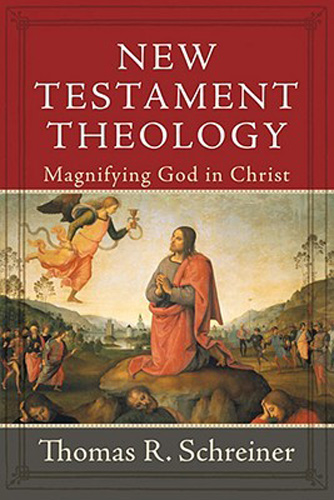
New Testament Theology: Magnifying God in Christ
In this substantial volume, Thomas Schreiner takes up the study of New Testament theology, looking for the themes that emerge from a detailed reading of the whole rather...
Downloads
About BiblicalTraining®
BiblicalTraining® wants every Christian to experience a deep and loving relationship with Jesus by understanding the life-changing truths of Scripture. To that end, we provide a high-quality Bible education at three academic levels taught by a wide range of distinguished professors, pastors, authors, and ministry leaders that moves from content to spiritual growth, all at no charge. We are a 501(c)(3) non-profit funded by gifts from our users. We currently have over 180 classes and seminars, 2,300 hours of instruction, registered users from every country in the world, and in the last two years 1.4 million people watched 257 terabytes of videos (11 million lectures).
Our goal is to provide a comprehensive biblical education governed by our Statement of Faith that leads people toward spiritual growth.