Survey of Biblical Theology - Lesson 17
Already but Not Yet
In this lesson, discover how Paul’s “already but not yet” theology shapes the Christian life. God’s promises are fulfilled in Christ but await full consummation. Gain insight into adoption, redemption, salvation, sanctification, and justification as both present realities and future hopes. This tension explains the overlap of the ages, where believers are new creations in Christ yet still await completion. You also learn how this framework applies practically to marriage, church, parenting, politics, and daily life.

I. Introduction
A. “Already/not yet” theme in Paul
B. Promises fulfilled but not consummated
II. Scriptural Foundations
A. Present world is temporary (1 Cor 7)
B. End of the ages has come (1 Cor 10)
C. Delivered from evil age (Gal 1)
D. New creation begun (2 Cor 5)
E. Tension of old/new self (Col 3 & Eph 4)
III. Doctrinal Tensions
A. Adoption – present yet future (Rom 8)
B. Redemption – forgiveness now, bodies later
C. Salvation – past, present, future
D. Sanctification – definitive yet ongoing
E. Justification – declared now, confirmed later
IV. Indicative & Imperative
A. Who we are in Christ vs. how we live
V. Practical Applications
A. Politics – avoid utopianism or withdrawal
B. Marriage – not perfect, but good
C. Church – healthy, though imperfect
D. Christian life – new yet unfinished
E. Parenting – balance discipline and grace
F. Health/wealth – blessings now, no guarantee
VI. Conclusion
A. Life shaped by “already/not yet” tension
B. Spirit’s guidance needed daily
So now we come to Paul's theology. I mean, obviously we can't look at every letter and every theme in Paul's. So I've just selected out certain themes that I think are especially important for biblical theology.
I begin with the already not yet in Paul. We've already seen that already not yet with the kingdom. So I begin there and then we're going to kind of step aside and look at some other themes, but the already not yet fits with the story, right? The promises are fulfilled, but in an inaugurated fashion, not a consummated fashion.
In other words, the promises have been fulfilled, but not completely yet. So I think that's very important to see. And I think the best way to see that is just to look at some texts.
1 Corinthians 7, 29, this is what I mean, brothers. The appointed time has grown very short. There's that eschatological vision.
From now on, let those who have wives live as though they had none. That's a shocking verse. When I told my wife that, she was rather surprised.
And those who mourn as though they were not mourning, should we go to funerals and say, what are you doing crying? And those who rejoice as though they were not rejoicing, should we go to a wedding and say, quit rejoicing? And those who buy as though they had no goods, and those who deal with the world as though they had no dealings with it, for the present form of this world is passing away. Of course, Paul's not saying that. You can't say to your wife, I live as though I don't have a wife or something like that.
That's a terrible application of this verse. But what is Paul saying? He's saying this world is temporary. That's what he's saying.
His point is marriage. I've been married 49 years now to my wife, the greatest gift of my earthly life, but it's going to end. Everything on earth ends.
Paul says, weep with those who weep. Rejoice with those who rejoice. But every sorrow, as deep and profound as it is, every sorrow will end one day in the new creation.
Every joy of this world will end. Everything we possess will end. So Paul's thought is infused with eschatology.
Jesus has come. The time is short. We can live on earth and begin to think this is heaven on earth, or if it's hard, hell on earth.
But remember, Paul says the time on earth is very short. Don't sink your life into this world because it's coming to the end. Well, there's the already, not yet.
And we see it again in 1 Corinthians 10, 11. Now these things happen to them. By the way, he's talked about all these things that happened to Israel in the Old Testament.
They happened to them as an example, but they were written down for our instruction on whom the end of the ages has come. And there it is again, right? The end of the ages has come. This is very similar to what Jesus said, right? I'm Matthew 12, 28.
By the spirit of God, I'm casting out demons. So the kingdom of God has come upon you. Here's Paul's way of saying it.
The end of the ages has arrived. So we talked about this earlier. Are we in the last days? Absolutely.
The end of the ages has come. It's not future. It's here in Christ now.
So we just talked about this in Acts as well, right? The new covenant has come. The eschaton has arrived. We see the same thing in Galatians 1, 4. Jesus gave himself for our sins to deliver us from the present evil age.
Now, yes, the present evil age still exists, but we're also delivered from it now through faith in Christ. We have here what's called the overlapping of the ages, the arrival of the new covenant. Or another way of putting it is therefore, if anyone is in Christ, he is a new creation.
The old has passed away. Behold, the new has come. The new creation has arrived in Christ, hasn't it? Now, I think we recognize we're not in heaven yet.
So what do we say? The new creation is inaugurated. It's begun, but it's not consummated. But the new creation is a reality.
Remember those four categories, the new creation, the new Exodus, the new deliverance in Christ, right? The new covenant, and we have the new David. That's come. So Paul's saying the same thing.
One of my favorite texts on this matter, 1 Corinthians 5, 6, and 7, Paul says your boasting is not good. But this is the passage where the man's committing incest in the Corinthian congregation, and they're not doing anything about it. And they're boasting probably about how spiritual they are.
He says, don't you know that a little leaven leavens the whole lump? In other words, don't you know that allowing the sin in your midst is corrupting the church? You know, it's not just this one person, but your toleration of what he's doing has a corrupting effect. Cleanse out the old leaven, by which he means, right, kick this guy out. He picks up that language from Passover, right? So Passover and unleavened bread are together in the Old Testament.
And on the feast of the Passover, for those seven days, the Jews would remove leaven from their houses. So he picks up this idea, right? He tells us Christ is our Passover lamb. So the Passover, so all the feasts are fulfilled in Christ, right? The Passover lamb points to Christ as our Passover lamb.
And the removal of leaven points to the fact that we need to be living lives that are pleasing to God. So he applies, interesting to see how he applies these Old Testament texts. Cleanse out the old leaven, kick this guy out, that you may be a new lump.
Now here's what I want to emphasize. Your lump of dough, so to speak, your church, that's what the lump of dough signifies, right? Your church has become contaminated by sin. You've got some leaven in there, this guy committing incest that you're just allowing to stay in your body.
Your church is becoming contaminated and you need to be a new lump. And to be a new lump, you need to remove this person. But then he says, as you really are unleavened.
That is so fascinating to me. Wait a minute. In Christ, you are unleavened.
In Christ, you are a new lump. In Christ, you're perfect, right? So you see this tension between what's true in Christ and what you need to live out in your lives. So in one sense, you already are a new lump.
Why? Because our Passover lamb has been sacrificed. He's made you pure. If we use the language of theology here, we could say you enjoy positional or definitive sanctification.
In Christ, you're already sanctified positionally, definitively. But you need to live that out and live out who you are. And Paul keeps that tension.
He doesn't say, well, since you're unleavened in Christ, it doesn't matter what you do, right? You could argue that. Hey, we're perfect in Christ. What I do doesn't matter.
Or you could say, hey, there's sin in the community, so we're not we're not unleavened at all. No, he says, actually, you are unleavened. So I want to argue, this is the overlap of the ages, right? This is the already not yet being shown here.
There's a sense in which we're totally unleavened, but there's also a sense in which leaven can infect our lives. It's a very complicated thing. Well, we see that again and again.
So here's an example from Colossians. And I'll probably add another passage or two. Paul says, don't lie to one another, seeing that you have put off the old self with its practices.
Don't lie because you have put off the old self. You have put off who you are in Adam. You are a new person, right? You've put off the old self, you've put on the new.
And that new self is being renewed in knowledge after the image of its creator. So you're new now. You're new.
But then what does he say in Ephesians? Assuming that you have heard about him and were taught in him as the truth is in Jesus, put off your old self, which belongs to your former manner of life and is corrupt through deceitful desires and be renewed in the spirit of your minds and put on the new self. Wait a minute. Why do we have to put off the old self and put on the new if it's already put off and put on right now? Some try to some try to say, oh, no, no, this really isn't a command in Ephesians.
I'm not going to get in the details, but I don't think that works. I think there's that tension here again. Put off what's already been put off, put on what's already been put on.
You know, we see that elsewhere. I want to show you another example. Galatians 3 27.
All of those who are baptized in the Christ, all those who are converted have been clothed with Christ. But actually that word clothed is another way of saying put on and do all. All Christians have put on Christ, right? You're clothed with Christ.
You've put them on. You're clothed with them because you're a Christian. But what does he say in Romans 13 14? He says, put on the Lord Jesus Christ, same verb and do all put on the Lord Jesus Christ, put on.
What do you mean? Put them on. He's already put on, put on what's put on. That's the, that's the overlapping of the ages.
Again, that's the already not yet. That's the tension, the tension that we see in Paul's thought. And what I want to argue that that runs through all the Paul's thoughts.
I want to just hit some doctrines, which we're not going to talk about in detail, most of these in the class, but I want you to see adoption. You know, J.I. Packer says, this is the sweetest gift of all that we're, that God loves us. We're his children.
It's the most amazing gift. He says in Romans 8 15, you didn't receive the spirit of slavery to fall back into fear, but you have received the spirit of adoption. We're adopted.
It's a fact we're adopted. But what does he say in Romans 8 23? We, we wait eagerly our adoption of sons. What do you mean? We await for it eagerly.
We're already adopted. There's a sense in which we're adopted. It's inaugurated, but our adoption is not consummated by this, by way, by the way, these, this verb wait eagerly is always used in Paul of future realities.
It's used of our resurrection bodies. So he's clearly saying there's a sense in which our adoption is future. How about redemption in him? We have redemption, present tense through his blood, the forgiveness of our trespasses.
We're redeemed. We're liberated. We're freed.
Our sins are forgiven. By the way, this is the language of the new Exodus, right? This, this word redemption, that's, that's what's used when Israel is freed from Egypt, they're redeemed, they're liberated, they're freed. So here's the new Exodus theme right here in Paul.
You, you've experienced the new Exodus, the better Exodus. They were physically liberated from Egypt. You've been spiritually liberated.
You, you've been, this is even a greater Exodus. You've been forgiven of your sins. So that's true now, but notice in Romans 8 23, we wait eagerly for adoption of the redemption of our bodies.
The redemption is not complete. It's ours, but we're still awaiting the redemption of our bodies, aren't, aren't we? Because our bodies are dying. So even our bodies are a testimony to the already not yet we're saved.
You know, God, I suppose God could have saved us in an instantly given us a resurrection body and we're glorified. It's not how he did it though. There's this, there's this eschatological tension.
How about salvation? For by grace, you have been saved through faith. This is how evangelicals usually talk. And it's totally biblical.
Have you been saved? Yes, I have been saved. I was saved on whatever day it was. If you know the day, not everybody knows the day, right? So salvation has passed, but it's also future, right? Paul can speak of the hope of salvation.
Well, hope is something you look forward to in the future. And it's clearly future in this context. Now I bring in Peter because Peter also speaks of salvation in verse five, that's ready to be revealed in the last time.
The fullness of our salvation has not yet been, been revealed. Or, you know, there's a lot of verses. Actually, Paul usually uses salvation of the future.
Here's an interesting one. Yeah. Verse 11 of Romans 13, besides this, since you know, the time it is already for the hour, the hour for you to wake up from sleep, because now our salvation is nearer than when we first believed.
What do you mean our salvation is near? We're already saved, but there's an already, not yet. Yes, we are saved. Yes, our salvation is complete in one sense, right? And yet there's a sense in which it hasn't been fully consummated yet.
That it's the already, not yet. How about sanctification? First Corinthians 6.11, and such were some of you. That's where Paul talks about, all the sins people were committing.
And he said, you used to be like that, but you were washed when you were converted, you were sanctified, you were justified in the name of the Lord Jesus Christ and by the spirit of our God. But let's have a systematic theology class and let's grade Paul. Let's grade him.
He puts sanctification before justification. Should we give him a C? Did he not pass the test? No, of course, Paul passes the test. He tests us, right? But sanctification here is definitive sanctification, positional sanctification.
The washing, the sanctifying, the justifying, they're all talking about the same thing, right? They're talking about in Christ, you're cleansed from your sin. In Christ, you're holy, sanctified, positional, definitive sanctification. In Christ, you're justified.
Those are accomplished realities. That's the already. Well, I'm completely sanctified.
I guess it doesn't matter what I do, but there's a not yet to our sanctification, right? See this prayer in 1 Thessalonians. Now may the God of peace himself sanctify you completely. Why would you even pray that if you're already completely sanctified? But no, there's a future element to our sanctification.
By the way, I'm only listing one or two verses in each case. There's many others we could look at. Now may the God of peace himself sanctify you completely.
And then he says, he who calls you as faithful, he will surely do it. I think that means he'll surely complete that sanctification on the last day. So in sanctification, there's an already, but not yet.
How about justification? Therefore, since we have been justified by faith, that's past. Actually, Paul almost always emphasizes the past and definitive reality of justification. Justification is an accomplished reality for us.
But he can also speak of the hope of righteousness. Righteousness is another word for justification. There's a sense in which our justification is future.
Now it's very important in what sense? Yes, we're completely justified. We're declared to be in the right. I'm going to talk more about justification.
I'm going to talk about the new perspective because I think you need to know about that. That's been quite controversial, but I want to just talk about this one thing. How is justification future? It's future in this way.
We can doubt our justification now, right? And the world doesn't see we're justified. People don't see you walking down the street and go, well, there's a justified saint. That's one who's declared to be right before God.
No, God is going to declare to the world and to you on the last day publicly that you're justified. No more doubts after that. No more questions.
So are we justified now by faith? Yes, but we can doubt it, right? We can wonder, oh, maybe I'm not. All that's going to be removed on the last day. So we're going to look next at the indicative and imperative.
I have a practical question in this whole thing of already, but not yet, because we live in that and we fight it or we enjoy it every day of our life that we are sanctified and yet we're not fully sanctified. I'm just trying to think at a practical level, how would you use the already, but not yet to explain the nature of the Christian life? I have six things I'm going to talk about. So I'm going to apply it and it's right here.
So what I think happens, when New Testament authors talk about Old Testament saints, I think this is a very interesting thing. They always commend them, always. You know, Rahab's called a prostitute, but when she's brought up, she's commended.
Even Lot, right? When Lot is brought up, he's not criticized, he's commended. When Samson's brought up, right? Or Jephthah, some of those guys in Judges, they did some terrible things, but they're commended. So I don't think the New Testament authors are denying they did wrong things, but I think there is a practical lesson there and it's this.
This is my reading of it. When God looks at their lives, yes, they did wrong things and we need to learn from that. Maybe it is already not yet, but I just put it in a different category.
When God looks at their lives, He approves of them. And I think that's very significant because I think that's true of us. We're sinners too, right? But when God looks at our lives as a whole, He's pleased with us.
So, you know, I don't know if you've heard this, but in popular evangelicalism, there's this view out there. I don't hold this view. Maybe you do.
I mean, I don't know this for sure, but there's kind of this view that on the last day when you meet God, it's mainly going to be you're super sad about all the things you did wrong. But I don't see that in the New Testament. It says, well done, good and faithful servant.
That's what it says. And what do we read about the Old Testament saints? I think that's an indication. Did Lot do a lot of things wrong? Yeah, but what does 2 Peter say? He was a godly man.
It doesn't say, well, look at all the bad things he did. So, I think it's telling us, look, God's pleased with us. We all fall short in many ways.
So, I think that's a very encouraging message what we see in Hebrews. God's pleased with His people. Now, when we sin, of course, we're to confess it.
But God remembers. When we preach Genesis, we preach where Lot fell short. But when God looks at us, and maybe that does fit with them already.
Not yet. I don't deny it. But when God looks at us, He's pleased with us.
So, I'm just looking at the same thing from another way. And I've already talked about this. Another way of talking about this is the indicative and imperative.
The indicative is who we are in Christ. It's a declaration. It's a fact.
The imperative are the commands, how we're supposed to live. And that's another indication of that same eschatological tension that already not yet. That's why we need paranesis, exhortations.
I have a whole lecture on paranesis coming up. So, we have that same tension between the indicative and the imperative. So, the imperative could erase the indicative.
Do some churches do that? Yeah, you're perfect in Christ, but you go to church and every week all you're told is, do this, don't do that, do this, don't do that. So, the imperative in our preaching and teaching, even our own lives, we can begin to live always under the burden of the imperative. But what's happened then? The indicative has been forgotten, right? That's a danger.
Of course, we could go the other way. You can always talk about who you are in Christ and forget all commands. I don't worry about any commands.
I just talk about who I am in Christ. That's another misunderstanding. So, how should we frame this? Should we say, be what you already are, but in a way that kind of cancels out what God is going to do for us, right? So, that doesn't seem to capture it completely.
Be what you're becoming. Maybe that's better, but that probably diminishes too much what we already are in Christ. We already are justified.
We already are sanctified. Be what you will be. That also doesn't explain the already.
So, I actually think this is kind of like the divine sovereignty and human responsibility. We can't capture this exactly in our words, I would argue. Because there's a tension here.
But the indicative is the foundation and the guarantee of the imperative, I like to say, without canceling out the imperative, right? We have to remember in Christ we're perfect. And who we are in Christ guarantees we're going to fulfill the commands. But that doesn't mean we don't need to keep commands.
We got to hold these together. We already saw that in 1 Corinthians 5, 7. But there's other examples here. Some of them I've already mentioned, right? Paul says in Philippians, work out your salvation with fear and trembling.
But then he says it's God who works in you, right? There's the imperative. Work out your salvation with fear and trembling. But what's the indicative? God's doing the work.
God's even giving you the will, the desire. Isn't that amazing? God gives you the desire to do what's good. But he doesn't say, well, then it doesn't matter what you do.
So I went to a church in Wisconsin and spoke there years ago. And the pastor said to me, I have a guy in the church, he's left his wife and he's living with another woman. And you know what he said? I'm just waiting for God to give me the desire to go back to my wife.
No, you can't say that. Well, he did say it, but it's wrong, right? You can't use that excuse. You can't say, well, God gives me the will.
So he says, work out your salvation. It's both, isn't it? Yes. If we have the right desire, finally, all the glory goes to God.
But we can't say, here's that sovereignty, responsibility, tension emerging again. We can't say, well, then it's not my fault. Sometimes I say, here's my theology.
And it doesn't answer every question. All the wrong I do is my fault. All the good I do, God gets the credit.
I think that's true, right? There's more to say than that. But that's part of what he's saying here. Romans six, Paul says, you've died to sin because you've died with Christ.
Therefore don't let sin reign. You could read, you've died to sin. Well, I can't sin anymore.
No, that's not what Paul says. You've died to sin. I mean, if I've died to sin, sin's impossible.
No, you could let sin reign in your mortal body. Don't let it reign. The indicative, you've died to sin.
The power of sin's been broken in your life, but don't let it rule in your life. There's that tension again, right? Same thing in cautions too. You've died with Christ.
Therefore don't submit to regulations. You've been raised to Christ, put to death sin by the spirit. So now I want to apply this.
I have six applications of what I've been talking about, because I think this is very, very practical in the Christian life. So I want to apply it to six things, but I think this is so practical. Every day, the already, not yet.
First politically, I don't want to apply it. So examples of both the already and the not yet. So what are examples of the over-realized eschatology is over-emphasizing the already, right? Over-realized eschatology is saying there's heaven on earth.
Well, what are examples of that? Marxist ideology, right? Marxist ideology is over-realized eschatology. Of course, we all realize Marxism has brought untold suffering and misery in the people's lives, right? But it promised, right? It promised, didn't come through at all. Heaven on earth, by the way, when I was in university, I had many, many Marxist teachers at the time.
But one of my favorite jokes was in 1989 when the former Soviet Union fell, although arising in a new way, right, tonight. But when the former Soviet Union fell, the joke was the only Marxists left are in American universities. So I always thought that was quite funny.
But whatever form of utopianism you hold, Marxism is a Christian heresy, right? We can create heaven on earth through this communistic system. But there have been other utopian schemes politically. There is no utopian government.
There is no perfect world. So that's over-realized eschatology. But what's under-realized eschatology, quietism, by which I mean, well, the world's going to hell.
I'm not going to do anything about being involved in this world. But the already not yet tells us, yes, we're not going to make heaven on earth, right? That's not going to happen. But we can make a difference in our society, even politically, right? Some countries are better than others.
I remember in the 1980s, I ran across a student and we were debating, this was before the Soviet Union fell, and he told me the Soviet Union and the United States are exactly the same. And I told him, you're wrong. The United States has problems, but it's a far better country than the Soviet Union.
He fell prey to under-realized eschatology, right? Some countries are better than others. In other words, we can make a difference in life. So second example, marriage.
So you can have an under-realized eschatology or over-realized eschatology that leads to divorce, right? What's an over-realized eschatology that leads to divorce? You expect your spouse to be perfect, right? I mean, what's the exhibit A of this? I always say it's Hollywood. They have plenty of money to marry and divorce over and over and over, right? But what are they looking for? What we really all want, we want that perfect spouse. There is no such thing, right? That's not in this world.
That's over-realized eschatology, isn't it? You want that perfect spouse, so you get divorced, so forth and so on. What's under-realized eschatology? You know, marriage is a pain and sometimes people talk like this, right? Oh, yes, I'm married. I mean, what a pain, but I have to live with the old lady or the old man.
People will talk like that, right? But as Edith Schaefer said long ago, we don't have perfect marriages, but we can have good marriages, wonderful marriages, wonderful marriages that aren't perfect. There's a profound difference between the two. Our marriages can be good because God's working, isn't he? But goodness and perfection aren't the same thing.
So, we have to live, right? We have to live in that realm where something is good. It's thirdly church. So, look, I mentioned this before.
How does this manifest itself in church? I already said there are times, I think there are times, that it's right to leave a church. Those are matters of wisdom. Some churches are moving in bad directions.
Some churches become heretical. Some churches can become toxic, so forth and so on. But often in American culture, especially, but probably happens in other places, I know my own culture, people hop from church to church to church.
What are they looking for? Over-realized eschatology, they're looking for that perfect church. Well, you're not going to find it. People know this in theory.
We all know this in theory, but some people don't live it. I can pick up friends of mine, I love them. I mean, they've been in eight or 10 churches in the last 15 or 20 years.
And I know these churches. They're not perfect churches. They're good churches.
I don't know what they're looking for. Well, I know what they're looking for. They're not going to find it.
And they're going to just keep hopping as they were looking for that perfect, perfect place that doesn't exist, right? What's under-realized eschatology of Laodicean church? Well, you know, churches are bad. I mean, you know, churches are horrible. Churches are toxic.
They're all bad. I mean, let's just be happy with, and we're just going to accept it. We're just going to accept that churches are bad.
No, that's the Laodicean church, right? No, no, no. Churches aren't perfect, but, but, but, but churches can be, can be and are good. There are many churches that God is using powerfully that are good and fundamentally healthy, and you can contribute to that.
That doesn't mean you're in a healthy church, right? But we can work towards there being healthy churches. There isn't already here. It's not just a not yet.
What about the Christian life? Is there an over-realized eschatology? Yes. What's the over-realized eschatology? We can be perfect. Perfectionism, right? So Christian perfectionism is really over-realized eschatology that we can be perfect in this life.
That's heaven. Yeah, in heaven, we're going to be perfect, but we're not perfect now. We sin, right? What's under-realized eschatology? Well, you know, we're just sinners.
What are we? We're fundamentally, as Christians, we're fundamentally sinners. That's what we fundamentally are, but that's not what the New Testament says. We're fundamentally saints, right? We do sin, but what's the fundamental reality? And we don't live perfect Christian lives, but we can live new lives that are pleasing to God.
And yes, there are disappointments and struggles, but there's new life that we experience as Christians by God's grace. Then next, children raising children, right? What's over-realized eschatology? I think in some circles, you can kind of have a fundamentalist over-realized eschatology where you expect your children to be perfect. There can be a pressure on people, especially if they're in ministry.
You want your children to appear to be perfect. Maybe they, you know, they act out, they throw a tantrum in public. And so there can become a rigidity in raising kids, right? Yeah, there can become a rigidity where you end up actually requiring as parents a perfection you don't even attain to.
Doesn't Paul warn us of that? Don't exasperate your children. Don't provoke them. Don't expect, you expect too much of kids.
You become kind of unrealistic. You expect them to be like these perfect kids, but there's no such thing as perfect kids. And every kid is different, right? So that's one side.
The other side is under-realized eschatology. You're too lax, right? The kids run wild. We've all experienced this, right? The kids come into your house and there's no discipline and you love them while you're there.
But when they're gone, you're like, praise the Lord, you know, they're gone. Because that was like a tornado that just went through my house. And the parents don't say anything.
Now, of course, these are all complex matters, right? Some kids are harder to train than others. And some children, it's a longer process than others, but there is a kind of training of the kids that is good. And then finally, over-realized eschatology.
That's what the health wealth gospel is, right? That's what heaven is. You'll be healthy, you'll be wealthy, but that's not true in this world, right? God's children, we get sick, we die. Sometimes we have financial problems.
Sometimes we're poor. That happens, doesn't it? God doesn't guarantee we'll be healthy or wealthy. One of my dearest friends, he was super healthy, a great athlete, got cancer.
He died at 58. He was the music minister in my church. And when he'd go to the doctor, the doctor would say, you're as healthy as a horse, but he got cancer and he died.
And it was just a very grievous thing and sad. And those things happen to Christians, don't they? God doesn't guarantee. God didn't guarantee he'd be healed.
That's not the gospel. That's over-realized eschatology. What's under-realized eschatology? Forgetting that God blesses us, right? We can self-focus.
Yeah, we get sick. We're not promised wealth, but God does give us wealth often, right? God blesses us with health. I've been alive 70 years.
That's a blessing with basically good health. I have plenty to eat and many good meals. God doesn't promise us that, but God may give us that.
And we want to thank him for the blessings he gives us. Last thing I want to say, living this out, there's no formula, right? It's not easy. There's not a one, two, three step.
We need the Holy Spirit. We can't just chart it out. We can fall afoul on one side or the other and we do and God brings us back and life is complicated.
There's no nice chart to work this out. That's why we need the Holy Spirit. That's why we need churches.
That's why we need other Christians. Life just isn't written down for us, but God gives us his Spirit. He gives us his Word.
He gives us the church. He's patient with us. We're all in process.
But I want to say, understanding this, I hope you see, understanding the already not yet, understanding that tension in the Christian life, it explains a lot of things, not just personally, but politically, in terms of the church. It helps us in so many arenas of life. So, I hope this has been helpful to you.
- Explore how biblical theology developed through figures from Irenaeus to Bultmann, learning how debates over history, reason, and revelation shaped its methods, authority, and lasting influence on theology and the church.0% Complete
- Study how biblical theology traces God’s revelation historically while systematic theology organizes doctrine, seeing how both disciplines work together with presuppositions of faith to interpret Scripture as God’s authoritative Word.0% Complete
- Creation, covenant, and conflict reveal humanity’s sin and God’s judgment, showing the garden as sanctuary, Adam’s priest-king role, the serpent’s opposition, and God’s plan to bring salvation and victory through His promises.0% Complete
- God’s covenant with Abraham promises land, offspring, and blessing to all nations, showing both unconditional divine fulfillment and conditional obedience, while God preserves His plan through threats and fulfills His promises in surprising ways.0% Complete
- The Exodus shows God redeeming Israel by grace, giving the law and sacrifices, and dwelling in the tabernacle, all pointing to Christ’s final sacrifice and God’s presence with His people in the new creation.0% Complete
- Watch Israel’s unbelief, partial fulfillment of God’s promises, the cycle of sin without a king, and the rise of David as God’s chosen ruler who anticipates the true king to lead His people.0% Complete
- God’s covenant with David points to an eternal King, Israel’s failure reveals the need for renewal, and the prophets promise a new covenant, Exodus, creation, and David—all fulfilled in Jesus, the true King bringing worldwide blessing.0% Complete
- Israel’s identity forms through unfulfilled promises, foreign domination, Jewish factions, and rising messianic hopes, which fuel anticipation of a Messiah and set the stage for the New Testament.0% Complete
- Matthew shows Jesus as Emmanuel, true Israel, Son of David, and Son of God, fulfilling promises through a new Exodus, atonement, and divine authority, so that all God’s covenants find their fulfillment in him.0% Complete
- Dr. Schreiner reveals Jesus as the divine Son, true Israel, greater Moses, and eternal King who fulfills God’s promises, reveals the kingdom in hidden yet present power, and builds his church as the new people of God drawn from all nations.0% Complete
- Mark proclaims Jesus as the Son of God and true King whose suffering secures forgiveness, while discipleship means following his example of humility and obedience despite weakness.0% Complete
- John portrays Jesus as the eternal Logos and Son whose I AM sayings and signs grant believers the present possession of eternal life through faith.0% Complete
- John presents Jesus’ work as his lifting up and glorification, fulfilling Scripture. Life comes through true believing—receiving, coming, hearing, drinking, eating, entering, abiding—while false belief, darkness, and human glory block it.0% Complete
- Dr. Schreiner highlights divine sovereignty: the Father gives believers to the Son, the Spirit gives life, and all who truly believe are preserved, and glorifies Christ, showing Jesus’ death and resurrection as God’s sovereign plan.0% Complete
- In John’s epistles, he teaches that assurance rests on the apostolic witness, confession of sin, obedience, love, and doctrinal truth, while false teachers deny Christ.0% Complete
- Acts shows God’s plan through Christ and the Spirit, fulfilling covenant promises, spreading the gospel, empowering witnesses, and forming the church as restored Israel united in salvation.0% Complete
- Paul’s “already but not yet” theology shows God’s promises fulfilled in Christ yet awaiting completion, shaping Christian life, doctrine, and practice in areas like adoption, redemption, sanctification, and practical living.0% Complete
- In this lesson, Paul shows that Spirit-led believers still need commands, which guide holiness and love without legalism, uniting word and Spirit to shape Christian life, protect love from distortion, and call for discernment in obedience.0% Complete
- Learn how the New Perspective reinterprets Judaism and Paul, how Sanders and Stendhal shifted focus from justification to covenant and inclusion, and how Paul’s own words confirm his Damascus road conversion.0% Complete
- Paul uses “works of the law” to mean all deeds of the law, not just Jewish boundary markers, and teaches that justification comes by faith in Christ because human disobedience makes works powerless to save.0% Complete
- Learn that justification is God’s declarative act of counting believers righteous through Christ’s atonement, not human works, and see why imputation, not transformation, secures assurance and preserves the heart of the gospel.0% Complete
- Hebrews teach the Son as God’s final revelation and superior Melchizedekian priest whose one sacrifice fulfills typological promise.0% Complete
- James emphasizes authentic faith that produces obedience, wisdom, and care for others, showing that faith without works is dead while affirming God’s goodness and calling believers to endurance, humility, and practical godliness.0% Complete
- In 1 Peter, see how believers as exiles endure suffering with hope, live as God’s priestly people, rest in Christ’s atoning work and victory, and anticipate the inheritance of the new creation as fulfillment of God’s promises.0% Complete
- Revelation’s symbolism portrays Satan, the beast, false religion, and Babylon while teaching to persevere in suffering, trust God’s sovereignty, and hope in Christ’s victory and the new creation.0% Complete
- Dr. Schreiner teaches how Revelation portrays Christ’s full deity, the Lamb’s redeeming work, with victory grounded in the cross and fellowship with God as the ultimate goal.0% Complete
Lessons
- Explore how biblical theology developed through figures from Irenaeus to Bultmann, learning how debates over history, reason, and revelation shaped its methods, authority, and lasting influence on theology and the church.0% Complete
- Study how biblical theology traces God’s revelation historically while systematic theology organizes doctrine, seeing how both disciplines work together with presuppositions of faith to interpret Scripture as God’s authoritative Word.0% Complete
- Creation, covenant, and conflict reveal humanity’s sin and God’s judgment, showing the garden as sanctuary, Adam’s priest-king role, the serpent’s opposition, and God’s plan to bring salvation and victory through His promises.0% Complete
- God’s covenant with Abraham promises land, offspring, and blessing to all nations, showing both unconditional divine fulfillment and conditional obedience, while God preserves His plan through threats and fulfills His promises in surprising ways.0% Complete
- The Exodus shows God redeeming Israel by grace, giving the law and sacrifices, and dwelling in the tabernacle, all pointing to Christ’s final sacrifice and God’s presence with His people in the new creation.0% Complete
- Watch Israel’s unbelief, partial fulfillment of God’s promises, the cycle of sin without a king, and the rise of David as God’s chosen ruler who anticipates the true king to lead His people.0% Complete
- God’s covenant with David points to an eternal King, Israel’s failure reveals the need for renewal, and the prophets promise a new covenant, Exodus, creation, and David—all fulfilled in Jesus, the true King bringing worldwide blessing.0% Complete
- Israel’s identity forms through unfulfilled promises, foreign domination, Jewish factions, and rising messianic hopes, which fuel anticipation of a Messiah and set the stage for the New Testament.0% Complete
- Matthew shows Jesus as Emmanuel, true Israel, Son of David, and Son of God, fulfilling promises through a new Exodus, atonement, and divine authority, so that all God’s covenants find their fulfillment in him.0% Complete
- Dr. Schreiner reveals Jesus as the divine Son, true Israel, greater Moses, and eternal King who fulfills God’s promises, reveals the kingdom in hidden yet present power, and builds his church as the new people of God drawn from all nations.0% Complete
- Mark proclaims Jesus as the Son of God and true King whose suffering secures forgiveness, while discipleship means following his example of humility and obedience despite weakness.0% Complete
- John portrays Jesus as the eternal Logos and Son whose I AM sayings and signs grant believers the present possession of eternal life through faith.0% Complete
- John presents Jesus’ work as his lifting up and glorification, fulfilling Scripture. Life comes through true believing—receiving, coming, hearing, drinking, eating, entering, abiding—while false belief, darkness, and human glory block it.0% Complete
- Dr. Schreiner highlights divine sovereignty: the Father gives believers to the Son, the Spirit gives life, and all who truly believe are preserved, and glorifies Christ, showing Jesus’ death and resurrection as God’s sovereign plan.0% Complete
- In John’s epistles, he teaches that assurance rests on the apostolic witness, confession of sin, obedience, love, and doctrinal truth, while false teachers deny Christ.0% Complete
- Acts shows God’s plan through Christ and the Spirit, fulfilling covenant promises, spreading the gospel, empowering witnesses, and forming the church as restored Israel united in salvation.0% Complete
- Paul’s “already but not yet” theology shows God’s promises fulfilled in Christ yet awaiting completion, shaping Christian life, doctrine, and practice in areas like adoption, redemption, sanctification, and practical living.0% Complete
- In this lesson, Paul shows that Spirit-led believers still need commands, which guide holiness and love without legalism, uniting word and Spirit to shape Christian life, protect love from distortion, and call for discernment in obedience.0% Complete
- Learn how the New Perspective reinterprets Judaism and Paul, how Sanders and Stendhal shifted focus from justification to covenant and inclusion, and how Paul’s own words confirm his Damascus road conversion.0% Complete
- Paul uses “works of the law” to mean all deeds of the law, not just Jewish boundary markers, and teaches that justification comes by faith in Christ because human disobedience makes works powerless to save.0% Complete
- Learn that justification is God’s declarative act of counting believers righteous through Christ’s atonement, not human works, and see why imputation, not transformation, secures assurance and preserves the heart of the gospel.0% Complete
- Hebrews teach the Son as God’s final revelation and superior Melchizedekian priest whose one sacrifice fulfills typological promise.0% Complete
- James emphasizes authentic faith that produces obedience, wisdom, and care for others, showing that faith without works is dead while affirming God’s goodness and calling believers to endurance, humility, and practical godliness.0% Complete
- In 1 Peter, see how believers as exiles endure suffering with hope, live as God’s priestly people, rest in Christ’s atoning work and victory, and anticipate the inheritance of the new creation as fulfillment of God’s promises.0% Complete
- Revelation’s symbolism portrays Satan, the beast, false religion, and Babylon while teaching to persevere in suffering, trust God’s sovereignty, and hope in Christ’s victory and the new creation.0% Complete
- Dr. Schreiner teaches how Revelation portrays Christ’s full deity, the Lamb’s redeeming work, with victory grounded in the cross and fellowship with God as the ultimate goal.0% Complete
Class Resources
Recommended Books
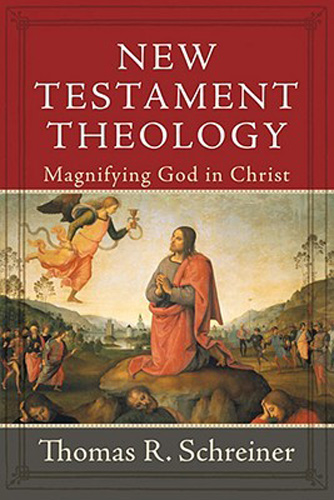
New Testament Theology: Magnifying God in Christ
In this substantial volume, Thomas Schreiner takes up the study of New Testament theology, looking for the themes that emerge from a detailed reading of the whole rather...
Downloads
About BiblicalTraining®
BiblicalTraining® wants every Christian to experience a deep and loving relationship with Jesus by understanding the life-changing truths of Scripture. To that end, we provide a high-quality Bible education at three academic levels taught by a wide range of distinguished professors, pastors, authors, and ministry leaders that moves from content to spiritual growth, all at no charge. We are a 501(c)(3) non-profit funded by gifts from our users. We currently have over 180 classes and seminars, 2,300 hours of instruction, registered users from every country in the world, and in the last two years 1.4 million people watched 257 terabytes of videos (11 million lectures).
Our goal is to provide a comprehensive biblical education governed by our Statement of Faith that leads people toward spiritual growth.