Survey of Biblical Theology - Lesson 20
Works
Jesus’ parable of the Pharisee and tax collector warns against trusting in works, and how Paul insists justification comes by faith, not by law-keeping. Evaluate New Perspective claims that “works of the law” mean boundary markers like circumcision, Sabbath, and food laws, but discover Paul’s usage includes the entire law and all human deeds. Gain clarity that works cannot be justified because of universal disobedience, leading to boasting without reality, and that salvation is God’s gift in Christ, grasped by faith alone.

I. Introduction
A. Question: Does Paul oppose legalism?
B. Example: Pharisee & tax collector
II. “Works of the Law”
A. Appears in Galatians & Romans
B. Linked to justification & the Spirit
III. Interpretations
A. Evil works (minority view)
B. Legalism itself (Bultmann & Fuller)
C. Boundary markers (Dunn & Wright)
D. Full law & its demands (Schreiner)
IV. Evidence
A. Qumran & Jewish use
B. Romans 2–3: Jews judged for moral sin, not markers
C. Gal 3: Law demands perfection; all fail
D. Sacrifices no longer sufficient
V. Paul’s Testimony (Phil 3)
A. Confidence in heritage & zeal
B. Persecuted church as service to God
C. Declares law-righteousness worthless, gains Christ
VI. Theological Summary
A. Works = full law, not just boundary markers
B. Justification by faith, not works
C. Legalism = boasting in partial obedience
VII. Pastoral Reflection
A. Justification by faith is hard to live out
B. Believers easily fall back into works-righteousness
C. Must keep learning to rest in grace
VIII. Conclusion
A. Paul rejects righteousness by works
B. Gospel: Christ saves by grace through faith
C. Leads into discussion on justification
So, really the main question, or at least one of the main questions, regarding the New Perspective, regarding what Sanders has proposed, is there a polemic, a critique of legalism in the New Testament, especially in Paul. But, actually, we already mentioned this passage, I just want to point to it quickly, therefore. I think we see already, and I've pointed this out, in the parable of the Pharisee and the tax collector, a polemic against legalism.
Remember, when we looked at that parable, the parable is addressed to those who trusted in themselves that they were righteous and who despised the others. So, that seems to be, at least, leaning towards legalism, but then, even more, the Pharisee praises himself that he's not immoral, like others, and then he's impressed with the good works that he's done. By the way, those works are beyond the call of duty, the tithing and fasting he does is beyond what the Old Testament says.
And Jesus says that he exalted himself, and it seems natural to me to say he exalted himself because of his works, but the tax collector, who admitted his sin, was justified rather than the Pharisee, so I think we have some good evidence that legalism is also spoken against by Jesus himself. But the main argument has been in Paul, and we begin with this phrase, works of law in Paul, which is found eight times in his letter, three times in Galatians 2.16, we might as well read that verse because it's so central, we know that a person is not justified by the works of the law, there it is, but by faith in Jesus Christ, even we ourselves have believed in Christ Jesus, this was so that we might be justified by faith in Christ and not by the works of the law, because by the works of the law, no human being will be justified. So we see that term three times used relative to justification, then in Galatians 3.2, he asks, did you receive the spirit by the works of the law? And again in 3.5 of Galatians, does God give you the spirit and work miracles among you by your doing the works of the law or by believing what you heard? And then in 3.10 of Galatians, all who rely on the works of the law are under a curse, we read, because it is written, everyone who does not do everything written in the book of the law is cursed.
And then we find it twice in Romans, Romans 3.20, which is a very significant verse because it concludes Paul's argument where he says all are sinners, no one will be justified in his sight by the works of the law. And then again in 3.28, we conclude that a person is justified by faith apart from the works of the law. So that phrase, works of the law, is used in terms of justification and receiving the spirit in every case.
So how should we understand it? Here's one reading. The works of the law refer to the evil works produced by the law. So in that understanding, the word law is taken as a subjective genitive.
The law produces works that are evil. Now that is supported by Lloyd Gaston and a scholar by the name of Owen, but this is a very minority view, I mean it's obvious, right, to say that you're not justified by your evil works, is that what Paul's saying? And also Paul's phrase seems polemical, by which I mean he seems to be arguing against people who think you are justified by the works of the law, but there'd be no one out there arguing that you're justified by evil works. So I mentioned that view, very few people hold that view.
Daniel Fuller, who taught for many years at Fuller Seminary, and Rudolf Bultmann, very different in many ways, but they both argue that the works of the law refers to legalism itself. Now, right, my title is, is there a polemic against legalism, and I'm going to argue yes, but this is a subsidiary point, and I'm making a really technical argument here. Does this phrase, works of the law, does the phrase in and of itself denote legalism? And I'm going to argue no, but Fuller and Bultmann say yes.
Now Fuller, now Bultmann says the very desire, the very desire to do the law is sin, even if you want to do the law is sin, but I don't think we see that in the New Testament, that the desire to do the law is sin. He goes on to say that even if you keep the law, if Abraham was justified by works, he has something to boast about. So in the Bultmann view, so change that, he says that if one keeps the law, he will not be justified.
So in this view, right, the problem with the law, with keeping the law is it leads to boasting. Even if you keep the law, that will lead to boasting, and therefore you won't be justified. Even for Bultmann, even if you keep it perfectly, you keep the law perfectly, you won't be justified because Bultmann reads Romans 2 to say, if Abraham was justified by works, he has something to boast about, boasting is wrong.
So even if you do the law, even if you do all the law, you're still going to be condemned. So my argument will be works of the law may involve legalism, but should not be defined as legalism. That's a specific point, but I'll make it more clearly when I defend my view.
And then more relevant for the new perspective, Jimmy Dunn and Tom Wright, famous advocates of the new perspective, they argue that the works of the law stands for the boundary markers of the law, that it designates the social function of the law. So the works of the law are the boundaries, are kind of the badges, the identity markers. So they're especially including things like circumcision, food laws, Sabbath.
So I talked about that, I think it was the first part of the course where we talked about the things that distinguish Jews from Gentiles, and the Gentiles look down on the Jews because they were circumcised, because they observed Sabbath, they thought they were lazy, and their food laws, they wouldn't eat together. So if that's what's going on, these are the things that distinguish Jews from Gentiles, it's not talking about moral norms of the law, then what Paul is criticizing is nationalism, not activism. The issue is racial.
So what's the problem with the Jews? They're saying you need to be a Jew, because circumcision separates Jews from Gentiles. The issue is exclusivism, not merit. The Jews are saying, we are the people of God, over against the Gentiles.
For right and done, it has nothing to do with failure to obey, but it has everything to do with, the Jews are basically saying, you have to become a Jew, you have to join the Jewish people. And even today, once you join the Jewish people, once you become a convert, once you become a proselyte, that's what a convert is, then you're considered to be part of the Jewish people, you're converted. So I want to say something good before I criticize this view.
The New Perspective reminds us, yes, the New Perspective is very much emphasizing, let's include the Gentiles in the people of God. And of course, that is a very important theme in Paul's theology, right? The inclusion of the Gentiles. And that fits with what we've been saying in this course, that all nations will be blessed in Abraham.
So yeah, that's a very prominent theme, certainly in Paul's theology. But that's not the same thing as saying that's what works of the law refers to. So now I'm going to argue, and really what I'm arguing is very simple.
I'm arguing that the works of the law refer to the deeds or actions demanded of the law. So Doug Moo argues this, Stephen Westerholm, I've argued this in various places. Works of the law, this is very simple.
What does it mean? The things that you do that the law commands. All the things you do that the law commands. It doesn't just focus on circumcision, Sabbath, and food laws.
It refers to the whole law. So just some arguments for it. I don't have time to get in all this, you know, this debate.
People debate everything. But I think this is the most likely, likely has this meaning in Jewish literature. This phrase shows up at Qumran in the Dead Sea Scrolls.
And I think that's the most likely meaning there. But you know how the world works. Everything's debated.
So it's debated there too. We're not going to spend time on Qumran. But in Romans 9, 11, maybe we should see it in the text, Paul speaks of Jacob and Esau.
Her sons had not been born or done anything good or bad. And then he says, not from works. So I'm going to say, and Mu makes this point, that's what works are.
Anything you do that's good or bad. But it's anything you do that's good or bad in the law, right? These are works of the law. So when it's works of the law, anything you do, that's according to the law.
However, Paul doesn't just use the phrase works of law. He also uses the word works. So again, I think this supports our statement.
What does he mean by the word works? This may seem very fundamental and very easy, but this is where the debate is. Works refers to anything you do. It's wider, right, than works of law.
Works of law is circumscribed by the of law modifier. But works refers to everything we do more cosmically. So Paul can say in Romans 3, 28, justification is not by the works of law.
But when he comes to Romans 4, 2, he tells us that Abraham was not justified by works. Why doesn't he say works of law in terms of Abraham? Because Abraham didn't live under the law. Paul's actually being very precise.
But the most natural way to define the word works is anything you do. Here's another way of putting it. It isn't confined or restricted to those boundary markers.
Let's look at Romans 4, 4, right? He speaks of Abraham, was Abraham justified by works? Now to the one who works, pay is not credited as a gift, but as something owed. Clearly here, he's speaking of works as actions people do. And from those actions, they receive a reward, a payment, a credit.
So we have a broad understanding of works. And we see the same in Paul's later writings. In Ephesians 2, 9, he says, by grace, you have been saved through faith, not as a result of works, so that no one may boast.
Well, the word works refers to anything we would do in the broadest sense of that word. And we see the argument here. If you're saved by works, you may boast.
Now, this is really important. The word works doesn't refer to legalism, right? But if you do the works, then you can boast. That's legalistic, or at least it could be.
I'll come back to that. God saved us, not because of our works, because of the things we do. Very simple, right? But because of his own purpose and grace.
Titus 3, 5, again. He saved us, not because of works done by us in righteousness. So I think this is very interesting.
Because here, he argues it's the works done by us in righteousness. So the focus here almost seems to be on moral works, you see? Works that are done either righteously or unrighteously. Here, righteously.
But he saved us according to his mercy. So, my argument is, the evidence we have is that works is used in a more general sense. And then when we look at the argument of Romans 1, 18 through 3, 20, and that's the place where Paul argues all are sinners, right? Both Jews and Gentiles are sinners.
All fall short. He says in Romans 3, 23, all without exception have sinned. All have sinned and fall short of the glory of God.
So that's the theme, right? And he talks about judgment comes for failing to do good works. He says in 2, 7 or 2, 6, he renders, God renders to each person according to his works. I mean, according to what you do, right? Not works of the law here, but works.
And then he says, those who are self-seeking and do not obey the truth, but obey unrighteousness, there will be wrath and fury. What's my argument here? What point am I making? The point I'm making is judgment, judgment comes because of what? Disobedience, not obeying the truth, doing what's unrighteous. Those people will experience wrath and fury.
There'll be tribulation and distress for every human being who does evil, the Jew first and also the Greek. So the works, right? The works are clearly further defined as whether you do good or evil. Now, listen, you know, you could get lost in what I'm saying because actually what I'm saying is so elementary, right? You're like, of course.
But it's very important to show you this from the text to establish the case I'm trying to make, because, you know, I'm trying to inductively show you this is how we ought to define this word works. And I'm showing you, this is how Paul uses it. In Romans 2, 12 and 13, he says, those who have the law, that's the Jews, will be judged for failing to do the law.
Why are they judged? Not for excluding Gentiles, not for focusing on circumcision or Sabbath or food laws, not for requiring Gentiles to do these things, but for failing to do the law. So that's very fundamental, right? In chapter 2, 21 and 23, the Jews are criticized for what? Not for forcing the Gentiles to be circumcised, not for food laws, not for Sabbath, but for stealing, committing adultery and robbing temples for moral infractions of the law. So what I'm saying is this makes most sense to understand Romans 3, 19 and 20 to refer to what the law as a whole commands.
Now we know that whatever the law says, it speaks to those who are under the law so that every mouth may be stopped and the whole world may be held accountable to God or by works of the law, no human being will be justified in his sight since through the law comes the knowledge of sin. Isn't Paul's argument this? When we look at the other examples we've seen, the Jews are not condemned for requiring the Gentiles to be circumcised or observe food laws or Sabbath, they're condemned for their own sin, for stealing, committing adultery and robbing temples. Obviously he's not saying all Jews steal, commit adultery and rob temples, but he's saying all Jews sin, right? He does bring up, somebody might say, wait, wait, wait, wait, he does bring up circumcision, right? Circumcision benefits you if you observe the law, but he doesn't criticize them for imposing it on the Gentiles, he criticizes them for practicing circumcision and breaking the rest of the law, keeping the rest of the law, failing to keep the rest of the law's requirements.
So Romans 4, 6 through 8, there the word works refers again to works in general. So let's look at those verses, it's in the notebook too, but we'll look in the text, David speaks of the blessing of the person to whom God credits righteousness apart from works. It doesn't end, and he cites Psalm 32, blessed are those whose lawless acts are forgiven and whose sins are covered, blessed is the person the Lord will never charge with sin.
David's praising God for the forgiveness of his sins. What sins did David almost certainly have in mind? The killing of Uriah and adultery with Bathsheba, that refers to works therefore in a general sense, nothing is said about their boundary markers. So too in Romans 9, 30 through 10, 8, Paul says nothing about the boundary markers.
He says this, Israel who pursued a law that would lead to righteousness did not succeed in reaching that law. Why? Because they did not pursue the law by faith, but as if it were based on works, works in a general sense. The Jews tried to be righteous by virtue of what they've done.
For Romans 10, 2, same thing. I bear them witness that they have a zeal for God, but not according to knowledge, for being ignorant of the righteousness of God and seeking to establish their own righteousness. What are they seeking to establish their own righteousness on? Their works.
They did not submit to Christ's righteousness, for Christ is the end of the law for righteousness to everyone who believes. For Moses writes about the righteousness that is based on the law. The person who does the commandments shall live by them.
But the righteousness is based on faith says. So again, we have this strong contrast between faith and works. Then Galatians 3, 10.
For all who rely on the works of the law are under curse for it is written, curse be everyone who does not abide by all things written in the book of the law and do them. I was checking if I was talking about this verse later, but I don't see it. So I want to say, right? You must, so three steps.
You must obey the entire law to avoid the curse. Two, no one obeys the entire law. Three, therefore those of the works of the law are cursed.
Why is this verse so important? Because he talks about everything being written in the law. You see, you must abide by all things. That's why I said, you must obey the entire law to avoid the curse, all of it.
Now, and then he says, all who rely on the works are under a curse. Why? Because the law says you're cursed if you don't keep everything the law says. So the law demands perfection.
However, you know, the second step I put in there, Paul doesn't say that here. He says, no one obeys the entire law. And so some people are saying, some people argue, well, that's not his argument.
Why doesn't he include the second step of the argument? And my reply to that is because the second step of the argument is assumed. So why is it assumed? Because it's taught everywhere in the Old Testament. What do I mean by that? First Kings 8, 46.
Paul doesn't have to say that. Solomon's prayer, when they sin against you, for there's no one who does not sin. Right? So, you know, when you have an argument, sometimes you skip steps because that middle step is so obvious.
Proverbs 20, verse nine. Who can say I've kept my heart pure? I am cleansed from sin. No one, no one can say that, right? All are sinners.
Or Ecclesiastes, I think it's 720. There's certainly no one righteous on earth who does good and never sins. And furthermore, we know that from reading the Old Testament, whether it's Moses or Abraham or David, no matter how great those people were, how godly they were, they all sinned.
So this is a very, very important verse. Now, one of the objections that's raised to my reading, I've written articles about this verse. One of the objections that's raised is, well, wait a minute.
You can get forgiveness under the law. You don't have to keep the whole law because the law provides atonement through sacrifices. So you don't have to keep the whole law.
So what's the response to that? The response to that is the law sacrifices no longer atone. So you see the argument, hey, you don't have to keep the whole law perfectly because if you sin, you offer a sacrifice and then you're forgiven. But the response is no, no, those sacrifices now that Christ has come, they no longer count.
So now you are stuck with having to keep the whole law if you place yourself under the law. Because if you're relying on animal sacrifices, you're denying the sacrifice of Christ. So Paul's argument is more profound.
You place yourself under the law, you put yourself in an impossible position because you have to do it all and you can't do that. We also see that Paul easily moves from works of law to the concept of law in Galatians. Righteousness does not come via the law, but by God's grace, he says.
By there, by that, I think he means righteousness does not come by keeping the law. He says, if righteousness came through the law, then Christ died for nothing. There's no use for Christ to die for our sins if we can be righteous by keeping the law.
Believers have died to the law. Galatians 5.3 is an important verse. Again, I testify to every man who gets himself circumcised that he is obligated to do the entire law.
So Paul says, do you want to be circumcised to be saved? Because that's the entrance into the covenant, right? Do you want to rely on circumcision for salvation? Well, then you have to do it all. And he's already told us you can't. This is an impossible thing.
The law focuses on doing everything it commands. Galatians 3.12, the law is not based on faith, right? Instead, the one who does these things will live by them. You must do the law.
And this is two verses after Galatians 3.10. You must do the law and you must do all of it to be saved, right? The law is closely related to transgression. Why was the law given? It was added for the sake of transgressions. Paul says in Romans 5.20, the law came along to multiply the trespass.
The law didn't tamp down sin, it inflamed it. By the way, that's one of the most radical things Paul said we see in the book of Avot. Yeah, it's post-New Testament, but we also find this idea in Sirach.
The book of Avot, which is a rabbinic book, says the more law, the more life. So the Jews believed, hey, the law is the means of life. Paul says, no, actually the law increases sin because of the sinfulness of human beings.
He's not criticizing the law there, but the human being. We also see Philippians 3.2-11. That's a very, very interesting verses. Does it, the new perspective, does it fit that? We have these Jewish opponents.
Remember, we already pointed out that Paul called them dogs, evil workers, those who mutilate the flesh. So these false teachers argued you must be circumcised to be safe. Paul said, look, what they call circumcision, I call mutilation.
That is actually one of the most radical things Paul said because Paul himself was circumcised as a young child, rejoiced in his Jewish heritage. Now he's comparing circumcision to pagan cuttings. That's quite remarkable.
We're the circumcision, we Christians, the one who worship by the spirit of God. We boast in Christ Jesus and do not put confidence in the flesh. Although I have reasons for confidence in the flesh, if anyone else thinks he has grounds for confidence in the flesh, I have more.
And at first, Paul sounds like a new perspectivist because he says, okay, I'm circumcised the eighth day. There's the boundary marker, right? Leviticus 12.3, when should you be circumcised on the eighth day? I'm a Jew. I'm of the nation of Israel.
Hey, I even know my tribe, you know, by the time of the New Testament, the tribes were being, you know, they'd been in exile, intermarrying, losing their tribal identity. Some people still knew their tribes, but remember the tribes were tied up together with the boundary markers of the various tribes. And that was dissolving after they'd been in exile.
I'm of the tribe of Benjamin. I'm a Hebrew born of Hebrews, which I think means I know the language. Regarding the law, I'm a Pharisee, but now, yeah, so I'm not arguing the boundary markers weren't important, but now Paul begins to remark on what makes him distinctive.
Because remember, you chose to be a Pharisee. It's a lay movement. And Paul's saying, look, I was extraordinarily devoted in terms of zeal.
I persecuted the church. Remember before Paul was saved, he was proud of that. Before Paul was saved, he didn't think persecuting the church was wrong.
He thought it was right. Paul thought of himself, you know, what did Paul think of himself to be like? We see that same zeal of Phineas in the Old Testament, Numbers 25, where the Hebrew man and a pagan woman are having sexual relations and Phineas takes a spear. Remember that? And stabs them and kills them, puts a spear right through both of them.
And God commends him for his zeal. Or you think of Elijah's zeal for the things of the Lord and he kills 400 prophets of Baal. So remember, don't read Paul from the modern world.
It's a little bit like, not exactly like right modern day Muslims who believe it's right to kill. For the sake of Allah. That's what Paul believed.
You know, he read the Old Testament and said, if murder is wrong, heresy is worse because heresy sends people to hell. And therefore I'm pleasing God and going out and killing Christians. So I believe, you know, the day Stephen was killed, I think Paul was very happy that day.
I don't think he was saddled with a guilty conscience or anything like that. So persecuting the church he viewed as good, regarding the righteousness that is in the law, blameless. I don't think that means that Paul was sinless.
Nobody's sinless, right? But that Paul always offered the requisite sacrifices and he was extraordinarily devoted to the law. But so it's Paul's, Paul was not only observing the boundary markers, but also the whole law, right? And that's what I'm arguing. Works of law refers to the whole law, everything we find in the law.
And then Paul goes on to say, look, none of those things saved me. I have a righteousness of my own from the law, but that righteousness was a loss. That righteousness doesn't save.
So that is very significant. So to sum up, works of law refers to the entire law in Paul, Paul's use of the related term works shows that he engaged in a polemic against being righteous by your works, not just the boundary markers. Justification cannot be merited or earned by works, but is given to those who put their faith in Jesus Christ.
So this, this is the heart of the gospel. So I want to make it clear. Why do works of the law not save? So what's the reason here? Why did they not save? They don't save because of disobedience.
I don't think Paul's saying what Boltman's saying. If you keep the law, you'll be condemned anyway. No, if you keep the law, you'll be, you'll be justified.
God is a fair God. If you do what the law says, you'll be justified. No, works of the law don't save.
There's nothing, not because there's anything wrong with the law, but because of human disobedience. So really my whole argument here, and I've been doing it a long time. I hope I didn't bore you too much.
My whole argument here is very simple, but so many people disagree with it today. And my argument is Paul's making a really elementary point. The reason you're not justified by works of the law is because you don't do it.
That's it. It's just that simple. That's not legalism, right? In and of itself.
But where does legalism come in? Legalism comes in here. Even though we don't keep the law, we boast as if we did. And that's exactly what happens.
Sinners who fail to keep the law become proud of how much of the law they keep. So the condemnation comes because of disobedience. The problem with legalism is legalism is outside reality because we don't keep the law.
What are we boasting about? We're boasting about something we didn't even do. So that's the issue. Why is this important? Because it's the heart of the gospel.
Christ saves sinners. This is why the new perspective has riled people up because this is the gospel. Let's hear Martin Luther on this issue.
A pastoral word. Luther says, what about justification by faith instead of works? Is this important? We'll talk more about justification in a minute. But Luther says, when you hear an immature and unripe saint, that's an interesting statement, isn't it? An unripe saint.
When you hear them trumpet, then he knows very well that we must be saved by the grace of God without our own works. And then pretend that this is a snap for him. So if someone says, well, yeah, this is easy.
We understand this. We got this. It's down.
Well, then I have no doubt that he has no idea what he's talking about and probably will never find out. I don't agree with that last statement. Luther could start exaggerating.
Yeah, he might find out. But somebody who says, oh, this is easy. They're not understanding.
I'm not talking about easy to understand, but easy to put in practice. That's what Luther has in mind. For this is not an art that can be completely learned or of which anyone could boast that he is a master.
Why not? Because we're very prone and we very much want to boast in what we do. We very much want to rely on our works, even after we're Christians. We're just so wired.
Everything in life is based on what we do. Everything in life is based on works. So it's very, what Luther is saying, it's very easy to fall back into works righteousness, right? We all want to justify our lives based on, hey, how good is my work? What do people think of what I've accomplished at the end of the day? So Luther says this is an art that will always have us as pupils while it remains the master.
We'll be learning this our whole lives. And all those who do understand and practice it do not boast that they can do everything. On the contrary, they sense it.
What's the it? Justification by faith is like a wonderful taste or odor that they greatly desire and pursue. And that they are amazed that they cannot grasp but are comprehended as they would like. We're reminded, oh, again and again.
Yeah, I don't. I forget, I'm not resting in the grace of God. I'm starting to rely on what I do.
I'm starting to boast in myself. I'm starting to give way to pride or even feelings of inferiority, right? They're kind of an inverted pride, right? If you feel very inferior, what's the thing? You're looking at yourself, but then you're not concentrating on the justification you have in God. You're not looking at God, you're looking at you.
You know, either way, you're looking at you. So this is why we have to keep learning this. They hunger, thirst, and yearn for it more and more.
They never tire of hearing about it or dealing with it. Just as St. Paul himself confessed that he has not yet obtained it. And in Matthew 5, 6, Christ calls those blessed who hunger and thirst after righteousness.
So such a fundamental truth. And we're going to go on and talk next about justification.
- Explore how biblical theology developed through figures from Irenaeus to Bultmann, learning how debates over history, reason, and revelation shaped its methods, authority, and lasting influence on theology and the church.0% Complete
- Study how biblical theology traces God’s revelation historically while systematic theology organizes doctrine, seeing how both disciplines work together with presuppositions of faith to interpret Scripture as God’s authoritative Word.0% Complete
- Creation, covenant, and conflict reveal humanity’s sin and God’s judgment, showing the garden as sanctuary, Adam’s priest-king role, the serpent’s opposition, and God’s plan to bring salvation and victory through His promises.0% Complete
- God’s covenant with Abraham promises land, offspring, and blessing to all nations, showing both unconditional divine fulfillment and conditional obedience, while God preserves His plan through threats and fulfills His promises in surprising ways.0% Complete
- The Exodus shows God redeeming Israel by grace, giving the law and sacrifices, and dwelling in the tabernacle, all pointing to Christ’s final sacrifice and God’s presence with His people in the new creation.0% Complete
- Watch Israel’s unbelief, partial fulfillment of God’s promises, the cycle of sin without a king, and the rise of David as God’s chosen ruler who anticipates the true king to lead His people.0% Complete
- God’s covenant with David points to an eternal King, Israel’s failure reveals the need for renewal, and the prophets promise a new covenant, Exodus, creation, and David—all fulfilled in Jesus, the true King bringing worldwide blessing.0% Complete
- Israel’s identity forms through unfulfilled promises, foreign domination, Jewish factions, and rising messianic hopes, which fuel anticipation of a Messiah and set the stage for the New Testament.0% Complete
- Matthew shows Jesus as Emmanuel, true Israel, Son of David, and Son of God, fulfilling promises through a new Exodus, atonement, and divine authority, so that all God’s covenants find their fulfillment in him.0% Complete
- Dr. Schreiner reveals Jesus as the divine Son, true Israel, greater Moses, and eternal King who fulfills God’s promises, reveals the kingdom in hidden yet present power, and builds his church as the new people of God drawn from all nations.0% Complete
- Mark proclaims Jesus as the Son of God and true King whose suffering secures forgiveness, while discipleship means following his example of humility and obedience despite weakness.0% Complete
- John portrays Jesus as the eternal Logos and Son whose I AM sayings and signs grant believers the present possession of eternal life through faith.0% Complete
- John presents Jesus’ work as his lifting up and glorification, fulfilling Scripture. Life comes through true believing—receiving, coming, hearing, drinking, eating, entering, abiding—while false belief, darkness, and human glory block it.0% Complete
- Dr. Schreiner highlights divine sovereignty: the Father gives believers to the Son, the Spirit gives life, and all who truly believe are preserved, and glorifies Christ, showing Jesus’ death and resurrection as God’s sovereign plan.0% Complete
- In John’s epistles, he teaches that assurance rests on the apostolic witness, confession of sin, obedience, love, and doctrinal truth, while false teachers deny Christ.0% Complete
- Acts shows God’s plan through Christ and the Spirit, fulfilling covenant promises, spreading the gospel, empowering witnesses, and forming the church as restored Israel united in salvation.0% Complete
- Paul’s “already but not yet” theology shows God’s promises fulfilled in Christ yet awaiting completion, shaping Christian life, doctrine, and practice in areas like adoption, redemption, sanctification, and practical living.0% Complete
- In this lesson, Paul shows that Spirit-led believers still need commands, which guide holiness and love without legalism, uniting word and Spirit to shape Christian life, protect love from distortion, and call for discernment in obedience.0% Complete
- Learn how the New Perspective reinterprets Judaism and Paul, how Sanders and Stendhal shifted focus from justification to covenant and inclusion, and how Paul’s own words confirm his Damascus road conversion.0% Complete
- Paul uses “works of the law” to mean all deeds of the law, not just Jewish boundary markers, and teaches that justification comes by faith in Christ because human disobedience makes works powerless to save.0% Complete
- Learn that justification is God’s declarative act of counting believers righteous through Christ’s atonement, not human works, and see why imputation, not transformation, secures assurance and preserves the heart of the gospel.0% Complete
- Hebrews teach the Son as God’s final revelation and superior Melchizedekian priest whose one sacrifice fulfills typological promise.0% Complete
- James emphasizes authentic faith that produces obedience, wisdom, and care for others, showing that faith without works is dead while affirming God’s goodness and calling believers to endurance, humility, and practical godliness.0% Complete
- In 1 Peter, see how believers as exiles endure suffering with hope, live as God’s priestly people, rest in Christ’s atoning work and victory, and anticipate the inheritance of the new creation as fulfillment of God’s promises.0% Complete
- Revelation’s symbolism portrays Satan, the beast, false religion, and Babylon while teaching to persevere in suffering, trust God’s sovereignty, and hope in Christ’s victory and the new creation.0% Complete
- Dr. Schreiner teaches how Revelation portrays Christ’s full deity, the Lamb’s redeeming work, with victory grounded in the cross and fellowship with God as the ultimate goal.0% Complete
Lessons
- Explore how biblical theology developed through figures from Irenaeus to Bultmann, learning how debates over history, reason, and revelation shaped its methods, authority, and lasting influence on theology and the church.0% Complete
- Study how biblical theology traces God’s revelation historically while systematic theology organizes doctrine, seeing how both disciplines work together with presuppositions of faith to interpret Scripture as God’s authoritative Word.0% Complete
- Creation, covenant, and conflict reveal humanity’s sin and God’s judgment, showing the garden as sanctuary, Adam’s priest-king role, the serpent’s opposition, and God’s plan to bring salvation and victory through His promises.0% Complete
- God’s covenant with Abraham promises land, offspring, and blessing to all nations, showing both unconditional divine fulfillment and conditional obedience, while God preserves His plan through threats and fulfills His promises in surprising ways.0% Complete
- The Exodus shows God redeeming Israel by grace, giving the law and sacrifices, and dwelling in the tabernacle, all pointing to Christ’s final sacrifice and God’s presence with His people in the new creation.0% Complete
- Watch Israel’s unbelief, partial fulfillment of God’s promises, the cycle of sin without a king, and the rise of David as God’s chosen ruler who anticipates the true king to lead His people.0% Complete
- God’s covenant with David points to an eternal King, Israel’s failure reveals the need for renewal, and the prophets promise a new covenant, Exodus, creation, and David—all fulfilled in Jesus, the true King bringing worldwide blessing.0% Complete
- Israel’s identity forms through unfulfilled promises, foreign domination, Jewish factions, and rising messianic hopes, which fuel anticipation of a Messiah and set the stage for the New Testament.0% Complete
- Matthew shows Jesus as Emmanuel, true Israel, Son of David, and Son of God, fulfilling promises through a new Exodus, atonement, and divine authority, so that all God’s covenants find their fulfillment in him.0% Complete
- Dr. Schreiner reveals Jesus as the divine Son, true Israel, greater Moses, and eternal King who fulfills God’s promises, reveals the kingdom in hidden yet present power, and builds his church as the new people of God drawn from all nations.0% Complete
- Mark proclaims Jesus as the Son of God and true King whose suffering secures forgiveness, while discipleship means following his example of humility and obedience despite weakness.0% Complete
- John portrays Jesus as the eternal Logos and Son whose I AM sayings and signs grant believers the present possession of eternal life through faith.0% Complete
- John presents Jesus’ work as his lifting up and glorification, fulfilling Scripture. Life comes through true believing—receiving, coming, hearing, drinking, eating, entering, abiding—while false belief, darkness, and human glory block it.0% Complete
- Dr. Schreiner highlights divine sovereignty: the Father gives believers to the Son, the Spirit gives life, and all who truly believe are preserved, and glorifies Christ, showing Jesus’ death and resurrection as God’s sovereign plan.0% Complete
- In John’s epistles, he teaches that assurance rests on the apostolic witness, confession of sin, obedience, love, and doctrinal truth, while false teachers deny Christ.0% Complete
- Acts shows God’s plan through Christ and the Spirit, fulfilling covenant promises, spreading the gospel, empowering witnesses, and forming the church as restored Israel united in salvation.0% Complete
- Paul’s “already but not yet” theology shows God’s promises fulfilled in Christ yet awaiting completion, shaping Christian life, doctrine, and practice in areas like adoption, redemption, sanctification, and practical living.0% Complete
- In this lesson, Paul shows that Spirit-led believers still need commands, which guide holiness and love without legalism, uniting word and Spirit to shape Christian life, protect love from distortion, and call for discernment in obedience.0% Complete
- Learn how the New Perspective reinterprets Judaism and Paul, how Sanders and Stendhal shifted focus from justification to covenant and inclusion, and how Paul’s own words confirm his Damascus road conversion.0% Complete
- Paul uses “works of the law” to mean all deeds of the law, not just Jewish boundary markers, and teaches that justification comes by faith in Christ because human disobedience makes works powerless to save.0% Complete
- Learn that justification is God’s declarative act of counting believers righteous through Christ’s atonement, not human works, and see why imputation, not transformation, secures assurance and preserves the heart of the gospel.0% Complete
- Hebrews teach the Son as God’s final revelation and superior Melchizedekian priest whose one sacrifice fulfills typological promise.0% Complete
- James emphasizes authentic faith that produces obedience, wisdom, and care for others, showing that faith without works is dead while affirming God’s goodness and calling believers to endurance, humility, and practical godliness.0% Complete
- In 1 Peter, see how believers as exiles endure suffering with hope, live as God’s priestly people, rest in Christ’s atoning work and victory, and anticipate the inheritance of the new creation as fulfillment of God’s promises.0% Complete
- Revelation’s symbolism portrays Satan, the beast, false religion, and Babylon while teaching to persevere in suffering, trust God’s sovereignty, and hope in Christ’s victory and the new creation.0% Complete
- Dr. Schreiner teaches how Revelation portrays Christ’s full deity, the Lamb’s redeeming work, with victory grounded in the cross and fellowship with God as the ultimate goal.0% Complete
Class Resources
Recommended Books
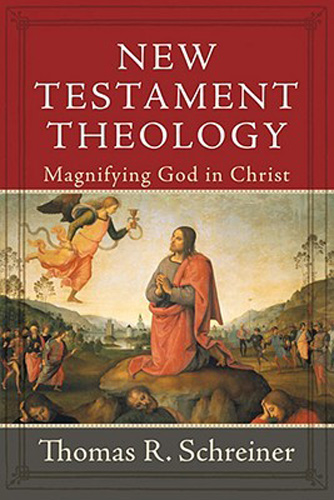
New Testament Theology: Magnifying God in Christ
In this substantial volume, Thomas Schreiner takes up the study of New Testament theology, looking for the themes that emerge from a detailed reading of the whole rather...
Downloads
About BiblicalTraining®
BiblicalTraining® wants every Christian to experience a deep and loving relationship with Jesus by understanding the life-changing truths of Scripture. To that end, we provide a high-quality Bible education at three academic levels taught by a wide range of distinguished professors, pastors, authors, and ministry leaders that moves from content to spiritual growth, all at no charge. We are a 501(c)(3) non-profit funded by gifts from our users. We currently have over 180 classes and seminars, 2,300 hours of instruction, registered users from every country in the world, and in the last two years 1.4 million people watched 257 terabytes of videos (11 million lectures).
Our goal is to provide a comprehensive biblical education governed by our Statement of Faith that leads people toward spiritual growth.