Survey of Biblical Theology - Lesson 6
Numbers through Samuel
Trace Israel’s journey from Numbers through Samuel and see how unbelief in the wilderness leads to disobedience and judgment, while God still blesses through Balaam’s prophecy of a coming king. Discover how the land promise is initially fulfilled in Joshua, though incomplete, and how Judges reveals Israel’s cycle of sin without a king. Ruth anticipates David, and Samuel shows Saul’s rise and fall as God raises David, proving that Israel needs a faithful king to lead God’s people.

I. Wilderness Generation
A. Unbelief leading to disobedience
B. Balaam narrative—Israel blessed, prophecy of king
II. Deuteronomy
A. Renewal of covenant for new generation
B. Call to love, trust, & obey the Lord
III. Joshua & the Land
A. Conquest & distribution of land
B. Rest given, but obedience incomplete
IV. Judges & Ruth
A. Cycle of sin & flawed deliverers
B. Refrain: no king in Israel, need for a king
C. Ruth points to David
V. Samuel & the Kingship
A. Corruption under Eli’s sons, Hannah’s prayer
B. Saul raised up & rejected
C. David raised as true king
VI. Theological Themes
A. Israel needs a righteous king
B. God’s promises unfold slowly
C. Depth of human sin persists
So we continue as we tell the story. We're coming to the next part of the story, right? We basically have finished Leviticus, and remember the elements of the promise made to Abraham. Land, offspring, blessing.
They have the offspring, the nation is multiplied, they're freed from Egypt, but they're not yet in the land, and of course, universal blessing has not been achieved. So Israel is wandering in the wilderness. What do we see in the wilderness? We see disobedience, and why were they disobedient? Because they failed to believe, right? Hebrews comments on this very thing, doesn't it? When we come to Hebrews, Hebrews talks about how Israel hardened their hearts in the wilderness.
Watch out, brothers and sisters, so that there won't be in any of you an evil, unbelieving heart that turns away from the living God. Did you see it? The evil heart is what? An unbelieving heart. And what does an unbelieving heart do? It disobeys.
It turns away from the living God. So this is what happened to the wilderness generation, and he says, verse 18, to whom did he swear that they would not enter his rest, if not to those who disobeyed? But then what's the next verse saying? So that we see they were unable to enter because of unbelief. So we see these two things together, the unbelief and disobedience of that generation.
All disobedience stems from unbelief. So simple example, if you steal, you're not trusting God to provide for you, right? Why would you disobey in that way? Because it's a lack of trust in God. Instead, you think, well, there's no God to provide for me.
He won't take care of me. I better steal. If somebody commits sexual sin, we're not trusting God to give us the pleasures we think we deserve.
So we say, okay, I'm going to get pleasure my way. So every sin really can be traced to this lack of trust in God. If we're worrying, right? What is worry? Worry is saying there's no God to take care of me.
I have to worry, so forth and so on. So only a pure and obedient people can enter the land. Not talking about perfection there, right? These people had seen God do the signs and wonders in Egypt, and yet they failed to believe that he would give them the grace and power to enter the land.
So this wilderness generation is characterized by unbelief, disobedience, rebellion. And yet in the middle of that story is such a fascinating story about Balaam and Balak. And again, this is talked about a number of times in the Old Testament, but so I am putting together the whole Testament and really the New Testament as well.
What's happening in this story? Balak, the king of Moab, wants Balaam, a prophet, pagan prophet, to come and curse Israel. That's Balaam's job as a prophet. Balaam wants to do that.
He wants to come and curse Israel. For one thing, he's going to get a great financial reward if he does it. However, the Lord does not allow Balaam to do it.
It's, so to speak, the Lord sort of takes over Balaam's life, and Balaam, who came there wanting to curse Israel, ends up blessing Israel. And that's what the promise to Abraham is, isn't it? This nation is going to be blessed. And I think it's quite remarkable and even encouraging because these blessings are pronounced over people who are very disobedient.
These are the same people who just refuse to enter the land. And yet, ultimately, God is going to bless them. And there are good reasons they should be cursed, but they are going to be the blessed people of the Lord, finally.
And then it's really quite significant because that blessing in his last oracle, right, focuses on a king. I see him. I mean, this is a pagan prophet.
This is a person who was killed, right, and numbers, if you know this, numbers 31, Balaam was killed opposing Israel. So, his heart was never changed. He didn't love the people of God.
He hated them. But here's the prophecy. I see him, but not now.
I perceive him, but not near. A star will come from Jacob, and a scepter will arise from Israel. So, ultimately, that's Jesus himself, right? Here's the king.
He will smash the forehead of Moab. You know, Balaam has called upon him to curse Israel for Moab's sake, and he's prophesying just the opposite. He'll strike down all the Shethites.
You know, by the way, there seems to be an allusion there to Genesis 3.15 as well, to the destruction of the enemies of God, the seed of the serpent. Then another verse I want you to see. Notice how Balaam became furious with Balaam, struck his hands together, and said to him, I summoned you to put a curse on my enemies, but instead, you blessed them these three times.
There's the Abrahamic promise, right? Instead of being cursed, these people are blessed. We see Deuteronomy. So, that's all I want to say about numbers.
Deuteronomy focuses, what, on the promise of the land. They're brought to the plains of Moab. They're about to enter the land, right? Preparations are given for the new generation, and then stipulations are given that govern life in the land.
What's it going to look like to be the covenant people? And I don't think we need to linger on this. The commands, we've already seen, they're undergirded by God's grace. They indicate Yahweh's supremacy in all of life.
What does it mean to be the people of the Lord? It means to cling to him, to obey him, to trust him, so forth and so on. So, we come to the end of the Pentateuch, right? Land, the offspring is fulfilled. The land promise is about to be fulfilled, universal blessing.
When we come to Joshua, that land promise is now fulfilled, isn't it? We have the conquest, and the battles show the Lord brings the victory. So, most of these battles are described in very short order, but the battle of Jericho is typical. You don't win battles by marching around cities seven times, but the Lord is showing these battles are won by his grace and his power.
These battles are not won by the military prowess of Israel. Israel in and of itself is weak, but the Lord is strong. I just want to say here, there are a number of people who want to argue because the Lord commanded Israel to wipe out, in most cases, every man, woman, child, animals, everything, harem.
Everything's placed under destruction. There are some people who want to say, no, the Lord didn't give that command, but look, nothing can be clear. The Lord gave that command over and over.
That's what he told them to do. And that can be difficult for us today to read about. That is not a command for armies today, but it was very important that Israel not be contaminated by the idolatry of the people.
I think it's very interesting. Notice that Israel didn't enter into the land for 400 years. God says to Abraham, Israel will only return to the land in the fourth generation for the iniquity of the Amorites has not yet reached its full measure.
That total wiping out of the people is reserved for the place and time when the sin of the people is so great that their total annihilation is warranted. And God's the Lord of life and death, and God instructed them to do this. So we trust, as Abraham said, that won't the judge of all the earth do right.
God knows what's right outside the land, but outside the land, they don't wipe out all the peoples. This is a command only for the land of promise. And by the way, they didn't even obey it.
And it got them into trouble. Sometimes they did, sometimes they didn't, but they didn't obey completely. Still, what Joshua emphasizes is the new generation's obedience and their faith in contrast to the wilderness generation.
They enter into the land. That's a new Eden. So you see the second element of the promise is fulfilled.
Offspring. Land. Quite significant.
The land is then, in the second half of Joshua, the land is apportioned. The inheritance is relayed in very loving detail. So again, in your Bible reading, when you come to about Joshua 13 and 14, it can be very hard for us to read because they list in detail, basically every city, every place, the boundaries that they took, and that seems boring to us.
But just imagine if it was your land. Every place mattered to them. So those places were significant.
I grew up on a hundred acres, and I worked on that land as a kid for 11 summers. And I love that land even now. I'd love to walk it even now, just a hundred acres.
I grew up on it. I worked on it. And there's something, it ties you to the land.
So when you read those chapters, recognize that God is a real world God. This land is a real place. And I don't think we have to memorize those places, but we ought to recognize this is very significant.
God had given them a special gift and presumably you all have a place where you live or stay and places are important. That land is called an inheritance. For those of us in Christ, our inheritance is the new creation.
The land promise is, in at least an initial way, fulfilled. So let's read a couple of verses here. Joshua 21, 43.
So the Lord gave Israel all the land he had sworn to give their ancestors, and they took possession of it and settled there. The Lord gave them rest on every side. Notice that word rest, Hebrews picks up on that.
The Lord gave them rest on every side, according to all he had sworn to their ancestors. None of their enemies were able to stand against them for the Lord handed over all their enemies to them. None of the good promises the Lord had made to the house of Israel failed.
Everything was fulfilled. Oh, I guess I have that verse below here as well. So we see the fulfillment of that promise, but I'm writing here it was fulfilled in an initial way.
I don't think what Joshua says here is false, because it's generally true, but we'll see that in some respects they didn't completely do all that God commanded. But generally speaking, this is the case. The promise was fulfilled, and this promise is also described in the land as rest.
We see that rest in Genesis 2, on the seventh day, the rest in Joshua, Psalm 95 talks about the rest, and Hebrews 3. For us, the rest is our heavenly rest, which we enjoy in Christ even now. And that rest will be consummated. That rest will be consummated in the new creation that is coming.
So I said there's an initial fulfillment. God fulfilled his promises, but there's indications in the narrative that there's more to do. Not all the inhabitants are destroyed.
I mentioned that, right? They didn't. The Gibeonites, deceived them, so they survived. And we're told in Joshua 15, 63, so there's no contradiction here.
We're told there the Jebusites still are in Jerusalem. So God fulfilled all his promises, but hey, the Jebusites are still hanging out there. We're told there's Canaanites in Gaza.
We're told there's Canaanites in Manasseh. So yes, God's promises are fulfilled, but there's these little warning signals. They're small, right? This is like great victories, but there's something going on here that's not complete.
In fact, Joshua says near the end of the book, chapter 22, only be very careful to observe the commandment and the law that Moses, the servant of the Lord, commanded you. And what's the command? Isn't it interesting to love the Lord your God? So that's first. That's the first commandment.
No other gods before me, but that means to love. There's an affection for the Lord. That's what the first commandment is.
By the way, that's very Deuteronomic. Deuteronomy often speaks this way as well. We skipped over that, but Joshua picks up on many themes from Deuteronomy.
To love the Lord your God, to walk in all his ways, and to keep his commandments, and to cling to him. That's the word used for husbands and wives being cleaving to each other. It's a covenant word, right? And to serve him with all your heart and with all your soul.
So that's what God called them. That's what God calls us to do as well, doesn't he? As believers, we're to love him, we're to walk in his ways, we're to keep his commandments, we're to cling to him, serve him with all of who we are. However, Joshua ends kind of on a note of pessimism.
Have you ever noticed that? Such an optimistic book. Such a wonderful book of victory. Yet Joshua ends the book by saying, you're not able to serve the Lord.
They say, yeah, we're going to serve him, but he's like, no, you can't. That's kind of strange. We wouldn't expect that, but it's an anticipation of what's to come.
One scholar says the promise is fulfilled, but a dark cloud hangs over the people. There's sort of an ominous, even though it's a very positive book, there's sort of an ominous ending in Joshua. There's no king to replace Joshua.
There's no leader to replace Joshua. So that's quite interesting. They're in the land now, but what's going to happen? Well, we know what's going to happen because we read the next books, right? And it's from Judges to 1 Samuel 1 through 15.
And what happens? A pattern of sin emerges in the next generation. So think of this. Let's just step back for a moment.
Depends on your chronology, but God promised Abraham land, offspring, blessing, let's say 2000 BC, right? Depending on how you date the Exodus, some people date it in the 1400s, some in the 1200s, whatever dating, the land and the offspring promise are only fulfilled together 500 or 800 years later. That is an incredibly long time. So we're reminded, are we reminded God works slowly.
God, I'm always struck because I'm an impatient person that the Proverbs say, the one who acts hastily is in sin. Now it's a proverb. There are times we do have to act fast, but we can be in a rush, right? We can be in a hurry to accomplish certain things.
God's not in a big hurry. He's fulfilling his promises, but it's not going fast. A lot of years have passed before now they're finally in the land.
Well, then they're in the land and you think, okay, they're finally in the land. Here comes universal blessing. Nope.
Nope. Instead they slip in the sin. If Israel is to become and see, right? Israel is to become and see, but instead, what do you come and see? You see in Israel, Israel, that's not devoted to the Lord.
So we see in judges, right? We see right away the cycle of sin, repentance and deliverance with the judges. So the nation's not doing well. So how can we put it? Israel in the land is a new Adam, so to speak, and a new Eden.
What's the new Eden? The land, but they have the same experience as Adam. What is God teaching us? God is teaching us the, what I've already said, the evil in our hearts is profound and deep. Even the people God has liberated and brought into the land are not serving him.
The judges save Israel, but all the judges are flawed or very unusual. So yeah, they're saved and delivered, but there's no indication that the nation is changing when we think of Samson. So people interpret this different ways, but I think what he's saying in judges is Israel needs a king.
And that is repeated a number of times in the book, Judges 17, 6. In those days, there was no king in Israel. Everyone did whatever seemed right to him. Now there are Old Testament scholars who say that their desire for a king even here is wrong, but I don't think that's a very likely reading of the book.
We've already read in Genesis 49 and Numbers 24, that a king is coming from the tribe of Judah, that's scepter and a star, and Joshua has gone off the scene. Israel is not obeying. They need a king.
And he repeats that a number of times, doesn't he? In those days, there was no king in Israel. And then we're told about these sordid events that take place in Judges. So I think, again, he's saying, these bad things are happening and there's no king.
Here it is again. The tribe of Benjamin acts like Sodom and Gomorrah. And what does he say before that? In those days, there was no king in Israel.
And there was great evil in the nation. That's how the book ends. That seems very significant.
In those days, there was no king in Israel. Everyone did whatever seemed right to him. So as we come to the end of Judges, what are we learning? Israel needs a king.
Israel needs a king. Brevard Childs, I mentioned him, the canonical reader. I told you some of his weaknesses, but I like his canonical readings.
And here's what he says. No leader after Joshua has arisen. The unity of the nation has been fractured.
Israel needs a king. Israel needs a king. And Ruth is next.
It depends on your ordering of the canon, but Ruth is next. There's a lot of things we could say about Ruth, but Ruth says the king's coming. Right? I mean, Ruth ends with a genealogy and the genealogy is the genealogy of a king.
Through Ruth comes David. So Israel needs a king. A king is coming.
So here's a very interesting thing. The promise of offspring is now kind of being funneled, in some ways, through a king. Yes, Israel's in the land.
They have the offspring. They're in the land, but they need a leader. They need a leader to follow the Lord.
And we see that in 1 Samuel 1-7. The priesthood is corrupted under Eli and his sons, Hophni and Phinehas, who are remarkably corrupt. And of course, the Lord puts them all to death.
But what's the point of the story here? The point of the story is that the nation needs renewal. Here they are in the land. They're God's people, but they're not living like God's people at all.
And very important for reading 1 Samuel, 1 and 2 Samuel, or one book, are these songs. The song of Hannah and the song of David. So we're not going to read the whole thing.
But Hannah prays for victory. I mean, obviously, if you know the story, Hannah has a child. But you know, her prayer is more political, we could say.
Her prayer is about how God is going to redeem the nation. The Lord is going to humble the wicked and exalt the righteous. But what I think is fascinating for our purposes here, she ends by saying, he will give power to his king.
He will lift up the horn of his anointing. Well, there's no king yet when she sings this song. But isn't 1 Samuel all about the king? And doesn't she, doesn't this song anticipate the whole message of this book? Because what's it about? God raises up Saul, but then he brings him down.
And then he raises up David in his place. Because David is after God's own heart and Saul isn't. And that's how the book ends.
2 Samuel 22. David says, the Lord is my rock and my fortress. I'm king.
I'm deliverer. I win because of the Lord. The Lord is the one who raises up and the Lord is the one who puts down finally.
Now, the story is complicated because Israel's desire for the king, their motivation for wanting the king is a bad motivation. They want to have a king so they can be like the other nations. And the Lord doesn't like that.
Right? The Lord doesn't like that motivation. But still God intends for there to be a king. You know, we've seen this before, haven't we? Simeon and Levi remember.
Simeon and Levi sin in killing all the Shechemites, but it was God's intention that they not intermarry with the Shechemites. Joseph's brothers sinfully sell them into Egypt, but it was God's intention to preserve Israel in Egypt. Yes, it's God's intention for there to be a king, but Israel's motivation for it is a bad motivation.
So, the first king that is raised up is Saul. Raised up from nowhere, Saul begins well. So, one of my themes in this course is we see a lot of repetition.
Saul is like a new Adam, right? In the garden, like Israel in the land. And he starts very well, but he becomes like Adam, doesn't he? Like Adam, like Israel. He doesn't obey the Lord and he finally blatantly disobeys, on a number of occasions, what God commands.
So, what Hannah sings about comes true, doesn't it? Saul was put down and David is raised up as the new king. And Saul actually becomes, what a complicated story this is, Saul becomes the offspring of the serpent trying to kill the true king, David, right? So, this fascinating reversal. Saul becomes like Pharaoh trying to kill David, but Hannah's song is fulfilled.
The Lord brings down David, I mean brings down Saul, not David. The Lord brings down Saul and raises up David as king. So, what a significant turn in the story.
Israel needs a king. We've seen the nation in the land and they have the numbers, but they're not really following the Lord. Now, here's the thing.
Think of this. If Abraham's 2,000 BC, David's 1,000 BC. A thousand years have gone by.
Think of that. A thousand years have gone by. Where is the nation? Yeah, they're in the land and there's a lot of people, but they're still not really following the Lord.
The problem with the human heart is so profound and deep. And also, we see again, God's certainly not in a hurry. A thousand years have passed and now finally David's on the scene.
And we'll see what will happen next.
- Explore how biblical theology developed through figures from Irenaeus to Bultmann, learning how debates over history, reason, and revelation shaped its methods, authority, and lasting influence on theology and the church.0% Complete
- Study how biblical theology traces God’s revelation historically while systematic theology organizes doctrine, seeing how both disciplines work together with presuppositions of faith to interpret Scripture as God’s authoritative Word.0% Complete
- Creation, covenant, and conflict reveal humanity’s sin and God’s judgment, showing the garden as sanctuary, Adam’s priest-king role, the serpent’s opposition, and God’s plan to bring salvation and victory through His promises.0% Complete
- God’s covenant with Abraham promises land, offspring, and blessing to all nations, showing both unconditional divine fulfillment and conditional obedience, while God preserves His plan through threats and fulfills His promises in surprising ways.0% Complete
- The Exodus shows God redeeming Israel by grace, giving the law and sacrifices, and dwelling in the tabernacle, all pointing to Christ’s final sacrifice and God’s presence with His people in the new creation.0% Complete
- Watch Israel’s unbelief, partial fulfillment of God’s promises, the cycle of sin without a king, and the rise of David as God’s chosen ruler who anticipates the true king to lead His people.0% Complete
- God’s covenant with David points to an eternal King, Israel’s failure reveals the need for renewal, and the prophets promise a new covenant, Exodus, creation, and David—all fulfilled in Jesus, the true King bringing worldwide blessing.0% Complete
- Israel’s identity forms through unfulfilled promises, foreign domination, Jewish factions, and rising messianic hopes, which fuel anticipation of a Messiah and set the stage for the New Testament.0% Complete
- Matthew shows Jesus as Emmanuel, true Israel, Son of David, and Son of God, fulfilling promises through a new Exodus, atonement, and divine authority, so that all God’s covenants find their fulfillment in him.0% Complete
- Dr. Schreiner reveals Jesus as the divine Son, true Israel, greater Moses, and eternal King who fulfills God’s promises, reveals the kingdom in hidden yet present power, and builds his church as the new people of God drawn from all nations.0% Complete
- Mark proclaims Jesus as the Son of God and true King whose suffering secures forgiveness, while discipleship means following his example of humility and obedience despite weakness.0% Complete
- John portrays Jesus as the eternal Logos and Son whose I AM sayings and signs grant believers the present possession of eternal life through faith.0% Complete
- John presents Jesus’ work as his lifting up and glorification, fulfilling Scripture. Life comes through true believing—receiving, coming, hearing, drinking, eating, entering, abiding—while false belief, darkness, and human glory block it.0% Complete
- Dr. Schreiner highlights divine sovereignty: the Father gives believers to the Son, the Spirit gives life, and all who truly believe are preserved, and glorifies Christ, showing Jesus’ death and resurrection as God’s sovereign plan.0% Complete
- In John’s epistles, he teaches that assurance rests on the apostolic witness, confession of sin, obedience, love, and doctrinal truth, while false teachers deny Christ.0% Complete
- Acts shows God’s plan through Christ and the Spirit, fulfilling covenant promises, spreading the gospel, empowering witnesses, and forming the church as restored Israel united in salvation.0% Complete
- Paul’s “already but not yet” theology shows God’s promises fulfilled in Christ yet awaiting completion, shaping Christian life, doctrine, and practice in areas like adoption, redemption, sanctification, and practical living.0% Complete
- In this lesson, Paul shows that Spirit-led believers still need commands, which guide holiness and love without legalism, uniting word and Spirit to shape Christian life, protect love from distortion, and call for discernment in obedience.0% Complete
- Learn how the New Perspective reinterprets Judaism and Paul, how Sanders and Stendhal shifted focus from justification to covenant and inclusion, and how Paul’s own words confirm his Damascus road conversion.0% Complete
- Paul uses “works of the law” to mean all deeds of the law, not just Jewish boundary markers, and teaches that justification comes by faith in Christ because human disobedience makes works powerless to save.0% Complete
- Learn that justification is God’s declarative act of counting believers righteous through Christ’s atonement, not human works, and see why imputation, not transformation, secures assurance and preserves the heart of the gospel.0% Complete
- Hebrews teach the Son as God’s final revelation and superior Melchizedekian priest whose one sacrifice fulfills typological promise.0% Complete
- James emphasizes authentic faith that produces obedience, wisdom, and care for others, showing that faith without works is dead while affirming God’s goodness and calling believers to endurance, humility, and practical godliness.0% Complete
- In 1 Peter, see how believers as exiles endure suffering with hope, live as God’s priestly people, rest in Christ’s atoning work and victory, and anticipate the inheritance of the new creation as fulfillment of God’s promises.0% Complete
- Revelation’s symbolism portrays Satan, the beast, false religion, and Babylon while teaching to persevere in suffering, trust God’s sovereignty, and hope in Christ’s victory and the new creation.0% Complete
- Dr. Schreiner teaches how Revelation portrays Christ’s full deity, the Lamb’s redeeming work, with victory grounded in the cross and fellowship with God as the ultimate goal.0% Complete
Lessons
- Explore how biblical theology developed through figures from Irenaeus to Bultmann, learning how debates over history, reason, and revelation shaped its methods, authority, and lasting influence on theology and the church.0% Complete
- Study how biblical theology traces God’s revelation historically while systematic theology organizes doctrine, seeing how both disciplines work together with presuppositions of faith to interpret Scripture as God’s authoritative Word.0% Complete
- Creation, covenant, and conflict reveal humanity’s sin and God’s judgment, showing the garden as sanctuary, Adam’s priest-king role, the serpent’s opposition, and God’s plan to bring salvation and victory through His promises.0% Complete
- God’s covenant with Abraham promises land, offspring, and blessing to all nations, showing both unconditional divine fulfillment and conditional obedience, while God preserves His plan through threats and fulfills His promises in surprising ways.0% Complete
- The Exodus shows God redeeming Israel by grace, giving the law and sacrifices, and dwelling in the tabernacle, all pointing to Christ’s final sacrifice and God’s presence with His people in the new creation.0% Complete
- Watch Israel’s unbelief, partial fulfillment of God’s promises, the cycle of sin without a king, and the rise of David as God’s chosen ruler who anticipates the true king to lead His people.0% Complete
- God’s covenant with David points to an eternal King, Israel’s failure reveals the need for renewal, and the prophets promise a new covenant, Exodus, creation, and David—all fulfilled in Jesus, the true King bringing worldwide blessing.0% Complete
- Israel’s identity forms through unfulfilled promises, foreign domination, Jewish factions, and rising messianic hopes, which fuel anticipation of a Messiah and set the stage for the New Testament.0% Complete
- Matthew shows Jesus as Emmanuel, true Israel, Son of David, and Son of God, fulfilling promises through a new Exodus, atonement, and divine authority, so that all God’s covenants find their fulfillment in him.0% Complete
- Dr. Schreiner reveals Jesus as the divine Son, true Israel, greater Moses, and eternal King who fulfills God’s promises, reveals the kingdom in hidden yet present power, and builds his church as the new people of God drawn from all nations.0% Complete
- Mark proclaims Jesus as the Son of God and true King whose suffering secures forgiveness, while discipleship means following his example of humility and obedience despite weakness.0% Complete
- John portrays Jesus as the eternal Logos and Son whose I AM sayings and signs grant believers the present possession of eternal life through faith.0% Complete
- John presents Jesus’ work as his lifting up and glorification, fulfilling Scripture. Life comes through true believing—receiving, coming, hearing, drinking, eating, entering, abiding—while false belief, darkness, and human glory block it.0% Complete
- Dr. Schreiner highlights divine sovereignty: the Father gives believers to the Son, the Spirit gives life, and all who truly believe are preserved, and glorifies Christ, showing Jesus’ death and resurrection as God’s sovereign plan.0% Complete
- In John’s epistles, he teaches that assurance rests on the apostolic witness, confession of sin, obedience, love, and doctrinal truth, while false teachers deny Christ.0% Complete
- Acts shows God’s plan through Christ and the Spirit, fulfilling covenant promises, spreading the gospel, empowering witnesses, and forming the church as restored Israel united in salvation.0% Complete
- Paul’s “already but not yet” theology shows God’s promises fulfilled in Christ yet awaiting completion, shaping Christian life, doctrine, and practice in areas like adoption, redemption, sanctification, and practical living.0% Complete
- In this lesson, Paul shows that Spirit-led believers still need commands, which guide holiness and love without legalism, uniting word and Spirit to shape Christian life, protect love from distortion, and call for discernment in obedience.0% Complete
- Learn how the New Perspective reinterprets Judaism and Paul, how Sanders and Stendhal shifted focus from justification to covenant and inclusion, and how Paul’s own words confirm his Damascus road conversion.0% Complete
- Paul uses “works of the law” to mean all deeds of the law, not just Jewish boundary markers, and teaches that justification comes by faith in Christ because human disobedience makes works powerless to save.0% Complete
- Learn that justification is God’s declarative act of counting believers righteous through Christ’s atonement, not human works, and see why imputation, not transformation, secures assurance and preserves the heart of the gospel.0% Complete
- Hebrews teach the Son as God’s final revelation and superior Melchizedekian priest whose one sacrifice fulfills typological promise.0% Complete
- James emphasizes authentic faith that produces obedience, wisdom, and care for others, showing that faith without works is dead while affirming God’s goodness and calling believers to endurance, humility, and practical godliness.0% Complete
- In 1 Peter, see how believers as exiles endure suffering with hope, live as God’s priestly people, rest in Christ’s atoning work and victory, and anticipate the inheritance of the new creation as fulfillment of God’s promises.0% Complete
- Revelation’s symbolism portrays Satan, the beast, false religion, and Babylon while teaching to persevere in suffering, trust God’s sovereignty, and hope in Christ’s victory and the new creation.0% Complete
- Dr. Schreiner teaches how Revelation portrays Christ’s full deity, the Lamb’s redeeming work, with victory grounded in the cross and fellowship with God as the ultimate goal.0% Complete
Class Resources
Recommended Books
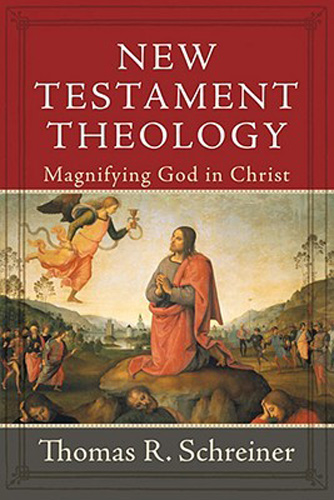
New Testament Theology: Magnifying God in Christ
In this substantial volume, Thomas Schreiner takes up the study of New Testament theology, looking for the themes that emerge from a detailed reading of the whole rather...
Downloads
About BiblicalTraining®
BiblicalTraining® wants every Christian to experience a deep and loving relationship with Jesus by understanding the life-changing truths of Scripture. To that end, we provide a high-quality Bible education at three academic levels taught by a wide range of distinguished professors, pastors, authors, and ministry leaders that moves from content to spiritual growth, all at no charge. We are a 501(c)(3) non-profit funded by gifts from our users. We currently have over 180 classes and seminars, 2,300 hours of instruction, registered users from every country in the world, and in the last two years 1.4 million people watched 257 terabytes of videos (11 million lectures).
Our goal is to provide a comprehensive biblical education governed by our Statement of Faith that leads people toward spiritual growth.