Survey of Biblical Theology - Lesson 23
James
Study James as the half-brother of Jesus, martyred in AD 62, who writes a practical letter stressing authentic faith shown through obedience, control of speech, wisdom, endurance in trials, and care for the poor. Observe his warnings against anger, quarrels, judgment, favoritism, and misuse of riches, while affirming God’s unchanging goodness. James teaches that faith without works is dead, showing that true faith produces action, harmonizing with Paul’s emphasis on salvation by faith that results in fruit.

I. Background
A. Half-brother of Jesus, leader in Jerusalem, martyred AD 62
II. Purpose
A. Practical call to authentic Christian life
B. Emphasis on obedience & perseverance
III. Key Exhortations
A. Control anger, be doers of the word
B. Pure, loving speech
C. Quarrels from coveting; judge with charity
IV. Trials & Wisdom
A. Trials produce maturity & joy
B. God gives wisdom generously
V. Rich & Poor
A. Care for poor, widows, orphans
B. Warning against favoritism toward rich oppressors
VI. God’s Goodness
A. Trials not temptations from God
B. Every good gift from unchanging Father
VII. Faith & Works
A. Faith without works is dead
B. Examples: Abraham, Rahab
C. True faith always produces works
VIII. Imperfection
A. All stumble, especially in speech
B. Works show direction, not perfection
IX. Suffering
A. Painful but used by God for growth
B. Comfort equips believers to help others
So, now we come to the letter of James. This James, by the way, is James the half-brother of Jesus. He plays a big role in the New Testament.
He's the final voice at that Jerusalem Council in Acts 15. In Galatians 2, when Paul brings Titus down with Barnabas to see if he must be circumcised, it's Peter and this James and John who help resolve that issue. He was actually martyred in AD 62.
He was put to death by the Jews for his faith in Christ. Incidentally, he was not a believer in Jesus during his ministry. We see that, for example, in John chapter 7. But Jesus appeared to him, 1 Corinthians 15.
He had a resurrection appearance. That helps someone believe, doesn't it? So, yeah, James came to faith and his ministry, his whole life was among the Jews and basically around Jerusalem. So, this letter was probably written, we don't know the exact destination, but probably somewhere in Israel or near it.
If we look at the theme of this course, what it means to belong to God's kingdom in the already not yet world in which we're living, James is really going to emphasize obedience, right? Faith and obedience. James is going to concentrate on that. You know, Luther didn't have a great love for James.
He called it an epistle of straw. One time he said, I kind of wish I could throw Jimmy into the fire. But at the end of the day, even Luther said, this is the word of God.
And we ought to recognize this letter is not the whole of James's theology. This is one letter he wrote. In that sense, there's nothing about Jesus' death or resurrection and the forgiveness of sins explicitly, but that doesn't mean James didn't believe in these things.
He's not writing in this letter everything he believes, but it's a word on target for his churches. So, what can we say about James? First, it's a very practical book. James is concerned.
We should be concerned about living an authentic Christian life. So, for example, he speaks about putting aside anger in our life, not letting anger rule us, not thinking that anger is a solution to solving human problems. Or he says that we must do the word.
We must put the word in practice. Now, it's easy for all of us to hear the word, but not to do what we hear. So, again, just the practicality of what James says shines forth.
And then in chapter 3, 1 through 12, we have a longer section on loving speech. This and other parts of James, it kind of reminds us of the book of Proverbs. Proverbs talks a lot about our speech being pure and right and good and edifying and not hateful and maligning and slanderous.
And so, James speaks about this as well. What does it mean to be a Christian that it shouldn't affect the way we talk? Again, very convicting and practical. Obviously, all these subjects, I'm just hitting them at lightning speed.
These are all worth, really the best way to hear these is through sermons, to hear them applied to our hearts. But we notice these as we're looking at them quickly theologically. James talks about the source of quarrels.
What is the source of our quarrels? And James locates it in idolatry, coveting. We've talked about this before. When we covet something, what we covet, that's what we desire most.
When we desire it so much and that desire is frustrated, then anger erupts. And James says there, well, don't you realize you're an adulteress? Of course, he picks up the Old Testament there. The whole language of adultery is in God's relationship with Israel.
Israel's like an unfaithful wife. So, that's one way of talking about sin. That's one way of talking about idolatry.
It's a kind of adultery. But here, it comes from the frustration of desires not being met. So, then he says, we war and fight.
How many churches have good doctrine, but this is what happens in the church. Quarrels and fighting and strife erupts. The church unravels because of these sort of things.
So, these are not minor things. It's not that hard to understand, but it's very important for our Christian life. And James goes on to say we must desist from judging one another.
Of course, he's not saying there should be no evaluation of one another's lives. There are passages about church discipline, right? But the inclination of our hearts towards others should be charity, understanding, forgiveness, overlooking faults and sins in others. You know, I'm just going to say this now.
James has a great, I have it later in my notes, but there's a great influence in James from the Jesus tradition. And, of course, that goes back to what Jesus himself said about judging. As Jesus said, we have to take the log out of our own eye.
And in the next matter as well, the matter of oaths. I mean, again, that goes back to the teaching of Jesus. That's a difficult thing to interpret.
I don't interpret it to say that it's wrong ever to take an oath. I think James and Jesus are concerned about truth telling and the frivolous use of oaths. You know, always saying, you know, now I'm telling the truth.
My grandchildren, they were at a certain stage in their life where it wasn't really an oath, but they'd always say, is this a pinky promise? And then we'd have to, then I knew that they were really serious about telling the truth. For James, prayer and perseverance and trials. James talks about what is life like for Christians and for these Christians.
It was hard. There are trials, difficulties, pressures, stresses. And James says, those aren't inherently enjoyable, but he says, consider it to be joy, count it to be a blessing, because God is using those difficult times in our lives to make us more like Christ, to give us a godly character.
As he says, we'll be perfect, complete, and lacking in nothing. So, God uses those hard times. And then James talks about wisdom.
He says, God delights to give wisdom to those who ask for it. You know, I think James especially has in mind, because this is right after the passage in chapter 1, verses 2 through 4 on trials, then he talks about wisdom in 1, 5 through 8. So, I think James has in mind particularly, we need wisdom, especially in our trials, in the hard times in our lives. And James emphasizes, God wants to give us that wisdom.
And then one of my favorite passages, who is wise, chapter 3, verses 13 through 18. James says, who is wise in understanding among you. Well, isn't it those of us who have PhDs, who have degrees? That's not what James says, right? We all know, there's a lot of people in our country who are highly educated.
I'm for education. It's good. It's great.
That's what this course is about, right? Learning, education is important, but we ought not to confuse it with wisdom. Who is wise in understanding, James says, prove it by the gentleness of your conduct, by your right conduct. Maybe we should look at that verse just quickly, how he ends it.
Who's the person who's wise? Well, not those who have bitter envy and selfish ambition. So you're going to be intellectually gifted, right? But that's what inhabits our hearts. And James says, wisdom is not fundamentally intellectual, but it's been pure, peace-loving, gentle, compliant, full of mercy and good fruits, unwavering and without pretense.
I think that's very remarkable. It's counterculture, even can be countercultural in evangelical circles, isn't it? Another interesting thing, I mean, it's hard to prove this, but in Paul, all those virtues are the fruit of the spirit, but in James, he relates them to wisdom. But there seems to be a relationship between wisdom and the spirit, because we can think of passages in the Old Testament that God fills people with wisdom, and in the New Testament, Ephesians 1, for example, God fills people with wisdom by his spirit.
So that's very interesting and helpful. And then James says a lot about riches and poverty. What do we think again? Oh, that's what Jesus talked a lot about, those things.
So I think we can say one of the trials that the believers were experiencing was poverty, financial constraints. And so part of what it means is to be concerned for the widow and the orphan at the end of chapter one. Remember in chapter two, the first 13 verses, he says, watch out that if the rich person comes to your synagogue, that's the word he uses, but your church, your assembly, that you pay attention to the rich person, and you don't even greet really the poor person, and you don't care where they sit.
So James has a concern for the ordinary person. He says, recognize that typically, now James is speaking in generalities, typically the rich don't belong to God. It's the rich who oppress you.
It's the rich who mistreat you. James is not saying everybody who's rich is evil, no, but in the situation he was in, believers were poor, and the rich were oppressing them. So he can just describe the rich virtually as unbelievers, but we ought not to conclude from that everybody who's rich is an unbeliever.
We remember epistles are written in specific situations. And then James emphasizes, we've already seen this first passage, but he emphasizes God's goodness. I just want to look at that very quickly, because when life is hard, we ask ourselves, is God good? And he says, ask for wisdom in your trials.
Ask God, because God gives to everyone generously and ungrudgingly. Our God loves to give. When do we doubt that? When times are difficult, James is saying.
So recognize God's unstinting generosity. And we see this again in chapter 1, verse 12. Again, he talks about the blessing of trials, but he goes on to say, if you're undergoing a trial, don't say I'm being tempted by God.
So when trials come, the temptation for us is to say, God doesn't love me. God's making my life miserable. He says, no, you're not being tempted by God.
Remember the nature of God, he says. God has no interest in evil. He's not tempted by evil, and he doesn't tempt anyone to sin.
Now, these words temptation and trial are the same word in Greek. So I think this is what's going on. God does give us trials to strengthen us, but he never is tempting us to sin, because he loves us.
And then James says, where does the lure and desire to sin come from? It comes from ourselves, right? It doesn't come from God. God doesn't tempt us to sin. That desire comes from ourselves.
But this is very important, isn't it? Because he says in verse 16, don't be deceived. Don't be deceived about what? Don't think that God is trying to make your life miserable. Instead, every good and perfect gift is from God.
God always is longing to bless his children. They come down from the Father of light. What are the lights there? I think they're the created world, the sun, the moon, and the stars.
We see God's goodness, right? You look up at the moon, or the sun, or the stars, the heavens. We see God's goodness. God's good.
He does not change like shifting shadows. He never changes. God is unalterably good.
His goodness never changes. His goodness is permanent. He's good yesterday, today, and forever.
He's stable. And then the greatest manifestation of his goodness is we're born again by his word, right? He's given us new life. We see his goodness in creation and the new creation.
So remember, James says, God's goodness. I talked about the Jesus tradition already, kind of as I went. But now we come to the biggest question in James, and that's his passage on justification.
So that's what bothered Luther about James. You know, how do we harmonize James's claim that we're justified by works with Paul, that we're justified by faith? I think Luther can be very funny. Luther said, if anyone can solve this, I will put a doctor's cap on him, and I will call him a fool.
I don't agree with that, but I do think it's funny. So Luther was a fascinating guy. You know, if you could hang out with Luther or Calvin for a night, we love Calvin's theology, but you'd definitely pick Luther, right? He'd be a lot more fun.
But anyway, if you love Calvin more, forgive me for saying that. But anyway, what does James say? He says, faith doesn't save if you claim, if you have a faith, 2.14, if you claim to have a faith, but there's no works with it, that faith doesn't save. A faith doesn't save that has no practical expression.
Of course, this fits with everything we've seen in James, right, that practical concern. And here he uses the example, a very well-known example. You see someone hungry or without clothes, sufficient clothing, and you say, oh, you know, be warm, be filled, be clothed, but you don't do anything.
So faith doesn't save if you just claim to have faith, but there's no results or consequences that show up in real life. Faith doesn't save that simply adheres to right doctrine. And here he brings up, right, the demons, demons believe, but they shudder, but they're not saved, right? And actually we saw in the gospel, right, the demons would confess that Jesus is the Son of God, but that mere confession does not save.
So I think that speaks to us today, doesn't it? Evangelism is a great thing, but a person, we can go out and evangelize and get someone to say they believe, sometimes very quickly, and that doesn't necessarily mean a person has become a Christian, right, because we have to have a right understanding of faith and what it means. So James also says faith without works is dead. He says that twice in 2.17 and 26 and then in 2.20 that it's useless.
That's a very strong word, right? Actually, he brings up Abraham and Rahab and he says Abraham was justified by works when he offered up Isaac in Genesis 22. And Rahab is justified by works in her protection of the spies who entered Jericho. So then James concludes justification isn't by faith alone.
So, you know, I want you to see that verse because it's just so striking for Protestants, at least. You see that a person is justified by works and not by faith alone. Protestants, you know, the five syllables of the Reformation emphasize we're justified by faith alone, and James specifically says we're not.
So how do we interpret this? So here we go. How do we work this out? Does James contradict Paul? Well, one answer, not my answer, but one answer is yes. So scholars like Peter Sturmacher, Martin Hengel in Germany, who are actually in German scholarship quite conservative in Germany, but here I think following kind of Luther's pattern, they say yeah, they do contradict.
They teach two different ways of salvation, they argue. Paul says we're saved by trusting. James says we're saved by doing and by working.
After all, they appeal to the same verse. Abraham believed God, Genesis 15, 6. They appeal to the same verse. Abraham believed God and it was counted to him as righteousness, but James uses it to say we're justified by works.
Paul uses that same verse to say we're justified by faith. So my comment here, I'm going to have more comments, but this is a big problem, isn't it? If scripture contradicts on salvation, on justification, how is that our authority any longer? I mean, what is the authoritative word if it contradicts on such a fundamental matter? We're faced then with deciding whether Paul or James, in the Lutheran tradition they always pick Paul, right? But we're faced with deciding whether Paul or James is authoritative, but then if we're making the decision, we're the authority. The scripture is no longer the authority.
We're the authority. We decide. And of course, our doctrine of scripture teaches that scripture is inspired, infallible, and without error.
So that's not my only answer, but I don't think it's wrong. I think it's right for us to think that this is hugely problematic to think there's a contradiction. So I'm going to reject that answer, but I think there are some good solutions out here.
So I'm going to give you a few solutions. As I usually do, I'll favor the last one. I talked about, when we talked about Hebrews, the free grace school.
So they come in, and James as well, and they argue, okay, when James say, does faith save you, and does this faith justify you, they say, this is not about salvation at all. This is not about eternal salvation. This is not about being right with God.
Instead, James is simply talking about a fruitful and happy life on earth. So that's a very interesting solution. It works, right? James and Paul don't contradict if James isn't even talking about salvation.
James is simply saying, do you want to flourish on earth? Do you want to live a happy life on earth while doing what God says? Well, I think we'd all agree it's helpful in our earthly lives to live in such a way, but I think this view is what's the word to use? Deeply problematic, right? Really hard to believe. No one argued this until the 20th century. That doesn't mean it's necessarily wrong, but it does mean it's probably wrong, right? First of all, what are the problems with this? The words save and justify are completely redefined.
Now to say that justify doesn't mean you're declared to be right before God and save doesn't mean spiritual salvation. I mean, what evidence do we have that he's completely redefining these words? I don't think we have that. Genesis 15.6 is completely redefined.
Abraham believed God and it was counted to him as righteousness, but now it just relates to a fruitful life on earth. So I think we can dismiss this view. Actually, not a lot of people hold this view, but it is out there.
So we're going to reject that view, but now we're going to come to the Roman Catholic solution. When I say Roman Catholic, I haven't said this before in the course, so I think it's important to say, you know, Roman Catholics don't all agree with Roman Catholic doctrine. So you can talk to an individual Roman Catholic.
I mean, I'm talking about Roman Catholic professors and priests and scholars that don't necessarily endorse in their writings and their speech what the church says in their doctrinal statements. Why do I say that? Just so you're not confused. If you say, oh, well, I talked to a Roman Catholic.
He didn't hold that view. Well, there's the official doctrine and then there's the individuals and you know, if you follow things, Roman Catholicism is actually incredibly diverse. You know, in some ways it has as many denominations under it as Protestants, but they're just all under one roof, so to speak.
So I'm speaking about the kinds of things you find in official Roman Catholic documents historically. So Roman Catholics have solved this problem, but they solve it with a different definition of works. So they say this, the works, the works in Paul are the ceremonial works of the Jewish law, circumcision, Sabbath, food laws.
So very interesting, very much like the New Perspective reading, right? When Paul says you're not justified by works, he means the ceremonial works. But works in James refers to works in general, right? Works of charity. So what's the solution? Paul and James are talking about different things.
So for a Roman Catholic, are we justified by works, as James says? Absolutely. Does Paul contradict? No, because Paul is not talking about moral works. Yes, Roman Catholics say, we are justified by our moral works.
We are declared to be righteous based on our works. That's what James says. When you understand Paul and that Paul's only criticizing the ceremonial law, when you understand that, then you see that James and Paul do not contradict.
So what can we say in reply to that? First of all, this solution is coherent. It makes sense. It solves the problem, doesn't it? So it is not a contradictory solution.
So that's why it's had a long history. It does make sense. The problem, and I don't have to revisit this, we talked about this earlier in the course, the problem is I don't think this understanding of how Paul uses the word works fits because we argued at some length, right? We did a lot of donkey work, actually.
We argued that works and Paul refer to the whole law, including the moral norms. So I think even though this is a coherent, consistent solution, it doesn't carry the day. So what is a better solution? So we recognize first that Paul and James are addressing different situations.
Epistles speak to situations in life. So Paul is addressing legalism, mainly in his letters, works righteousness, earning your salvation. James is addressing antinomianism, right? It doesn't matter what we do.
We believe and who cares after that what we do. So that's the first thing. We recognize the different situations.
We also must note that over against the free grace view, when Paul says, I mean when James says, let's look at the verse, James says, what good is it, my brothers and sisters, if someone claims to have faith but does not have works? Can such faith save him? He is talking about eschatological salvation. And so too here in 221, wasn't Abraham our father justified by works? Or you see that a person is justified by works in 224 of James and not by faith alone. That justification there has a salvific sense.
It means to be declared in the right before God. So I want to say both in James and Paul, justification refers to that declaration pronounced before the world by God on the last day. So that's what justification is.
God will declare to the world on the last day that those who belong to him, they're in the right. They're acquitted of their sins. They're not guilty.
However, that verdict has been announced in advance even now. We saw this in Paul, right? And it's now ours by faith. That end time verdict, that eschatological verdict, that end time declaration is ours even now.
So Paul says in Romans 5.1 we're justified by faith, doesn't he? So works, what does works refer to in James? It refers to good deeds as in Paul. When James says we're justified by works, he means we're justified by what we do, right? By our works, by our deeds. Again, I spent a lot of time on this when we talked about Paul, and the argument is, as I said, very simple.
What do works mean? The things we do. That's what it means. So what's the difference here? James and Paul don't mean a different thing by justification.
Some have argued that they have different sense in the word justification, as if in James it means proved righteous, and in Paul declared righteous. But I'm not arguing that. I'm arguing that the same meaning of justification of the verb justify means to declare to be in the right.
They don't have different understandings of the word works. The difference is, and this is absolutely vital, is that James criticizes a wrong notion of faith. So notice in 214, if someone claims to have faith, but does not have works, can such faith save him? Can this kind of faith save him, the faith there with an article, the faith he just talked about, the hapistus faith, the faith that he just mentioned, can the faith, can faith that doesn't have any works, can that kind of faith save? And the answer is, and I'm not saying really anything new here in terms of how Protestants receive this, faith doesn't save that involves mere intellectual assent to doctrines, right? Mere agreement doesn't save.
So I'm going to talk about my testimony a little bit later if you want to watch that, but when I grew up as a Roman Catholic, if someone asked me, no one ever did that I can remember, but do you believe Jesus died for your sins, I would have said, yeah, I guess I do. That's what we believe, right? I believe that, but it didn't mean anything to me. It was like, you know, do you believe that London's in England? No.
As a fact, I believe it, but that doesn't necessarily have any meaning for my life. So what I'm arguing is James does not reject the idea that we're saved even by faith alone. He's saying this kind of faith doesn't save us.
True faith for James, as I say in the notes, is a wholehearted embrace of what God has done for us in Christ just as in Paul. So my answer is James is not rejecting the idea of justification by faith alone, but a wrong notion of faith, and this is very practical, right, because there are many people out there who make professions and confessions, but it isn't that true faith, and we have to teach this well. True faith then, true faith then always has the fruit of works, right? True faith always manifests itself in works.
Faith is completed by works, but works are not the basis, but the evidence and the fruit of our faith, aren't they? Our works attest to the reality of our faith. So, you know, we're not in a room together, but imagine we're all in a room together right now, and then I say to you, I planted a bomb in this room, and that bomb is going to go off in 75 seconds. So if you have faith in what I said, you want to live, you have the physical ability to leave the room, you'll leave.
If you don't leave, you have no faith in what I said. You don't believe what I said. That's a very common, everyday illustration.
It's obvious, isn't it? That true faith, real trust leads to certain actions, and that's what James is saying. And you know, Paul says this too. He talks about works, right? Paul can say in Galatians 5.21, those who practice the works of the flesh will not inherit the kingdom of God.
So Paul can say works are necessary, but I want to say they're a necessary fruit of faith. So the last thing I want to say here is works are not the basis of our justification, but they're the fruit of our faith, the evidence of our faith. You know, even Luther would say this, we're good trees now.
That's the teaching of Jesus, right? Good trees have good fruit. Not perfect fruit. Oh, no, there is one more thing I want to say.
I lied. I have one more thing. This is very interesting to me, because don't interpret what James says perfectionistically, because two verses later, after this passage, when he's talking about the tongue, he says, for we all stumble in many ways.
Now that Greek word there is patial. By stumble, he means sin. And by the way, I can prove that to you.
In 2.10, he says, whoever keeps the entire law and stumbles at one point is guilty of breaking the law. And he uses that same word patial. So if you keep the entire law, but sin at one point, you're a lawbreaker, right? And then he says in 3.2, we all stumble in many ways.
So I want to make a couple of comments about this verse. James does not say you all stumble in many ways, you bad people, right? No, he includes himself. We all, and there's no exception.
We all stumble. And notice this, in many ways, he's talking about the tongue, right? I mean, our mouths, we sin with our mouths. Probably most of us, maybe if you're a quieter person, not as much, but I'm a louder person.
Every day, I say something like, what did I just say? So we all stumble in many ways. So what's my point? Why am I bringing this up? Justification of my works isn't perfection, is it? I mean, James isn't saying then you're all going to hell. He's just saying we need to live godly lives, but obviously we don't live perfect lives.
So I like this verse to kind of help us see, well, our justification by works is, as I've said earlier in this course, it's a new direction, a new orientation, a new pattern, not perfection. And our works can't be the basis because our works are very imperfect. So that's the last thing I want to say.
I have a few follow-up questions, and one has to do with something you mentioned in passing about justification in James, and you called it proved righteousness. And I think that's the position that says that the word group behind justify is broad enough so that, again, as I understand it, Paul is talking about how you actually are justified, and James is picking up on another part of the meaning of the same word that it means to show what happened. Is that an accurate definition of this proved righteousness, and why don't you go with that position? Yes, yes, and many luminaries hold this view.
Calvin, that's R.C. Sproul. I mean, many others hold this view, and, of course, I think it's possible. I'd refer students to Doug Mu's commentary on James.
I don't have time to get into this in detail, but I think Doug shows, yeah, that's possible, but less likely, it's more likely that Paul and James are using the word with the same meaning of declared to be righteous, but there is disagreement on that. I'm the first to say that other reading is possible. The nice thing about this debate is we end up at the same place.
You know, we get there a different way. Yeah, I think that other view is a possible view, but I always say to my students, hey, theologically, because they say, wow, you're not agreeing with Sproul and Calvin, what's going on here? But I'm saying, yeah, I don't agree with them specifically. Mu doesn't agree with them specifically, but both Doug and me, we end up saying the same thing a different way theologically.
Right, yeah, it's a fine point, same conclusion. The second question has to do with the rich, and I think you were right to qualify that not all rich people are evil, but in James' church, for lack of a better word, in his historical situation, some of those statements against the rich are, you know, weeping, mourning, misery, and it's really hard in some of the rich passages to see them as possible Christians. So, in his historical setting, when we read these different passages, do you think it's possible that they are Christians, or do they have to be non-Christians who are going to the church for whatever reason? Yeah.
So, I think, and I'll bring up Doug Mu again, Doug and I differ on this, I think James always uses the word rich of non-Christians. But Doug, again, read Doug for the other view, and one of the verses where I see that is he says, chapter one, verse nine, let the brother of humble circumstances, which is the poor, right, boast in his exaltation, let the rich boast in his humiliation. I take that as very sarcastic, because he will pass away like a flower in the field.
I interpret that verse to be saying, not that his riches will pass away, many slide over and they say, but he will pass away, for the sun rises, here's the illustration, right, hot Middle Eastern climate, the sun rises and together with the scorching wind dries up the grass, right, the grass withers, the flower falls off, and its beautiful appearance perishes in the same way the rich person will wither away. So, to me, I don't think James has in mind, oh, everybody who's rich is going towards the judgment. But I think in his community, he doesn't know any rich that are saved.
So, that's why I think his language is so strong. But yeah, when we look at the whole Bible, riches, right, riches can be used for God's sake and are a blessing. All right.
My third follow-up is one of the hardest things in James, and I know you can't cover everything, but it's in chapter one on suffering. And for those who know you, know that your wife had a horrible accident, almost died, bike accident. And so, this has got to be something that's very real to you.
And I don't know if you want to talk about Diane's accident, but could you say a little more about the role of suffering in the life of a Christian? Yeah, yeah, well, yeah, I mean, if I start out with what happened to Diane, that was August 17th, 2012. She had a bike accident and was near, near death. I mean, you know, the first moment I saw her, her head was almost twice the size.
You know, your head swells up. I mean, I just burst into tears. That was, yeah, that was a very, very difficult time in so many ways.
It was a very desolate feeling coming home that first night, and I thought, I may never see her in our bedroom again, right? So, when I walked in there, I thought, you know, there's, and many have experienced this. However, at least in my personal experience, she got a little better every day. So, that was very encouraging.
Many believers came and helped us. So, in some ways, yes, I suffered, but, you know, others have experienced people get worse every day and die, right? She got a little better every day. So, that was so encouraging, and God was very kind in doing that, but I would just say in suffering, you know, I mean, what does the Book of Job say? There's no easy answers, right? There's no formulas when we suffer, but people can go through very dark and bleak times in their heart and their souls, and if we're ministering to people like that, if they're angry and so forth and so on, we need to be understanding and to listen to what people are going through.
But also, I want to say God draws near, and He comforts, and He strengthens, and He sanctifies us, and He makes us more like Jesus. So, I'm going to use an example of a person that you know, Bill, Tim Bailey, who wrote for World Magazine along with your dad, not World Magazine, Eternity Magazine. That was the precursor to World, but Tim Bailey, he came and spoke at our chapel when I was a seminary student, and he lost three children, one in infancy, one at about five, one a teenager.
I mean, I can't even imagine that. I can't imagine what that would do to a person, but God, the suffering had to be enormous, but God used that to make Tim, I think, soft and gentle, and especially, God used that so he had a ministry, especially to parents who'd lost children. So, yeah, suffering's hard.
It's difficult, but on the other side of it, not, when I say the other side of it, I don't think you ever get over something like that, right? But there is a healing that takes place, and then, as Paul says in 2 Corinthians, we can comfort others with the comfort we ourselves have received from God, and I really saw that in Tim's life. But if I can mention a book, I like Don Carson's book, How Long, O Lord? I think that's a very helpful book on this. I think it's helpful to read A Grief Observed by C.S. Lewis because it's just kind of the raw pain of what he experienced when his wife died, and I'm sure there's many other things I'm not thinking of.
The other book that we found helpful when we lost two of our daughters was Jerry's sister's book, a professor at Whitworth College who's a drunk driver, ran into him, killed mom, wife, and a daughter. And so, yeah, there are some good books out there. I think what people struggle with, though, with James is you're supposed to count it all joy, and you're in the midst of this incredible pain.
I think probably that night you came home without Diane, you were not rejoicing. No, no, no. But is the idea that in the long term, it's called, the sister's book is called A Grace Disguised, is the idea that God doesn't want us to count it all joy in the midst of it, but ultimately that's where we're supposed to go? Yeah, I guess I would take it as it's not intrinsically joyful, right? It's not, I've got cancer, praise God, you know? I don't think that's what it means.
I think he means, I think it means something like even in the hardest times, we say to ourselves, this is terrible, this is horrible, this is extremely painful, but God still loves me and means it for my good. Something like that. I don't think he's saying it's inherently good, because it isn't.
It's evil. It's bad. In that sense, we ought not to rejoice in it.
- Explore how biblical theology developed through figures from Irenaeus to Bultmann, learning how debates over history, reason, and revelation shaped its methods, authority, and lasting influence on theology and the church.0% Complete
- Study how biblical theology traces God’s revelation historically while systematic theology organizes doctrine, seeing how both disciplines work together with presuppositions of faith to interpret Scripture as God’s authoritative Word.0% Complete
- Creation, covenant, and conflict reveal humanity’s sin and God’s judgment, showing the garden as sanctuary, Adam’s priest-king role, the serpent’s opposition, and God’s plan to bring salvation and victory through His promises.0% Complete
- God’s covenant with Abraham promises land, offspring, and blessing to all nations, showing both unconditional divine fulfillment and conditional obedience, while God preserves His plan through threats and fulfills His promises in surprising ways.0% Complete
- The Exodus shows God redeeming Israel by grace, giving the law and sacrifices, and dwelling in the tabernacle, all pointing to Christ’s final sacrifice and God’s presence with His people in the new creation.0% Complete
- Watch Israel’s unbelief, partial fulfillment of God’s promises, the cycle of sin without a king, and the rise of David as God’s chosen ruler who anticipates the true king to lead His people.0% Complete
- God’s covenant with David points to an eternal King, Israel’s failure reveals the need for renewal, and the prophets promise a new covenant, Exodus, creation, and David—all fulfilled in Jesus, the true King bringing worldwide blessing.0% Complete
- Israel’s identity forms through unfulfilled promises, foreign domination, Jewish factions, and rising messianic hopes, which fuel anticipation of a Messiah and set the stage for the New Testament.0% Complete
- Matthew shows Jesus as Emmanuel, true Israel, Son of David, and Son of God, fulfilling promises through a new Exodus, atonement, and divine authority, so that all God’s covenants find their fulfillment in him.0% Complete
- Dr. Schreiner reveals Jesus as the divine Son, true Israel, greater Moses, and eternal King who fulfills God’s promises, reveals the kingdom in hidden yet present power, and builds his church as the new people of God drawn from all nations.0% Complete
- Mark proclaims Jesus as the Son of God and true King whose suffering secures forgiveness, while discipleship means following his example of humility and obedience despite weakness.0% Complete
- John portrays Jesus as the eternal Logos and Son whose I AM sayings and signs grant believers the present possession of eternal life through faith.0% Complete
- John presents Jesus’ work as his lifting up and glorification, fulfilling Scripture. Life comes through true believing—receiving, coming, hearing, drinking, eating, entering, abiding—while false belief, darkness, and human glory block it.0% Complete
- Dr. Schreiner highlights divine sovereignty: the Father gives believers to the Son, the Spirit gives life, and all who truly believe are preserved, and glorifies Christ, showing Jesus’ death and resurrection as God’s sovereign plan.0% Complete
- In John’s epistles, he teaches that assurance rests on the apostolic witness, confession of sin, obedience, love, and doctrinal truth, while false teachers deny Christ.0% Complete
- Acts shows God’s plan through Christ and the Spirit, fulfilling covenant promises, spreading the gospel, empowering witnesses, and forming the church as restored Israel united in salvation.0% Complete
- Paul’s “already but not yet” theology shows God’s promises fulfilled in Christ yet awaiting completion, shaping Christian life, doctrine, and practice in areas like adoption, redemption, sanctification, and practical living.0% Complete
- In this lesson, Paul shows that Spirit-led believers still need commands, which guide holiness and love without legalism, uniting word and Spirit to shape Christian life, protect love from distortion, and call for discernment in obedience.0% Complete
- Learn how the New Perspective reinterprets Judaism and Paul, how Sanders and Stendhal shifted focus from justification to covenant and inclusion, and how Paul’s own words confirm his Damascus road conversion.0% Complete
- Paul uses “works of the law” to mean all deeds of the law, not just Jewish boundary markers, and teaches that justification comes by faith in Christ because human disobedience makes works powerless to save.0% Complete
- Learn that justification is God’s declarative act of counting believers righteous through Christ’s atonement, not human works, and see why imputation, not transformation, secures assurance and preserves the heart of the gospel.0% Complete
- Hebrews teach the Son as God’s final revelation and superior Melchizedekian priest whose one sacrifice fulfills typological promise.0% Complete
- James emphasizes authentic faith that produces obedience, wisdom, and care for others, showing that faith without works is dead while affirming God’s goodness and calling believers to endurance, humility, and practical godliness.0% Complete
- In 1 Peter, see how believers as exiles endure suffering with hope, live as God’s priestly people, rest in Christ’s atoning work and victory, and anticipate the inheritance of the new creation as fulfillment of God’s promises.0% Complete
- Revelation’s symbolism portrays Satan, the beast, false religion, and Babylon while teaching to persevere in suffering, trust God’s sovereignty, and hope in Christ’s victory and the new creation.0% Complete
- Dr. Schreiner teaches how Revelation portrays Christ’s full deity, the Lamb’s redeeming work, with victory grounded in the cross and fellowship with God as the ultimate goal.0% Complete
Lessons
- Explore how biblical theology developed through figures from Irenaeus to Bultmann, learning how debates over history, reason, and revelation shaped its methods, authority, and lasting influence on theology and the church.0% Complete
- Study how biblical theology traces God’s revelation historically while systematic theology organizes doctrine, seeing how both disciplines work together with presuppositions of faith to interpret Scripture as God’s authoritative Word.0% Complete
- Creation, covenant, and conflict reveal humanity’s sin and God’s judgment, showing the garden as sanctuary, Adam’s priest-king role, the serpent’s opposition, and God’s plan to bring salvation and victory through His promises.0% Complete
- God’s covenant with Abraham promises land, offspring, and blessing to all nations, showing both unconditional divine fulfillment and conditional obedience, while God preserves His plan through threats and fulfills His promises in surprising ways.0% Complete
- The Exodus shows God redeeming Israel by grace, giving the law and sacrifices, and dwelling in the tabernacle, all pointing to Christ’s final sacrifice and God’s presence with His people in the new creation.0% Complete
- Watch Israel’s unbelief, partial fulfillment of God’s promises, the cycle of sin without a king, and the rise of David as God’s chosen ruler who anticipates the true king to lead His people.0% Complete
- God’s covenant with David points to an eternal King, Israel’s failure reveals the need for renewal, and the prophets promise a new covenant, Exodus, creation, and David—all fulfilled in Jesus, the true King bringing worldwide blessing.0% Complete
- Israel’s identity forms through unfulfilled promises, foreign domination, Jewish factions, and rising messianic hopes, which fuel anticipation of a Messiah and set the stage for the New Testament.0% Complete
- Matthew shows Jesus as Emmanuel, true Israel, Son of David, and Son of God, fulfilling promises through a new Exodus, atonement, and divine authority, so that all God’s covenants find their fulfillment in him.0% Complete
- Dr. Schreiner reveals Jesus as the divine Son, true Israel, greater Moses, and eternal King who fulfills God’s promises, reveals the kingdom in hidden yet present power, and builds his church as the new people of God drawn from all nations.0% Complete
- Mark proclaims Jesus as the Son of God and true King whose suffering secures forgiveness, while discipleship means following his example of humility and obedience despite weakness.0% Complete
- John portrays Jesus as the eternal Logos and Son whose I AM sayings and signs grant believers the present possession of eternal life through faith.0% Complete
- John presents Jesus’ work as his lifting up and glorification, fulfilling Scripture. Life comes through true believing—receiving, coming, hearing, drinking, eating, entering, abiding—while false belief, darkness, and human glory block it.0% Complete
- Dr. Schreiner highlights divine sovereignty: the Father gives believers to the Son, the Spirit gives life, and all who truly believe are preserved, and glorifies Christ, showing Jesus’ death and resurrection as God’s sovereign plan.0% Complete
- In John’s epistles, he teaches that assurance rests on the apostolic witness, confession of sin, obedience, love, and doctrinal truth, while false teachers deny Christ.0% Complete
- Acts shows God’s plan through Christ and the Spirit, fulfilling covenant promises, spreading the gospel, empowering witnesses, and forming the church as restored Israel united in salvation.0% Complete
- Paul’s “already but not yet” theology shows God’s promises fulfilled in Christ yet awaiting completion, shaping Christian life, doctrine, and practice in areas like adoption, redemption, sanctification, and practical living.0% Complete
- In this lesson, Paul shows that Spirit-led believers still need commands, which guide holiness and love without legalism, uniting word and Spirit to shape Christian life, protect love from distortion, and call for discernment in obedience.0% Complete
- Learn how the New Perspective reinterprets Judaism and Paul, how Sanders and Stendhal shifted focus from justification to covenant and inclusion, and how Paul’s own words confirm his Damascus road conversion.0% Complete
- Paul uses “works of the law” to mean all deeds of the law, not just Jewish boundary markers, and teaches that justification comes by faith in Christ because human disobedience makes works powerless to save.0% Complete
- Learn that justification is God’s declarative act of counting believers righteous through Christ’s atonement, not human works, and see why imputation, not transformation, secures assurance and preserves the heart of the gospel.0% Complete
- Hebrews teach the Son as God’s final revelation and superior Melchizedekian priest whose one sacrifice fulfills typological promise.0% Complete
- James emphasizes authentic faith that produces obedience, wisdom, and care for others, showing that faith without works is dead while affirming God’s goodness and calling believers to endurance, humility, and practical godliness.0% Complete
- In 1 Peter, see how believers as exiles endure suffering with hope, live as God’s priestly people, rest in Christ’s atoning work and victory, and anticipate the inheritance of the new creation as fulfillment of God’s promises.0% Complete
- Revelation’s symbolism portrays Satan, the beast, false religion, and Babylon while teaching to persevere in suffering, trust God’s sovereignty, and hope in Christ’s victory and the new creation.0% Complete
- Dr. Schreiner teaches how Revelation portrays Christ’s full deity, the Lamb’s redeeming work, with victory grounded in the cross and fellowship with God as the ultimate goal.0% Complete
Class Resources
Recommended Books
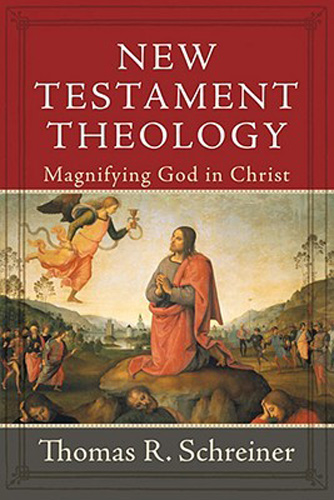
New Testament Theology: Magnifying God in Christ
In this substantial volume, Thomas Schreiner takes up the study of New Testament theology, looking for the themes that emerge from a detailed reading of the whole rather...
Downloads
About BiblicalTraining®
BiblicalTraining® wants every Christian to experience a deep and loving relationship with Jesus by understanding the life-changing truths of Scripture. To that end, we provide a high-quality Bible education at three academic levels taught by a wide range of distinguished professors, pastors, authors, and ministry leaders that moves from content to spiritual growth, all at no charge. We are a 501(c)(3) non-profit funded by gifts from our users. We currently have over 180 classes and seminars, 2,300 hours of instruction, registered users from every country in the world, and in the last two years 1.4 million people watched 257 terabytes of videos (11 million lectures).
Our goal is to provide a comprehensive biblical education governed by our Statement of Faith that leads people toward spiritual growth.