Survey of Biblical Theology - Lesson 4
Covenant With Abraham
Discover how God establishes His covenant with Abraham, promising land, offspring, and blessing to all nations. Abraham’s faith and obedience mark him as a covenant partner, though he still needs atonement. God’s promise is sure yet involves obedience, symbolized in circumcision. Despite threats from barrenness, rulers, Ishmael, Esau, and pagan compromise, God preserves His plan. Through Isaac, Jacob, and Joseph, His promises unfold slowly and surprisingly, pointing to Christ’s worldwide blessing.

I. Abraham as a New Beginning
A. World’s sin & serpent’s triumph
B. Abraham as new Adam with God’s promise
II. Covenant Promises
A. Land: from Canaan to whole world
B. Offspring: Isaac to kings and Judah
C. Universal blessing to all nations
III. Covenant Nature
A. Unconditional in God’s fulfillment
B. Conditional on faith & obedience
C. Circumcision as covenant sign
IV. Faith & Obedience
A. Faith credited as righteousness
B. Obedience in journey & Isaac’s sacrifice
V. Threats to the Promise
A. Sarah in harems
B. Eleazar or Ishmael as heirs
C. Barrenness & delay
VI. Continuation Through Isaac & Jacob
A. Covenant reaffirmed
B. Obstacles: spouses, threats, intermarriage
VII. Theological Lessons
A. God fulfills promises slowly, surprisingly
B. Faith & obedience mark covenant partners
VIII. Joseph & Preservation
A. Multiplication in Egypt
B. Land unfulfilled, battle ongoing
So now we come to the covenant with Abraham. We've seen that the world is descending into sin. In the cosmic battle, the offspring of the serpent are clearly triumphant, but in the covenant with Abraham, God will reclaim the world through one man, through Abraham.
And in that sense, Abraham becomes a new Adam. God originally, his plan was to manifest his lordship through Adam and Eve. I'm not saying God didn't know what would happen.
Don't interpret it that way, but God had a plan, a command for them, and they violated that plan. But now he starts over with, so to speak, with one man. Again, when I say starts over, I don't mean plan B or anything like that.
Everything was planned from the beginning. But Abraham, by faith, would receive what the human beings grasped after Babel. They wanted to have a great name.
But notice, if you read Genesis 12, God promises, one of his promises in verse two, he says, I will make your name great. So greatness is not something that's wrong, but it's to be received by God himself, instead of grasping after it, as they did at the Tower of Babel. So through Abraham, the curses that came on to human beings, those curses that began in Genesis three, they're reversed through the blessings of Abraham.
Notice in the text that God promises over and over again, he is going to bless Abraham. And so a covenant is made with Abraham. We see that in Genesis 12, one through three.
Actually, this covenant is repeated over and over again in Genesis and in the Pentateuch. But the three elements of the covenant we want to emphasize here are the land, and the land that Abraham has promised is Canaan. But ultimately, in light of the whole biblical story, that land is the whole world.
Romans chapter four, verse 13. It's very interesting here because it says there that Abraham would inherit the world. So yeah, the promise begins with Canaan, but it's going to zoom out.
So you see, right, Adam and Eve were to rule the garden for God. Now you see God's people, that's Abraham and his offspring, are going to have Canaan initially, but ultimately God's going to reclaim the whole world. And there's going to be what offspring or seed children, and that's Isaac, right? But ultimately, kings are going to come from Abraham.
And we see that in Genesis 17, verse six, it says, kings will come from you. Again, in verse 16, that promise that there'll be a king is reiterated in Genesis 35, verse 11. And then in Genesis 49, we're told there that the king will come.
We're getting a little bit ahead but the king will come from the tribe of Judah. So the offspring, yes, that's Isaac, but ultimately there'll be a king from that offspring. And then that blessing is universal.
All nations will be blessed through you. So yes, God begins with one man, but it isn't restricted to Abraham or even Israel. It's intended to be for the whole world.
Actually, that's a great missionary text, isn't it? That God's promise is for the salvation of the entire world. That covenant God makes with Abraham is unconditional in one sense. God passes through the animals alone.
You have these cut up animals. God passes through them. Let's just look at that in Genesis 15 for a moment.
Abraham had cut up the animals, set them apart from each other. The sun was set. It was dark.
A smoking fire pot and a flaming torch appeared and passed between the divided animals. The smoking fire pot and flaming torch fire often represents God. That represents God himself and God only passing through the divided animals, signifying that the covenant will be fulfilled by God himself.
In fact, it says if God swore an oath by himself, a covenant oath, there'd be a covenant curse on God himself if he did not fulfill the covenant. And we see that custom come up again in Jeremiah 34, where the rich in Israel had freed their slaves, but then they went back on their promise. But what's important to us is they disobeyed God's covenant, not keeping the terms of the covenant.
Verse 18 of Jeremiah 34, I will treat them like the calf they cut in two in order to pass between the pieces, the officials of Judah and Jerusalem, the court officials, the priests, and all the people of the land who passed between the pieces of the calf. All these I will hand over to their enemies, to those who intend to take their life. Their corpses will become food for the birds of the sky and for the wild animals of the land.
So cutting up the pieces of the animal signifies in a covenant that what happened to the animals will happen to you if you don't fulfill the covenant obligations. And of course, in this case, Israel did not fulfill the covenant obligations. So God says he will punish them.
But in Genesis 15, God is a smoking fire pot and a flaming torch. God himself passes through the animals alone, signifying that the covenant will be fulfilled on the basis of his promise alone. So in that sense, the covenant is unconditional.
It will certainly be fulfilled. In another sense, however, so ultimately the covenant is unconditional. It will be fulfilled.
God's kingdom will come. God will triumph. But the covenant is conditional in another sense because Abraham obeys God and travels to the land of promise.
T. Desmond Alexander, I mentioned this book before, From Paradise to Promised Land. Let me say, by the way, that's a great book on biblical theology. If you haven't read it, From Paradise to Promised Land by T. Desmond Alexander.
That's a study of the Pentateuch from a biblical theological point of view. Actually, T. Desmond Alexander writes a lot of books on biblical theology. They're all worth getting.
But this is one of my favorites. Alexander says, first, the fulfillment of the divine promise is conditional upon Abraham's obedience. I think that's right.
The covenant is ultimately unconditional, but Abraham's obedience was necessary for the covenant to be fulfilled. We read in Genesis 15, 6, Abraham believed the Lord and it was credited to him or counted him as righteousness. Abraham was not right with God based on his obedience, but his faith.
That's what this verse is saying. Paul does much with that. Chapter 15 confirms, but does not commence, Abraham's faith.
I think that's important. Abraham must have been believing in Genesis 12 when he travels and obeys and goes to the land of promise. I don't think Genesis 15, 6 is saying this is the first time Abraham believed.
I think what Genesis 15, 6 is saying is that Abraham's obedience flowed from his faith. So it shows that his faith is why he was right with God. That's what's important there.
Abraham also in chapter 17 receives a covenant of circumcision. I do not understand that to be a new covenant, contrary to Paul Williamson. Paul Williamson has written a book on the covenants.
He argues that's a different covenant. I don't think it's a different covenant. I think it's an elaboration of the same covenant he's already been given, but clearly the covenant of circumcision is a conditional covenant.
You have to be circumcised to be a member of the covenant. Genesis 17 is very clear. If you're not circumcised, you're cut off.
I think there's an intentional pun there. You're cut off from the covenant if you're not circumcised. So clearly it's conditional.
It's in this chapter, by the way, that Abraham's name is changed from Abram to Abraham, interestingly enough. So there he's called what the father of many nations. And then we pick up what the universal blessing that's promised Abraham, don't we? That now all nations are going to be included.
So why circumcision? That's a very strange, strange, right? Isn't it? Of all things. Why the cutting of the male sexual organ, right? That seems strange and even weird. Well, I would argue, what's the context? The context is the promise that Abraham will have a lot of children.
What is God saying to Abraham? The children do not come from your own virility. He's reminded through the cutting of his own sexual organ, look, children come from me, from my grace, ultimately. It's not, Abraham, it's not your virility at the end of the day that's bringing children.
It's me. Probably circumcision also, the cutting off symbolizes, we think of some passages in the New Testament Colossians 2. Circumcision is related to the removal of the old person. So it probably also symbolizes dedication to God, fruitfulness.
So, you know, we should always ask why circumcision? You all know this, right? But just to remind you, when we read the Bible, we need to ask questions. We can't answer every question, but I think we can know why this happened. Blessing comes because Abraham obeys.
So I'm still on the point that the covenant is conditional in one sense, but this is very interesting. So we read Abraham is to become a great and powerful nation. All the nations of the earth will be blessed through him.
So there's that universal blessing, right? For I've chosen him so that he will command his children in his house after him to keep the way of the Lord by doing what is just and right. This is how the Lord will fulfill to Abraham what he promised to him. What's the this go back to? By his obeying.
The promise will be fulfilled through an obedient covenant people. Yes, the covenant is unconditional in one sense, but in another sense, you've got to be a faithful covenant partner. And that's what Abraham was.
Now he wasn't perfect, right? We're not saying that, but he was obedient. God viewed him as obedient. So Genesis 26, four.
Now this is addressed to Isaac. He says to Isaac, I will make your offspring as numerous as the stars of the sky. So right.
The covenant promise is now confirmed to Isaac. You're going to have children, right? What are the elements of the covenant? Land offspring, universal blessing. Here's the children.
I will give your offspring all these lands. Is that right? So first the children offspring, then the lands and the nations of the earth will be blessed by your offspring, universal blessing. But isn't this interesting? Why? Because Abraham listened to me and kept my mandate, my commands, my statutes, and my instructions.
I'm going to fulfill this covenant because Abraham was an obedient covenant partner. Not a perfect covenant partner, but obedient. So there's a sense in which anybody who participates in that covenant, who receives that covenant was obedient.
We also see Abraham's obedience in the sacrifice of Isaac. So we go, we go there, a very fascinating passage. Verse 16, by myself, I have sworn, this is the Lord's declaration, because you've done this, because, and have not withheld your only son, withheld your only son, obedience, right? I will indeed bless you and make your offspring as numerous as the stars of the sky and the sand on the seashore.
There's the element, the first element of the promise, offspring, right? Your offspring will possess the city gates of their enemies. There's land and all the nations of the earth will be blessed by your offspring. There's the universal blessing.
Why? Because you've obeyed my command. So Abraham participates in the blessing because of his obedience. Now, I don't want to be overly simplistic because Abraham needed atonement, didn't he? And we see in this very story, God will provide, Genesis 22, 8, God himself will provide the lamb for the burnt offering, my son.
And that's repeated in verse 14, the Lord will provide, that's the lamb. So today it is said, it will be provided on the Lord's mountain. So yes, Abraham was obedient, but he's still, he's not perfect, right? He needs forgiveness of sins, but he is also a faithful covenant partner.
So I say, does Abraham, as a new Adam, have the same requirement as Adam? Yes, to obey, but now as a sinner, because before Adam sinned, Adam did not need atonement. Now, yes, Abraham was called upon to obey, but he also needs atonement for his sin. So grace, so we're just thinking biblical theology, grace plays a unique role in faith, in Abraham's case, in contrast to Adam in the garden and Christ's obedience, right? Christ did not need God's grace because he always obeyed.
Adam did not need God's grace in the sense of forgiveness of sins before he sinned, but yes, Abraham believes and obeys, but he also needs atonement for his sin. Does the emphasis upon obedience in Abraham's life rule out faith? No. I think this is fascinating.
Genesis 12, so let's just look at this really quickly. Genesis 12, the Lord said to Abraham, go from your land to your relatives, your father's house, I will show you, we've already looked at the promise. Abraham went because the Lord had told him, but Hebrews tells us by faith Abraham obeyed when he was called to go out to a place that he was to receive as his inheritance.
So I love this, the canonical read of what happened in Genesis 12, and the canonical read is Abraham's obedience was motivated by what? His faith. Why did he go to the land of Canaan? Because he trusted God. He wasn't working for God, right? He was trusting in God.
That's very different. I told you I love T. Desmond Alexander's book, but I don't like what he says here. Just unfortunately, Alexander speaks of Abraham as meriting the promises by his obedience.
I don't like that word merit. I hope you don't like it either. Meriting? I don't think meriting is the right word.
He's a sinner, right? I think we can say he received the promise by faith that led to obedience. Yes, his obedience was important, but to merit? I think that strays from the story. I'm very surprised that Alexander describes it in terms of meriting, especially given the history of theology.
This is not being said in a vacuum. So that surprises me. So the covenant is unconditional ultimately, but what I'm saying is any particular covenant partner enters into that covenant by faith and obedience.
If they don't have faith and obedience, they're not part of the covenant. Now we have the battle of the offspring, right? So the seed of the woman will win, but there's a great battle and the offspring are preserved and the promise is threatened when Sarah is sold in the harems, which is twice, Genesis 12 and Genesis 20. Now I do think Abraham should not have done that, and I think Abraham sinned, but actually Genesis does not emphasize Abraham's sin remarkably, although he did.
I think that's a right preaching of the passage. But what does Genesis emphasize? That God makes sure that both Pharaoh and Abimelech can't have her. You know, he inflicts disease on Pharaoh.
He threatens to kill Abimelech. Remember, Abimelech gets a dream because God's going to fulfill that promise. So there's a great conflict going on, and when Sarah's given to another person, how are they going to have children if Sarah does not belong to Abraham? So that threat is real.
It isn't a charade, but God's going to fulfill his promise. The promise of offspring is threatened by Eleazar becoming the heir. Do you remember that, Genesis 15? Abraham says to God, you promised me a child, but I don't have a child.
I guess my servant Eleazar is going to be the heir. And God says, no. No, somebody coming from your own body will be your heir.
Go outside. No secondary lights. Go outside.
Look up at the sky. How many stars are there? That's how many children you're going to have. Not biologically, but ultimately, which that's an amazing promise.
Abraham could have easily said, that's crazy. What are you talking about? I don't even have one child. But he said, your offspring are going to be countless.
And Abraham believed that promise. So the heir is not going to be Eleazar. The heir is going to come from Abraham's own body.
And then the promise is threatened by Ishmael. Because Ishmael, yes, Ishmael comes from Abraham's body, but the promise is ultimately that the heir is going to come from Abraham and Sarah. But Abraham and Sarah think they have a better idea, which we often do.
We think we have a better idea than God. And they resort to Hagar, the slave girl. So it's Sarah's idea.
Let's have a child by, which was quite common in the culture, by the way. Let's have a child by Hagar. And they do have a child, Ishmael.
But just read the story in chapter 17. It's fascinating because when God comes to Abraham and says, no, my covenant is not with Ishmael. It's with Isaac.
What does Abraham say at first? He says, may Ishmael live before thee. In other words, what Abraham was saying was, thanks God for this promise, but no thanks. We're just happy with Ishmael.
This is a fine fulfillment of the promise. And God says, no, my covenant isn't with Ishmael. It's going to be with a son that comes from you and Sarah.
And as you go on and read the story, Sarah laughs at that idea, doesn't she? The promise is going to come that way. So my point here isn't, you know, we're looking at these stories quickly. My point is, look at the miraculous ways God's fulfilling this promise.
There's all kinds of threats to it. And the focus is not on Abraham's sin, but the promise and grace of God. So here's another way of thinking of it.
God gave this amazing promise to Abraham and Sarah. And think of it. It took years for that promise to be fulfilled.
Years and years. Now, he promised them countless offspring. They're having a terrible time having even one child.
What can happen in our hearts when we're given a promise that doesn't seem to be fulfilled? We can begin to doubt it. And yet, I think another lesson we learned here is, yes, God gives great promises, but he fulfills those promises in what surprising ways. Maybe you've seen that in your own life, maybe in the life of your church.
He fulfills his promises in surprising ways. And often, he fulfills those promises rather slowly from our perspective. And, you know, I helped in a church plant, and to me, it all went too slow.
I wanted everything to move along much more quickly than it did. But looking back, I can see, yeah, God was working in his own timing, and my timing wasn't the same as his. And I think that was definitely true in the life of Abraham and Sarah.
So finally, Isaac is born. The battle between the offsprings continue, right? The offspring of the serpent, the offspring of the woman. I've already mentioned these.
The promise of land, offspring, and blessing was reiterated to Isaac. We reiterated to Jacob in chapter 28 when he's traveling to Bethel, and in chapter 35 when he's coming back from Laban. But there's all kinds of obstacles to the promise of the offspring of the woman.
First of all, finding a godly wife for Isaac, Genesis 24. You're familiar with that passage where the servant goes and fetches a wife for Isaac. That's a very long chapter if you read it, but it's a very important chapter because it's keeping the offspring pure, right? What does Abraham say to his servant? I don't want a pagan wife for Isaac.
So there's a danger of contamination and idolatry, isn't there? So this is not a throwaway chapter in the story. It's very, very important that Isaac has a wife who follows Yahweh, the God of Israel. Rebecca is barren, just like Sarah.
So again, the promise is only going to be fulfilled through offspring. Isaac, just like Abraham, lies about his wife, Rebecca, because she's also beautiful. But again, God protects.
Another threat to the promise. So this is kind of the through line, the story of Genesis. Another threat is Esau threatens to kill Jacob.
So we know from the story, I'm not lingering on this, the promise is going through Jacob, not Esau. By the way, that's surprising. Maybe we could just stop and say God fulfills his promises in surprising ways, right? So Esau threatens to kill the one through whom the promise will be fulfilled.
Laban threatens Jacob's return to the land. So there's another threat. Again, in Genesis 32, a few chapters later, Jacob fears Esau will kill him with 400 men.
A very interesting story of Dinah and Shechem. Remember, Shechem's not an Israelite. He rapes Dinah, but he wants to marry her.
The Shechemites want to intermarry with Israel. That's a very big threat, because if the Shechemites intermarry with Israel, the purity of Israel will be lost. They'll be contaminated by pagans.
And what Simeon and Levi did, do you remember the story? I'm going really fast. The Israelites trick the Shechemites and say, okay, if y'all get circumcised, we'll intermarry with you. And so the Shechemites say, okay, we'll be circumcised, we'll intermarry.
Our sons and daughters can marry one another. But after they're circumcised, Simeon and Levi, and presumably some of their other helpers, go in and kill them all. That is not blessed by God.
By the way, later, Simeon and Levi, if you notice, they do not get, they don't have apportionments in the land. I'll come back to Levi. They don't have particular tribal portions because they did that.
However, it's complicated, isn't it? Because what they did was wrong and sinful. However, God uses that, doesn't commend it, to prevent Israel from marrying these pagans. God sovereignly works through that.
But what God sovereignly intends, it's not always the case that what happens is good, right? Just because it's sovereignly intended, doesn't mean that what human beings have done is a good thing. And of course, there's that complexity of divine sovereignty and human responsibility. Ultimately, I think that's a mystery because human actions matter.
We're not puppets, are we? Our choices are significant. And yet God is sovereign and he's preserving his people. So one way to read, what am I saying? One way to read the story in Genesis, and by the way, we will speed up.
We won't be in Genesis. We will get to the New Testament. But one way to read Genesis is God's promise of offspring, land, and blessing.
Most of it, most of Genesis is focused on offspring and all the dangers to the offspring. You see the conflict, the seed of the serpent always wants to destroy the seed of the woman. That's the point of the story, by whatever means, by idolatry, by killing.
So when Christians are persecuted today, right, that's the same thing that's happening. Or if Christians compromise with pagans, right? We don't believe we should kill pagans today, but we should not compromise. So we're told in Hebrews that Abraham, Isaac, and Jacob lived as sojourners in tents, looking to the city to come.
I just feature this verse to say God had promised them land and they didn't get it, right? God's promises are true. God always fulfills those promises, but he works slowly. They didn't enter the land.
They didn't own any of it. Actually, Jacob ends up dying in Egypt, doesn't he? So we recognize, yes, God gives us promises, but the way they happen in real life, it's slow and not easy. So what's the lesson I'd see for today? The lesson I'd see for today, we recognize life is complicated.
God gives promises, but they work out in complex ways and ways that even cause us to question whether his promises are true. They are true, but they don't always... God doesn't always fulfill his purposes for us in the way we anticipated. We have a plan for our lives, right? Virtually never does it happen the way we thought.
It goes in very different ways. That's not new. This is what's happened at the beginning.
We could say God fulfills his promise in circuitous, surprising ways. And then we have the Joseph narrative. We have the preservation and multiplication of Israel during the Egyptian sojourn.
So they're out of the land, right? As Genesis comes to the end, they're in Egypt under Joseph, but they're not in the land. Remember, they're being promised the land, but what promise is being fulfilled? They're having a lot of children. So that promise is starting to really zoom in.
Lots of kids are coming. So the promise of offspring is being fulfilled in a remarkable way. But we're at the end of Genesis and they're not in the land and they're certainly not universal blessing yet.
So that battle of the offspring, that covenant with Abraham as we come to the end here of Genesis, God is working. But when you think of it, think of the whole world and this tiny, small people living in Egypt. God's given them great promises, but in terms of the whole world, most of the world is not yet reclaimed for God's glory.
When you look at the whole world, the battle between the serpent and the seed of the woman, the evil side is winning. So we see God's plan develop slowly and in surprising ways to us.
- Explore how biblical theology developed through figures from Irenaeus to Bultmann, learning how debates over history, reason, and revelation shaped its methods, authority, and lasting influence on theology and the church.0% Complete
- Study how biblical theology traces God’s revelation historically while systematic theology organizes doctrine, seeing how both disciplines work together with presuppositions of faith to interpret Scripture as God’s authoritative Word.0% Complete
- Creation, covenant, and conflict reveal humanity’s sin and God’s judgment, showing the garden as sanctuary, Adam’s priest-king role, the serpent’s opposition, and God’s plan to bring salvation and victory through His promises.0% Complete
- God’s covenant with Abraham promises land, offspring, and blessing to all nations, showing both unconditional divine fulfillment and conditional obedience, while God preserves His plan through threats and fulfills His promises in surprising ways.0% Complete
- The Exodus shows God redeeming Israel by grace, giving the law and sacrifices, and dwelling in the tabernacle, all pointing to Christ’s final sacrifice and God’s presence with His people in the new creation.0% Complete
- Watch Israel’s unbelief, partial fulfillment of God’s promises, the cycle of sin without a king, and the rise of David as God’s chosen ruler who anticipates the true king to lead His people.0% Complete
- God’s covenant with David points to an eternal King, Israel’s failure reveals the need for renewal, and the prophets promise a new covenant, Exodus, creation, and David—all fulfilled in Jesus, the true King bringing worldwide blessing.0% Complete
- Israel’s identity forms through unfulfilled promises, foreign domination, Jewish factions, and rising messianic hopes, which fuel anticipation of a Messiah and set the stage for the New Testament.0% Complete
- Matthew shows Jesus as Emmanuel, true Israel, Son of David, and Son of God, fulfilling promises through a new Exodus, atonement, and divine authority, so that all God’s covenants find their fulfillment in him.0% Complete
- Dr. Schreiner reveals Jesus as the divine Son, true Israel, greater Moses, and eternal King who fulfills God’s promises, reveals the kingdom in hidden yet present power, and builds his church as the new people of God drawn from all nations.0% Complete
- Mark proclaims Jesus as the Son of God and true King whose suffering secures forgiveness, while discipleship means following his example of humility and obedience despite weakness.0% Complete
- John portrays Jesus as the eternal Logos and Son whose I AM sayings and signs grant believers the present possession of eternal life through faith.0% Complete
- John presents Jesus’ work as his lifting up and glorification, fulfilling Scripture. Life comes through true believing—receiving, coming, hearing, drinking, eating, entering, abiding—while false belief, darkness, and human glory block it.0% Complete
- Dr. Schreiner highlights divine sovereignty: the Father gives believers to the Son, the Spirit gives life, and all who truly believe are preserved, and glorifies Christ, showing Jesus’ death and resurrection as God’s sovereign plan.0% Complete
- In John’s epistles, he teaches that assurance rests on the apostolic witness, confession of sin, obedience, love, and doctrinal truth, while false teachers deny Christ.0% Complete
- Acts shows God’s plan through Christ and the Spirit, fulfilling covenant promises, spreading the gospel, empowering witnesses, and forming the church as restored Israel united in salvation.0% Complete
- Paul’s “already but not yet” theology shows God’s promises fulfilled in Christ yet awaiting completion, shaping Christian life, doctrine, and practice in areas like adoption, redemption, sanctification, and practical living.0% Complete
- In this lesson, Paul shows that Spirit-led believers still need commands, which guide holiness and love without legalism, uniting word and Spirit to shape Christian life, protect love from distortion, and call for discernment in obedience.0% Complete
- Learn how the New Perspective reinterprets Judaism and Paul, how Sanders and Stendhal shifted focus from justification to covenant and inclusion, and how Paul’s own words confirm his Damascus road conversion.0% Complete
- Paul uses “works of the law” to mean all deeds of the law, not just Jewish boundary markers, and teaches that justification comes by faith in Christ because human disobedience makes works powerless to save.0% Complete
- Learn that justification is God’s declarative act of counting believers righteous through Christ’s atonement, not human works, and see why imputation, not transformation, secures assurance and preserves the heart of the gospel.0% Complete
- Hebrews teach the Son as God’s final revelation and superior Melchizedekian priest whose one sacrifice fulfills typological promise.0% Complete
- James emphasizes authentic faith that produces obedience, wisdom, and care for others, showing that faith without works is dead while affirming God’s goodness and calling believers to endurance, humility, and practical godliness.0% Complete
- In 1 Peter, see how believers as exiles endure suffering with hope, live as God’s priestly people, rest in Christ’s atoning work and victory, and anticipate the inheritance of the new creation as fulfillment of God’s promises.0% Complete
- Revelation’s symbolism portrays Satan, the beast, false religion, and Babylon while teaching to persevere in suffering, trust God’s sovereignty, and hope in Christ’s victory and the new creation.0% Complete
- Dr. Schreiner teaches how Revelation portrays Christ’s full deity, the Lamb’s redeeming work, with victory grounded in the cross and fellowship with God as the ultimate goal.0% Complete
Lessons
- Explore how biblical theology developed through figures from Irenaeus to Bultmann, learning how debates over history, reason, and revelation shaped its methods, authority, and lasting influence on theology and the church.0% Complete
- Study how biblical theology traces God’s revelation historically while systematic theology organizes doctrine, seeing how both disciplines work together with presuppositions of faith to interpret Scripture as God’s authoritative Word.0% Complete
- Creation, covenant, and conflict reveal humanity’s sin and God’s judgment, showing the garden as sanctuary, Adam’s priest-king role, the serpent’s opposition, and God’s plan to bring salvation and victory through His promises.0% Complete
- God’s covenant with Abraham promises land, offspring, and blessing to all nations, showing both unconditional divine fulfillment and conditional obedience, while God preserves His plan through threats and fulfills His promises in surprising ways.0% Complete
- The Exodus shows God redeeming Israel by grace, giving the law and sacrifices, and dwelling in the tabernacle, all pointing to Christ’s final sacrifice and God’s presence with His people in the new creation.0% Complete
- Watch Israel’s unbelief, partial fulfillment of God’s promises, the cycle of sin without a king, and the rise of David as God’s chosen ruler who anticipates the true king to lead His people.0% Complete
- God’s covenant with David points to an eternal King, Israel’s failure reveals the need for renewal, and the prophets promise a new covenant, Exodus, creation, and David—all fulfilled in Jesus, the true King bringing worldwide blessing.0% Complete
- Israel’s identity forms through unfulfilled promises, foreign domination, Jewish factions, and rising messianic hopes, which fuel anticipation of a Messiah and set the stage for the New Testament.0% Complete
- Matthew shows Jesus as Emmanuel, true Israel, Son of David, and Son of God, fulfilling promises through a new Exodus, atonement, and divine authority, so that all God’s covenants find their fulfillment in him.0% Complete
- Dr. Schreiner reveals Jesus as the divine Son, true Israel, greater Moses, and eternal King who fulfills God’s promises, reveals the kingdom in hidden yet present power, and builds his church as the new people of God drawn from all nations.0% Complete
- Mark proclaims Jesus as the Son of God and true King whose suffering secures forgiveness, while discipleship means following his example of humility and obedience despite weakness.0% Complete
- John portrays Jesus as the eternal Logos and Son whose I AM sayings and signs grant believers the present possession of eternal life through faith.0% Complete
- John presents Jesus’ work as his lifting up and glorification, fulfilling Scripture. Life comes through true believing—receiving, coming, hearing, drinking, eating, entering, abiding—while false belief, darkness, and human glory block it.0% Complete
- Dr. Schreiner highlights divine sovereignty: the Father gives believers to the Son, the Spirit gives life, and all who truly believe are preserved, and glorifies Christ, showing Jesus’ death and resurrection as God’s sovereign plan.0% Complete
- In John’s epistles, he teaches that assurance rests on the apostolic witness, confession of sin, obedience, love, and doctrinal truth, while false teachers deny Christ.0% Complete
- Acts shows God’s plan through Christ and the Spirit, fulfilling covenant promises, spreading the gospel, empowering witnesses, and forming the church as restored Israel united in salvation.0% Complete
- Paul’s “already but not yet” theology shows God’s promises fulfilled in Christ yet awaiting completion, shaping Christian life, doctrine, and practice in areas like adoption, redemption, sanctification, and practical living.0% Complete
- In this lesson, Paul shows that Spirit-led believers still need commands, which guide holiness and love without legalism, uniting word and Spirit to shape Christian life, protect love from distortion, and call for discernment in obedience.0% Complete
- Learn how the New Perspective reinterprets Judaism and Paul, how Sanders and Stendhal shifted focus from justification to covenant and inclusion, and how Paul’s own words confirm his Damascus road conversion.0% Complete
- Paul uses “works of the law” to mean all deeds of the law, not just Jewish boundary markers, and teaches that justification comes by faith in Christ because human disobedience makes works powerless to save.0% Complete
- Learn that justification is God’s declarative act of counting believers righteous through Christ’s atonement, not human works, and see why imputation, not transformation, secures assurance and preserves the heart of the gospel.0% Complete
- Hebrews teach the Son as God’s final revelation and superior Melchizedekian priest whose one sacrifice fulfills typological promise.0% Complete
- James emphasizes authentic faith that produces obedience, wisdom, and care for others, showing that faith without works is dead while affirming God’s goodness and calling believers to endurance, humility, and practical godliness.0% Complete
- In 1 Peter, see how believers as exiles endure suffering with hope, live as God’s priestly people, rest in Christ’s atoning work and victory, and anticipate the inheritance of the new creation as fulfillment of God’s promises.0% Complete
- Revelation’s symbolism portrays Satan, the beast, false religion, and Babylon while teaching to persevere in suffering, trust God’s sovereignty, and hope in Christ’s victory and the new creation.0% Complete
- Dr. Schreiner teaches how Revelation portrays Christ’s full deity, the Lamb’s redeeming work, with victory grounded in the cross and fellowship with God as the ultimate goal.0% Complete
Class Resources
Recommended Books
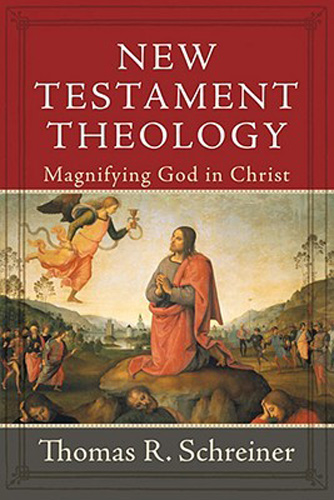
New Testament Theology: Magnifying God in Christ
In this substantial volume, Thomas Schreiner takes up the study of New Testament theology, looking for the themes that emerge from a detailed reading of the whole rather...
Downloads
About BiblicalTraining®
BiblicalTraining® wants every Christian to experience a deep and loving relationship with Jesus by understanding the life-changing truths of Scripture. To that end, we provide a high-quality Bible education at three academic levels taught by a wide range of distinguished professors, pastors, authors, and ministry leaders that moves from content to spiritual growth, all at no charge. We are a 501(c)(3) non-profit funded by gifts from our users. We currently have over 180 classes and seminars, 2,300 hours of instruction, registered users from every country in the world, and in the last two years 1.4 million people watched 257 terabytes of videos (11 million lectures).
Our goal is to provide a comprehensive biblical education governed by our Statement of Faith that leads people toward spiritual growth.