Survey of Biblical Theology
About This Class
About the Professor
Thomas Schreiner
Thomas Schreiner, an expert on the Pauline Epistles, is the James Buchanan Harrison Professor of New Testament at The Southern Baptist Theological Seminary in Kentucky. He has an extensive background in teaching and has authored various books on biblical interpretation and theology.

Lessons
- Explore how biblical theology developed through figures from Irenaeus to Bultmann, learning how debates over history, reason, and revelation shaped its methods, authority, and lasting influence on theology and the church.0% Complete
- Study how biblical theology traces God’s revelation historically while systematic theology organizes doctrine, seeing how both disciplines work together with presuppositions of faith to interpret Scripture as God’s authoritative Word.0% Complete
- Creation, covenant, and conflict reveal humanity’s sin and God’s judgment, showing the garden as sanctuary, Adam’s priest-king role, the serpent’s opposition, and God’s plan to bring salvation and victory through His promises.0% Complete
- God’s covenant with Abraham promises land, offspring, and blessing to all nations, showing both unconditional divine fulfillment and conditional obedience, while God preserves His plan through threats and fulfills His promises in surprising ways.0% Complete
- The Exodus shows God redeeming Israel by grace, giving the law and sacrifices, and dwelling in the tabernacle, all pointing to Christ’s final sacrifice and God’s presence with His people in the new creation.0% Complete
- Watch Israel’s unbelief, partial fulfillment of God’s promises, the cycle of sin without a king, and the rise of David as God’s chosen ruler who anticipates the true king to lead His people.0% Complete
- God’s covenant with David points to an eternal King, Israel’s failure reveals the need for renewal, and the prophets promise a new covenant, Exodus, creation, and David—all fulfilled in Jesus, the true King bringing worldwide blessing.0% Complete
- Israel’s identity forms through unfulfilled promises, foreign domination, Jewish factions, and rising messianic hopes, which fuel anticipation of a Messiah and set the stage for the New Testament.0% Complete
- Matthew shows Jesus as Emmanuel, true Israel, Son of David, and Son of God, fulfilling promises through a new Exodus, atonement, and divine authority, so that all God’s covenants find their fulfillment in him.0% Complete
- Dr. Schreiner reveals Jesus as the divine Son, true Israel, greater Moses, and eternal King who fulfills God’s promises, reveals the kingdom in hidden yet present power, and builds his church as the new people of God drawn from all nations.0% Complete
- Mark proclaims Jesus as the Son of God and true King whose suffering secures forgiveness, while discipleship means following his example of humility and obedience despite weakness.0% Complete
- John portrays Jesus as the eternal Logos and Son whose I AM sayings and signs grant believers the present possession of eternal life through faith.0% Complete
- John presents Jesus’ work as his lifting up and glorification, fulfilling Scripture. Life comes through true believing—receiving, coming, hearing, drinking, eating, entering, abiding—while false belief, darkness, and human glory block it.0% Complete
- Dr. Schreiner highlights divine sovereignty: the Father gives believers to the Son, the Spirit gives life, and all who truly believe are preserved, and glorifies Christ, showing Jesus’ death and resurrection as God’s sovereign plan.0% Complete
- In John’s epistles, he teaches that assurance rests on the apostolic witness, confession of sin, obedience, love, and doctrinal truth, while false teachers deny Christ.0% Complete
- Acts shows God’s plan through Christ and the Spirit, fulfilling covenant promises, spreading the gospel, empowering witnesses, and forming the church as restored Israel united in salvation.0% Complete
- Paul’s “already but not yet” theology shows God’s promises fulfilled in Christ yet awaiting completion, shaping Christian life, doctrine, and practice in areas like adoption, redemption, sanctification, and practical living.0% Complete
- In this lesson, Paul shows that Spirit-led believers still need commands, which guide holiness and love without legalism, uniting word and Spirit to shape Christian life, protect love from distortion, and call for discernment in obedience.0% Complete
- Learn how the New Perspective reinterprets Judaism and Paul, how Sanders and Stendhal shifted focus from justification to covenant and inclusion, and how Paul’s own words confirm his Damascus road conversion.0% Complete
- Paul uses “works of the law” to mean all deeds of the law, not just Jewish boundary markers, and teaches that justification comes by faith in Christ because human disobedience makes works powerless to save.0% Complete
- Learn that justification is God’s declarative act of counting believers righteous through Christ’s atonement, not human works, and see why imputation, not transformation, secures assurance and preserves the heart of the gospel.0% Complete
- Hebrews teach the Son as God’s final revelation and superior Melchizedekian priest whose one sacrifice fulfills typological promise.0% Complete
- James emphasizes authentic faith that produces obedience, wisdom, and care for others, showing that faith without works is dead while affirming God’s goodness and calling believers to endurance, humility, and practical godliness.0% Complete
- In 1 Peter, see how believers as exiles endure suffering with hope, live as God’s priestly people, rest in Christ’s atoning work and victory, and anticipate the inheritance of the new creation as fulfillment of God’s promises.0% Complete
- Revelation’s symbolism portrays Satan, the beast, false religion, and Babylon while teaching to persevere in suffering, trust God’s sovereignty, and hope in Christ’s victory and the new creation.0% Complete
- Dr. Schreiner teaches how Revelation portrays Christ’s full deity, the Lamb’s redeeming work, with victory grounded in the cross and fellowship with God as the ultimate goal.0% Complete
Class Resources
Recommended Books
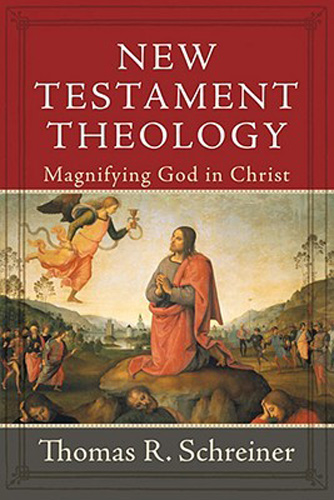
New Testament Theology: Magnifying God in Christ
In this substantial volume, Thomas Schreiner takes up the study of New Testament theology, looking for the themes that emerge from a detailed reading of the whole rather...
Downloads
About BiblicalTraining.org
BiblicalTraining.org wants every Christian to experience a deep and loving relationship with Jesus by understanding the life-changing truths of Scripture. To that end, we provide a high-quality Bible education at three academic levels taught by a wide range of distinguished professors, pastors, authors, and ministry leaders that moves from content to spiritual growth, all at no charge. We are a 501(c)(3) non-profit funded by gifts from our users. We currently have over 180 classes and seminars, 2,300 hours of instruction, registered users from every country in the world, and in the last two years 1.4 million people watched 257 terabytes of videos (11 million lectures).
Our goal is to provide a comprehensive biblical education governed by our Statement of Faith that leads people toward spiritual growth.