Survey of Biblical Theology - Lesson 8
New Testament Historical Background
In this lesson, discover how Israel’s story sets the stage for the New Testament. God’s promises of offspring, land, and blessing remain unfulfilled as foreign powers dominate and revolts fail. Watch the rise of groups like Pharisees, Essenes, and zealots, each offering competing solutions through law, purity, or rebellion. Understand how the temple, Torah, and land define Jewish identity, while Roman hostility and Jewish resistance heighten expectations for a Messiah. This context prepares you to grasp the New Testament’s message.

I. Review of Israel’s Story
A. Promises of land, offspring, blessing
B. Exodus, covenant with David, exile
C. Prophetic hope: new Exodus, king, covenant, creation
II. Historical Context (400 BC–AD 135)
A. Foreign rule: Alexander, Ptolemies, Seleucids, Rome
B. Antiochus Epiphanes: persecution, temple defilement
C. Maccabean revolt & Hasmoneans
D. Roman rule: Pompey, Herod, revolts, Bar Kokba
III. Jewish Groups
A. Pharisees: Torah-focused lay movement
B. Essenes: separatist, apocalyptic community
C. Sadducees: priestly leaders tied to temple
IV. Symbols of Identity
A. Temple as worship center
B. Land under foreign control
C. Torah as boundary marker
V. Roman Views
A. Criticism of Sabbath, circumcision, diet
B. Hostility & anti-Semitism
VI. Jewish Self-Understanding
A. Emphasis on purity & separation
B. Identity as chosen yet under exile
VII. Transition to New Testament
A. Numerous offspring, but oppressed
B. Blessing unrealized, hopes intensified
So we've been telling the story of the conflict between the offspring of the serpent and the offspring of the woman after sin entered into the world. God made human beings to rule the world for God's glory and under his lordship, but human beings sinned, but God promised through the offspring of the woman victory would come, and we've seen that develop especially through the covenants. God promises to preserve the world until his purposes are fulfilled in the covenant with Noah.
In the covenant with Abraham, he starts with one man and promises Abraham land, offspring, and blessing, universal blessing. We see that promise was fulfilled slowly in the life of Abraham, even having one son, and then we think of Isaac and Jacob to whom the promise was given by the time we come to the end of Exodus. The first part of the promise is being fulfilled.
They have many children, but they're not in the land. They're exiled in Egypt. In Exodus, they're freed from Egypt, and they're on their way to the promised land.
We see God makes a covenant with Israel through Moses in Exodus. That's a conditional covenant, a temporary covenant, a covenant that doesn't last forever. The wilderness generation, however, doesn't believe and trust in God and obey him, which is the fundamental call for human beings, so they don't enter into the land.
God promises the next generation will enter. We have more instructions in Deuteronomy. In Joshua, the second element of the promise is fulfilled.
The nation enters the land. They dispossess the Canaanites. God fulfills his promises.
It seems that we're poised for the third element of the promise, which is universal blessing, but instead of that happening and judges, the nation slips back into sin, fails to believe and obey in so many significant ways. God delivers again and again, but the nation keeps falling. We enter 1 Samuel.
We have a corrupted priesthood under Eli. Samuel comes on the scene, but then we have the kingship. The king, in a sense, is to be a new Adam, a new Israel, representing the people, the means by which the promise is going to be fulfilled.
Saul clearly becomes like Adam in the garden. He fails to trust and obey the Lord. His line is removed as a king.
His dynasty is removed, but God makes a covenant with David, a man after his own heart, and we're promised through David there will be an eternal dynasty. Now, remember, this is a thousand years later after Abraham, but we're promised through David there'll be an eternal dynasty. The offspring of the woman is going to come from David's line.
We see that in the book of Ruth as well. Under Solomon, it looks like this promise is about to be fulfilled, but Solomon, kind of imitating Saul, not slipping as far as he does, but he's corrupted by foreign wives and foreign entanglements and idolatry, and because of Solomon's sin, the nation is divided, and almost shockingly, the story ends with both the northern kingdom in 722 BC and the southern kingdom in 586 BC going into exile. So, instead of the story moving forward, it's moving backwards.
That's just a shocking thing. So, almost 1500 years have gone by, and the promise is still not realized in the lives of God's people, but we do see God promises that the people will come back. They do come back in 536 BC to Israel.
We have the second temple that's rebuilt during that time, and we read there about Nehemiah and Ezra and Malachi, but the nation is still not really flourishing. The promises aren't being fulfilled. They're back in the land, but the fulfillment isn't very remarkable and great, but when we read the prophets, the prophets promise there's going to be a new Exodus, a new liberation.
There's going to be a new king, a new David. There's going to be a new covenant, unlike the old covenant, and there's going to be a new creation. So, those are the promises.
Now, what I want to do here is I just want to look at Judaism from 400 BC to AD 135. It's just a brief sketch. Why am I doing it? Because I think it's important for New Testament theology because we're tracing the story.
What happened in these years? And when we come to the New Testament, what's the perspective that should inform us as we're reading the New Testament? What kind of world did they live in? What were their beliefs? What were their experiences? Of course, we understand better anything we read if we understand the context in which they live. So, just kind of a brief sketch of what's going on. I'm relying especially on N.T. Wright's book, The New Testament and the People of God.
There are other things in here that aren't in Wright, but I wanted to give credit to him. So, the first thing we see is Israel is dominated politically mainly by foreign powers. In other words, the promises aren't being fulfilled, right? They're under the dominion and the rule of Alexander the Great in the 330s.
So, that's 70 years later after 400. And then they're ruled by the Ptolemies. They're basically in Egypt, the Ptolemies and the Seleucids.
The Seleucids are in Syria, Turkey, until the 160s. So, Israel is kind of, you know, it's almost like a ping pong match, right? They're going back and forth. These different nations are ruling over them.
Clearly the promises aren't being fulfilled. One of the Seleucid rulers, Antiochus Epiphanes, he's talked about in the book of Daniel. You can see Daniel 7, 8, and 11.
You can also read about him in 1 Maccabees, which is a fascinating book. If you've never read it, I recommend it. It's a pretty quick read.
Antiochus Epiphanes took over the Jerusalem temple in 167 BC. He repressed the practice of circumcision. That's really important, right? Because circumcision was the covenant requirement for Israel that you'll be circumcised or the covenant.
They even took Jewish babies from the arms of their mothers who were circumcised and in a horrific act would throw them down on the pavement and kill them in front of their mothers. So, when I say repressed, it was persecution, right? He offered a pig on the altar. Of course, you know that the pigs for the Jews are unclean animals.
He dedicated the temple to Zeus, the Greek god. So, this is just rank, idolatry, horrifying to the Jews. What was Antiochus thinking? Of course, we can't get inside his head.
No one ever talked to him about it, but probably Antiochus was thinking, of course, that's what you do when you take over a country. The state and the religion were not separated in the ancient world. Of course, if you take over a country, you also take over their religion.
So, probably Antiochus thought, no big deal. This is just what you do. But for the Jews, this is shocking.
Well, what the Jews do is rebel. There's a guerrilla revolt, so to speak, under the Hasmoneans, sometimes called the Maccabeans. So, you can read about this again, for example, in 1 Maccabees.
They win this battle, pretty amazing. They cleanse the temple. They re-consecrate the temple in 164 BC.
The Jews still celebrate this today, around Christmas time, and it's called Hanukkah. Hanukkah means the dedication. Actually, if you read John 10, we're told that Jesus was walking in the temple, and during this time of dedication, about December, in the year of his death, in April, he died and was risen again.
So, this great victory, by 164 BC, is viewed as Yahweh's vindication of his people. People were excited, God's working again. The Hasmoneans were priest-kings, but it immediately led to theological debates.
So, you have probably, you've heard of Qumran, where the Essenes were, the Dead Sea Scrolls, and maybe if you've been to Israel, you've seen those caves. I've seen them. I've seen them from afar.
I haven't seen them close up. I've always wondered, how in the world did they get in those caves without dying, if you've seen them? They're pretty incredibly inaccessible. Maybe if you get closer up, which I wasn't able to do, they're more accessible.
Of course, they were trying to get away from the Romans, so that's where they deposited the scrolls. Anyway, the Essenes and the Pharisees had big problems with the Hasmonean rulers because they felt they weren't following the law. So, they were opponents.
Jonathan was one of them. So, you have all these brothers, all these Hasmonean brothers, Judas, Jonathan, Simon, they kind of ruled one after another in Israel after 164. And in the Dead Sea Scrolls, we read about the wicked priest, and most think that's Jonathan.
So, the point is, there's this conflict going on in Israel, right? God's going to fulfill his promises, but the Qumran people are saying, but not through this guy. This guy's bad. And so, they said, okay, these guys are Levites, but they're not from the house of Aaron.
They're not doing the right thing. So, conflict in Israel. So, for about 100 years, there's freedom.
Then the Romans come in, 63 BC to 135 AD. Did they ever think that one of the Maccabees was the Messiah? No, they didn't. They didn't really think that.
Not these people anyway. So, yeah, because they thought they were problems. Yeah, that was a great question.
So, the Romans come in, the great Roman general Pompey, he comes into Jerusalem, he walks into the Holy of Holies, the most holy place, that's 63 BC, right? Only the high priest is supposed to go in there on Yom Kippur, only once a year. So, this is terrible to the Jews. Pompey walks in there and he's shocked there's nothing in there.
The Ark of the Covenant's been lost, right? So, he's just totally shocked. What kind of religion is this? You go in there and there's nothing there. However, Pompey dies 15 years later.
You can read about this in an apocryphal book called Psalms of Solomon, not written by Solomon, a pseudepigraphic book written under Solomon's name, but not really by Solomon, but a very interesting book to read. Very interesting things to read about the Messiah in that book, by the way. Anyway, they talk about Pompey's death and basically in chapter two, they're like, God got him.
Yes, we knew God would get him because he dies in Egypt. I think he was fleeing from Caesar or something like that. So, yeah, here it is.
And I had not to wait long until God showed me the insolent one, that's Pompey, slain on the mountains of Egypt, esteemed of less account than the least thing on land and sea. He's the lowest of the low. He did not consider that he was man.
He thought he was great stuff, but he wasn't. He reflected not on the latter end. He said, I will be Lord of land and sea.
And he did not understand that it's God who is great and powerful and has great strength. He is king over the heavens and judges, kings and kingdoms. Yeah, God got him.
God brought him down and they're like, praise God. This is great. So, things move on and Herod the Great, under the rule of Rome, becomes the of Israel, Palestine, Canaan from 34 to 4 BC.
Herod is an Edomite. Deuteronomy 17 says, one of your brothers is to rule over you, but Herod's not their brother. He's an Edomite.
So, we're not here to talk about Herod, but he was a very, very nasty guy. So, because of things aren't right, there's revolution in the air. You know, they're waiting for the Messiah.
Nobody else is supposed to rule over Israel. This is not right. Rome's ruling.
So, we see in Josephus, all these different guys come on the scene, trying to really be the Messiah, right? So, you have this guy named Judas. We read here, Herod captured him. Judas got a large army together.
He assaulted the royal palace, took some weapons, armed some men. You can read this in more detail. It's in your notebook.
I'm paraphrasing it. He pondered people. He had ambition for royal rank, right? He wanted to be the king.
Clearly, this is not just political, but it's also religious. He wanted to be the Messiah, but you know, it didn't work out. He's deposed.
Along comes Simon. Simon's a slave of King Herod. He's handsome.
He's tall. He's strong. Must have worked out every day, right? Looked good.
He's bold to place the diadem on his head. Here we go again. Hey, I'm going to be the king.
Got some followers, right? He proclaimed them king in their madness. You know, Josephus is saying, I'm not for this guy, right? He raided himself beyond anyone else. He burned the royal palace in Jericho, right? Plunders things, robs things, sets fire to many royal residents.
He's trying to take over, right? But Grotus, an officer of Rome caught up with him and cut off his hat. So, you know, it doesn't work again. But what's the point here? You know, all these kind of, there's a lot of ferment and revolution in the air.
We can think of even Israel today, right? Very politically volatile. So too in that day. Then there's another guy that comes on the scene.
Josephus, the Jewish historian, tells us about all these guys. Thronges, he, Josephus says he's a man distinguished neither for the position of his ancestors nor by the excellence of his character, nor for anything else. So Josephus is telling us, I don't like this guy, right? Of course, Josephus is writing this after the event.
But he was remarkable for his great stature and feats of strength. I mean, all these guys must have had something that attracted people to them. He aspired to the kingship and he was courageous, right? He wasn't worried about dying.
His brothers supported him. He put on the diadem. So here it goes again.
He's really trying to be the Messiah. And he took power for a while. He had the title of king, but he's not really king, right? Herod's in charge, but he's trying to get things going.
They wanted to slaughter the Romans. They attacked, but they were eventually defeated and Thronges surrendered. So, right, here we go again.
Josephus tells us Judea was full of robberies. Anyone might make himself king as the head of a band of rebels, causing trouble to a few Romans, but bringing the greatest slaughter upon their own people. So, you know, I just wanted you to get the sense, you know, Jesus, this is coming near to the time of Jesus, right? This is not like a peaceful political time in the nation.
Everything's going on. One of the Roman officers, Verus, crucified 2,000 Jews after the time of Herod the Great, which is right around the time of Jesus' birth, right? Judas the Galilean, AD 6, comes along, another Judas. There's a census.
We read about a census when Jesus was born. So, Rome is taking a census. Now, you know, we might think we're taking a census, right? You count the people and then have them pay a tax.
No big deal, but to some Jews, this is a big deal. Remember the tax question that was asked to Jesus. Should we pay taxes to Caesar? Well, look at this.
Judas the Galilean, this is the fourth of the philosophies. Josephus calls these people the zealots, right? He's the leader. He had a passion for liberty.
Hey, almost sounds like Patrick Henry, right, if you're an American reading this, right? He had a passion for liberty that is almost unconquerable. He wanted to be free, but this is theological, right? They were convinced that God alone is their leader and master. They're ready to die, right? We see that again.
This movement kept going even into the 60s. Gessius Florus is one of the Roman procurators. Judas, one of the Jews to revolt, he said, you're cowards.
You shouldn't pay tribute to the Romans because once you're paying tribute to the Romans, you're saying they're the rulers of the land, and that's theologically wrong. God's our ruler. We shouldn't be paying any taxes to Rome.
So that fired people up. I mean, from whatever country you're watching this, right, there's always political factions and beliefs, and this is a group saying, hey, it's totally wrong to pay taxes. Then along comes a guy named Thutis.
This is between AD 44 and 46 after Jesus, but just to get a feeling for the time, right, Thutis promised the River Jordan would part. Well, like, well, why is that significant? Because that's when Israel entered the land, right? If you're promising the River Jordan would part, what are you promising? You're promising the new Exodus and the prophets. You're saying you're the redeemer, basically.
So follow me. The River Jordan is going to part. We're going to win, right? We see later, he said, I'm a prophet.
I'm your guy, but the Roman procurator Thutis killed him, cut off his head. That's the end of that, right? Jason and Simon, then the son of Judas, the Judas I talked about who didn't want to pay taxes, he comes along. Tiberius Alexander is the procurator at this time.
By the way, Tiberius Alexander, this is not important if you don't know what I'm talking about, but he's the brother of Philo, the great Jewish writer. So he's an apostate Jew. That's what Tiberius Alexander is, not a faithful Jew.
Anyway, they come along and they were brought to trial and they're crucified, right? Because they're like, okay, these guys are going to lead a revolt. We don't want that. We read again.
Now this is after the time of Jesus, 20,000 Jews were killed at So think of the ministry of Jesus, think of Passover, think of when Jesus was killed. That's not just a religious event. This is infused with politics, isn't it? Politics, revolt, there's a Passover, one of the Roman soldiers, he hates the Jews.
He wants to make fun of them. He pulls down his pants, right? So that outrageous the Jews, because they know he's doing it to provoke them. So they revolt, but the Roman army, they're not going to put up with that and 20,000 are put to death.
So another event, this is talked about in the New Testament. We read about this in Acts 21. It's also in Josephus, an Egyptian Jew led a whole group of Jews down the Mount of Olives.
He said the city would fall down Jerusalem and he would enter. Well, right. He's calling on the Bible, isn't he? That's what happened in Jericho.
What's this guy saying? I'm going to be your king. Remember what happened in Jericho? The Romans are ruling. I'm going to lead this revolt.
God's going to give us the city. Well, that didn't work, right? We know from Acts, he got away. He disappeared.
Smart guy, right? He ran away. Where he ended up in his life, we have no idea, but he figured out this is not going to work. So just again, story after story of ferment in the land.
You have the Saqqadri. The Saqqadri are kind of revolutionary guerrillas going in the crowds with knives, knifing people in the crowds, creating panic and uncertainty. We don't have to read all these things, but it finally led to the Jewish war, the revolt in AD 66 through 70.
Jerusalem is destroyed. Of course, this fulfills the prophecy Jesus made. That's a very significant prophecy, isn't it? That the temple is destroyed as Jesus predicted.
You can read about fourth Ezra and second Baruch. They're not written by Ezra and Baruch. They're post AD 70 Jewish compositions.
They're not scripture, but they're both kind of depressed books, right? After AD 70, what happened to the promises? But the Jews aren't done yet. They rebelled one more time against the Emperor Hadrian in AD 132 through 135. Hadrian, again for bad circumcision, he had made Jerusalem a pagan city, Aelia Capitolia.
He had an altar to Zeus. So you can see, okay, here we go again. We're going to win again.
This guy named Simon Ben Keseba came along and he led a revolt. Rabbi Akiva even called him the Messiah. Simon Bar Kokba.
Bar Kokba means son of star. Back to that Balaam prophecy we talked about. Hey, this guy is the Messiah.
Well, this revolt was crushed and really the Jews politically never played any role in history again until 1948 when they became a nation, right? So this was the end of all this political ferment. So just a little bit of religious context. What's going on? You have the Pharisees who come on the scene.
Remember they come on the scene when the Maccabeans and the Hasmoneans are ruling and they're like, these guys aren't quite following the Bible. So remember Pharisees are lay people. They're not, you're not born a Pharisee.
They're lay people who, you know, they want to follow the Lord. They're, you know, a little bit, what can we compare them to in Christian history? Maybe a little bit like the Puritans, right? They want to purify the nation. So the Pharisees are a lay religious and political pressure group because religion and politics are never separated.
And the Pharisees want there to be purity. And they say, look, you know, the reason the promises aren't being fulfilled is we're not, we're really not doing God's will. You know, so the Pharisees are, in a way they're saying, look, the answer is really not political.
The answer is religious. That's why they're the closest to Jesus. You know, Jesus criticizes them most severely because actually they're the closest to him of any group because they're saying, look, we need to be more pure.
The purity that we see in the temple that needs to be, that needs to be in the whole, the whole land. Then the Essenes, yes. So since the Pharisees are a lay group, how did you become one? You just chose to become one.
Yeah. You chose, you just said, I want to be a Pharisee. Yeah.
Didn't they have any requirements to be in the group? You know, that's a good question. I don't know how they resolved that. You know, I don't, I don't know if I've read, if they, if they rejected some people, perhaps they did.
Yeah. Did you just like study more and become an expert in the scriptures? Is that kind of how you got to be part of that group? Yes. And I think probably rabbis rejected some people.
So Paul attached himself to the rabbi Gamaliel. So yeah, I mean, I, I don't know if you know this Bill, but they must've said, Hey, I want to study with you. And, and then some are more respected than others.
So it's kind of like academia. You, you get connected with people that are well respected and do enough study that you know what they're talking about. Yeah.
Yeah. And that's clearly true. I mean, Paul says that in Galatians one, I was like the shining student.
I was exceeding my contemporaries. Everybody was looking up to me. And of course, his teacher, rabbi Gamaliel, everybody looked up to him and we read about him in the book of Acts.
He's the one that says, Gamaliel, don't, don't bother these people. He'll be fighting against God. Yeah.
Yeah. So the Essenes, that's the Qumran community. They saw themselves as the true Israel heirs of the promise of the great future before them.
But the Qumran community, at least many of them left, left the land and right went out into the wilderness, you know? So, so they're, they're even more puritanical in a way they're kind of saying, you know, this nation is so corrupt. We can't even live in there. And the wrong, they said the wrong priests are in the temple.
We're not even going to go to the temple. So the temple, it's not that they were against the temple, by the way, there've been disputes about that, but I think the best read as they thought the wrong rulers are in the temple. And they said, this isn't working.
We're going to go out in the wilderness. We're going to be the pure community. You know, this is not a perfect analogy, but if you know about the Amish kind of separating, we're going to be God's pure people.
And they said, there's a great war that's going to happen. Right. And the sons of light and the sons of darkness, we're going to win.
We got to be really pure and righteous and follow the laws very rigorously. You know, Jesus tells a story when he heals on the Sabbath to the Pharisees. Hey, if you, if one of your animals falls into a pit, you'll you take it out.
Even if it's the Sabbath, the Essenes said, no, don't even take it on the Sabbath. They are super strict about the law, right? No, no, just leave it in there. So this is just another way, right? There's these different movements going on.
So what I'm trying to say here is there's different perspective and Israel's story, Sirach, which is an apocryphal book, sometimes called Ecclesiasticus. By the way, that's a great book. That's a great book to read devotionally.
I don't think it's inspired. It's part of the Catholic canon. I don't hold to the Catholic canon, but there's a lot of great things in the book of Sirach if you've never read it.
I mean, we read John Owen devotionally or John Piper or John Wesley, whatever you read, right? We don't think they're inspired. This is a great book. I taught a class years ago at Azusa Pacific on the Greco-Roman world.
And I had the students read Sirach and one of the women in the class said to me, I'm going to read this this summer again. Because she said I was helped by this book. And yeah, there's not everything in this book is good.
I won't get into that, but that's a good book to read. Anyway, Sirach says, look what God's doing in the worship of the nation. I mean, this was written about 200 BC.
So Sirach was like, yeah, things are going pretty well overall. So that's one perspective. We've already seen the Maccabeans.
The Maccabeans say, we cleanse the land. We've got to take control politically, militarily. But the Essenes and Pharisees said, hey, you're compromising.
Jubilees, that's another apocryphal book said, hey, we've got to keep the law better, pretty rigorous. Josephus, I talked about Josephus, that Jewish historian. Josephus basically says, well, you know, it looks like right now God's on the side of the Romans.
So Josephus seems to be a rather opportunistic person. He kind of sides with who's ever winning. So what can we say? This is what Wright says.
God has given Israel the Torah. So Israel will be his people by keeping the Torah. And if Israel keeps the Torah, they'll be rescued from their pagan enemies.
And then they'll rule. So that's the animating purpose as we come into the New Testament. And you feel that, don't you? Hey, we're under the thumb of the Romans.
God wants us to be free. Why aren't we free? Because we're sinning. How are we sinning? We're not keeping the law.
We've got to do better. And then when we think of Israel's symbols, it makes sense, right? What does it mean to be a Jew? Well, it's the temple, right? I mean, that's where we get forgiveness of sins. That's where God dwells.
That's where sacrifices and cleansing occur. Remember in John 11, when the Jewish leaders are conspiring to kill Jesus, they say, look, he's going to, the Romans are going to come in. They're going to take away the little freedom we have, and they're going to destroy our temple.
Now that's ironic, isn't it? Because in killing Jesus, they actually guaranteed the future destruction of the temple. So, you know, that's how sin is. You say, kind of like the wilderness generation.
Well, we want to obey God because of our kids, right? And God says, well, your kids are going to inherit, but not you. And they say, well, you know, they end up doing, we're going to kill Jesus to protect the temple when actually it leads to the destruction of the temple. But anyway, the temple is very important in Israel.
And of course the land, the land, that's the promise given to Abraham. Rome shouldn't be in it. That's the problem.
What's going on here? This land should be ours. And then, and then what's the, what's the solution? It's the Torah. We have to keep the Torah.
We have to be circumcised. We have to keep the purity laws. We have to keep the Sabbath and these things separate the Jews from the Gentiles.
So I want to make a few comments on this just culturally, again, just to get a feel for the time. What did, what did Roman writers think about the Jews? Now, some, some admired the Jews, right? Some, some became converts, proselytes to Judaism, but also there was a lot of criticism of the Jews. The famous Roman Stoic Seneca, by the way, there's an apocryphal book of conversations between Paul and Seneca that you can read.
It never happened, but somebody invented that story. John Calvin, his first book was on Seneca. Many Christians have read Seneca, the Stoic thinker over the years, but Seneca had no love for the Jews.
He attacks the Jewish Sabbath and he basically says, why did the Jews observe the Sabbath? Cause they're lazy. You know, they, they don't want to work on Saturday. You know, every seven days they do nothing.
I mean, what's wrong with these people? Tacitus, another Roman historian. What does he say about the Jews? Oh yeah. They're, they're totally unrestrained.
They're immoral. You know, they circumcise. I mean, that's weird.
They're weird people, right? They, they only have one God. That's strange to a Roman, right? And they conceive of him by the mind alone. They don't, they don't have any statues.
They don't worship. They're weird and strange. You know, maybe it's hard to find analogies.
I speak from my cultural background, but you know, when I grew up and I first heard about Jehovah's Witnesses, like, you know, what struck me, they don't celebrate birthdays, you know, or Christmas. They don't do blood transfusions. And of course I don't hold to their theology, but I was like, oh, that's strange stuff to me.
Right. Why wouldn't you celebrate a birthday? Well, you know, this is kind of the Romans are saying, yeah, the Jews are strange. Plus they don't like us.
They don't, they don't eat with us. But Tacitus says, you know, they're very lustful people when you want to criticize others. Yeah.
They won't, they won't marry us. Right. But he says among themselves, nothing is unlawful.
So like they're terrible people. Anti-Semitism has very long roots. Right.
They do this circumcision. They despise the other gods. They disown their country.
They put parents and children against themselves. Yeah. Very negative.
Here's Petronius, another writer. He says, listen to this. The Jew may worship his pig God.
Okay. Well, that's very negative. Right.
And, and, and of course they don't worship a pig God. It's totally wrong. Unless he cuts back his foreskin with a knife, he should go forth from the people and emigrate to Greek cities and shall not tremble at the fast of Sabbath imposed by the law.
So, you know, you know, this, they do this weird circumcision thing. Another Roman writer, Juvenal, he talks about again, circumcision. Yeah.
On Sunday, on Saturdays, I mean on the Sabbath, they're, they're lazy. They don't work. Yeah.
They do. They, they don't eat pork. Pork was the most inexpensive and common meat in the Greco-Roman world.
Why? Yeah. They don't eat it. They don't eat with us.
What's, what's the deal with these people? Um, so on and on it goes, right. Damocritus, they worship an asinine golden head again. You know, these things, this is totally made up.
You know, if you think of today, uh, the protocols of the elders of Zion, if you've heard of that, this was, you know, propagated by the Nazis and others, anti-Semitic slurs, very common in history, right? All these things are made up about the Jews, but there's, there's a lot of hostility, uh, uh, to the Jews. Uh, we don't, we don't have to read, uh, all of these. Um, but now just a couple of things from the Jewish point of view, just to see what it meant to be a Jew.
Here's Josephus writing the Jewish historian. When I was 26 years old, I went to Rome. Felix was the procurator of 52 to 58.
Remember Felix was the procurator that Paul, that imprisoned Paul, right? And Caesarea and Paul preaches the gospel to him. So we know about this guy, they're priests there, they're sent to Rome. Uh, and as they go, they ate figs and nuts.
So what they weren't, they weren't gluten-free, right? Why did they just figs and nuts? They didn't want to do anything to violate the food laws. So you see now from the Jewish side, they're really, these guys are really pious. They want to be really sure they don't do anything.
This, this is not, this is not like, they're not, you know, modern day health nuts, right? This is, this is following the law. And we see this again in the letter of Aristeas. That's a book written during the second temple period, not part of scripture, but a Jewish book.
In his wisdom, the legislator, uh, being endowed by God, teaching us, surrounded us with unbroken palisades, you know, palisades, fences and iron walls to prevent our mixing with any of the other peoples in any matters. So what I'm saying, right? The Romans looked at the Jews and they said, they don't like us. They don't eat with us.
They don't work on Saturday. They do circumcision. Well, look at it.
There's some truth in it, right? Aristeas is saying we're setting up walls between these people. We're going to be kept pure because what's wrong? These, these Roman people are their idolaters. They have false beliefs.
We worship only the one God. Um, we, we follow the Lord. Um, we follow the food laws.
Um, so to prevent her being perverted by contact with others or by mixing with bad influence, he had just sent on all sides with strict observances connected with meat and drink and touch and hearing insight after the manner of the law. So here we are, you know, we're really separated from, from the nations. We don't, we don't, we don't eat with them.
Right. A story about Joseph when he was in Egypt. So, you know, the Jews thought about this.
This is not, this is a made up story, right? But they're thinking, what did Joseph do when he was in Egypt? Did he eat with them? Eat unclean food? No, no, no. He never, of course there's some evidence of this in Genesis too, right? He never ate with the Egyptians because that was an abomination to him. Why not? Because, because they, they ate foods offered to false gods, right? It's not fitting for a man who worships God to kiss a strange woman who will bless with her mouth.
Joseph married an Egyptian woman. Well, she must have been converted because he wouldn't have married some pagan Egyptian woman, right? So he wouldn't have done that. She must have been converted to because he wouldn't have kissed her.
Otherwise Jews could eat with Gentiles as long as they kept the purity of laws. But on the whole, they probably tried to avoid eating with Gentiles to avoid purity laws. So, you know, here's my point, right? There's revolution in the air.
There's just these sharp distinctions between Jews and Gentiles. So we come into the New Testament and here we are. What does it mean to be a Jew? Who are we? We're Israel, the chosen people, creator God, separate, separated from the world, right? From the pagan nations.
But where are we? We're, well, we're in the land. We have the temple, but in, but practically we're in exile. So, so, you know, remember our story, 2000 years have passed now.
Offspring, land, universal blessing. Okay. You got the offspring, but you're in the land, but you're basically enslaved.
2000 years and nothing's happening. And certainly there's not universal blessing. Nothing's happening.
What's with all these revolts and the attempts to keep the law, you're trying to make things happen. We got it. So some of these guys are rising up and saying, I'm going to be the king.
I'm going to make it happen. Of course, it's every time it's failing, right? So, so what's wrong? So, you know, right. If it's not happening, you ask what's wrong? Well, they're, they're the wrong rulers.
The Romans, they're not to be the rulers or, or, or half Jews because Herod was half Jew. Then they're not the right rulers. So, so then what's to be done? We need our own king and we need our own priests and we've got to be faithful.
So that's the situation as we come, as we come into the new Testament. So I think, I think that's going to be a helpful context as we look and come to the new Testament.
- Explore how biblical theology developed through figures from Irenaeus to Bultmann, learning how debates over history, reason, and revelation shaped its methods, authority, and lasting influence on theology and the church.0% Complete
- Study how biblical theology traces God’s revelation historically while systematic theology organizes doctrine, seeing how both disciplines work together with presuppositions of faith to interpret Scripture as God’s authoritative Word.0% Complete
- Creation, covenant, and conflict reveal humanity’s sin and God’s judgment, showing the garden as sanctuary, Adam’s priest-king role, the serpent’s opposition, and God’s plan to bring salvation and victory through His promises.0% Complete
- God’s covenant with Abraham promises land, offspring, and blessing to all nations, showing both unconditional divine fulfillment and conditional obedience, while God preserves His plan through threats and fulfills His promises in surprising ways.0% Complete
- The Exodus shows God redeeming Israel by grace, giving the law and sacrifices, and dwelling in the tabernacle, all pointing to Christ’s final sacrifice and God’s presence with His people in the new creation.0% Complete
- Watch Israel’s unbelief, partial fulfillment of God’s promises, the cycle of sin without a king, and the rise of David as God’s chosen ruler who anticipates the true king to lead His people.0% Complete
- God’s covenant with David points to an eternal King, Israel’s failure reveals the need for renewal, and the prophets promise a new covenant, Exodus, creation, and David—all fulfilled in Jesus, the true King bringing worldwide blessing.0% Complete
- Israel’s identity forms through unfulfilled promises, foreign domination, Jewish factions, and rising messianic hopes, which fuel anticipation of a Messiah and set the stage for the New Testament.0% Complete
- Matthew shows Jesus as Emmanuel, true Israel, Son of David, and Son of God, fulfilling promises through a new Exodus, atonement, and divine authority, so that all God’s covenants find their fulfillment in him.0% Complete
- Dr. Schreiner reveals Jesus as the divine Son, true Israel, greater Moses, and eternal King who fulfills God’s promises, reveals the kingdom in hidden yet present power, and builds his church as the new people of God drawn from all nations.0% Complete
- Mark proclaims Jesus as the Son of God and true King whose suffering secures forgiveness, while discipleship means following his example of humility and obedience despite weakness.0% Complete
- John portrays Jesus as the eternal Logos and Son whose I AM sayings and signs grant believers the present possession of eternal life through faith.0% Complete
- John presents Jesus’ work as his lifting up and glorification, fulfilling Scripture. Life comes through true believing—receiving, coming, hearing, drinking, eating, entering, abiding—while false belief, darkness, and human glory block it.0% Complete
- Dr. Schreiner highlights divine sovereignty: the Father gives believers to the Son, the Spirit gives life, and all who truly believe are preserved, and glorifies Christ, showing Jesus’ death and resurrection as God’s sovereign plan.0% Complete
- In John’s epistles, he teaches that assurance rests on the apostolic witness, confession of sin, obedience, love, and doctrinal truth, while false teachers deny Christ.0% Complete
- Acts shows God’s plan through Christ and the Spirit, fulfilling covenant promises, spreading the gospel, empowering witnesses, and forming the church as restored Israel united in salvation.0% Complete
- Paul’s “already but not yet” theology shows God’s promises fulfilled in Christ yet awaiting completion, shaping Christian life, doctrine, and practice in areas like adoption, redemption, sanctification, and practical living.0% Complete
- In this lesson, Paul shows that Spirit-led believers still need commands, which guide holiness and love without legalism, uniting word and Spirit to shape Christian life, protect love from distortion, and call for discernment in obedience.0% Complete
- Learn how the New Perspective reinterprets Judaism and Paul, how Sanders and Stendhal shifted focus from justification to covenant and inclusion, and how Paul’s own words confirm his Damascus road conversion.0% Complete
- Paul uses “works of the law” to mean all deeds of the law, not just Jewish boundary markers, and teaches that justification comes by faith in Christ because human disobedience makes works powerless to save.0% Complete
- Learn that justification is God’s declarative act of counting believers righteous through Christ’s atonement, not human works, and see why imputation, not transformation, secures assurance and preserves the heart of the gospel.0% Complete
- Hebrews teach the Son as God’s final revelation and superior Melchizedekian priest whose one sacrifice fulfills typological promise.0% Complete
- James emphasizes authentic faith that produces obedience, wisdom, and care for others, showing that faith without works is dead while affirming God’s goodness and calling believers to endurance, humility, and practical godliness.0% Complete
- In 1 Peter, see how believers as exiles endure suffering with hope, live as God’s priestly people, rest in Christ’s atoning work and victory, and anticipate the inheritance of the new creation as fulfillment of God’s promises.0% Complete
- Revelation’s symbolism portrays Satan, the beast, false religion, and Babylon while teaching to persevere in suffering, trust God’s sovereignty, and hope in Christ’s victory and the new creation.0% Complete
- Dr. Schreiner teaches how Revelation portrays Christ’s full deity, the Lamb’s redeeming work, with victory grounded in the cross and fellowship with God as the ultimate goal.0% Complete
Lessons
- Explore how biblical theology developed through figures from Irenaeus to Bultmann, learning how debates over history, reason, and revelation shaped its methods, authority, and lasting influence on theology and the church.0% Complete
- Study how biblical theology traces God’s revelation historically while systematic theology organizes doctrine, seeing how both disciplines work together with presuppositions of faith to interpret Scripture as God’s authoritative Word.0% Complete
- Creation, covenant, and conflict reveal humanity’s sin and God’s judgment, showing the garden as sanctuary, Adam’s priest-king role, the serpent’s opposition, and God’s plan to bring salvation and victory through His promises.0% Complete
- God’s covenant with Abraham promises land, offspring, and blessing to all nations, showing both unconditional divine fulfillment and conditional obedience, while God preserves His plan through threats and fulfills His promises in surprising ways.0% Complete
- The Exodus shows God redeeming Israel by grace, giving the law and sacrifices, and dwelling in the tabernacle, all pointing to Christ’s final sacrifice and God’s presence with His people in the new creation.0% Complete
- Watch Israel’s unbelief, partial fulfillment of God’s promises, the cycle of sin without a king, and the rise of David as God’s chosen ruler who anticipates the true king to lead His people.0% Complete
- God’s covenant with David points to an eternal King, Israel’s failure reveals the need for renewal, and the prophets promise a new covenant, Exodus, creation, and David—all fulfilled in Jesus, the true King bringing worldwide blessing.0% Complete
- Israel’s identity forms through unfulfilled promises, foreign domination, Jewish factions, and rising messianic hopes, which fuel anticipation of a Messiah and set the stage for the New Testament.0% Complete
- Matthew shows Jesus as Emmanuel, true Israel, Son of David, and Son of God, fulfilling promises through a new Exodus, atonement, and divine authority, so that all God’s covenants find their fulfillment in him.0% Complete
- Dr. Schreiner reveals Jesus as the divine Son, true Israel, greater Moses, and eternal King who fulfills God’s promises, reveals the kingdom in hidden yet present power, and builds his church as the new people of God drawn from all nations.0% Complete
- Mark proclaims Jesus as the Son of God and true King whose suffering secures forgiveness, while discipleship means following his example of humility and obedience despite weakness.0% Complete
- John portrays Jesus as the eternal Logos and Son whose I AM sayings and signs grant believers the present possession of eternal life through faith.0% Complete
- John presents Jesus’ work as his lifting up and glorification, fulfilling Scripture. Life comes through true believing—receiving, coming, hearing, drinking, eating, entering, abiding—while false belief, darkness, and human glory block it.0% Complete
- Dr. Schreiner highlights divine sovereignty: the Father gives believers to the Son, the Spirit gives life, and all who truly believe are preserved, and glorifies Christ, showing Jesus’ death and resurrection as God’s sovereign plan.0% Complete
- In John’s epistles, he teaches that assurance rests on the apostolic witness, confession of sin, obedience, love, and doctrinal truth, while false teachers deny Christ.0% Complete
- Acts shows God’s plan through Christ and the Spirit, fulfilling covenant promises, spreading the gospel, empowering witnesses, and forming the church as restored Israel united in salvation.0% Complete
- Paul’s “already but not yet” theology shows God’s promises fulfilled in Christ yet awaiting completion, shaping Christian life, doctrine, and practice in areas like adoption, redemption, sanctification, and practical living.0% Complete
- In this lesson, Paul shows that Spirit-led believers still need commands, which guide holiness and love without legalism, uniting word and Spirit to shape Christian life, protect love from distortion, and call for discernment in obedience.0% Complete
- Learn how the New Perspective reinterprets Judaism and Paul, how Sanders and Stendhal shifted focus from justification to covenant and inclusion, and how Paul’s own words confirm his Damascus road conversion.0% Complete
- Paul uses “works of the law” to mean all deeds of the law, not just Jewish boundary markers, and teaches that justification comes by faith in Christ because human disobedience makes works powerless to save.0% Complete
- Learn that justification is God’s declarative act of counting believers righteous through Christ’s atonement, not human works, and see why imputation, not transformation, secures assurance and preserves the heart of the gospel.0% Complete
- Hebrews teach the Son as God’s final revelation and superior Melchizedekian priest whose one sacrifice fulfills typological promise.0% Complete
- James emphasizes authentic faith that produces obedience, wisdom, and care for others, showing that faith without works is dead while affirming God’s goodness and calling believers to endurance, humility, and practical godliness.0% Complete
- In 1 Peter, see how believers as exiles endure suffering with hope, live as God’s priestly people, rest in Christ’s atoning work and victory, and anticipate the inheritance of the new creation as fulfillment of God’s promises.0% Complete
- Revelation’s symbolism portrays Satan, the beast, false religion, and Babylon while teaching to persevere in suffering, trust God’s sovereignty, and hope in Christ’s victory and the new creation.0% Complete
- Dr. Schreiner teaches how Revelation portrays Christ’s full deity, the Lamb’s redeeming work, with victory grounded in the cross and fellowship with God as the ultimate goal.0% Complete
Class Resources
Recommended Books
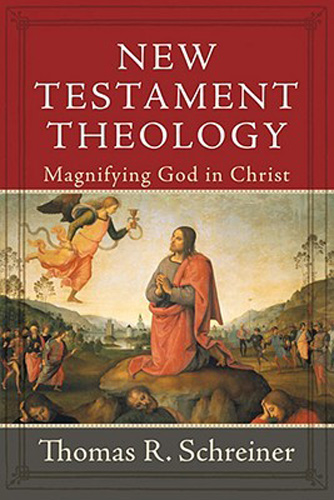
New Testament Theology: Magnifying God in Christ
In this substantial volume, Thomas Schreiner takes up the study of New Testament theology, looking for the themes that emerge from a detailed reading of the whole rather...
Downloads
About BiblicalTraining®
BiblicalTraining® wants every Christian to experience a deep and loving relationship with Jesus by understanding the life-changing truths of Scripture. To that end, we provide a high-quality Bible education at three academic levels taught by a wide range of distinguished professors, pastors, authors, and ministry leaders that moves from content to spiritual growth, all at no charge. We are a 501(c)(3) non-profit funded by gifts from our users. We currently have over 180 classes and seminars, 2,300 hours of instruction, registered users from every country in the world, and in the last two years 1.4 million people watched 257 terabytes of videos (11 million lectures).
Our goal is to provide a comprehensive biblical education governed by our Statement of Faith that leads people toward spiritual growth.