Survey of Biblical Theology - Lesson 3
Old Testament Context
Dr. Schreiner teaches that biblical theology begins with the Old Testament context of creation, covenant, and God’s lordship. You see Adam and Eve created as priest-kings in God’s image, tasked to rule and bless the world, yet failing through disobedience and lack of trust. The garden is shown as a sanctuary where God dwells with His people. Understand the covenantal structure of obedience, curses, and promises, the cosmic battle between the serpent’s offspring and the woman’s offspring, and God’s judgments through the flood and Babel.

I. Importance of the Old Testament
A. Essential background for NT theology
B. Covers creation through intertestamental period
II. Creation & God’s Rule
A. God as sovereign creator
B. Humanity in God’s image to rule as priest-kings
III. Eden as Sanctuary
A. Fellowship with God
B. Temple imagery in the garden
IV. Covenant & Fall
A. Covenant with Adam & Eve
B. Disobedience from unbelief
C. Promise of victory over serpent
V. Spread of Sin & Judgment
A. Cain & Abel; cosmic conflict
B. Corruption before the flood
C. Covenant with Noah & preservation
VI. Continued Rebellion
A. Noah’s failure
B. Tower of Babel pride
VII. Theological Summary
A. Humanity created for God’s rule
B. Persistent rebellion shows need for salvation
C. Anticipation of God’s triumph
Dr. Thomas Schreiner
Survey of Biblical Theology
bt504-03
Old Testament Context
Lesson Transcript
Survey of Biblical Theology
Dr. Thomas Schreiner
Old Testament Context
So now we get actually into doing biblical theology. We've talked about history, background, method, but the purpose of this course is actually to do New Testament theology. But really, we can't do New Testament theology without thinking of the Old Testament context for a New Testament theology.
You can't do New Testament theology without understanding the Old Testament. So that's where I want to begin. So we're going to go very fast because we're doing the whole Old Testament, but that's the context.
And then we'll talk a little bit about the intertestamental period, the second temple period before and overlapping with the New Testament. So where do we begin? Well, where does the story begin? It begins with God. God creates the world.
And what do we read in Genesis 1? The world God created is good. It's very good. Again and again, we're told that God created the world and the world is a good creation.
And we see in the creation of the world, God's sovereignty. God's the king. He's the Lord.
So some have described what's happening here, Graham, Goldsworthy and other, is what you see here is this idea of kingship. You see God's people, Adam and Eve, at the beginning of creation and God's place in the garden under God's rule. So that's a nice way of thinking of biblical theology right from the beginning, because that's still true today.
You have God's people in God's place on earth, under the rule of God. And that's really where the story begins. We read in Jeremiah 10, 11, the gods who did not make the heavens and the earth shall perish from the earth and from under the heavens.
So there's false gods, according to Jeremiah, but those false gods are not the creator. Those false gods, which Paul later calls demons or idols, they will not last. They are not the one true God.
Psalms 96.5 says, for all the gods of the peoples are worthless idols. The Hebrew word there is Elilim. They're nothings.
They're vanities, right? The gods of the peoples are worthless idols, but the Lord made the heavens. He's the one true God. He's the creator God.
He made the world. And again, right away, we're seeing the supernaturalism, right? The creation of the world by God. It's interesting if you, Jake, Greg Beal, famous New Testament scholar, has written a book on idolatry and he says, we become like the idols we serve.
Idolatry has an impact on us, doesn't it? And that's a very interesting work of biblical theology. If we serve the creator God, the God who made the heaven and earth, we'll become like him. But if we serve false gods, idols, we become like those idols and those idols ultimately are worthless and vain and futile.
So we will pursue in our life what's vain and futile. John Frame, another famous New Testament, I mean, systematic theologian, John Frame emphasizes God's lordship over and over and over. We read in the Old Testament, Yahweh is Lord.
He's the Lord of all. He's the king. That's and he made human beings.
He made Adam and Eve and he gave them a mandate in Genesis 1, 26 through 28. And what did he say? Human beings who are made in the image of God. Very interesting, right? We're made in the image of God.
And then we read in the New Testament that Jesus is made in the image of God and we're restored to the image of God. So when we're restored to the image of God, we become like the God-man, Jesus Christ. We don't become God like Jesus, right? But we become like Jesus.
We're conformed to the image of God. Human beings were made in the image of God to rule the world for God. So that's what Adam and Eve were intended to do, beginning in the garden, to exercise that lordship over the world as vice regents, right? Made in God's image.
And we learn from that and I think of Francis Schaeffer here, who I read a lot of when I was young, that human beings are magnificent, aren't they? As made in the image of God. C.S. Lewis says somewhere, when you see a glorified human being, you'd be tempted to worship that person because we will be so glorious. We're magnificent.
Or I think of another book Schaeffer wrote. He wrote a little commentary on Luke and the title is No Little People. I don't know if you've seen that book.
It's a great little commentary on Luke. Every person matters. So this is the beginning of the biblical worldview.
Human beings were the crown of creation. I mean, we do think of so many people in our world today, they don't understand that, right? Everything God created is good, but some people are so confused, they don't recognize that, yeah, we are more important than dolphins, right? Dolphins are wonderful, but human beings are the crown of creation, meant to rule the world for God. Ruling the world doesn't mean abusing the world, right? Doesn't mean mistreating the world.
We're to rule the world for God, but there's still a rulership intended. The regal rule, the nature of the image, right, is confirmed by the use of images in the ancient Near East where, I'm quoting T. Desmond Alexander, where a ruler's image was set up in distant parts of his kingdom to indicate that his authority reached there. So human beings in the image of God were to extend, what a privilege God has given us, right? To extend God's rule to the world.
God gave us that commission. So the story begins with, we're God's people, Adam and Eve living under God's rule to extend his lordship, so to speak, over the world. So another way of putting it, I have this heading for Adam and Eve.
Adam and Eve are to be a blessing for the whole world. They're to bless the whole world. And Adam, so to speak, Adam and Eve, I'm not ruling out Eve here, Adam and Eve are priest-kings.
What does a priest do? A priest mediates blessing. So there's a priestly role for Adam to mediate blessing to the world, but there's a sense in which he's a king, right? Adam and Eve are priest-kings. They rule, because what does a king do? Rule.
So they're priests and they're kings, but also Adam is called the son of God. So isn't that interesting? Because in Luke, the genealogy in Luke ends with Adam, who's a son of God and Jesus is the final son of God. So we see that priestly, kingly role but there's a test for Adam and Eve.
Will they really live under God's lordship? Will they rule that garden for God or will they try to be independent of him? So of course, we all know he gave the command not to eat of the tree of knowledge of good and evil. And then the serpent, a very mysterious part of the story, right? The serpent comes into the garden. Genesis does not explain where the serpent came from.
We have to read the whole Bible for that, don't we? But the first time in the story, there's no explanation where he comes from, but we know everything God made is good and we know the serpent is now evil, so something happened. I think it's right. When we read the whole Bible, that must have been a fall, right? And Revelation 12, if we read the Bible canonically, Revelation 12 tells us the serpent is Satan, the devil.
So I think Greg Beal is right. When the serpent comes in the garden that Adam and Eve, particularly Adam, had the responsibility to evict the serpent from the garden. But instead, we're told in Genesis 3, 6, Adam is with Eve and Adam does nothing.
He doesn't say a word throughout the whole temptation. He just lets it happen, right? And he doesn't do anything to evict the serpent. In fact, at the end of the day, he obeys the serpent.
So they failed that test, don't they? We know that. We'll talk more about that. But let's go back to the garden.
They're in the garden and the garden can also be conceived of as a sanctuary, as a temple, because what's a temple or a tabernacle? It's a place where humans meet with God. So here's another way of thinking of biblical theology. Yes, God's the king, God's people live under God's rule, but it's not just that, is it? It's relationship with God.
It's loving God. It's knowing God. It's worshiping God.
It's enjoying God. What did they do in the garden? They had fellowship with God. And that's the ultimate point, isn't it? I mean, we think at the end of the Bible, we will see his face.
In a way we don't even now. God will dwell with us. So in that garden, God walks in the garden, so to speak.
That's anthropomorphic language, but God's dwelling with his people. He's having fellowship as he dwells in the temple. Now he walks in that garden with Adam and Eve, having warm fellowship with them.
Someday we can ask Adam and Eve what that was like, right? It'd be fascinating to talk about those early days with them. The temple and tabernacle were entered from the east and guarded by cherubim, and so too with the garden, right? And the ark was overshadowed by cherubim. So cherubim are very interesting because they're always hovering over where God is present and guarding and protecting.
And we see that in Genesis as well. Adam and Eve, yeah, maybe we should look at the verse here. Genesis 2.15. The Lord God took the man and placed him in the garden of Eden to work it and to watch over it.
So those verbs, work and watch, or keep, in Hebrew, avad and shamar, are also used in the work of Levites in the sanctuary. So the Levites would have performed duties, and it's not as clear here in the English translation, by attending to the service of the tabernacle. That's the ESV, maybe a more literal translation here.
I wonder what, maybe the New American Standard's more literal there. Yeah, I think we find it here, perform and do the service. There's shamar and then do the service avad.
So those are the two verbs, a little clearer in the original text. To work and to watch, keep, but they're also used in the work of the Levites in the sanctuary. So what's the point? I'm making the gardens like a sanctuary, right? The same thing Adam was to do in the garden is to be done in the sanctuary.
Another interesting link, the stones are found in Eden, right? Like the gold and silver and so on. But also there's a great emphasis on stones in the tabernacle, aren't there? The stones on the priest's breastplate. Again, another link to tabernacle language.
Speaking of the Sanctuary Ezekiel 28, which is a fascinating passage, you are in Eden, the garden of God. So there, Eden's called a garden. Every precious stone was your covering.
So you see in Eden, you have these stones, ruby, topaz, diamond, beryl, onyx, jasper, so forth and so on. So you see this emphasis on stones where we clearly see those stones in the breastplate of the priest and the tabernacle and temple. The menorah, that lampstand, kind of shaped like a tree.
So some point, is it like the tree of life as well? There's a river in Eden, and that's very much like what we find in Ezekiel 47. Do you remember that river coming from the temple in Ezekiel 47? We're not told that originally about the tabernacle temple, but that river is a really strange river because it starts with a trickle. Do you remember that? Then it goes to the ankles, then it goes to the knees, then it goes to the hips, and then you got to swim over it.
But there's no other rivers feeding into it. It's kind of a miraculous river. No body of water starts with a trickle unless there's some kind of spring or something, but it's a symbol of God's refreshing power.
But also in Eden, we have rivers all standing. So what's our point here? The garden's a sanctuary, kind of like the temple where we meet with God. So again, we return to that theme.
That's what life is about. Ultimately, we're refreshed and strengthened by God's presence. I want to argue that what we have here is a covenant between Adam and Eve and God.
Now, that's very debatable. Not everybody agrees with that. You can make up your own mind on that, but I would say you don't need the language or the word covenant for there to be a covenant.
So for example, there's no mention of a Davidic covenant in 2 Samuel 7. We'll look at that passage later. But clearly, a covenant is made with David there, a covenant in which he is promised an eternal dynasty. Now, the next verse is very disputed, but I think this verse points to a covenant made with Adam, but they, like Adam, violated the covenant there.
That's Hosea 6-7. Now, some want to argue that the word Adam refers to a place, and not Adam and Eve. But let's see if I can find this really fast.
But there's only one place in the Bible where Adam is listed as a place, and it's right there, Joshua 3-16. And the water flowing downstream still, rising up in a mass that extended as far as Adam, a city next to Zarethon. It's the only place in the Bible that Adam is a place, but that's when a good thing happened, when they crossed the Jordan.
So there's no, here's my point, right? There's no intertextual biblical evidence that the place Adam is used for sin. So I think it's much more likely that we ought to read this as referring to Adam violating the covenant. The historical Adam violated the covenant by sinning.
So I think we have later biblical evidence that we have a covenant between Adam and Eve. Well, what's a covenant, right? So, well, a covenant is a little different from a contract. We all sign contracts, maybe if you buy a house or make a purchase of some kind, but in a covenant, you have a relationship.
So it is like a contract in some ways, but it's relational. And here the relationship is Adam and Eve are priest kings who are to rule the world for God under God's Lordship. So that's one part of it.
But in the covenant, there's obligations and the obligation is Adam and Eve are to rule the world under God's Lordship. So just a quick word of application, right? That's our job, isn't it? We're to live under God's Lordship, under his authority every day. But Adam and Eve played a unique role.
There's the curse of death for disobedience and life for obedience. So there's covenant curses if you disobey the covenant. And we know they disobeyed.
So I want to think a little bit about obedience and faith, because that's a main theme throughout this course. True obedience can never be severed from faith. Paul talks about the obedience of faith in Romans 1.5, actually he mentions it again in Romans 16.26, the obedience of faith, all true obedience flows from our trust in God.
So what Genesis emphasizes is not Adam and Eve's lack of trust, but their concrete disobedience. But we know from reading the whole Bible that the reason they disobeyed is because they didn't trust God. And that's true of all of us, right? All sin always comes from lack of trust.
All disobedience comes from lack of trust. The other thing I want to say, and by the way, we're going to talk about obedience and faith a lot, many times in this course, nor should our obedience be conserved as serving God in this sense. Yeah, there is a sense in which we do serve God, right? Joshua says, serve the Lord.
But it shouldn't be understood as serving God in the sense of supplying his lack, because God doesn't need anything from us, right? So Adam and Eve weren't supplying something God lacked, but Jesus was the last Adam, right? And we read that very clearly in Romans 5, 1 Corinthians 15. Jesus, unlike Adam, obeyed. Independence upon God by the power of the Spirit.
So where Adam disobeyed, Jesus, as the last Adam, obeyed. And the Gospels, I think it's interesting, the Gospels don't emphasize Jesus' faith. I think he did have faith, but they don't emphasize his faith, but they emphasize his obedience.
And why is that? Because I think the reason is they want to emphasize the concrete act. They want to emphasize the result, but the perfection of his obedience is what they want to emphasize. But so again, we can say Adam and Eve disobeyed in Genesis 3 because they didn't believe.
And what does the serpent say? Essentially, I'm paraphrasing, God doesn't love you. God's withholding from you. You can be like God, knowing good and evil.
Since God is withholding from you, if you eat, you're going to find a joy and an excitement that you're not experiencing now. That's the emphasis of the serpent. And Adam and Eve trust that word of the serpent, don't they? That obeying God actually will make you miserable and will bring unhappiness into your life.
So again, we see all disobedience comes from a lack of trust in God's goodness. John Owen, the famous Puritan, what did he say? All sin comes because we've failed to believe and recognize how much God loves us. Instead, we think he's withholding from us in some way.
We think he's trying to torment us. And that's really what Adam and Eve believed. The serpent's saying, do you think God loves you? He doesn't love you.
He's trying to make your life miserable. So what happens then is a battle of the offspring occurs. Now, as we come to the biblical storyline, we could call it a cosmic conflict between good and evil takes place.
But there's a promise of victory through the conflict, Genesis 315, the very famous verse where God says to Satan, I, that's I as God, I will put enmity between you, you as the serpent there, and the woman, and between your offspring, that's the offspring of the serpent, and her offspring, the offspring of the woman, he shall bruise your head. The offspring of the woman will bruise or crush the head of the serpent, and you, the serpent, shall bruise his heel. We read, I think Paul's reflecting on this verse in Romans 16, 20, where he says the God of peace will soon crush Satan under your feet.
We have this idea of being crushed in the feet there, which is very similar to what we see in Genesis 3. So we have the two offspring, right? And right away, we see that conflict. Everybody who comes in the world is born as the offspring of the serpent. We know that from the New Testament.
Everyone's born as a son and daughter of Adam and Eve, as a sinner, Romans 5, 12 through 21. There's none righteous, not even one. But some, by God's grace, are transformed, and immediately we see with Cain and Abel, Cain is the offspring of the serpent, right? Abel's the offspring of the woman, and the conflict begins.
And we see this elsewhere in the Bible, the parable of the weeds and the wheat, or the tares and the wheat. The weeds are the sons of the evil ones sown by the devil. So there's a conflict in the world between those who are the seed of the serpent.
We're all naturally the seed of the serpent. We're all children of wrath, Ephesians 2, 3, when we come into the world. But some remain the offspring of the serpent their whole lives.
They're sown by the devil. Jesus says in John 8, 44, you are of your father, the devil, to the Jews who do not believe in him. And Revelation chapter 12, the devil tries to destroy the woman and her children.
So the offspring of the serpent, they want to destroy and kill and obliterate the offspring of the woman. And that's exactly what Cain does, right? Cain kills Abel. What did the offspring of the serpent want to do? They want to destroy, and they want to kill, and they want to obliterate the offspring of the woman.
Abel, going back in the narrative, Abel's sacrifice was accepted. We read in Genesis that Abel brought the best, the firstborn of the flock, and the fat portions. Genesis only emphasizes Abel's obedience.
But isn't it interesting that Hebrews, looking at Abel's sacrifice canonically, says what? It was offered in faith. So Genesis emphasizes his obedience. Hebrews emphasizes his faith.
Those are not contrary to each other. They belong together, as I've already talked about a couple of times. Faith and obedience, they're friends.
All disobedience flows from lack of faith. There's a famous song, trust and obey, for there's no other way to be happy in Jesus, but to trust and obey. The only word I'd say about that song is don't put trust and obey in two different categories.
Trust is over here. Obey is over here. No, they're linked, right? All disobedience flows from lack of trust.
So when we're not obeying, we're not trusting. Abel's sacrifices came from a trust in God, whereas Cain's motive, well, 1 John tells us, what was Cain's motive? Cain's motive in killing Abel was jealousy. God confronted Cain, giving him an opportunity and a chance to repent.
But instead, Cain only became furious. And then he thought, well, my brother is better than I am. The way to remove this is to remove him all together.
So he kills the offspring of the woman, but it's not over because then Seth is born. And then you have the Cainites versus the Sethites, right? The battle continues. So one way to think of biblical theology, one way to think of the history of the world, it's not hard to understand this, right? There's this conflict going on.
There's this battle that's going on. Then we have the story of the sons of God and the daughters of men. That's a very controversial story.
People understand that in a lot of different ways. I don't have time to get into that detail. I took a class in Old Testament theology and our professor gave us 13 different interpretations of the sons of God.
Well, we're definitely not talking about that. But my professor argued, and I think most Old Testament scholars argue, but not all because it's very disputed, that the sons of God are angels and that these angels had sexual relations with the daughters of men. That's a very strange story.
Not everybody believes that's exactly what happened. That's not in our church's statement of faith, right? People have lots of different views of what happened in that passage. It's interesting, almost every culture from the ancient world has kind of a myth of this happening.
And I think those myths are garbled versions of what happened here. So actually, I think what happened, I think they did have sexual relations and I think God punished these demons who did this and no one can do that. But however you take it, if you don't take that interpretation, we don't have to linger on that.
What's happening though, in Genesis 6, what's happening? The forces of evil are taking over the world. So we come to Noah next in the storyline. What's the point of the story? The point of the story is, if we're reading the story carefully, evil is overwhelmingly powerful.
The whole world is becoming evil. So we're not told in Genesis about the fall of Adam and Eve in terms of Romans 5 affecting the whole human race, but that's what the story is, isn't it? The whole human race becomes corrupt, incredibly corrupt and corrupt in a mind boggling way. So by the time we come to Noah, he's the only righteous person in the world, basically, he and his family.
So what's the story? Human beings were meant to live under God's lordship. They've abandoned that lordship, haven't they? And the world is absolutely falling apart with anarchy and corruption. Maybe, you know, we've seen that sometimes in human history.
It's sort of like if you've read the book, The Lord of the Flies, right? Or you think of what's happened, maybe it's coming together more, I'm not on top of it, but right, Somalia, the country of Somalia is just falling apart. And this is sort of what's happening, but it's with the whole world showing the power of evil. However, however, God has not abandoned his creation and he makes another covenant, a covenant with Noah.
So what are we seeing? The offspring of the serpent is ascended. What's the lesson for us? What do we learn from this? We learn from this, the evil in the human heart, the evil in your heart, the evil in my heart, it's no little thing. It is powerful.
It is deep. It is the evil in human beings is so powerful that it's taking over the whole world. And the offspring, who's winning this battle? The serpent, right? But God always wins.
God's the covenant Lord. He's the King. So he judges the world, exercising his Lordship.
He judges evil. God's judgment of evil that bothers some people. Why does God judge? But actually without judgment, life makes no sense, right? Just think of a world without any judgment.
It'd be pure anarchy, pure chaos if there were no judgment. No, no judgment. Judgment makes sense.
We all judge. We all believe evil ought to be judged. And actually God's judgment is a sign of not a defect in his character.
It's actually a sign of his goodness, isn't it? That he judges the world and he's their triumphant Lord. Finally, those who are the offspring of the serpent, they won't triumph. There's a judgment as there was in the flood.
God though, with Noah and his family, he reestablishes his covenant with Adam. And there are many parallels to the covenant with Adam. So the world was originally created out of water, right? And so again, after the flood, the water was separated in the original creation.
So dry land can appear. So after the flood, birds, animals, and creeping things are brought in to swarm upon the earth. We see that in Genesis 1. We see that in Genesis 8. Those creatures that are preserved in the ark.
God establishes days and seasons, right? In Genesis 1, 14 through 18. He does that again in Genesis 8, 22. So he's reestablishing that covenant with Adam.
The animals are commanded to be fruitful and multiply in Genesis 1, verse 22. Then Genesis 8, verse 17. God showing mercy on the world.
He repeats the mandate that he gave to Adam and Eve in Genesis 1, 28 to be fruitful and multiply to Noah and his descendants. God reestablishes his rule over the world. God provides food for humans.
Now there is a change in the Noahic covenant. Now human beings can eat meat, right? That's something new. The image of God is still in man.
We see that reaffirmed in Genesis 9, 6. Even though human beings are sinners, usually theologians say the image of God is marred and defaced, but not erased. I think that's a nice way of putting it. Marred, defaced, not erased.
Human beings are still made in the image of God. It's interesting that he uses the language of establishing the covenant, the word kum in Hebrew, instead of cutting the covenant, kerat in Hebrew, which may signal the reestablishment of a previous covenant. So a lot of parallels to the covenant made with Adam and Eve.
Humans are preserved in history. We see that God promises in this covenant that human life will continue to the end. I think that's more than just saying, when he says there'll be no more flood, I think he's saying that there'll be nothing that destroys human beings now to the end of history.
And so it's been, right? We can say now, the next time the earth is judged totally and completely will be the second coming. So God promised, I'm not going to do this again. I'm not going to destroy all human beings.
In this covenant, we have a preservation so that God can fulfill his covenant promises. Sin still exists. So that's the main difference between Noah and Adam, right? We're not returning to paradise.
Very important verses here. Genesis 6, 5, before the flood, when the Lord saw that human wickedness was widespread on the earth and that every inclination of the human heart or mind was nothing but evil all the time. Isn't that an incredible verse? Every inclination was nothing but evil all the time.
The gravity, the depth of human evil, but is that erased after the flood? No, because even after the flood, the Lord says, I'll never again curse the ground because of human beings, even though the inclination of the human heart is evil from youth onward. So that problem hasn't been erased, has it? Human beings still have those evil inclinations. So we're not in paradise, but the rainbow is a sign and seal of the promise.
I agree with those who say the rainbow is like a bow, right? It's the bow of war that shot at people. That bow of war is withdrawn. It's not that God doesn't judge, but he's not going to judge the whole world.
And government is brought in to deter evil in a very interesting verse. Whoever sheds human blood with malice aforethought, right? By humans, his blood will be shed. So clearly he's saying, if you kill another person with malice aforethought, by which I mean intentionally, then you shall be put to death for God made humans in his image.
Since human beings are made in the image of God, they're so valuable. If you kill someone intentionally with malice aforethought, with intentionally, then your life should be taken. And it seems Romans 13, four picks up on this.
The state does not carry the sword for no reason. So that's, of course, there's a lot of discussion today on capital punishment. That's not my brief to work out in ethics.
How does that work out in our society? That's a complicated question. I'm not getting into that, but clearly capital punishment in and of itself is not a bad thing, right? It's clearly mandated in scripture. Human beings are scattered after the flood, but very interesting, Noah, like Adam, sins in the garden, right? He gets drunk.
So that's very fascinating. He repeats, so to speak, in a different way, a sin like Adam, and that he gets drunk in the garden. And what begins to happen, the world, sometimes people say, what if we just started the world over? Well, it's been done, right? It's been done.
And it didn't help because the evil offspring begins to multiply again. And we get to the Tower of Babel, right? Genesis 11, one through nine. So even after Noah, life isn't really fundamentally changed.
What's the sin? I don't think the sin is building a tower in and of itself, but the sin is found in verse four. Come, let's build ourselves a city. This is Genesis 11, verse four.
Come, let's build ourselves a city and a tower with its top in the otherwise we will be scattered throughout the earth. And that's the sin. The sin is making a name for themselves instead of focusing on God.
So evil seems to be triumphant there. In other words, the offspring of the serpent is winning. So let's pause.
Let's pause and say, what's going on in the story? What's going on in the story is this. Hundreds of years have gone by. Thousands, we could say, right? Whatever your chronology is, a long time has gone by.
God has promised to bring in victory. It's not happening, right? The world is fundamentally corrupt. So what's the point of the story? Salvation, your salvation is not a light thing, right? My salvation.
I'm including myself here. We are far more evil than we recognize. The depth of the human problem is radical.
We are not fundamentally good people. We are fundamentally sinners. We need salvation.
The story is telling us, look, human beings left in themselves, we're terribly destructive to one another and to our own lives at the end of the day. When we come to the covenant of Abraham, we'll see that God has an answer to this, but it's a huge problem. It helps us understand the greatness of the salvation that is ours in Jesus Christ in response.
So to summarize where we are, we were created by God, God's people, in God's place, under God's rule, but what do we see in the story so far? What do we see? We see that we've rebelled. Human beings rebel. They don't serve under God's lordship.
It is God's place, but we try to make a name for ourselves and we want it to be our place and instead of living under God's rules. So what we're going to see next in the story, God's going to bring in salvation. God's ways are going to triumph.
He's going to rule and we're going to see how God is going to bring victory over the serpent and the serpent's offspring as the story progresses.
- Explore how biblical theology developed through figures from Irenaeus to Bultmann, learning how debates over history, reason, and revelation shaped its methods, authority, and lasting influence on theology and the church.0% Complete
- Study how biblical theology traces God’s revelation historically while systematic theology organizes doctrine, seeing how both disciplines work together with presuppositions of faith to interpret Scripture as God’s authoritative Word.0% Complete
- Creation, covenant, and conflict reveal humanity’s sin and God’s judgment, showing the garden as sanctuary, Adam’s priest-king role, the serpent’s opposition, and God’s plan to bring salvation and victory through His promises.0% Complete
- God’s covenant with Abraham promises land, offspring, and blessing to all nations, showing both unconditional divine fulfillment and conditional obedience, while God preserves His plan through threats and fulfills His promises in surprising ways.0% Complete
- The Exodus shows God redeeming Israel by grace, giving the law and sacrifices, and dwelling in the tabernacle, all pointing to Christ’s final sacrifice and God’s presence with His people in the new creation.0% Complete
- Watch Israel’s unbelief, partial fulfillment of God’s promises, the cycle of sin without a king, and the rise of David as God’s chosen ruler who anticipates the true king to lead His people.0% Complete
- God’s covenant with David points to an eternal King, Israel’s failure reveals the need for renewal, and the prophets promise a new covenant, Exodus, creation, and David—all fulfilled in Jesus, the true King bringing worldwide blessing.0% Complete
- Israel’s identity forms through unfulfilled promises, foreign domination, Jewish factions, and rising messianic hopes, which fuel anticipation of a Messiah and set the stage for the New Testament.0% Complete
- Matthew shows Jesus as Emmanuel, true Israel, Son of David, and Son of God, fulfilling promises through a new Exodus, atonement, and divine authority, so that all God’s covenants find their fulfillment in him.0% Complete
- Dr. Schreiner reveals Jesus as the divine Son, true Israel, greater Moses, and eternal King who fulfills God’s promises, reveals the kingdom in hidden yet present power, and builds his church as the new people of God drawn from all nations.0% Complete
- Mark proclaims Jesus as the Son of God and true King whose suffering secures forgiveness, while discipleship means following his example of humility and obedience despite weakness.0% Complete
- John portrays Jesus as the eternal Logos and Son whose I AM sayings and signs grant believers the present possession of eternal life through faith.0% Complete
- John presents Jesus’ work as his lifting up and glorification, fulfilling Scripture. Life comes through true believing—receiving, coming, hearing, drinking, eating, entering, abiding—while false belief, darkness, and human glory block it.0% Complete
- Dr. Schreiner highlights divine sovereignty: the Father gives believers to the Son, the Spirit gives life, and all who truly believe are preserved, and glorifies Christ, showing Jesus’ death and resurrection as God’s sovereign plan.0% Complete
- In John’s epistles, he teaches that assurance rests on the apostolic witness, confession of sin, obedience, love, and doctrinal truth, while false teachers deny Christ.0% Complete
- Acts shows God’s plan through Christ and the Spirit, fulfilling covenant promises, spreading the gospel, empowering witnesses, and forming the church as restored Israel united in salvation.0% Complete
- Paul’s “already but not yet” theology shows God’s promises fulfilled in Christ yet awaiting completion, shaping Christian life, doctrine, and practice in areas like adoption, redemption, sanctification, and practical living.0% Complete
- In this lesson, Paul shows that Spirit-led believers still need commands, which guide holiness and love without legalism, uniting word and Spirit to shape Christian life, protect love from distortion, and call for discernment in obedience.0% Complete
- Learn how the New Perspective reinterprets Judaism and Paul, how Sanders and Stendhal shifted focus from justification to covenant and inclusion, and how Paul’s own words confirm his Damascus road conversion.0% Complete
- Paul uses “works of the law” to mean all deeds of the law, not just Jewish boundary markers, and teaches that justification comes by faith in Christ because human disobedience makes works powerless to save.0% Complete
- Learn that justification is God’s declarative act of counting believers righteous through Christ’s atonement, not human works, and see why imputation, not transformation, secures assurance and preserves the heart of the gospel.0% Complete
- Hebrews teach the Son as God’s final revelation and superior Melchizedekian priest whose one sacrifice fulfills typological promise.0% Complete
- James emphasizes authentic faith that produces obedience, wisdom, and care for others, showing that faith without works is dead while affirming God’s goodness and calling believers to endurance, humility, and practical godliness.0% Complete
- In 1 Peter, see how believers as exiles endure suffering with hope, live as God’s priestly people, rest in Christ’s atoning work and victory, and anticipate the inheritance of the new creation as fulfillment of God’s promises.0% Complete
- Revelation’s symbolism portrays Satan, the beast, false religion, and Babylon while teaching to persevere in suffering, trust God’s sovereignty, and hope in Christ’s victory and the new creation.0% Complete
- Dr. Schreiner teaches how Revelation portrays Christ’s full deity, the Lamb’s redeeming work, with victory grounded in the cross and fellowship with God as the ultimate goal.0% Complete
Lessons
- Explore how biblical theology developed through figures from Irenaeus to Bultmann, learning how debates over history, reason, and revelation shaped its methods, authority, and lasting influence on theology and the church.0% Complete
- Study how biblical theology traces God’s revelation historically while systematic theology organizes doctrine, seeing how both disciplines work together with presuppositions of faith to interpret Scripture as God’s authoritative Word.0% Complete
- Creation, covenant, and conflict reveal humanity’s sin and God’s judgment, showing the garden as sanctuary, Adam’s priest-king role, the serpent’s opposition, and God’s plan to bring salvation and victory through His promises.0% Complete
- God’s covenant with Abraham promises land, offspring, and blessing to all nations, showing both unconditional divine fulfillment and conditional obedience, while God preserves His plan through threats and fulfills His promises in surprising ways.0% Complete
- The Exodus shows God redeeming Israel by grace, giving the law and sacrifices, and dwelling in the tabernacle, all pointing to Christ’s final sacrifice and God’s presence with His people in the new creation.0% Complete
- Watch Israel’s unbelief, partial fulfillment of God’s promises, the cycle of sin without a king, and the rise of David as God’s chosen ruler who anticipates the true king to lead His people.0% Complete
- God’s covenant with David points to an eternal King, Israel’s failure reveals the need for renewal, and the prophets promise a new covenant, Exodus, creation, and David—all fulfilled in Jesus, the true King bringing worldwide blessing.0% Complete
- Israel’s identity forms through unfulfilled promises, foreign domination, Jewish factions, and rising messianic hopes, which fuel anticipation of a Messiah and set the stage for the New Testament.0% Complete
- Matthew shows Jesus as Emmanuel, true Israel, Son of David, and Son of God, fulfilling promises through a new Exodus, atonement, and divine authority, so that all God’s covenants find their fulfillment in him.0% Complete
- Dr. Schreiner reveals Jesus as the divine Son, true Israel, greater Moses, and eternal King who fulfills God’s promises, reveals the kingdom in hidden yet present power, and builds his church as the new people of God drawn from all nations.0% Complete
- Mark proclaims Jesus as the Son of God and true King whose suffering secures forgiveness, while discipleship means following his example of humility and obedience despite weakness.0% Complete
- John portrays Jesus as the eternal Logos and Son whose I AM sayings and signs grant believers the present possession of eternal life through faith.0% Complete
- John presents Jesus’ work as his lifting up and glorification, fulfilling Scripture. Life comes through true believing—receiving, coming, hearing, drinking, eating, entering, abiding—while false belief, darkness, and human glory block it.0% Complete
- Dr. Schreiner highlights divine sovereignty: the Father gives believers to the Son, the Spirit gives life, and all who truly believe are preserved, and glorifies Christ, showing Jesus’ death and resurrection as God’s sovereign plan.0% Complete
- In John’s epistles, he teaches that assurance rests on the apostolic witness, confession of sin, obedience, love, and doctrinal truth, while false teachers deny Christ.0% Complete
- Acts shows God’s plan through Christ and the Spirit, fulfilling covenant promises, spreading the gospel, empowering witnesses, and forming the church as restored Israel united in salvation.0% Complete
- Paul’s “already but not yet” theology shows God’s promises fulfilled in Christ yet awaiting completion, shaping Christian life, doctrine, and practice in areas like adoption, redemption, sanctification, and practical living.0% Complete
- In this lesson, Paul shows that Spirit-led believers still need commands, which guide holiness and love without legalism, uniting word and Spirit to shape Christian life, protect love from distortion, and call for discernment in obedience.0% Complete
- Learn how the New Perspective reinterprets Judaism and Paul, how Sanders and Stendhal shifted focus from justification to covenant and inclusion, and how Paul’s own words confirm his Damascus road conversion.0% Complete
- Paul uses “works of the law” to mean all deeds of the law, not just Jewish boundary markers, and teaches that justification comes by faith in Christ because human disobedience makes works powerless to save.0% Complete
- Learn that justification is God’s declarative act of counting believers righteous through Christ’s atonement, not human works, and see why imputation, not transformation, secures assurance and preserves the heart of the gospel.0% Complete
- Hebrews teach the Son as God’s final revelation and superior Melchizedekian priest whose one sacrifice fulfills typological promise.0% Complete
- James emphasizes authentic faith that produces obedience, wisdom, and care for others, showing that faith without works is dead while affirming God’s goodness and calling believers to endurance, humility, and practical godliness.0% Complete
- In 1 Peter, see how believers as exiles endure suffering with hope, live as God’s priestly people, rest in Christ’s atoning work and victory, and anticipate the inheritance of the new creation as fulfillment of God’s promises.0% Complete
- Revelation’s symbolism portrays Satan, the beast, false religion, and Babylon while teaching to persevere in suffering, trust God’s sovereignty, and hope in Christ’s victory and the new creation.0% Complete
- Dr. Schreiner teaches how Revelation portrays Christ’s full deity, the Lamb’s redeeming work, with victory grounded in the cross and fellowship with God as the ultimate goal.0% Complete
Class Resources
Recommended Books
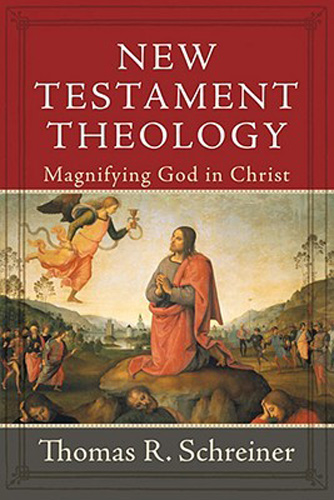
New Testament Theology: Magnifying God in Christ
In this substantial volume, Thomas Schreiner takes up the study of New Testament theology, looking for the themes that emerge from a detailed reading of the whole rather...
Downloads
About BiblicalTraining®
BiblicalTraining® wants every Christian to experience a deep and loving relationship with Jesus by understanding the life-changing truths of Scripture. To that end, we provide a high-quality Bible education at three academic levels taught by a wide range of distinguished professors, pastors, authors, and ministry leaders that moves from content to spiritual growth, all at no charge. We are a 501(c)(3) non-profit funded by gifts from our users. We currently have over 180 classes and seminars, 2,300 hours of instruction, registered users from every country in the world, and in the last two years 1.4 million people watched 257 terabytes of videos (11 million lectures).
Our goal is to provide a comprehensive biblical education governed by our Statement of Faith that leads people toward spiritual growth.