Survey of Biblical Theology - Lesson 15
John’s Epistles
Gain insight into John’s epistles, which affirm the historical reality of Jesus—heard, seen, and touched—and present the apostolic witness as the foundation for true fellowship with God. John describes God as light and love, showing that genuine believers confess sin, obey his commands, and love one another. False teachers denied sin and Christ’s humanity, forming rival groups, but assurance of salvation rests on new birth, faith, love, doctrinal truth, and God’s grace, as regeneration precedes faith.

I. Introduction
A. Continuity with John’s Gospel
B. Theme: Belonging to God through faith & obedience
II. Apostolic Witness
A. Eyewitness testimony: heard, seen, touched
B. Fellowship with God through apostolic word
III. God’s Nature
A. God is light (holy)
B. God is love
IV. False Teachers
A. Secession from church, rival doctrines
B. Claims: fellowship, sinlessness
V. Sin & Confession
A. Believers confess sin, forgiven in Christ
B. Jesus as Advocate & atonement
VI. Marks of True Faith
A. Confession of sin
B. Obedience
C. Love for believers
D. Right doctrine: Jesus in the flesh
VII. Antichrist & Secessionists
A. Many antichrists show last hour
B. Departures reveal false faith
VIII. Assurance
A. Purpose: confidence in salvation
B. Basis: forgiveness, victory, eternal life in the Son
IX. Grace & New Birth
A. Righteousness & love flow from regeneration
B. Faith follows new birth
C. God’s love enables ours
X. Regeneration & Faith Debate
A. Schreiner: new birth precedes faith
B. Alternative: faith precedes regeneration
C. Tension: sovereignty & human responsibility
We're going to look now at John's epistles. We looked at the gospel before this. Here we see John develop some of his thought and we see especially he's going to talk about what it means really to belong to God.
We saw the importance of faith and obedience in the gospel and we're going to see that as well in the epistle. But before that, just two truths I want to lift out of 1 John. In the first, just the introduction of the book, we see the historical nature of revelation.
The beginning of 1 John chapter 1 reminds us a lot of the gospel. The gospel commences with the words in the beginning. And here we have the words, what was from the beginning, what we have heard, what we have seen with our eyes, what we have observed and have touched with our hands concerning the word of life.
Now I think talking here about Jesus and notice the words he uses, hearing, seeing, observing, touching. And I think he's talking about the Lord Jesus here. And the we here, I don't think it can be the readers.
Probably John's writing this in the 80s or 90s. The readers probably never saw Jesus. John's an old man by now.
So the we, I think the we in this case is speaking of John himself. And John is reminding them of the truth of the revelation he has received. And he reminds them what they actually heard Jesus, right? And then they saw him and observed him and they touched him.
Did you notice something else about the order here? It's quite interesting. You can hear someone, you can hear a voice, but not see someone. So seeing brings you closer in, but you could see someone and not touch someone.
So John emphasizes in dramatic ways, doesn't he? The experience of knowing and seeing and even touching Jesus. He speaks of the revelation, verse two, the manifestation of life in Christ. And so John says, we've seen that life.
We testify about it. We declare to you the eternal life that was with the Father and was revealed to us. By us there again, I think he means the apostles.
Of course, the other apostles are probably no longer alive, but John's not the only one who received this revelation that was given to all the apostles. So the historical revelation was given to the apostles. So verse three, he emphasizes that again, doesn't he? What we've seen and heard, we declare to you.
What we've seen and heard as apostles, we declare to you so that you may have fellowship with us. So isn't that interesting? The fellowship with God is mediated through the apostles, through the apostolic witness. Of course, the apostles are no longer alive today.
Roman Catholics would say that revelation is mediated through the Pope and the bishops, but Protestants would say that apostolic revelation is now mediated to us through the scriptures, through the Bible. So the only way to have fellowship with God and have fellowship with Christ is through the apostolic witness, through the apostolic testimony. And so John goes on to say, indeed, our fellowship, that is John's fellowship as an apostle, all the apostles, their fellowship is with the Father and with his Son, Jesus Christ.
So John's saying from the beginning, if you want to know God, you've got to know him through the witness I bear. He's not being arrogant. Jesus revealed himself to the apostles and there's false teachers that are being countered in 1 John and these false teachers are departing from the apostolic witness.
John also has some significant statements on who God is. We read in 1 John 1.5 that God is light. And in context, it's clear that means God is good or God is absolutely holy and that God is love in 1 John 4.8 and 4.16. So both truths are there and that God is holy and love.
Sometimes people say God is holy love, right? Of course, there are many other attributes of God we could talk about. Then 1 John is very interesting on sin. The secessionists, and that's what I'm calling the false teachers, they're secessionists.
In the United States, there was a civil war in 1861 and the South seceded, left the North. So they were called secessionists. Well, what's happening in 1 John is there were, in the church or churches, we don't know all the details, there was a group that left the church and formed a rival church.
And so John speaks often about them in the book. And that's why he begins with, you have to believe the apostolic witness because these secessionists, right, today you may leave a church for a number of reasons and join another church, but you may not be departing from the gospel, right? We want to be slow to leave churches, right? Americans do that too quickly, at least I think so. But often when we leave one church and go to another, we're not we're not departing from the gospel, but these people were.
So this is a very serious matter. They're leaving and forming a rival group that has a different doctrine. So John speaks to these people and we see in chapter 1 that he speaks to them, a kind of mirror reading, right? In a mirror you see yourself that the text functions as a mirror that reveals what these false teachers were saying.
So we'll look at that and we'll look at John's response to what they were saying. So first of all, the false teachers were claiming that fellowship, the secessionists were claiming that fellowship with God. Fellowship means they claim to be Christians.
That's all fellowship means. Sometimes in popular evangelical lingo, at least in the United States, people will talk about fellowship in terms of the quality of their relationship with God. They'll say, I'm not having fellowship with God today.
But that's not how John's using the word fellowship. He means by fellowship, whether you belong to God at all, whether you're a Christian. So John is not thinking of, oh, your fellowship's going up and down.
So when we read in verse 6 that they say we have fellowship with them, that means we're Christians, right? We already saw that in verse 3. We want to have fellowship with you and our fellowship, we belong, true Christians belong to the father in Jesus Christ. Well, these secessionists claim to have fellowship with God, but if someone claims to have such fellowship, yet walks in darkness, we're lying and we're not practicing the truth. In other words, if someone claims to have fellowship with God and doesn't walk in a godly way, that claim is contradicted by their lives because they're not practicing the gospel.
Those who are truly believers, verse 7, walk in the light as Jesus is in the light. And then we have fellowship with one another, right? That fellowship has been broken with the secessionists and the blood of Jesus's son cleanses us from all sin. So this is very important, isn't it? Because we might think, oh, to have fellowship with God, you have to be perfect.
You have to walk in the light. Those who walk in darkness don't have fellowship. Do we have to be perfect to have fellowship with God? No.
When we're walking in the light, the blood of Jesus is cleansing us from sin. So while we're walking in the light, there is sin in our life. So how do we put this together? It must mean that the secessionists have given themselves over to sin in dramatic ways.
And I'll say more about that in a moment. But believers, yes, they still sin, but they haven't given themselves over to sin. There's a different pattern in the lives of believers.
Well, on to verse eight, because this all belongs together. If we say we have no sin, we are deceiving ourselves and the truth is not in us. So I think this is also what the secessionists were saying.
I think the secessionists were saying, now that we're Christians, now that we have the Holy Spirit, we can't sin. We don't sin. There's no sin in us whatsoever.
We're perfect. John says in response that if you're saying that you're deceiving yourself and the truth of the gospel is not in you. In other words, John's saying they're not Christians.
They're not believers. They've denied the faith by claiming to be sinless in such a way. And then thirdly, or I'm not thirdly, but conversely, what does a believer do? So again, we see what it means to be a believer is not to be perfect.
Believers confess their sins. They admit their sins. What does it mean to confess our sins? To acknowledge our sins.
We don't deny our sins. And if we do so, he's faithful and righteous to forgive us our sins, a very famous verse, and cleanse us from all unrighteousness. So what it means to be a believer is to regularly confess our sins.
Now, I just want to say a quick pastoral word here. Sometimes people with very sensitive consciences have come to me worried that they're not forgiven because they've remembered to confess every sin they've committed. And I think that's not the right reading of the verse.
Probably we've all sinned. I think we have all sinned and forgotten to confess. John's not trying to be that specific.
He's just saying if you're aware of sins in your life and refusing to confess them, that's a problem. Probably all of us have committed sins. We've forgotten to confess.
That doesn't mean we're not forgiven. This is not some kind of legalistic requirement. This is just a refusal to admit that there's sin in our life when it's there.
A refusal to say we're sorry about our sins. So don't read this in a kind of rigid, legalistic way and torment yourself. Some people are kind of tempted in that direction.
So verse 10, if we say we have not sinned, we make him a liar and his word is not in us. Now, that's a perfect tense verb where it says we have not sinned. And I think these people said, the secessionists said, since we've become Christians, we can't sin.
Sin is impossible for us. And actually, I think they're very sinful. And John says again, look, yeah, we've all sinned and we all fall short.
So verse one, then John says, look, I'm not encouraging sin here, right? We all are sinners and we confess it, but I'm not encouraging sin. But if we do sin, we have an advocate. By the way, that's our word pericletos again, that we had looked at when we looked at the gospel of John.
We have an advocate, but now the pericletos is not the Holy Spirit, but Jesus, right? We have an advocate with the father, Jesus Christ, the righteous one. He's the atoning sacrifice of the propitiation, the satisfaction for our sins, John tells us. Then as we're talking about sins in chapter three, John says something kind of surprising.
He says, no one who is born of God sins. And that's a very surprising statement because born of God means if you're a Christian, no one who's a Christian sins. So I'm just reading what in the word sins, I'm just reading the Greek text, they're translating it very literally.
But does that mean if we're a Christian, we're perfect? Well, first of all, we've already seen in the verses we just looked at in chapter one, the Christians do sin, right? And it's the false teachers who claim to be without sin. So yeah, we definitely sin. So what does he mean? Well, here's some solutions, and I'll argue for the last one.
Some say, well, this is talking about the super duper elite Christians, the really great spiritual Christians. What's the problem with that exegetically? The problem with it is he says, no one who is born of God sins. He's talking about all Christians.
That's clear. Some say, I think this solution is really interesting that he's saying no one who is born of God commits the sin unto death. That could be translated mortal sin.
What is the sin unto death? I would argue that the sin unto death is apostasy. So I don't think it's physical death. Some have interpreted the sin unto death to be physical death.
I would argue the sin unto death is the same sin as blaspheming against the Spirit, denying God. But surely this is true. No one who is born of God can commit apostasy.
They won't commit the sin unto death. No true Christian is going to blaspheme the Spirit. So yeah, I don't disagree with that.
I just think the verse is saying more than that. But I certainly agree that that's included. Augustine said it means we can't and we don't sin while we're abiding in Christ.
But actually, yes, it does speak of abiding in Christ and not sinning in 3.6. But again, I think the verse is saying more than that. It's talking about something characteristic of Christians. I think Augustine picks out one of these statements, but he really doesn't account for the whole context.
So I don't think he's talking about that either. So with most, I think he's thinking, what is characteristic? If you put this together with chapter one, what is characteristic of our lives as Christians? What's the pattern of our lives? What's the orientation of our lives? What's the direction of our lives? Yes, of course we still sin. I think we still sin every day.
If you include in sin thought, word, and deed, and motive. If you include in sin what the Bible says, everything that is not of faith is sin. If you include in sin what I would include in sin, everything that's not done to the glory of God is sin.
So yeah, we continue to sin. But that's not the pattern or orientation or direction of our lives. There's a newness in our lives as Christians.
So I think these false teachers, on the other hand, were actually enslaved in sin. And that's what I want to talk about next. John talks a lot.
This fits our theme of faith and obedience that we've been looking at. John talks a lot about what does it look like to be a Christian? What's the evidence of salvation? What's the evidence of genuine faith? And we've already seen the first one, right? One evidence is we confess sin. There's a humility there, isn't there? Of admitting our sin, admitting where we fall short.
But another one is that we keep his commandments. Now, by the way, we don't look at all these verses. You know the way 1 John is written.
It's written, he kind of hits a subject and then he circles back to it again. This can be a hard book for preachers to preach, right? Because you feel like you're repeating yourself and you sort of are, right? But that's one way is to hit a subject, then return to it again, you know, kind of to impress on your readers. So, you know, we see these themes several times.
We'll just look at some examples, but here's an example. This is how we know 1 John 2, 3. This is how we know that we know him. This is how we know.
1 John is written to give us assurance of salvation. We saw that earlier, remember? This is how we can be assured that we know God, that we're Christians. What does he say? If we keep his commands.
The one who says, I've come to know him, the one who says I'm a Christian and yet doesn't keep his commands is a liar and the truth is not in him. But whoever keeps his word truly in him, the love of God is made complete. This is how we know we're in him.
If we're obedient, the one who says he remains in him, abides in him. If I abide there, he means a Christian, right? Should walk as just as he walked. So again, John's not talking about perfection here, is he? I had a person who was very close to me.
I prayed with that person to receive Christ. And then that person started living with someone who was, they were not married, started getting involved in alcohol, drunkenness. I mean by that, it's not wrong to drink alcohol, right? But, and I said to her, this is how we know we've come to know him, if we keep his commands.
I didn't say you're not a Christian. I said, I don't know if you're a Christian anymore, because you're giving no evidence. And that's what I think John has in mind.
There's no clear evidence that you really belong to God. Just the mere professions of faith aren't sufficient. And that's what was happening in the lives of these secessionists.
John also talks about loving the brothers and sisters. I don't think I need to read those verses, but they're very powerful, very practical, not hard to understand. That we'd love one another as believers.
In my own life, I became a believer when I was 17. That's one of the first things God stirred in me and it's never left. People I've never met before, but I know when they tell me they have faith in Jesus, there's an affection there, right? There's an immediate bond between us, because they've experienced what I've experienced.
And I think that's what John is talking about here. Again, we're not perfect at doing this, but there's a special love and affection. We remember what the gospel of John says, John 13, 34 and 35.
This is how people will know we're Jesus's disciples, by how we love, not the world, but how we love one another. And that's what John emphasizes. John's not against loving the world, but he emphasizes loving one another, because that's the mark that the church is a new community, that the church belongs to Jesus Christ.
And then he says in 1 John 2, 15 through 17, that true believers, they don't love the world. Their affection isn't on the things of this world, but on God. But another very important theme is confessing Jesus as the Christ who has come in the flesh.
I want to show you a couple of these passages. And that's the last thing we'll look at in this section. So, children, it is the last hour.
Sometimes people ask me, perhaps they ask you, are we in the last days? And tongue in cheek, I can say, indeed, we are. Not only are we in the last days, we're in the last hour. And we have been for 2,000 years.
Well, of course, the word hour isn't used literally, is it? But the last days have arrived, haven't they? We're in the last hour. As you heard, an Antichrist is coming. Even now, many Antichrists have come.
So, there will be a final Antichrist, by the way, right? But there are many Antichrists that precede the final Antichrist. So, we recognize all through history, Christians have rightly said there are people on the scene who may be the final Antichrist. The only mistake they've made is when they've predicted this is the final Antichrist, right? But there have been many candidates throughout history, and of course, one of these many Antichrists will end up being the Antichrist.
But the many Antichrists that are present show us the last hours. One of my favorite verses, here's the secessionists, they went out from us, right? They seceded, but they did not belong to us. For if they had belonged to us, they would have remained with us.
A beautiful verse on the perseverance of the saints, is it not? If they truly belonged to us, they would have remained. But they didn't remain. However, they went out, they seceded, so that it might be made clear that none of them belongs to us.
They weren't truly Christians. You have an anointing from the Holy One through God's Word and God's Spirit. True believers have an anointing.
And all of you know the truth. So, what is John saying there? He's saying right at the end of the passage, he says, the anointing you receive from him remains in you and you don't need anyone to teach you. Instead, his anointing teaches you about all things and it's true and it's not a lie, just as it is taught you remain in him.
Some cults have used this verse to say, we don't need any teachers, we don't need any pastors, we know everything individually and personally. That's not what John's saying. He's assuring these people who are Christians, you already know the truth.
Don't pay attention to these false teachers. Don't pay attention to these secessionists. And we see that again in verse 21.
I've not written to you because you don't know the truth, but because you know it. And because no lie comes from the truth, who is the liar? Is it not the one who denies that Jesus is the Christ? So, here we see the doctrinal deviation of these false teachers. They deny that Jesus is the Messiah come in the flesh.
So, this false teaching is called docetism. D-O-C-E-T-I-S-M. D-O-C-E-T-I-S-M.
Docetism. Docetism is the idea that Jesus just appeared to be human. And we see this again in 2 John, the same teaching.
Many deceivers have gone out into the world. They do not confess the coming of Jesus Christ in the flesh. So, interestingly, they believe Jesus was God, but not man.
They believe Jesus only appeared to be human, but he wasn't really human. And John says that's heresy. It's heresy to deny the full deity of Jesus.
It's also heresy to deny the full humanity. What does John say? Someone who teaches that, that's the deceiver and the Antichrist. Such false teaching.
So, we've seen what's the evidence of genuine faith. We've seen faith and obedience, confessing sin, keeping God's commands, not perfectly, but a new direction in our lives, loving the brothers and sisters, and doctrinal orthodoxy. Doctrine is important.
They've denied the incarnation. What does John say in his gospel? The word became flesh. And they're denying that, and that's a fundamental teaching of the gospel.
As we mentioned earlier, John writes to assure his readers. I've already talked about some of these verses. We talked about the anointing, but here's another one I just want us to look at briefly.
1 John 2.12, I'm writing to you little children since your sins have been forgiven. On account of his name, I'm writing to you fathers because you have come to know the one who was from the beginning. I'm writing to you young men because you have conquered the evil one.
I've written to you children because you have come to know the father. I've written to you fathers because you have come to know the one who was from the beginning. I've written to you young men because you are strong.
God's word remains in you and you have conquered the evil one. Now, I'd love to talk about these verses more in detail, but I just want to say assurance, assurance, assurance, right? That's what's going on in these verses. That's the purpose of this letter.
Let's see. Let's just look at maybe a couple others. Verses that say this.
1 John 4.17, and this is, love is made complete so that we may have confidence in the day of judgment. So you see it there. God wants us to have confidence because as he is, so also are we in this world, which I think means we are perfect before him by his grace.
There is no fear in love. Instead, perfect love drives out fear because fear involves punishment. So the one who fears is not complete in love.
There is a right fear of God, isn't there? But this is the kind of paralyzing fear, the kind of terror that we will be punished on the last day. And John says, I don't want you to feel that. I want you to approach God on the last day to be assured of your salvation and to have confidence in him.
Not because of our own works, obviously, at the end of the day, but because of what God has done for us in Jesus. And then we see again in 1 John 5.5, who is the one who conquers the world, but the one who believes that Jesus is the son of God. How do we overcome? It's our faith, ultimately.
And Jesus Christ, he tells us, is the one who came by water and the blood. What's the water there? Baptism, blood, death. What's he saying? He's fully human, right? He died.
He came by water and blood, not by water only, not just the baptism, but water and the blood. Yeah, Jesus really died. The spirit testifies to this.
The spirit is the truth. For there are three that testify to the truth, the Holy Spirit, Jesus' baptism, where God said, you're my beloved son, the blood of the cross. These three are in agreement.
If we accept human testimony, God's testimony is greater because it is God's testimony that he has given about his son. The one who believes in the son of God has the testimony within himself. So those of us who trust in God, the testimony, John speaks about the assurance of the spirit, right? The witness of the spirit that we believe in God is within us.
And God has given us this testimony. The testimony is God has given us eternal life. This life is in his son.
If you have the son, you have the life, right? If you don't have the son, you don't have the life. God wants you to know. God wants us to know that we have this life in Jesus Christ and the spirit witnesses to that truth.
So we've seen the emphasis on faith and obedience and assurance. And like in the gospel, John emphasizes God's grace. So I want, I'm not going to talk about all these verses here, but I'm just going to pick out a few and we'll see the priority of grace.
The one who practices righteousness, John says, has been born of God. So how does that work? Is John saying we do what's right and because we do what's right, then we're born of God? Absolutely not, right? That's a false gospel. Actually has been born of God is perfect tense in Greek.
What he's saying, first you're born of God and the result is you practice righteousness. The practice of righteousness is a consequence of being born of God. So our righteousness is a product, a consequence, a result of our regeneration.
First John three, nine, everyone who has been born of God does not practice sin. Perfect tense again, has been born of God. Perfect tense verb.
Is he saying first we'd love others. And as a consequence, as a result, we're born of God. Absolutely not.
That's a false gospel, right? No, it's the other way around. God gives us new life. We're born of God.
We're born again, as Jesus says to Nicodemus, right? We're born again. And as a result, as a consequence of that new life, then we'd love others. Oh, I'm sorry.
I skipped a verse, didn't I? That's first John four, seven. I talked about loving, but I skipped first John three, nine, or I mixed up those verses, right? Four, seven, just to make this clear, right? Four, seven says everyone who loves has been born of God, but three, nine says everyone who has been born of God does not practice sin. The same idea, right? Is he saying first we don't practice sin.
And then as a result, we're born of God. Absolutely not. Right? These are all perfect tenses.
Now, first we're born of God. Then as a consequence, we don't practice sin. We already looked at this first.
Remember, it's not talking about perfection, talking about a new direction. So we come to the last one. Everyone who believes that Jesus is the Christ has been born of God.
Does regeneration precede faith? Absolutely. Because look at the pattern. It's perfect tense again.
Is it first we believe, then we're born of God? No, we're born of God and then we believe. So this is a very interesting thing, isn't it? Because people debate this. Good people are on the other side of this.
Does regeneration precede faith? I just think first John's very clear on this. Regeneration precedes faith. You know, if you're interested in this topic, John Piper has a nice little book on it called Finally Alive, which I really love that book.
Finally Alive, a very clear exposition of what it means to be born again. So as I said, we're not going to look at all these verses, but I want to just look at a couple we love because he loved us first, right? There's God's grace. Why do we love God? You know, the gospel isn't, let's work really, really hard to love God.
No, our love for God is a consequence of his love for us. And notice what he says in first John 5.4. What is born of God overcomes the world. How is it we can overcome the world? Remember John said, don't love the world.
Well, we can't do it on our own. We overcome the world because of God's grace, because we're born of God. And so very, very encouraging.
So, you know, there's many other things we could talk about in first John, isn't there? But here, we just want to emphasize that the new life that is in believers, we're to be assured we have eternal life. That eternal life involves faith, right? Which is a gift of God that God gives us as a result of being born of God. But that faith, John tells us, shows up in particular ways in a new way of living and loving brothers and sisters and confessing what is true doctrinally.
These two are part of the gospel of Jesus Christ. When you say that regeneration precedes faith, could you give a summary of somebody who believes the other position, that faith would come before regeneration? Yes, yes. I think most people who argue that would say, they'd say, first you believe and then you receive the Holy Spirit, right? And there's a lot of verses that say that.
When you believe, then you receive the Spirit. So, that's a very good argument. My reply to that is, I don't think receiving the Spirit should be equated with being born of God.
So, that's where we differ, really. Because I'm saying being born of God precedes faith, then we exercise faith and then we receive the Spirit. But they would say, and certainly this is a possible reading, isn't it? They would say, no, you believe and then you receive the Spirit and receiving the Spirit is what it means to be born of God.
So, that'd be the difference between us. So, if regeneration precedes faith, does that take the element of personal volition out of the process of salvation? Wouldn't some people say that in order for us to enter into a relationship with Christ, it has to be a real choice on our part? And does having regeneration before we have faith take out that element of personal volition in the salvation process? Yeah, that's really an excellent, excellent question. Excellent way of putting it.
And my answer being, no, it doesn't remove personal volition at all because this is a larger answer and we'd have to talk about other texts, which we don't have time to do. But I would argue that what we see is God is sovereign in everything, but that sovereignty never cancels out human freedom and human responsibility. And here we return to what we've talked about a number of times.
There's a mysterious correlation. Our faith, yeah, our faith is ultimately a gift of I think Ephesians 2.8. It's God's gift. But that doesn't mean our choices are an illusion.
They are real. Now, I don't think scripture finally explains how do you correlate these two truths. That leaves us in the realm of mystery.
But the apostles, when they preach in the book of Acts, which we're about to look at, although I'm not going to talk about this theme, they never say, has the Holy Spirit regenerated you? Then come and believe. No, they say, repent and believe. They always summon people to choose, right? That choice is real.
But I think they'd say, yeah, you chose, you repented, but you chose and repented because God gave you the grace to do it. He regenerated you. And I think there's a sense, I mean, of course, people disagree on this, but there's another sense in which every believer would say, yeah, finally, that wasn't me.
It was me. But in a sense, it wasn't. Now, there are good believers who are in more of the Arminian stream who wouldn't hold to what I just said.
I understand that, but that's more of a typically Reformed answer.
- Explore how biblical theology developed through figures from Irenaeus to Bultmann, learning how debates over history, reason, and revelation shaped its methods, authority, and lasting influence on theology and the church.0% Complete
- Study how biblical theology traces God’s revelation historically while systematic theology organizes doctrine, seeing how both disciplines work together with presuppositions of faith to interpret Scripture as God’s authoritative Word.0% Complete
- Creation, covenant, and conflict reveal humanity’s sin and God’s judgment, showing the garden as sanctuary, Adam’s priest-king role, the serpent’s opposition, and God’s plan to bring salvation and victory through His promises.0% Complete
- God’s covenant with Abraham promises land, offspring, and blessing to all nations, showing both unconditional divine fulfillment and conditional obedience, while God preserves His plan through threats and fulfills His promises in surprising ways.0% Complete
- The Exodus shows God redeeming Israel by grace, giving the law and sacrifices, and dwelling in the tabernacle, all pointing to Christ’s final sacrifice and God’s presence with His people in the new creation.0% Complete
- Watch Israel’s unbelief, partial fulfillment of God’s promises, the cycle of sin without a king, and the rise of David as God’s chosen ruler who anticipates the true king to lead His people.0% Complete
- God’s covenant with David points to an eternal King, Israel’s failure reveals the need for renewal, and the prophets promise a new covenant, Exodus, creation, and David—all fulfilled in Jesus, the true King bringing worldwide blessing.0% Complete
- Israel’s identity forms through unfulfilled promises, foreign domination, Jewish factions, and rising messianic hopes, which fuel anticipation of a Messiah and set the stage for the New Testament.0% Complete
- Matthew shows Jesus as Emmanuel, true Israel, Son of David, and Son of God, fulfilling promises through a new Exodus, atonement, and divine authority, so that all God’s covenants find their fulfillment in him.0% Complete
- Dr. Schreiner reveals Jesus as the divine Son, true Israel, greater Moses, and eternal King who fulfills God’s promises, reveals the kingdom in hidden yet present power, and builds his church as the new people of God drawn from all nations.0% Complete
- Mark proclaims Jesus as the Son of God and true King whose suffering secures forgiveness, while discipleship means following his example of humility and obedience despite weakness.0% Complete
- John portrays Jesus as the eternal Logos and Son whose I AM sayings and signs grant believers the present possession of eternal life through faith.0% Complete
- John presents Jesus’ work as his lifting up and glorification, fulfilling Scripture. Life comes through true believing—receiving, coming, hearing, drinking, eating, entering, abiding—while false belief, darkness, and human glory block it.0% Complete
- Dr. Schreiner highlights divine sovereignty: the Father gives believers to the Son, the Spirit gives life, and all who truly believe are preserved, and glorifies Christ, showing Jesus’ death and resurrection as God’s sovereign plan.0% Complete
- In John’s epistles, he teaches that assurance rests on the apostolic witness, confession of sin, obedience, love, and doctrinal truth, while false teachers deny Christ.0% Complete
- Acts shows God’s plan through Christ and the Spirit, fulfilling covenant promises, spreading the gospel, empowering witnesses, and forming the church as restored Israel united in salvation.0% Complete
- Paul’s “already but not yet” theology shows God’s promises fulfilled in Christ yet awaiting completion, shaping Christian life, doctrine, and practice in areas like adoption, redemption, sanctification, and practical living.0% Complete
- In this lesson, Paul shows that Spirit-led believers still need commands, which guide holiness and love without legalism, uniting word and Spirit to shape Christian life, protect love from distortion, and call for discernment in obedience.0% Complete
- Learn how the New Perspective reinterprets Judaism and Paul, how Sanders and Stendhal shifted focus from justification to covenant and inclusion, and how Paul’s own words confirm his Damascus road conversion.0% Complete
- Paul uses “works of the law” to mean all deeds of the law, not just Jewish boundary markers, and teaches that justification comes by faith in Christ because human disobedience makes works powerless to save.0% Complete
- Learn that justification is God’s declarative act of counting believers righteous through Christ’s atonement, not human works, and see why imputation, not transformation, secures assurance and preserves the heart of the gospel.0% Complete
- Hebrews teach the Son as God’s final revelation and superior Melchizedekian priest whose one sacrifice fulfills typological promise.0% Complete
- James emphasizes authentic faith that produces obedience, wisdom, and care for others, showing that faith without works is dead while affirming God’s goodness and calling believers to endurance, humility, and practical godliness.0% Complete
- In 1 Peter, see how believers as exiles endure suffering with hope, live as God’s priestly people, rest in Christ’s atoning work and victory, and anticipate the inheritance of the new creation as fulfillment of God’s promises.0% Complete
- Revelation’s symbolism portrays Satan, the beast, false religion, and Babylon while teaching to persevere in suffering, trust God’s sovereignty, and hope in Christ’s victory and the new creation.0% Complete
- Dr. Schreiner teaches how Revelation portrays Christ’s full deity, the Lamb’s redeeming work, with victory grounded in the cross and fellowship with God as the ultimate goal.0% Complete
Lessons
- Explore how biblical theology developed through figures from Irenaeus to Bultmann, learning how debates over history, reason, and revelation shaped its methods, authority, and lasting influence on theology and the church.0% Complete
- Study how biblical theology traces God’s revelation historically while systematic theology organizes doctrine, seeing how both disciplines work together with presuppositions of faith to interpret Scripture as God’s authoritative Word.0% Complete
- Creation, covenant, and conflict reveal humanity’s sin and God’s judgment, showing the garden as sanctuary, Adam’s priest-king role, the serpent’s opposition, and God’s plan to bring salvation and victory through His promises.0% Complete
- God’s covenant with Abraham promises land, offspring, and blessing to all nations, showing both unconditional divine fulfillment and conditional obedience, while God preserves His plan through threats and fulfills His promises in surprising ways.0% Complete
- The Exodus shows God redeeming Israel by grace, giving the law and sacrifices, and dwelling in the tabernacle, all pointing to Christ’s final sacrifice and God’s presence with His people in the new creation.0% Complete
- Watch Israel’s unbelief, partial fulfillment of God’s promises, the cycle of sin without a king, and the rise of David as God’s chosen ruler who anticipates the true king to lead His people.0% Complete
- God’s covenant with David points to an eternal King, Israel’s failure reveals the need for renewal, and the prophets promise a new covenant, Exodus, creation, and David—all fulfilled in Jesus, the true King bringing worldwide blessing.0% Complete
- Israel’s identity forms through unfulfilled promises, foreign domination, Jewish factions, and rising messianic hopes, which fuel anticipation of a Messiah and set the stage for the New Testament.0% Complete
- Matthew shows Jesus as Emmanuel, true Israel, Son of David, and Son of God, fulfilling promises through a new Exodus, atonement, and divine authority, so that all God’s covenants find their fulfillment in him.0% Complete
- Dr. Schreiner reveals Jesus as the divine Son, true Israel, greater Moses, and eternal King who fulfills God’s promises, reveals the kingdom in hidden yet present power, and builds his church as the new people of God drawn from all nations.0% Complete
- Mark proclaims Jesus as the Son of God and true King whose suffering secures forgiveness, while discipleship means following his example of humility and obedience despite weakness.0% Complete
- John portrays Jesus as the eternal Logos and Son whose I AM sayings and signs grant believers the present possession of eternal life through faith.0% Complete
- John presents Jesus’ work as his lifting up and glorification, fulfilling Scripture. Life comes through true believing—receiving, coming, hearing, drinking, eating, entering, abiding—while false belief, darkness, and human glory block it.0% Complete
- Dr. Schreiner highlights divine sovereignty: the Father gives believers to the Son, the Spirit gives life, and all who truly believe are preserved, and glorifies Christ, showing Jesus’ death and resurrection as God’s sovereign plan.0% Complete
- In John’s epistles, he teaches that assurance rests on the apostolic witness, confession of sin, obedience, love, and doctrinal truth, while false teachers deny Christ.0% Complete
- Acts shows God’s plan through Christ and the Spirit, fulfilling covenant promises, spreading the gospel, empowering witnesses, and forming the church as restored Israel united in salvation.0% Complete
- Paul’s “already but not yet” theology shows God’s promises fulfilled in Christ yet awaiting completion, shaping Christian life, doctrine, and practice in areas like adoption, redemption, sanctification, and practical living.0% Complete
- In this lesson, Paul shows that Spirit-led believers still need commands, which guide holiness and love without legalism, uniting word and Spirit to shape Christian life, protect love from distortion, and call for discernment in obedience.0% Complete
- Learn how the New Perspective reinterprets Judaism and Paul, how Sanders and Stendhal shifted focus from justification to covenant and inclusion, and how Paul’s own words confirm his Damascus road conversion.0% Complete
- Paul uses “works of the law” to mean all deeds of the law, not just Jewish boundary markers, and teaches that justification comes by faith in Christ because human disobedience makes works powerless to save.0% Complete
- Learn that justification is God’s declarative act of counting believers righteous through Christ’s atonement, not human works, and see why imputation, not transformation, secures assurance and preserves the heart of the gospel.0% Complete
- Hebrews teach the Son as God’s final revelation and superior Melchizedekian priest whose one sacrifice fulfills typological promise.0% Complete
- James emphasizes authentic faith that produces obedience, wisdom, and care for others, showing that faith without works is dead while affirming God’s goodness and calling believers to endurance, humility, and practical godliness.0% Complete
- In 1 Peter, see how believers as exiles endure suffering with hope, live as God’s priestly people, rest in Christ’s atoning work and victory, and anticipate the inheritance of the new creation as fulfillment of God’s promises.0% Complete
- Revelation’s symbolism portrays Satan, the beast, false religion, and Babylon while teaching to persevere in suffering, trust God’s sovereignty, and hope in Christ’s victory and the new creation.0% Complete
- Dr. Schreiner teaches how Revelation portrays Christ’s full deity, the Lamb’s redeeming work, with victory grounded in the cross and fellowship with God as the ultimate goal.0% Complete
Class Resources
Recommended Books
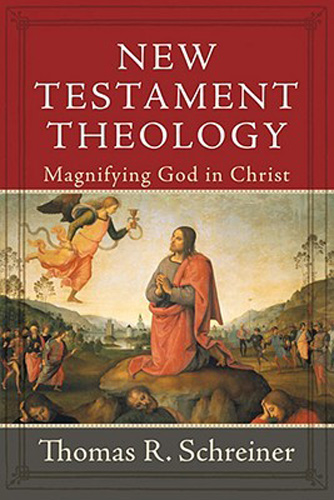
New Testament Theology: Magnifying God in Christ
In this substantial volume, Thomas Schreiner takes up the study of New Testament theology, looking for the themes that emerge from a detailed reading of the whole rather...
Downloads
About BiblicalTraining®
BiblicalTraining® wants every Christian to experience a deep and loving relationship with Jesus by understanding the life-changing truths of Scripture. To that end, we provide a high-quality Bible education at three academic levels taught by a wide range of distinguished professors, pastors, authors, and ministry leaders that moves from content to spiritual growth, all at no charge. We are a 501(c)(3) non-profit funded by gifts from our users. We currently have over 180 classes and seminars, 2,300 hours of instruction, registered users from every country in the world, and in the last two years 1.4 million people watched 257 terabytes of videos (11 million lectures).
Our goal is to provide a comprehensive biblical education governed by our Statement of Faith that leads people toward spiritual growth.