Survey of Biblical Theology - Lesson 19
The New Perspective
Examine the rise of the New Perspective on Paul, beginning with E.P. Sanders’ claim that Judaism was not legalistic but based on “covenantal nomism” (entry by grace, maintained by obedience). Discover how Stendhal emphasized Gentile inclusion over justification and argues Paul was called, not converted. Assess scholarly critiques showing Jewish sources often stressed works, sometimes grace, revealing a complex picture. Finally, learn why Paul’s own testimony proves his Damascus road experience was true conversion, not merely a call.

I. Introduction
A. Focus on Paul’s justification & the New Perspective
B. Shift from storyline to doctrinal debate
II. Origins
A. E.P. Sanders (Paul and Palestinian Judaism, 1977)
B. Influences: Stendhal, Holocaust context
C. Key idea: Judaism not legalistic but covenantal nomism
III. Sanders’ Thesis
A. Enter covenant by grace, remain by obedience
B. No merit-based salvation; Torah acceptance emphasized
IV. Responses
A. Positive: avoids caricatures, notes grace
B. Jewish critique (Neusner): legalism not negative
C. Other scholars: Elliot, Avemarie, Das, Gathercole, Carson/O’Brien/Seifrid show mixed or works-based emphases
D. Schreiner: Mishnah fosters legalism, synergism, Holocaust influence, blindness to legalism
V. Stendhal’s View
A. Claims: Paul only called, justification minor, Jews already saved
B. Refuted by Paul’s testimony: persecutor, blasphemer, self-righteous, in need of conversion
C. Damascus road: both conversion & call
VI. Conclusion
A. Sanders influential but simplistic
B. Stendhal’s view biblically untenable
C. Paul opposed legalism; New Perspective mistaken
So now I want to kind of step aside. We've mainly been talking about the storyline since we've been in the New Testament, the fulfillment that's come in Christ, the already not yet, faith and obedience. We've been really talking lately about obedience and what that looks like in our lives, the already not yet.
But here I want to step aside and talk about a particular issue, really Paul's understanding of justification and the new perspective on Paul. You know, maybe not all of you have heard of the new perspective. It's kind of a funny name now because it started in 1977.
So when it came out, it was new, but now that's over 40 years ago, right? It's getting old. But another way of describing it is to describe it as the Sanders revolution. And that's named after a person named E.P. Sanders, Ed Sanders.
The Lutheran view of Judaism dominated until 1977, when Sanders wrote this book, Paul and Palestinian Judaism, a comparison of patterns of religion. I saw this book when I was a seminary student, I was doing my Master of Divinity. And I remember seeing this book, 500 plus pages in the bookstore and thinking, wow, that looks fascinating.
I'd love to read this book, but I was too busy with all my seminary classes. I had too much homework. I didn't have time to read the book at the time.
But what the Lutheran view of Judaism is basically Judaism was legalistic, was focused on works righteousness, trying to earn your salvation. Jesus and Paul, but especially Paul here comes along and says, look, you're not saved by your works, but you're saved by faith. And of course, that's what Martin Luther emphasizes as well.
Paul criticizes and corrects this wrong view of the law and salvation and justification that had become so popular in Jewish circles. Sanders comes along and he says, no, no, this is completely wrong. The Jews were not, they were not, they were not legalistic at all.
When you actually read the sources, they believed in grace. They believed in what he called covenantal nomism. And I'll talk more about that in a moment.
So Sanders has written a lot of books. You can see those. I just want you to see that he's a very scholarly person.
There are people that preceded him, like this Montefiore, George Footmore, but their ideas never caught on. But there was another guy who preceded him named Krister Stendhal. Krister Stendhal, he ended up being a Lutheran bishop, more from the liberal wing of Protestantism.
He wrote a book, or he actually wrote an essay called Paul and the Introspective Conscience of the West in 1961. And it fits with what Sanders is doing because Stendhal says, look, the problem is the Lutheran understanding of things is dominating our way of reading the New Testament. And this is wrong.
That's what Sanders is saying as well, right? We've been reading the New Testament through the lenses of Luther. That's bad. We shouldn't be doing that.
And we're reading Paul through the lens of Augustine and his conversion. But Stendhal says Paul really wasn't about justification. Justification wasn't really very important to Paul.
What was important to Paul is that the Gentiles are included in the people of God. So this is a key theme of the New Perspective, Gentile inclusion. That's what was important to him.
And Stendhal goes on to say, Paul wasn't even actually converted on the Damascus road. He was just called to preach the gospel, but he was already a believer as a Jew. So we'll come back to that.
So Sanders and Stendhal, this whole idea, Judaism is not legalistic. The gospel is not mainly about justification. Why did this become popular in many circles? By the way, if you think it hasn't influenced evangelical circles, it has.
So just to name a couple of things. So Jimmy Dunn's word biblical commentary on Romans is from a New Perspective angle. Scott McKnight's Galatians commentary on Nivac is clearly New Perspective.
And there are others as well. So it has entered into evangelical circles and especially, and I'll talk about this especially through Tom Wright, and we'll talk about him later. Anyways, Sanders and Stendhal's ideas, one reason they were popular is because it was after the Holocaust.
Of course, you know what the Holocaust is. Many Jews were killed, 6 million or so, horrifically by the Nazis in World War II. Really this idea is entering into scholarship through liberal Protestantism.
Protestants were asking, how come in a Christian country like Germany, all these Jews were killed? And one of the things they thought is, well, it's because we've been very critical of Judaism, right? So they want to say, okay, one reason we're so negative about Jews is because we always talk about them as being very legalistic. But actually that's a myth. The Jews aren't legalistic at all.
There was no legalism in Judaism. And I'll say more about that. And then Sanders would say, see what's going on here? Why are we reading the Bible this way? We're reading the Bible through the lenses of Luther's debate with the Roman Catholics.
So we're making the Jews of the first century like the Roman Catholics of the 1500s. But it's actually right. We're putting these glasses on, these glasses of the Lutheran-Catholic debate, and that's how we're reading the New Testament.
We need to take our glasses off. We take our glasses off. We're going to read the Bible rightly.
We're going to read the Bible for what it's really saying instead of imposing this Catholic-Lutheran reading. Can you define legalism? Sure. Yeah, legalism is the idea that you earn your righteousness before God by your works, that you merit your righteousness by works.
And that's what Sanders is saying. There's no idea of that in Jewish thought. So what does Sanders say? So it's a very impressive book.
He talks about a pattern of Jewish religion in this book, Paul and Palestinian Judaism. It's covenantal gnomism. So he studies the Dead Sea Scrolls, the Apocrypha, the Pseudepigrapha, and the Tanaitic literature.
By Tanaitic literature, I mean the Mishnah and the Talmud. So you may not know what all these pieces of literature are, but this is a Jewish literature that is very accessible during the time of Jesus. Now, we actually could add in Josephus and Philo.
He didn't study those, but this is a lot, right? The amount of material he covers is staggering. So what's his thesis? That's what we're really interested in, covenant gnomism. The word covenant, we've used that word.
A covenant is where you enter into a relationship and make promises and obligations to one another. Gnomism is the word for law. So we could call this covenant lawism, covenant obedience, we could say.
So Sanders says this is what the Jews believed. Luther's wrong. Most scholars are wrong about Judaism, right? We enter into the covenant by grace.
So it's all grace in Jewish circles. We stay in by keeping the law. So we respond to God's grace with obedience.
But we enter in by grace. The Jews did not weigh merits and say, okay, yeah, you're 51% obedient. I mean, I wasn't taught this formally as a Catholic, but before I was saved and I was a Catholic, every once in a while, as a kid, I'd wonder if I was saved.
And this is the thought that would go through my mind. I'd literally think this way. I'd think, I wonder if I'm going to heaven.
Then I'd think, I wonder if I'm more good than bad. And then I'd think, I think I'm probably 51% good. Am I 51% good? And then I think, I hope so.
Maybe I am. And then I think, but I'm not sure. And then I just forget about the whole thing and wouldn't think about it for maybe three years.
But this is the idea that, oh, these Jews believed you had to be 51% obedient. Well, Sanders says, that's a myth. They didn't believe that.
They believed you got in by grace. So they didn't believe in works righteousness. They didn't believe you had to work to be righteous, to obtain God's favor.
No, they didn't demand perfect obedience. It's grace, grace, grace, right? The Jews were gracious. This whole idea of the way we've been reading the Bible, the way the reformers read the Bible, it's just not what the Bible is saying.
And it's really a criticism of the Jews that's unfair. The rabbis, this is Sanders now. So the rabbis then had to explain why did God choose Israel? And now I use that little rhyme earlier, right? How odd of God to choose the Jews, right? Why did he choose them? Well, what did, what did the Jewish rabbi say? He chose them for God's namesake.
Well, that's not legalistic, right? Now the second one may sound legalistic because of the merit of the fathers, but hey, for you, that's grace. He chose you because of Abraham, Isaac, and Jacob, because they were so good. Well, that's not legalistic for you.
What about the last reason? So now here, the rabbis actually talked this way. The rabbi said, God actually offered, now this isn't written in the old Testament anyway, right? The rabbis just come up with this. God offered the Torah, the law to every nation in the world, every people group.
All the other people groups said, we don't want it. We don't want the law. Israel said, we want it.
So that's why God chose us. Why did God chose us? Because everybody else said no. And we said, yes.
Well, somebody might say, well, wow, that sounds kind of legalistic. And Sanders says, but, but God's fair, right? Why is God judging the Gentiles? They said, no. Why are we included? That's not works, Sanders says.
That's not works. God's fair. We're, we're included because we said yes.
So that's Sanders, really simply, 500 pages in 10 minutes. Right? But that's essentially his program. Many people, scholars, I mean, embraced what Sanders said.
James Dunn, I mentioned his Romans commentary. This was, he wrote it in the early 1980s. And I was a doctoral student then.
And I remember Dunn saying, wow, this is so exciting. I was, I'm paraphrasing. These aren't his exact words.
It's a little bit boring to write on Romans. I have nothing new to say, but now I have something new to say. Because Sanders is right.
We need to read Romans a whole new way. N.T. Wright didn't put it quite that way, but Wright's kind of in those same paths, you know, hey, Sanders is right. We got to rethink what Paul's saying now.
So that became very exciting and new and scholarship. And I'll return to those guys momentarily. But first I want to respond to Sanders and his view of Judaism.
You see, when we talk about Dunn and Wright, we're going to talk about Paul, but now we're talking about Second Temple Judaism. First of all, we're not talking about the Old Testament here. People often make that mistake when I'm talking about this.
I've taught it many times. I'm not talking about the Old Testament. We're talking about Second Temple Judaism, right? We're talking about what is the pattern of religion? Where is that in my notes? In the Dead Sea Scrolls, the Apocrypha, the Pseudepigrapha, and the Tanaitic literature.
That's not the Old Testament. We're talking about Second Temple Jewish writings. They're not in the Bible.
Maybe you haven't read any of them. You know, that's okay, right? It takes time to read all that. But that's what we're talking about.
What did the Jews believe when Paul was alive? Why do you call it Second Temple Judaism? Yeah, well, that's just, I didn't make up that name, because the Second Temple was established or built in like 500. And so then this period goes, I mean, roughly from 400 BC to, well, people extend it different places, 200 AD, although the Second Temple was destroyed in AD 17. So it just becomes kind of a convenient, this is the Second Temple period.
But it's sometimes called Intertestamental Judaism, but it even extends beyond the New Testament, right? 200 AD. So it's, there's actually no neat, really, title to give it. Yeah.
Yeah. Good question. So anyway, we're talking about this period.
And what can we say about Sanders? I'm going to end up disagreeing with him. You can probably already tell that. But first of all, I want to say something positive.
He helps us avoid a caricature of Judaism, right? It can be, we can come to the New Testament and read about the Jews and think, well, by these, the Pharisees, they're just so legalistic. And we can, we can caricature them in the sense that we separate ourselves from them entirely. Like, look how terrible they are.
They are so out of sync with what God does it. And, but we can read the story and say, well, we'd never do that. Right.
We can dehumanize them. And, and, and also we can overemphasize how legalistic we are. They are as if that's all they thought about all the time.
They never thought about God's grace. You know, Sanders is helpful. Like, yeah, there are a lot of times in Jewish literature, they talk about the grace of God and the covenant.
So that's, that's good. Okay. And, and, and it's a good question, right? When somebody raises an objection to our view, the first response shouldn't be, you're wrong necessarily.
Maybe we disagree, but at least listen to them. That's a very lost art in our culture today, isn't it? People immediately just want to defend themselves and argue or criticize other people, but at least listen and, and people we disagree with. So, so, cause it's useful even to reevaluate cherished views.
Maybe, you know, if somebody is going to challenge the Trinity, I know they're going to be wrong. Right. But maybe there's part of what I say about the Trinity that isn't right, or I need to refine my views, but we always want to listen.
And well, Sanders and others are saying we're misreading things. Maybe we are. That's, that's what it means to be humble.
I, as a student, so many times over the years, things I held very strongly as I talked to people and read people, I realized, oh, my view isn't as strong as I thought. Yeah. I, so, you know, I'm kind of known or infamous in a bad way, maybe for like changing my eschatology many times because I, but I, you know, I had a certain view.
I was really strong on it. And then as I heard others, I was like, wow, I'm unsure. But so anyway, that, that's all I need to say.
But, but, but here, here's something that I think is very fascinating. So a Jewish scholar named Jacob Neusner read Sanders. Now he said, yeah, Sanders is right.
He's Jewish, not a Christian faint, very famous scholar, Jacob Neusner written many, many books. If you type in Jacob Neusner sometime and look at books, you'll be amazed. In fact, you have to wonder, I'm not doubting you, Jacob, if you're still alive, but did he really write all those books? That's almost seems impossible.
But anyway, very famous, well-known Jewish scholar. And Neusner says, yeah, yeah, I like, I like what Sanders says, but, but I find it quite interesting because he's a Jew reading Sanders. And, and, and Neusner says this, Sanders is, Sanders is still infected by a Protestant, being a Protestant.
Sanders thinks grace is great and legalism is bad. But this, this is what I found fascinating because Neusner says, who says legalism is bad? That's a Christian view. I'm a Jew.
I don't care about legal, if you call my view legalistic. He goes, I don't care if you don't think my view is gracious. He goes, because I don't care what Christians think of my religion.
Now, isn't that interesting? I think it's very, very fascinating because what does it show? We, we always come to a subject with certain values and beliefs and Sanders came to this whole subject, like legalism is bad, grace is good. But Neusner reads them and says, what's the problem with being, what's, what's the problem with earning your way to God? He goes, I think that's just fine. And, and, and Sanders thinks that's bad.
I don't care. So that's what Sanders says. Does Sanders want to rescue my religion? He doesn't.
Neusner says, I don't need him because I don't care what Sanders thinks of my religion. So he basically says, I think Sanders is pretty much right, but I don't care. So I just find that fascinating.
Maybe you don't find it fascinating, but I do. So, but now for more substantial things, I think, and I can't prove any of this. I'm just about to say, I think there's problems with Sanders reading of Judaism.
Now, you know, we, we don't have time to read all these sources, right? So you can't, you can't decide that. So you can just, just store this in your mind and think about it. But there's been a lot of books written that have called into question what Sanders says.
And one of them is by Mark Elliott. I think his book is called the survivors of Israel. And what Elliot does is he looks at the same sources as Sanders.
And he says, who's saved on the last day? Those who are obedient. They're the remnant. Now you see Sanders is basically saying almost all Jews are going to be saved.
It's grace, grace, grace, right? Elliot says, that's not how I read these sources. I read these sources. It's only as a group, small group, that's going to be safe.
And who are they? They're the ones who obey. Now that's, that's getting closer back to where others read the Jewish sources, right? The focus, the focus is not says Elliot. The focus is not on grace.
Yeah, there's grace there, but the focus is on obedience. Then along comes another scholar, Friedrich Ava Marie. He's German.
He wrote a book called Torah und Bund, which in German is the law and the covenant. And he evaluates the same sources and Friedrich Ava Marie. So he looks at it and he says, you know, sometimes they talk about election and grace as what saves us.
And sometimes they talk about works and it's not very clear what they believe. Some writers seem to put the focus on grace. Some put it on works.
Now, what I like about that book is, you know, it could be, right, it could be that Sanders is right in some places. Some writers did. I mean, after all, that's what the Old Testament teaches, grace, right? Some writers did emphasize grace, but others emphasized works and got out of line, right? So that's what Ava Marie says.
Then Andrew Doss comes along and Andrew Doss is a Lutheran scholar. He teaches at Elmhurst College, which is a secular school. Andrew's a good friend of mine, by the way.
And he says, hey, there, Sanders says perfect obedience wasn't required. Doss shows all these verses. Seems like it is required.
Maybe not by everybody, but there's a lot of people saying you have to obey perfectly. And so Doss is saying, well, wait a minute, Sanders. It's really not so clear.
And then another person comes along named Simon Gathercolt. Simon Gathercolt is a New Testament scholar at Cambridge University. He's an evangelical.
By the way, he was discipled by Mark Dever when he was a college student. Do you know the name Mark Dever? Many evangelicals have done their PhDs under Simon now. Simon did his PhD under Jimmy Dunn, and he actually disagreed with Jimmy Dunn in this.
This is his dissertation. And I have to hand it to Dunn because a lot of supervisors wouldn't let somebody write a dissertation under them that radically disagreed with them. And Dunn let Gathercolt do that.
And that was very kind of him. Gathercolt argues, look, when you look at these Jewish sources, a lot of them believe that you're finally vindicated based on your works. So you see, as it goes against Sanders, Sanders is saying it's basically grace.
Gathercolt is saying, well, I see a lot of places where final vindication is based on works. And then one other book, so let's see so many books we're talking about so fast. Don Carson, Peter O'Brien, and Mark Seyfried edited two volumes on justification and variegated gnomism.
What a lovely name, right? Gnomism means law. And volume one is all about the Jewish sources. And, you know, a chapter on Josephus, a chapter on Philo, a chapter on Jubilees, you may not have heard of all these books, right? A chapter on the Psalms of Solomon.
What's their view of salvation? It's a very interesting read. I read every chapter in that book. And some, some of them emphasize grace, right? Qumran, maybe.
Hoyadot. Some, some emphasize works. So, so, so basically what this book says is Sanders is too simplistic.
He says there's a pattern of religion, but some, some emphasize grace, but not everyone. So, so here's my conclusion to all these books. My conclusion is let's not, let's, let's not just rush in and accept everything Sanders is saying.
This is very debated. A lot of scholars looking at this are saying, no, it's not so simple. And, and like done and right.
They just, even to this day, they've never responded really to these critiques of Sanders. They're just like Sanders is right. Let's go from there and read Paul like that.
But I'm saying it's not that clear. And actually, I think a lot of these critiques have merit. Their, their view of Judaism.
I mean, the Sanders view of Judaism isn't as clear as he says. Furthermore, here, now here are some of my own observations. I talked to you about the mission and 600 pages of rules.
You have a book with 600 pages of rules. That's minutiae, right? That, that is a recipe for legalism. If you have 600 pages of rule, even Sanders agrees, well, they failed to mention the covenant, but he says, well, but they assume it.
But, but what about Christian churches? If you go to a Christian church and they say, you know what, we're just going to assume grace. And every week we're just going to talk about the rules. We're just going to talk about what you have to do.
I mean, churches like that become legalistic, don't they? If they, if they don't regularly talk about the gospel and forming our obedience, but they always talk about what we're supposed to do or not supposed to do. Well, that, that's a problem. So, so yeah, to say, oh, they just assume the covenant.
I think that's a bit too convenient. I believe his attempts to explain election introduced synergism. What do I mean by that? Israel, Israel, only Israel received the Torah.
I think that's a form of legalism. Now, not everybody agrees with me there, but God says to everybody in the world, Hey, here's the Torah. All the other nations rejected Israel except that.
I mean, Israel can boast. We said, yes, we did it. We're the only ones that accepted it.
I mean, unless, and they're not emphasizing God's grace, that God gave us a special grace. He didn't give to the others. They're not saying that they're saying we chose.
I think that's, I think that is a form of legalism and boasting, but not everybody agrees with me there. You know, Sanders says, the problem is we've just been reading these documents through the eyes of Lutheranism. Good question.
Have we? But then I can say, are you reading it through the eyes of the Holocaust? Right. If you, if you want to talk about situations, what about your situation? So, you know, all this is interesting. It finally depends, right.
On how we read the New Testament itself. My, my, my supervisor, Don Hagner would say to me, the Jewish writers could have missed their own legalism, right? You can, you can be in a Christian church that has a theology of grace, but it's actually legalistic and I don't see it. They don't even know they're legalistic.
So the Jewish writers could have thought that they were gracious, but actually in practice, they were legalistic. And I think that's an important thought. So, so that's where I began.
Sanders, we're going to see Sanders is going to really influence the new perspective, but, but I just want to say at the outset, well, I don't think, I don't think we should embrace Sanders so wholeheartedly, but even today he is, he is being embraced. Now remember Stendhal, Stendhal argues justification's not a big deal in Paul. Stendhal argues that Paul was not converted, but he was only called.
And I want to argue, and this is pretty quick, I want to argue that Stendhal is absolutely wrong on these things. First of all, we could ask the question, did Paul change religion? So that's a, that's a complicated question, right? I mean, you could say yes and no. I mean, no, because Christianity, Christians believe Christianity fulfills the old Testament.
I mean, not since he didn't change religions, but was Paul unconverted before the road of Damascus? I want to say against Stendhal, yes, he was unconverted. Yes. We believe, we believe that our gospel, the new Testament fulfills the old Testament.
In that sense, it's not a new religion. But in Stendhal saying that Paul was already saved, I think that's a problem. Yes.
I agree with Stendhal that in Galatians, the emphasis is on Paul's call to be an apostle. So I think he's right in saying, where's the, where's the emphasis? Well, Paul's talking about his ministry. And yes, I mean, so it is interesting.
Paul does compare himself, uses some of the same language that Isaiah and Jeremiah use of their call, right? And Isaiah and Jeremiah presumably were already converted before they were called as prophets. So, well, of course, Isaiah says he was called from the womb, right? From the body of my mother, he named my name and Paul uses that same language. Jeremiah 1.5, before I formed you in the womb, I knew you.
And before you were born, I consecrated you. I appointed you a prophet to the nations. So yes, Paul is called as a missionary.
That's primarily. But here's the question. Was Paul before the Damascus road headed toward eschatological destruction? Was Paul going to hell, right? And I want to argue, yes, he was.
Stendhal is wrong in this regard because first of all, he speaks of his former life in Judaism. So he no longer describes himself as within the ambit of Judaism. He says he persecuted God's ecclesia, God's assembly or views the Hebrew God's cahal.
I mean, how does, what does it mean to say Paul's a member of the true people of God? If you're persecuting the true people of God, Paul also pronounces an anathema, a curse on those who proclaim another gospel. And Galatians 1, 8, 9. But, uh, that's clearly includes Jews who, uh, even Jews in Galatians who believe Jesus is the Messiah. Isn't that remarkable? Because the false teachers in Galatia, they believe Jesus is the Messiah.
They just believe you have to keep the law to be saved. And Paul says, that's a false gospel. And we see that again in Galatians 2, 3 through 5, the false brothers who are described there are Jews who are keeping the law.
They're brothers. They say Jesus is the Messiah. Paul says, that's not enough.
Isn't that remarkable? There's not enough to believe Jesus is the Messiah. If you believe you're righteous by keeping the law. Um, so another very interesting verse is Paul says, I wish I could be cursed anathema so that my fellow Jews could be saved.
But an anathema is Paul is saying now that's, that's a very hard verse to interpret in this sense. Does Paul really wish he could get, could go to hell? I think most interpret this to say that Paul, there's a sense in which Paul has desires at times in his heart saying, I love my people so much that I'm almost like a Messiah figure wishing I could be cursed on their behalf. But, but it's an impossible wish.
You know, you can't do that. But, but why would he think that if the Jew, if, if, if, if Jews who don't believe in Jesus, like he didn't are already saved. Well, if Paul believed Jews were already saved without believing in Jesus, why there's no reason to wish he'd be cursed.
He'd be like, yeah, well they're, they're doing it their way. And by the way, this is very popular. Now there's a Paul within Judaism movement and scholarship arguing Jews are saved by keeping the Torah.
Gentiles are saved by believing Jesus is the Messiah. We're both saved. We're both fine.
Uh, Jews don't have to believe Jesus is the Messiah. They just keep the law and the covenant and they're saved. But I'm, Paul did not believe that.
And Philippians three, uh, Paul calls his Jewish opponents. These are opponents again, who believed Jesus was the Messiah, right? But they believed you had to keep the law and be circumcised to be safe. Paul calls them dogs in, in Jewish culture, right? Dogs aren't lovely animals that are pets that we love, but they were as unclean as pigs, right? Remember second Peter, uh, dogs and pigs are put together as unclean animals.
You know, often in the ancient world, they ran around scavenged in the garbage. They were just like a pain, right? And they're considered unclean. So Gentiles were called unclean by Jews.
That is, they didn't know God, but call Paul calls the Jewish opponents dogs. Well, I mean, why would he say that if, uh, if Jews are saved, right? Paul speaks of his past confidence in the flesh, his persecution of the church. He says he clung to his own righteousness rather than God's.
But then, then he says he's lost his past life now and gained Christ. I think that's interesting. He uses the very words Jesus uses.
I think it's the noun form. And I think Jesus uses the verb, but maybe it's the noun in both cases. But Jesus says you can gain the whole world and lose your soul.
Paul uses those same words. I've lost my past life and gained Christ. But what in the world would this mean if he was already saved, right? His, he knew himself as lost before.
Paul says, I was unworthy to be an apostle in first Corinthians 15, because I persecuted the church. And now he says, God has given me grace. First Timothy two.
I think this letter is authentically by Paul check the excellent commentary by William mounts, which argues that case. So, um, how does Paul describe himself there? A blasphemer, a persecutor and an insolent opponent. Is that a question? I mean, of course, of course, Stendhal doesn't think Paul wrote the pastorals, but even if Paul, let's say, I think Paul wrote it, but let's say Paul didn't write it.
This is an early reflection, an early reflection on who Paul was, right? So this, this is not a description of a believer. He says, he's the foremost of sinners. And then he says, Jesus came to save sinners.
Well, what does it mean? He came to save sinners that Paul was already saved. He says he acted ignorantly and unbelief. He received mercy and eternal life.
So when we put it all together, when we put the accounts together that speak of Paul's call on the Damascus road, the evidence that he was also converted is compelling before Jesus. So I'm He belonged to Judaism, not Christianity. You know, even if they, you didn't call it Christianity yet, he belonged to a different group.
He persecuted God's true assembly in the church. He trusted his own righteousness. He put his confidence in the flesh.
He had worldly gain. He was unworthy to be an apostle. He was insolent, a blasphemer and a persecutor.
But on the Damascus road, he experienced the grace and mercy and love of God. He gained Christ, was righteous by faith, turned from unbelief to belief, enjoyed eternal life and was saved. So I think you can probably pick this up.
I think Stendhal's view is really bad. And yet some people have bought into it. And that view is not real popular in evangelicalism.
But I just want to show you from the text that this view isn't very persuasive. We will come next to speak more directly about the new perspective. And is there a polemic against legalism and Paul? And I'm going to argue there is.
And the new perspective is fundamentally mistaken.
- Explore how biblical theology developed through figures from Irenaeus to Bultmann, learning how debates over history, reason, and revelation shaped its methods, authority, and lasting influence on theology and the church.0% Complete
- Study how biblical theology traces God’s revelation historically while systematic theology organizes doctrine, seeing how both disciplines work together with presuppositions of faith to interpret Scripture as God’s authoritative Word.0% Complete
- Creation, covenant, and conflict reveal humanity’s sin and God’s judgment, showing the garden as sanctuary, Adam’s priest-king role, the serpent’s opposition, and God’s plan to bring salvation and victory through His promises.0% Complete
- God’s covenant with Abraham promises land, offspring, and blessing to all nations, showing both unconditional divine fulfillment and conditional obedience, while God preserves His plan through threats and fulfills His promises in surprising ways.0% Complete
- The Exodus shows God redeeming Israel by grace, giving the law and sacrifices, and dwelling in the tabernacle, all pointing to Christ’s final sacrifice and God’s presence with His people in the new creation.0% Complete
- Watch Israel’s unbelief, partial fulfillment of God’s promises, the cycle of sin without a king, and the rise of David as God’s chosen ruler who anticipates the true king to lead His people.0% Complete
- God’s covenant with David points to an eternal King, Israel’s failure reveals the need for renewal, and the prophets promise a new covenant, Exodus, creation, and David—all fulfilled in Jesus, the true King bringing worldwide blessing.0% Complete
- Israel’s identity forms through unfulfilled promises, foreign domination, Jewish factions, and rising messianic hopes, which fuel anticipation of a Messiah and set the stage for the New Testament.0% Complete
- Matthew shows Jesus as Emmanuel, true Israel, Son of David, and Son of God, fulfilling promises through a new Exodus, atonement, and divine authority, so that all God’s covenants find their fulfillment in him.0% Complete
- Dr. Schreiner reveals Jesus as the divine Son, true Israel, greater Moses, and eternal King who fulfills God’s promises, reveals the kingdom in hidden yet present power, and builds his church as the new people of God drawn from all nations.0% Complete
- Mark proclaims Jesus as the Son of God and true King whose suffering secures forgiveness, while discipleship means following his example of humility and obedience despite weakness.0% Complete
- John portrays Jesus as the eternal Logos and Son whose I AM sayings and signs grant believers the present possession of eternal life through faith.0% Complete
- John presents Jesus’ work as his lifting up and glorification, fulfilling Scripture. Life comes through true believing—receiving, coming, hearing, drinking, eating, entering, abiding—while false belief, darkness, and human glory block it.0% Complete
- Dr. Schreiner highlights divine sovereignty: the Father gives believers to the Son, the Spirit gives life, and all who truly believe are preserved, and glorifies Christ, showing Jesus’ death and resurrection as God’s sovereign plan.0% Complete
- In John’s epistles, he teaches that assurance rests on the apostolic witness, confession of sin, obedience, love, and doctrinal truth, while false teachers deny Christ.0% Complete
- Acts shows God’s plan through Christ and the Spirit, fulfilling covenant promises, spreading the gospel, empowering witnesses, and forming the church as restored Israel united in salvation.0% Complete
- Paul’s “already but not yet” theology shows God’s promises fulfilled in Christ yet awaiting completion, shaping Christian life, doctrine, and practice in areas like adoption, redemption, sanctification, and practical living.0% Complete
- In this lesson, Paul shows that Spirit-led believers still need commands, which guide holiness and love without legalism, uniting word and Spirit to shape Christian life, protect love from distortion, and call for discernment in obedience.0% Complete
- Learn how the New Perspective reinterprets Judaism and Paul, how Sanders and Stendhal shifted focus from justification to covenant and inclusion, and how Paul’s own words confirm his Damascus road conversion.0% Complete
- Paul uses “works of the law” to mean all deeds of the law, not just Jewish boundary markers, and teaches that justification comes by faith in Christ because human disobedience makes works powerless to save.0% Complete
- Learn that justification is God’s declarative act of counting believers righteous through Christ’s atonement, not human works, and see why imputation, not transformation, secures assurance and preserves the heart of the gospel.0% Complete
- Hebrews teach the Son as God’s final revelation and superior Melchizedekian priest whose one sacrifice fulfills typological promise.0% Complete
- James emphasizes authentic faith that produces obedience, wisdom, and care for others, showing that faith without works is dead while affirming God’s goodness and calling believers to endurance, humility, and practical godliness.0% Complete
- In 1 Peter, see how believers as exiles endure suffering with hope, live as God’s priestly people, rest in Christ’s atoning work and victory, and anticipate the inheritance of the new creation as fulfillment of God’s promises.0% Complete
- Revelation’s symbolism portrays Satan, the beast, false religion, and Babylon while teaching to persevere in suffering, trust God’s sovereignty, and hope in Christ’s victory and the new creation.0% Complete
- Dr. Schreiner teaches how Revelation portrays Christ’s full deity, the Lamb’s redeeming work, with victory grounded in the cross and fellowship with God as the ultimate goal.0% Complete
Lessons
- Explore how biblical theology developed through figures from Irenaeus to Bultmann, learning how debates over history, reason, and revelation shaped its methods, authority, and lasting influence on theology and the church.0% Complete
- Study how biblical theology traces God’s revelation historically while systematic theology organizes doctrine, seeing how both disciplines work together with presuppositions of faith to interpret Scripture as God’s authoritative Word.0% Complete
- Creation, covenant, and conflict reveal humanity’s sin and God’s judgment, showing the garden as sanctuary, Adam’s priest-king role, the serpent’s opposition, and God’s plan to bring salvation and victory through His promises.0% Complete
- God’s covenant with Abraham promises land, offspring, and blessing to all nations, showing both unconditional divine fulfillment and conditional obedience, while God preserves His plan through threats and fulfills His promises in surprising ways.0% Complete
- The Exodus shows God redeeming Israel by grace, giving the law and sacrifices, and dwelling in the tabernacle, all pointing to Christ’s final sacrifice and God’s presence with His people in the new creation.0% Complete
- Watch Israel’s unbelief, partial fulfillment of God’s promises, the cycle of sin without a king, and the rise of David as God’s chosen ruler who anticipates the true king to lead His people.0% Complete
- God’s covenant with David points to an eternal King, Israel’s failure reveals the need for renewal, and the prophets promise a new covenant, Exodus, creation, and David—all fulfilled in Jesus, the true King bringing worldwide blessing.0% Complete
- Israel’s identity forms through unfulfilled promises, foreign domination, Jewish factions, and rising messianic hopes, which fuel anticipation of a Messiah and set the stage for the New Testament.0% Complete
- Matthew shows Jesus as Emmanuel, true Israel, Son of David, and Son of God, fulfilling promises through a new Exodus, atonement, and divine authority, so that all God’s covenants find their fulfillment in him.0% Complete
- Dr. Schreiner reveals Jesus as the divine Son, true Israel, greater Moses, and eternal King who fulfills God’s promises, reveals the kingdom in hidden yet present power, and builds his church as the new people of God drawn from all nations.0% Complete
- Mark proclaims Jesus as the Son of God and true King whose suffering secures forgiveness, while discipleship means following his example of humility and obedience despite weakness.0% Complete
- John portrays Jesus as the eternal Logos and Son whose I AM sayings and signs grant believers the present possession of eternal life through faith.0% Complete
- John presents Jesus’ work as his lifting up and glorification, fulfilling Scripture. Life comes through true believing—receiving, coming, hearing, drinking, eating, entering, abiding—while false belief, darkness, and human glory block it.0% Complete
- Dr. Schreiner highlights divine sovereignty: the Father gives believers to the Son, the Spirit gives life, and all who truly believe are preserved, and glorifies Christ, showing Jesus’ death and resurrection as God’s sovereign plan.0% Complete
- In John’s epistles, he teaches that assurance rests on the apostolic witness, confession of sin, obedience, love, and doctrinal truth, while false teachers deny Christ.0% Complete
- Acts shows God’s plan through Christ and the Spirit, fulfilling covenant promises, spreading the gospel, empowering witnesses, and forming the church as restored Israel united in salvation.0% Complete
- Paul’s “already but not yet” theology shows God’s promises fulfilled in Christ yet awaiting completion, shaping Christian life, doctrine, and practice in areas like adoption, redemption, sanctification, and practical living.0% Complete
- In this lesson, Paul shows that Spirit-led believers still need commands, which guide holiness and love without legalism, uniting word and Spirit to shape Christian life, protect love from distortion, and call for discernment in obedience.0% Complete
- Learn how the New Perspective reinterprets Judaism and Paul, how Sanders and Stendhal shifted focus from justification to covenant and inclusion, and how Paul’s own words confirm his Damascus road conversion.0% Complete
- Paul uses “works of the law” to mean all deeds of the law, not just Jewish boundary markers, and teaches that justification comes by faith in Christ because human disobedience makes works powerless to save.0% Complete
- Learn that justification is God’s declarative act of counting believers righteous through Christ’s atonement, not human works, and see why imputation, not transformation, secures assurance and preserves the heart of the gospel.0% Complete
- Hebrews teach the Son as God’s final revelation and superior Melchizedekian priest whose one sacrifice fulfills typological promise.0% Complete
- James emphasizes authentic faith that produces obedience, wisdom, and care for others, showing that faith without works is dead while affirming God’s goodness and calling believers to endurance, humility, and practical godliness.0% Complete
- In 1 Peter, see how believers as exiles endure suffering with hope, live as God’s priestly people, rest in Christ’s atoning work and victory, and anticipate the inheritance of the new creation as fulfillment of God’s promises.0% Complete
- Revelation’s symbolism portrays Satan, the beast, false religion, and Babylon while teaching to persevere in suffering, trust God’s sovereignty, and hope in Christ’s victory and the new creation.0% Complete
- Dr. Schreiner teaches how Revelation portrays Christ’s full deity, the Lamb’s redeeming work, with victory grounded in the cross and fellowship with God as the ultimate goal.0% Complete
Class Resources
Recommended Books
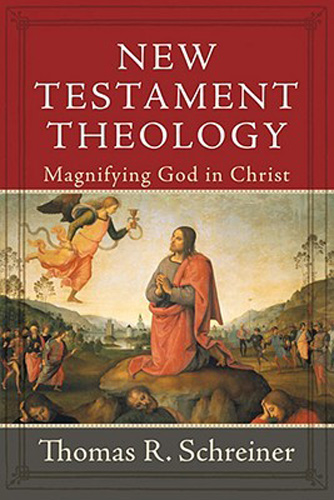
New Testament Theology: Magnifying God in Christ
In this substantial volume, Thomas Schreiner takes up the study of New Testament theology, looking for the themes that emerge from a detailed reading of the whole rather...
Downloads
About BiblicalTraining®
BiblicalTraining® wants every Christian to experience a deep and loving relationship with Jesus by understanding the life-changing truths of Scripture. To that end, we provide a high-quality Bible education at three academic levels taught by a wide range of distinguished professors, pastors, authors, and ministry leaders that moves from content to spiritual growth, all at no charge. We are a 501(c)(3) non-profit funded by gifts from our users. We currently have over 180 classes and seminars, 2,300 hours of instruction, registered users from every country in the world, and in the last two years 1.4 million people watched 257 terabytes of videos (11 million lectures).
Our goal is to provide a comprehensive biblical education governed by our Statement of Faith that leads people toward spiritual growth.