Survey of Biblical Theology - Lesson 12
Gospel of John
In this lesson, Dr. Schreiner dives into the book of John, where the author presents Jesus as the eternal Son and Logos who becomes flesh, whose I AM sayings, signs, and ties to Israel’s scriptures reveal his divinity. The Gospel stresses that through faith in Christ, believers already possess the eschatological gift of eternal life.

I. Covenant Storyline Fulfilled
A. Promises narrowed to Jesus: true Israel, King, Son, Servant
B. Kingdom in Synoptics vs. “eternal life” in John
II. Eternal Life
A. Present possession: believers already have life
B. Still future resurrection
C. Qualitative, relational: knowing God & Christ
III. Purpose of John
A. Written so readers believe and have life
B. 1 John assures believers of eternal life
IV. Christology
A. High claims: Son of God, equal with the Father
B. Confessions: Nathanael, Martha, Thomas
C. Conflict with leaders over divine identity
V. The Logos
A. Eternal Word with God, fully God
B. Creator of all things
C. Word became flesh: incarnation
VI. “I AM” Sayings
A. OT background
B. Bread, light, shepherd, vine, way/truth/life, resurrection
C. Climactic claim: “Before Abraham was, I am”
VII. Signs & Authority
A. Miracles reveal identity (feeding, healing, raising Lazarus)
B. Predictive knowledge & judgment authority
VIII. Theological Implications
A. Eternal life through the divine Son
B. Text presses toward Trinitarian faith
C. Intertextual ties show divine authorship
So we're coming to the gospel of John and the Johannine epistles. I'm doing those together. I take those all to be by the apostle John, but let's back up for a minute just to summarize where we've been.
So we have the conflict between good and evil, God's kingdom and the kingdom of evil, the offspring of the serpent and the offspring of the woman. We have the covenants in the Old Testament that God has made promising Abraham offspring, land and blessing. And we saw in Israel's history that these covenants were fulfilled very slowly.
A good lesson for us, right? That God's not in a hurry in accomplishing his plan. And a covenant was made with Israel. And then we have the Davidic covenant, the covenant with David where a king is promised and a new covenant where the hearts of the people would be transformed.
When we come to the prophets after Israel has failed so much and has gone into exile, we're promised a new creation, a new Exodus, a new David, a new covenant. Did I say those right? New Exodus, new David, new creation, new covenant. So now we've looked at the gospels and what have we seen there? The promise has been realized in the coming of the king, in Jesus.
The promise of the offspring has narrowed down to one person, Jesus Christ. He is the king, he is really the true Israel. So the promise is made to Israel, but Jesus constitutes the true Israel.
Israel is God's son. We've seen Jesus as God's son. Jesus is God's son, he's the true Israel, but he's also the true king and he's the eternal son of God.
So there's a depth in that understanding of son. We're told in the Old Testament that the kingdom will be given to the son of man in Daniel seven. And we saw in Daniel seven, the kingdom that's to be given to the son of man is to be given to the people of the Holy one of the saints.
But again, that promise is fulfilled in Jesus as the son of man. He's the corporate head. He's the representative.
We could even say he's the king that represents his subjects, the people of Israel. So son of God, son of man represent Israel. I actually didn't say as much about this, but the servant of the Lord also represents Israel.
In Isaiah, the servant of the Lord is called Israel. And yet the servant of the Lord is distinct from Israel. It's a certain person who suffers on Israel's behalf.
So the promises are all being funneled through and fulfilled in Jesus himself. He's the son of man. He's the son of God.
He's the servant of the Lord. He's the true Israel. He's the offspring.
And the kingdom, what are the synoptic gospels tell us? The kingdom promises is fulfilled in him, but in a surprising way, in an already not yet pattern. When the kingdom comes, God's enemies aren't destroyed. They continue to exist.
And the kingdom comes in a small way, like a mustard seed and like 11. So that's surprising and unexpected. Those who receive the benefits of the kingdom are those who trust and obey.
Those who are disciples, those who put their faith in Jesus, those who repent of their sins, those who follow him in discipleship. So we have this fulfillment in an already not yet way, but that brings us to the gospel of John and the Johannine epistles. When we open the gospel of John, we instantly recognize that it's very different from Matthew, Mark, and Luke.
Not contradictory, but complimentary. A very different way of speaking of things. If the synoptic gospels speak of the kingdom of God, actually we find the kingdom only used four times in the gospel of John.
So instead, what John talks about is eternal life. And we do read about eternal life in the gospels, but not very often. In the story of the rich ruler, he asks how he can inherit eternal life.
But eternal life, life dominates the gospel of John. Now, we ought to recognize that eternal life is the life of the eschaton, the life of the end times, the life of the age to come. So yes, it's qualitative, but it's also, it has that eschatological end time sense.
We saw in the gospels with the kingdom, there's an already not yet dimension, but when John talks about eternal life, he does not emphasize the not yet. There is a not yet. John emphasizes the already.
That eternal life, the life of the age to come, the life of the future is already ours. So we'll just look at a few verses and see that. Just so we observe it in the text.
Everyone who believes in Jesus may have eternal life. Have it now, right? Those who believe have the life of the age to come in the present age. Verse, yeah, verse 36 is an interesting verse because we have a contrast.
The one who believes in the son has eternal life. That verb has his present tense, has it now. The life of the age to come, so to speak, the age to come has penetrated this present evil age, but the one who rejects the son will not see life.
Instead, the wrath of God remains on him. And again, the wrath of God is on that person now. In John 5, 24 is particularly clear.
Truly, I tell you, anyone who hears my word and believes him who sent me has eternal life. There's that present tense. And will not come under judgment, but has passed, perfect tense verb, but has passed from death to life.
So the life of the age to come is ours now. We have that eternal life and we see it as well. I'm not going to look at all these verses, but we see it in 1 John 2, 8, which I think is also written by the apostle John.
Here, it's not talking about life, but just the coming of the new age. I'm writing a new command, which is true in him and in you, because the darkness is passing away and the true light is already shining. So the point I'm making there is the new age has arrived.
The true light is shining now, already in this present age. So, however, John does also, he doesn't emphasize the future, but there is a future element in his eschatology, John 5, 28 and 29. Do not be amazed at this because the time is coming when all who are in the graves will hear his voice.
So that's future, right? All those who are in graves, all who are dead, the time is coming and they'll come out. Those who have done good things to the resurrection of life, but those who have done wicked things to the resurrection of condemnation. So there's a future physical resurrection.
John emphasizes the present. Now, just a little technical comment here. I mentioned Rudolf Bultmann in one of my lectures.
Rudolf Bultmann says, John doesn't believe in any future eschatology, only in the present. But then what does he do with these verses, right? These verses are clearly talking about the future. So you ask yourself, if a scholar says, John only believes in the present experience of eternal life, not a future experience, what does he do with these verses? Guess what he does? He says, these verses weren't in the gospel.
What evidence does he have for that? None. He just says they couldn't have been. Why couldn't they be? Because John doesn't have a future eschatology, but there's no evidence for it.
So this is a classic example, right, of a scholar having a theory. Actually, the text denies it, but he just says these verses aren't authentic, but there's no textual evidence for it, no support for it. He just makes that up, right? So that's not convincing, I hope.
You say, well, that won't be on your copy. I want to change it on my copy to 528 and 29, because I have the wrong reference there. So you can just write that in for the future.
It's John 528 and 29. Now, what do we do to obtain eternal life? We believe, but I'm going to come back to that. So I'm not going to talk about that now.
In John 4, 14, when Jesus speaks to the woman of Samaria, we have that very beautiful image of the well of water springing up to eternal life, this picture of being eternally refreshed and strengthened. Probably the water refers here to the Holy Spirit within us, continually strengthening us. Jesus speaks of himself as the bread of life.
When we see the word bread, we should think of food. He's our fuel, so to speak. He's our energy.
He gives us life. Remember, it's the life of the age to come that is ours even now. So that'd be very surprising to the Jews.
How can you have the life of the age to come before the age to come is consummated? Well, that's what Jesus has brought, right? A very beautiful verse, many of you know it, often cited, rightly cited, Jesus has came so that we would have life and have it more abundantly, right? That what a beautiful promise that is. If you're tempted to think, well, God doesn't care about us. He doesn't want us to flourish.
That is clearly a lie of the devil, isn't it? God desires us to have abundant life. That doesn't mean there's not suffering, of course, but he's come to give us life. The story of Lazarus, Jesus is the resurrection and the life.
Of course, we'll talk more about these I am statements. The very famous statement, I am the way and the truth and the life. I'll tell you a little story about this verse.
When we were in Minnesota, we lived on the same street as a university professor. He was not a believer, really nice guy and his kids played with our kids. We invited him over for dinner.
And when he was over, I told him my testimony. And he said, like so many people do in our culture, he said, well, that's very wonderful for you. And I said, no, that's not what I'm saying.
I'm saying this is for everybody. Everybody must believe in Jesus to be saved. And then I quoted him, John 14, six.
Jesus said, I am the way and the truth and the life. No one comes to the father except through me. And he said to me, I guess I'll never forget that.
He said, well, it depends on how you interpret that. And I said to him, I think it's pretty clear. I don't think this is a hard verse to interpret.
Well, that was the end of that conversation. So, but you know, it's, that's a very powerful verse that there's one way and it's the way is Jesus. The way to, there's one way to God, one truth, one life.
And that one true life is in Jesus himself. Eternal life is, yes, it's the life of the age to come, but it's also qualitative. Eternal life is knowing, I probably shouldn't have left this out, the one true God and Jesus Christ, isn't it? So there's a qualitative dimension to eternal life since there's a relational dimension, an experiential dimension to eternal life.
It's knowing Jesus, loving Jesus, experiencing Jesus. So it's not just an abstraction, right? We have life as some kind of thing in us. It's hard to express to people who don't know him, right? But what it means to have eternal life is to know Jesus, to love Jesus, even now.
And of course, that's the purpose of the gospel that was written so that you would, oh, there's another mistake, so that you would believe. So you can correct that, it says B. It was written so that you would believe Jesus is the Christ and in believing you should have life in his name. So that's the purpose of the gospel.
By the way, in scholarship, there are big debates. Is John's gospel written to bring unbelievers to faith or is it written to strengthen believers in their faith? And I'm not the only one that says this. A lot of people say this.
I say both. We don't have to choose, it's both. It's written for unbelievers and for believers.
People differ on this. I like to say to unbelievers that the first gospel to read is John. Many people recommend Mark.
I mean, that's great too. But John is very clear and beautiful on what it means to believe in Jesus. And of course, 1 John has the same purpose.
It was written so that you may know you have eternal life so that we could have assurance of salvation right now. I was raised as a Catholic, as I've said, before and in the Catholic tradition in which I was raised. And you can read this in the Council of Trent.
The Council of Trent in the 1500s after the Reformation pronounced an anathema, a curse on anyone who claims to be assured of eternal life unless you get a special revelation of God, which is basically nobody, right? I mean, a few people. But I think here we have a clear statement of scripture that God wants us to know that we're saved, to know that we have eternal life. That's the purpose of the entire letter.
So God wants us to know that we have the life of the age to come. I take it that's written to encourage us. And I think it's a mistake to take away that encouragement.
Of course, that's tied up really with the Roman Catholic view of salvation. So we see instead of the kingdom, right? So if we think of our story, instead of the kingdom, that we have the life, life is talked about here. So what does that mean? When the promises are fulfilled, ultimately we have life, both now and forever.
God's plan, the covenants are finally designed to bring us into relationship with him and to give us life and joy. So I think that's the connection. Now, we've seen in the gospels, Christology, the doctrine of Christ.
And of course, we're not surprised, that's a huge thing in John's gospel as well. And John's gospel is even more explicit, isn't it? So I'm not gonna linger long on this, but Jesus is the eternal, he's the king, right? Son of God means king, but he's also clearly the eternal son of God. Nathanael says in chapter one, remember Nathanael's the person who says, can anything good come from Nazareth? And Jesus says, before Philip called you, I saw you under the fig tree.
Then Nathanael says, well, you're the son of God, you're the king of Israel. Now, this is the first time Nathanael's met Jesus. He's a Jew.
I don't think Nathanael had in his mind, you're God. You're the second person of the Trinity and you're the Messiah. So as we saw in the synoptic gospels, I think Nathanael meant with the son of God, right? We saw the king in 2 Samuel 7, in Psalm 2 is called the son, Isaiah 9. I think if Nathanael just meant you're the Messiah, he's saying it two different ways, but clearly again, at another level, John wants us to read that as you're the eternal son of God.
So Nathanael is speaking better than he knew. Then very, we probably should turn to this one. I'm not Matthew, John five.
We actually looked at this for a second earlier. This is when Jesus heals on the Sabbath, they start persecuting him. And Jesus says, well, my father's working, verse 17 on the Sabbath, so I'm working too.
That's quite a shocking statement, right? So then the Jews want to kill him. After all, he's breaking the law in their view, but he was also calling God his own father, making himself equal to God. Jesus replied, truly I tell you, the son is not able to do anything on his own, but only what he sees the father doing.
For whatever the father does, the son likewise does these things. For the father loves the son and shows him everything he's doing. And he will show him greater works than these so that you will be amazed.
And just as the father raises the dead and gives them life, so the son also gives life to whom he wishes. The father, in fact, judges no one, but has given all judgment to the son so that all people may honor the son just as they honor the father. Anyone who does not honor the son does not honor the father who sent him.
A very significant passage on Jesus's sonship. Verse 23 is very striking, isn't it? Here's the problem with Islam and really Judaism. They do not honor the son in the same way they honor the father.
So when Islamic people say, I can't believe Jesus is the son, this is no matter to compromise on. This is vital to our faith. Jesus says, or a Jewish person says, well, I love God, but I can't honor Jesus as the Messiah and the eternal son of God.
Well, this, as Christians, we can't compromise on this matter. This is very, very fundamental. So a very, kind of a puzzling passage.
I'll just say a little bit here, but I don't think it's contradictory. Comes up in John 8. Jesus says, I and the father are one, in verse 30. The Jews picked up rocks to stone him for blasphemy.
Jesus says, well, I've shown you many good works. Why do you want to stone me? Well, they say, you're blaspheming. You're making yourself God, and that's why we're doing it.
But then Jesus, citing Psalm 82, says, well, isn't it written in your law, you're gods? So if he called those to whom the word of God came gods and the scripture cannot be broken, you say you are blaspheming to the one who set apart and sent into the world because I said I'm the son of God. So that seems very strange, but I would just say Jesus is arguing from the lesser to the greater. And if you read Psalm 82, that's what he's citing, God stands in the divine assembly.
He pronounces judgment among the gods, small g. Now, this Psalm is actually very debated. I understand that to be human beings. And because he says, see, they're not, he's saying in a sense, you stand in the place of God because they're judging unjustly and showing partiality to the wicked.
So in a sense, they're functioning as gods because they're judging. I said, you are gods and all sons of the most high. However, you will die like humans and fall like any other ruler.
So actually the Psalm is directed to those who are judging unjustly. You know, even Moses, when we read in Exodus 7, the Lord answered, see, I've made you like God to Pharaoh. But he's not saying Pharaoh is God.
So when we come back to John 10, I don't think Jesus is saying, look, we're all gods. I think Jesus is saying, if in a lesser sense, these people who are judging can be called God, small g, not that they're divine, but they judge, then there's every reason to think that I am divine because I am in a greater sense, the son of God. And I think the other thing I'd say here, there's a fittingness to God taking on human flesh.
So this is more of a systematic theology observation, right? Human beings are made in the image of God. Adam is made in the image of God. Jesus, I mean, the son of God is the second person that the Trinity takes on humanity.
And then we are conformed to the image of Christ. We don't become God like Jesus, but yet there's a fittingness to the divine and human being joined together in Jesus. And then we are incorporated into him.
So the distinction between us and Jesus is still preserved, but there's a fitting connection that is also present. A very important text. This is in the middle of the Lazarus story, which I'd love.
I just read this in my Bible reading yesterday. This is a fascinating story where he raises Lazarus from the dead and Martha comes out and talks to Jesus and then Mary, and that's where Jesus says on the resurrection and the life. But one of the climaxes of the story right in the middle of it, Martha says, yes, Lord, I believe you're the Messiah, the son of God who comes into the world.
So probably Martha meant there by son of God, the same thing as Messiah. But again, we read that in a deeper sense, right? That it also stands for divinity. But look, that's the purpose of the gospel, remember? Why was it written, right? So we compare that, it's very interesting.
So he shows us in the middle, doesn't he? This is written, so you may believe Jesus is the Messiah, the son of God, and that by believing you may have life in his name. Well, what does Martha say? I believe you're the Messiah, the son of God. So amazingly enough, I heard somebody preaching on this passage and they criticized what Martha said here.
Isn't that kind of, I was just shocked. You know, like, wait a minute, this is like a prime moment where she's expressing the purpose and the truth of the entire gospel. And somehow the preacher thought it was, I forget what his reason was, I thought it was pretty crazy, because this is good, you know, John's telling us, hey, she's got it.
She's got it. At the cross, glorify your son, that the son may glorify you. We'll come back to that.
Jesus is crucified for making himself to be the son of God. And we already looked at John 20, 31. So that's the first part of Christology.
Now we come to the Logos, which is distinctive to John. So I put the Greek here in your notes and, oh, I guess I didn't put the English, but you have English Bibles, you can look it up. I thought I put the English as well.
But, so this is a very important concept in John. Of course, Logos in Greek culture stood for reason, thought, right, speech. And so I think there is some Greek background here.
In Stoic thought, there's this whole idea that God, God made the world according to the Logos. But we have to say, right, it may pull some on Greek thought, but Stoic thought is basically pantheistic. It's polytheistic.
So there may be some connections there, but the primary connection, I think, has to be the Old Testament background here. So we look at this text, you know, John is so simple and so profound, right? In the beginning was the Word. And we immediately think in the beginning, resonates with Genesis, right? In the beginning, God created the heavens and the earth.
But this is a different beginning, isn't it? Because this is a beginning before that beginning. In the beginning was the Word. And here's the thing I love about this.
This is a beginning that has no beginning. Like, well, you know, it just boggles my mind, right? This is a beginning that's eternal. In the beginning was the Word, a beginning that has no beginning.
I mean, we can't even comprehend that, right? So in the beginning was the Word, and the Word was with God. So I don't get another preposition pros, as some people do, but I think reading in context, the Word had fellowship with God. The Word and God, Jesus, right? We know the Word is Jesus, we haven't been told that yet, but we know that's true.
The Word and God had eternal fellowship with one another. And of course we can bring the Spirit in as well. Was God lonely before he created the world? No, of course not.
Because the Father and the Son and the Spirit had eternal fellowship with one another. The Word was with God and the Word was God. Now, I'm not gonna get into the details of the Greek here, but there is no basis for the Jehovah Witness translation that the Word was a God.
As far as I know, last I checked, they've never even released the names of the translators who translated their Bible, the New World Translation. We don't even know if these people knew Greek. You can read Dan Wallace's grammar, Greek Beyond the Basics.
He has a great chapter on this. But clearly it's saying the Word was fully divine. But by the way, it makes no sense in a Jewish context to say the Word was a God because they were monotheists.
How many gods could there be, right? That's not a Jewish conception, there's one God. So here we see, right, here we see, he doesn't say, okay, here's the Trinity, but clearly the Word was with God. The Word is distinct from God, right? The Word was with God, so he's distinct from God.
He's having fellowship with God, and yet the Word was God. John doesn't solve it for us. He just leaves it there, doesn't he? The Word is fully God, God is fully God.
And the church, I think rightly reading all these texts, was, you know, Calvin Rowe in his work says the church is pressured, in a good sense, coerced from the text towards the doctrine of the Trinity. Why did the church formulate the doctrine of the Trinity? The text pressured them. I like these words from Calvin Rowe.
The text pressured them, not in a negative sense, but in a good sense, it pressed them, right, towards the doctrine of the Trinity. So that's a very, very deep and profound verse. And it's such simple language, right? You know, in the beginning was the Word, and the Word was with God, and the Word was God.
Also, even if you don't know Greek, this is very simple, simple Greek. Students love, students wish the whole New Testament were written like the Gospel of John. But in then chapter one, verse 14, the Word became flesh.
Then that, I mean, for the Greek mind, that is just an incredible, flesh is bad, right? Taking on humanity. So the second person in the Trinity, God became man. That is the greatest miracle.
After that, you can believe the resurrection, right? God actually became man. And this is written by a Jewish person, nurtured in the Old Testament. So quite remarkable.
So I think it's significant, it is the word Word. The Word is the, what is a Word? A Word communicates. He communicates who God is to us.
He's the expression of who God is, as God's Word. Genesis, well, we read in verse three of John, all things came into being through him, through the Logos, right? And apart from him, not one thing came into being. And then we think of Genesis 1, 3, and God said, let there be light, and there was light.
And did you notice this? God created the world through his Word, and God said. And what does John say? All things came into being through him. And apart from him, not one thing came into being that was, that came into being.
So I think John looks back at Genesis 1, 3 and says, God created the world through his Word, through Jesus Christ. So that's the beginning of the gospel. If we, before the epilogue in chapter 21, the climax of the gospel is when Thomas says, my Lord and my God, to Jesus when Jesus appears to him.
Now, some Jehovah Witnesses have said that Thomas is doing this. He's looking up into heaven, my Lord and my God. I think that's really, come on, right? That is, that's, that makes, that is not a plausible reading of the text.
Others have even said it's like he's taking God's name in vain. Like people say today, oh my God, I don't think so. That would, that would not be something Jesus would be pleased with, right? No, clearly, I mean, again, aren't these clear indications of trying to get around the text? Clearly, clearly Thomas is identifying Jesus as divine.
I was in a situation once with historical critical people, and it was a doctoral interview, and the professor said to the student who had written his dissertation, did Thomas really say this? And the student said, no, Thomas never said this. In other words, it was invented and just put on Thomas's lips. But we have no basis for saying that, right? Really an anti-supernaturalist bias to say that Thomas didn't say this.
Now, we have good reasons to believe that after the resurrection, Thomas recognized that Jesus was God. So, look, it fits with the beginning of the gospel, doesn't it? Quite remarkable. On the word of God, just some texts, by the word of the Lord, the heavens were made, Psalm 33.6. But the New Testament reads that as, yes, by God's spoken word, but in a deeper sense by Jesus Christ.
Or Psalm 107, verse 20, he sent out his word and healed them. God's word is almost like a, he sent it, right? I'm not saying literally here he's thinking of Jesus, but there's a power to his word. He sends out his command to the earth, his word runs swiftly.
This is from the Wisdom of Solomon, not a biblical book, but we see this emphasis on God's word. For your all-powerful word leaped from heaven, down from the royal throne, a stern wire. And we see the relationship in Proverbs between God's wisdom and his word.
God's wisdom is closely connected to his word. So, quite remarkable. So, we're thinking of high Christology, right? Eternal life, who's Jesus? He's the son of God, he's the Logos.
Then let's just think quickly about some of these I am sayings in John. So, what's the background? Exodus 3, 14, very famous verse. God appears to Moses at the burning bush.
Who are you? What's your name? I am who I am, the Lord says. Say this to the people of Israel. I am, has sent me to you.
I'm the self-existent God. I am the one who ever and always exists. So, what a fascinating saying.
Again, you can't domesticate God, right? And Isaiah picks this up. I, the Lord, the first and with the last. I am he, there's that I am again.
Or Isaiah 43, 10. You're my witnesses, declares the Lord, and my servant whom I have chosen, that you may know and believe and understand that I am he. Before me, no God was formed, nor shall there be any after me.
Isaiah 43, 25. I, I am he who blots out your transgressions for my own sake, and I will not remember your sins. Turn to me and be saved all the ends of the earth, for I am God and there is no other.
So, by the way, right? Isaiah, more than any other author, you probably know this, it's a lot in Deuteronomy, but more than any other author, what does Isaiah emphasize? There's only one God. And then we see it again in the last verse I have up here. Remember the former things of old, for I am God and there is no other.
I am God, there's only one God. I am God and there is none like me. Now, John knew these texts, right? And John's saying Jesus is divine, and the Father is divine.
And of course we know from other places, the scripture is divine. So, there we have it, right? There's that pressure that Calvin Rowe talks about. There's one God, we're pressed to believe there's one God, but we're also pressed to say by the text, Jesus is God.
So, it's the text that's moving us in that direction. And now we'll see this in the I am sayings. So, the first one, he says to the Samaritan woman, I am the Messiah.
Yeah, yeah, of course. Of course, the I am saying, I am doesn't in and of itself indicate divinity in Greek, right? John 9, 9, yeah, maybe we should see it in Greek too, at least for me, look at it in the Greek. They're talking to the blind man saying, hey, who are you? And he says, I am, ego me.
I'm the one, I'm the blind man. So, yeah, just to say I am doesn't mean you're saying you're God, right? Because we see that in John 9. But he says to the, he says to the Samaritan woman, I am the Messiah. So, maybe there's no, you know, the word Messiah doesn't mean God, right? In and of itself.
Messiah just means you're the king, you're the son of David. But given John's gospel, it seems to me maybe there's a little bit more there. Or the other case, and we already looked at this in the synoptics, when Jesus was walking on the water, it seems very significant that when Jesus walks on the water and they're afraid, he says, well, it's translated here, it is I, but the wording is exactly I am.
I am. Given John's gospel, I think it's more than just self-identification. And given the fact that he's walking on the water, I think that's an, I am, do not be afraid.
I mean, that fits with what we read about the Lord, right? I am the Lord. Don't be afraid. Did the disciples understand that at the time? I doubt it.
I don't think they understood it, but I think it's more than just, I think it's more than just a blind man saying, I am. So, but then these very famous ones, John puts together, right, events with discourses. The event, feeding the 5,000, right? He feeds the 5,000.
And then Jesus says over and over again, I am the bread of life. I am the food of life. Clearly that's a statement about divinity, right? I mean, you wouldn't, you wouldn't say that.
None of us would say that about ourselves, right? I'm the food of life. I'm your fuel for life. That's an incredible statement.
Or Jesus says in John 8, 12, I am the light of the world. I mean, that's, who else would say that about themselves? And in the very next chapter, he gives sight to the blind man. And it's during the Feast of Tabernacles in which there's a lighting, a lighting ritual is practiced.
And we think of the beginning of the gospel, John 1, 4, in him was life, and the life was the light of men, right? I am the light of the world. And then what does he say? And the light shines in the darkness, verse five, and the darkness has not overcome it. So that's quite remarkable.
And then he says in verse nine, there was the true light coming into the world, which enlightens every man, right? So again, he's described as the true light. Or one other place on light that's pretty significant. And this is the judgment that light has come into the world, clearly Jesus, he's the light of the world.
People love darkness rather than the light because their deeds were evil. For everyone who does evil hates the light, hates Christ, right? And avoids it so that his deeds may not be exposed. But anyone who loves by the truth comes to the light, comes to Jesus so that his works may be shown to be accomplished by God.
So quite a remarkable statement. Then, this is a really, so many fabulous stories here. John, let's see, where should we pick that up? Yeah, let's pick it up here.
Jesus says, he's speaking to the religious leaders. He said, I'm going away, you look for me and you will die in your sin. Where I'm going, you can't come.
The Jews said he won't kill himself. Well, he says, where I'm going, you can't come. You're from below, I am from above.
You are of this world, I am not of this world. Therefore, I told you that you will die in your sins. For if you do not believe that I am he, but right, where is that in the Greek? I can't see the verse.
Yeah, there it is, egoi me. If you don't believe I am, you will die in your sins. So that's, if you don't believe finally that I'm God, I think he's saying that I am, you will die in your sins.
And then he says again, oh yes, just a few verses later, when you lift up the son of man, then you will know that I am. We'll come back to the lifting up, but there it is again. You'll know that when I'm lifted up, we'll come back to that.
And of course the most famous verse, the clearest verse of all, when they're going to stone him at the end of chapter eight, and he starts saying, Abraham, rejoice to see my day. And they're like, you're crazy. What are you talking about? You're not even 50.
Abraham's been dead for centuries. And he says, before Abraham existed, I am. And then they get it, right? Then they want to kill him.
So there's like, wait a minute, you can't say that about yourself. So clearly the I am statement is a clear statement of deity. Jesus goes on to say, I am the door of the sheep in John 10.
So he's, Jesus is telling a parable here. He's both the door, right? He's the door and the shepherd. You know, he mixes the metaphors, so to speak.
We have that Ezekielian background, which is interesting. I was, because this is the good shepherd discourse in John 10. I will establish over them one shepherd, my servant, David.
He will shepherd them. He will tend them himself and be their shepherd. I, the Lord will be their God.
And my servant, David will be prince among them. I, the Lord have spoken. Jesus is clearly saying, I'm that person.
I'm the door of the sheep. I am the good shepherd. Remember shepherds in the ancient world, often in the Old Testament, kings are called shepherds.
We tend to think of shepherds as only these very kind people who lead sheep. And he is that. But they're also leaders, right? A shepherd is a leader, often used of kings.
A protector, surely, but also a leader. In John 11, we've already seen, I am the resurrection of life. And that's paired with the raising of Lazarus.
But clearly that's a divine activity, is to raise someone from the dead. And you know, in John's gospel, many started to believe in him. And then John 13, 19, he predicts Judas's betrayal.
He says, I'm telling you now before it happens, so that when it does happen, you will believe that I am, ego eimi, that you believe because he predicts in advance, only God can do that infallibly, right? What he predicts in advance, what Judas will do. I already mentioned that amazing verse, I am the way and the truth and the life, clearly expressions of deity. Imagine if, again, right? If any of us said that, if we said, I'm the truth, that's the height of arrogance, isn't it? Jesus says in John 15, I'm the true vine.
But remember in the Old Testament, the vine is Israel. So Jesus is saying, I'm the true Israel as well. I'm the true people of God.
And then one more, one of my favorites, John 18, they're coming to arrest Jesus, right? So they, verse four, Jesus says, like, who are you seeking? Oh, they said Jesus of Nazareth. And he says, yeah, it could be just, I'm he, ego eimi. Okay, just self-identification.
But I think John is, yes, it is self-identification, but isn't it something more? Because when Jesus told them I am, they stepped back and they fell to the ground. Like, well, what's that about? They're in the presence of God, right? I am, and they all fall down. And then Jesus says, hey, who are you seeking? It's almost as if Jesus said, come on, take me away, guys.
And they do. So these are very remarkable statements about who Jesus is. So how do we put this together where we've been so far? Eternal life, right? That's the life of the age to come.
But that life, and this is not surprising at all, it comes from God himself. It comes from the king, the son of God, the one who's very God. Only God can give us this life.
How are these promises being fulfilled? Through one whose God has become man. So, you know, what's the message? What's the theology of the Bible about? Well, the Sunday school answer is right, it's about Jesus, right? I mean, there's no big surprise there. You know, if it's not about Jesus, if someone's in something else, that's a problem, isn't it? Who Jesus is just dominates the story.
And it's quite remarkable. I have a question, and I was gonna ask it in our last lesson, but this whole, but it came up a lot in this lesson too, but I guess you call it intertextuality. Yeah.
That you're able to find all kinds of verbal parallels in the Old Testament that tie in. So let's take the example of God walks on the water. Yeah.
And then Jesus walks on the water. And what I'm wondering is, it's a series of questions. When the Old Testament passage was written, did they realize that there was going to be a deeper meaning? Does Jesus act in such a way as to bring people's attention to that deeper meaning? Or, I mean, or is this just the divine author of the Bible tying things together in a way that no human being could tie them together? In other words, when the person wrote, I forget where it was, Isaiah or something, it said that God walks on the water.
Yeah. Were they intended, and it probably has to be on a passage by passage basis, because clearly sometimes Jesus is acting in a specific way to fulfill Old Testament prophecy, whether they could see it was prophetic or not. Right, right.
But how did all the intertextuality occur? Yeah, I mean, I would say, so the walking on the water, that's what, Psalm 107, right? I don't think the author of that Psalm is thinking of Jesus at all. He's thinking of God, right? He doesn't, I would argue that the human author, I don't know if we're told who that is, but whoever it is, he doesn't, he's not thinking of Jesus. But yes, I would appeal to the divine author.
God, God knows, right? And I think there is a divine author. And I think the gospel writers saw it. Did all the readers see it? Probably not, you know, but these books were preserved and read again and again, and probably some readers saw it, depending on how well they knew the Old Testament.
Probably some didn't know it very well, you know? Some knew it, and that's why I always say there was learning and community. But yeah, I would appeal to the divine author ultimately. Because, I mean, I'm gonna guess in the walking on the water scene that Jesus saw the disciples were in trouble and he wasn't thinking, oh, hey, here is his chance for me to fulfill this Psalm 7 passage.
I'm just gonna go help my friends. But in some overarching way, those passages are tied together. And to me, it's an argument for divine authorship because there's no, I don't think there's any other way that could have happened.
Yeah, yeah. The only thing I'd add is I do think Jesus has a consciousness when he says, I am. Yes.
You know, and I am, don't fear. But I don't think Jesus was thinking, I think I'll go fulfill that passage. I think that seems kind of artificial, you know? Oh yeah, that passage is written in the Bible, let me go do that now.
Yeah. Yeah, I don't think it was like that. Okay, all right.
Anyway, hey, but the intertextuality, I mean, that's almost been one of your key themes throughout this whole class is that there's common threads that run and there are threads that a regular reader is not gonna pick up. Right, right. I mean, I've never thought of Psalm 7 and the walking on the water.
But when you look at it, one is an affirmation of what God does, and I hear Jesus doing it. Oh. Yeah, yeah.
Yeah, I mean, some of this stuff is so subtle, you're not gonna just pick it up automatically. Right, right, I agree.
- Explore how biblical theology developed through figures from Irenaeus to Bultmann, learning how debates over history, reason, and revelation shaped its methods, authority, and lasting influence on theology and the church.0% Complete
- Study how biblical theology traces God’s revelation historically while systematic theology organizes doctrine, seeing how both disciplines work together with presuppositions of faith to interpret Scripture as God’s authoritative Word.0% Complete
- Creation, covenant, and conflict reveal humanity’s sin and God’s judgment, showing the garden as sanctuary, Adam’s priest-king role, the serpent’s opposition, and God’s plan to bring salvation and victory through His promises.0% Complete
- God’s covenant with Abraham promises land, offspring, and blessing to all nations, showing both unconditional divine fulfillment and conditional obedience, while God preserves His plan through threats and fulfills His promises in surprising ways.0% Complete
- The Exodus shows God redeeming Israel by grace, giving the law and sacrifices, and dwelling in the tabernacle, all pointing to Christ’s final sacrifice and God’s presence with His people in the new creation.0% Complete
- Watch Israel’s unbelief, partial fulfillment of God’s promises, the cycle of sin without a king, and the rise of David as God’s chosen ruler who anticipates the true king to lead His people.0% Complete
- God’s covenant with David points to an eternal King, Israel’s failure reveals the need for renewal, and the prophets promise a new covenant, Exodus, creation, and David—all fulfilled in Jesus, the true King bringing worldwide blessing.0% Complete
- Israel’s identity forms through unfulfilled promises, foreign domination, Jewish factions, and rising messianic hopes, which fuel anticipation of a Messiah and set the stage for the New Testament.0% Complete
- Matthew shows Jesus as Emmanuel, true Israel, Son of David, and Son of God, fulfilling promises through a new Exodus, atonement, and divine authority, so that all God’s covenants find their fulfillment in him.0% Complete
- Dr. Schreiner reveals Jesus as the divine Son, true Israel, greater Moses, and eternal King who fulfills God’s promises, reveals the kingdom in hidden yet present power, and builds his church as the new people of God drawn from all nations.0% Complete
- Mark proclaims Jesus as the Son of God and true King whose suffering secures forgiveness, while discipleship means following his example of humility and obedience despite weakness.0% Complete
- John portrays Jesus as the eternal Logos and Son whose I AM sayings and signs grant believers the present possession of eternal life through faith.0% Complete
- John presents Jesus’ work as his lifting up and glorification, fulfilling Scripture. Life comes through true believing—receiving, coming, hearing, drinking, eating, entering, abiding—while false belief, darkness, and human glory block it.0% Complete
- Dr. Schreiner highlights divine sovereignty: the Father gives believers to the Son, the Spirit gives life, and all who truly believe are preserved, and glorifies Christ, showing Jesus’ death and resurrection as God’s sovereign plan.0% Complete
- In John’s epistles, he teaches that assurance rests on the apostolic witness, confession of sin, obedience, love, and doctrinal truth, while false teachers deny Christ.0% Complete
- Acts shows God’s plan through Christ and the Spirit, fulfilling covenant promises, spreading the gospel, empowering witnesses, and forming the church as restored Israel united in salvation.0% Complete
- Paul’s “already but not yet” theology shows God’s promises fulfilled in Christ yet awaiting completion, shaping Christian life, doctrine, and practice in areas like adoption, redemption, sanctification, and practical living.0% Complete
- In this lesson, Paul shows that Spirit-led believers still need commands, which guide holiness and love without legalism, uniting word and Spirit to shape Christian life, protect love from distortion, and call for discernment in obedience.0% Complete
- Learn how the New Perspective reinterprets Judaism and Paul, how Sanders and Stendhal shifted focus from justification to covenant and inclusion, and how Paul’s own words confirm his Damascus road conversion.0% Complete
- Paul uses “works of the law” to mean all deeds of the law, not just Jewish boundary markers, and teaches that justification comes by faith in Christ because human disobedience makes works powerless to save.0% Complete
- Learn that justification is God’s declarative act of counting believers righteous through Christ’s atonement, not human works, and see why imputation, not transformation, secures assurance and preserves the heart of the gospel.0% Complete
- Hebrews teach the Son as God’s final revelation and superior Melchizedekian priest whose one sacrifice fulfills typological promise.0% Complete
- James emphasizes authentic faith that produces obedience, wisdom, and care for others, showing that faith without works is dead while affirming God’s goodness and calling believers to endurance, humility, and practical godliness.0% Complete
- In 1 Peter, see how believers as exiles endure suffering with hope, live as God’s priestly people, rest in Christ’s atoning work and victory, and anticipate the inheritance of the new creation as fulfillment of God’s promises.0% Complete
- Revelation’s symbolism portrays Satan, the beast, false religion, and Babylon while teaching to persevere in suffering, trust God’s sovereignty, and hope in Christ’s victory and the new creation.0% Complete
- Dr. Schreiner teaches how Revelation portrays Christ’s full deity, the Lamb’s redeeming work, with victory grounded in the cross and fellowship with God as the ultimate goal.0% Complete
Lessons
- Explore how biblical theology developed through figures from Irenaeus to Bultmann, learning how debates over history, reason, and revelation shaped its methods, authority, and lasting influence on theology and the church.0% Complete
- Study how biblical theology traces God’s revelation historically while systematic theology organizes doctrine, seeing how both disciplines work together with presuppositions of faith to interpret Scripture as God’s authoritative Word.0% Complete
- Creation, covenant, and conflict reveal humanity’s sin and God’s judgment, showing the garden as sanctuary, Adam’s priest-king role, the serpent’s opposition, and God’s plan to bring salvation and victory through His promises.0% Complete
- God’s covenant with Abraham promises land, offspring, and blessing to all nations, showing both unconditional divine fulfillment and conditional obedience, while God preserves His plan through threats and fulfills His promises in surprising ways.0% Complete
- The Exodus shows God redeeming Israel by grace, giving the law and sacrifices, and dwelling in the tabernacle, all pointing to Christ’s final sacrifice and God’s presence with His people in the new creation.0% Complete
- Watch Israel’s unbelief, partial fulfillment of God’s promises, the cycle of sin without a king, and the rise of David as God’s chosen ruler who anticipates the true king to lead His people.0% Complete
- God’s covenant with David points to an eternal King, Israel’s failure reveals the need for renewal, and the prophets promise a new covenant, Exodus, creation, and David—all fulfilled in Jesus, the true King bringing worldwide blessing.0% Complete
- Israel’s identity forms through unfulfilled promises, foreign domination, Jewish factions, and rising messianic hopes, which fuel anticipation of a Messiah and set the stage for the New Testament.0% Complete
- Matthew shows Jesus as Emmanuel, true Israel, Son of David, and Son of God, fulfilling promises through a new Exodus, atonement, and divine authority, so that all God’s covenants find their fulfillment in him.0% Complete
- Dr. Schreiner reveals Jesus as the divine Son, true Israel, greater Moses, and eternal King who fulfills God’s promises, reveals the kingdom in hidden yet present power, and builds his church as the new people of God drawn from all nations.0% Complete
- Mark proclaims Jesus as the Son of God and true King whose suffering secures forgiveness, while discipleship means following his example of humility and obedience despite weakness.0% Complete
- John portrays Jesus as the eternal Logos and Son whose I AM sayings and signs grant believers the present possession of eternal life through faith.0% Complete
- John presents Jesus’ work as his lifting up and glorification, fulfilling Scripture. Life comes through true believing—receiving, coming, hearing, drinking, eating, entering, abiding—while false belief, darkness, and human glory block it.0% Complete
- Dr. Schreiner highlights divine sovereignty: the Father gives believers to the Son, the Spirit gives life, and all who truly believe are preserved, and glorifies Christ, showing Jesus’ death and resurrection as God’s sovereign plan.0% Complete
- In John’s epistles, he teaches that assurance rests on the apostolic witness, confession of sin, obedience, love, and doctrinal truth, while false teachers deny Christ.0% Complete
- Acts shows God’s plan through Christ and the Spirit, fulfilling covenant promises, spreading the gospel, empowering witnesses, and forming the church as restored Israel united in salvation.0% Complete
- Paul’s “already but not yet” theology shows God’s promises fulfilled in Christ yet awaiting completion, shaping Christian life, doctrine, and practice in areas like adoption, redemption, sanctification, and practical living.0% Complete
- In this lesson, Paul shows that Spirit-led believers still need commands, which guide holiness and love without legalism, uniting word and Spirit to shape Christian life, protect love from distortion, and call for discernment in obedience.0% Complete
- Learn how the New Perspective reinterprets Judaism and Paul, how Sanders and Stendhal shifted focus from justification to covenant and inclusion, and how Paul’s own words confirm his Damascus road conversion.0% Complete
- Paul uses “works of the law” to mean all deeds of the law, not just Jewish boundary markers, and teaches that justification comes by faith in Christ because human disobedience makes works powerless to save.0% Complete
- Learn that justification is God’s declarative act of counting believers righteous through Christ’s atonement, not human works, and see why imputation, not transformation, secures assurance and preserves the heart of the gospel.0% Complete
- Hebrews teach the Son as God’s final revelation and superior Melchizedekian priest whose one sacrifice fulfills typological promise.0% Complete
- James emphasizes authentic faith that produces obedience, wisdom, and care for others, showing that faith without works is dead while affirming God’s goodness and calling believers to endurance, humility, and practical godliness.0% Complete
- In 1 Peter, see how believers as exiles endure suffering with hope, live as God’s priestly people, rest in Christ’s atoning work and victory, and anticipate the inheritance of the new creation as fulfillment of God’s promises.0% Complete
- Revelation’s symbolism portrays Satan, the beast, false religion, and Babylon while teaching to persevere in suffering, trust God’s sovereignty, and hope in Christ’s victory and the new creation.0% Complete
- Dr. Schreiner teaches how Revelation portrays Christ’s full deity, the Lamb’s redeeming work, with victory grounded in the cross and fellowship with God as the ultimate goal.0% Complete
Class Resources
Recommended Books
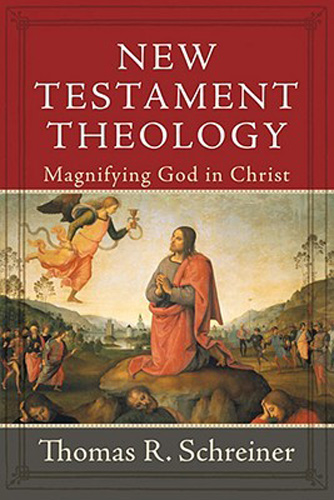
New Testament Theology: Magnifying God in Christ
In this substantial volume, Thomas Schreiner takes up the study of New Testament theology, looking for the themes that emerge from a detailed reading of the whole rather...
Downloads
About BiblicalTraining®
BiblicalTraining® wants every Christian to experience a deep and loving relationship with Jesus by understanding the life-changing truths of Scripture. To that end, we provide a high-quality Bible education at three academic levels taught by a wide range of distinguished professors, pastors, authors, and ministry leaders that moves from content to spiritual growth, all at no charge. We are a 501(c)(3) non-profit funded by gifts from our users. We currently have over 180 classes and seminars, 2,300 hours of instruction, registered users from every country in the world, and in the last two years 1.4 million people watched 257 terabytes of videos (11 million lectures).
Our goal is to provide a comprehensive biblical education governed by our Statement of Faith that leads people toward spiritual growth.