Survey of Biblical Theology - Lesson 10
Son of God, Kingdom of God
This lesson presents Jesus as the unique Son of God, true Israel, and true King whose divinity is affirmed by the Father, confessed by disciples, demons, and even a centurion at the cross. Learn how his authority surpasses all others—calling disciples, forgiving sins, stilling storms, and inviting rest as God himself. Matthew presents Jesus as the greater Moses who fulfills the covenants, inaugurates the kingdom in an “already–not yet” form, and establishes the church as God’s new people for all nations.

I. Jesus as the Son of God
A. True Israel, King, unique Son
B. Divine voice at baptism/transfiguration
C. Demons confess without obedience
D. Exclusive knowledge with the Father
E. Disciples’ confession, partial grasp
F. Mocked at cross, confessed by centurion
II. Jesus’ Authority
A. Calls disciples permanently
B. Greater than family, demands surrender
C. Gives rest, life, new wine
D. Divine acts: calming storm, walking on water
III. Jesus as Greater Moses
A. Sermon on the Mount with authority
B. Feedings surpass manna
C. Transfiguration shows greater glory
IV. Kingdom Theology
A. “Kingdom of heaven” shows transcendence
B. For poor in spirit, humble, persecuted
C. Mystery: already/not yet
D. Fulfillment in Jesus’ ministry
V. Life in the Kingdom
A. Forgiveness through Jesus’ blood
B. Faith leads to obedience
C. Beatitudes shape kingdom life
VI. People of God
A. Mission to Israel, extends to Gentiles
B. Gentile inclusion: genealogy, Magi, centurion, feeding
C. Mission to all nations
VII. The Church
A. Unique to Matthew
B. Twelve as new Israel’s foundation
C. Built on apostolic confession, Christ as cornerstone
So we talked about Jesus being the Son of God, and I just wanted to reflect on that a little bit more. We saw that Jesus is the Son of God, is the true Israel, really the true King as well, but also he's the unique Son of God, and we see that he's described as the Beloved Son at his and his transfiguration. So not surprisingly, those are key moments in the gospel, because we have the divine voice identifying Jesus as God's Beloved Son, indicating his identity, which is so crucial.
Interestingly, the demons confess that Jesus is the Son of God. We learned from that, right, that you can confess Jesus as the Son of God intellectually in your head without loving him or knowing him. The demons, I think, understand this in the fullest sense, that he's the eternal Son of God, that he's fully divine in a way that the other human beings don't understand, and yet they don't love him, and serve him, and belong to him.
Jesus emphasizes that he uniquely knows the Father, a very important verse, Matthew 11, 27, this is in Luke as well, all things have been entrusted to me by my Father. No one knows the Son except the Father. No one knows the Father except the Son.
So notice the knowledge of the Father and Son is mutual. He doesn't just say the Father knows me, but I also know the Father, and anyone to whom the Son desires to reveal him. The only way to come to know the Father is through the Son, but the Father and Son have mutual and exclusive knowledge of one another.
This passage reminds us, the wording here reminds us of John's Gospel. It's very much like John's Gospel. Some people have said, they've described this as a bolt, have you heard this, a bolt from the Johannine blue, right, a lightning bolt from John, because it sounds so much like the Gospel of John and it's high Christology.
So that is quite a striking statement. Jesus was confessed by his disciples to be the Son of God in Matthew 14, verse 33, and in Matthew chapter 16, verse 16 by Peter. So what I want to ask here is when Peter and the disciples confessed Jesus as the Son of God, were they saying, let's look at Peter's example, is Peter saying, Peter says, you're the Messiah, you're the Christ, the Son of the living God, is Peter saying, you're God, you're the person of the Trinity? That seems doubtful to me, that Peter had that understanding.
I think because we've seen Son can mean Messiah, right, King. I think it's what Peter was saying is you're the Messiah, you're the King. Two statements saying the same thing, essentially.
But so I think that's what Peter meant. But I think Matthew, in light of the whole Gospel, wants us to read that at a deeper level, because we know, right, he's Emmanuel, he's God with us. We know from Matthew 11, 27, that he has an exclusive and mutual knowledge of God.
So I think it's fair to say, yeah, at one level, Peter didn't fully understand what it meant for Jesus to be the Son. He partially understood he was gloriously right, Jesus is the Messiah, he's the Christ. And in that sense, he's the divine Son.
But he didn't understand that he was fully God at this point. I think that came later, probably after the resurrection, we think of Thomas saying, my Lord, and my God. And so here, I've already really looked at these verses, right, in the Old Testament, the Davidic King was God's son.
So if you say, what do you mean, sonship refers to the Davidic King? Well, we saw that we already turned to 2 Samuel 7, 14, right? God says, I will be your father, you will be my son. He says to David in Psalm 2, 7, you are my son, today I become your father. Of course, these finally are fulfilled in Jesus himself.
He says the same in the famous prophecy in Isaiah 9, 6. So Jesus is mocked as the Son of God at his death, when he's crucified. We'll see this again, but there's irony at play here, isn't there? He's mocked as the Son of God, they're making fun of him, but they're actually speaking the truth. Isn't that remarkable? They're saying, so you're the Son of God.
Yeah, you're actually speaking the truth. And then the centurion confesses him as the Son of God at his death. Now, I'm very interested in the self-consciousness of the centurion.
What would he mean by that? What was he thinking? How could he think that? But Matthew's not interested in that. We don't know. What was he thinking? Matthew's just saying to the reader, whatever's going on with the centurion, he's speaking the truth.
The crucified one, that's shocking, right? The crucified one, this is even before the resurrection, he is the Son of God. And then the fullness of Jesus' Sonship, a verse that's very famous. You know it very well.
Go therefore and make disciples of all nations, baptizing them in the name, the one name, right? Name stands for deity in the name of the Father and of the Son and of the Holy Spirit. Clearly here, the Son stands for deity. The Spirit and the Son are put together, a very important verse for the Trinity and Matthean theology.
So, you know, we see again the divinity, the divinity of the Son. So true Israel, true King, true Son. Yeah.
I can't remember the actual verbiage, but when Jesus was teaching the synagogue in Capernaum and then they're going to kill him for blasphemy and throw him over the cliff, was it that he claimed to be the Son of God? Well, no. So that's in Luke. And in Luke, what happens is the reason they're so angry is because he says that God delivered the Gentiles during the days of Elijah and Elisha, right? He went to the widow of Zarephath and he went to Naaman.
He was the only one cleansed and that takes them off. And but he walks through their midst. So he calls himself really the servant of the Lord.
He says, the Spirit of the Lord is upon me. But he doesn't use the language of sonship there. I'm sorry, I can't think of specifics.
I'm thinking of a passage where he claimed to be the Son of God and they wanted to kill him for blasphemy. And it wouldn't be blasphemy if Son of God only met Messiah. Yeah.
Well, I'm sorry, I can't think of the passage. Maybe you're thinking of this one. This is what he said, my father is working and I am working.
This is why the Jews began trying all the more to kill him. Not only was he breaking the Sabbath, but he was even calling God his own father, making himself equal to God. So they want to kill him because he was calling God your father.
My other question was, the whole thing with Islam and Son of God and the curse on the inside of the mosque. How would you communicate Jesus's divinity to a Muslim person? Would you use the phrase Son of God, or would you find another way to do it? Yeah, there's been a big controversy on this. And by the way, can I recommend a book by Don Carson, a little book he's written on this very topic.
I forget the title, but you can Google it and find it, Jesus as the Son of God. It's something like that. I've actually written a little essay on this, why we should retain Jesus as the Son of God.
It's in a book of collected essays, which again, I totally forgot the title of the book, but I think it's edited by Iman Ibrahim. So yes, there have been some who've said we shouldn't use the word Son of God with Muslims. But actually, there's been big pushback against that.
And I think, at least maybe it's just the circles I'm in, but I think most are agreeing now, no, this is fundamental to the Christian faith. Jesus is the Son of God. We need to explain it.
We don't mean, right, Muslims can misunderstand this, that we're not saying he's physically the Son of God, right? There's even some indications that perhaps, I'm no expert on this, that they understood by the Trinity, God the Father, Mary, and Jesus. Well, that's not what we mean by the Trinity, right? Thanks. Yeah, that's great.
Then we see Jesus' authority. So, Son of God has authority in it, but I just quick bullet points here to see his authority again, right? We're not surprised, the Gospel of Matthew, what's it about? It's about Jesus. He calls disciples.
You know that from the story very well, but what's very interesting, what's distinctive, other rabbis had disciples, but what was the pattern in the ancient world? Your discipleship ended. You put yourself under a certain rabbi. You asked him if you could be his disciple, but that discipleship was not forever.
You didn't ask to be Jesus' disciple. He asked you to be his disciple, and then that discipleship never ends. You never outgrow being his disciple.
So, that's remarkable. Jesus says, you're not worthy of him if your family is more important. Now, no human being can say that, right? Just imagine if I said that, that would be the height of arrogance.
If I were to say to you, is your family more important than me? I mean, that is an incredible statement, isn't it? If he's not God, it's ridiculous. It borders on insanity, doesn't it? But what a statement. The next verse, take up your cross and die for his sake, but why would you die for the sake of just a mere human being? Again, chapter 10, verse 39, you find your life if you lose it for Jesus' sake.
So, we read those texts, but maybe we don't think of what they're saying about who Jesus is because we rightly concentrate on the call to discipleship there. But Jesus' authority there is quite remarkable. Or in chapter 19, verse 21, another passage that I find most fascinating.
You have the rich ruler, he comes to Jesus, what must I do to inherit eternal life? Jesus says, well, you got to keep the commands. He says, okay, I've done that. And Jesus says, Jesus doesn't say, okay, you're saved.
Remember the subject is, what must I do to be saved? What must I do to enter the kingdom? Jesus says, you got to follow me. You got to give up everything and follow me. Now, I don't think Jesus is saying everybody who follows him has to give up everything, but that's what he calls this particular person to do.
He says, you have to give up everything to be my disciple, to be saved. But again, if Jesus is just a human being, this is ridiculous, right? Can you imagine any other Jew? Can you imagine a rabbi saying, you know, to be saved, sell everything and follow me? No, no one else is saying that. Or Jesus says a very famous passage, come to me all you who are weary and heavy laden, and I will give you rest.
I mean, again, right? No one, no human being, no mere human being can say that. And we think of the Sabbath rest of God himself. And I just got to say, isn't that a great promise that finally we find rest in Jesus.
Or Jesus says he's the bridegroom with the new wine. And that resonates with, maybe we should look at one of these prophecies, right? Because it's easy to miss the prophecy there. Joel 3, at the end of the book, God's going to restore his people.
And that day, the mountains will drip with sweet wine and the hills will flow with milk. All the streams of Judah will flow with water and a spring will issue from the Lord's house water in the valley of the Acacias. Well, that's poetic language, but Jesus is finally the bridegroom who brings that new wine or Jesus stilling the storm.
I've run into some people, I don't know if you've heard this, who say, well, yeah, that's just what human beings should do. But I think this is a divine activity because we read the Bible, as we've said from the beginning, intertextually, and look at Psalm 107, which is about a shipwreck. Was that verse 29? Yeah.
This is about Yahweh. He stilled the storm to a whisper and the waves of the sea were hushed. That's the Old Testament text.
So the Jews know the Bible, right? And that's exactly what Jesus does. He stills the storm, another indication of his divinity. This is why I say, if someone denies the divinity of Jesus, we're not just talking about a debated verse here and there.
We're talking about it's everywhere, right? I don't mean every verse, but it's just woven into the warp and woof of the story so deeply that denying the divinity of Jesus is heretical, isn't it? You're not a Christian because it's who Jesus is. It's everywhere in the story. And the walking on water.
Again, there's an Old Testament text, Job 9.8. Yahweh alone stretches out the heaven. He treads. He walks on the waves of the sea.
Let's see. I think, let's look at the Greek there. Yeah.
So it is the word peripetal for walk, right? Peripetone there. He walks. He walks as upon the dry ground upon the sea.
So that's what Jesus was doing. Again, when Jesus is walking on the water, yes, he invites Peter to walk on the water, but it's under his authority. But Jesus independently walks on the water.
So don't miss, what am I saying here? Don't miss these indications of Jesus' unique authority there. There's more. This is just a sample.
It's all over the gospel and we can easily miss that as we read the story. So also Jesus, yes, he's the king. He's divine.
He's the true Israel, but he's also the new and greater Moses. This is quite a theme in Matthew, isn't it? He, Moses goes up to the mountain and then speaks God's word. Jesus goes up on the mountain and gives the Sermon on the Mount.
Jesus gives his last directives on a mountain, right? Make disciples of all nations. We see in the Sermon on the Mount, Jesus cites again and again a command of Moses. And then he says, but I say to you, and he's come to fulfill the law.
But again, notice his authority. He has, he's speaking just as Moses spoke the word of the Lord. He is speaking God's word.
Moses brought manna to the people. Regularly Jesus feeds the 5,000 and the 4,000. And John picks up on this in his gospel.
Jesus brings greater manna. Everybody who ate the manna Moses brought dies. Jesus' face shines at the transfiguration.
It shows he has a greater glory than Moses. Shameless plug here. My son has just written a book on the transfiguration.
So Patrick Schreiner, read it, help his family. He'll be so happy. So, and maybe he'll, you know, next time I'm there, he might buy me a steak dinner or something.
So remember Jesus' face shines at the transfiguration. So Moses' face is shining on the mountain, but the glory of Jesus' face is a greater glory. Moses does signs and wonders.
Jesus does signs and wonders showing he's a prophet like Moses. And Jesus has a better Exodus than Moses. So if you want to read something on this, Dale Allison, you could pursue his work.
Dale Allison has done a lot of work on Jesus being the new Moses. I think that's, it's good stuff and worth looking at. Now, you know, we've talked about Jesus being the king.
Now we ought to talk about specifically Matthew's theology of the kingdom. Of course, this is in all the gospels and we won't linger on this every time. When I say all the gospels, Matthew, Mark, and Luke in particular, the synoptic gospels.
So, but it's interesting. Matthew prefers kingdom of heaven. So we see kingdom of God four times.
He uses kingdom of heaven 32 times. Now why? It used to be said that he uses kingdom of heaven because Jews don't want to use the name of God. But I think Jonathan Pennington, who's my colleague at Southern Seminary and wrote his dissertation on this shows that that's really not the right answer because he does use kingdom of God and he uses, he speaks of God often in the gospel.
So then that doesn't seem very convincing. Pennington argues, and I think he's right here, is instead kingdom of heaven emphasizes what? God's transcendence, right? There's heaven and there's earth. So why does he use kingdom of heaven to emphasize the transcendence of God? God, what does transcendence mean? God's above us.
He's beyond us, so to speak. So as Pennington says, the latter kingdom of heaven is used to contrast God's ways in heaven to ours on earth. Heaven is the perfect realm.
Earth, because of our sin, is deficient. But the ways of heaven, right? The kingdom of heaven is now coming to earth. So you have the wickedness of earthly kingdoms being compared to God's kingdom.
And we think of Daniel 7. God's kingdom is coming, right? That's our hope. And God's kingdom comes from heaven, so it's God's transcendent above, right? That's what heaven means. God's kingdom.
Only Matthew uses that phrase, kingdom of heaven, and I think that's the best explanation for why he uses it. Of course, there's a lot of cross-fertilization with the other gospels in terms of what the kingdom means. If you have that transcendent kingdom, that perfect kingdom, that heavenly kingdom coming to earth, and the kingdoms on earth are wicked, who's going to get in? Who's going to belong to that heavenly kingdom? And well, clearly the righteous are going to get in.
But Matthew has good news, doesn't he? Because Jesus begins the Sermon on the Mount by saying that kingdom is for those who are poor in spirit. The kingdom is for those who recognize that they and themselves are not worthy of the kingdom. So that's good news for all of us, isn't it? The kingdom isn't given to those who are inherently righteous, but to those who recognize they lack righteousness, those who hunger and thirst for righteousness, as he says, right? The kingdom is for those who are persecuted.
So I think that's comparable to what Paul says, the justification of the ungodly. Again, sometimes people say, oh, that's a different gospel justification for the ungodly, but isn't it the case that the kingdom is for the poor in spirit? Isn't that Matthew's way of saying the kingdom is for sinners? And there's other ways Matthew says that. The mysteries of the kingdom are talked about in chapter 13, in the parables.
What are mysteries? Mysteries in the Bible are not necessarily hard things to understand, like puzzles, or we use the word mystery, rightly, theologically, say of the Trinity, God is three in one, or the person of Christ is one nature with two persons. We use the word mystery of how did the soul and the body interact? In other words, we use the word mystery theologically to describe things we don't fully understand, but we believe. And that's a fine use of the word, but that's not typically how the word is used in the Bible.
And it's fine. I think it's fine. I have no objection to use having a technical theological meaning to the word, just like we have the use word Trinity.
It's not in the Bible, but it's a fine theological word. But in the Bible, a mystery is something previously hidden, but now revealed. Something previously not disclosed, not evident, but now it's revealed.
And Jesus reveals the mysteries of the kingdom in parables. And I think the main mystery, really, this goes back to George Ladd's theology in the New Testament. He argues this very eloquently, is really the already, but not yet.
But what do we mean by that? The Jews expected that when the kingdom came, it would come with apocalyptic power and destroy all their enemies immediately. And that's the story we looked at in the Old Testament, right? God's kingdom is going to come. It's going to be universal.
When he comes, God's people will be blessed and the wicked will be judged. And they expected that to be instantaneous, apocalyptic. Here it comes, the enemy is destroyed.
But Jesus says there's a mystery of the kingdom that wasn't disclosed fully, at least in the Old Testament. And that mystery is when the kingdom comes, it comes in an already, but not yet fashion. So what's the surprise? The surprise is the kingdom is as small as a mustard seed.
In Jesus' day, that was the smallest seed known. So the kingdom is virtually invisible. Or he says the kingdom is like leaven, hidden in dough.
So it's hidden. So that's very remarkable because the religious leaders would say, how could Jesus be the Messiah? Because we don't see the kingdom here. This isn't the kingdom.
And Jesus is saying, this is what the kingdom is. When the kingdom comes, it comes in a hidden fashion. So we can say the kingdom has already come in Jesus.
Well, we should look at another verse here, famous verse, Matthew 12, 28. If I drive out demons by the spirit of God, then the kingdom of God has come upon you. So the kingdom has come.
It's present in Jesus' ministry, even in the exorcisms of demons, but it hasn't come in full apocalyptic power. It's hidden to the world. As you mentioned, George Ladd earlier, I sat in that class and that's his favorite verse.
And he quoted it all the time. If I by the finger cast out demons, you don't know the kingdom of God has come in your midst. And he loved it.
And he said it over and over and over again. I think it was a theme verse of his life. That's fascinating.
Yeah. He loved that verse because it was so clear. Yeah.
Yeah. Yeah. I didn't see that.
So she clearly shows the kingdom has come. Yeah. Yeah.
I think it's still true. The kingdom is like a mustard seed and like it's hidden in leaven because, you know, as Christians, people don't see that we're part of the kingdom, right? By people, I mean, unbelievers, it's not evident to them that the kingdom is already here because it's still hidden. Obviously there's a lot more Christians, but it's not evident to people that the eschaton, right? When the kingdom comes, the eschaton, the end has arrived.
We're in the last days, so to speak, but that's not clear to people. So that's the mystery of the kingdom. Here's the surprise, right? Surprise fulfillment.
The kingdom is here. And you can imagine secular people saying, well, what do you mean the kingdom's here? I don't see it. And this is really what Jesus's opponents were saying as well.
What do you mean the kingdom's here? The Romans are still here. That's not the kingdom. So Jesus says, no, it's come in a surprising way.
Well, what can a skeptic say? No, it hasn't come. It hasn't come at all. But Jesus says, if you have eyes to see, it's that treasured pearl.
You'll do everything. You'll do everything to receive the kingdom. And I really love this verse again, very much like the poor in spirit verse, who's the kingdom for? It's for those who humble themselves like children and admit their need.
So again, why am I emphasizing this? Because some people, some scholars out there are saying, Matthew has a different theology than Paul. And he emphasizes how good we have to be and he doesn't emphasize the gospel. But isn't this the gospel again? We receive the kingdom humbly as children and we admit our need for God.
So we have summary statements in Matthew. What I mean by that is Matthew 4.23, 9.35, 10.7 and 8 indicate that the kingdom was, we should read one of these, a feature of Jesus' ministry. Now Jesus began to go all over Galilee, teaching in their synagogues, preaching the good news of the kingdom and healing every disease and sickness among the people.
So there you see it, this is characteristic of Jesus' ministry. There we have the word gospel, the good news. And what the good news, the gospel of the kingdom, teaching, healing.
So the kingdom, Jesus was all about the kingdom, the fulfillment. When we think of kingdom, the fulfillment of the storyline I've sketched for you, beginning with the promise of Genesis 3.15 and then the covenant made with Abraham and David and the new covenant. We have the fulfillment of all these.
Remember, if you say I've struggled seeing the kingdom coming, so did John the Baptist chapter 11. Even one of Jesus' closest followers, so to speak, the Baptist believed Jesus was the Messiah, but he had doubts. He had doubts.
I mean, after all, he's in prison. I mean, how's this the kingdom? You know, God didn't say to the Baptist, oh, by the way, you're going to die in prison with your head cut off. He didn't, the Baptist didn't know that.
So here he is languishing in prison. You can understand that he's like, wait, is this what I've been prophesying? That wasn't clear to him. But Jesus showed him Old Testament prophecies to say, look, this really is the kingdom, but it, yeah, it comes in an already not yet way.
And, you know, we can just say an application to our lives today. Yeah, the kingdom is here, but that doesn't mean we don't suffer, right? That doesn't mean life isn't hard and difficult and perplexing and confusing and really difficult things can and do happen in our lives. That's part of what life looks like in the kingdom.
So now I want to talk a little bit about life in the kingdom. We've already seen this. Those in the kingdom are saved from their sins.
You know, they were ransomed by the death of Jesus. He poured out his blood for the forgiveness of sins. I already talked about all those verses.
Those who benefit from Jesus' death put their trust in him. So there's an emphasis on faith. So I've talked about that as well.
The kingdom is for those who are poor in spirit, for those who know they need righteousness, right? For those who mourn, the earth is given to the meek. So that's very much like the Pauline gospel, right? So in a way, that's the emphasis on faith, right? You're poor in spirit, you're trusting God, you're meek, you're trusting God for righteousness, but faith leads to obedience, right? So Matthew has both themes, not surprisingly. So he says mercy will be given to the merciful.
If you've really experienced mercy, and you know it's mercy, you'll be merciful to others. That's what Matthew teaches. You know, we have that parable at the end of Matthew 18.
I don't have that passage written down, but we have that parable at the end of Matthew 18. The person who's forgiven the great debt, if he won't forgive his brother or sister and show mercy, it calls into question whether he's received God's mercy. It's the pure in heart who will see God.
It's not talking about perfection, is it? But there's a purity in those who follow Jesus. There's a greater righteousness. We see that in the Sermon on the Mount, not perfection.
So maybe we should look at one of those, just to think about what Jesus is saying, because I think it's helpful. So let's just look at the first one. You have heard that it was said to our ancestors, don't murder, and whoever murders will be subject to judgment.
I think the judgment in the Old Testament is a human judgment. But I tell you, everyone who is angry with his brother or sister will be subject to judgment. But for Jesus, the judgment is hell, right? Because look, whoever insults his brother or sister will be subject to the court.
Whoever says you fool will be subject to hellfire. If you're angry with your brother or sister, Jesus says you'll go to hell. Well, what hope is there for us then? Well, Jesus isn't talking about perfection.
First of all, Jesus teaches us the Lord's Prayer, right? And the Lord's Prayer, surely he taught us that so that we regularly say it. A little parenthetical comment, I grew up as a Catholic, memorized the Lord's Prayer. As a Catholic, at least for me, I said it.
Every time I said it, I didn't mean it. I just said it without any thought. I said it over and over and over and over and over.
But sometimes Protestants don't pray it at all, right? We can fall into that habit, hey, we're not Catholics, but Jesus did teach us that prayer to be prayed meaningfully and often, right? And one of the things that prayer says is forgive us our sins, right? So if we pray that often and we're to pray that often, clearly we're sinning. We're not perfect. So when he says, don't be angry, it's not talking about perfection, but he does say those who know God, they do something, right? If you're offering your gift on the altar and they're remembering that your brother or sister has something against you, I take it something valid against you, right? Because the context is anger.
You've hurt them with your anger. You know you've hurt them. You haven't reconciled.
Leave your gift there in front of the altar first. Go and be reconciled with your brother and sister. You know, we have to look at all the Bibles.
Sometimes they won't reconcile with us, right? I can hurt someone and apologize and they may still not respond, but we've done our part, right? But I think what Jesus is saying here is, look, you know, anger is sin, but here's what repentance looks like. We don't hold our anger against someone. And then he uses just an illustration, reach a settlement quickly with your adversary while you're on the way with him to a court.
You know, it's like a court case, you know, reconcile now if you've hurt someone or your adversary will hand you over to the judge and the judge, the officer, and you'll be thrown into prison. So it's just an illustration. Truly, I tell you, you'll never get out of there until you've paid the last penny.
In other words, if you don't reconcile with others, if you hold on to anger and you're not repentant, that's an indication that you don't know God. I think he's Now, he's not talking about perfection, right? But that, you know, if you think of C.S. Lewis's book, The Great Divorce, and, you know, I don't think this literally happens, but people coming up on a bus ride from hell to heaven, but, you know, Lewis describes people who are given a second chance. I don't hold that view, but I don't think Lewis is trying to teach that even.
I think Lewis is just saying, imagining people who are in hell, their character has changed. They're just, you know, he talks about people who are given an opportunity, but they're so angry. Their anger dominates them.
And I think that's what Jesus has in mind here. The disciples live a different way. They're forgiving.
They don't let that anger rule. So, you know, Jesus talks about the narrow gate, 7.13. Enter through the narrow gate. Well, what's the narrow gate? Well, in the context, it's not, now, don't misunderstand what I'm about to say.
Hear me out. It's not receiving Christ as Savior. Now, of course, that's true, right? We enter into the kingdom by receiving Christ as Savior.
But in the context of Matthew, he's talking about living a new life. That's the fruit. That's the result of receiving Christ as Savior.
So, what does Matthew go on to say? The false prophets who do miracles, cast out demons, prophesy in Jesus' name, but they don't enter the kingdom because they don't have good fruit. Right? They are lawbreakers. They have rotten fruit.
The only ones who receive the final reward build rightly on the foundation and live godly lives. So, the sheep and the goats, right? The sheep, those who will be vindicated are those who've shown mercy to others. Not perfection, but a new direction, right? A new orientation in one's life.
So, that's very important to Matthew. Fitting with the theme of this class, true faith leads to obedience. Again, because I've taught this so long, and people read this, and they read it very perfectionistically.
No, not perfection. We're all sinners. Matthew has.
We confess our sins. Yes, yes, yes, of course. But there's a newness to our life as Christians that's expressed.
There's an evidence that we're saved. We're all at different places, aren't we? I like the illustration of C.S. Lewis. Again, he talks about that really crabby person who's a Christian.
Maybe, hopefully that's not us, but maybe it is us. But that really crabby person who's a Christian, and we think, well, maybe they're not a Christian. And Lewis says, but they were a lot crabbier before.
They're a lot less crabby. They don't seem very nice, and they don't seem very Christian, but actually maybe they've come farther than you, right? So, it's hard for us to judge how far people have come. They have actually changed, but from our perspective, they have a long way to go.
But maybe that's what other people think about us. We have a long way to go. So, not perfection, but a new direction.
By the way, it's a wonderful time of summer here north of Spokane, but if you're hearing noise, we're all hearing it in here. We're in the middle of a thunderstorm, which is, yeah, it's good to be inside. So, yeah.
Okay. Let's talk about the people of God in Matthew. That's a big theme.
Matthew is, in one way, it's a very Jewish gospel. Jesus came to search for the lost sheep of Israel. Jesus' ministry is focused on Israel, isn't it? I mean, he does minister to Gentiles, but mainly to Israel.
And we remember the story of the Canaanite woman. I'm not here to unpack that story fully. That story can bother people, but I actually think read rightly, it shows Jesus' mercy and love.
But the Canaanite woman, her daughter is demonized. She asks for help. Jesus says at first, I was sent only to the lost sheep of the house of Israel.
But remember, Jesus does heal her daughter at the end. But we do see a focus here. That's the focus of Jesus' ministry is on the Jews.
Paul says it's in Romans, to the Jew first and also to the Greek. So, Jesus came for all people, but he came for the Jewish people. He's the Jewish Messiah.
When we were in Minnesota for 11 years, one of our neighbors, she was Jewish. And she would tell us, I can't be a Christian because I'm Jewish. And we'd say to her, Jesus was Jewish.
Jesus came for the Jewish people. We'd say to her, as a Jew, you're a completed and fulfilled Jew. You're not giving up your Jewishness and believing in Jesus.
Jesus is a Jewish, he's the Jewish Messiah. He's not only the Jewish Messiah, but he's the Jewish Messiah. Jesus says you won't finish evangelizing before the Son of Man comes.
That's a very controversial verse. I'm not going to solve that verse. What's the complete answer to what that verse means? But at least I think that verse means we keep evangelizing the Jewish people until Jesus comes again.
And that's still happening today. We have organizations like Chosen People Ministries, the Jews for Jesus, other groups reaching out to the Jewish people with the gospel because they need it. But also, Matthew emphasizes the inclusion of the Gentiles.
And we see that in the genealogy. Of course, there's women named there. That's very significant.
But also, Tamar was a Gentile. Rehab, the prostitute, was a Gentile from Jericho. Ruth, a Moabite.
And isn't it interesting, he doesn't say Bathsheba in the genealogy, but Uriah's wife. I think this fits with the Gentiles theme because we know Uriah was a Hittite. So, Uriah was also a Gentile.
So, even in the genealogy, we see from the beginning, oh, yes, there's this Gentile influence. And actually, yes, at the end, these people all became Jews. Uriah the Hittite was converted to Judaism.
But even in Jesus' genealogy, there's Gentile ancestors. And of course, we have the story of the Magi. I mean, that's one of the stories where I have tons of questions like, what is going on there? Magi are astrologers.
And what did Matthew think about that? And what were they thinking? And did they give up their idolatry? Well, Matthew doesn't answer any of these questions, right? We have a lot of different questions. The point is, you have Gentiles coming to worship Jesus. And of course, we have some fulfillments there.
Psalm 72. Actually, I read this verse earlier, I think. May the kings of Tarshish and the coasts and islands bring tribute.
The kings of Sheba and Seba, the region where these these people came from, offer gifts. Let all kings bow in homage to him, all nations serve him. By the way, that's why in tradition, these are often called kings, right? Even though it's not clear they were kings.
But because of this Old Testament text, I still think there's a fulfillment, even if there's not an exact equivalent experience here. And then we see in Isaiah 60, caravans of camels will cover your land, young camels of Midian and Ephah. All of them will come from Sheba.
They will carry gold and frankincense and proclaim the praises of the Lord. So those texts are quite interesting. And then we see the story of the centurion in chapter 8. And remember what Jesus says, I haven't found such faith in Israel.
And he says, many, chapter 8, verse 12, many will come from east and west and will recline and enjoy the messianic feast with Abraham, Isaac and Jacob, and the sons of the kingdom will be left out. So yes, Jesus came for the Jews. Absolutely.
He came for the Jews. But he also came for Gentiles. They would also be part of the messianic feast.
The feeding of the 4,000, this is disputed. I think it's most likely that the 4,000, there were Gentiles. Many commentators hold that view.
I think that's right. So the 5,000 is for the Jews, the 4,000, the Gentiles, it is for both. And also we see this in two important passages.
You know these very well. Matthew 24, 14, the good news of the kingdom will be proclaimed in all the world as a testimony to all nations. So I think that includes the Jews.
We're not excluding the Jews there, but clearly all nations. And then a text you know really well, Matthew 28, 19, make disciples of all nations. So Matthew is interesting.
Yeah, it's a Jewish gospel, but he's also really emphasizes the inclusion of the Gentiles. And then two other things about Matthew. Only Matthew mentions the church, right? The ecclesia of the gospels, I mean.
No other gospel has the word church in it. I will build my church. Jesus calls the 12.
Now this is in all the gospels. Jesus calls the 12. And you have 12 tribes of Israel and the 12 are the nucleus, right, of the new Israel, the new people of God.
So you can think of Paul later saying the church is built on the foundation of the apostles and prophets. Well, the new people of God is constituted by these 12, so to speak, Jesus' 12 disciples. So just as there are 12 tribes, there's 12 apostles.
So they kind of function as the new Israel. And to belong to God's people, you have to hold the, well, we think of Acts 2, 42. They follow the apostles' teaching.
And then we're told the church will finally triumph. The church will be built upon Peter, maybe I'll just give you a quick read of that verse. He says to Peter after Peter confesses Jesus to be the Messiah.
We could look at the Greek here too. I say to you that you are Peter, you are Petras. That's his name.
So it's masculine. And on this rock, Petra, I will build my church. You know, the change to the feminine, the Greek word rock and in Greek, it is a feminine word.
So I think the rock is Peter here. The rock upon which the church will be built is Peter. No, I'm not a Roman Catholic.
This verse says nothing about the Pope, right? I agree with those who say the church is built upon Peter insofar as Peter confesses Jesus as the Messiah. The church is built upon Peter and really all the apostles because Peter represents, he's the first among equals. He represents all the apostles.
So when he says, I'll build a church upon Peter, it fits with Ephesians 2, 20. The church is built on the foundation of the apostles and prophets, but Jesus is the cornerstone. So I think this is Matthew's way of saying, Jesus's way of saying the church is built upon Peter.
Yes, but not Peter apart from his confession. So we got to do a full theology, right? Paul can rebuke Peter, Galatians 2, 11 through 14, if Peter doesn't follow the gospel. Peter doesn't have an inherent authority apart from the gospel.
So the church is built upon Peter insofar as he follows the gospel and the other apostles. Remember also Paul says in Galatians 1, if I, if I, or even an angel of heaven preach another gospel, I should be accursed. So finally the authority is the gospel, not any person, but the apostles, they weren't perfect, right? But the apostles insofar, and now it's in the scriptures, faithfully taught the gospel, the apostles' teaching is authoritative.
So I think Jesus is giving authority to Peter and the apostles here as they confess Jesus as the Messiah. He gives them the keys of the kingdom. He gives them authority to bind and loose insofar as they are led by God.
And I think they were led by God. And so they, he's establishing the church. And when he says the gates of Hades will not overpower it, I think that stands for death there.
Hades is the realm of death. Nothing, nothing will conquer the church of Jesus Christ. That doesn't mean, by the way, that doesn't mean a local church can't go out of existence, right? Jesus, there are local churches.
I can point to a local church in Louisville. They still meet, but it's not a gospel church at all. Yeah, local churches can be ruined, but, but the church as a whole will, it will survive.
Sometimes people will say, will the church survive? Yes, it has, it will. But that doesn't mean every local church has that promise because there are local churches that have gone apostate, right? There are local churches that have denied the gospel. That does not contradict what Jesus is saying here.
- Explore how biblical theology developed through figures from Irenaeus to Bultmann, learning how debates over history, reason, and revelation shaped its methods, authority, and lasting influence on theology and the church.0% Complete
- Study how biblical theology traces God’s revelation historically while systematic theology organizes doctrine, seeing how both disciplines work together with presuppositions of faith to interpret Scripture as God’s authoritative Word.0% Complete
- Creation, covenant, and conflict reveal humanity’s sin and God’s judgment, showing the garden as sanctuary, Adam’s priest-king role, the serpent’s opposition, and God’s plan to bring salvation and victory through His promises.0% Complete
- God’s covenant with Abraham promises land, offspring, and blessing to all nations, showing both unconditional divine fulfillment and conditional obedience, while God preserves His plan through threats and fulfills His promises in surprising ways.0% Complete
- The Exodus shows God redeeming Israel by grace, giving the law and sacrifices, and dwelling in the tabernacle, all pointing to Christ’s final sacrifice and God’s presence with His people in the new creation.0% Complete
- Watch Israel’s unbelief, partial fulfillment of God’s promises, the cycle of sin without a king, and the rise of David as God’s chosen ruler who anticipates the true king to lead His people.0% Complete
- God’s covenant with David points to an eternal King, Israel’s failure reveals the need for renewal, and the prophets promise a new covenant, Exodus, creation, and David—all fulfilled in Jesus, the true King bringing worldwide blessing.0% Complete
- Israel’s identity forms through unfulfilled promises, foreign domination, Jewish factions, and rising messianic hopes, which fuel anticipation of a Messiah and set the stage for the New Testament.0% Complete
- Matthew shows Jesus as Emmanuel, true Israel, Son of David, and Son of God, fulfilling promises through a new Exodus, atonement, and divine authority, so that all God’s covenants find their fulfillment in him.0% Complete
- Dr. Schreiner reveals Jesus as the divine Son, true Israel, greater Moses, and eternal King who fulfills God’s promises, reveals the kingdom in hidden yet present power, and builds his church as the new people of God drawn from all nations.0% Complete
- Mark proclaims Jesus as the Son of God and true King whose suffering secures forgiveness, while discipleship means following his example of humility and obedience despite weakness.0% Complete
- John portrays Jesus as the eternal Logos and Son whose I AM sayings and signs grant believers the present possession of eternal life through faith.0% Complete
- John presents Jesus’ work as his lifting up and glorification, fulfilling Scripture. Life comes through true believing—receiving, coming, hearing, drinking, eating, entering, abiding—while false belief, darkness, and human glory block it.0% Complete
- Dr. Schreiner highlights divine sovereignty: the Father gives believers to the Son, the Spirit gives life, and all who truly believe are preserved, and glorifies Christ, showing Jesus’ death and resurrection as God’s sovereign plan.0% Complete
- In John’s epistles, he teaches that assurance rests on the apostolic witness, confession of sin, obedience, love, and doctrinal truth, while false teachers deny Christ.0% Complete
- Acts shows God’s plan through Christ and the Spirit, fulfilling covenant promises, spreading the gospel, empowering witnesses, and forming the church as restored Israel united in salvation.0% Complete
- Paul’s “already but not yet” theology shows God’s promises fulfilled in Christ yet awaiting completion, shaping Christian life, doctrine, and practice in areas like adoption, redemption, sanctification, and practical living.0% Complete
- In this lesson, Paul shows that Spirit-led believers still need commands, which guide holiness and love without legalism, uniting word and Spirit to shape Christian life, protect love from distortion, and call for discernment in obedience.0% Complete
- Learn how the New Perspective reinterprets Judaism and Paul, how Sanders and Stendhal shifted focus from justification to covenant and inclusion, and how Paul’s own words confirm his Damascus road conversion.0% Complete
- Paul uses “works of the law” to mean all deeds of the law, not just Jewish boundary markers, and teaches that justification comes by faith in Christ because human disobedience makes works powerless to save.0% Complete
- Learn that justification is God’s declarative act of counting believers righteous through Christ’s atonement, not human works, and see why imputation, not transformation, secures assurance and preserves the heart of the gospel.0% Complete
- Hebrews teach the Son as God’s final revelation and superior Melchizedekian priest whose one sacrifice fulfills typological promise.0% Complete
- James emphasizes authentic faith that produces obedience, wisdom, and care for others, showing that faith without works is dead while affirming God’s goodness and calling believers to endurance, humility, and practical godliness.0% Complete
- In 1 Peter, see how believers as exiles endure suffering with hope, live as God’s priestly people, rest in Christ’s atoning work and victory, and anticipate the inheritance of the new creation as fulfillment of God’s promises.0% Complete
- Revelation’s symbolism portrays Satan, the beast, false religion, and Babylon while teaching to persevere in suffering, trust God’s sovereignty, and hope in Christ’s victory and the new creation.0% Complete
- Dr. Schreiner teaches how Revelation portrays Christ’s full deity, the Lamb’s redeeming work, with victory grounded in the cross and fellowship with God as the ultimate goal.0% Complete
Lessons
- Explore how biblical theology developed through figures from Irenaeus to Bultmann, learning how debates over history, reason, and revelation shaped its methods, authority, and lasting influence on theology and the church.0% Complete
- Study how biblical theology traces God’s revelation historically while systematic theology organizes doctrine, seeing how both disciplines work together with presuppositions of faith to interpret Scripture as God’s authoritative Word.0% Complete
- Creation, covenant, and conflict reveal humanity’s sin and God’s judgment, showing the garden as sanctuary, Adam’s priest-king role, the serpent’s opposition, and God’s plan to bring salvation and victory through His promises.0% Complete
- God’s covenant with Abraham promises land, offspring, and blessing to all nations, showing both unconditional divine fulfillment and conditional obedience, while God preserves His plan through threats and fulfills His promises in surprising ways.0% Complete
- The Exodus shows God redeeming Israel by grace, giving the law and sacrifices, and dwelling in the tabernacle, all pointing to Christ’s final sacrifice and God’s presence with His people in the new creation.0% Complete
- Watch Israel’s unbelief, partial fulfillment of God’s promises, the cycle of sin without a king, and the rise of David as God’s chosen ruler who anticipates the true king to lead His people.0% Complete
- God’s covenant with David points to an eternal King, Israel’s failure reveals the need for renewal, and the prophets promise a new covenant, Exodus, creation, and David—all fulfilled in Jesus, the true King bringing worldwide blessing.0% Complete
- Israel’s identity forms through unfulfilled promises, foreign domination, Jewish factions, and rising messianic hopes, which fuel anticipation of a Messiah and set the stage for the New Testament.0% Complete
- Matthew shows Jesus as Emmanuel, true Israel, Son of David, and Son of God, fulfilling promises through a new Exodus, atonement, and divine authority, so that all God’s covenants find their fulfillment in him.0% Complete
- Dr. Schreiner reveals Jesus as the divine Son, true Israel, greater Moses, and eternal King who fulfills God’s promises, reveals the kingdom in hidden yet present power, and builds his church as the new people of God drawn from all nations.0% Complete
- Mark proclaims Jesus as the Son of God and true King whose suffering secures forgiveness, while discipleship means following his example of humility and obedience despite weakness.0% Complete
- John portrays Jesus as the eternal Logos and Son whose I AM sayings and signs grant believers the present possession of eternal life through faith.0% Complete
- John presents Jesus’ work as his lifting up and glorification, fulfilling Scripture. Life comes through true believing—receiving, coming, hearing, drinking, eating, entering, abiding—while false belief, darkness, and human glory block it.0% Complete
- Dr. Schreiner highlights divine sovereignty: the Father gives believers to the Son, the Spirit gives life, and all who truly believe are preserved, and glorifies Christ, showing Jesus’ death and resurrection as God’s sovereign plan.0% Complete
- In John’s epistles, he teaches that assurance rests on the apostolic witness, confession of sin, obedience, love, and doctrinal truth, while false teachers deny Christ.0% Complete
- Acts shows God’s plan through Christ and the Spirit, fulfilling covenant promises, spreading the gospel, empowering witnesses, and forming the church as restored Israel united in salvation.0% Complete
- Paul’s “already but not yet” theology shows God’s promises fulfilled in Christ yet awaiting completion, shaping Christian life, doctrine, and practice in areas like adoption, redemption, sanctification, and practical living.0% Complete
- In this lesson, Paul shows that Spirit-led believers still need commands, which guide holiness and love without legalism, uniting word and Spirit to shape Christian life, protect love from distortion, and call for discernment in obedience.0% Complete
- Learn how the New Perspective reinterprets Judaism and Paul, how Sanders and Stendhal shifted focus from justification to covenant and inclusion, and how Paul’s own words confirm his Damascus road conversion.0% Complete
- Paul uses “works of the law” to mean all deeds of the law, not just Jewish boundary markers, and teaches that justification comes by faith in Christ because human disobedience makes works powerless to save.0% Complete
- Learn that justification is God’s declarative act of counting believers righteous through Christ’s atonement, not human works, and see why imputation, not transformation, secures assurance and preserves the heart of the gospel.0% Complete
- Hebrews teach the Son as God’s final revelation and superior Melchizedekian priest whose one sacrifice fulfills typological promise.0% Complete
- James emphasizes authentic faith that produces obedience, wisdom, and care for others, showing that faith without works is dead while affirming God’s goodness and calling believers to endurance, humility, and practical godliness.0% Complete
- In 1 Peter, see how believers as exiles endure suffering with hope, live as God’s priestly people, rest in Christ’s atoning work and victory, and anticipate the inheritance of the new creation as fulfillment of God’s promises.0% Complete
- Revelation’s symbolism portrays Satan, the beast, false religion, and Babylon while teaching to persevere in suffering, trust God’s sovereignty, and hope in Christ’s victory and the new creation.0% Complete
- Dr. Schreiner teaches how Revelation portrays Christ’s full deity, the Lamb’s redeeming work, with victory grounded in the cross and fellowship with God as the ultimate goal.0% Complete
Class Resources
Recommended Books
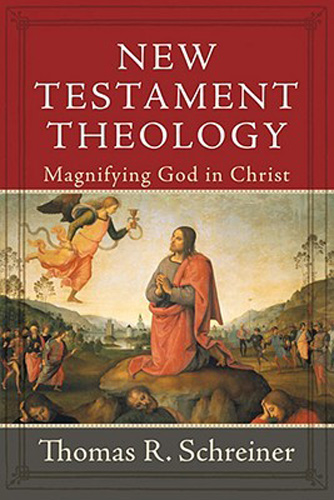
New Testament Theology: Magnifying God in Christ
In this substantial volume, Thomas Schreiner takes up the study of New Testament theology, looking for the themes that emerge from a detailed reading of the whole rather...
Downloads
About BiblicalTraining®
BiblicalTraining® wants every Christian to experience a deep and loving relationship with Jesus by understanding the life-changing truths of Scripture. To that end, we provide a high-quality Bible education at three academic levels taught by a wide range of distinguished professors, pastors, authors, and ministry leaders that moves from content to spiritual growth, all at no charge. We are a 501(c)(3) non-profit funded by gifts from our users. We currently have over 180 classes and seminars, 2,300 hours of instruction, registered users from every country in the world, and in the last two years 1.4 million people watched 257 terabytes of videos (11 million lectures).
Our goal is to provide a comprehensive biblical education governed by our Statement of Faith that leads people toward spiritual growth.