Survey of Biblical Theology - Lesson 24
1 Peter
1 Peter teaches how suffering Christians are called exiles, facing verbal abuse and discrimination yet sustained by hope through Christ’s resurrection. Understand how Peter applies Israel’s covenant identity—chosen race, royal priesthood, holy nation—to the church. Learn that Jesus’ atonement provides forgiveness, healing, and reconciliation with God, while his victory over demonic powers assures believers of final triumph. The promised inheritance now points to the new creation, expanding the land promise to the whole universe.

I. Context
A. Written to Gentile believers as spiritual exiles
B. Facing reviling & discrimination
II. Salvation & Identity
A. Trinitarian salvation: Father elects, Spirit sanctifies, Son’s blood sprinkles
B. Christ as Passover Lamb; church as chosen race, royal priesthood, holy nation
III. Resurrection & Inheritance
A. Living hope through resurrection, signaling new creation
B. Future inheritance is heavenly glory
IV. Temple & Priesthood
A. Jesus the living stone; believers as living stones & spiritual house
B. All Christians are priests; no longer a physical temple
V. Atonement & Suffering
A. Christ bore sins on the tree; substitutionary atonement
B. His example: endure insult & suffering without retaliation
VI. Christian Conduct
A. Fear God, submit to authorities
B. Guidance for slaves, wives, & husbands
VII. Difficult Passages
A. Spirits in prison: proclamation of victory to demons
B. Gospel to the dead: deceased believers vindicated, no second chance
VIII. Fulfillment of Land Promise
A. Escalates from Canaan to inheritance of the whole new creation
As I said, we don't look at every part of the New Testament. I'm looking at 1 Peter, but not 2 Peter. We're not looking at Jude as well.
But 1 Peter is a fascinating book, and we'll just talk about it briefly. It seems, if James is written to Jewish readers, probably, given his ministry, 1 Peter was written, most scholars agree, to Gentiles, but he begins by calling them exiles, exiles of the dispersion. Probably, they're not literally exiles, but spiritually exiles.
They don't fit. They don't fit with the society they are in, and they're being mistreated and persecuted. In fact, we see later that they're being reviled.
Interestingly, in 1 Peter, we have no evidence that they're being persecuted physically. The persecution is verbal discrimination, and perhaps discrimination in employment and other advantages that come from everyday life. Sometimes people say there's no persecution in a country like the United States at all, but I know what they're saying.
We're not being put to death. We're not being imprisoned for being Christians, but there is a kind of persecution when you're verbally abused. That is persecution, 1 Peter tells us.
You may not get a job that you should get because you're a Christian. That's persecution as well. We ought not to forget there is some persecution going on.
Some are mistreated, and that's what we see in 1 Peter as well. The exile theme picks up on this idea that we've seen of a new exodus. Believers are exiles, but there's been a new exodus, and they actually belong to God, right? So we can say heaven is their home.
Peter, in this book, is very theological. He begins right away in the first verses. You're foreknown and elected by the Father.
You're set apart by the Spirit for obedience and the sprinkling which uses blood. Did you notice the Trinitarian work there? Foreknown and elected by the Father, set apart, sanctified by the Spirit, and sprinkled with Jesus' blood. We could say our salvation is planned by the Father, accomplished by the Son, and applied by the Spirit, right? Then you have this exodus theme and Christ being the Passover lamb in 1, 18 and 19.
He's our Passover lamb who has delivered us. Peter also appropriates this idea. We saw right in the garden with Adam and Eve that they're priest kings, and then we saw in Exodus 19, 5 and 6, that Israel is a kingdom of priests.
Israel is God's chosen people, but now he says to these Gentile Christians, probably some Jewish Christians with them, but you're the chosen race, right? This language that was used of Israel is now true of the church of Jesus Christ. Jews aren't excluded, right? But now the true people of God are defined by faith in Jesus Christ. What is true of the Jewish people is now true of the church.
We are God's chosen race. The royal priesthood, where is the royal priesthood now? It's in the church. The church is God's holy nation.
It's not a nationalistic entity. He's not talking about the United States or Argentina or Zimbabwe. Obviously, that's true.
Those countries didn't even exist as countries, right? But what I mean is he's not talking about a political entity here in terms of having boundaries over against other countries. No, this is true of all Christians throughout the world. All Christians are a holy nation, but that was true of the Jews, but now it's true that the church of Jesus Christ were a people for God's own possession to proclaim God's mercies.
So we could say believers are the restored Israel, right? Jews and Gentiles together. God's fulfilled his New Exodus promise in a surprising way, actually, in a way that we didn't expect. Believers have a living hope through the resurrection of Jesus Christ, and here I refer to Isaiah 65 and 66.
The resurrection signals what? A new creation. So in the Old Testament, passages like Isaiah 25, Daniel 12, actually Isaiah 26 too. It's in Isaiah 25 and 26 and a few others.
There's a promise, actually Ezekiel 37 is a good one to remember. There are promises of the resurrection, but the resurrection signaled to the Jews the last days are here. So what does the New Testament teach us? The last days have arrived because the resurrection has arrived of Jesus, right? Jesus is the first person resurrected from the dead.
The other people he raised from the dead in his ministry, right? Lazarus, Cyrus' daughter, the widow of Nain's son, they all died again, right? Jesus is the first person resurrected. Well, that means the end times have come. Remember what Paul says in 1 Corinthians 15? He's the first fruits.
There's a surprising separation between his resurrection and ours. We have to wait for our resurrection. But the last days have come, and because Jesus is resurrected, we're a new creation, and we're promised an inheritance.
The inheritance in the Old Testament was land, but here the inheritance is our heavenly glory. So I think this is interesting. What does Peter say to a suffering people? He says, you'll go to heaven.
He says, rejoice. You have a future salvation. Now, this is what I thought when I read this.
I told you I had a lot of Marxist teachers in the university, and, of course, Marx would say, what do religious leaders do, and political leaders, what do they do to keep the people in line? They say, according to Marx, hey, you know, you behave. You're going to go to heaven later, and then they can oppress them while they're on earth. That's what Marx said.
So is that what Peter's doing? Well, I want to say a couple things. First, Peter is not part of the bourgeois class, right? Peter's not like the rich leader or executive saying to the people, yeah, you guys suffer, but I'm going to live a life as a fat cat. Peter's suffering, too.
Peter gives his life for the gospel. So, you know, he's not saying to people in comfort, you just bear with it. But the second thing I want to say is, of course, we remember the utter devastation and horrific things done by Marxism.
That's not the point of this lecture, right? But Marxism, I've mentioned it before, Marxism has not been helpful, to say the least, right? Where it's been practiced has led to immense human misery, and many people put to death. So that's the second thing I want to say. The third thing I want to say is there are many people suffering in this world.
I've lived a relatively comfortable life, I would say a very comfortable life, but not everybody does, right, who's a Christian. We can't always promise people, can we, that their earthly life will be relieved of their sufferings. You know, Peter had no solution.
He couldn't say, well, I have an economic plan where you guys are going to do really well. There are many people in this world, right, maybe it's you, maybe it's believers you know, they might be in situations politically, socially, what country they're in, what city they're in, for whatever reason. It's complicated, isn't it? But they might be in a situation where you might live in a very poor place.
So there's no guarantee. God is often good and blesses us, but there's no guarantee of earthly pleasure. So fourthly, I want to say, sometimes we fall so in love with this earth that we think, well, heavenly blessing, what about now? Well, okay, but heaven's forever, right? We may suffer now, but let's not look down on this promise of heavenly blessing.
That's amazing. It's forever, right? Whatever we experience in this world, whether we prosper and flourish or whether we suffer, that ends. So I resist very strongly the idea, oh, well, this is just throwing a carrot to people who are suffering.
No, this is real, this eschatological promise. So that's a very important thing to say, I think, about Peter's theology. Now, Peter also, he speaks of the church as a new temple.
So this is very interesting. He describes Jesus as a living stone, a living stone because he's raised from the dead, right? He's rejected by people but chosen and honored by God. Well, yeah, he was put to death, but this is what the readers are experiencing as well.
What is Peter saying? Rejected now, but Jesus was honored and exalted at his resurrection. That'll be your future too. But you yourselves, because you belong to Jesus, you are living stones.
You're members of that new temple. You're God's spiritual house. So he takes that temple theme, right, of the Old Testament.
It's no longer for him a building. Now you're the temple. Well, actually, Jesus is the temple, and then you belong to him, and you become part of that spiritual house.
And now you're the priesthood, verse 5, right? So the priesthood is no longer Levitical and Aaronic. It's all believers are priests. So we see, again, this fulfillment theme, what's true in the Old Testament, is now fulfilled in a deeper and more profound way.
The physical temple points to Jesus being the temple and the church being the temple, and there is no longer a physical temple. So that's interesting to see. Then where does healing and forgiveness come from? It comes from our divine shepherd.
It comes from Jesus' atonement. So that's a very important passage. You were called to suffer, 221, because Christ suffered for you.
He left you an example that you should follow in his steps. And then he quotes Isaiah 53 right here. He didn't commit sin.
No deceit was found in his mouth. When he was insulted, he did not insult in return. That's amazing, isn't it? When I'm insulted, I want to insult back really bad, but he didn't do it.
When he suffered, he did not threaten. That's tempting, isn't it? You're going to really get it. He didn't do that, but instead he entrusted himself to the one who judges justly.
So he entrusted himself to God instead of ripping on others. But now, 224, he himself bore our sins in his body on the tree. We have on the cross, right? But it's interesting, it's called the tree, going back to Deuteronomy 21, 23.
Everyone who hangs on a tree is cursed of God. He himself bore our sins in his body on the tree. Our sins were put on him.
So by his wounds you have been healed. The healing here is, I think, atonement in this context. I don't think he's talking about physical healing.
But the healing has come because we're forgiven of our sins through the substitutionary death of Jesus. And we see this again in 318. For Christ also suffered for sins once for all, once for all time, right? That doesn't mean once for all people there.
But once for all time he suffered the righteous for the unrighteous. So there's substitution, right? The righteous one, Jesus, suffered for the unrighteous. I mean, what can be clearer? You know, a lot of people don't like substitutionary atonement if you read the literature.
But, I mean, I think it's so clear. Then he might bring you to God. So, he suffered for our sins.
I think it's right to say we have penal substitutionary atonement here. What does penal mean? He took the penalty we deserved. He suffered for our sins.
And he substituted for us. He suffered in our place. The righteous for the unrighteous.
And the benefit is he's brought us to God. We have fellowship with God. So there's the gospel, right? Then Peter says, live with fear.
I don't think he means paralyzing fear. But live with fear during the time of your exile. What does it mean to fear God? And then he talks about we relate well to the government.
Slaves relate well to their masters. Wives and husbands relate well to each other. So, Peter, by the way, he especially focuses on the people who will tend to be oppressed, right? He doesn't say anything to the masters, but many verses address to the slaves in chapter 2. One verse for husbands, but six for wives.
Not because he thinks wives need more exhortations, but the wives are more apt to be abused, I think. They're more apt to suffer under the authority of the husband. So, that fits with the whole letter, right? But he's speaking of those who are experiencing hard times.
And I don't think Peter is saying when he calls upon wives to submit, I don't think he's saying stay there if you're being abused, right? I think we'd all agree. When you're being abused or if you're a slave and you can get out of it, do so. But, of course, many people are in situations they couldn't escape.
And so he speaks of those matters. Of course, that is the typical teaching, isn't it? How husband and wives relate, you know, submitting to your husbands. But we think of this persecution context.
Maybe I'll just make two quick comments. First, about this passage. What does it mean when it says, Jesus went and made proclamation to the spirits in prison? What does that passage mean? That is a very difficult and controversial passage.
Again, great people disagree on it. So, I interpret this, well, let me say, some people understand this to be, there's a number of understandings, but maybe the two main ones, that Christ preached through Noah to his contemporaries. So that's one understanding.
That understanding goes back to Augustine. So Christ was preaching through Noah. Those are the spirits who are now in prison, right? Who rejected and were punished.
And that's what's going on in this passage. No idea, you know, of a second chance or anything like that. Just, they were preached to while they were alive.
That's what this view means. I don't hold that view, though. And I think the view I hold, I think, is the main view, that the spirits in prison are demons.
That's the view I think is more likely. I think he's thinking back to Genesis 6, where I mentioned earlier, I think demons had sexual relations with women. And I think Jesus went, and perhaps this is all the demons.
There's a lot we don't know about demons. But I think after his resurrection, Jesus, we have the word, where is it in this text? He went and made proclamation to the spirits in prison. I think he went, made alive by the spirit, he went as the resurrected Lord and proclaimed, not the gospel to them, but victory.
He proclaimed victory over them. And it's very interesting, in verse 22, Jesus is gone into heaven. It's the same word in Greek, poietes.
322, he went into heaven. And in 319, he went and preached, poietes, the very same word. And I think, you know, in 22 as well, the angels, authorities, and powers are also the demons.
So I think this passage holds together. And what Peter is arguing is Jesus proclaimed victory over the demonic spirits. I mean, why does he bring this up? Well, I think he brings this up to say evil is not going to win, right? Jesus has conquered even the demons.
So I don't think there's any second chance theology, whatever view you hold. I mean, this is a very controversial text. I don't think there's anything about the second chance.
The other text I should mention quickly, Peter mentions in 4.6 the gospel being preached to those who are now dead. And I think that's a good translation. It's an interpretation.
All translations are interpretations. But the Greek doesn't have the word now, right? The Bible just says, the Greek just says the gospel is preached to the dead. I hold the interpretation spoken of here that what was happening, some believers had died, unbelievers were saying, see, it doesn't make any difference to be a Christian.
I mean, you die, we die, what's the big deal? And Peter's saying, no, yes, I mean, yes, these people have died, but no, they are living in the Spirit according to God. God will vindicate them. So don't think that the gospel being preached to them and them believing it doesn't make any difference.
Again, I don't think there's any second chance theology here as well. I think a second chance theology doesn't make a lot of sense in this context because Peter says, chapter 4, verse 5, that the wicked will give an account to the one who stands ready to judge the living and the dead. And he's saying to the believers here, hang on and don't give in.
Well, if there's a second chance, why do you need to hang on? Because you have another path. So I think that's unlikely. So, you know, those are very controversial passages.
Read the commentaries on that. Make up your own mind. I hope you love 1 Peter.
Shameless plug, I've written a commentary on it. Maybe that'll be helpful to you. But there are other good commentaries out there as well.
So when you talk about the themes in the Old Testament theology that run through the New Testament, and especially the Abrahamic promise of offspring, land, and a blessing. And you mentioned here that when we go to the New Testament, we can see that the people are still there. The blessing has come in Christ.
What about the land? How does that fit? Yes, yes. That is a great question. And that does relate to my next lecture on Revelation.
But I would say, I think the inheritance begins as a spiritual reality first. But it will translate into, I think, the new heavens and the new earth. So I think the land promise is fulfilled in the new world that's coming.
But it's no longer just Canaan. It's the whole earth. It's the whole universe.
So it fits with the typological pattern we've seen. There's escalation. It begins with Canaan, but Romans 4.13, Abraham's going to inherit the whole world.
So the whole world is going to be our inheritance now. So it's amazing, right? It begins with Isaac, but now it's all people in terms of offspring. In terms of land, it begins with Canaan, but it's going to zoom out to be the whole universe, I think.
- Explore how biblical theology developed through figures from Irenaeus to Bultmann, learning how debates over history, reason, and revelation shaped its methods, authority, and lasting influence on theology and the church.0% Complete
- Study how biblical theology traces God’s revelation historically while systematic theology organizes doctrine, seeing how both disciplines work together with presuppositions of faith to interpret Scripture as God’s authoritative Word.0% Complete
- Creation, covenant, and conflict reveal humanity’s sin and God’s judgment, showing the garden as sanctuary, Adam’s priest-king role, the serpent’s opposition, and God’s plan to bring salvation and victory through His promises.0% Complete
- God’s covenant with Abraham promises land, offspring, and blessing to all nations, showing both unconditional divine fulfillment and conditional obedience, while God preserves His plan through threats and fulfills His promises in surprising ways.0% Complete
- The Exodus shows God redeeming Israel by grace, giving the law and sacrifices, and dwelling in the tabernacle, all pointing to Christ’s final sacrifice and God’s presence with His people in the new creation.0% Complete
- Watch Israel’s unbelief, partial fulfillment of God’s promises, the cycle of sin without a king, and the rise of David as God’s chosen ruler who anticipates the true king to lead His people.0% Complete
- God’s covenant with David points to an eternal King, Israel’s failure reveals the need for renewal, and the prophets promise a new covenant, Exodus, creation, and David—all fulfilled in Jesus, the true King bringing worldwide blessing.0% Complete
- Israel’s identity forms through unfulfilled promises, foreign domination, Jewish factions, and rising messianic hopes, which fuel anticipation of a Messiah and set the stage for the New Testament.0% Complete
- Matthew shows Jesus as Emmanuel, true Israel, Son of David, and Son of God, fulfilling promises through a new Exodus, atonement, and divine authority, so that all God’s covenants find their fulfillment in him.0% Complete
- Dr. Schreiner reveals Jesus as the divine Son, true Israel, greater Moses, and eternal King who fulfills God’s promises, reveals the kingdom in hidden yet present power, and builds his church as the new people of God drawn from all nations.0% Complete
- Mark proclaims Jesus as the Son of God and true King whose suffering secures forgiveness, while discipleship means following his example of humility and obedience despite weakness.0% Complete
- John portrays Jesus as the eternal Logos and Son whose I AM sayings and signs grant believers the present possession of eternal life through faith.0% Complete
- John presents Jesus’ work as his lifting up and glorification, fulfilling Scripture. Life comes through true believing—receiving, coming, hearing, drinking, eating, entering, abiding—while false belief, darkness, and human glory block it.0% Complete
- Dr. Schreiner highlights divine sovereignty: the Father gives believers to the Son, the Spirit gives life, and all who truly believe are preserved, and glorifies Christ, showing Jesus’ death and resurrection as God’s sovereign plan.0% Complete
- In John’s epistles, he teaches that assurance rests on the apostolic witness, confession of sin, obedience, love, and doctrinal truth, while false teachers deny Christ.0% Complete
- Acts shows God’s plan through Christ and the Spirit, fulfilling covenant promises, spreading the gospel, empowering witnesses, and forming the church as restored Israel united in salvation.0% Complete
- Paul’s “already but not yet” theology shows God’s promises fulfilled in Christ yet awaiting completion, shaping Christian life, doctrine, and practice in areas like adoption, redemption, sanctification, and practical living.0% Complete
- In this lesson, Paul shows that Spirit-led believers still need commands, which guide holiness and love without legalism, uniting word and Spirit to shape Christian life, protect love from distortion, and call for discernment in obedience.0% Complete
- Learn how the New Perspective reinterprets Judaism and Paul, how Sanders and Stendhal shifted focus from justification to covenant and inclusion, and how Paul’s own words confirm his Damascus road conversion.0% Complete
- Paul uses “works of the law” to mean all deeds of the law, not just Jewish boundary markers, and teaches that justification comes by faith in Christ because human disobedience makes works powerless to save.0% Complete
- Learn that justification is God’s declarative act of counting believers righteous through Christ’s atonement, not human works, and see why imputation, not transformation, secures assurance and preserves the heart of the gospel.0% Complete
- Hebrews teach the Son as God’s final revelation and superior Melchizedekian priest whose one sacrifice fulfills typological promise.0% Complete
- James emphasizes authentic faith that produces obedience, wisdom, and care for others, showing that faith without works is dead while affirming God’s goodness and calling believers to endurance, humility, and practical godliness.0% Complete
- In 1 Peter, see how believers as exiles endure suffering with hope, live as God’s priestly people, rest in Christ’s atoning work and victory, and anticipate the inheritance of the new creation as fulfillment of God’s promises.0% Complete
- Revelation’s symbolism portrays Satan, the beast, false religion, and Babylon while teaching to persevere in suffering, trust God’s sovereignty, and hope in Christ’s victory and the new creation.0% Complete
- Dr. Schreiner teaches how Revelation portrays Christ’s full deity, the Lamb’s redeeming work, with victory grounded in the cross and fellowship with God as the ultimate goal.0% Complete
Lessons
- Explore how biblical theology developed through figures from Irenaeus to Bultmann, learning how debates over history, reason, and revelation shaped its methods, authority, and lasting influence on theology and the church.0% Complete
- Study how biblical theology traces God’s revelation historically while systematic theology organizes doctrine, seeing how both disciplines work together with presuppositions of faith to interpret Scripture as God’s authoritative Word.0% Complete
- Creation, covenant, and conflict reveal humanity’s sin and God’s judgment, showing the garden as sanctuary, Adam’s priest-king role, the serpent’s opposition, and God’s plan to bring salvation and victory through His promises.0% Complete
- God’s covenant with Abraham promises land, offspring, and blessing to all nations, showing both unconditional divine fulfillment and conditional obedience, while God preserves His plan through threats and fulfills His promises in surprising ways.0% Complete
- The Exodus shows God redeeming Israel by grace, giving the law and sacrifices, and dwelling in the tabernacle, all pointing to Christ’s final sacrifice and God’s presence with His people in the new creation.0% Complete
- Watch Israel’s unbelief, partial fulfillment of God’s promises, the cycle of sin without a king, and the rise of David as God’s chosen ruler who anticipates the true king to lead His people.0% Complete
- God’s covenant with David points to an eternal King, Israel’s failure reveals the need for renewal, and the prophets promise a new covenant, Exodus, creation, and David—all fulfilled in Jesus, the true King bringing worldwide blessing.0% Complete
- Israel’s identity forms through unfulfilled promises, foreign domination, Jewish factions, and rising messianic hopes, which fuel anticipation of a Messiah and set the stage for the New Testament.0% Complete
- Matthew shows Jesus as Emmanuel, true Israel, Son of David, and Son of God, fulfilling promises through a new Exodus, atonement, and divine authority, so that all God’s covenants find their fulfillment in him.0% Complete
- Dr. Schreiner reveals Jesus as the divine Son, true Israel, greater Moses, and eternal King who fulfills God’s promises, reveals the kingdom in hidden yet present power, and builds his church as the new people of God drawn from all nations.0% Complete
- Mark proclaims Jesus as the Son of God and true King whose suffering secures forgiveness, while discipleship means following his example of humility and obedience despite weakness.0% Complete
- John portrays Jesus as the eternal Logos and Son whose I AM sayings and signs grant believers the present possession of eternal life through faith.0% Complete
- John presents Jesus’ work as his lifting up and glorification, fulfilling Scripture. Life comes through true believing—receiving, coming, hearing, drinking, eating, entering, abiding—while false belief, darkness, and human glory block it.0% Complete
- Dr. Schreiner highlights divine sovereignty: the Father gives believers to the Son, the Spirit gives life, and all who truly believe are preserved, and glorifies Christ, showing Jesus’ death and resurrection as God’s sovereign plan.0% Complete
- In John’s epistles, he teaches that assurance rests on the apostolic witness, confession of sin, obedience, love, and doctrinal truth, while false teachers deny Christ.0% Complete
- Acts shows God’s plan through Christ and the Spirit, fulfilling covenant promises, spreading the gospel, empowering witnesses, and forming the church as restored Israel united in salvation.0% Complete
- Paul’s “already but not yet” theology shows God’s promises fulfilled in Christ yet awaiting completion, shaping Christian life, doctrine, and practice in areas like adoption, redemption, sanctification, and practical living.0% Complete
- In this lesson, Paul shows that Spirit-led believers still need commands, which guide holiness and love without legalism, uniting word and Spirit to shape Christian life, protect love from distortion, and call for discernment in obedience.0% Complete
- Learn how the New Perspective reinterprets Judaism and Paul, how Sanders and Stendhal shifted focus from justification to covenant and inclusion, and how Paul’s own words confirm his Damascus road conversion.0% Complete
- Paul uses “works of the law” to mean all deeds of the law, not just Jewish boundary markers, and teaches that justification comes by faith in Christ because human disobedience makes works powerless to save.0% Complete
- Learn that justification is God’s declarative act of counting believers righteous through Christ’s atonement, not human works, and see why imputation, not transformation, secures assurance and preserves the heart of the gospel.0% Complete
- Hebrews teach the Son as God’s final revelation and superior Melchizedekian priest whose one sacrifice fulfills typological promise.0% Complete
- James emphasizes authentic faith that produces obedience, wisdom, and care for others, showing that faith without works is dead while affirming God’s goodness and calling believers to endurance, humility, and practical godliness.0% Complete
- In 1 Peter, see how believers as exiles endure suffering with hope, live as God’s priestly people, rest in Christ’s atoning work and victory, and anticipate the inheritance of the new creation as fulfillment of God’s promises.0% Complete
- Revelation’s symbolism portrays Satan, the beast, false religion, and Babylon while teaching to persevere in suffering, trust God’s sovereignty, and hope in Christ’s victory and the new creation.0% Complete
- Dr. Schreiner teaches how Revelation portrays Christ’s full deity, the Lamb’s redeeming work, with victory grounded in the cross and fellowship with God as the ultimate goal.0% Complete
Class Resources
Recommended Books
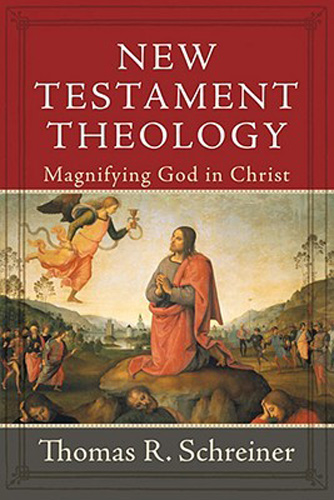
New Testament Theology: Magnifying God in Christ
In this substantial volume, Thomas Schreiner takes up the study of New Testament theology, looking for the themes that emerge from a detailed reading of the whole rather...
Downloads
About BiblicalTraining®
BiblicalTraining® wants every Christian to experience a deep and loving relationship with Jesus by understanding the life-changing truths of Scripture. To that end, we provide a high-quality Bible education at three academic levels taught by a wide range of distinguished professors, pastors, authors, and ministry leaders that moves from content to spiritual growth, all at no charge. We are a 501(c)(3) non-profit funded by gifts from our users. We currently have over 180 classes and seminars, 2,300 hours of instruction, registered users from every country in the world, and in the last two years 1.4 million people watched 257 terabytes of videos (11 million lectures).
Our goal is to provide a comprehensive biblical education governed by our Statement of Faith that leads people toward spiritual growth.