Survey of Biblical Theology - Lesson 26
Revelation (Part two)
Revelation emphasizes Christ’s deity, sharing God’s titles, authority, and worship. Learn that he conquers as the slain and risen Lamb, redeeming people from every nation by his blood. The book highlights the cross as the basis of victory, the saints’ worship, and God’s Trinitarian work. You gain hope in the new creation where God and the Lamb are the temple and light, sorrow ends, and fellowship with God is complete. Different millennial views are assessed, with new creation millennialism presented.

So we're continuing our study, the second half of our study of Revelation, and now we're going to talk about Christ, the cross, the new creation, and another thing or two. One of the things, we won't look at all these verses, but one of the things I want you to see is the extraordinarily high Christology of Revelation, which I think is one of the arguments that this is also written by Apostle John, because we've already seen that in the Gospel of John, right? So there's a parallel with the Gospel of John in that Jesus is called the Word of God in 1913. Jesus is identified as the ruler of the kings of the earth.
Well, that's not just a man, right? He has the same sovereignty as God. Three times, Jesus is said to be the first and the last in chapter 1, 17, 2A, 22, 13. And he also says in 22, 13, I'm the Alpha and the Omega.
But in Isaiah, only Yahweh is the first and the last. And elsewhere in Revelation, God declares that he is the Alpha and the Omega. So clearly, Jesus shares the same identity as God, right? As God is the first and the last, he is the first and the last.
We see Jesus' sovereignty in the book. He holds the keys of death and Hades. I love that picture, death and Hades.
I think Hades is another picture of death, the realm of the death. But he holds the keys and the saints, if they worry about getting there, he says, I got to get the key. I'm going to unlock it and let you out.
Death will not rule over you. He holds the seven stars in his hands. Those are the angels of the seven Churches.
Hey, what are the angels of the seven Churches? I give a guess in my commentary, but what I'm going to say here is I have no idea. So that's really hard to know. Jesus opens the door so no one can shut it.
And when he shuts the door, no one can open it. Well, that's a divine activity, right? Chapter five emphasizes that no one is worthy to open the seven-sealed book except Jesus. But remember how chapter four ends, chapter four ends that God is worthy as creator.
Same word. He's worthy. He's fully God.
I think I'm just going to read this part because it's not hard to understand. We find astonishing parallels between God and the Lamb, indicating that the Lamb is equal to God. Sinners beg to be spared from the wrath of God, but the wrath of the Lamb.
Hey, Lambs aren't wrathful, right? This Lamb is, right, on the final day. Salvation is attributed in 710 to God and to Lamb. Note he's equal with God.
We read in 717, the Lamb in the midst of their throne will be their shepherd, and he will guide them to the springs of living water. Lambs aren't shepherds. This Lamb is, right? And what do we think of Psalm 23? The Lord is my shepherd.
But this Lamb is the shepherd. He's the king. Well, he's called the king of kings and the Lord of lords, isn't he? We see the verses there.
The apostles, 21 forward, belong to the Lamb. And both God and the Lamb are the new temple. We'll talk about that later.
But what's the temple in the new creation? It's God himself. But it's not just God. It's God and the Lamb.
The new creation is illumined by both God and the Lamb, 21, 23, 22, 5. They're the light. The river of life comes from both God and the Lamb, 22, 1. Isn't it remarkable how many times he does this, showing the equality of God and the Lamb, showing that he's fully God? I think a lot of people who've read Revelation, I mean, they believe Jesus is God, but maybe they haven't seen how clear it is. Both God and the Lamb sit on the throne, 22, 3. The kingdom of the world is given to the Lord, I think the Lord there is God, and to his Christ.
Just as God the creator is worshiped in chapter 4, so Christ as redeemer is worshiped in chapter 5. Well, maybe I just want to look at those verses because they're so clear. They sing a new song because they've been redeemed. Then I looked and heard the voice of many angels around the throne and the living creatures and the elders.
Their number was countless, thousands plus thousands of thousands. They said with a loud voice, worthy is the Lamb who was slaughtered to receive power and riches, wisdom, strength, honor, and glory, and blessing. By the way, I don't think it's always the case, but I don't think it's an accident that it's one power, two riches, three wisdom, four strength, fifth honor, six glory, seven blessing.
Seven is a number of completion. And of course, these are the things that belong to God. I heard every creature in heaven and on earth, under the earth, on the sea, and everything in them saying, blessing and honor and glory and power be to the one seated on the throne, that's God, and to the Lamb.
Equal worship, right? Forever and ever. The four living creatures said amen and the elders fell down and worshiped. What a beautiful, lovely, powerful text.
What a clear indication of the deity of Christ. So, you know, just a few others. Jesus is the beginning and the head of the new creation.
He's the resurrected Lord. He's the Davidic King, right? We see that he fulfills the Davidic covenant. He's the root of David.
We read in chapter five. As the Davidic King, he will rule the world with an iron rod. He'll destroy God's enemy.
He's also the glorious Son of Man. You know, outside the Gospels, Son of Man appears once in Acts. It's debated how we should interpret this.
Maybe once in Hebrews, but then only here in Revelation. As the Son of Man, well, I want to look at that for a minute because it's important hermeneutically. So, among the Lamb's sons was one like the Son of Man, dressed in a robe with a golden sash wrapped around his chest.
I want to say hermeneutically. This is symbolic language. The robe and sash are priestly vestments.
He's our priest. The hair of his head was white as wool. Jesus doesn't literally have white hair, right? White hair symbolizes eternity and wisdom.
White as snow. In fact, this is very interesting because he's the Son of Man that goes back to Daniel 7, but in Daniel 7, it's the ancient of days who has hair like white wool. He's not forgotten the passage.
He's saying Jesus is equal to the ancient of days. He's fully gone. Then he tells us that Jesus has eyes like a fiery flame.
His eyes aren't literally like burning coals, right? But Jesus sees everything. So, we see the symbolism. His feet were like fine bronze as it is fired in a furnace.
No, his feet actually aren't cast in bronze, right? But the picture is perhaps purity and strength. His voice is like the sound of cascading waters. He's glorious, and he had a double-edged sword coming from his mouth.
He doesn't really have a double-edged sword. It stands for his word. His face was shining like the sun at full strength.
He's glorious, and John falls down to worship him, doesn't he? And later, he's told not to fall down and worship an angel. So, again, a very remarkable passage on the deity of Christ. So, sometimes I say to my students, you know, Revelation is a really weird book.
It's about God's sovereignty, evil, the need to persevere, Christ as God, and the cross. Now, there are other things in there, but most of what we read in there is just basic Christian stuff, right? And here's the cross. In chapter 4, as we've seen, God as creator is worshipped in the throne room.
Chapter 5, God holds this seven-sealed book. Seven, symbolic, right? No one's worthy. That's the key word to open it, right? John is told the lion from the tribe of Judah has conquered and can open the seals, the Davidic king, the one who's fully man, fulfilling the Davidic covenant, and fully God, the lion from the tribe of Judah.
That means he's the Davidic king. Well, he also says the root of David, but this is just like chapter 7. John is told there's a lion, but when he looks, he sees a lamb. Remember chapter 7? He's told about the 144,000, but he sees the great multitude.
They're the same entity, just different pictures. He is a lion and a lamb, but the fundamental truth here is he doesn't conquer first as a lion, but as the slain and risen lamb, right? By the way, the lamb is risen because we see I saw one like a slaughtered lamb. He really was slaughtered, but he's standing, and I think the standing means he's risen.
He's conquered. That's what I saw. I saw this lamb and, well, the lamb conquers, and he gives rule to the saints, so I talk about that a little bit.
We conquer through what God has done, but what we should see here is they sing a new song. You were worthy to take the scroll and open its seals because you were slaughtered or slain, and you purchased. That's the word for redeemed, right? Argorazzo, but another word for redeemed.
You purchased people for God by your blood from every tribe and language and people and nation. You made them a kingdom and priests to our God, fulfilling all biblical theology, right? How do we get restored and really beyond what Adam and Eve were? Well, it's through the cross, right? It's through the cross. That's how we get in, so it's through his blood that people are purchased and redeemed.
Actually, now I'm not going in the order of my notebook, but it doesn't matter because you can read that. Right from the beginning of the book, Jesus is the faithful witness, the firstborn from the dead, the ruler of the kings of the earth, to him who loves us. I think the present tense participle there is significant.
That can be debatable, but, and he set us free from our sins by his blood. Fundamentally, perseverance doesn't come first, right? First comes forgiveness. First comes being cleansed by his blood.
In fact, if we look at Revelation 5.5, remember we're called to conquer and overcome, but the lion from the tribe of Judah, the root of David, has conquered. We're to conquer, but we only conquer because he conquers. He conquered first.
That's fundamental. I don't think I talk about this anywhere else. Since I'm in chapter one, I want to show you a little parenthesis, because this is very interesting.
Grace and peace to you from the one who is, who was, and who is to come, and from the seven spirits before his throne, and from Jesus Christ, the faithful witness. I want to argue, though, that's Trinitarian, since I don't know if I have that anywhere else. Grace and peace to you from the father, the one who is, and who was, and who is to come.
That's clearly the father there. Grace and peace to you, last, from Jesus Christ, the seven spirits. Seven's a symbolic number.
The fullness and completion of the spirits. Now, you never read in the Bible, grace and peace to you from God the father and the archangel Michael. Never.
Grace and peace come from God. You never read grace and peace to you from God the father and the apostle Paul. Grace and peace to you from God the father and the church at Galatia.
No. Every time, grace and peace come from God. So, I think this is a very powerful Trinitarian reference.
Grace and peace to you in apocalyptic language, right? Grace and peace to you from the father, the spirit, and the son. Well, let's go to Revelation 7, which we already looked at. That's the great multitude.
Remember, we saw they're standing before the throne, which I think means heaven. He's retrojected us into heaven. These visions aren't linear, right? They're in heaven.
They're in their white robes. They're saying, God saved us. The angels are praising God.
And then one of the elders asked me, this is a literary device, John, who are these people in white robes, and where do they come from? I said to them, I have no idea. You tell me. Then he told me, these are the ones coming out of the great tribulation.
They washed their robes and made them white in the blood of the lamb. Remember, this is in the chapter that says, who will stand? Remember, who will stand when that great day of the Lord comes? It's the sealed, the 144,000. Why are they sealed? Because they've washed their robes and made them white in the blood of the lamb.
That's why they're protected. I believe, you know, there's so many things going on. I believe the great tribulation, a lot of people disagree with this, I believe the great tribulation begins at the resurrection and lasts to the second coming.
I think we're in it. So, I don't think it's seven years at the end or three years at the end. Many wonderful godly people hold a different view.
Maybe you hold a different view, but I think it's equal to the 1,260 days. So, I think it's the same period. For this reason, because they're redeemed, they're before the throne of God.
They're in heaven, right? This is a heavenly scene. They serve him day and night in his temple. Well, there actually is no temple, but the temple stands for heaven.
The one seated on the throne will shelter them. Are we in heaven? Absolutely, because what does it say? They'll no longer hunger. They'll no longer thirst.
The sun will no longer strike them. The lamb will wipe every tear from their eyes. That's the same thing it says in chapter 21.
Remember, Revelation isn't a linear book. They're in heaven now. They're in God's presence.
They're redeemed. One more passage on the cross. Revelation chapter 12.
So, this is the passage where the woman's giving birth. She gives birth to the son, right? She gives birth to a male child, and he's caught up to God and to his throne. Then John skips the whole story and says, the dragon wants to kill this male child, right? The dragon's sitting there waiting to kill the child, but John tells us, zip, zap.
Yeah, Jesus is ascended on high, resurrected, crucified, resurrected, and he won. You know the story. He goes, we won.
God won. I'm arguing, you know, we're going fast. I'm arguing the next panel does not advance the story chronologically.
War broke out in heaven. Michael and his angels fought against the dragon, Satan. The dragon and his angels fought, but the dragon could not prevail, and he's thrown out of heaven.
He's thrown out. The ancient serpent, who is called the devil and Satan, the one who deceives the whole world, he was thrown to the earth and his angels with him. I argue this is the same thing we see in John 12 31.
Now is the judgment of this world. Now the ruler of this world will be cast out. So, when is Satan cast out? This is not talking about his primeval fall.
This is not talking about a fall at the end of history. This is talking about the cross. The ruler of the world is cast out at the cross, and that's what the earlier panel told us.
When the Son is ascended and exalted, so the angels win this victory on basis of the cross. Satan's thrown out, thrown to the earth. It's a picture, right? I don't think he's literally falling out of the skies.
I heard a loud voice in heaven say, salvation and power in the kingdom of our God and the authority of his Christ have now come because the accuser of our brothers who accuses them before God day and night has been thrown down. This is John's way of saying there is therefore now no condemnation for those who are in Christ Jesus. Satan has no basis upon which to accuse us because Jesus has died and been risen.
What does Paul say? Who can bring a charge against God? Select. God is the one who justifies, who can condemn. Christ Jesus died for us.
He's been raised. He's seated at the right hand of God. He intercedes for us.
That's John's way of saying it. There's no basis. Satan before the cross, so to speak, could accuse people, but now the cross has happened.
So he says we conquered by the blood of the Lamb. So I close this section by saying a vital theme in Revelation is victory comes to the saints not on their own, but based on the atoning and victorious work of Jesus. Now this part I'm not, I'm going to talk about very fast, but I just want you to see, therefore, I'm not going to look at all these verses, but it's all over Revelation.
What are God's people doing? They're worshiping him, right? They're worshiping him and praising him and they're full, they're full of joy. So pictures of heaven sometimes were taken in the heaven. So I go to the last thing that I want to talk about before there's some questions.
I know there'll be some questions. There's always questions with Revelation. The wonder of the new creation.
So this is the goal of all redemptive history, the new creation that is coming. I already told you, I think this language is very symbolic when we talk about the new creation. What's the new creation? It's our heavenly reward.
We're told in Revelation 7.15, we just looked at this, we will worship God in his temple day and night. We're told in 3.12 that believers will be a pillar in the temple, but nobody takes that literally, that we'd be a literal pillar, right? But there isn't a temple in the new creation for the Lord and the Lamb are the temple. And John tells us that specifically.
There's no temple. The Lord's the temple and the Lamb are the temple. Now here's something very interesting.
Ezekiel 40-48 in great detail describes a new temple, but there are many allusions, echoes, drawings from Ezekiel 40-48 and Revelation 21 and 22. In a passage, it tells us there's no temple. Therefore, we have hermeneutical justification to say, I think you can even argue this from Ezekiel, the temple in Ezekiel is not a literal temple.
How do we know that? John tells us it's not a literal temple, and he's citing Ezekiel. Citing is the wrong word. Alluding to Ezekiel, clearly drawing on Ezekiel.
So we recognize immediately, okay, this language, even in Ezekiel, is symbolic. There are many precious gems in the heavenly city, right? The stones that are described, and there's 12. So, right, that's symbolic, right? Are there literal gems in the city, which is the new Jerusalem, it's not just one city.
It's the whole universe. It's a picture of the whole universe, because the whole universe is now a city. And the precious gems, they remind us of the tabernacle and temple, and they're telling us the city is what? It's beautiful.
We've already seen that with the gems. It's absolutely beautiful. The city, when I look at this, the city is a perfect cube.
The city is laid out in a square. Its length and width are the same. He measured the city with a rod at 12,000 stadia.
Its length and width and height are equal. You know, this is like 1,500 miles in every direction. I don't think John is meaning for us to think the city goes 1,500 miles up into the sky, you know? So, I think it's just a picture, but it's a picture of what 1 Kings 6.20, the interior of the sanctuary, the most holy place, was 30 feet long, 30 feet wide, and 30 feet high.
What is he saying? The whole city is a sanctuary. The whole city is God's temple. God first dwelt in the garden, and then he dwelt in a tabernacle, and then he dwelt in a physical temple, and then he came in Jesus Christ, and then he came in the church, and then he's going to fill it all.
This whole massive universe, the whole thing is going to be the holy of holies. That's going to blow our minds. It's not a literal picture, but it still blows our minds.
The most important dimension of the new creation is fellowship with God, right? He dwells with his people. We'll see his face. Of course, God doesn't have a face, right? But it means we will have intimate and remarkable fellowship with him.
We can all agree on this. The greatest thing about the new creation is God himself. That fellowship with him, that will be wonderful.
The pain and sorrow of the present world will be over. We saw in 7.17 that there's no more crying, and he picks that up again in 21.4 and 5. He says in 14.13, those who die in the Lord from now on are blessed. Maybe some of you, maybe all of you can think of sorrows in your life.
They don't go away during this life. God doesn't promise they will, but they will go away, right? In the new creation, every tear, every sorrow will finally be removed, we're told, in God's presence. We're not promised that now, but it's coming.
The saints will satisfy their thirst in the new creation and the fountain of living waters will be continually refreshed and renewed, won't we? The new creation is described as a wedding feast, as the marriage supper of the Lamb. I had the privilege and the joy of performing the ceremony for all four of my kids, for, since they were good situations, right? They're not always are, but they were good situations, for the happiest days of my life. I was happier those days than the day I got married, just to be able to, you know, see my kids marry a person I respected and loved and who were Christians, that brought me amazing joy.
But this wedding feast is going to be far greater than that, right? I mean, I'm still not on that high of those days, you know? I'm happy, but the, today's not like that day, as much as I enjoy teaching, right? So, but the marriage supper of the Lamb is coming, and it's going to be amazing, and we're going to be joyful. The city will radiate with the glory of God. This world is beautiful, and I think the world to come is physical.
So, when I talk about the city, I think it's this world, this world, not recreated, purified, transformed. And this world now is beautiful, but this world has right now tsunamis, hurricanes, earthquakes, all that will be gone. We're told, yeah, I love this, the city, the city, I had the wrong verse, but the city has a massive high wall, right? I don't think that's literal.
I mean, in the ancient world, cities had walls for protection. We know today, high walls in your city, cities don't have them anymore, because they're useless. You just bomb, bomb them to death, right? The walls are useless today for cities, so cities don't have them.
I mean, they could help a little bit, I guess, if you have an army, but no, it's not worth the expense, right? But it's a picture, and there's not really literally a wall, in my view. There's no wall. It's just saying it's a picture, and there's gates, and there's the apostles at the gate and the other, but look at this.
Oh, I forgot the verse. Where is it? He says in 2125, the gates on the wall will never close, because there will never be night there. There's no use having a wall if you don't close the gates, right? But it's poetry.
How safe is, how safe are we going to be? So safe, and it'll never be night. I love this, because another indication, I think John is the author, when Judas goes out to betray Jesus, John 13, 30, remember what John says? And it was night. No night there, no evil.
You know, if you think, I'm going to miss the beauty of the night. The beauty of the night will be there, you know? The beauty of everything in this world, it's going to be there, and that's another thing. Do I have this down here? I didn't say this.
I'm going to say it. Yeah, I interpret the nations will walk by its light. The kings of the earth will bring their glory into it.
They will bring the glory and honor of the nations into it. I would argue that everything beautiful and wonderful in this world will be in the next world in a greater way than we can imagine. I'll tell you a little story.
When my daughter Anna was probably six or seven, she just absolutely loved our dog, Scamper. She loved him so much. She loved him more than I did.
I didn't love our dog the way I should, but anyway, she said to me, Dad, is Scamper going to be in heaven? I said to her, Anna, do you need Scamper to be in heaven to be happy? She goes, Dad, I need it. I really need Scamper to be there. She's five or six years old.
I spoke apocalyptically. I said, well then, Anna, Scamper will be there. I meant, you know, everything you love in this world, it's going to be in the next world.
I didn't say that to her. She wouldn't understand that, but I think my answer was still right. I'm happy about what I said because for a five-year-old, that was the way to say it, right? Everything beautiful in this world is going to be in the world to come.
The city consists of the one people of God throughout the ages, having the names of the twelve tribes of Israel on its gates and the name of the twelve apostles on its foundation stones. The city is founded on the teaching of the apostles and prophets and consists of all believers everywhere, which is wonderful. The number twelve is symbolic.
The city is 12,000 stadia. That's symbolic. And the wall is 12 times 12, 144 cubits.
That's symbolic. Remarkably, John tells us, by the way, that's the measurement of an angel here. But my response is, John's screaming to us, that's symbolic because what do we say? Oh, that's an angel's measurement.
Yeah, I was talking to an angel the other day and they were telling me how they measure things. I think John's saying symbolism, symbolism, symbolism. Last thing, the beginning of God's creation in Genesis is reflected in the end.
So, there's a tree of life in the city for healing. But no one in the city gets sick, right? This is a picture. No one needs to be healed in the city.
You never get sick. It's perpetual health. So, we ought not to over-literalize it, right? And last thing, again, what makes the city lovely is God himself and the Lamb for the light of the city.
They're the light of our lives. So, there you have it. Many more things we could say about Revelation, but time is short.
Thank you, Dr. Schreiner. We appreciate this. Obviously, there's more questions than you can deal with on this topic.
I do want to refer people shamelessly to your commentary, cleverly named Revelation, in the Baker series. And if you go to the class page, it's listed in the resources so people can see which one it is and can get it. Can I say something here? Sure.
Also, I wrote in the ESV expository commentary a shorter, more accessible commentary on Revelation. There are some things, like the Millennium, that I changed my mind on. So, my more mature, hopefully better work is the second one.
But the first one, I'd like to recommend if you want something shorter. Okay, and we'll put that on the resource page as well so people can see it. I have three clarifying comments, and I actually have a question then.
I had a friend that loved Revelation, studied it all the time, and his position was, unless it's explicitly stated to be symbolic, he understands it as literal. So, you think there's a sword coming out of Jesus' mouth? He goes, yes. So, I said, does it bother you that every time something is interpreted, it's interpreted metaphorically or symbolically? And he just had this deadpan look on his face.
He realized he'd wasted the previous 10 years. So, is it fair to say that if we're going to understand Revelation literally, it means that we're going to understand it exactly as John intended it to be understood, which is symbolically? I think that's beautifully put. That's exactly what I would say.
All right. You mentioned a second comment. You mentioned this briefly.
A lot of people look at Revelation as sequential, but I want to make sure I understand. So, you see it as cyclical. I mean, I still remember you lecturing on this 20 years ago at some school that I came to listen to your lecture.
So, like, the seals are the expression of the truth, and then the trumpets are the same events, and so forth and so on. So, you don't see it as straight through, but it loops around and around to make the same point over and over again. That's right.
I see it as cyclical is a good word, recapitulation, recursive. So, John starts and finishes, and then he starts and finishes again. Okay, good.
I just want to make sure that was clear. You made a comment that we're in the tribulation. Do you think that there's going to be a heightened tribulation at the end of time or not? Yes, I think there will be, because I think there's a final Antichrist.
Right. So, yes, I think there will be a greater intensity at the end. Yes.
Okay. All right. And so, here's my question.
As this came in through someone watching this on social media, you believe in what's called new creation millennialism, and they want to know what that is without listening to your paper ETS. Yeah. So, I said nothing.
If you noticed, I said nothing about the millennium in my lecture. Nothing, right? I skipped it. It's in chapter 20.
We can't cover everything. So, the first thing I want to say is the millennium, understand me now, the millennium is not that important. Why? It's important.
It's in God's word. It's not that important. Why do I say that? Because it ends.
It's not forever. Whatever your millennium, it ends. The new creation lasts forever and ever and ever.
Whatever lasts forever and ever and ever has to be more important. So, that's the first thing. Secondly, I'm not actually answering your question yet.
Secondly, I think we've gotten to the point as evangelicals we recognize we can love one another with different views of the millennium, but the argument goes way back. So, there's premillennialists, amillennialists, postmillennialists, and now there's even new creation millennialists. So, all those views have been held in the history of the church by very Orthodox Christians who love the Lord and are studying his word and trying to understand it.
I want to give you one example from history. An early church father named Papias was premillennial. So, Papias lived maybe in the 100s.
I forget his exact age. Eusebius lives in the 300s. So, Eusebius is talking about Papias, and he says, Papias is premillennial, and he says, oh, he's a person of very little intelligence.
So, basically, Eusebius says, because Papias is premillennial, he's dumb. So, you know, I always like to say, you know, these insults about your eschatological views, they go way back. I don't think that was fair of Eusebius to say.
It's fine to disagree. So, we recognize, actually, these disputes on the millennium, they're not new. Now, I can say, I have never been postmillennial.
So, postmillennialism, you know, is the world's going to get better and better, and then Jesus is going to come. The one I want to say about that is, I wish I could be convinced of postmillennialism. I love it.
I absolutely love it, but I'm not convinced of it exegetically. So, I've never been there. But after that, I've been everything.
I've been premillennial. I've been dispensational premillennial. I've been historical premillennial.
I've been all millennial. So, and now I'm new creational millennial. So, unless the postmillennialists were right, at some point in my life, I was right.
Who knows where it was? But I'm not, for a lot of reasons that were really implicit in everything I said, I'm not a dispensationalist anymore. And I honestly never strongly held to dispensationalism. I grew up as a Catholic.
I went to a dispensational school. I sort of kind of believed it a little bit when I was there, but it never really took for me. So, that was never a very strong belief, but I was strongly historical premillennial for a number of years.
What is historical premillennialism? Very quickly, the idea is that, there's many other parts I could say, but Christ will come to earth and the saints will reign with him for a thousand years on earth, and then will come the new creation. Then I became all millennial. All millennialists believe we're in the millennium now, and the postmillennialists typically believe that as well, culminating with Jesus coming.
But all millennialists, Augustine believed that you entered the millennium when you regenerated. It's your baptism. But most all millennialists today, following people like Greg Beale and Meredith Kline, they argued that the millennium is the reign of the saints in heaven in the intermediate state.
So, they argue the number thousand is symbolic. The binding of Satan took place at the cross. The binding talked about in chapter 20.
That first resurrection in Revelation 20 is a spiritual resurrection when you go reign with Christ in heaven. So, the millennium will end at the second coming. We're in the expository commentary.
I think there are many good arguments in support of it. So, that's just the background. However, when I was studying Revelation for this commentary, and honestly, where I am theologically, you know, we're all affected by our theology.
The view that fits best with my theology is all millennialism. But when I was reading Revelation 20 and studying it intensely, I just couldn't be persuaded that that's what Revelation 20 was saying. So, here's the two big problems with all millennialism that I have.
There are others, but the two biggest. First, that the binding of Satan takes place at the cross. Yes, I think Satan is thrown out of heaven at the cross, Revelation 12.
But in Revelation 20, he's put in the abyss. It's sealed. It's locked.
I think that's a more comprehensive binding that hasn't happened yet. So, that alone made me no longer a normal millennialist. Secondly, to say the first resurrection is the intermediate state, very attractive.
But that word, anastasis, resurrection, as N.T. Wright shows in his book, The Resurrection of the Son of God, that word anastasis is always used everywhere else as physical resurrection. Okay, there always could be exceptions. But then there's another resurrection in the next verse in Revelation 20, verse 5. I mean, maybe we should even look at it and read it just because it's good to see in the text.
Well, he says at the end of verse 4 that those who are the saints came to life, right? And they reigned with Christ. That word came to life, where is it in the text? Ezzeson, I think it is. Yeah, there it is, Ezzeson.
They came to life and they reigned with Christ for a thousand years. The rest of the dead did not come to life until the thousand years were completed. This is the first resurrection, the coming to life and reigning.
Blessed and holy is the one who shares in the first resurrection because that's the believers. The second death has no power over them. They won't go to hell, right? But they will be priests of God and of Christ and they will reign with them for a thousand years.
But the second resurrection everybody understands is physical. So this is the other problem I have with our millennialism. They say the first resurrection is the intermediate state.
The second resurrection there of the unbelievers is physical. But then the word resurrection nowhere else means spiritual resurrection. But then they say it does here, but then they say in the next verse it means physical resurrection.
I think that's a big problem. Another problem that's related, so Ramsey Michaels and Meredith Kline both used to teach Gordon Conwell and Meredith Kline defends this view that the first resurrection is the intermediate state. But I think Ramsey Michaels, in an article I read, they were colleagues together.
Hopefully they were friends. I didn't know either of them. But Ramsey Michaels says, okay, I'm putting this in my own words, Meredith, so the ultimate vindication of the saints in the book of Revelation is the intermediate state, not the resurrection of the dead? Because like everywhere else in the New Testament, it's the final resurrection.
The intermediate state is not very important in the New Testament, right? It's there. But here we are in the climactic book of the Bible and the final vindication is your spirit is with God in heaven. And he says, isn't it much more likely it's the physical resurrection? I think that's right.
So I agree now with the premillennialists, the binding of Satan is total and the resurrection is physical. So then I could be a historic premillennialist, but I have some problems with them as well. And my problem with them is who are these people in the millennium with unglorified bodies, right? This is the typical premillennial view, whether you're dispensational or historical, premillennial.
So the typical premillennial view is say you're not glorified, you're on earth, not everybody's destroyed at the second coming, you're walking around in your body and there's the apostle Paul in his glorified body. Hi Paul, how are you doing? You're going to die, but he's okay. Well, that's very strange, right? You could say strange things happen.
There's Peter, there's Paul, there's you. But here's the exegetical problem. What evidence is there in Revelation 19 when Jesus comes again that anybody survives? I mean, the most natural way to read that text is everybody's destroyed.
The wicked are destroyed, the righteous are vindicated. Who's left to have an unglorified body and walk around on earth? It's a big problem for the premillennial view. I won't name him, but I talked to one premillennialist and I said, he's one of my colleagues, I love him, he's great.
I said, how do you solve that problem? He goes, oh, I don't know. Well, that's fine, I was honest, but I think it's a big problem. So here comes new creation millennialism.
The resurrection is physical, like the premill say, the binding of Satan is total, but the millennium is the first age of the new creation. There are no unglorified things. The millennium and the new creation, they overlap.
The millennium is a discrete period, though, maybe the thousand years aren't, a literal thousand years, but they overlap, but everybody in the new creation has a glorified body. So, yeah, when you're in the millennium, you're in heaven. It's the heavenly life.
Now, a lot of people would say, well, that sounds great, but then they say, well, how do you explain this? Satan comes out from his prison, gathers the nations to attack them. So where are these people coming from? And what do you mean we're in heaven? I freely acknowledge that's the hardest part of this view, right? That's the problem. But no, I am not dogmatic about this.
How could I be? People make fun of me where I teach it, how often I've changed my mind. So I'm not dogmatic, I'm tentative about it, but I think every view has problems. I think this view has the least problems.
I'll find out someday, well, find out which view has the least problems. But the answer here is, when the thousand years end, Satan is released from prison, but it's at that same time, the rest of the dead, they're destroyed, but they come to life at the end of the thousand years. They're raised from the dead, the wicked dead.
This is the wicked dead, right? All the righteous are already in new creation. Satan is released after a thousand years, so are the wicked dead, and they attack the holy city, right? Symbolic language, what does it look like? Now, so I think I have a plausible account for where they come from. Yeah, they weren't on earth, they're raised from the dead, and they joined Satan.
Then there can be a number of objections. One objection is, well, that's crazy. Why would you attack glorified saints? My answer to that is, Satan's insane.
Sin's crazy. Sin makes no sense. Alcoholism, where you drink yourself to death, it's insane.
We do it. A drug addiction, it makes no sense. But Satan's the most insane person of all, and now so are all the wicked.
They're insane. I'm not speaking clinically here, right? They're crazy. Sin distorts the mind.
They're so full of rage. This is an attack that can't work. I mean, they're just destroyed, right? It shows us at the end of the age the insanity of sin.
Sin makes no sense, so that's why they do it. Yeah, there's other things I could say, but that's kind of the heart and soul of it. Why can't the first resurrection be when we're born again? Well, actually, it's interesting.
Greg Beal, who's an amillennialist, has a lot of arguments against this as an amillennialist, and I think the answer is because the first resurrection happens after you've been put to death in the context. Which verse are you referring to? Verse 4. I saw the souls of those who had been beheaded because of their testimony about Jesus and because of the word of God. Which chapter? Revelation chapter 20, verse 4. Okay.
They've been beheaded, and they're the ones that came to life and reigned with Christ for a thousand years. This is the first resurrection, so the first resurrection happens after death. So Augustine did hold that view, but not many amillennialists hold it today.
Some do. That is a view out there that it's when you're born again, but most don't hold it because of the language of this verse, right? It is a possible view out there. There are amillennialists who say that.
Yeah, okay. I have a question about the traditional view of hell. It's hard for me to figure out how that makes God just when it seems like, to most people when they hear it, it sounds like eternal torment is beyond the scope of good judgment, where the punishment is supposed to fit the crime.
I've heard people try to get around that, and I've had some staff members that they rejected God because of the fact that hell was eternal torment, and it seemed unjust to them. Yeah, that's a great question. That's a huge question.
I don't think I can do justice to the depth of a question like that, so I can just say some things briefly. The first thing I'd say is I think those same feelings can be there about any judgment at all, whether it's annihilation or hell. Many people become universalists for similar reasons.
They can say, well, I don't see how it's just for anybody to be punished even or annihilated. So that's my first comment. My second comment is we first have to begin with exegesis.
The first question isn't whether it's just. I think that is a good question, but it's exegesis. I think Revelation 14 indicates it.
Matthew 25, 46, they will go away into eternal punishment, but the righteous into eternal life. I know annihilationists say eternal punishment is annihilation, but I think the most moral way to read that is both are eternal. The life is eternal, so is the punishment.
That's how it's typically been read in the history of the church. I think that's right. I think in Romans 2, when he's talking about hell, he says there will be affliction and distress.
I mean, it's possible only for a moment, but it seems to me that he's talking about something that's more permanent than just you die, and for a moment you feel affliction and distress, and then you're wiped out. But if there's affliction and distress, I think it's more likely, this is a historic view again, it's more likely that that's something enduring. So, furthermore, the wicked are raised.
Are they just raised to be blotted out immediately? Is that possible? Yes, but it seems less likely to me that they're raised from the dead and then they're wiped out. So, you know, I would begin with the exegesis. The theological argument I'd make is, well, I always want to begin with exegesis.
I think that's what the text teaches. The theological argument I'd make is people suffer, people are troubled by eternal punishment. Yes, I understand, but we tend to minimize how horrific sin is.
We look at it anthropocentrically instead of theocentrically. We don't look at it from God's perspective. We look at it from ours, and we think that punishment, it isn't a warranted eternal punishment.
But, you know, the theologians of old who hold this view, the majority of the Christian tradition, they would say God is infinitely majestic, so sin against him is infinitely heinous, and therefore warrants an infinite punishment. You know, if you step on a valuable insect, there may be a punishment. If you kill a citizen, there may be punishment.
This is just an analogy. But if you kill the president, that's more significant, right? So that's just an analogy. But, you know, people I love, like John Stah is an annihilationist, but yeah, I don't hold that view.
- Explore how biblical theology developed through figures from Irenaeus to Bultmann, learning how debates over history, reason, and revelation shaped its methods, authority, and lasting influence on theology and the church.0% Complete
- Study how biblical theology traces God’s revelation historically while systematic theology organizes doctrine, seeing how both disciplines work together with presuppositions of faith to interpret Scripture as God’s authoritative Word.0% Complete
- Creation, covenant, and conflict reveal humanity’s sin and God’s judgment, showing the garden as sanctuary, Adam’s priest-king role, the serpent’s opposition, and God’s plan to bring salvation and victory through His promises.0% Complete
- God’s covenant with Abraham promises land, offspring, and blessing to all nations, showing both unconditional divine fulfillment and conditional obedience, while God preserves His plan through threats and fulfills His promises in surprising ways.0% Complete
- The Exodus shows God redeeming Israel by grace, giving the law and sacrifices, and dwelling in the tabernacle, all pointing to Christ’s final sacrifice and God’s presence with His people in the new creation.0% Complete
- Watch Israel’s unbelief, partial fulfillment of God’s promises, the cycle of sin without a king, and the rise of David as God’s chosen ruler who anticipates the true king to lead His people.0% Complete
- God’s covenant with David points to an eternal King, Israel’s failure reveals the need for renewal, and the prophets promise a new covenant, Exodus, creation, and David—all fulfilled in Jesus, the true King bringing worldwide blessing.0% Complete
- Israel’s identity forms through unfulfilled promises, foreign domination, Jewish factions, and rising messianic hopes, which fuel anticipation of a Messiah and set the stage for the New Testament.0% Complete
- Matthew shows Jesus as Emmanuel, true Israel, Son of David, and Son of God, fulfilling promises through a new Exodus, atonement, and divine authority, so that all God’s covenants find their fulfillment in him.0% Complete
- Dr. Schreiner reveals Jesus as the divine Son, true Israel, greater Moses, and eternal King who fulfills God’s promises, reveals the kingdom in hidden yet present power, and builds his church as the new people of God drawn from all nations.0% Complete
- Mark proclaims Jesus as the Son of God and true King whose suffering secures forgiveness, while discipleship means following his example of humility and obedience despite weakness.0% Complete
- John portrays Jesus as the eternal Logos and Son whose I AM sayings and signs grant believers the present possession of eternal life through faith.0% Complete
- John presents Jesus’ work as his lifting up and glorification, fulfilling Scripture. Life comes through true believing—receiving, coming, hearing, drinking, eating, entering, abiding—while false belief, darkness, and human glory block it.0% Complete
- Dr. Schreiner highlights divine sovereignty: the Father gives believers to the Son, the Spirit gives life, and all who truly believe are preserved, and glorifies Christ, showing Jesus’ death and resurrection as God’s sovereign plan.0% Complete
- In John’s epistles, he teaches that assurance rests on the apostolic witness, confession of sin, obedience, love, and doctrinal truth, while false teachers deny Christ.0% Complete
- Acts shows God’s plan through Christ and the Spirit, fulfilling covenant promises, spreading the gospel, empowering witnesses, and forming the church as restored Israel united in salvation.0% Complete
- Paul’s “already but not yet” theology shows God’s promises fulfilled in Christ yet awaiting completion, shaping Christian life, doctrine, and practice in areas like adoption, redemption, sanctification, and practical living.0% Complete
- In this lesson, Paul shows that Spirit-led believers still need commands, which guide holiness and love without legalism, uniting word and Spirit to shape Christian life, protect love from distortion, and call for discernment in obedience.0% Complete
- Learn how the New Perspective reinterprets Judaism and Paul, how Sanders and Stendhal shifted focus from justification to covenant and inclusion, and how Paul’s own words confirm his Damascus road conversion.0% Complete
- Paul uses “works of the law” to mean all deeds of the law, not just Jewish boundary markers, and teaches that justification comes by faith in Christ because human disobedience makes works powerless to save.0% Complete
- Learn that justification is God’s declarative act of counting believers righteous through Christ’s atonement, not human works, and see why imputation, not transformation, secures assurance and preserves the heart of the gospel.0% Complete
- Hebrews teach the Son as God’s final revelation and superior Melchizedekian priest whose one sacrifice fulfills typological promise.0% Complete
- James emphasizes authentic faith that produces obedience, wisdom, and care for others, showing that faith without works is dead while affirming God’s goodness and calling believers to endurance, humility, and practical godliness.0% Complete
- In 1 Peter, see how believers as exiles endure suffering with hope, live as God’s priestly people, rest in Christ’s atoning work and victory, and anticipate the inheritance of the new creation as fulfillment of God’s promises.0% Complete
- Revelation’s symbolism portrays Satan, the beast, false religion, and Babylon while teaching to persevere in suffering, trust God’s sovereignty, and hope in Christ’s victory and the new creation.0% Complete
- Dr. Schreiner teaches how Revelation portrays Christ’s full deity, the Lamb’s redeeming work, with victory grounded in the cross and fellowship with God as the ultimate goal.0% Complete
Lessons
- Explore how biblical theology developed through figures from Irenaeus to Bultmann, learning how debates over history, reason, and revelation shaped its methods, authority, and lasting influence on theology and the church.0% Complete
- Study how biblical theology traces God’s revelation historically while systematic theology organizes doctrine, seeing how both disciplines work together with presuppositions of faith to interpret Scripture as God’s authoritative Word.0% Complete
- Creation, covenant, and conflict reveal humanity’s sin and God’s judgment, showing the garden as sanctuary, Adam’s priest-king role, the serpent’s opposition, and God’s plan to bring salvation and victory through His promises.0% Complete
- God’s covenant with Abraham promises land, offspring, and blessing to all nations, showing both unconditional divine fulfillment and conditional obedience, while God preserves His plan through threats and fulfills His promises in surprising ways.0% Complete
- The Exodus shows God redeeming Israel by grace, giving the law and sacrifices, and dwelling in the tabernacle, all pointing to Christ’s final sacrifice and God’s presence with His people in the new creation.0% Complete
- Watch Israel’s unbelief, partial fulfillment of God’s promises, the cycle of sin without a king, and the rise of David as God’s chosen ruler who anticipates the true king to lead His people.0% Complete
- God’s covenant with David points to an eternal King, Israel’s failure reveals the need for renewal, and the prophets promise a new covenant, Exodus, creation, and David—all fulfilled in Jesus, the true King bringing worldwide blessing.0% Complete
- Israel’s identity forms through unfulfilled promises, foreign domination, Jewish factions, and rising messianic hopes, which fuel anticipation of a Messiah and set the stage for the New Testament.0% Complete
- Matthew shows Jesus as Emmanuel, true Israel, Son of David, and Son of God, fulfilling promises through a new Exodus, atonement, and divine authority, so that all God’s covenants find their fulfillment in him.0% Complete
- Dr. Schreiner reveals Jesus as the divine Son, true Israel, greater Moses, and eternal King who fulfills God’s promises, reveals the kingdom in hidden yet present power, and builds his church as the new people of God drawn from all nations.0% Complete
- Mark proclaims Jesus as the Son of God and true King whose suffering secures forgiveness, while discipleship means following his example of humility and obedience despite weakness.0% Complete
- John portrays Jesus as the eternal Logos and Son whose I AM sayings and signs grant believers the present possession of eternal life through faith.0% Complete
- John presents Jesus’ work as his lifting up and glorification, fulfilling Scripture. Life comes through true believing—receiving, coming, hearing, drinking, eating, entering, abiding—while false belief, darkness, and human glory block it.0% Complete
- Dr. Schreiner highlights divine sovereignty: the Father gives believers to the Son, the Spirit gives life, and all who truly believe are preserved, and glorifies Christ, showing Jesus’ death and resurrection as God’s sovereign plan.0% Complete
- In John’s epistles, he teaches that assurance rests on the apostolic witness, confession of sin, obedience, love, and doctrinal truth, while false teachers deny Christ.0% Complete
- Acts shows God’s plan through Christ and the Spirit, fulfilling covenant promises, spreading the gospel, empowering witnesses, and forming the church as restored Israel united in salvation.0% Complete
- Paul’s “already but not yet” theology shows God’s promises fulfilled in Christ yet awaiting completion, shaping Christian life, doctrine, and practice in areas like adoption, redemption, sanctification, and practical living.0% Complete
- In this lesson, Paul shows that Spirit-led believers still need commands, which guide holiness and love without legalism, uniting word and Spirit to shape Christian life, protect love from distortion, and call for discernment in obedience.0% Complete
- Learn how the New Perspective reinterprets Judaism and Paul, how Sanders and Stendhal shifted focus from justification to covenant and inclusion, and how Paul’s own words confirm his Damascus road conversion.0% Complete
- Paul uses “works of the law” to mean all deeds of the law, not just Jewish boundary markers, and teaches that justification comes by faith in Christ because human disobedience makes works powerless to save.0% Complete
- Learn that justification is God’s declarative act of counting believers righteous through Christ’s atonement, not human works, and see why imputation, not transformation, secures assurance and preserves the heart of the gospel.0% Complete
- Hebrews teach the Son as God’s final revelation and superior Melchizedekian priest whose one sacrifice fulfills typological promise.0% Complete
- James emphasizes authentic faith that produces obedience, wisdom, and care for others, showing that faith without works is dead while affirming God’s goodness and calling believers to endurance, humility, and practical godliness.0% Complete
- In 1 Peter, see how believers as exiles endure suffering with hope, live as God’s priestly people, rest in Christ’s atoning work and victory, and anticipate the inheritance of the new creation as fulfillment of God’s promises.0% Complete
- Revelation’s symbolism portrays Satan, the beast, false religion, and Babylon while teaching to persevere in suffering, trust God’s sovereignty, and hope in Christ’s victory and the new creation.0% Complete
- Dr. Schreiner teaches how Revelation portrays Christ’s full deity, the Lamb’s redeeming work, with victory grounded in the cross and fellowship with God as the ultimate goal.0% Complete
Class Resources
Recommended Books
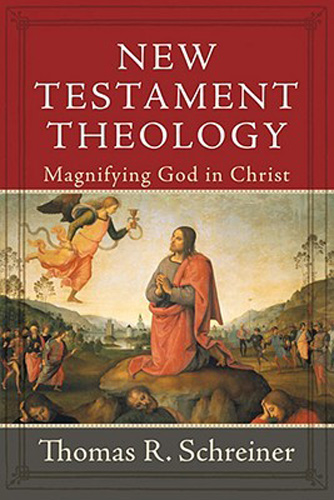
New Testament Theology: Magnifying God in Christ
In this substantial volume, Thomas Schreiner takes up the study of New Testament theology, looking for the themes that emerge from a detailed reading of the whole rather...
Downloads
About BiblicalTraining®
BiblicalTraining® wants every Christian to experience a deep and loving relationship with Jesus by understanding the life-changing truths of Scripture. To that end, we provide a high-quality Bible education at three academic levels taught by a wide range of distinguished professors, pastors, authors, and ministry leaders that moves from content to spiritual growth, all at no charge. We are a 501(c)(3) non-profit funded by gifts from our users. We currently have over 180 classes and seminars, 2,300 hours of instruction, registered users from every country in the world, and in the last two years 1.4 million people watched 257 terabytes of videos (11 million lectures).
Our goal is to provide a comprehensive biblical education governed by our Statement of Faith that leads people toward spiritual growth.