Survey of Biblical Theology - Lesson 1
History of Biblical Theology
In this lesson, trace the development of biblical theology from early church figures like Irenaeus through the Reformers, Pietists, Rationalists, and into modern scholarship. See how thinkers such as Gobler, Stendhal, Bousset, Schlatter, Barth, and Bultmann shaped the field through their different approaches to Scripture, history, reason, and revelation. You gain insight into how debates over authority, method, and presuppositions continue to influence biblical theology and its role in the church today.

I. Introduction
A. Schreiner’s background
B. Importance of pastors in shaping biblical theology
II. Early History
A. Irenaeus & early church
B. Reformers: Luther, Calvin
C. Cocceius & covenant focus
D. Pietists: Spaner, Francke
III. Rationalism & Gabler
A. Rationalists’ rejection of inspiration
B. Gabler’s 1787 oration & three steps
C. Limitation: reducing Scripture to timeless truths
IV. Later Developments
A. Stendhal: “what it meant” vs. “what it means”
B. Critics: Vanhoozer, Scobie on canon & theology
C. Historical criticism: Baur, Strauss, Wrede, Bousset
V. Alternative Approach
A. Schlatter: rejection of neutrality & rationalism
B. Emphasis on canon, observation, humility
VI. Twentieth Century
A. Barth: revelation & theology
B. Bultmann: demythologizing, existentialism, lasting influence
Well, welcome to New Testament Theology. My name is Tom Schreiner. I'm a professor of New Testament at Southern Seminary.
I've taught there for 27 years. Before that, I taught 11 years at Bethel Seminary in Saint Paul, Minnesota, and three years at Azusa Pacific. I also served as a grandkids, so that is a great joy.
I'm so excited that you're in this class. I love New Testament Theology. I've taught this class many, many times over the years, so I'm thrilled that you're in it, and I hope this is a great experience as you learn more about God's Word and how to apply it to our lives today.
So I want to start with this quotation from Peter Adam, who's an Australian scholar of the Bible, and he says, people learn how to use the Bible mostly from their teachers in church, so preachers have a better opportunity than anyone else to teach good biblical theology and to model a hermeneutically sound use of the Bible. So I love that quote because most Christians don't learn mainly from scholars. I think scholars help, but they learn mainly from their pastors, from what is taught in church, and so it's so important what we teach in the classroom gets disseminated and taught in churches, and we want to teach our churches to understand and apply the Bible well with a good biblical theology.
So I want to begin by talking about the early history of biblical theology and the method. Now let me say up front that, you know, it depends on where you are as a student, but for some people this is not interesting. They're not very interested in the history and the method.
They just want to get to the Bible, and I understand that. That makes perfect sense, but actually history is important, and what others have said before us is important because we are all affected by the world in which we live, and we're affected by those who have preceded us, who've gone before us. So it's very important to understand history and method and just to see where we are in this whole discussion.
So, you know, if this isn't something you love, this part, be patient. We're going to get to the Bible, but I think this part is very important as well because, you know, we're not the first people to study the Bible. Others have gone before us.
We stand on the shoulders of others. We learn from others, and we learn both positively and negatively from others who've gone before us. So we want to begin by talking about the early history.
I'm going super fast here. We begin with Irenaeus. Irenaeus lived about 200 A.D., say, so very, very early in the history of the church.
If you read Irenaeus, he wrote against heresies. He clearly was involved in some way in biblical theology. He was a very careful reader of the Bible, and he's still very much worth reading today.
And then the reformers. By the reformers, I mean people like Martin Luther, Zwingli, Calvin, many others. They also engaged in biblical theology, but they didn't clearly distinguish biblical theology from systematic theology.
There's a recent biblical theology written by Charles Scobie, when I say recent, in the last 20 years or so, maybe around the year 2000. Scobie says in an article he wrote, in many ways, Calvin can be seen as the initiator of a truly biblical theology. You know, Calvin is still read today.
That's pretty remarkable, 500 years later. He was very clear in what he wrote and very understandable. But then I want to make a comment, and this is going to be one of our themes.
I think you can overplay, and we'll talk about this, the distinctions between biblical and systematic theology. All systematic theology is informed by biblical theology. And biblical theology, it's not like in a watertight compartment separate from biblical theology, but we'll talk more about that.
So we're still thinking about those who've done biblical theology before us. And in the 1600s, you see Johannes Kochaias, and he emphasized the covenant. So Kochaias was Reformed.
If you know anything about Reformed theology, you know the covenant plays a huge role in Reformed thinking, even today. Often in Presbyterian circles, Reformed circles, they speak in terms of the covenant, covenantally. Well, you know, that goes back to, really, you could say it goes back to Irenaeus, but in Reformed thought, it goes back to Kochaias.
So Kochaias, he didn't talk about it in terms of biblical theology, but there it is. And I think you'd all agree, right? The covenants are very, very important in the Bible, as we'll see in this course. Then we come across Pietists, Spaner, you can see in the 1600s, mainly, and Franca, late 1600s, early 1700s.
These are two famous Pietists. What is Pietism? Pietism emphasized reading, understanding, applying the Bible. Pietists were, they were concerned about, like, dead orthodoxy, you know, having right doctrine, not living a life that's pleasing to God, not really being informed by the Bible in your everyday life.
Well, Pietists, you know, they really emphasize the Bible. So they've distinguished biblical theology from the scholastic theology of Protestant orthodoxy. So biblical theology, the first use of the term, we find it in the rationalists of the second half of the 18th century.
That's 1700s, right? 1750 to 1799. They wanted to discover the timeless truths from the Bible and to counteract Protestant orthodoxy. So what I mean by the rationalists, these people did not believe the Bible was inspired and infallible and inerrant.
They believed there were errors in the Bible. And you can see some of the names here, Semmler, 1725 to 91. Benedict Spinoza, he was actually the previous century, perhaps you've heard of him.
Spinoza was very famous and Richard Simon as well in the 1600s to the 1700s. So rationalists, right, they're prizing reason over God's word. So the rationalists would say, you know, things like that.
So in the rationalist view, human reason is the final source of authority instead of the Bible. And as I said, the Bible's infallibility and inerrancy is rejected. So the interesting thing is biblical theology as a formal discipline really began with one of these rationalists.
You know, it didn't begin as a formal discipline. I've been saying to you, biblical theology has been around from the beginning because we all want to be biblical, right? But in the formal sense, biblical theology began in this address by J.P. Gobler in 1787. In those days, they had super long titles.
Here it is, right? An Oration on the Proper Distinction Between Biblical and Dogmatic Theology and the Specific Objectives of Each. He was German. He said it in German.
But actually, if you look at the Scottish Journal of Theology in 1980, if you want to read it, it's translated there in English. You can read this address he gave in 1787. You know, if I remember my American history right, that's when the Articles of Confederation came into being, right? And shortly after the American Revolution and the Revolutionary War, if we're thinking at least of American history.
But obviously, things were going on all over the world. Gobler said dogmatic theology. Now, what he means by dogmatic theology, he means by that systematics.
So dogmatic theology is just another way of talking about systematic theology. Gobler said dogmatic theology is too far removed from Scripture and biblical theology can rescue us from the vagaries of systematic theology. So right, you have now, you know, the Reformation took place in the 1500s, right? You have Lutherans, you have Presbyterians, Baptists are coming along, many other groups, and they're all arguing, right? What does the Bible say? Actually, that's still happening today, isn't it? There are differences between Lutherans, Presbyterians.
So Gobler comes along and says, look, these people doing this systematic theology, they're all disagreeing. That's because they're not doing biblical theology. But he says, if we do biblical theology, we can break the impasse and we can come to an agreement on what the Bible says.
Now, parenthetical comment, 200 years later, right? More than 200 years later, 250 years later, basically. Hey, this is a pipe dream from Gobler, isn't it? Biblical theology didn't solve any of this. So that's just important to recognize.
That's the goal. He sort of says, okay, we just read the Bible and we're going to solve all this. But now we can see 250 years later, biblical theologians have as many theories as systematics.
So there's this goal, but it didn't solve anything really in that way. That doesn't mean I don't think biblical theology is important. I think it is, but Gobler clearly was wrong on that.
Gobler says religion is a record of divine teaching found in the Bible. That's relatively clear. Then he says, theology is the philosophical reflection based upon biblical religion.
So that's more subtle and difficult, right? So you have that, you have the, here's what the Bible says, then you look at it philosophically and you try to discern what the Bible is teaching. And of course he said, and I agree with this part, biblical theology should inform our dogmatics, should inform our systematic theology. One of the keys of biblical theology is it's historical, right? That's a key feature of biblical theology.
There's a historical character to it. Biblical theology begins with the task of trying to decipher what the biblical authors meant. And I'm quoting there Stuckenbrock, who agrees with that as well, a biblical scholar.
So you begin with the author's intention, but Gobler believed that historical interpretation does not define the task or goal of biblical theology so much as it involves a necessary starting point to be transcended. So this is really important. Gobler believed, yes, we're studying the history, we're studying what the biblical authors meant, but he wanted to go beyond that.
Really, you can kind of see if you're understanding me here. If you're not, we're going to keep going, right? But Gobler's also really bringing in his philosophy to interpret the Bible. So it's a little bit of both.
By the way, there's a lot of information right here. So this notebook is available to you. You can download it from the website and you should use that notebook as I'm lecturing.
So you don't have to write down everything I'm saying because there's a lot here, especially here, because this is quite technical at the beginning. So I think that would be helpful to you. So Gerhard Hassel Seventh-day Adventist, who's done a lot on biblical theology.
By the way, Hassel has a book both on the history of Old Testament theology, if you want to look that up, and New Testament theology. Fairly short books, pretty helpful surveys. So you might want to look into that.
Hassel, now we're talking about Gobler still, he overemphasizes the descriptive nature of Gobler's approach, lumping him too quickly with Vreda and Stendhal. We'll talk more about those guys. So what I'm saying, right? Hassel says, oh, Gobler just believes in describing what the Bible says, describing what the author's intent is.
In other words, according to Hassel, Gobler just believes in a purely historical approach. Another way of saying that is just describing what the Bible says, but it's clear. See, I think Hassel makes a mistake here.
He's a great scholar, but I think Hassel makes a mistake here. It's clear that Gobler also believed that biblical theology was interpretive, and we're going to see that right now. Gobler had three steps.
First, study the various biblical texts in their historical context, so discern the author's intention, collect all that is found, biblically both contingent, so contingent is that which is conditional, doesn't last forever, and unchanging. Such a task, according to Gobler, comprises true biblical theology. True biblical theology is the historical study of the Old Testament and the New Testament, their author, and the context in which they're written.
So this is purely descriptive, right? What does Genesis 10 mean or whatever passage you're looking at? So that's how you begin. He begins with the author's intent, but then he says, second, classify the elements that arise above the historical particulars. Here's what the author meant.
Here's what the text says. Now you say, okay, what's most important? In the second stage, what is normative, what is required for belief, that's what he means by normative. What is normative is brought to bear on the descriptive task.
Or conversely, one can say that one looks for consistency among the biblical authors. So there's a philosophical task going on here. And the third step is arrive at common ideas, which are divine and ideas that transcend what are merely human thoughts.
So that's the final step. That's the culmination for Gobler. These are universal ideas, which are identified, and this is very philosophical, right? Universal ideas, which are identified with ahistorical and unconditioned concepts and precepts.
That's Gobler's language. These universal ideas are the foundations for a pure biblical theology. The genuine agreements among the authors are then to be checked for their consistency with what is universal.
So this material is systematically organized. You have to shift what is unchanging from what is contingent. The latter is pure biblical theology.
Now if you're thinking like, I don't even know what you're talking about anymore, like what's going on here? The point is, what Gobler's doing is he's saying not everything in the Bible, not everything in the Bible is actually authoritative. We're looking for the pure stuff, right? We're looking for the pure stuff to take out of what we see in Scripture. That's what Gobler's doing.
So he's not just doing history, right? He's not just describing what the Bible says. He's trying to strain out, so to speak, the bad stuff and say, here's the good stuff. Gobler did not believe the Bible was inspired, right? Gobler did not believe the Bible was inerrant.
Gobler believed there were mistakes in Scripture. So Gobler's rationalism reduced the Bible to timeless truth. In practice, he ignored history and eliminated biblical truths that modern believers could not accept.
So that's the bottom line. Now, why do I emphasize this? Because if you read about biblical theology, a lot of people talk about Gobler as if he believed just in history. Let's just describe what the Bible said.
But that is not what Gobler believed, you see? Gobler believed, okay, we read the Bible. He was a classical liberal, right? We read the Bible and we take out the things we really don't like. That's too simple of a way to put it.
We take out of the Bible the things that don't fit our rational understanding of reality. Now, I disagree with that and we'll talk more about that. Now we go to Christer Stendhal.
Christer Stendhal, he's a 1900 person. So we're going forward almost 200 years. So I'm not going in order.
I'm just talking about biblical theology. Stendhal is different from Gobler because he says biblical theology seeks to understand only what a text meant and systematic theology, what a text means. That's in the International Bible Dictionary.
You see that article. So I hope you see that's different from Gobler because Stendhal's saying biblical theology is just historical. It's just descriptive.
Systematic theology tells us what the Bible means for us today. Stendhal says, now that's not what we're doing. We're just describing.
We're just describing what the Bible means. But Gobler, right? Gobler wanted to provide ideas that were normative for dogmatics. That's very different.
So I'm quoting Kevin Van Hooser, who teaches at Trinity. He's taught at Wheaton as well. Famous evangelical systematic theologian.
He says, Stendhal appears to have translated Kant's distinction between public fact and private values into the practice of biblical interpretation with fateful results. In other words, Van Hooser doesn't agree with this, right? It is not at all clear how one can move from description of the past to present or future application. So Stendhal doesn't want to say what Gobler is saying, but Van Hooser is saying, and I think Van Hooser is right here.
Here's a problem for Stendhal. Biblical theology is only what a text meant historically, but then Van Hooser says, but then how do we get to applying it to today? There's that unbridgeable gulf, right? I mean, that doesn't seem satisfying. Now, we don't like what Gobler's saying completely because of his rationalism, but Stendhal is also problematic.
Scobey, I talked about him earlier, who did a biblical theology. He argues that adopting a strictly historical approach, that's Stendhal, right? The sharp distinction between what it meant and what it means leads to the fragmentation of biblical theology and is the problem rather than the solution. So what am I saying? Biblical theology isn't only describing what a text meant historically.
It's more than that. Scobey says, can an approach which totally ignores the canon, the 66 books, right, that are deemed to be authoritative, can an approach which totally ignores the canon really be considered biblical? And can an approach that fails to recognize the biblical material as theologically normative be appropriately designated theology? So Scobey's in my camp, our camp, hopefully it's our camp. He views Scripture as normative, authoritative, and Stendhal doesn't believe that.
Stendhal believes that, well, when we study the Bible, it's like studying Shakespeare or it's like studying Homer or Plato. You're just describing what it means. It's not authoritative.
You're just doing description. But Scobey says, how's that theology? Theology has to speak to our lives today. Then Van Hooser again, in the final analysis, the best way to describe what it meant is to interpret a given passage of Scripture in its linguistic, historical, literary, and canonical context.
Yeah, we do want to know what an author meant, right? So we're interpreting passages in context. Finally, that means that we must interpret the whole Bible as pointing to Jesus Christ. Now that's a radical statement.
That is a radical statement because he's saying we have a theological standpoint by which we come to the Bible. We're not just neutrally interpreting Scripture. We're reading it as pointing to Jesus Christ.
So there's a faith stance that comes in as we're doing biblical theology. So some soundings in New Testament theology, soundings like when you're sending down soundings into the water, how deep we're going. So we're not doing everything.
We're just getting a feeling for some of the things that have happened. After Gobbler, scholars quickly separated biblical theology from confessional theology. By confessional theology, I mean systematic theology, dogmatic theology.
The Lutherans have their confessions, Presbyterians have theirs, Baptists have theirs, so forth. Such theology was not used to inform dogmatics as time passed. So really, people began to abandon Gobbler, right? They really, Stendhal wasn't alive yet, but immediately they began to just describe what the Bible said.
And you had the impact of historical criticism. There were naturalistic presuppositions in reading the New Testament. What do I mean by that? I mean naturalism means that God plays no role in interpreting the Bible.
We assume there's no miracles. We assume that there's no supernatural work of God. We just interpret the Bible like any other document.
We know, according to the naturalistic presuppositions, we know that God doesn't intervene in the world. So that's the method that began to be so popular. We see this with F.C. Bauer and David Friedrich Strauss in the 1800s.
The historical approach is based on a critical reconstruction of the New Testament. So things are left out that they view as not being authoritative, right? I mean, just one example, he wasn't really a New Testament scholar, but maybe you're familiar with Thomas Jefferson's Bible. Thomas Jefferson's Bible, he left out all the miracles, right? It ends with Jesus's death, nothing about the resurrection.
That's a naturalistic reading of the Bible. Anything miraculous is left out. The philosopher Georg Friedrich Hegel was very influential in Germany.
You have the Hegelian dialectic. So you have in Bauer, you have the struggle between Jewish Christianity. So for Bauer, that's Peter, Matthew, Revelation.
So that's Jewish Christianity. And then you have the antithesis, Gentile Christianity, that's basically Paul, right? So you have these conflicting, right? Bauer doesn't believe Scripture is authoritative. So you have these two, you know, Matthew is very conservative on the law, according to Bauer, Paul's very liberal.
They don't quite agree. But then you have this synthesis and what Bauer calls early Catholicism, and you see that in Mark, according to Bauer, the Gospel of John and Acts. So, right? Scripture is not being accepted here as authoritative, right? You see contradictions, but then they come together in what they call early Catholicism in Mark, John, and Acts.
So the goal, according to these people, is not to serve the church. We must be objective historians. We don't believe in miracles, right? We just describe what the Bible says.
That's what we're doing. We're scholars. We're just describing the Bibles like any other book.
That's how we read it. We take out what's bad, what we can't believe in, and we accept what is believable. At the end of the 1800s, one example of this, 1897, William Vreda, a German scholar, he wrote an essay on the task and method of so-called New Testament theology.
Notice the word so-called. He doesn't really believe in New Testament theology. You know, he says so-called, doesn't he? He believes in a purely historical approach.
So this is Stendhal before Stendhal, right? It's a history of religion rather than New Testament theology. There's a big German word for it. You don't need to know that, but there it is if you want to see it.
It's just descriptive. So what I'm saying here is Vreda doesn't believe in New Testament theology at all. Why not? Because the Bible is not authoritative at all.
The canon of Scripture and inspiration is excluded. So Vreda says, hey, if we want to study early Christianity, we don't limit ourselves just to the New Testament. We would add these other books that are written at that time.
First Clement, right? Written maybe 95, 96 AD. The Letters of Ignatius, written maybe 110 AD. Martyrdom of Polycarpus.
He says, you know, we don't privilege the canon as uniquely authoritative because Vreda, nothing's authoritative. You see, everything belongs together. We see the same thing with William Bousset, who wrote a book called Curios Christos, Lord Christ, in 1913.
Bousset believed Christians were mystery worshipers before they were converted. These are the mystery religions which were popular in the Greco-Roman world. So Bousset, you know, he's doing history of religion, right? He's comparing Christianity to its environment, to the world in which it lives.
He doesn't believe it's a supernatural revelation from God, but he says, look, the Christians are just borrowing things from these other religions, other movements. That's what's going on. They transferred these concepts of the mystery gods to Jesus Christ.
So Paul transformed Christianity into a mystery cult. When I was in college, so I was converted when I was 17, and I was converted out of Roman Catholicism. I knew nothing about New Testament theology.
I'd never heard of it, right? I was just reading the Bible, but I went to college. I took a class in Western civilization at a secular university, and the professor said, you know, I'm a freshman, 18 years old. He said, Paul totally changed Christianity.
He had a totally different religion than the religion of Jesus. I was like, what is he talking about? I've never heard this before. You know, the Lord had worked in my heart.
I knew he was wrong, but I really didn't have any background to understand why he was saying this. But really, you know, he is depending on people like Bousset, Albert Schweitzer, we'll talk about him a little bit later, and others in saying that. This is a very, very popular view among critics.
Now, I'm going to move in another direction. Here's a person who argues, you know, these people like Vreda, Bousset, Stendhal, they're wrong, and this is Adolf Schlatter. So Schlatter lived in the late 1800s, early 1900s.
So maybe, I think he died in 1938. He was dying right when Hitler was, you know, first coming into power. And by the way, he spoke powerfully against Hitler.
He said, we only have one Führer, one leader, and it's God. It was not Hitler. So Schlatter moved in a very different direction.
He says, we need to reject atheistic presuppositions in doing New Testament theology. That is so crucial, right? Vreda, Bousset, Gobbler, Stendhal even, they really all have atheistic presuppositions. So Schlatter said historical, pure historical objectivity is an illusion.
Now, he's not against history, we'll see that. But to pretend that we can just neutrally, with no presupposition, study a subject, he said, that's a figment of our imagination. Those who think they are neutral are actually opposed to the message of the New Testament.
And I think that's a very powerful word. We need to remember that in the scholarly scene we're in today. Because these people, many of these people are very bright, and they can be very kind, and very nice, and very attractive when you meet them.
But this kind of thought is still very popular today. But we need to remember that they're coming from a certain standpoint. Schlatter takes history seriously, but he rejects a closed universe.
He says this, we are not hermits who separate ourselves from history. So yeah, history matters, and he's not denying that. But we must acknowledge that we are limited to historical sources that are partial, and so our knowledge of history can never be complete.
We don't know everything, do we? There's no claim that we know everything. There's so much, you know, or you do an ordinary Bible study, and people ask questions all the time. We don't know the answer to, right? Because the sources don't tell us that.
The notion that we are neutral interpreters is mythical, and actually involves an atheistic method. Again, that's what's fundamental in Schlatter, and I think that's so true. He has a strong polemic against the history of religion school, right? That's Bousset and Vreda and others who just say, you know, Christianity is just borrowing from the environment, from the world in which it lives.
He accuses it of imposing backgrounds upon the subject matter of the New Testament. He concludes, in my view, New Testament theology only fulfills its obligations by observation, not free creation. What does he mean by that? He means we do not create.
That's what he's accusing the history of religions people are doing. We do not create the message of the New Testament. We observe what is there, and here's one of my favorite quotes.
I think this is fabulous. The first task of New Testament theology consists in perceiving the given facts of the case. Perceiving it.
What has happened in the past far exceeds in its fullness and depth our capacity for seeing, and there is no question of an end being reached, even of the first and most simple function of New Testament study, namely seeing what is there. So what's that saying? I just want to unpack it briefly. He's saying when we read the Bible, we ought not to think we've seen everything that's there.
That's what he means when he says there's no question of an end being reached. We have not seen everything that's there. Therefore, there's a place for study, right? And further observation.
Hasn't that happened to you in your own study? You're reading a verse, and for the first time you see something in the verse you haven't seen before, and that happens all our lives. So Schlatter says our task is to carefully read Scripture and to recognize we'll never come to an end of it. He's not saying we can't understand the Bible.
He's not saying that. He's just saying there's always more. So Schlatter emphasizes history himself and cuts us off too drastically from earlier tradition.
So I think that's a mistake Schlatter makes, right? I think the early tradition is more important. By that I mean the reformers and the early church fathers. But still, I think he rightly speaks of the uniqueness of the canon.
By the canon, I mean the 66 books. Remember what Vreda said? There is no canon. But here's what Schlatter says.
But the distinction between the New Testament writers and later literature, you know, think 1st Clement, Ignatius, other early Christian writings, is not based upon an arbitrary fiat. It's not arbitrary, the canon. It has historical reasons.
By canonizing these writings, the generations following the apostles expressed where they found that word through which the church emerged and received for all time its connection with the Christ. They found it not in the utterances of contemporary teachers and leaders, but in the writings of these men who speak to us in the New Testament. If we obscure this fact, we come into serious conflict, not with dogma, but with history.
So what Schlatter is saying is, look, there's a good basis for privileging the New Testament canon. There's a good basis for saying these are authoritative books, and they're authoritative because of history. This is really a faith stance, right? The church was led by the Holy Spirit.
Schlatter, again, academic work is always tempted towards rationalism, denial the miraculous, right? Towards a pride of judgment, which expects to get the whole of reality into its own intellectual grasp, and so reduces it to its own field of vision. So, you know, what is Schlatter arguing for here? Humility. We don't understand everything.
We study. God teaches us. But if we try to understand everything, there's the danger of conforming the New Testament actually to our philosophy and our worldview.
And that has happened very much in Western theology. It's a temptation everywhere, wherever you are in the world, right? There's a temptation to take your own cultural conceptions and to impose and force that on the New Testament. So we need to begin with God in studying the New Testament.
And to be clear, that historical criticism is never based on historical fact alone, but also has roots in the critics' dogma too. So your philosophy in looking at this plays an important role. Now, another sounding, we'll talk about Karl Barth a little bit.
He was writing mainly from 1920 to 1970. Karl Barth was a systematic theologian, probably the most influential systematic theologian of the 20th century, even though his work led to a renewed interest in biblical theology. Why was biblical theology becoming more important in the 20th century? Because there was a loss of faith in evolutionary naturalism.
I don't mean as a science, but I mean in terms of culture, right? The 20th century, World War I shattered this idea that the world's just getting better and better and better. World War I played such a huge role in bringing a sort of depressing spirit into Western cultures. And of course, then we had World War II, and things have continued since then in ways that aren't leading us to paradise, at least.
And Barth also reacted to the idea that historical truth can be gained by pure objectivity. So do you see that theme? It's not just history. We have presuppositions, Barth is saying.
So Barth returns to the idea of revelation, that we need a word. We need a word from God. We need a transcendent word from God.
Now, Barth isn't where I am as an evangelical. He believed there are errors in the Bible, but he had a much higher view of the authority of the Bible than most liberals of the time, and was very conservative in many respects. And there was a renewed interest in theology.
So that, I mean, of course, there's so much more to say, but just to see Barth's influence. And then along comes Rudolf Bollmann. He's also 20th century.
He was contemporary with Barth. But Bollmann, Bollmann's probably the most famous New Testament theologian of the 20th century, but he's a very complicated person, thinker. So he adopted the naturalism of Vreda at one level.
So, you know, we've been talking about these two different streams, right? Just objective, historical study, and then that's Vreda, and then schlatter, presuppositions, Scriptures, authoritative. So there's theology to be drawn from the Bible. It's not just mere description.
But at one level, Bollmann's saying, you know, we're just doing history. And for him, he saw pre-Christian Gnosticism as historically playing a big role in interpreting the New Testament. Bollmann was very famous for talking about demythologizing.
So here, he kind of goes back to Gobler. You see, at one level, he's the historian, but now he says, we want to remove this mythology from the New Testament. So he's not adopting what it meant and what it means.
We're trying to find the kernel, right? You have the husk, but we're taking off the husk and we're finding the kernel of that good teaching in the Bible. We're removing the myth. So, you know, for Bollmann, it would mean something like, Bollmann says, we can't believe in the resurrection, right? We can't believe in that, but we're going to take out the kernel out of that.
And the kernel is we can live a new life, right? Because we can't believe in a resurrection because we don't believe in miracles, but we can live a new life. So he's sort of trying, this is my perspective, right? To have his cake and eat it too, right? So he seeks to isolate the unchanging message, finds in John, Paul and John the Kerygma, the gospel, but he does this through Heideggerian existentialism. Heidegger is a German philosopher.
And so you see, can you see this on the one hand, Bollmann's saying, let's study it historically. Gnosticism influenced the New Testament, but then he's kind of like gobbler. And he says, okay, let's, let's try to apply it to today.
Now I totally disagree with Bollmann, but Bollmann actually, what was he thinking? I want to destroy the Bible. He actually thought I'm rescuing the Bible for today's generation. I'm removing false stumbling blocks from people because, you know, of course we can't believe in miracles, but the New Testament still speaks to us today.
He says, this is, this is what he's trying to do. So Bollmann does, he, he wants to put together the act of thinking and how we live, right? So against Stendhal and Vreda, he says, the New Testament speaks to us today. We just got to, like gobbler, we got to take out the bad parts and then we can live according to the parts we can believe on, believe in.
So that, that is, that is fascinating, isn't it? And you know, here it is. I'm, I'm doing this in 2024. Bollmann's still popular today.
There's kind of a renewal of Bollmann in New Testament circles. He says the message of Jesus is a presupposition for New Testament theology, but it's not a part of New Testament theology itself. Isn't that interesting? The message of Jesus is not part of New Testament theology.
That's strange, isn't it? I don't agree with that, but, but you see, the reason he says this is basically we don't know what Jesus taught for Bollmann. He doesn't think the gospel accounts are really reliable. So for Bollmann, New Testament theology is about anthropology.
What's anthropology? It's about, it's about the human being. It's about us. So the Bible says God's kingdom is coming, but we don't believe in that literally, demythologizing, right? Because we can't believe God will supernaturally intervene and bring in his kingdom.
We can't believe in that, Bollmann says. So what does it mean for us? He translates it into his existentialism. It means we got to make a decision for Christ today.
So now I want to say something about the school I teach in, Southern Seminary. Southern Seminary was infected by this teaching. And we had professors who went over to Germany and they were affected by Bollmann and some of Bollmann's students, and they came back as Bollmannian existentialists.
But here's the thing. This is very fascinating. They could go to revival meetings and preach, you need to choose Jesus.
But they didn't tell the people, look, we don't really believe in the resurrection. But they could say, you need to decide for Christ. So you had this fascinating, right? You had going on in Southern Baptist circles, you had this Bollmannian thinking, and like most of the lay people had no idea this was going on, but they kind of got a sense of it.
There was a whole renewal in the Southern Baptist Convention. They got a sense of it in the 1970s and 80s. But as my president Al Mohler says, they really only remained on the first floor.
They didn't really know how deep it went. The liberalism going on was very profound. But if you were listening to them in the revival meeting, you'd have no idea, because they're saying, decide for Jesus.
So this has actually impacted even conventions like the Southern Baptist Convention, because Bollmann and these people who are influenced by him, they really didn't believe in this supernatural message you find in the New Testament. So along comes Brevard Childs. Childs mainly wrote from the, he taught at Yale for many years, 1960s.
He lived into the 20th century. Brevard Childs, see, everybody's still trying to solve this. Brevard Childs is not an evangelical, but he's very influenced by Karl Barth.
So everybody comes with a perspective. So Childs, so Barth's more conservative than Bollmann. So you have Barth and Bollmann, but they both believe there's errors in the Bible.
But Bollmann's more radical than Barth. Childs is more like Barth, and he says, okay, let's go with the Bible. Let's go with the canon.
So he's well known for the canonical approach. So he argues that the historical and descriptive task is not neutral. So that's our theme, right? Against Rada and Stendhal, it's not a neutral task.
Our philosophy and presuppositions are playing a role. And he says the final form of the text, the Bible as we have it, must be seen as a witness to a greater reality. So the Bible is the authoritative word of God.
For Childs. And the two testaments must be interpreted together, intertextually. So like Barth, that's a strong view of the authority of Scripture.
So in the light of the canon, so that's Childs, canonical criticism, what the Bible meant and what it means are linked together. So the canonical view acknowledges the truth claims of the sacred text. So Childs sounds like an evangelical there, right? A critical scholar named James Barr wrote a book, Fundamentalism, very critical of evangelicals.
By the way, James Barr at one point in his life traveled with the famous Martin Lloyd Jones, but he totally rejected it all, threw it all out and became very critical. And James Barr is in the school of Vreda and Stendhal. And he believed, we just described what the Bible means.
It's not authoritative and it's not true. But Barth did not like Childs because Childs is, you know, he's teaching at Yale and Childs is saying things like, hey, the Bible is an authoritative word to teach us. So long ago I read an article where Barr is responding to Childs and Barr says, hey, this is, I'm worried about this because evangelicals are going to like what you wrote.
And I don't want evangelicals to like what you wrote because really Barr didn't, you know, he didn't like Scripture. And Childs said, I don't care if they like what I write. I'm happy.
But having said that, Childs is better than Barth, Barth is better than others. But Childs, you know, at the end of the day, he's a divided man because he still wants to live in that historical critical world. So this is a problem with biblical scholarship that's lasted for a long time.
So on the one hand, if you read Childs, he will actually say there's contradictions at one level, but then at the canonical level, it's all resolved. At one level, he's a historical critic. At another level, he holds to the inspiration and authority of the Bible.
But one of my teachers described it this way once about scholars like that were thankful for the good things they do, but he's going down the slide and then halfway out, he puts out his hands and stops. And it just isn't coherent at the end of the day. So I love what Childs is doing in so many ways, but you can't hold to his view, I think ultimately, of biblical theology and still say there's contradictions in Scripture.
You see, that's an unstable view. And this has plagued biblical theology from the beginning, which is why I think we as evangelicals have the best answer at the end of the day, because we think the Bible is infallible and inerrant and inspired. And that's important, isn't it? But the infallibility and inerrancy of Scripture is absolutely fundamental in studying the Scriptures.
Well, we go on to Heike Reissanen. He wrote a book Beyond New Testament Theology. Heike Reissanen, well, he's sort of like William Vreda reincarnated.
I don't believe in reincarnation, but he's William Vreda in the 1990s. Now, this is very interesting to me. Heike Reissanen grew up as a fundamentalist Christian in Finland, and he threw it all over.
He totally rejected the authority of Scripture. So look at the title of his book, Beyond New Testament Theology. There is no New Testament theology.
So look, here's this program. So, you know, in a way, if you're like, man, this has been hard to follow, I've been saying the same thing over and over again in this lecture. There's two approaches, right? It's either authoritative, or it's just descriptive.
And here's the descriptive approach. The goal of New Testament theology for Reissanen is to clarify the role of religion in society rather than serving the church. Do you see? The New Testament has nothing to say for Reissanen for the church.
It's like studying Islam for him, or Hinduism, or Buddhism. Or Plato, or Aristotle, whatever. According to Reissanen, a fatal mistake was made when people abandoned the history of religion school and succumbed to dialectical theology.
What does he mean by that? When Karl Barth and Brevard Childs come along and tried to say the Bible can still be authoritative today, that was a huge mistake. So Reissanen is saying the Bible is not authoritative. So he follows Vreda, who distinguished history from theology, but he says no one has followed Vreda's vision.
Let's get back to Vreda. Let's just go back to describing what the Bible says. Here's the principles.
The intended audience must be the secular community rather than the church. Do you see it again? We're just describing. The Bible is not authoritative, but it's a good thing to know culturally and historically, just as it's a good thing to know what Tacitus, the Roman historian, wrote.
The New Testament theology is concerned with information rather than proclamation, because there's nothing to proclaim, right? There's nothing to believe here. So even though Beaumont is problematic and his disciple Kahneman, he doesn't like Beaumont, because Beaumont is still trying to preach the Bible, right? As flawed as he is. He's trying to demythologize it and say, hey, here's a message for today.
Reissanen says, let's give that up. There's no message for today. We're just describing to people what Christians believe.
When we do this, we can present our results without fear, because we can just say, yeah, that's what they believe, but we don't believe that. In a post-Christian world, Christian documents cannot be normative for society. The Bible is not authoritative any more than, again, Islamic documents are authoritative.
New Testament theology encompasses early Christian thought and not just the canon. There's Vreda again, right? When we do New Testament theology, we're not restricting ourselves to the 66 books, but we include 1st Clement, Ignatius, Polycarp, 2nd Clement, on and on. A canon of Scripture makes sense if our goal is proclamation, but it does not fit with historical work.
We're just doing history. So, that's against Schlatter, right? Schlatter said, look, there's even historical reasons for a canon. Vreda says, no.
No unity can be derived from the canonical documents anyway. What is he saying? The Bible contradicts. There's no unity there.
There's no theology there. So, by the way, Reissanen wrote a book on Paul and the law, which I required in one of my classes because my students didn't like it very much, but I just wanted them to read a historical critic. And the thesis of that book is Paul's theology of the law is completely contradictory and doesn't make any sense.
It fits with Reissanen all the way, right? By the way, he did his dissertation on predestination in Paul and Islam. And again, he says, because Paul believed in human responsibility, Paul's theology of predestination doesn't make any sense. It's contradictory.
So, there's no unity. New Testament theology should be purely historical. We're just describing historical research does not have the aim of doing theology.
I mean, there's no theology to do, right? There's no normative theology. Actualizing concerns, what the Bible means today, what the Bible means for us should not affect historical research. We should never think about what it means for us today.
Well, no wonder he doesn't think it's authoritative, right? As scholars, we should not require faith. In fact, the scholar must be able to distance himself from the subject matter and his dearest values. So, there's some truth in that, right? We need to read text objectively, but you can see Reissanen believes there's really no room for New Testament theology.
Now, I want to talk about Peter Bala. This is the last person before we talk about method a little bit. Peter Bala wrote a book called, he's a Hungarian scholar, by the way, Challenges the New Testament Theology in Attempt to Justify the Enterprise.
Bala is a repristination of Schlatter. So, you know, you can see it's kind of going back and forth. He says, New Testament theology, New Testament theology, New Testament theology is justified as a historical enterprise, that's Schlatter.
And we can limit it to the canon, even if one does not grant a unique status to the New Testament. So, he defends the New Testament as a purely historical enterprise in an academic context. So, he's saying, look, even if you don't believe the New Testament is authoritative, there's good reasons for limiting yourself to the canon and doing New Testament theology.
He does not presuppose the uniqueness of the New Testament canon or an underlying unity. There's a scholar out there in Germany named Walter Bauer. Bauer argued that heresy preceded orthodoxy.
So, right, you read the New Testament, you think there's an orthodox theology. Walter Bauer argued, this has been very influential, maybe you've never heard of it, but Bauer argued that heresy preceded orthodoxy. So, Bauer's arguing there was no orthodoxy.
Heresy was first. You might think, how can you have heresy without orthodoxy? Well, really what Bauer means is not that there was an orthodoxy in place, but there were all these divergent views of Christianity that were contradictory and they all existed at once and nobody had a problem with it. But Bauer argues from silence and often misinterpreted the evidence.
And I think Bauer is right here. There was an original orthodoxy when you look at the New Testament documents. So, Bauer says, we can limit the New Testament theology to the canon since history shows that the early Christians made distinctions in recognizing which writings were authoritative.
If you read the letters to Ignatius, if you haven't read that, they're very short and very fascinating letters. Ignatius says very early, like 110 AD, hey, I'm not Peter and Paul. I'm not an apostle.
So, you see this recognition historically very early. Ignatius recognizes writing as a leader in the church, but he recognizes I'm not an apostle. Bauer defends theological unity in studying the New Testament.
He argues that there's no clear notion that we have development. And he argues that theology of Jesus and Paul, they're harmonious. Ballas thinks that application and systematizing belong to dogmatic theology.
So, I don't totally agree with Ballas because I think Ballas is a little too much Stendhal for me and Vreda, but with an evangelical stripe. So, I think Ballas separates two rigidly systematic and biblical theology, but he's on our side at the end of the day. He believes the biblical documents are authoritative, but when we get to the method, you'll see that I think there's actually even a better approach than Ballas.
I think the one phrase that you've used that struck me the most was the phrase, pride of judgment. And that's really the back and forth that you've been describing, isn't it? There are people who are willing to put their judgment above Scripture, and then there's others that are willing to put Scripture above human judgment. And I was thinking that while this is true historically, it's really true in all of our lives.
This is the decision we have to make, isn't it? Yeah. I think that is the fundamental issue, isn't it? Whether it's our reason or our tradition or our feelings, do they take precedence over Scripture? And I think that's what's happening. And it's really philosophy, isn't it? The philosophy of life, it just dominated so much in biblical scholarship what was going on in the last, and it's still going on today, isn't it? I mean, you go to the American and European universities today, and it's not limited to American and European universities.
It's really all over the world. You still see this view dominating.
- Explore how biblical theology developed through figures from Irenaeus to Bultmann, learning how debates over history, reason, and revelation shaped its methods, authority, and lasting influence on theology and the church.0% Complete
- Study how biblical theology traces God’s revelation historically while systematic theology organizes doctrine, seeing how both disciplines work together with presuppositions of faith to interpret Scripture as God’s authoritative Word.0% Complete
- Creation, covenant, and conflict reveal humanity’s sin and God’s judgment, showing the garden as sanctuary, Adam’s priest-king role, the serpent’s opposition, and God’s plan to bring salvation and victory through His promises.0% Complete
- God’s covenant with Abraham promises land, offspring, and blessing to all nations, showing both unconditional divine fulfillment and conditional obedience, while God preserves His plan through threats and fulfills His promises in surprising ways.0% Complete
- The Exodus shows God redeeming Israel by grace, giving the law and sacrifices, and dwelling in the tabernacle, all pointing to Christ’s final sacrifice and God’s presence with His people in the new creation.0% Complete
- Watch Israel’s unbelief, partial fulfillment of God’s promises, the cycle of sin without a king, and the rise of David as God’s chosen ruler who anticipates the true king to lead His people.0% Complete
- God’s covenant with David points to an eternal King, Israel’s failure reveals the need for renewal, and the prophets promise a new covenant, Exodus, creation, and David—all fulfilled in Jesus, the true King bringing worldwide blessing.0% Complete
- Israel’s identity forms through unfulfilled promises, foreign domination, Jewish factions, and rising messianic hopes, which fuel anticipation of a Messiah and set the stage for the New Testament.0% Complete
- Matthew shows Jesus as Emmanuel, true Israel, Son of David, and Son of God, fulfilling promises through a new Exodus, atonement, and divine authority, so that all God’s covenants find their fulfillment in him.0% Complete
- Dr. Schreiner reveals Jesus as the divine Son, true Israel, greater Moses, and eternal King who fulfills God’s promises, reveals the kingdom in hidden yet present power, and builds his church as the new people of God drawn from all nations.0% Complete
- Mark proclaims Jesus as the Son of God and true King whose suffering secures forgiveness, while discipleship means following his example of humility and obedience despite weakness.0% Complete
- John portrays Jesus as the eternal Logos and Son whose I AM sayings and signs grant believers the present possession of eternal life through faith.0% Complete
- John presents Jesus’ work as his lifting up and glorification, fulfilling Scripture. Life comes through true believing—receiving, coming, hearing, drinking, eating, entering, abiding—while false belief, darkness, and human glory block it.0% Complete
- Dr. Schreiner highlights divine sovereignty: the Father gives believers to the Son, the Spirit gives life, and all who truly believe are preserved, and glorifies Christ, showing Jesus’ death and resurrection as God’s sovereign plan.0% Complete
- In John’s epistles, he teaches that assurance rests on the apostolic witness, confession of sin, obedience, love, and doctrinal truth, while false teachers deny Christ.0% Complete
- Acts shows God’s plan through Christ and the Spirit, fulfilling covenant promises, spreading the gospel, empowering witnesses, and forming the church as restored Israel united in salvation.0% Complete
- Paul’s “already but not yet” theology shows God’s promises fulfilled in Christ yet awaiting completion, shaping Christian life, doctrine, and practice in areas like adoption, redemption, sanctification, and practical living.0% Complete
- In this lesson, Paul shows that Spirit-led believers still need commands, which guide holiness and love without legalism, uniting word and Spirit to shape Christian life, protect love from distortion, and call for discernment in obedience.0% Complete
- Learn how the New Perspective reinterprets Judaism and Paul, how Sanders and Stendhal shifted focus from justification to covenant and inclusion, and how Paul’s own words confirm his Damascus road conversion.0% Complete
- Paul uses “works of the law” to mean all deeds of the law, not just Jewish boundary markers, and teaches that justification comes by faith in Christ because human disobedience makes works powerless to save.0% Complete
- Learn that justification is God’s declarative act of counting believers righteous through Christ’s atonement, not human works, and see why imputation, not transformation, secures assurance and preserves the heart of the gospel.0% Complete
- Hebrews teach the Son as God’s final revelation and superior Melchizedekian priest whose one sacrifice fulfills typological promise.0% Complete
- James emphasizes authentic faith that produces obedience, wisdom, and care for others, showing that faith without works is dead while affirming God’s goodness and calling believers to endurance, humility, and practical godliness.0% Complete
- In 1 Peter, see how believers as exiles endure suffering with hope, live as God’s priestly people, rest in Christ’s atoning work and victory, and anticipate the inheritance of the new creation as fulfillment of God’s promises.0% Complete
- Revelation’s symbolism portrays Satan, the beast, false religion, and Babylon while teaching to persevere in suffering, trust God’s sovereignty, and hope in Christ’s victory and the new creation.0% Complete
- Dr. Schreiner teaches how Revelation portrays Christ’s full deity, the Lamb’s redeeming work, with victory grounded in the cross and fellowship with God as the ultimate goal.0% Complete
Lessons
- Explore how biblical theology developed through figures from Irenaeus to Bultmann, learning how debates over history, reason, and revelation shaped its methods, authority, and lasting influence on theology and the church.0% Complete
- Study how biblical theology traces God’s revelation historically while systematic theology organizes doctrine, seeing how both disciplines work together with presuppositions of faith to interpret Scripture as God’s authoritative Word.0% Complete
- Creation, covenant, and conflict reveal humanity’s sin and God’s judgment, showing the garden as sanctuary, Adam’s priest-king role, the serpent’s opposition, and God’s plan to bring salvation and victory through His promises.0% Complete
- God’s covenant with Abraham promises land, offspring, and blessing to all nations, showing both unconditional divine fulfillment and conditional obedience, while God preserves His plan through threats and fulfills His promises in surprising ways.0% Complete
- The Exodus shows God redeeming Israel by grace, giving the law and sacrifices, and dwelling in the tabernacle, all pointing to Christ’s final sacrifice and God’s presence with His people in the new creation.0% Complete
- Watch Israel’s unbelief, partial fulfillment of God’s promises, the cycle of sin without a king, and the rise of David as God’s chosen ruler who anticipates the true king to lead His people.0% Complete
- God’s covenant with David points to an eternal King, Israel’s failure reveals the need for renewal, and the prophets promise a new covenant, Exodus, creation, and David—all fulfilled in Jesus, the true King bringing worldwide blessing.0% Complete
- Israel’s identity forms through unfulfilled promises, foreign domination, Jewish factions, and rising messianic hopes, which fuel anticipation of a Messiah and set the stage for the New Testament.0% Complete
- Matthew shows Jesus as Emmanuel, true Israel, Son of David, and Son of God, fulfilling promises through a new Exodus, atonement, and divine authority, so that all God’s covenants find their fulfillment in him.0% Complete
- Dr. Schreiner reveals Jesus as the divine Son, true Israel, greater Moses, and eternal King who fulfills God’s promises, reveals the kingdom in hidden yet present power, and builds his church as the new people of God drawn from all nations.0% Complete
- Mark proclaims Jesus as the Son of God and true King whose suffering secures forgiveness, while discipleship means following his example of humility and obedience despite weakness.0% Complete
- John portrays Jesus as the eternal Logos and Son whose I AM sayings and signs grant believers the present possession of eternal life through faith.0% Complete
- John presents Jesus’ work as his lifting up and glorification, fulfilling Scripture. Life comes through true believing—receiving, coming, hearing, drinking, eating, entering, abiding—while false belief, darkness, and human glory block it.0% Complete
- Dr. Schreiner highlights divine sovereignty: the Father gives believers to the Son, the Spirit gives life, and all who truly believe are preserved, and glorifies Christ, showing Jesus’ death and resurrection as God’s sovereign plan.0% Complete
- In John’s epistles, he teaches that assurance rests on the apostolic witness, confession of sin, obedience, love, and doctrinal truth, while false teachers deny Christ.0% Complete
- Acts shows God’s plan through Christ and the Spirit, fulfilling covenant promises, spreading the gospel, empowering witnesses, and forming the church as restored Israel united in salvation.0% Complete
- Paul’s “already but not yet” theology shows God’s promises fulfilled in Christ yet awaiting completion, shaping Christian life, doctrine, and practice in areas like adoption, redemption, sanctification, and practical living.0% Complete
- In this lesson, Paul shows that Spirit-led believers still need commands, which guide holiness and love without legalism, uniting word and Spirit to shape Christian life, protect love from distortion, and call for discernment in obedience.0% Complete
- Learn how the New Perspective reinterprets Judaism and Paul, how Sanders and Stendhal shifted focus from justification to covenant and inclusion, and how Paul’s own words confirm his Damascus road conversion.0% Complete
- Paul uses “works of the law” to mean all deeds of the law, not just Jewish boundary markers, and teaches that justification comes by faith in Christ because human disobedience makes works powerless to save.0% Complete
- Learn that justification is God’s declarative act of counting believers righteous through Christ’s atonement, not human works, and see why imputation, not transformation, secures assurance and preserves the heart of the gospel.0% Complete
- Hebrews teach the Son as God’s final revelation and superior Melchizedekian priest whose one sacrifice fulfills typological promise.0% Complete
- James emphasizes authentic faith that produces obedience, wisdom, and care for others, showing that faith without works is dead while affirming God’s goodness and calling believers to endurance, humility, and practical godliness.0% Complete
- In 1 Peter, see how believers as exiles endure suffering with hope, live as God’s priestly people, rest in Christ’s atoning work and victory, and anticipate the inheritance of the new creation as fulfillment of God’s promises.0% Complete
- Revelation’s symbolism portrays Satan, the beast, false religion, and Babylon while teaching to persevere in suffering, trust God’s sovereignty, and hope in Christ’s victory and the new creation.0% Complete
- Dr. Schreiner teaches how Revelation portrays Christ’s full deity, the Lamb’s redeeming work, with victory grounded in the cross and fellowship with God as the ultimate goal.0% Complete
Class Resources
Recommended Books
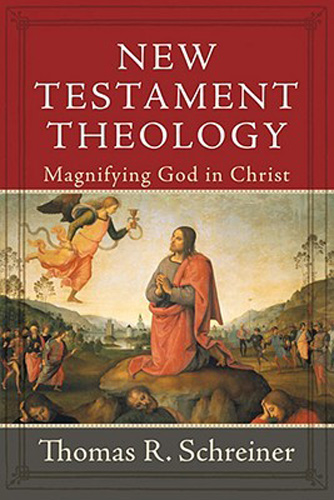
New Testament Theology: Magnifying God in Christ
In this substantial volume, Thomas Schreiner takes up the study of New Testament theology, looking for the themes that emerge from a detailed reading of the whole rather...
Downloads
About BiblicalTraining®
BiblicalTraining® wants every Christian to experience a deep and loving relationship with Jesus by understanding the life-changing truths of Scripture. To that end, we provide a high-quality Bible education at three academic levels taught by a wide range of distinguished professors, pastors, authors, and ministry leaders that moves from content to spiritual growth, all at no charge. We are a 501(c)(3) non-profit funded by gifts from our users. We currently have over 180 classes and seminars, 2,300 hours of instruction, registered users from every country in the world, and in the last two years 1.4 million people watched 257 terabytes of videos (11 million lectures).
Our goal is to provide a comprehensive biblical education governed by our Statement of Faith that leads people toward spiritual growth.