Survey of Biblical Theology - Lesson 25
Revelation (Part one)
This lesson reveals insight into Revelation’s symbolism, persecution, and the reality of evil embodied in Satan, the beast, the false prophet, and Babylon. Understand the call to persevere, conquer, and endure trials while trusting God’s sovereignty and Christ’s victory. The visions reveal how governments, false religion, and worldly powers demand worship, yet God protects His people, ensures evil implodes, and promises final judgment and eternal inheritance in the new creation.

I. Introduction & Method
A. Luther’s struggle & later use
B. Apocalyptic, full of symbolism
C. Symbols true though not literal
II. Authorship & Context
A. Likely Apostle John, 80s–90s
B. Churches facing persecution
III. Reality of Evil
A. Satan: accuser, deceiver, dragon
B. Unholy trinity: dragon, beast, false prophet
C. Babylon: city of man, idolatry, hatred of saints
D. Earth dwellers: unbelievers opposed to God
IV. Call to Persevere
A. Endure trials, remain faithful
B. Mark of beast as symbolic loyalty
C. Seven letters: conquer & overcome
D. Warning of eternal judgment
V. God’s Sovereignty
A. Alpha & Omega, Creator
B. Evil allowed yet under control
C. Babylon judged, victory assured
VI. Judgment & Structure
A. Revelation shaped by recapitulation
B. Seals, trumpets, bowls portray end
C. Sixth seal: cosmic upheaval
VII. God’s People
A. Who can stand?
B. 144,000 symbolic of church
C. Spared wrath, not suffering
VIII. Core Message
A. Evil spans history
B. Saints must persevere
C. God reigns & triumphs
When we come, lastly, to the book of Revelation, I always like my Luther quotes. Revelation, at the beginning, frustrated Martin Luther because Luther said a revelation should reveal something. And he felt like it was too hard to understand, but at the end he actually started to like the book more, perhaps not for the best reason, because he began to often emphasize the Pope as the Antichrist, and he liked Revelation to emphasize that theme.
But Revelation is very controversial, even to this day. I've actually written two commentaries on it in a short little book. I do not claim to have the final word on this book, but I do want to say that I think no matter what your view of Revelation, there are themes that speak to all of us and that we can all agree on, and then there are some things that good evangelicals differ on.
I think both are true. But I should say something hermeneutically up front there. It's been popular to say that you should interpret Revelation as literally as possible, and I want to say to that, in very popular ways, that's cheating.
You can't say that in advance, because if we're interpreting according to an author's intent, the issue is whether the author intends something to be symbolic. That's the question. We can't decide in advance it should be interpreted as literally as possible.
Plus, what does that mean, and how does that work out? For example, no one thinks the beast is a literal animal in chapter 13, right? The literal picture is a beast. Obviously that's symbolic. So we have symbolism in the book.
So the question we have to ask is, how do we interpret the symbolism? That's not always easy, but the book, I think, it's apocalyptic, right? And apocalyptic books are full of symbolism. By the way, this is not the only apocalyptic book. I mean, you can read some of these Second Temple books like 1 Enoch and 2 Baruch.
I mean, if you read those, you'll recognize that symbolism is being used. For example, in 1 Enoch, he starts talking about different kinds of cows. Well, these cows, he's not talking literally about cows, right? The cows represent people and nations.
No one thinks that Satan is literally a dragon, right? It's an image. It's a picture that is used. So that's fundamental for me in my interpretation of Revelation.
I think the book is infused with symbolism. C.S. Lewis said about chapters 21 and 22, people who take it literally, maybe this is a little bit snarky, but he said people who take it literally don't know how to read literature. Well, maybe I don't want to go that far, but I think there's some truth in that.
It's not intended to be read as a literal book. When I say it's not intended to be literal, I'm not saying it's not true, right? It's true. Some people say, oh, you're not taking it literally.
You don't think it's true or you don't think it's real. Yeah, I think it's real. What the symbols represent, they are real.
We're not talking about myths here. We're talking about truths. So don't make the mistake of thinking, well, if something's not literal, it's not true.
It is still true. But anyway, let's dive in and just look at various themes. What's the context of this book? I think John wrote this in the 80s or 90s near the end of his life.
I think the Apostle John wrote it. By the way, that's disputed, but I defend that in my commentary because all the book says is John wrote it. So many people think it's another John.
I think that's possible. But I think there's good reasons to think the Apostle wrote it, but we're not going to get into that. But anyway, he begins with the reality of evil.
What was the church facing? They were facing persecution and difficult times. So he emphasizes evil is real. So that's the first thing I want to say is that speaks to us still today, doesn't it? Evil is real.
In John's day, it's real in our day. Sometimes it's more intense. Sometimes it's less intense, but it's real.
And the prime mover for evil in the world is the devil or Satan. So the devil's real, right? The devil is a real spiritual being. The word devil, diabolos, means accuser.
But the word can also mean adversary. The word Satan means adversary. He's our great adversary.
He's our accuser. He's linked up in Revelation 12 and 20 with the serpent of Genesis 3. He's called that ancient serpent. He's also called many times in chapters 12, 13, 16, and 20, he's called the dragon.
So I already mentioned this, right? He's not literally a dragon. The dragon is, so to speak, a mythological monster. But that is not literal.
He's not literally a dragon, but actually it communicates a truth that is real. And that is the most horrifying being, evil being on earth is Satan. If there are monsters and there's nightmares, he's the monster of all monsters, he's saying.
He is horrifically evil. You know, a lot of people have a hard time believing in Satan today. But Satan is very clever.
Let me just give you one example of where I think Satan is working greatly in Western societies, and it's this. I would say, from my experience, so it's anecdotal, most people in the West do not believe there will be a final judgment. They believe everything's going to be fine after they die.
I think that's the majority view. How did that view come to be spread, and why do so many people accept it? I think it's Satanic at the end of the day, because it keeps people from wanting to believe in the gospel. Why should I believe in it? It doesn't matter.
I'm going to be fine. So, Satan, he's a persecutor, but he uses human beings. Very interesting, in chapters two and three, we're told that the Jewish synagogue is a synagogue of Satan.
Now, some people worry, though, that John is being anti-Semitic, but remember John himself is Jewish, right? Furthermore, John is not saying all Jews are Satanic, right? Why does he mention this? Because probably these Jewish people in the synagogue are reporting the Christians to the Roman authorities, and they're saying, they're not part of us. Go get them, right? And John's saying that's Satanic. They are denying the true people of God.
Of course, Satan works, we see it in chapter 12 and chapter 20, he works especially through deception. That's his main tool, isn't it? To deceive people. And that happens fundamentally through false teaching, which there's a whole variety of false teaching out there, right? But false conceptions of life in the world, that's Satan's main weapon, just as he deceived Adam, or even Adam in the garden, right? And then we're told that there's an unholy trinity, and that unholy trinity is the beast, we'll talk about him more, and the false prophet, we'll talk about him more too.
And Satan. So there's a parody, so to speak, of the trinity, but this is an evil trinity. This is a trinity that oppresses the people of God.
As I say in the notes, they counterfeit and parody the things of God. What does the dragon, what does the beast want? They want worship. They want praise.
They want what belongs only to God and the Lamb and the Holy Spirit. They want absolute worship, and I'm going to return to that again later. We have an interesting parody of the resurrection, because the beast dies, right? He dies and returns to life.
And since the beast dies and returns to life, it seems that the beast is invincible, right? And in chapter 13, he even speaks against God with impunity. You know, I just jumped down a little bit. We don't have to go in exact order here.
So what does the beast represent? I think in John's day, the beast represented Rome. Roman imperial power, the government, right? So, you know, we have to put Romans 13 with Revelation 13. The government keeps order, but the government can also become demonic and totalitarian.
So, I mean, I preached a sermon at our church based on Revelation 13, and I titled it, The State as an Antichrist. I didn't name any particular state as embodying that. But my point in the sermon, and I think what John is talking about is this, the danger with governments is they want to irrigate all power to themselves and become your God and control you completely and in every area of life.
And we see that, don't we, in Revelation 13, economically, but also they want your loyalty, absolute loyalty. That's what's going on there. So the beast speaks against God with impunity.
The beast persecutes, kills, and discriminates against the people of God. So that is always a danger. I would say, yes, that was true of Rome.
I don't think John is saying every political entity is the beast, but I do think we should derive from this. There's always the danger, and it crops up more or less, there's a danger of governments taking absolute power, totalitarian power, over their citizens, which is, in a sense, demanding absolute worship. So this is not just a historical issue, but I think this has been an issue for the church all throughout history.
Notice that, very interestingly, in Revelation 12, Satan, you know, Chapter 12 is all about the devil and Satan and the dragon, but at the end of Chapter 12, he stands on the sea, and he summons the beast out of the sea, right? The sea stands for the realm of chaos and evil. It's a symbol of that, right? We don't believe seas are literally evil, but he goes back to Daniel 7 here, because the sea can have this idea of the flood and chaos, destruction. So the beast is in the sea, and he raises him out of the sea.
Well, I don't think that literally happens, right? I don't think the beast is literally coming out of the water, but I think it's saying the beast, this governmental power, they're animated by Satan himself. That's what's going on. Later, we're told the beast comes from the abyss, right? The underworld.
Notice, well, did he come from the sea or the underworld? We're not to interpret this literally as, well, wait a minute, that's a contradiction. No, no, the sea and the underworld are the same thing, right? It's the realm of evil. That's what he's saying.
We ought not to think he literally came out of the underworld. That's not the point that he's giving us here. The second beast, the false prophet, we read about him in chapter 13 and 19.
He tries to impersonate the lamb and the Holy Spirit. He has two horns like a lamb, we're told, and he's the preacher, right? He's the, or another way to put it, the Holy Spirit's goal is to shine the light on Christ. The second beast, the false prophet, his goal is to shine the light on the beast, right? To support the beast.
There's a lot of debates about what John had in mind in his day. Was it the imperial priesthood in Rome? There's just lots of different views, but I think we can just say probably the second beast stands for false religion, and this false religion is supporting the imperial designs of Rome, and this happens any time in history. So, you know, if I can give an example in history.
Remember what John says in 1 John 2? There are many antichrists, and then there's an antichrist. So, for example, I could give more than one, right? When under, in the former Soviet Union, Stalin was an antichrist, right? Clearly. Demanding absolute totalitarian power.
How many did he kill? 50 million? People don't even know. Through famine, 50 million, 100 million? I mean, those numbers are staggering. Mao's in the same category, right? I mean, I don't live there.
The numbers can seem abstract, even to me, right? Well, probably to all of us. How do we process numbers like that? But what we see is governing powers want, or can incline to taking that kind of absolute power over their citizens, and, of course, that's going to press, right? That's going to press on the people of God. So, you know, what am I saying here? There's a lot of debates over revelation, but I think it's very practical, not just at a personal level, but to think at a political level.
Now, we got to be careful, right? Don't just, we don't want to just say any political leader is the antichrist. I'm not saying that, right? There are better and worse governments out there. But if John's right, there are many antichrists before the antichrist.
I think it's right to read revelation in this way. Every generation, every generation is potentially the end, right? So, some readers today say, well, revelation couldn't have been fulfilled in the first century. I disagree with that.
No, every generation has rightly said, this looks like it's the end. It looks like the end has come. Everything's falling into place.
But it's never the case that we can say, definitively, this is the end. This could be the end. And I think that's true in our world today.
I look around the world. I won't get into the details. But I look around the world and I think, I don't know, how could it last much longer? I think Christians have thought that many times in history.
They're not wrong to think that. And then we think everything's working in such a way that this could be the very end, but we can never say, oh, definitively, this is the end. And that's where we've made the mistake, right? We've made the mistake by saying, this is the final antichrist.
Everybody who's said that so far has been wrong, right? But if you think of revelation this way, every generation has rightly thought of this as the end. I think this makes sense. Revelation is applied to the church throughout the ages.
Not just the end of history. All Christians have always said, yes, this may be what's happening. Then another way of describing evil is Babylon.
I believe Babylon is the city of Rome in the historical context of revelation. Most agree with that. You know, there's some preterists out there that want to say it's Jerusalem.
You know, he says the woman, who's Babylon, is a great city that has royal power over the kings of the earth. And then in 18, he talks about the trade of the city, the riches of the city. You know, these preterists who want to say it's Jerusalem, I just don't think that fits.
I mean, Jerusalem wasn't that rich and powerful. I mean, they were under the thumb of Rome. How that could be Jerusalem? I mean, I'm not upset if it's Jerusalem, but I just don't see exegetically how it can be Jerusalem.
That doesn't make much sense to me. I agree with Augustine, though, that Babylon represents sort of the city of man, right, in general. So, yes, again, there's Babylon, and then there's Babylon's that appear all through history.
There's a sense, right, that in every city, everywhere can be a Babylon, right? What's Babylon? Babylon's rich, in one way it's beautiful, but in another way, what does John tell us? Babylon's a harlot. Babylon's a whore, right? What does he say then? False worship, right? He's not talking about sex. They're unfaithful to the one true God.
Babylon is a wicked and a brazen witch, and the people, they're a joiner and harlot tree. How? By forsaking God. And what does Babylon do? I actually think Babylon is just another picture of what the beast and the false prophet do, because I think we have pictures here.
What does Babylon do? What does the city of man do? The city of man wants to kill the saints. Well, that's what Cain wanted to do to Abel, right? And did it, actually, right? That's what Pharaoh wanted to do to the people of God. That's what Herod wanted to do to Jesus.
That's what Babylon wants to do. That's what Satan wants to do. Babylon has a lust for economic security, but also a great hatred of the things of God.
Babylon lives for the luxuries and comforts of this world, but has an intense hatred for the saints. Now, let's not be simplistic. So, you know, can we say San Francisco, Portland, and New York are Babylon? I think we can say, yeah, they are.
But there's believers there, too, right? But there are believers in Rome. You know, we're not saying, when we're saying that, everything in those cities is evil. And John's not saying that.
There's believers in Rome. So when we say something is Babylon, we're not saying everything's bad. And in history, some cities, you know, when we look at history, some cities were marked by a lot of Christians and a lot of Christian influence.
So, but the point I'm making is that there's a tendency for cities to become Babylon, right? I'm not saying every city is Babylon, but I feel comfortable, you make up your own mind, saying at least most of the big cities in our country today, they can rightly be characterized as Babylon. So again, Revelation speaks to today, if that's right. Then another way of describing the evil, so what's the evil so far? Satan, right? The devil.
The beast, standing for imperial power, government. False religion, the false prophet. Babylon, the city of man, another picture of it.
And then now it's more individual, the earth dwellers. I gave you the Greek there, those who dwell upon the earth. Hoi kat oikuntas epe tes ges.
So that phrase, and I give you the verses there, that phrase sounds like, well, we all live on the earth, right? But it's very clear if you read it in context that it becomes kind of a technical phrase for unbelievers on the earth. Obviously, we live on the earth too. But earth dwellers, so I think this is interesting, right? They're not heaven dwellers, they're earth dwellers.
They live for this world instead of the new creation that is coming. And I think a verse, maybe a verse that could show you what I'm saying. Those who live on the earth, that's the earth dwellers, right? That's the translation here.
Those who live on the earth whose names have not been written in the book of life, that's the definition of the earth dwellers. Their names aren't in the book of life. They're unbelievers.
And they're opposed too. They are, let's look at 13, 14. The false prophet deceives those who dwell upon the earth.
You know, that's not everybody, right? He doesn't deceive Christians. No, that's the unbelievers. Only the earth dwellers are deceived.
They get in bed with Babylon, 17 too. The kings of the earth committed sexual immorality with Babylon. Remember, that's idolatry.
I don't think it's literal sex, right? I mean, it might involve that, but it's more than that. And those who live on the earth, there they are again, became drunk on the wine of her sexual immorality. Well, that's not everybody, right? The earth dwellers stand here for the wicked.
And they put to death God's people. And they will be judged finally, 8, 13. He says, the eagle find woe, woe, woe to those who live on the earth.
The earth dwellers. Well, it's not woe for us, right? The earth dwellers are the wicked. So, it's just a different picture, right, of evil.
So, that's the first thing. I wanted to talk about the reality of evil. The second thing, because I'm trying to emphasize to you how practical revelation is for our lives today.
Even if we disagree on some things, maybe you've already disagreed with some things I've said, that's fine. But secondly, what are we called to do to persevere? So, you know, we saw this in Hebrews, right? But that's a huge message in Revelation. We're to persevere until the end.
When in chapter 13, remember that beast comes out of the sea? He's called up by Satan. And he persecutes and kills the saints. And what does John say in verse 10 when he comes to the end? Here's a call to endure and to have faith.
He's like, hang on, guys. This is really tough, but hang on, endure. So, a very interesting passage, Revelation 14.
We see this. The third angel says, if anyone worships the beast and its image and receives a mark on his forehead or on his hand. People disagree on this.
I could be wrong. I don't think that marks a literal mark. I think it's symbolic.
But we'll all find out. I just want to say, you know, I taught a Bible study years ago with high scorers. And they're all afraid.
This is like 50 years ago. They're all afraid that they got the wrong credit card. I was like, you know, guys, God's not going to send you to heaven, hell for having the wrong credit card.
That's not the way God works. You know, it isn't that abstract. Like, you know, you walk through the wrong door accidentally, you know.
So, this is worshiping the beast and its image. It's giving yourself to him. So, I don't think the mark is literal, but you make up your own mind.
Then, those who do so will drink the wine of God's wrath, which is poured full strength into the cup of his anger. He will be tormented with fire and sulfur in the sight of the holy angels, and in the sight of the lambs. And the smoke of their torment will go up forever and ever.
There is no rest, day or night, for those who worship the beast and its image, or anyone who receives the mark of its name. Now, that is a gripping passage about the future judgment. But, it was written to believers.
Unbelievers aren't reading that. What's the next thing he says? This calls for endurance from the saints, who keep God's commands in their faith in Jesus. Why does he tell them this? Don't join the other side, right? Look what's going to happen to them.
They're going to suffer. You don't want to do that. Is it really, really hard right now? It's super hard right now, he's saying to them.
But, hang on, hang on. There's a great reward coming. And if you switch sides, what did Jesus say? If you deny me, I'll deny you, right? If you deny me, and you switch sides, you're going to be judged.
So, that's the message. What does he say in every one of those seven letters? Revelation's interesting because it's prophecy, apocalyptic, and epistolary. Three different genres, right? Well, some want to put prophecy and apocalyptic together.
Maybe that's right. George Ladd wrote an article, Why Not Prophecy, Apocalyptic? So, as long as we say it's symbolic, I'm happy. Or contains symbolism.
But in all, so chapters two and three are letters to seven churches. What does John say every time to every church? You've got to conquer. You've got to conquer.
You've got to overcome. You can't, you must persevere to the end. So, he says to anyone who has ears to hear, listen to what the Spirit says to the churches.
To the one who conquers, I will give the right to eat from the tree of life. You've got to conquer to eat from the tree of life. You've got to, which is in paradise.
That's not an option. Or look at the next letter. Write to the angel of the church in Smyrna.
Thus says the first and last, the one who was dead and came to life, I know your affliction and poverty. So, there's the hard time, right? But you are rich spiritually. I know the slander of those who say they are Jews and are not, but are a synagogue of Satan reporting these people to the authorities, right? As I said, he goes, they think that the people are God.
They're actually not. They're Satan's assembly. Don't be afraid of what you're about to suffer.
Look, the devil is about to throw some of you in the prison. I would argue contextually, probably through the Jews, right? The devil's not going to literally appear and throw them in prison, right? He's never done that, I would say, dogmatically. He's never appeared physically and thrown people in prison, but he uses the Jews, right? That's how the devil works.
He uses instruments. And you will experience affliction for 10 days. Be faithful to the point of death, and I will give you the crown of life.
I think the 10 days there, now, I think numbers and revelation, we'll talk more about this, is symbolic. I don't think he's saying, well, 10 days, that's not bad. I can handle it.
I think he means, symbolically, your suffering is going to be short, but some of you might die. Be faithful to the point of death. He's not promising them.
He's not promising them you're going to get out. So, some people who interpret this literally say, well, you'll only get in for 10 days, then you'll be out, and it'll be fine. First of all, that doesn't fit with the rest of what we see in the letter.
Christians are being put to death, right? And I think that's an overly literalistic reading of what's going on here. But he says, you might die, but the one who conquers will never be harmed by the second death. You might die the first time, and that's hard, right? I feel like I'm the coward of all cowards and the wimp of all wimps.
So, I say, if I get in that situation, I need God's help. But I think he'll give it to me, you know? I think he'll give it to me. But you've got to conquer, or else you're going to go to the second death.
So, that's a huge message in this book, isn't it? So, I want to say, what's Revelation about? Evil's real and powerful, political, social. What are we going to do? We've got to hang on. We've got to hang on.
We've got to endure. Revelation 16, 15, we've got to be alert, right? Revelation 12, 17, believers are those who keep the commandments of God and hold to the testimony of Jesus. I mean, not perfectly, right? But we hang on.
Peter denied Jesus, didn't he? But he repented of his denial. He repented, didn't he? And so, yeah, we may fail, but Thomas Cranmer, do you know that story? Thomas Cranmer, when Mary came into power, kind of a beastly moment, right? Persecuting the saints. She came into power.
Thomas Cranmer, if you don't know who he was, the architect of the English Reformation, really the one who played such a leading role in the Reformation in England. But Mary had already decided to kill him no matter what, but she didn't tell him that. And Thomas, you know, she said to Thomas, okay, you sign a recantation of all your teachings.
Thomas was a coward. Yeah, like flesh and blood, like us. He signed it.
They didn't know she was going to kill him anyway, you know. But he signed it. Then Mary thought, oh, this is great.
I love this. Let's have him publicly read this recantation. But Thomas was a Christian, right? Thomas, the Holy Spirit got ahold of him.
You know, he temporarily failed, like we all do sometimes. But by the time he got up to read the recantation, he recanted his recantation, which Mary was very annoyed at, right? And she burned him. And at least the story is he put his hand in the fire that signed that recantation first, right? So at the end, you know, he held to the testimony of Jesus, didn't he? It wasn't easy.
That's what we're called to do. Don't think this is a denial of the gospel, right? The call to persevere should not be interpreted as works righteousness. It's not perfection.
Remember what Revelation says. The water of life is given freely to those who thirst. Revelation says, come.
Come. It's free. Drink the water of life.
But then those who've drunk it, they keep following that stream, right? They keep drinking from it. So Revelation 12, 11, saints have conquered him by the blood of the lamb. I'm coming back to that.
By the word of their testimony, for they love their, not their lives, even in the death. So evil's real, right? We're called to persevere. We're in a great battle.
No matter what your view of Revelation, I think you can agree with me on that. Evil's real. It shows itself up in real life.
But I do want to say, I want to say something critical. I love you all, but if you think Revelation is only about the last seven years of history, I think that's a little bit strange because then the book really doesn't apply in any direct way to any of the believers, except for in the last seven to 10 years of history. Isn't it more likely that it applies to all believers throughout all history? So, you know, if someone says, well, yeah, all the evil that's being talked about here, that's just at the end.
Well, I guess God could inspire a book that relates only to the last seven or 10 years, but you can see that's not my reading. But also I want to just say, doesn't that seem pretty unlikely that God would inspire a book for most Christians? It's like, well, that's interesting. I hope they all do well at the end, but is it more likely, hey, this is talking about our lives all through history.
So anyway, that's what I'm trying to say. The third truth, God is sovereign. God is sovereign.
Why is that important? Evil's horrific. What's the question? Has God lost control? Is the world spinning outside his control? I mean, we're suffering. The world's going in the wrong direction.
I think that right now, honestly, I think, where's the world going? I'm not filled with optimism about the course of this world right now. Maybe I'm wrong. I mean, I'm not an infallible interpreter in the offense of this world.
But clearly in Revelation, they're persecuting the saints, and many of our brothers and sisters are being persecuted today in severe ways that we don't experience to the same extent. But what is he saying? God says, I'm the alpha and the omega. I'm the first and last letter of the Greek alphabet, and all the letters in between.
I'm in charge from the first to the last. From the beginning to the end, I haven't lost control. All the things that are happening to you, they're not a surprise.
God is chapter 1, verse 4 and 8. God is the one who is now. He's the one who is with you, and who was, who always was eternally, and he's the one to come. So, he's reigning.
He's always reigned. He's going to come. So, there it is.
Well, God is sovereign in chapter 4, right? Chapter 4 is that great chapter where God sits on the throne, right? I mean, maybe we ought to read a couple verses just to see. John lurks. He's in heaven.
There's an open door. I don't believe there's a literal door in heaven, do you? I think it's a picture. The first voice I heard speaking with me said, come up here.
That's not the rapture, because it's just about John. It's John's rapture, but it's in a vision, right? I'll show you what will take place. Immediately, I was in the spirit, which means spirit of prophecy, right? He doesn't mean I was in the flesh a minute ago.
There's a throne in heaven, and someone's seated on it. Really remarkable. He doesn't actually describe God, because God's indescribable.
He describes the throne, right? And then he describes him in terms of jasper, carnelian stone, rainbow, emerald. We're not going to dive into the details, but, right? Maybe your wife loves diamonds, emerald, stones. Because they're beautiful, right? Stones have always appealed to people, because there's an indescribable beauty.
Isn't that what he's saying about God here? God's beyond description. He is so beautiful and lovely. You see the symbolism there, right? Nobody thinks that God is literally a stone, right? So, around the throne were 24 thrones with the 24 elders and the four living beings.
I don't have time to get into this, but I think they're both angelic authorities. There are different views of that. I mean, most agree the four living beings are angelic powers, because they're connected to the cherubim of Ezekiel 1 and Ezekiel 10 and the seraphim of Isaiah 6. But the thing I want to call attention to is what's going on in this throne room.
It's a massive thunderstorm. That's what's going on, right? There's this huge thunderstorm breaking out, lightning, rumblings, peals of thunder. I mean, have you ever been startled by thunder? It depends on where you live, you know? My sister still lives in Oregon, and I live in Louisville in Minnesota, and she's always struck when she comes back to Louisville.
Man, your storms are intense, you know? She's not used to those. You know, and this is a thunderstorm beyond any other thunderstorm. What's it saying? God, in a proper sense, God is absolutely terrifying, right? He is majestic.
He is great to enter into his presence. It's an awesome thing, you know? He's not denying God's love, but it's an awesome thing. And the chapter ends, what? God is worthy to receive worship as the creator.
And as the creator, he's sovereign over everything, right? So, John uses that word throne over 30 times referring to God or Christ, saying God rules and reigns. Now, this is, I think, very fascinating. So, two things I want to show you about God's sovereignty.
In chapter 13, we are told a number of times, the dragon actively, active verb, if you know Greek, where is it, adokon, in Revelation 13, 2, the dragon actively gave the beast his power, throne, and great authority. But we read in 13, 5, the beast was given, and there's a passive verb there, adothe, the beast was given. And we find this phrase a number of times.
It's used a number of times in these verses, that it was given, sometimes translated it was allowed. It's fine to translate different ways, I think, but it's the same verb. I want to argue along with many interpreters that that giving there is by God himself.
In other words, I think this is very interesting for the problem of evil. The beast can't do anything unless God allowed it, God gave it to him. God's even sovereign over the beast.
Now, the beast's motivations and purposes are evil. God's motivations and purposes are not. But this is the problem of evil, right? I cannot solve that here.
I'm not going to try. That is a very complicated thing. But I just want to say, I think it's right to have a category that God is sovereign over everything, and evil is real.
And again, I would just say, at the end of the day, I don't think we can fully understand it. But the author does not surrender God's sovereignty. And by the way, this fits with Romans 13.
The rulers are ordained by God. God's in control of what's happening. But what the beast is doing is evil.
But the God who stands behind it, but he uses a passive voice, standing behind it kind of indirectly, right, is not evil. And I think there's more to say here. One of my friends, his name is Guillaume Bignon, B-I-G-N-O-N, Guillaume Bignon.
He is French. He was an atheist. He was converted.
And Guillaume now lives, oh, he did live in New York. Maybe he lives in Virginia now. He works in the financial market, but he's written a book with the title, the words are in it, Blaming God.
And I'd recommend that book to you. I think it's a very good, if you want to look at this philosophically, he's arguing, look, God is sovereign, but God ought not to be blamed for evil. Evil's real.
So if that's helpful to you, I like that book. So God's in control, but also, I think these are finally pictures of what happens. People interpret this different ways.
But we read about Babylon and the 10 horns and the 10 kings and the beast. So interestingly here in Revelation 17, the 10 horns and the beast will hate the prostitute. That's Babylon.
They will make her desolate and naked, devour her flesh and burn her up with fire. I love that verse because I think what he's saying is, at the end of the day, evil turns on itself, right? Evil implodes on itself. Evil can't survive.
It's sort of like C.S. Lewis's Screwtape Letters, right? All those demons, they hate each other. At the end, but then what does he say in verse 17? God has put it into their hearts to carry out his plan. Finally, evil can't win.
God's sovereign. God sees to it that evil will not finally make it. You know, I think I can say categorically Vladimir Putin is evil.
He will not win, finally. I mean, he may die in his bed. You know, when Stalin died, do you know this? When Stalin died, he was having visions of wolves coming to attack him.
I don't think that was an accident, you know? Horrifying dreams. Well, I think that was an indication of what was to come, right, for him. These horrifying dreams.
God's sovereign over evil. You know, the purpose isn't so we can say, oh, we're glad they're going to suffer. That's not the purpose.
The purpose is to say, hey, we can trust God. It's all going to end well because life can be really, really hard. And that's the next point.
Since God's sovereign, he protects his people. That doesn't mean we're spared from suffering, but it does mean we're spared from God's wrath. So, we come to some controversial things there.
Maybe the most controversial thing I've said so far. So, I take chapter six. So, just a quick word about the structure of Revelation, which I'm not getting into in detail, but I take Revelation to be marked by recapitulation and recursive.
In other words, I think John often brings us to the end, and then he starts over again. He brings us to the end of history, and he starts over, and then he brings us to the end. He starts over and brings us to the end.
That's what recapitulation is. So, it isn't a linear story, right, just starting here and ending here. So, you know, there's debates about that.
You make up your mind, but that's how I'm interpreting it. So, the seals and the trumpets and the bowls, I think they overlap, and they all end up at the end, right? And we see this in a number of other places as well. So, here we are.
So, I think the sixth seal is the end of history, because it opens the sixth seal. There's a violent earthquake. I'd actually argue wherever there's the earthquake, it's a symbol of the end of history.
Will there be a literal earthquake? Maybe. There's going to be. What can we say? When the end comes, we'll rock and roll, right? There we go.
It's going to be crazy. The sun turned black like sackcloth made of air, and the entire moon became blood. Will that be literal? Maybe.
I don't know. It could be just apocalyptic language. It's hard to tell.
But what he's telling us is the world's falling apart. The stars are falling. Is it literal? It doesn't matter, right? The sky's splitting apart.
The mountains and islands are moving. It's just a way of saying, I think, the world's coming to the end. Well, everybody in the world, they're terrified, right? They say to the mountains and the rocks, fall on us and hide us from the face of the one seated on the throne and from the wrath of the Lamb, because the great day of their wrath has come.
Who's able to stand? So that's the question, right? So whatever your view is of what I'm saying about the sixth seal, that's the most important question of all, because this is the day of the Lord. Notice the great day. I think that's another indication this is the last day.
The day of the Lord is the last day. He says it's the great day, the great day, the final day of the Lord. Who can stand? That's the fundamental question.
Now, this is the part that gets controversial. You see four angels standing at the four corners of the earth. So the earth is flat, because there's four corners.
So obviously I'm joking. So that's symbolic language, right? Restraining the four winds of the earth. So there's only four.
So again, we ought not to be interpreting it that way. But I think this is all symbolizing judgments coming. We see another angel.
He said, don't harm the earth or sea or trees until we seal the servants of God on their foreheads. I'm arguing that the harming of the earth and the sea and the trees is another picture of the final judgment. What's going to happen when the final judgment comes? The world's going to unravel, so to speak.
But he says, who's going to stand, right? That's the question from chapter six. Who's going to stand? And then I think his answer is, well, the 144,000 are going to stand. Sealed from every tribe of Israel.
And then he lists the 12 tribes. I know many interpreters I love and respect think this is literally referring to the Jews. But I argue this is referring to the church.
And actually, this is not just about the end of history. That's your story and my story. We're part of the 144,000 because the number is not literal.
Revelation uses numbers symbolically. Twelve times twelve times a thousand. So, I'm arguing, along with many interpreters, the number twelve is very important in the Old Testament, right? Twelve tribes, for example.
Twelve apostles. Twelve times twelve times a thousand. I think it's a symbolic number.
And secondly, I would argue that we've already seen the Jews are a synagogue of Satan. Thirdly, we've seen throughout this course that believers in Jesus are the restored Israel. We've seen that as well.
We see in chapter 14, they come up again. We see in chapter 14, the 144,000. So, here in chapter 14, the Lamb standing on Mount Zion.
I think Mount Zion there represents heaven. So, John zooms ahead and says, where are the people of God? Ultimately, they're in heaven. The 144,000 are there.
That's us. We have God's name and the Father's name written on their foreheads. Not literally.
We're in heaven, right? The name isn't literally written. His point is, we belong to God. Then I heard a sound from heaven like the sound of cascading waters and the rumbling of loud thunder.
The sound I heard was like harpists playing on their harps. So, it is true in heaven we are going to play harps. So, there it is right there in the text.
We're going to play harps. I don't know how to play the harp. I'm super looking forward to it.
You probably are too. Harps are beautiful. Obviously, that's symbolic though, right? What's heaven like? What is one of the most beautiful experiences in life? Isn't it music? Music is ineffably beautiful.
We've all had that experience. You listen to something musical and it's beyond description. That's not the main point.
They sang a new song before the throne because they're redeemed. The throne's in heaven. This is a heavenly scene.
This is future. And before the four living creatures and the elders, but no one can learn the song except the 144,000 who had been redeemed from the earth. Notice the 144,000 are described as those who are redeemed.
That's us, right? That's our story. Who can stand when God's wrath is poured out? Those who are redeemed, right? Those who are sealed. Now, verse four, these are the ones who have not defiled themselves with women since they remain virgins.
Now, you ought not to take that literally. First of all, having sex, if you're married, is not defiling, right? This picks up on the Old Testament language of idolatry, where you're defiled by worshiping false gods. He's not saying that they were literally virgins.
No, he's saying spiritually. What does Paul say? I'm jealous for you with a godly jealousy because I have promised you in marriage to one husband to present you a pure virgin to Christ, right? It's the same thing here. So the 144,000 follow the lamb wherever he goes.
They're redeemed. So no lie was found in their mouths. I think no lie means they weren't idolaters.
I don't think it means they never lied. So 144,000 are those who are sealed and are protected. I may have notes on this later, but I'm just doing it now.
But since I'm there, I want to go back to chapter seven. They're described as 144,000. I heard the number of the sealed, 144,000.
That's what he heard. He heard it with his ears. He was told about the 144,000, but he looked and he saw a vast multitude.
That's the same group. That's the same group. Two different pictures.
Because it's not literally 144,000, right? Who are those who are sealed? It's the vast multitude. And they're in white robes because they're saved, right? And they have palm branches because they're praising God. And they're saying, thank you, Lord, for our salvation.
So it's just a different picture of the same reality. So the woman in chapter 12. Let's look at that really quick.
I'm skipping some things. But the woman in chapter 12, a woman appears. She's clothed with the sun.
The moon's under her feet. A crown of 12 stars on her head. Literally? Nobody thinks that's literal, right? These are pictures of her role.
She's pregnant. She's about to give birth. She gives birth to a child, which is the Christ.
I think this woman stands for the people of God. For the Old and New Testament, it's the people of God. The woman flees into the wilderness, right? I don't think that's literal.
It's saying the people of God live, so to speak, in the desert. But one, God is nourishing the woman for 1,260 days. We don't have time to resolve this.
I don't take this number as a literal number, along with many interpreters. Seven is a number of perfection. 1,260 days is a half of a seven.
So I think it stands for an evil time. I'm arguing that this evil time is from the resurrection to the second coming. We're in these 1,260 days.
We're in the wilderness. We're being nourished by God. I think that's what the text is saying, right? So at the end, the dragon is thrown to earth.
We'll come back to that. He persecutes the woman. John's not wanting the readers to read this and think, well, that's an interesting story about the end of history.
This is their life. They're being persecuted, right? They persecuted the woman. The woman was given the two wings of a great eagle so she could fly from the serpent's presence to her place in the wilderness.
But again, that's all symbolic. I read one interpreter just for some comic relief who said the two wings of the great eagle are the United States Air Force. Well, the United States Air Force is awesome.
I think it's absolutely awesome, but that's not what's in mind here. Because God carried his people, Exodus 19, on eagles' wings. There's something even greater than the United States Air Force, and that's God.
And he's the one who's protecting his people, right? And she's nourished for a time, times and half a time. That's equal to 1,260 days or 42 months. That's the whole period from the resurrection of the second coming.
These verses aren't advancing the story. They're telling the same story from another angle. The serpent spews out water like a river flowing after the woman to sweep her away with a flood.
But the earth helps the woman and it doesn't work. Look, I mean, I don't think this is a literal story of a flood. What's he saying? The devil's doing everything he can to destroy the church.
And it's not going to work. The gates of hell will not prevail against the church. So, you know, one thing I'm saying about Revelation, it's really found elsewhere in the New Testament, but without this apocalyptic language.
So the church will be preserved. So there's great evil, right? There's great evil in the world that we've seen. Oh, my mind's going a little bit.
What have we all said? I've lost it now. We're called upon to persevere. That was the second thing, right? God's sovereign, thirdly, over everything.
God's protecting us. And then fifth, God's going to judge. A lot of Revelation is about judgment, which is why some people find it a little off-putting.
But, you know, I'm not going to go over all this in detail, but I'm just going to say this. Lots of stories of God's judgment, right? There are lots of different pictures of God's judgment. But what I want to say here is you can read these notes.
I mean, it's clear that he's talking about judgments in history and the final judgment. But what I want to say, judgment's good news. Judgment shows God is good.
Judgment doesn't show God's evil. If there's no judgment, if life... Have you read the Lord of the Flies? You know, if life is like Lord of the Flies and it's complete anarchy and there's no judgment, life doesn't make any sense. You know, if people can just do evil and there's no consequence, what does it matter? Life has no significance.
Actually, our decisions don't even matter, right? That's not the way life is. Life matters. And God's judgment doesn't indicate that he's evil, but that he's good.
And yeah, let's look at a couple passages where we see that. Because John knew we'd ask these questions. So here's the bold judgments.
These judgments are horrific. I think, you know, culminating in the end of history. The third angel poured out his bowl into the rivers and springs of water, and they became blood.
Well, God is just pouring out judgments on the world, but he pauses. And I heard the angel over the waters say, You're just. Isn't that the question? Is this fair? You're just.
You're the Holy One who is and who was. Now, notice he doesn't say who is to come, because this is the end now, right? You're the Holy One. You've passed judgment on these things.
Why? Because they poured out the blood of the saints and the prophets. They have given them blood to drink. They deserve it.
So John was aware we'd ask the question. God was aware, inspiring it. Are these horrific judgments deserved? Yeah, they deserve it.
I heard the altar say, probably an angel, Yes, Lord God, the Almighty, true and just are your judgments. So that's very important. God's judgments, you know, they fit the crime, right? The judgments fit with what people deserve.
I think I've already said that, but when we meet God in heaven, none of us will say about anybody being judged, why are you doing that? We understand it. So many, many passages about judgments. There's one that I want to talk about, or two, two more.
When the judgment comes on Babylon, the people are crying out, Hallelujah, salvation, glory, and power belong to our God because his judgments are true and righteous. There we are again, because he's judged the notorious prostitute who corrupted the earth with their sexual immorality. He's avenged the blood of his servants.
The note was on her hands. A second time they said, Hallelujah, her smoke ascends forever and ever. Now, doesn't that seem weird? I mean, what do you mean they're praising God for the judgment of Babylon? But I think this is the way we ought to think about it.
During this life, we pray and long for and witness to people so they'll be saved. We do not rejoice in their judgment. We pray and long for them to be saved.
But when history's over, we will think the way God does about the judgment, and we will see it's right and just, and we will not be sad. The people are in hell. We will say, Hallelujah.
I think that's what this text is saying. We will say, Hallelujah. We will praise God.
We will see it is right, and it is indeed beautiful. I don't think now we're not to say, Oh, I hope these people get judged. No, no, no, no.
We hope everyone gets saved. But this is a future picture of what happens when the final judgment falls, and what are they doing? I think it's hard to deny. They're praising God.
Why are they praising God? By the way, Jonathan Edwards wrote a sermon about this, as he did so many things, and this is exactly the point he makes. Not in this life, but in the world to come. Yes, this is how we will think about these things.
Then, I know this is controversial today, but I think the judgment is eternal, conscious punishment, and I think this verse supports it. If anyone worships the beast and its image and receives a mark on his forehead or on his hand, he'll drink the wine of God's wrath, which is poured out full strength into the cup of his anger. He will be tormented with fire and sulfur.
So there it is. It's conscious. It's torment.
It's hard. And in the sight of the holy angels and in the sight of the lamb, yeah, that could be instantaneous, and then they're wiped out. But it says the smoke of their torment will go up forever and ever.
I know some people say, well, the smoke's going up, but the torment has ended. But I think the smoke's going up because the torment continues, and he says there's no rest, day or night, for these people. I don't think there's any indication that it's temporary.
Interestingly, when I worked on Revelation, Craig Kester, who's a Lutheran and more on the liberal side of things, because I thought, well, what will Craig say? But Craig just said, yeah, that's eternal conscious punishment. That's what that text is saying. So I think that's right, and I think that's true of the beast and false prophet.
- Explore how biblical theology developed through figures from Irenaeus to Bultmann, learning how debates over history, reason, and revelation shaped its methods, authority, and lasting influence on theology and the church.0% Complete
- Study how biblical theology traces God’s revelation historically while systematic theology organizes doctrine, seeing how both disciplines work together with presuppositions of faith to interpret Scripture as God’s authoritative Word.0% Complete
- Creation, covenant, and conflict reveal humanity’s sin and God’s judgment, showing the garden as sanctuary, Adam’s priest-king role, the serpent’s opposition, and God’s plan to bring salvation and victory through His promises.0% Complete
- God’s covenant with Abraham promises land, offspring, and blessing to all nations, showing both unconditional divine fulfillment and conditional obedience, while God preserves His plan through threats and fulfills His promises in surprising ways.0% Complete
- The Exodus shows God redeeming Israel by grace, giving the law and sacrifices, and dwelling in the tabernacle, all pointing to Christ’s final sacrifice and God’s presence with His people in the new creation.0% Complete
- Watch Israel’s unbelief, partial fulfillment of God’s promises, the cycle of sin without a king, and the rise of David as God’s chosen ruler who anticipates the true king to lead His people.0% Complete
- God’s covenant with David points to an eternal King, Israel’s failure reveals the need for renewal, and the prophets promise a new covenant, Exodus, creation, and David—all fulfilled in Jesus, the true King bringing worldwide blessing.0% Complete
- Israel’s identity forms through unfulfilled promises, foreign domination, Jewish factions, and rising messianic hopes, which fuel anticipation of a Messiah and set the stage for the New Testament.0% Complete
- Matthew shows Jesus as Emmanuel, true Israel, Son of David, and Son of God, fulfilling promises through a new Exodus, atonement, and divine authority, so that all God’s covenants find their fulfillment in him.0% Complete
- Dr. Schreiner reveals Jesus as the divine Son, true Israel, greater Moses, and eternal King who fulfills God’s promises, reveals the kingdom in hidden yet present power, and builds his church as the new people of God drawn from all nations.0% Complete
- Mark proclaims Jesus as the Son of God and true King whose suffering secures forgiveness, while discipleship means following his example of humility and obedience despite weakness.0% Complete
- John portrays Jesus as the eternal Logos and Son whose I AM sayings and signs grant believers the present possession of eternal life through faith.0% Complete
- John presents Jesus’ work as his lifting up and glorification, fulfilling Scripture. Life comes through true believing—receiving, coming, hearing, drinking, eating, entering, abiding—while false belief, darkness, and human glory block it.0% Complete
- Dr. Schreiner highlights divine sovereignty: the Father gives believers to the Son, the Spirit gives life, and all who truly believe are preserved, and glorifies Christ, showing Jesus’ death and resurrection as God’s sovereign plan.0% Complete
- In John’s epistles, he teaches that assurance rests on the apostolic witness, confession of sin, obedience, love, and doctrinal truth, while false teachers deny Christ.0% Complete
- Acts shows God’s plan through Christ and the Spirit, fulfilling covenant promises, spreading the gospel, empowering witnesses, and forming the church as restored Israel united in salvation.0% Complete
- Paul’s “already but not yet” theology shows God’s promises fulfilled in Christ yet awaiting completion, shaping Christian life, doctrine, and practice in areas like adoption, redemption, sanctification, and practical living.0% Complete
- In this lesson, Paul shows that Spirit-led believers still need commands, which guide holiness and love without legalism, uniting word and Spirit to shape Christian life, protect love from distortion, and call for discernment in obedience.0% Complete
- Learn how the New Perspective reinterprets Judaism and Paul, how Sanders and Stendhal shifted focus from justification to covenant and inclusion, and how Paul’s own words confirm his Damascus road conversion.0% Complete
- Paul uses “works of the law” to mean all deeds of the law, not just Jewish boundary markers, and teaches that justification comes by faith in Christ because human disobedience makes works powerless to save.0% Complete
- Learn that justification is God’s declarative act of counting believers righteous through Christ’s atonement, not human works, and see why imputation, not transformation, secures assurance and preserves the heart of the gospel.0% Complete
- Hebrews teach the Son as God’s final revelation and superior Melchizedekian priest whose one sacrifice fulfills typological promise.0% Complete
- James emphasizes authentic faith that produces obedience, wisdom, and care for others, showing that faith without works is dead while affirming God’s goodness and calling believers to endurance, humility, and practical godliness.0% Complete
- In 1 Peter, see how believers as exiles endure suffering with hope, live as God’s priestly people, rest in Christ’s atoning work and victory, and anticipate the inheritance of the new creation as fulfillment of God’s promises.0% Complete
- Revelation’s symbolism portrays Satan, the beast, false religion, and Babylon while teaching to persevere in suffering, trust God’s sovereignty, and hope in Christ’s victory and the new creation.0% Complete
- Dr. Schreiner teaches how Revelation portrays Christ’s full deity, the Lamb’s redeeming work, with victory grounded in the cross and fellowship with God as the ultimate goal.0% Complete
Lessons
- Explore how biblical theology developed through figures from Irenaeus to Bultmann, learning how debates over history, reason, and revelation shaped its methods, authority, and lasting influence on theology and the church.0% Complete
- Study how biblical theology traces God’s revelation historically while systematic theology organizes doctrine, seeing how both disciplines work together with presuppositions of faith to interpret Scripture as God’s authoritative Word.0% Complete
- Creation, covenant, and conflict reveal humanity’s sin and God’s judgment, showing the garden as sanctuary, Adam’s priest-king role, the serpent’s opposition, and God’s plan to bring salvation and victory through His promises.0% Complete
- God’s covenant with Abraham promises land, offspring, and blessing to all nations, showing both unconditional divine fulfillment and conditional obedience, while God preserves His plan through threats and fulfills His promises in surprising ways.0% Complete
- The Exodus shows God redeeming Israel by grace, giving the law and sacrifices, and dwelling in the tabernacle, all pointing to Christ’s final sacrifice and God’s presence with His people in the new creation.0% Complete
- Watch Israel’s unbelief, partial fulfillment of God’s promises, the cycle of sin without a king, and the rise of David as God’s chosen ruler who anticipates the true king to lead His people.0% Complete
- God’s covenant with David points to an eternal King, Israel’s failure reveals the need for renewal, and the prophets promise a new covenant, Exodus, creation, and David—all fulfilled in Jesus, the true King bringing worldwide blessing.0% Complete
- Israel’s identity forms through unfulfilled promises, foreign domination, Jewish factions, and rising messianic hopes, which fuel anticipation of a Messiah and set the stage for the New Testament.0% Complete
- Matthew shows Jesus as Emmanuel, true Israel, Son of David, and Son of God, fulfilling promises through a new Exodus, atonement, and divine authority, so that all God’s covenants find their fulfillment in him.0% Complete
- Dr. Schreiner reveals Jesus as the divine Son, true Israel, greater Moses, and eternal King who fulfills God’s promises, reveals the kingdom in hidden yet present power, and builds his church as the new people of God drawn from all nations.0% Complete
- Mark proclaims Jesus as the Son of God and true King whose suffering secures forgiveness, while discipleship means following his example of humility and obedience despite weakness.0% Complete
- John portrays Jesus as the eternal Logos and Son whose I AM sayings and signs grant believers the present possession of eternal life through faith.0% Complete
- John presents Jesus’ work as his lifting up and glorification, fulfilling Scripture. Life comes through true believing—receiving, coming, hearing, drinking, eating, entering, abiding—while false belief, darkness, and human glory block it.0% Complete
- Dr. Schreiner highlights divine sovereignty: the Father gives believers to the Son, the Spirit gives life, and all who truly believe are preserved, and glorifies Christ, showing Jesus’ death and resurrection as God’s sovereign plan.0% Complete
- In John’s epistles, he teaches that assurance rests on the apostolic witness, confession of sin, obedience, love, and doctrinal truth, while false teachers deny Christ.0% Complete
- Acts shows God’s plan through Christ and the Spirit, fulfilling covenant promises, spreading the gospel, empowering witnesses, and forming the church as restored Israel united in salvation.0% Complete
- Paul’s “already but not yet” theology shows God’s promises fulfilled in Christ yet awaiting completion, shaping Christian life, doctrine, and practice in areas like adoption, redemption, sanctification, and practical living.0% Complete
- In this lesson, Paul shows that Spirit-led believers still need commands, which guide holiness and love without legalism, uniting word and Spirit to shape Christian life, protect love from distortion, and call for discernment in obedience.0% Complete
- Learn how the New Perspective reinterprets Judaism and Paul, how Sanders and Stendhal shifted focus from justification to covenant and inclusion, and how Paul’s own words confirm his Damascus road conversion.0% Complete
- Paul uses “works of the law” to mean all deeds of the law, not just Jewish boundary markers, and teaches that justification comes by faith in Christ because human disobedience makes works powerless to save.0% Complete
- Learn that justification is God’s declarative act of counting believers righteous through Christ’s atonement, not human works, and see why imputation, not transformation, secures assurance and preserves the heart of the gospel.0% Complete
- Hebrews teach the Son as God’s final revelation and superior Melchizedekian priest whose one sacrifice fulfills typological promise.0% Complete
- James emphasizes authentic faith that produces obedience, wisdom, and care for others, showing that faith without works is dead while affirming God’s goodness and calling believers to endurance, humility, and practical godliness.0% Complete
- In 1 Peter, see how believers as exiles endure suffering with hope, live as God’s priestly people, rest in Christ’s atoning work and victory, and anticipate the inheritance of the new creation as fulfillment of God’s promises.0% Complete
- Revelation’s symbolism portrays Satan, the beast, false religion, and Babylon while teaching to persevere in suffering, trust God’s sovereignty, and hope in Christ’s victory and the new creation.0% Complete
- Dr. Schreiner teaches how Revelation portrays Christ’s full deity, the Lamb’s redeeming work, with victory grounded in the cross and fellowship with God as the ultimate goal.0% Complete
Class Resources
Recommended Books
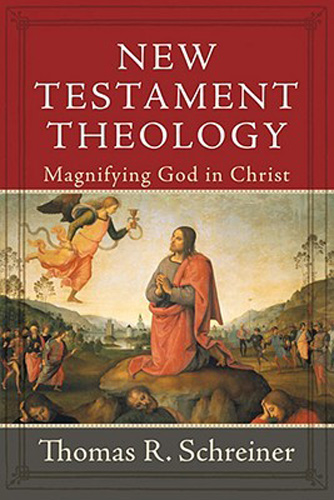
New Testament Theology: Magnifying God in Christ
In this substantial volume, Thomas Schreiner takes up the study of New Testament theology, looking for the themes that emerge from a detailed reading of the whole rather...
Downloads
About BiblicalTraining®
BiblicalTraining® wants every Christian to experience a deep and loving relationship with Jesus by understanding the life-changing truths of Scripture. To that end, we provide a high-quality Bible education at three academic levels taught by a wide range of distinguished professors, pastors, authors, and ministry leaders that moves from content to spiritual growth, all at no charge. We are a 501(c)(3) non-profit funded by gifts from our users. We currently have over 180 classes and seminars, 2,300 hours of instruction, registered users from every country in the world, and in the last two years 1.4 million people watched 257 terabytes of videos (11 million lectures).
Our goal is to provide a comprehensive biblical education governed by our Statement of Faith that leads people toward spiritual growth.