Survey of Biblical Theology - Lesson 21
Justification
Study the doctrine of justification and its debated importance in Paul’s theology. Learn how Schweitzer, Vreda, Stendahl, and Sanders minimized it, seeing it as secondary. Hear responses from Machen and Packer, who affirm justification as the heart of the gospel: God’s declarative act of counting believers righteous through Christ’s atoning work. Grasp how biblical language shows justification is forensic, not transformative, and why imputation of Christ’s righteousness is essential for assurance and salvation.

I. Debate on Importance
A. Reformers: central doctrine
B. Schweitzer: union with Christ primary
C. Vreda, Stendahl, Strecker: polemical, tied to Gentile inclusion
D. Sanders, Davies: one metaphor among many
II. Responses
A. Machen: justification is true gospel
B. Concept found beyond Romans/Galatians
C. Packer: addresses humanity’s greatest need
III. Biblical Background
A. OT: righteousness as saving acts
B. Righteousness fulfills covenant
IV. Nature of Justification
A. Protestant: declarative, forensic
B. Catholic: transformative, infused
C. OT/Paul: declaration in courtroom terms
V. Paul’s Teaching
A. No one justified by law/works
B. Justification by grace through faith
C. Christ’s righteousness imputed
D. Righteousness as God’s gift
VI. Clarifications
A. Transformative texts (Rom 6:7; 5:19)
B. Primary sense forensic; transformation follows
C. Distinct yet linked to sanctification
VII. Assurance & Imputation
A. Wright: works as final basis endangers assurance
B. Traditional view: final basis is imputed righteousness
C. Historical debate: Owen vs. Baxter
D. Machen: hope in Christ’s obedience
VIII. Conclusion
A. Justification = God’s forensic declaration
B. Grounded in grace, received by faith
So this whole, the new perspective, but it's even before the new perspective, raised this question about how important justification is. And Paul, since the Reformation, Protestants have said, over against Catholics, that justification is fundamental. But this has been called into question really in the last 100, 150 years or so, and many have argued that it's not central.
For example, Albert Schweitzer, you've probably heard of Albert Schweitzer, but if you haven't, Albert Schweitzer was an amazingly gifted guy. He was a doctor. He was a musician.
He wrote a book on Johann Sebastian Bach, and he was a New Testament theology person. He didn't believe in the resurrection though. So he was a very, very liberal Christian, right? Not believing in the resurrection.
So his life made no sense to me because Schweitzer wanted to follow Jesus. So he went out and served as a doctor in Africa to follow the ethic of Jesus, but he didn't believe Jesus was raised from the dead. That is not the gospel, I don't think.
But anyway, Schweitzer says righteousness is not very important. And Paul used this famous sentence, it's a subsidiary crater within the main crater of being in Christ. So he said the main issue is union with Christ.
I think union with Christ is the thing that ties all Paul's doctrines together. But what I don't like is he says justification is just a subsidiary doctrine because he says justification doesn't relate to ethics, how you live, life in the spirit or the resurrection. And so he says, yeah, this doctrine is not very important.
He says, and said the mystical doctrine of dying and rising with Christ is central. I don't like that word mystical there. I think dying and rising with Christ is an important doctrine.
But what Schweitzer is doing is he's saying justification, we ought to demote it in our thinking. Along comes our friend, we've met him before if you remember William Vreda. Remember William Vreda is the person who didn't really believe in New Testament theology, but just the history of religion.
Vreda comes along and he says, look, Paul only brings up justification when he's in a fight. That's what polemical means. We are in a fight.
This is what Georg Strecker believes. Christer Stendahl, I mentioned him. So what they're saying is, well, Paul doesn't really think this doctrine is very important.
He only brings it up when he's fighting. And so it's not very important. Vreda goes on to say, this is quite shocking, isn't it? But these are influential people.
You might think, well, you've probably never heard of them, but Vreda goes on to say, you can explain theology without even mentioning justification. And he says, look, it can't be that important because we only see it in Romans and Galatians. And those are polemical letters in which Paul's in a fight.
So yeah, it's not very important. Stendahl says justification is developed only to defend the inclusion of the Gentiles. So Stendahl, this is very new perspective, right? Remember, inclusion of the Gentiles, that's the big thing.
It's the nationalism, the Jews, that's the problem. We don't want to be ethnocentric. We want to include everyone.
Paul doesn't really care about justification. It's just a means to an end, you see. I want the Gentiles to get in.
So, okay, I'm going to talk about justification. I really don't care about justification. What I care about is that the Gentiles are included with the Jews and the people of God.
Well, certainly we agree that Paul's interested in the inclusion of the Gentiles, but I'll respond in a moment. Strecker, Georg Strecker says, well, if it's so important, why doesn't Paul mention it in 1 Thessalonians? And that's Paul's first letter. So it can't be that important.
E.P. Sanders, we come back to him and W.D. Davies, another New Testament scholar, lots of names here, sorry about that. They say, well, it's one metaphor among others to describe redemption. Again, it's like it's only central when Paul's fighting, not that important.
So, you know, we don't have to emphasize it so much. So what are my responses? I love what J. Gresham Machen says. You know who J. Gresham Machen is.
It's been the 100th anniversary of his great book, Christianity and Liberalism. If you've never read that book, students, you ought to read it. It's still very contemporary today.
Machen's a very clear writer. And that book tells you all, tells it all. I mean, because the title, there's Christianity and there's liberalism.
And the thesis of the book is liberalism. We're not talking politics here. He's talking about liberal Christianity.
Liberal Christianity is not Christianity. So very, very clear exposition, liberal Christianity is still around today. Machen shows why it's wrong.
Machen wrote a lot of great books, one on the virgin birth, so forth and so on. Anyway, Machen responds to Stendhal before Stendhal even wrote. Because this idea was around before Stendhal, he says Paul is devoted to justification by faith, not fundamentally because he's devoted to the Gentile mission, although that's true.
Rather, he's devoted to the Gentile mission because justification by faith is true. That's very important because you see what Stendhal does is he makes Paul a pragmatist. He makes Paul a utilitarian.
He makes Paul an instrumentalist. I said, well, the only reason I wanted Gentiles to come in, here comes justification by faith. Machen says long before Stendhal was even writing, no, Paul preached justification by faith because he believed it was the gospel, because it was true.
And the consequence, of course, is the Gentiles could come in. He's not. He's not an instrumentalist or a utilitarian.
That's a complete misunderstanding of Paul. Remember, Strecker says, well, why isn't it in 1 Thessalonians? But an argument can be made that we're not necessarily tied to the word, right? Don't we have the concept in that Jesus rescues us from the wrath of God? Is justification only limited to the word? Don't we have the idea here? What does justification mean? We'll talk about this more. It means to be right with God.
Well, it means to be rescued from God's eschatological wrath that will be poured out on the last day. And we see that again in 1 Thessalonians 5, 9. God did not appoint us to wrath, but to obtain salvation through our Lord Jesus Christ. No, this is not a full development of justification, is it? But you have the concept here of being rescued from God's punishment.
So, I think that's important to see. And it's not just in Romans and Galatians. Look at some of the statements we find in 1 Corinthians.
1 Corinthians 1.30. The argument in 1 Corinthians is not on justification, but he says, it is from him, God, that you're in Christ Jesus, who became wisdom from us, our righteousness. And the word righteousness, we should see here, is the word dikaiosune. That's the noun for justification.
The verb is dikaio. So, you know, in English, we use righteousness as the noun justification. I mean, we use justification and justify, but sometimes it's translated in English as righteousness.
But in Greek, the two words are very close, right? Dikaiosune and dikaio. So, Jesus is our righteousness. Paul also mentions sanctification and redemption, but it's very important that he mentions righteousness there.
We see it also in 1 Corinthians 6.11. We saw this verse before, but you were washed, you were sanctified, you were justified. So, it is there, isn't it? You were declared to be in the right. And then he doesn't use the word justification in 1 Corinthians 15, but isn't the idea there? Here, Paul communicates the gospel, which he preaches, and he says, this is what's most important, that Christ died for our sins according to the scriptures, and that he was buried and he was raised on the third day.
Well, isn't that what the gospel is? Isn't that what justification is? That you're forgiven of your sins through Christ's death. So, it's an exaggeration to say that it's not in the other letters. And then we have a very significant verse, 2 Corinthians 5.21, a very famous verse.
God made the one, Jesus, who did not know sin, Jesus was sinless, right? God made the one who did not know sin to be sin for us on our behalf. So, clearly we have the idea of substitution here. God made the sinless one to be sin for our sake, so that in Christ, in union with Christ, we might become the righteousness of God.
And there it is, that we might receive God's righteousness. We'll come back to that verse. So, we see it there.
So, it is central in some of Paul's chief epistles, especially Romans. Did you notice how they downplayed Romans and Galatians? Really, I mean, that's quite interesting to say, well, Romans is just a polemical letter. I mean, Romans is the fullest exposition of Paul's theology.
And then you have these people coming along, like Vreda, saying, well, it's only an argument when you're in a fight. Well, wait a minute. Sometimes when you're fighting about something, it's because it's super important, right? You know, because you see what their argument was.
Well, it's not very important because he only brings it up when he's in a fight. Well, first of all, he doesn't only bring it up when he's in a fight. Secondly, when you're fighting about something, it's because it's super important, at least hopefully, right? Hopefully you're not fighting about something that's not important.
So, I think that's a really bad argument. And Jack, the famous J.I. Packer says, rightly, he joined into this debate. It's not merely polemical.
It's not merely for a fight, for it deals with our chief need before God and is the root of all personal religion. And Packer says that so well, doesn't he? That our chief need before God is we're guilty and we need to be declared in the right. So, it can't be dismissed that way.
Now, let's think of the Old Testament a little bit. We might not read all these verses, but I want us to study the word. We're doing some donkey work again.
Here we go. Let's look at how this word is used. The word now we're looking at the Hebrew, right? Where you have words like, Zedekah, Zedekot, Zadik.
What I want to argue here is that the word righteousness, when we hear the word righteousness, we often think just of judgment. Did you do right? If you didn't do right, you'll be judged. But in the Old Testament, God's righteousness can refer to his salvation.
So, for example, Judges 5.11 speaks of the righteous acts of the Lord through Barak. So, remember what's happening in Judges 11. Remember, Barak wins a victory over Sisera.
And then, remember, Jael cuts his head off, right? Or no, not cuts his head off, puts the hammer through his head, right? And the righteous acts there are God's saving acts, the Zedekot, that's the Hebrew word, the saving acts by which he saved the people. Same thing in 1 Samuel 12.7. This is right before Saul is being anointed as king, established as king. Samuel's reviewing for the people, rehearsing the people, the Zedekot of the Lord, the righteous acts of the Lord.
He's saying, hey, think of all the kind things, the saving things God did for us. So, I just want you to have in your mind, yeah, righteousness can refer to God's saving work. Daniel 9.16. Daniel's praying for the people.
Daniel's in exile. The people are in exile. He says, God, turn away your anger in accord with your righteous acts.
According to your Zedekot, your righteous acts save us, save us like you did in the past. And same with Micah 6.5. Micah says, remember all the righteous acts of the Lord, from Shittim to Gegal. Remember all God's saving acts.
So, here's some other examples where righteousness is parallel with salvation. The Lord is made known as salvation. He has revealed his righteousness in the sight of all nations.
Hey, look at this. Romans 1.17. For in the gospel, the righteousness of God is revealed from faith to faith. He said there, the gospel is the power of God to salvation.
The righteousness is revealed. Go back to this text. The Lord made known as salvation.
He has revealed his righteousness. All commentators agree. Paul is in line Psalm 98.
By the way, Luther understood that God's righteousness was saving and good because, do you know what Luther was doing in the monastery? He was a teacher of the Bible. And he was studying the Psalms and Romans. And Luther began to understand, oh, righteousness can refer to God's salvation.
Because when Luther was reading Romans 1.17 and said the righteousness of God is revealed in the gospel, when he first started studying Romans, you know what he thought? He thought, that's bad news because God's righteousness is judgment. But he began to realize, oh, righteousness can refer to God's saving love. And we see it here in Hebrew parallelism.
The Lord is made known as salvation. He has revealed his righteousness, his saving righteousness. It's his steadfast love and his faithfulness.
Isaiah 51. My righteousness draws near. Hebrew parallelism.
My salvation has gone out. You see, the righteousness that draws near is his saving righteousness. The end of verse six.
My salvation will be forever. My righteousness will never be dismayed. Again, salvation and righteousness are put together.
And there are many other verses that do that. You can look those up on your own. So, righteousness.
Righteousness can refer to God's saving action for his people. Now I want to ask the question, how does righteousness relate to the covenant? Here, I want to disagree with both. I'm not boasting.
Maybe I'm wrong. You make up your mind. But I So, Wright and Dunn argue that God's righteousness, and this isn't that clear in the notes, so I'm going to say this slowly.
God's righteousness is his covenant faithfulness. That's how we should define it. This is a very subtle distinction, but I think it's important.
No, God's righteousness should not be defined as his covenant faithfulness. No, God's saving righteousness fulfills the covenant. Because what am I arguing? God's righteousness is his rightness in saving us.
So, see, they're saying God's righteousness is his covenant faithfulness, but I'm saying no, it fulfills it. I actually think Piper makes the same mistake, but with a different definition. Because Piper says God's righteousness is his unswerving allegiance to his glory.
No, no, it's simpler than that. That's what I'm saying. God's righteousness, his saving righteousness at least, maybe I should put that, God's saving righteousness is his rightness in saving us.
It brings him glory. So, it's the same argument I'm making. It brings him glory, but it isn't his glory.
To say you're righteous by faith doesn't mean you have an unswerving allegiance to God's glory. It means you stand in the right. What does it mean to be in the right? It means you stand in the right before God.
That's what it means. More on that to come. So, that's very important.
Now, how do we define righteousness? I've already told you this, but I'm going to make this argument. There are many scholars, Kasem and Stuhlmacher, others who want to argue that righteousness is inherently transforming. Now, these guys aren't Catholics, but this is traditionally the Catholic view, that righteousness is infused into you, that you are made righteous.
But the Protestant view, which is right here, is that you're declared righteous, that you stand as righteous before the judge. I'm going to argue the latter view is right. They want to argue that righteousness is transforming because God's righteousness is apocalyptically revealed and manifested in Romans.
So, what they want to say is God's righteousness is effective. God doesn't only declare you to be righteous, he makes you righteous. What do I mean by that? He changes you inside.
Then they'll say, well, he talks about the power of God, the righteousness of God, the wrath of God. It's a power. It's a power that transforms you.
And then they'll say, look, it says believers are made righteous in Romans 5.19. And then Romans 6.7 literally read, the one who died has been justified from sin. But most versions translate that freed, something like freed from sin. See, there's a power that takes place in justification.
You're transformed. You're made new. You're liberated by God's righteousness.
God's righteousness is a transforming power that makes you new. And then they'll say, what? You're saved by both the cross and the resurrection. You're not just forgiven, you're changed.
And 2 Corinthians 3.8-9, you have the ministry of the spirit, but the ministry of righteousness, but they say, look, well, the ministry of the spirit changes you. So, you know, those arguments are very attractive. And at one time I even held this view.
So, uh, but I think it doesn't work at the end of the day. Now, let me say something very important. I'm not denying God changes us, right? We all believe that we're asking what this word means.
Protestants have always distinguished between justification and sanctification. Well, so if you, if you're listening and you're thinking, of course, well, yeah, I like that idea. God transforms us.
Yes, yes, yes. Of course he transforms us. The question is, is that what this word means? And we'll see why that matters as we go.
Or perhaps you already see why that matters. So I'm arguing righteousness is not transformative, but declarative. That's, you know, it's amazing.
A lot of Protestants don't know this anymore. Sometimes Protestant preachers don't even know this anymore. That is traditionally the Catholic view.
And it makes sense of this. Catholics believe you can lose your salvation. Their view of justification is it's a process of transformation because you're not completely transformed when you're justified right.
And therefore you can slip back and away from it. Protestants argue that the declaration is complete. Therefore it can't be lost.
That's a, that's a big issue then, whether it can be lost, but, but I, but I'm getting ahead of myself. I want to argue this word is a declarative word. It's a judicial word.
This is a traditional Protestant reading. And I think that's demonstrated by how this word is used. So we're going to, so back to some donkey work, Exodus 23, seven, I will not justify the wicked.
That word means I will not declare the wicked to be in the right, but that word can't mean I will not make the wicked, wicked, right? There's no transformation. There's a declaration. I will not declare the wicked to be in the right.
The wicked are already wicked. There's no transformation going on there. Same thing.
Many texts say this Deuteronomy 25 one, but I have many other texts there. Judges, human judges are to justify the righteous and condemn the wicked. Well, what are judges do? Judges don't make the righteous, righteous, do they? They declare the righteous to be righteous.
Judges don't make the wicked, wicked. Judges declare the wicked. To be wicked.
Surely judges look at the facts of the case and they say, you didn't commit that crime. I declare you to be in the right. They didn't make him to be in the right.
They declared him to be in the right. So this word has the idea of being vindicated in the court. Isaiah 46, nine.
Remember what happened long ago for I am God and there is no other. I am God and no one is like me. And that is definitely the wrong verse.
So that has nothing to do with our subject. Sorry about that. Is this next one okay? No, no, I have, I have totally the wrong.
I'm wondering if it's chapter 45. No, who knows where that's from? Goodbye. Dear students, we are reminded again that this notebook is not inerrant.
Psalm 143 too. I'll have to find that someday. You find it.
I'll send you a thank you. That's not very nice, but that's all I'll send you. So verse two of Psalm 143, this is quoted in the new Testament in Romans three and in Galatians two, do not bring your servant in the judgment for no one alive is righteous in your sight.
So what, what, what David is saying here is I don't want to go into trial with you because you're going to declare me to be in the wrong. Don't, don't judge me. He's saying, don't judge me because if you do, I'm toast, right? I'm going to be condemned, but it's a declarative sense job.
I'm not going to turn to these verses, but I'm going to say something about the book of job in job. This word is clearly declarative. So what is the book of job about a lot of things, right? But the point of the book is job is suffering, even though he has done nothing to warrant his suffering, right? And the friends say you're suffering because you've done bad.
This is why the bad things are happening to you. And what does job say again and again, I haven't done anything to warrant suffering like this. And I don't understand what's happening to me.
And then job begins to say, I want a court case with God. Look at this. When you read the book, I want to meet God.
I want a court case. And he said, the thing is God's really scary. He's scary.
God scares me. He's big. He's strong.
He terrifies me. So I can't get this court case because God scares me so much. But if we could get the court case, God would declare me to be in the right, but I can't get the court case because God's not coming to meet me.
Of course, God does come and meet him at the end of the book, right? But, but here's my point, this whole language of righteousness and justice in the book is declarative, right? Job saying, I'm in the right. I'm in the right. I want a court case.
And I want, and if God's a fair judge, he's going to declare me to be in the right. Well, that's what God does at the end of the book, right? He says, Hey, Job's in the right. Job's in the right.
You, you, you friends have wrongly indicted him. Now I know Job did sin too, right? In the midst of the book, because he calls in the question, God's justice. And God, God hits him for that, but he's not suffering.
He's not suffering because of his sin. That's the big mistake of friends made. Paul says, the doers of the law will be justified.
That doesn't mean the doers of the law will be made righteous. The doers of the law will be declared to be in the right. Well, of course that's the way it works.
And then Paul says, no one will be justified by works of the law. No one will be declared to be in the right by the works of the law. Why? Because they don't do it.
You know, the judge says, God, did you do the works of the law on the final day? No, I can't declare you to be in the right. I can't declare you to be justified. Francis Schaeffer uses that great little illustration, right? If you, it's dated, right? But if you put a tape recorder around your neck, every moral judgment you've uttered in your life is recorded.
All God would have to do on the day of judgment is play back your own moral statements. Here's what's right and wrong and say, did you do it? No, you're guilty. It's that simple.
Same thing. No one is justified by the law. No one's declared to be right in the law.
But now, of course, then Paul, Stephen Westerholm calls us, then Paul begins to talk about this. We're justified freely by his grace. We're declared to be in the right.
Now this is surprising, right? Now justification is free. We're justified by faith. We're declared to be right by faith.
God doesn't declare us to be in the right based on what we do because we don't do what's right. No, he declares us to be in the right because of his grace. So that is extraordinary.
That is a gift because no human judge can do this, right? No human judge should do that. This is extraordinary. This is where N.T. Wright comes in and he says, look, there's no imputation of righteousness.
And the imputation of righteousness means that Christ's righteousness is credited to us, right? 2 Corinthians 5 21. God made him who knew no sin to be sin on our behalf so that in him we might become the righteousness of God. Wright says there's no imputation of righteousness because if I'm the judge in a human courtroom, I can't give you my righteousness.
Well, of course, the latter point's true, isn't it? If you're on trial and I'm the judge, I can't say, well, okay, you murdered that person, but I, the judge, give you my righteousness and you go free. That would be outrageous. But what's the problem with Wright's illustration? This is a different courtroom, right? You can't, he's not doing exegesis anymore.
This is the most amazing thing around is that God, God himself in Jesus Christ has taken the penalty we deserve. Of course, that doesn't happen in any human courtroom, but this is not a human courtroom. You can't restrict what's happening here to a human courtroom anymore.
This is a miracle. This is the gospel. So, you know, it sounds good.
And by the way, Tom and I are friends. I like Tom as a person. I have nothing against him personally, but I just don't, you know, we have to decide what do these texts mean? And when he says, hey, this is imputationism taught, well, I think it is, right? We're justified.
We're forgiven. We have all these cases where righteousness is counted to us. Well, that means, right? It's reckoned to us.
It's declared to us. So, what about this idea that, well, you have the ministry of condemnation, the ministry of righteousness, and it's linked with the spirit or the power of God? Well, yes, yes. But of course, God does both things.
He transforms us and declares us to be in the right, but still righteousness is forensic. Romans 8, 33, who will bring a charge against God's elect? That's a courtroom scene, right? God is the one who justifies. God declares us to be in the right.
So, that's very fundamental. I'm arguing the traditional Protestant view that righteousness is forensic, is correct. So, I was arguing basically about the verb.
Now, the righteousness of God as the noun, we'll just do this quickly. We see, I think we see as well that God's righteousness is a gift he gives to us, right? Righteousness is from God. It's a gift he gives us.
We don't have our own righteousness from the law. The righteousness that is given to us, the declaration that we're in the right, it isn't our own. It is given to us as a gift, as we see in Romans and Philippians.
You can read these notes in more detail, but Romans 10 and Philippians 3, they both tell us, right, God's righteousness is given as a gift to us when we trust in him. And then I want to argue against the transformative view a little bit. Remember, I gave the arguments for the transformative view.
First of all, the verb is typically forensic. I think I proved that with the examples I gave you. What about Romans 6, 7? The person who has died is freed from, but the verb is justified, is freed from sin.
There, it seems that the translators are understanding justification to be transformative. But I think two things can be said. Remember, words have their meaning in context.
There may be some cases where the verb does have a transformative sense. That would be very unusual. But I like to say one slice doesn't make a pie, right? The rest of the pie, I think it's clearly trans, I mean, forensic.
Secondly, this verse could be saying that your justification is the basis of your sanctification. So, which is what I'm saying here. The forensic can't be ultimately separated from the transformative, but that doesn't mean the two are equivalent, right? So when we do theology, we have to be very careful.
Of course, we're both declared righteous and we're also changed and a new creation and sanctified and reconciled and adopted. But that doesn't mean all these terms mean the same thing. So I say parallels don't mean equivalency.
Can I say that word? Second Corinthians 3, 8, 9. Yes, we have the ministry of the spirit and the ministry that brings righteousness. But that doesn't mean the ministry of the spirit and the ministry of righteousness mean the same thing. Actually, righteousness is contrasted with condemnation.
And I think that's a forensic category. Yes, we see in the gospel of God's power, God's righteousness and God's wrath. We see the transformative.
I'm saying the same thing over and over to you. The transformative and the forensic theologically are inseparable, but that doesn't mean they can't be distinguished. And then one last comment, Romans 5, 19.
What about that verse? Through the one man's obedience, the many will be made righteous. I actually think that word from Cathistamian Greek has an idea of appointment there. So I don't have problems with the translation made righteous, but I think the transformative there, the transformative is based on the forensic because we're an Adam or Christ.
We are reckoned and appointed to be sinners and then we actually become sinners. So at the end of the day, those who are declared righteous do live righteously, but they still ought to be distinguished. So last thing I want to say, why is this important? Because it preserves the reformation.
I'm not about preserving the reformation just to preserve the reformation. Traditions can be wrong, but I just think the reformation is right. That the righteousness that is ours is alien.
Now those aren't little creatures from outer space. The alien righteousness is a righteousness that's not our own. It's a righteousness that is given to us.
We can't prepare ourselves to receive it. It's a gift that we do not merit. Praise God.
There are differences between justification and sanctification, but those differences can be overdone and underdone. So what I mean by that, it can be, the differences can be overdone in the sense that you could say all that matters is we're justified. It doesn't matter at all how we live, right? So that's overemphasizing the differences.
Yes, it does matter how we live, but it can be underdone and it can be underdone by saying, well, justification and sanctification mean the same thing. So Christ's righteousness is ours since we're united to Christ by faith. So because we're united to Christ, Luther liked to say we are married to Christ.
Since we're married to him, his righteousness is ours. But the last thing I want to say, and I'm not going to read these verses, but God's righteousness can also judge us, right? I've been emphasizing the righteousness that saves us. There is a judging righteousness for those who don't repent and believe.
I'm not denying that. So I just want to throw that in. Yes, there is a judging righteousness, but in the cross, we receive the saving righteousness of God.
In the cross, God's judging and saving righteousness come together, right? Romans 3, because in Jesus, Jesus is judged on the cross, but he also saves. So in the cross, we see God's mercy and God's justice come together in the cross. God's judging and saving righteousness come together in the cross, don't they? And that's really the basis of our salvation.
So there's so many other things I'd like to talk about in Paul, but we have other things to talk about before we go. You've been covering a lot of technical things, and there's two things I need to get clear in my head. One is the relationship between imputation and transformation.
Can you distinguish or explain again the relationship of those two concepts? Yeah, absolutely. That is a great question. So I think a good way to come at that is to say N.T. Wright is an example.
He believes that our works are a final basis, those are the exact words he uses, of our justification. Our works are a final basis of our justification. Imputation argues that the final basis of our justification is the righteousness of Christ that is credited to us because we're united to him by faith.
So what does imputation mean? That something is credited to you, credited to your account, like a bank account, or it's counted to you. That's another word that could be used. So when we come to the final day and God judges us, does God demand perfection? We would say, yes, he demands it.
We're not only forgiven of our sins, but Christ's righteousness is imputed, counted to us. That's a forensic declarative act. We've done nothing to receive it, except for believe.
We've done nothing to work for it. That's probably a better way to put it. But Christ's righteousness is imputed to us and counted to us.
So we trust in him, our salvation is entirely in him. Wright rejects imputation, but if you reject imputation, you want to put something in instead for the final basis. So he wants to say it's our good works that is put in.
Well, when I had my debate with Tom in 2010 and discussion, I said to him, you know, Tom, your view is going to threaten people's assurance because now they're going to say, are my good works sufficient? Is it enough for me to have confidence on the day of judgment? Because my final vindication depends in part, at least, on my works, how good they are. They're not just evidence, right? Because it's not just judgment according to works or evidence, but now works are the basis. And Tom replied and said, oh, Americans worry about that.
British people don't worry about that. I don't think that's true. I mean, oh, the very clever answer.
But I've talked to British people who worry about that, right? I think it's a human issue. But I also think it's an exegetical issue. The final basis of our righteousness, I think, is what Christ has given to us.
His righteousness stands in our place. So that's why I think imputation is important. You know, kind of a historical point that's interesting.
John Owen and Richard Baxter had this very argument. So I think Tom writes a Christian and I love him and he's amazing and he's 10 times smarter than I am. But Baxter did not believe in imputation because Baxter was worried, oh, people won't care about obedience if there's imputation.
So Baxter said our obedience is a basis of our righteousness. He was called a neonomian, a new law person. John Owen said on the other hand, no, no, Richard, this is not good.
Our righteousness is finally based on the imputation of Christ's righteousness to us. So this is a long argument. But I would side with Owen over against Baxter and the traditional reform view over against Wright.
Right. And my second question that you basically answered, but just for the students who are taking this class, I want to make sure this is really clear because it's been three lessons. So what I need you to do is to summarize.
Yeah. What is Wright's definition of justification? And what is your definition of justification? Because this has caused so much debate in the church with serious consequences. And at times some of this sounds kind of like, well, excuse me, academic.
Sure. But it's not academic. So give us those two definitions to close, will you? Yeah.
And in a way, it gets even more complicated because Wright, he's a complicated person and he's very bright. So Wright, he will define justification more than one way in his writings. Sometimes he'll say it's declarative and forensic.
And then he'll say it's covenant faithfulness. But then there's other people out there who say it's transformative. Tom doesn't actually say that.
But what I've mainly been arguing, I've mainly been arguing, look, righteousness is declarative and forensic. It's God, the judge declaring you to be in the right, to stand in the right before him on account of your faith based on the atoning work of Christ. That's why we're saved.
We're not saved because God's changing us inside the typical Roman Catholic view and slowly transforming us in our work sufficient. Tom says some things about works being the final basis of our justification that at least incline in that direction and make people think, well, you're denying the traditional Protestant reading. So I just want to say for clarity, why are we right before God? What does justification mean? We're declared to be in the right by the divine judge.
That declaration is based on the atoning work of Christ. It's received by faith. When we believe in him, God declares us to be in the right.
He both forgives our sins and he credits us with Christ's righteousness. So we stand before God on the day of judgment. We stand before God based on what Christ has done.
And I'll tell a little story. When J. Gresham Machen was dying, you know, J. Gresham Machen, the founder of Westminster Seminary in 1929, I mentioned he wrote the book, Christianity and Liberalism. He also founded the Orthodox Presbyterian Church.
He was a great defender of Orthodoxy. He was in his fifties. He was ministering in the Dakotas and he got sick and he was dying.
I forget what it was from, but he was only 50 some years old. He wrote John Murray, if you know that name, John Murray wrote a commentary on Romans and many other things that are still read today. He wrote John Murray a little note and he said in a very Presbyterian way, thank God for the active obedience of Christ.
No hope without it. He wrote some other things, but he wrote that. What did Machen mean? So this is what I'd say.
Machen's dying. And what's he thinking of? His sins, right? So what? He founded a denomination and a seminary and wrote books, but you know, when you're dying, what does the devil bring to your mind? How you failed, right? You remember the devil attacks us typically. I mean, maybe some people don't go through this, but if you're dying slowly, you're going to remember, hey, here are areas.
I mean, when I think of my life, I think of areas where I failed, right? And so the devil brings that to mind, but he said, thank God for the active obedience of Christ. Machen was saying, thank God that my righteousness is the imputation of Christ's righteousness credited to me. He said, no hope without it.
My hope isn't in what I've done because it's not enough. My hope is in Christ's righteousness being given to me. And I think that that's the issue, you know, pastorally with all this technical stuff we've been talking about.
I think in Wright's scheme, it's like, well, have I done enough of those works? If they're the final basis of justification and that's, that's, I mean, at least I have the kind of personality would think, well, I don't know. And this is what Luther struggled with, you know, stop it. When he would confess his sins would say, you've confessed them enough.
And Luther would say, how do I know I've done enough? You know, and that, that's the issue, I think.
- Explore how biblical theology developed through figures from Irenaeus to Bultmann, learning how debates over history, reason, and revelation shaped its methods, authority, and lasting influence on theology and the church.0% Complete
- Study how biblical theology traces God’s revelation historically while systematic theology organizes doctrine, seeing how both disciplines work together with presuppositions of faith to interpret Scripture as God’s authoritative Word.0% Complete
- Creation, covenant, and conflict reveal humanity’s sin and God’s judgment, showing the garden as sanctuary, Adam’s priest-king role, the serpent’s opposition, and God’s plan to bring salvation and victory through His promises.0% Complete
- God’s covenant with Abraham promises land, offspring, and blessing to all nations, showing both unconditional divine fulfillment and conditional obedience, while God preserves His plan through threats and fulfills His promises in surprising ways.0% Complete
- The Exodus shows God redeeming Israel by grace, giving the law and sacrifices, and dwelling in the tabernacle, all pointing to Christ’s final sacrifice and God’s presence with His people in the new creation.0% Complete
- Watch Israel’s unbelief, partial fulfillment of God’s promises, the cycle of sin without a king, and the rise of David as God’s chosen ruler who anticipates the true king to lead His people.0% Complete
- God’s covenant with David points to an eternal King, Israel’s failure reveals the need for renewal, and the prophets promise a new covenant, Exodus, creation, and David—all fulfilled in Jesus, the true King bringing worldwide blessing.0% Complete
- Israel’s identity forms through unfulfilled promises, foreign domination, Jewish factions, and rising messianic hopes, which fuel anticipation of a Messiah and set the stage for the New Testament.0% Complete
- Matthew shows Jesus as Emmanuel, true Israel, Son of David, and Son of God, fulfilling promises through a new Exodus, atonement, and divine authority, so that all God’s covenants find their fulfillment in him.0% Complete
- Dr. Schreiner reveals Jesus as the divine Son, true Israel, greater Moses, and eternal King who fulfills God’s promises, reveals the kingdom in hidden yet present power, and builds his church as the new people of God drawn from all nations.0% Complete
- Mark proclaims Jesus as the Son of God and true King whose suffering secures forgiveness, while discipleship means following his example of humility and obedience despite weakness.0% Complete
- John portrays Jesus as the eternal Logos and Son whose I AM sayings and signs grant believers the present possession of eternal life through faith.0% Complete
- John presents Jesus’ work as his lifting up and glorification, fulfilling Scripture. Life comes through true believing—receiving, coming, hearing, drinking, eating, entering, abiding—while false belief, darkness, and human glory block it.0% Complete
- Dr. Schreiner highlights divine sovereignty: the Father gives believers to the Son, the Spirit gives life, and all who truly believe are preserved, and glorifies Christ, showing Jesus’ death and resurrection as God’s sovereign plan.0% Complete
- In John’s epistles, he teaches that assurance rests on the apostolic witness, confession of sin, obedience, love, and doctrinal truth, while false teachers deny Christ.0% Complete
- Acts shows God’s plan through Christ and the Spirit, fulfilling covenant promises, spreading the gospel, empowering witnesses, and forming the church as restored Israel united in salvation.0% Complete
- Paul’s “already but not yet” theology shows God’s promises fulfilled in Christ yet awaiting completion, shaping Christian life, doctrine, and practice in areas like adoption, redemption, sanctification, and practical living.0% Complete
- In this lesson, Paul shows that Spirit-led believers still need commands, which guide holiness and love without legalism, uniting word and Spirit to shape Christian life, protect love from distortion, and call for discernment in obedience.0% Complete
- Learn how the New Perspective reinterprets Judaism and Paul, how Sanders and Stendhal shifted focus from justification to covenant and inclusion, and how Paul’s own words confirm his Damascus road conversion.0% Complete
- Paul uses “works of the law” to mean all deeds of the law, not just Jewish boundary markers, and teaches that justification comes by faith in Christ because human disobedience makes works powerless to save.0% Complete
- Learn that justification is God’s declarative act of counting believers righteous through Christ’s atonement, not human works, and see why imputation, not transformation, secures assurance and preserves the heart of the gospel.0% Complete
- Hebrews teach the Son as God’s final revelation and superior Melchizedekian priest whose one sacrifice fulfills typological promise.0% Complete
- James emphasizes authentic faith that produces obedience, wisdom, and care for others, showing that faith without works is dead while affirming God’s goodness and calling believers to endurance, humility, and practical godliness.0% Complete
- In 1 Peter, see how believers as exiles endure suffering with hope, live as God’s priestly people, rest in Christ’s atoning work and victory, and anticipate the inheritance of the new creation as fulfillment of God’s promises.0% Complete
- Revelation’s symbolism portrays Satan, the beast, false religion, and Babylon while teaching to persevere in suffering, trust God’s sovereignty, and hope in Christ’s victory and the new creation.0% Complete
- Dr. Schreiner teaches how Revelation portrays Christ’s full deity, the Lamb’s redeeming work, with victory grounded in the cross and fellowship with God as the ultimate goal.0% Complete
Lessons
- Explore how biblical theology developed through figures from Irenaeus to Bultmann, learning how debates over history, reason, and revelation shaped its methods, authority, and lasting influence on theology and the church.0% Complete
- Study how biblical theology traces God’s revelation historically while systematic theology organizes doctrine, seeing how both disciplines work together with presuppositions of faith to interpret Scripture as God’s authoritative Word.0% Complete
- Creation, covenant, and conflict reveal humanity’s sin and God’s judgment, showing the garden as sanctuary, Adam’s priest-king role, the serpent’s opposition, and God’s plan to bring salvation and victory through His promises.0% Complete
- God’s covenant with Abraham promises land, offspring, and blessing to all nations, showing both unconditional divine fulfillment and conditional obedience, while God preserves His plan through threats and fulfills His promises in surprising ways.0% Complete
- The Exodus shows God redeeming Israel by grace, giving the law and sacrifices, and dwelling in the tabernacle, all pointing to Christ’s final sacrifice and God’s presence with His people in the new creation.0% Complete
- Watch Israel’s unbelief, partial fulfillment of God’s promises, the cycle of sin without a king, and the rise of David as God’s chosen ruler who anticipates the true king to lead His people.0% Complete
- God’s covenant with David points to an eternal King, Israel’s failure reveals the need for renewal, and the prophets promise a new covenant, Exodus, creation, and David—all fulfilled in Jesus, the true King bringing worldwide blessing.0% Complete
- Israel’s identity forms through unfulfilled promises, foreign domination, Jewish factions, and rising messianic hopes, which fuel anticipation of a Messiah and set the stage for the New Testament.0% Complete
- Matthew shows Jesus as Emmanuel, true Israel, Son of David, and Son of God, fulfilling promises through a new Exodus, atonement, and divine authority, so that all God’s covenants find their fulfillment in him.0% Complete
- Dr. Schreiner reveals Jesus as the divine Son, true Israel, greater Moses, and eternal King who fulfills God’s promises, reveals the kingdom in hidden yet present power, and builds his church as the new people of God drawn from all nations.0% Complete
- Mark proclaims Jesus as the Son of God and true King whose suffering secures forgiveness, while discipleship means following his example of humility and obedience despite weakness.0% Complete
- John portrays Jesus as the eternal Logos and Son whose I AM sayings and signs grant believers the present possession of eternal life through faith.0% Complete
- John presents Jesus’ work as his lifting up and glorification, fulfilling Scripture. Life comes through true believing—receiving, coming, hearing, drinking, eating, entering, abiding—while false belief, darkness, and human glory block it.0% Complete
- Dr. Schreiner highlights divine sovereignty: the Father gives believers to the Son, the Spirit gives life, and all who truly believe are preserved, and glorifies Christ, showing Jesus’ death and resurrection as God’s sovereign plan.0% Complete
- In John’s epistles, he teaches that assurance rests on the apostolic witness, confession of sin, obedience, love, and doctrinal truth, while false teachers deny Christ.0% Complete
- Acts shows God’s plan through Christ and the Spirit, fulfilling covenant promises, spreading the gospel, empowering witnesses, and forming the church as restored Israel united in salvation.0% Complete
- Paul’s “already but not yet” theology shows God’s promises fulfilled in Christ yet awaiting completion, shaping Christian life, doctrine, and practice in areas like adoption, redemption, sanctification, and practical living.0% Complete
- In this lesson, Paul shows that Spirit-led believers still need commands, which guide holiness and love without legalism, uniting word and Spirit to shape Christian life, protect love from distortion, and call for discernment in obedience.0% Complete
- Learn how the New Perspective reinterprets Judaism and Paul, how Sanders and Stendhal shifted focus from justification to covenant and inclusion, and how Paul’s own words confirm his Damascus road conversion.0% Complete
- Paul uses “works of the law” to mean all deeds of the law, not just Jewish boundary markers, and teaches that justification comes by faith in Christ because human disobedience makes works powerless to save.0% Complete
- Learn that justification is God’s declarative act of counting believers righteous through Christ’s atonement, not human works, and see why imputation, not transformation, secures assurance and preserves the heart of the gospel.0% Complete
- Hebrews teach the Son as God’s final revelation and superior Melchizedekian priest whose one sacrifice fulfills typological promise.0% Complete
- James emphasizes authentic faith that produces obedience, wisdom, and care for others, showing that faith without works is dead while affirming God’s goodness and calling believers to endurance, humility, and practical godliness.0% Complete
- In 1 Peter, see how believers as exiles endure suffering with hope, live as God’s priestly people, rest in Christ’s atoning work and victory, and anticipate the inheritance of the new creation as fulfillment of God’s promises.0% Complete
- Revelation’s symbolism portrays Satan, the beast, false religion, and Babylon while teaching to persevere in suffering, trust God’s sovereignty, and hope in Christ’s victory and the new creation.0% Complete
- Dr. Schreiner teaches how Revelation portrays Christ’s full deity, the Lamb’s redeeming work, with victory grounded in the cross and fellowship with God as the ultimate goal.0% Complete
Class Resources
Recommended Books
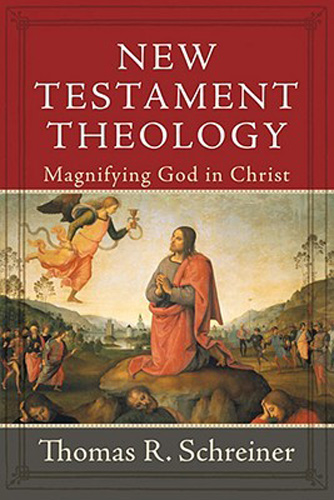
New Testament Theology: Magnifying God in Christ
In this substantial volume, Thomas Schreiner takes up the study of New Testament theology, looking for the themes that emerge from a detailed reading of the whole rather...
Downloads
About BiblicalTraining®
BiblicalTraining® wants every Christian to experience a deep and loving relationship with Jesus by understanding the life-changing truths of Scripture. To that end, we provide a high-quality Bible education at three academic levels taught by a wide range of distinguished professors, pastors, authors, and ministry leaders that moves from content to spiritual growth, all at no charge. We are a 501(c)(3) non-profit funded by gifts from our users. We currently have over 180 classes and seminars, 2,300 hours of instruction, registered users from every country in the world, and in the last two years 1.4 million people watched 257 terabytes of videos (11 million lectures).
Our goal is to provide a comprehensive biblical education governed by our Statement of Faith that leads people toward spiritual growth.