Survey of Biblical Theology - Lesson 11
Gospel of Mark
Dr. Schreiner points to how Mark emphasizes Jesus as the Son of God from beginning to end, with his identity affirmed at baptism, transfiguration, and even by demons and the centurion at the cross. He teaches how Mark highlights the weaknesses of the disciples to show their partial sight and need for Jesus’ correction. Through passion predictions tied to calls for discipleship, you understand that Jesus’ suffering both secures forgiveness and models humility, calling you to follow him in self-giving obedience.

I. Introduction to Mark
A. Focus on Jesus as Son of God
B. Emphasis on discipleship
II. Jesus as the Son of God in Mark
A. Opening declaration: Jesus Christ, Son of God
B. Closing confession: centurion proclaims Son of God
C. Affirmed at baptism and transfiguration
D. Recognized by unclean spirits
III. Discipleship in Mark
A. Disciples’ weakness & lack of understanding
B. Rebukes for fear, hardened hearts, blindness
C. Healing of blind man as parable of partial sight
IV. Passion Predictions & Discipleship
A. Three predictions of Jesus’ suffering
B. Calls to take up the cross & follow
C. Disciples’ ambition & rivalry contrasted with humility
D. Jesus’ death both substitutionary & exemplary
V. Concluding Emphasis
A. Discipleship shaped by Jesus’ self-giving
B. Ongoing relevance: temptation toward ambition and selfishness
So now we come to the Gospel of Mark. I mean, there's so much we could say about the Gospel of Mark, but partly because of time, and partly because other Gospels have many of the same themes we're going to deal with Mark in an abbreviated way. So I just want to lift out a couple of things in Mark, and that is Jesus is the Son of God, and then the theme of discipleship.
So we're going to do this really quickly, and then we're going to go on to Luke. I just want you to see, Matthew begins with his genealogy, right? Jesus is the Son of David and the Son of Abraham. I didn't mention this, but notice David comes first, right? He's the Messiah and the Son of Abraham.
But Mark begins with this phrase, the beginning of the Gospel, the good news of Jesus Christ, the Son of God. So we see that high Christology, he's the eternal Son of God, fully divine. Mark does not write, so hey, where am I going? He tells you in the very first verse.
And really, my last bullet point under this, the Gospel near the end, Mark chapter 15, verse 39, truly this was the Son of God. So you have the bookends in Mark of Jesus being God's Son. And then we see that throughout, and we've seen that in Matthew at the baptism, again, which we saw in Matthew, but now in Mark, he is identified as the beloved Son.
The unclean spirits call him the Son of God. The demoniac says, what is it to me in you, Jesus, Son of the most high God, and then at the transfiguration. So we saw all of that in Matthew.
I just want you to see that that's very programmatic for Mark as well. And then the teaching on the kingdom that we saw in Matthew, that's in Mark as well, and many other themes. But another very fascinating theme in Mark is discipleship.
Again, that's in all the Gospels, but in Mark, it's structured in a particular way. And of course, he calls people to be his disciples. Mark emphasizes more than the other Gospels, the weaknesses of the disciples, which is interesting, I think, because I agree with the tradition that Peter is the one who mediated what we find in Mark.
That's what the tradition says over and over again. The early disciples did not hide their faults. So we just look at a couple of these.
Mark chapter four, verse 40, he says to the disciples, after he rebukes the winds and the waves and the storm, he said, why are you afraid? Do you still have no faith? So the weakness of the disciples' faith is featured. Mark 6.52, another storm scene. Jesus tells them, don't be afraid.
But then we're told they were completely astounded because they had not understood about Jesus. Instead, their hearts were hardened. Again, the weakness of the disciples is emphasized by Mark.
And we see it one more time in Mark 8.17. They're discussing whether they have enough bread. And Jesus says to them, why are you discussing the fact you have no bread? Don't you understand or comprehend? Do you have hardened hearts? Do you have eyes and not seeing? Do you have ears and not hear? And do you not remember? So he rebukes them. And actually, maybe since I'm here, I should point out that's when Jesus does the two touches on the person before he heals them.
Do you remember that story? They bring him the blind man. He puts his hands on him, but the guy doesn't see clearly. And then he has to do a second touch.
I think the point of that story is not that Jesus needed two tries to heal somebody. We know he could heal somebody instantaneously. The point of that story is the disciples, they see, but they don't see completely.
It's sort of a parable. I think it happened to, but it's a parable of the blindness of the disciples. They're in process.
They really do love Jesus, but they're not fully seeing who he is. Then the other element of disciples, this is great for preaching and teaching, Mark, is you have the passion predictions, and then a call to discipleship. Probably many of you have seen this.
This happens three times. By passion prediction, I mean, passion means Jesus' suffering. Jesus predicts he will suffer, and in response, he calls up to the disciples, take up your cross.
Now, our suffering doesn't atone for sins, but we are also called upon to suffer in imitation of our Lord. You have the second passion prediction, and there the disciples are arguing about who is the greatest. You see the disconnect.
Jesus is going to suffer. The disciples instead are arguing about which one of us is the greatest. Jesus' death is substitutionary, but it's also an example to us of humility.
When we're consumed about how great we are and we're comparing ourselves with others and making a spiritual top 10 or whatever we're doing, we're missing the point, aren't we, about what it means to be Jesus' disciples. We see it one more time, the passion prediction, and James and John want to be at the right and left hand of the throne. And they're not the only ones because the other disciples get mad.
They're trying to advance themselves. So, those aren't just historical stories. I've been in Christian circles now for 50 some years, and we still struggle with these things, don't we, wanting to be great, ambition, selfishness.
So, Jesus' death is unique, and he suffered and died for us to forgive us of our sins, but it's also a call for us to live a new kind of life. So, that's a great thing for you as you go through Mark to put these together, which I think Mark does intentionally as a call to be disciples of Christ and living in a way that matches his self-giving, I think is what Mark has in mind. So, I almost feel guilty about leaving Mark so quickly.
There's so many good things there, but like I said, we just can't do everything in So, we're going to run on to Luke. Luke is our longest gospel. You know, I always like to say Luke acts together as 28% of the New Testament.
There's some debate about this, but I think Luke is a Gentile. So, a Gentile wrote 28% of the New Testament. I think that's interesting.
It wasn't all written by Jews. And the theology of Luke in the gospel is rich and multifaceted, and we begin with this idea that God's covenants are fulfilled. So, that fits our story, right? I started with that story, Genesis 3.15, the covenants, the story.
What are the Jews waiting for? They're waiting for fulfillment, and that's the very first verse. Literally, in Greek, most English translations, I think, get it this way. But the events that have been fulfilled among us, that's what Luke is writing about.
So, he's writing about the fulfillment of what God has done. So, I'm not hitting every verse, but Mary is told by Gabriel that her son will sit on David's throne and reign forever. Anybody who's read the Bible knows, oh, that's the covenant with David.
He's the Messiah. He's the king. Remember, that dynasty is going to be eternal.
So, that picks up 2 Samuel 7, Psalm 89, all those prophecies we looked at in Hosea 3, Ezekiel 37, Jeremiah 23, Isaiah 9, Isaiah 11. He's the Messiah. Zechariah, the father of John the Baptist, he celebrates that same promise, rejoicing in the redemption that has come to Israel and the realization of God's promises.
And Mary also sings a song, the Magnificat, and what does she do? She emphasizes the fulfillment of the covenant made to Abraham and that God's going to overthrow the nations. Actually, Mary's song is very similar to Hannah's song. A lot of resonances to Hannah's song and the many passages in the Old Testament.
So, we see that emphasis on fulfillment here. And then the kingdom, we saw that in Matthew and Mark. It's there in Mark as well.
The kingdom of God, the kingdom, what does it represent? It represents God's rule and the covenants are the means by which God's kingdom promises are secure. If I can recommend a book here, one by two of my colleagues, Steve Wallum and Peter Gentry, called Kingdom Through Covenant. And I think they pick up this well.
The kingdom is God's rule and God's rule is affected in history mainly by means of the covenants. The covenants progress the biblical story. So, Luke uses the phrase kingdom of God 32 times.
The word kingdom, seven other instances, refers to God's kingdom or Jesus' kingdom. God's kingdom denotes his rule, but especially, here's something important, his, and I didn't emphasize this earlier, his saving promises in which the world will be reclaimed for God's lordship. So, what do I mean by that? So, let me look at a verse.
Psalm 103, verse 19, the Lord has established his throne in heaven and his kingdom rules over all. Well, that's always true, right? God's always reigning. He's always ruling.
He's always king. That's not what Luke is talking about when he says the kingdom is coming. He's talking about, yes, God always rules.
He's talking about God fulfilling his saving promises for his people. So, I hope you see that's different. God's always reigning.
God's always sovereign, but this is the fulfillment when Jesus is talking about the coming of the kingdom here. Yes, God's sovereign always, everywhere, but no, this is God's salvation that's coming. It's the fulfillment of the covenants.
And Luke summarizes Jesus' teaching, his teaching about the kingdom. So, you can look at those verses. I showed you a similar verse in Matthew, preaching the kingdom.
We wouldn't remember in Matthew, he goes about preaching the kingdom and the good news. So, we see that in Luke as well. And Jesus sends out his disciples to preach on the kingdom.
One thing I did not point out, although we read this, the kingdom is manifested in Jesus' healings and his exorcisms. So, if you think about it, healings and exorcisms, where demons are cast out, healings and exorcisms are an anticipation of the new creation. In what sense? Because in the new creation, praise God, we'll never get sick, no injuries, our bodies will be incorruptible.
So, Jesus' healings are an anticipation of what is to come and his exorcisms. But of course, all those people he healed got sick and died again. They did not die again, but died, right? So, that's why they're anticipations.
It's not the new creation yet, but they're instantiations or little signs. Maybe they're not little. I don't want to minimize them.
They're signs of the kingdom has come. They're an indication of hope. And we could add to this when Jesus raised people from the dead.
Jesus raised some people from the dead, but all those people died again. It's, we'll have to ask them one day what it was like to die twice. You know, I haven't died yet.
I wonder if the second time it was easier, but I don't know. We're not told that, right? The kingdom has come supremely in the person of Jesus. That's an important verse.
Luke 17, 20. When he was asked by the Pharisees when the kingdom of God would come, he answered them, the kingdom of God is not coming with something observable. No one will say, see here or there, for you see the kingdom of God is in your midst.
The Greek there is entos, humon, eston. And sometimes that's translated, the kingdom of God is within you. But I think this is a good translation here.
The kingdom of God is in your midst, because I don't think he'd be saying to the Pharisees, the kingdom of God is in you. I mean, they're not believers. So I think what Jesus is saying is the kingdom of God is present in me.
There's the already not yet. The kingdom has come. The kingdom has come in my very person.
Of course, that's actually the most important thing about the kingdom, that the kingdom has come in Jesus. We've seen before in Matthew, right? The smallness and hiddenness of the kingdom and the mustard seed and leaven. We've seen the already not yet.
There is a future kingdom, isn't there? We pray in the Lord's prayer. This is in Matthew as well. Your kingdom come.
We're told there's a messianic feast. So the kingdom is inaugurated, but not consummated, inaugurated, but not consummated already, but not yet. So Jesus is understood.
We move on. Jesus is understood to be a prophet. He's called the prophet in a number of times.
I have those verses for you. Maybe one example. My favorite example is when Jesus is having a dinner with Simon the Pharisee.
The sinful woman comes in. You remember the story, very powerful, profound story. She starts to weep.
Her tears fall on Jesus' feet. She wipes off his feet with her hair. Simon is scandalized, and he says, if this person were a prophet, he would know who and what sort of woman this is, that she's a sinner.
And then Jesus tells a parable to show that he's a prophet, right? He knows what sort of woman this is. And he tells this parable about those who are forgiven more, love more, showing he has full knowledge. And not only that, he's reading Simon's mind.
So he is truly a prophet. Then a very interesting example is in Luke 9.35. That's the transfiguration scene. The voice comes from heaven, from the cloud, from God, saying, this is my son, the chosen one.
Listen to him. In Greek, and that's very interesting because Deuteronomy 18.15, the Lord, your God, will raise up for you a prophet, Moses says, like me, from your own brothers. You must listen to him.
Well, we don't have the exact words in Greek, but again, as the Greek, akuo, with autu, there, you will listen to him. It's actually a command in Greek, you must listen to him. So clearly he's drawing on that verse, teaching us that Jesus is also the great prophet that Moses prophesied.
So Jesus is the Christ, the son of David. We've seen a lot of this. I'm going to go fast.
He fulfills that covenant made with David that we saw in 2 Samuel 7. Gabriel tells Mary that Jesus is given David's throne. The shepherds are told that the baby born in Bethlehem was Christ. That means Messiah, right? The King, the Lord.
Simeon doesn't die before he sees and holds what? What does Luke tell us? The Christ, the Messiah. So we see Luke is emphasizing over and over again, he's the King. The demons recognize from the beginning, Luke 4.41, Jesus is the Messiah.
The disciples, they're slower to catch on, but Luke 9.20, that's the same passage we saw in Matthew. Luke is very abbreviated, but he says there, who am I? And Peter answers, God's Messiah, God's Christ. You're the anointed one.
The blind man at the conclusion of Jesus' ministry hails Jesus twice as the son of David. So I love those kinds of stories. He's blind, but he sees, right? He actually sees.
A lot of people don't see who Jesus is because the crowd's telling him to shut up, shut up, be quiet. You're bothering the teacher. And he's like, no.
Son of David, son of David. Jesus doesn't outright identify himself as the Messiah when he's examined by the religious leaders, but his answer shows he believes he's the Messiah. In the Luken version, we should probably look at that.
They said, verse 67, if you're the Messiah, tell us. He said, if I do tell you, you will not believe. And if I ask you, you will not answer.
But from now on, the son of man will be seated at the right end of the power of God. Then they all asked, are you then the son of God? And he said to them, you say that I am. Why do we need any more testimony? They said, since we've heard it ourselves from his mouth.
So effectively, I think he answers the question, yes. If you're interested in this passage and this issue, it's a pretty technical book, but I never remember the titles of books, but Daryl Bach has written a book on this that is very good about the trial and Jesus, what Jesus says here. But the problem is, it's a super expensive book.
It's in the Wundt series. So that means you've got to get it from a library. You can't afford to buy this book.
It'll burst your budget. It's a technical book, but if you're interested in this, it's really an excellent treatment of this whole issue. So I recommend that to you.
Luke emphasizes that the suffering and resurrection of Christ, his suffering and glory were predicted in scripture. Luke's favorite designation for Jesus is son of man. He uses this title 25 times.
We've already seen that, right? I talked about that in Matthew. What I want to add here, I could have said this in Matthew or Mark, but we can split those son of man sayings into three categories, earthly, suffering, and future. In all three of those though, his authority is the theme that binds them together.
But the earthly son of man, the suffering son of man, and the future. So the earthly son of man, we see that he has the authority on earth to forgive sins, right? We see in chapter seven, verse 34 is the earthly son of man. He eats and drinks.
In chapter nine, verse 58 is the earthly son of man. He needs to seek a place to sleep. And as the earthly son of man, he comes to seek and to save the lost.
By the way, you see that verse there, he came to seek and save the lost. I've got to say this, Bill Mounce's mentor, supervisor, I. Howard Marshall, he wrote a book on the theology of Luke. Marshall argues this is the theme of Luke in that book.
So the son of man came to seek and to save the lost. And I think that's a very good choice. I mean, so this is a very important verse, right? What did Jesus come to do? He came to save and he came to save the lost, right? This is a gospel where he's fulfilling God's promises to save and deliver his people.
So then the suffering of the son of man, I didn't explain any of these verses, right? Because they all just talk about Jesus suffering. So they're not hard to understand. I didn't give you any more detail here.
These are all the verses. You can see there's quite a few of them in the notebook where Jesus predicts he'll suffer. And then there's the future son of man sayings where he's going to come in glory and power and the whole world will see him.
He'll be seated at God's right hand. So you have earthly son of man. These aren't watertight compartments, are they? I mean, they do overlap some because it's the earthly son of man who suffers.
You could say, well, all the suffering ones belong in the earthly category, but it's just kind of a helpful way to think of these son of man sayings. Just a couple things. We're not going to look at all of these, but one of the passages I think is very fascinating.
Luke chapter five, when Jesus tells Peter and the disciples, put up the boats and go fishing. Remember that passage? And Peter's like, you know, I'm paraphrasing Jesus. You're a great teacher and everything, but we fished all night and that's the time to fish.
This is not the time to fish, but okay, we'll do it. And then they have a great catch of fish, right? But what's really remarkable in that story is I think it shows Peter, hey, you know what? He's an expert even over your career. You're not, you don't know more than him about anything.
You're not in charge. And he falls at Jesus' feet and says, he had to hit Peter so hard. I'm a sinful man, oh Lord.
And it's like, what's remarkable there, it's like the calling of Isaiah, isn't it? Where Isaiah realizes that he's a man of unclean lips. So that's very similar here in that Peter's called to be, in this very story, to be a fisher of people. So I think that's a fascinating story.
And I think that's all I want to say there. Luke uses son of God six times. We talked about that more in Matthew, but notice very early on, Mary is told that her son will be the son of God.
Probably Mary took that to mean he'll be the Messiah. But again, just like in Matthew, it also means he's going to be the eternal son of God. Luke shapes the genealogy so that Jesus' stature as God's son is emphasized.
What do I mean by that? Just quickly, you know, the genealogy in Luke goes the other way with Matthew, right? He was thought to be the son of Joseph, the son of Heli. We won't go through all that, but it ends, he's the son of Adam, the son of God. So he shapes that genealogy.
So the last thing is, Jesus is God's son in a deeper and more profound sense than Adam or any other human, right? So we see the devil and demons call him God's son, and he identifies himself as the son of God in the trial. We just looked at that actually, but I think that's worth just peeking out for a moment again. They all asked him, are you then the son of God? And he said to them, you say that I am.
And he's not contradicting it. You're saying I am because you're going to kill me, right? So you yourselves, isn't that interesting? They themselves are acknowledging that truth, so to speak, and putting Jesus to death. And we see what we've seen in the other gospels.
So I'm going fast because we've seen this. He's acknowledged as the beloved son at his baptism and at the transfiguration and the parable of the vineyard and the tenants and in the mutual knowledge of the father and the son. So I did that pretty quickly, but I want to talk more about the Holy Spirit because we haven't talked about, yes, the Holy Spirit's in Matthew and Mark, but Luke has a particular interest.
So I thought we would talk about the Holy Spirit and Luke. Luke refers to the Holy Spirit in the gospel 17 times and in Acts 56 times. What does the Spirit do? And we'll look at this more when we get to Acts, but the Spirit inspires prophecy.
And thus the Baptist was filled with the Spirit inside Elizabeth's womb. So the Spirit, this is very much like the Old Testament, right? The Spirit comes on people and they prophesy. That's Elizabeth and Zechariah.
Remember the Spirit comes on Simeon and he prophesies. The Spirit comes on Mary in a very mysterious way and she gives birth to the Christ and the virgin birth. The Baptist promises that Jesus will immerse his disciples with the Holy Spirit.
So the word baptism, if you don't know Greek, the word baptism in Greek is the word baptizo. So the word baptism, there's big debates on baptism, right? I'm a Baptist. Some people who love the Lord, right, aren't Baptists.
But I think the word baptizo means immerse. So at least the picture here, I think it's very beautiful that Jesus is going to drench his people. He's going to immerse his people in the Spirit.
So the Baptist is saying the Spirit's coming. Well, remember the Spirit is the promise of the new covenant. If we look at our whole story, so we've been focusing on Jesus being the Son, the Messiah, the King, but what's he going to do? He's going to give the people the Spirit, fulfill that new covenant promise, put the law in the heart.
And so Luke emphasizes Jesus was the Spirit-led man. He was anointed with the Spirit for his ministry at baptism. Remember the Spirit came on him as a dove.
What does that dove represent? I think you have the Spirit of God hovering over the waters at creation and the dove coming out of the ark. So it seems like there's a new creation theme there. Jesus wasn't, I take it, Jesus wasn't doing miracles.
You know, he wasn't making little clay pigeons and making them fly and stories like that before his ministry, but he's anointed. He always was obedient, but he started his ministry when he was about 30 years old. So he's anointed by the Spirit for ministry at his baptism.
And then we're told after that, he's full of the Spirit. And so Luke really emphasizes this, doesn't he? Jesus is anointed by the Spirit. He's full of the Spirit.
He was led by the Spirit into the wilderness. And chapter 4, verse 14, Jesus begins his ministry in the power of the Spirit, Luke tells us. And then, so this is the first public thing.
And you know, Jesus comes to Nazareth, picks up the scroll of Isaiah, and Isaiah 61, he says, the Spirit of the Lord is on me because he has anointed me to preach the good news to the poor. So we see here the Spirit is anointing Jesus to fulfill his messianic ministry. So this is a Spirit-led ministry, and we'll see that continue in the book of Acts.
A very important theme in Luke is salvation. Jesus is designated as Savior. You know, I already mentioned, right, Luke 19, 10, as a theme of the book, Jesus came to seek and to save the lost.
And he's often described as the Savior. In fact, if we come back to the verses we just looked at, he sent me to preach good news to the poor. I don't think that's only physically poor, but also to those who need God, which is all of us.
He sent me to proclaim release to the captives, spiritually captive, recovery sight of the blind, both blind physically and spiritually, to set free the oppressed, and to proclaim the Lord's favor. So Jesus came to liberate and free and save those who are oppressed. I just want to say a pastoral word here.
Sometimes it depends on what context you're in, but we can feel like the world is against us. I think there can be a little bit of a tendency in us to strike back and to defend ourselves. Sometimes that can be right, and to go on the attack ourselves.
But we need to remember our fundamental ministry is to bring salvation to people, and to remind people Jesus has come to set free those who are, yeah, they're sinners, but also they're victims of sin, right? They're oppressed and down, and we don't see many things happening in people's lives. The hurt that is there, even if they're angry with us, maybe they won't repent, right? But we have that good news. That's what Jesus brought to people, coming to bring salvation.
And of course, Luke has some of the most beautiful stories. I can't do justice to them here. You got to preach them, right? I can't do justice to these beautiful stories.
You have the story of the lost sheep in Luke 15, the lost coin, and the beautiful, beautiful story of the two lost sons, right? They're both lost, right? And if you read the beginning of Luke 15, the older son represents the Pharisee, the son who goes away, the tax collectors and sinners. They both need salvation. There's so many parts of that story we could talk about, but one of the things I like at the end of the story, I think Jesus is appealing to the Pharisees and the religious leaders, because what does the father say to the older son who's complaining? Hey, we just had the party, but come on in.
Isn't that what Jesus is saying? You come too. You're still invited to the party. I'm inviting everybody to this party, the lost son and the supposedly son that's not lost, but they both are.
Jesus pictures salvation and his table fellowship with tax collectors and sinners. He invites everyone to turn. I mentioned the beautiful story of the forgiveness of the sinful woman.
Surely that's one of my favorite stories in the gospel. This story is distinctive to Luke. I already mentioned her tears on Jesus' feet.
And then Jesus tells the parable, who loves more? The one who's forgiven more or the one who's forgiven less? Well, the one who's forgiven more. And then what Jesus says to her, however, there's so much we could talk about. He says her many sins have been forgiven.
That's why she loved much. But the one who was forgiven little loves little. Then he said to her, your sins are forgiven.
Go in peace. So that's the gospel, isn't it? What does Paul say? Having been justified by faith, we have peace with God through our Lord Jesus Christ. What does the Lord say to us? Your faith is saved.
You go in peace. Your sins are forgiven. That's the gospel that we proclaim.
But I also think, isn't he saying to Simon, Simon, you don't realize your sins. That's why you don't love me. Because if you loved me, you would turn to me and you'd be, you'd realize how much I love you and you'd experience the forgiveness of sin.
But you're not, you're not responding. She, with all her sins, she actually realizes who, who I am. So what a, what a beautiful story of, of forgiveness.
Luke 18, just quickly, one of the most beautiful stories. Sometimes people say that Luke, that the gospel of Jesus is different from the gospel of Paul, but isn't this story the picture of justification by faith? So I tell it really quickly. First, the first verse, he told this parable to some who trusted in themselves, that they were righteous and looked down on everyone else hermeneutically.
Did you notice something before Luke tells us the parable? He doesn't usually do this. He tells us who the parable is for. That's an, we have an editorial comment before the parable is told of Luke and editorial comments.
So Luke helps us interpret the parable. The parable is on those who trust in their own righteousness. Well, isn't that what Paul's against? Isn't that the Pauline gospel? Hey, Hey, maybe, maybe Paul got his gospel from Jesus, right? There it is.
They trust in themselves that they're righteous. Two men went up to the temple to pray. That's where you pray.
The Pharisee and the tax collector. Of course, the Pharisee to read this parable rightly is very respected. The most respected sect, the sect closest to Jesus, tax collectors were looked down upon because they collaborated with the Romans.
They skim money off for themselves. I actually, I don't, I don't know how the NIV does this. I actually think the CSB doesn't translate this because I think the text is saying the Pharisee was standing by himself.
That's how I think the Greek ought to be read. The, that he's standing apart and that, and the tax collector standing far away. So I think that's what's going on in the text.
The tax collector standing far away, but the Pharisee doesn't want, he's too good for anybody else. Right? So the picture of the parable is the tax collector realized he's not worthy. The Pharisee thinks nobody's worthy of me.
So he stands by himself. I don't think it's saying he's praying to himself, but he's standing by himself. And so I think that should be emphasized a little more clearly in the translation there.
And he says, God, I thank you that I'm not like other people, greedy, unrighteous, adulterers, even like this tax collector. Well, he's, he's, uh, he's thanking God. Isn't that okay? I mean, isn't he giving all the praise to God, but, but seriously, he's not really thanking God.
He's just using the right word, right? Have you ever prayed a prayer and you didn't really mean it? I mean, I have, right. And that's what he's done. I remember once praying over one of my kids when it was time to go to bed, I was exhausted.
And I said, thank you, Lord, for this food. You know, well, uh, I wasn't about to eat my children, but you know, that prayer wasn't really authentic. Um, so, so this is not a real prayer.
Uh, this, this is not an authentic prayer. We're told he trusts in himself and, uh, he, or in verse 14, he's exalting himself. That's what this is about.
He's, he's impressed with how good he is, but the tax collector would not even raise his eyes to heaven, but kept striking his chest saying, God have mercy on me as a sinner. Luke even uses the language of justification. This one went down to his house justified rather than the others.
So we see a clear example here of justification by faith, don't we? This, the, the, the tax collector realizes that he needs, uh, the, the mercy of, uh, of God. So that's what a beautiful picture that is. Um, I'm going to tell you a little story here.
This is probably an apocryphal story, but it kind of captures the, uh, story of the parable. If it, if this didn't happen, it should have happened. So, uh, supposedly in a Sunday school class, somebody there for kids, they're teaching this parable.
And at the end, the teacher says, Johnny, Johnny, will you pray? And Johnny prays. And Johnny says, Lord, thank you that we're not like that Pharisee. Right.
Do you get that? Right. So the, um, the Pharisee says, thank you that I'm not like that tax collector. Well, Johnny didn't understand the parable at all.
Did he pray in that prayer? But this parable, I think has a sting in it that we can't evade. Cause when we hear that story, at least when I hear that story, first time I heard it, I kind of laughed because like, Hey, Johnny doesn't get it. But aren't we implicitly saying, thank you, Lord, that we're not like Johnny, that we get it.
So there's a way in which that parable kind of traps us. And we have to acknowledge our sin, our sin before God. So, um, we see the gospel so wonderfully proclaimed here.
The third gospel doesn't fully explicate the basis of salvation, but a careful reading shows that salvation is traced to the cross and resurrection. It's Jesus's crucified body and shed blood that established the new covenant and secure forgiveness. We have a subtle indication that Jesus bore the sins of his people in the citation of Isaiah 53, 12 and Luke 22, 37.
The cup, this is very important. The cup Jesus takes Luke 22, 42 signifies that he experiences God's wrath for the sake of those who put their faith in him. So, you know, let's just look at one verse.
The cup regularly refers to God's wrath for there's a cup in the Lord's hand full of wine blended with spices, and he pours from it. All the wicked of the earth will drink, draining it to the dregs. So the cup is typically used of the wrath of God.
There's other verses there where we see that theme. So when Jesus says, I'm going to take this cup, he's saying, I'm going to take the wrath of God and experience it upon myself. Luke emphasizes in chapter 23, that Jesus suffered as the innocent one, that his punishment was completely undeserved.
Pilate says, have you noticed this in the story? Pilate says again and again, what are we doing here at this trial? This guy's completely innocent. So Luke is telling us, he's speaking to the readers through Pilate, this trial is completely unjust and unfair. And then the story of Barabbas, the story of Barabbas doesn't necessarily mean Barabbas became a believer, but it's teaching us the innocent one, Jesus, died in place of the guilty.
So that's often used as a story. Did Barabbas individually become a believer? Maybe he did. I don't think it matters.
The story still speaks to us. The innocent one dies for the sake of the guilty. So salvation by faith, trusting in Jesus' death.
Okay. Let's talk about discipleship in Luke. That's a main theme of the gospel.
We saw that briefly in Mark. Luke is all about discipleship as well. Disciples put their faith in Jesus.
That's been a theme in this course, right? Faith, trust in Jesus. We really see that with the Pharisee and the tax collector, right? The sinful woman. So how does salvation come? Salvation comes to sinners.
Jesus came to seek and save the lost. What do the lost do? They put their faith in Jesus, but they also turn from their sins. They repent.
Faith and repentance are two sides of the same coin. I met someone in England last year. Unfortunately, I forgot his name, but I have his book.
He wrote a book on repentance. What I really liked and what he emphasized when he talked to me about it is that repentance is relational. Sometimes we think of repentance as I'm going to stop doing bad things.
But what he emphasizes in his book on repentance is repentance is turning from sin and turning from evil, but it's turning to the Lord. I like that. I think that's right.
It's personal. It is turning, but it's also turning to the Lord, right? That's what it means to be a disciple, to acknowledge Jesus as Lord and to serve him. True disciples recognize they're not worthy of salvation.
That's the parable of the Pharisee and the tax collector. Very interesting, Luke's gospel is marked by a journey motif where Jesus travels from Galilee to Jerusalem. The second half of the gospel, it starts here.
When days were coming to a close for Jesus to be taken up, he set his face to journey to Jerusalem. Actually, that's a very interesting allusion there to Isaiah 50. Oh, maybe I don't have the right verse.
Because this is a servant song. The Lord God will help me. Isaiah 50 verse 7. Therefore, I've not been humiliated.
Therefore, I've set my face like flint to suffer. That's the context of Isaiah 50. This is very interesting.
Jesus is determined to go to Jerusalem to want to suffer. Then there's this journey motif. You can miss it because Luke has so many stories and parables.
In some ways, Luke is the hardest gospel to track. The stories are amazing and the parables. But every once in a while, he reminds us that we're going.
Luke 13. Yeah, 22. He went through one town and village after another teaching and making his way to Jerusalem.
You can kind of miss it. Oh, what's going on here? He's slowly kind of weaving his way to the cross. Well, that journey is also a journey we take as disciples, right? The words to the rich ruler represent what it means to be a disciple of Jesus.
I talked about that earlier. We're to be willing to give everything to Jesus. Some of Luke's words on discipleship are very, very strong, aren't they? And powerful.
A guy says to Jesus, Luke 9 57, I'll follow you wherever you go. Jesus said, foxes have dens and birds of the sky have nests, but the Son of Man has no place to lay his head. Jesus says, where am I going to go? Where are you going to go? No guarantees here.
If you're expecting a comfortable life, I can't promise you that. Then another said to him, follow me. The Lord, he said, first, let me go bury my father.
But he told him, let the dead bury their own dead. But you go and spread the news of the kingdom of God. Now, you know, how we apply that to our lives, you know, it differs with every person.
And, you know, you should, you should talk about others in terms of your own calling. But I mean, clearly Jesus is saying family isn't first, right? God's first, you follow the Lord. I experienced that in kind of a minor way.
You know, when I became a Christian, it was out of a Catholic family. It was really difficult for my family members. When I, when I followed the Lord, just to to see that happening in my life, you know, and God calls all of us in different ways.
Another said, I'll follow you, Lord, but first let me go and say goodbye to those in my house. Probably saying, probably saying in ancient culture, let me wait till my parents die. And Jesus said to him, no one who puts his hand to the plow and looks back is fit for the kingdom of God.
So those are, those are just great words about discipleship. Good, just an application for us. I mean, I just even think of us with our kids, our kids are in different parts of the world.
They're finally not ours, right? They belong to God. We want to release them. Sometimes I hear parents that their kids want to go overseas and serve the Lord.
They don't, they don't want them to leave home. I understand that, but they're, our kids aren't ours, right? At the end, they're the Lord's. We give them to him and we free them up to do what God's called them to do.
And we see this as well in Luke 14, 26, right? If anyone comes to me and does not hate, this is very strong language, his own father and mother and wife and children, brothers and sisters, yes, and even his own life, he cannot be my disciple. Whoever does not bear his own cross and come after me cannot be my disciple. Obviously he doesn't mean literally hate, hating yourself and hating your wife, but he's talking about what takes precedence, but so it's a very strong way of saying what's first in our lives.
So Luke, you know, it's challenging to me. It's challenging to all of us, has very strong words about what it means to be a disciple of Christ. Luke, oh yeah, we're in the same chapter.
Verse 33, in the same way, therefore, every one of you who does not renounce all his possessions cannot be my disciple. I don't think that means you can't be rich and have a lot, right? It means everything belongs to God and what he calls you to do, you do. I actually wrote a paper on riches in Luke Acts and remember, Zacchaeus gave away half, not everything, right? John Mark's mother in Luke Acts, well, maybe I have this later in the notes.
I can't remember, but I'll just say it now. John Mark's mother had a house where they all met him. It was probably a nice house.
She didn't sell it. So there's, I know we ought not to read a text like this and there's no rule there, right? It's different for different people. It's just that all our possessions, we give to the Lord and we trust he'll guide us.
There's no one legalistic standard. Ananias and Sapphira, they're not judged because they didn't give away all their possessions. They're judged because they pretended to give away all their possessions, right? So it's just a matter of willingness.
However, Luke is very strong on the danger of riches and how riches can corrupt us and he is very strong in that regard, isn't he? And that is a very good reminder to us. We see very interestingly, many other things we could talk about, but we see very interesting that the women who supported Jesus' ministry financially, they weren't poor, but they used their money. And it isn't an interesting that Jesus had women who followed him as well.
We're not told a lot about that, recognizing there's things about Jesus' ministry that we're not told, but these women were wealthy. They preserved their wealth and they used it for the sake of the gospel. And you think of all the ministries today that could not survive without a financial support and help, including this one, right? BiblicalTraining.org, this ministry would not flourish without generous gifts from donors.
So those who make wealth, it's helpful when they use their wealth for the sake of the kingdom. Jesus warns people about making riches their treasure instead of the one true God. So what's our treasure ultimately? Disciples take their cross and they follow Jesus as his disciples.
Luke also emphasizes that the gospel is for all people, right? Jesus is a light of revelation for the Gentiles, but we're going to see that theme more in the book of Acts. So we will pick that up there because Luke, Acts is one book, but we're going to first, we're going to dive in a little bit to John next before we, we're going to do the gospel of John, and then I'll do the Johannine epistles with John, and then we'll come back to Acts. When you were talking about the theme of riches in Luke, my mind went back, I think, to the third lecture in this class about God is the king and we are his vice regents.
And I think that's really, in terms of application, that's what that three, what were the three words you used? You see, God is the king. God's people in God's place under God's rule. Yeah.
And where your treasure is there, your heart was, and it's, the riches really tie into that, don't they? And how we use our wealth. Is God really our king? If we give a half of one percent to the work of the kingdom. Yeah, yeah.
I heard Ray, a famous preacher, Ray Steadman, when I was young, he said, older way of putting it, but he said, you can tell where your heart is by your pocketbook. So yeah, exactly. I have a friend who studied giving and thinks that it's mostly meant to be, mostly our first thought should be giving to people in the church that are in need, rather than the poor of the whole world.
Yeah, I think that's biblical because I would say, I mean, I think there are other passages, but Paul says, and I think he's talking about giving here in this context. Therefore, as we have opportunity, let us work for the good of all. And I think he's talking financially, especially for those who belong to the household of faith.
So, and actually first Timothy five, three through 16, what does he say? Take care of the widows in your own house. Take care of your family. If there's not sufficient funds, then the church should care.
And then if there's more funds for the world, I think there is that priority. Yeah, I agree with that.
- Explore how biblical theology developed through figures from Irenaeus to Bultmann, learning how debates over history, reason, and revelation shaped its methods, authority, and lasting influence on theology and the church.0% Complete
- Study how biblical theology traces God’s revelation historically while systematic theology organizes doctrine, seeing how both disciplines work together with presuppositions of faith to interpret Scripture as God’s authoritative Word.0% Complete
- Creation, covenant, and conflict reveal humanity’s sin and God’s judgment, showing the garden as sanctuary, Adam’s priest-king role, the serpent’s opposition, and God’s plan to bring salvation and victory through His promises.0% Complete
- God’s covenant with Abraham promises land, offspring, and blessing to all nations, showing both unconditional divine fulfillment and conditional obedience, while God preserves His plan through threats and fulfills His promises in surprising ways.0% Complete
- The Exodus shows God redeeming Israel by grace, giving the law and sacrifices, and dwelling in the tabernacle, all pointing to Christ’s final sacrifice and God’s presence with His people in the new creation.0% Complete
- Watch Israel’s unbelief, partial fulfillment of God’s promises, the cycle of sin without a king, and the rise of David as God’s chosen ruler who anticipates the true king to lead His people.0% Complete
- God’s covenant with David points to an eternal King, Israel’s failure reveals the need for renewal, and the prophets promise a new covenant, Exodus, creation, and David—all fulfilled in Jesus, the true King bringing worldwide blessing.0% Complete
- Israel’s identity forms through unfulfilled promises, foreign domination, Jewish factions, and rising messianic hopes, which fuel anticipation of a Messiah and set the stage for the New Testament.0% Complete
- Matthew shows Jesus as Emmanuel, true Israel, Son of David, and Son of God, fulfilling promises through a new Exodus, atonement, and divine authority, so that all God’s covenants find their fulfillment in him.0% Complete
- Dr. Schreiner reveals Jesus as the divine Son, true Israel, greater Moses, and eternal King who fulfills God’s promises, reveals the kingdom in hidden yet present power, and builds his church as the new people of God drawn from all nations.0% Complete
- Mark proclaims Jesus as the Son of God and true King whose suffering secures forgiveness, while discipleship means following his example of humility and obedience despite weakness.0% Complete
- John portrays Jesus as the eternal Logos and Son whose I AM sayings and signs grant believers the present possession of eternal life through faith.0% Complete
- John presents Jesus’ work as his lifting up and glorification, fulfilling Scripture. Life comes through true believing—receiving, coming, hearing, drinking, eating, entering, abiding—while false belief, darkness, and human glory block it.0% Complete
- Dr. Schreiner highlights divine sovereignty: the Father gives believers to the Son, the Spirit gives life, and all who truly believe are preserved, and glorifies Christ, showing Jesus’ death and resurrection as God’s sovereign plan.0% Complete
- In John’s epistles, he teaches that assurance rests on the apostolic witness, confession of sin, obedience, love, and doctrinal truth, while false teachers deny Christ.0% Complete
- Acts shows God’s plan through Christ and the Spirit, fulfilling covenant promises, spreading the gospel, empowering witnesses, and forming the church as restored Israel united in salvation.0% Complete
- Paul’s “already but not yet” theology shows God’s promises fulfilled in Christ yet awaiting completion, shaping Christian life, doctrine, and practice in areas like adoption, redemption, sanctification, and practical living.0% Complete
- In this lesson, Paul shows that Spirit-led believers still need commands, which guide holiness and love without legalism, uniting word and Spirit to shape Christian life, protect love from distortion, and call for discernment in obedience.0% Complete
- Learn how the New Perspective reinterprets Judaism and Paul, how Sanders and Stendhal shifted focus from justification to covenant and inclusion, and how Paul’s own words confirm his Damascus road conversion.0% Complete
- Paul uses “works of the law” to mean all deeds of the law, not just Jewish boundary markers, and teaches that justification comes by faith in Christ because human disobedience makes works powerless to save.0% Complete
- Learn that justification is God’s declarative act of counting believers righteous through Christ’s atonement, not human works, and see why imputation, not transformation, secures assurance and preserves the heart of the gospel.0% Complete
- Hebrews teach the Son as God’s final revelation and superior Melchizedekian priest whose one sacrifice fulfills typological promise.0% Complete
- James emphasizes authentic faith that produces obedience, wisdom, and care for others, showing that faith without works is dead while affirming God’s goodness and calling believers to endurance, humility, and practical godliness.0% Complete
- In 1 Peter, see how believers as exiles endure suffering with hope, live as God’s priestly people, rest in Christ’s atoning work and victory, and anticipate the inheritance of the new creation as fulfillment of God’s promises.0% Complete
- Revelation’s symbolism portrays Satan, the beast, false religion, and Babylon while teaching to persevere in suffering, trust God’s sovereignty, and hope in Christ’s victory and the new creation.0% Complete
- Dr. Schreiner teaches how Revelation portrays Christ’s full deity, the Lamb’s redeeming work, with victory grounded in the cross and fellowship with God as the ultimate goal.0% Complete
Lessons
- Explore how biblical theology developed through figures from Irenaeus to Bultmann, learning how debates over history, reason, and revelation shaped its methods, authority, and lasting influence on theology and the church.0% Complete
- Study how biblical theology traces God’s revelation historically while systematic theology organizes doctrine, seeing how both disciplines work together with presuppositions of faith to interpret Scripture as God’s authoritative Word.0% Complete
- Creation, covenant, and conflict reveal humanity’s sin and God’s judgment, showing the garden as sanctuary, Adam’s priest-king role, the serpent’s opposition, and God’s plan to bring salvation and victory through His promises.0% Complete
- God’s covenant with Abraham promises land, offspring, and blessing to all nations, showing both unconditional divine fulfillment and conditional obedience, while God preserves His plan through threats and fulfills His promises in surprising ways.0% Complete
- The Exodus shows God redeeming Israel by grace, giving the law and sacrifices, and dwelling in the tabernacle, all pointing to Christ’s final sacrifice and God’s presence with His people in the new creation.0% Complete
- Watch Israel’s unbelief, partial fulfillment of God’s promises, the cycle of sin without a king, and the rise of David as God’s chosen ruler who anticipates the true king to lead His people.0% Complete
- God’s covenant with David points to an eternal King, Israel’s failure reveals the need for renewal, and the prophets promise a new covenant, Exodus, creation, and David—all fulfilled in Jesus, the true King bringing worldwide blessing.0% Complete
- Israel’s identity forms through unfulfilled promises, foreign domination, Jewish factions, and rising messianic hopes, which fuel anticipation of a Messiah and set the stage for the New Testament.0% Complete
- Matthew shows Jesus as Emmanuel, true Israel, Son of David, and Son of God, fulfilling promises through a new Exodus, atonement, and divine authority, so that all God’s covenants find their fulfillment in him.0% Complete
- Dr. Schreiner reveals Jesus as the divine Son, true Israel, greater Moses, and eternal King who fulfills God’s promises, reveals the kingdom in hidden yet present power, and builds his church as the new people of God drawn from all nations.0% Complete
- Mark proclaims Jesus as the Son of God and true King whose suffering secures forgiveness, while discipleship means following his example of humility and obedience despite weakness.0% Complete
- John portrays Jesus as the eternal Logos and Son whose I AM sayings and signs grant believers the present possession of eternal life through faith.0% Complete
- John presents Jesus’ work as his lifting up and glorification, fulfilling Scripture. Life comes through true believing—receiving, coming, hearing, drinking, eating, entering, abiding—while false belief, darkness, and human glory block it.0% Complete
- Dr. Schreiner highlights divine sovereignty: the Father gives believers to the Son, the Spirit gives life, and all who truly believe are preserved, and glorifies Christ, showing Jesus’ death and resurrection as God’s sovereign plan.0% Complete
- In John’s epistles, he teaches that assurance rests on the apostolic witness, confession of sin, obedience, love, and doctrinal truth, while false teachers deny Christ.0% Complete
- Acts shows God’s plan through Christ and the Spirit, fulfilling covenant promises, spreading the gospel, empowering witnesses, and forming the church as restored Israel united in salvation.0% Complete
- Paul’s “already but not yet” theology shows God’s promises fulfilled in Christ yet awaiting completion, shaping Christian life, doctrine, and practice in areas like adoption, redemption, sanctification, and practical living.0% Complete
- In this lesson, Paul shows that Spirit-led believers still need commands, which guide holiness and love without legalism, uniting word and Spirit to shape Christian life, protect love from distortion, and call for discernment in obedience.0% Complete
- Learn how the New Perspective reinterprets Judaism and Paul, how Sanders and Stendhal shifted focus from justification to covenant and inclusion, and how Paul’s own words confirm his Damascus road conversion.0% Complete
- Paul uses “works of the law” to mean all deeds of the law, not just Jewish boundary markers, and teaches that justification comes by faith in Christ because human disobedience makes works powerless to save.0% Complete
- Learn that justification is God’s declarative act of counting believers righteous through Christ’s atonement, not human works, and see why imputation, not transformation, secures assurance and preserves the heart of the gospel.0% Complete
- Hebrews teach the Son as God’s final revelation and superior Melchizedekian priest whose one sacrifice fulfills typological promise.0% Complete
- James emphasizes authentic faith that produces obedience, wisdom, and care for others, showing that faith without works is dead while affirming God’s goodness and calling believers to endurance, humility, and practical godliness.0% Complete
- In 1 Peter, see how believers as exiles endure suffering with hope, live as God’s priestly people, rest in Christ’s atoning work and victory, and anticipate the inheritance of the new creation as fulfillment of God’s promises.0% Complete
- Revelation’s symbolism portrays Satan, the beast, false religion, and Babylon while teaching to persevere in suffering, trust God’s sovereignty, and hope in Christ’s victory and the new creation.0% Complete
- Dr. Schreiner teaches how Revelation portrays Christ’s full deity, the Lamb’s redeeming work, with victory grounded in the cross and fellowship with God as the ultimate goal.0% Complete
Class Resources
Recommended Books
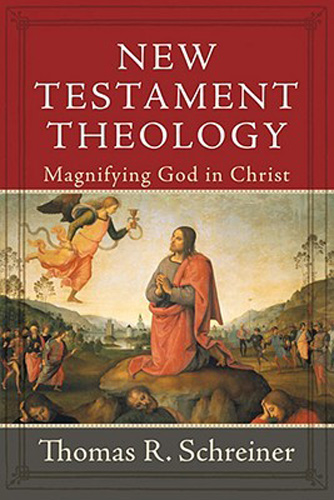
New Testament Theology: Magnifying God in Christ
In this substantial volume, Thomas Schreiner takes up the study of New Testament theology, looking for the themes that emerge from a detailed reading of the whole rather...
Downloads
About BiblicalTraining®
BiblicalTraining® wants every Christian to experience a deep and loving relationship with Jesus by understanding the life-changing truths of Scripture. To that end, we provide a high-quality Bible education at three academic levels taught by a wide range of distinguished professors, pastors, authors, and ministry leaders that moves from content to spiritual growth, all at no charge. We are a 501(c)(3) non-profit funded by gifts from our users. We currently have over 180 classes and seminars, 2,300 hours of instruction, registered users from every country in the world, and in the last two years 1.4 million people watched 257 terabytes of videos (11 million lectures).
Our goal is to provide a comprehensive biblical education governed by our Statement of Faith that leads people toward spiritual growth.