Survey of Biblical Theology - Lesson 14
Divine Sovereignty
John emphasizes divine sovereignty alongside human responsibility. He teaches that new birth comes by God’s Spirit, unpredictable like the wind, and that the Son gives life to whom he wills. Understand that all whom the Father gives to the Son will come, believe, and be preserved to the end. Explore the Spirit’s role as teacher, comforter, and advocate, guiding into truth, convicting the world, and glorifying Christ. Discover Jesus' death and resurrection as God’s planned, sovereign fulfillment of Scripture.

I. Introduction
A. Eternal life through Jesus’ death
B. Human responsibility & divine sovereignty
II. Born of God
A. New birth by God, not human will
B. Spirit’s sovereign work (John 3)
C. Son gives life as he wills
III. Divine Sovereignty in John 6
A. Father gives people to the Son
B. Effectual calling & preservation
IV. Mystery of Sovereignty
A. Held with human responsibility
B. Purpose: trust & praise God
V. Jesus Draws All
A. Cross draws Jews & Gentiles
B. Victory over Satan
VI. Security of Believers
A. Eternal life cannot be lost
B. No one can snatch believers from God
VII. Holy Spirit
A. New birth (Ezek 36)
B. Living water renewal
C. Paraclete: teacher, comforter, advocate
VIII. Sovereignty in the Passion
A. Arrest and trial under God’s plan
B. Crucifixion fulfills prophecy
C. Irony: mockery reveals truth
IX. Resurrection
A. Empty tomb as sign
B. Appearances to Mary, Thomas, disciples
C. Peter restored as shepherd
X. Conclusion
A. Life fulfilled in Jesus
B. Faith is divine gift
We've talked about eternal life, believing to receive eternal life, eternal life based on Jesus' death. Jesus' death is effective because of who he is as the Son of God, the Logos, the Messiah. Now, there's another dimension of John's thought, and that is John has a very strong emphasis on divine sovereignty on God's work in our life.
Of course, he emphasizes human responsibility, doesn't he? The need to believe, receive, welcome, drink, eat, all those metaphors, abide, so forth that we saw. But he also emphasizes that divine sovereignty. He says, right, we put these verses together, as many as received him, he gave them the right to become children of God to those who believed in his name.
But then he says, verse 13, who were born not of blood, nor of the will of the flesh, nor of the will of man, but of God. So, in this verse, at least, there's this mysterious correlation. You're born of God, and yet you receive and you believe.
When Jesus is talking to Nicodemus in John chapter 3, Nicodemus is puzzled by Jesus saying, you must be born again. He misunderstands him, so forth and so on. Jesus goes on to say, the wind blows where it wishes.
Now, of course, in Greek, and actually in Hebrew, too, the words wind and spirit are the same word. You know, penuma in Greek, ruach in Hebrew. So, the wind blows where it wishes, and you hear its sound, but you do not know where it comes from or where it goes.
The wind is unpredictable to human beings. So, it is with everyone who was born of the spirit. So, again, here we have a statement of the sovereignty of the spirit, right? It's the spirit that does the work sovereignly and unpredictably.
That's that we can anticipate. The Son gives life to whom he wishes. So, the Son is sovereign.
He gives life, he chooses, which is a very interesting Christological statement showing the Son's equality with God. Then, John 6, which is perhaps one of the most important texts, Jesus said to them, I'm the bread of life. Whoever comes to me shall not hunger.
Whoever believes in me shall never thirst. So, coming and believing are clearly synonyms. We've already seen that, right? Believing is coming.
If you come, you won't hunger. If you believe, you shall not thirst. Then he says, all that the Father gives me will come to me.
So, that's a very important verse. We could paraphrase it this way. All that the Father gives me will believe in me because coming is another way of describing believing.
But clearly, it's true that not everyone in the world is given by the Father to the Son. How do we know that? Because not everybody believes. But all that the Father gives to the Son will come to the Son.
And whoever comes to me, I will never cast out. So, if we use systematic categories for a minute, we have the idea of effectual calling. All that the Father gives to the Son will believe, will come.
And we have the idea of final preservation. Everyone who comes will never be cast out, will never be lost. For I have come down from heaven, not to do my own will, but the will of him who sent me, says Jesus.
And this is the will of him who sent me, that I should lose nothing of all that he has given to me. All that he's given to me, I will not lose. So, there's the idea of perseverance of the saints, or preservation of the saints is probably better here.
But I'll raise it. And sometimes that's true in Greek. The it here is personal, but raise all that are given.
These are people on the last day. So, their final salvation will be demonstrated on the day of the resurrection. For this is the will of my Father, that everyone who looks on the Son and believes in him should have eternal life.
And I will raise him up on the last day. The Jews start grumbling. I'm skipping a couple of verses here.
The Jews are grumbling because he said, I've come down from heaven. And like, how could you say that? Jesus answered, do not grumble among yourselves. That word grumble is significant, isn't it? Because it's what happened in the wilderness.
The people don't enter the rest. So, grumbling is no light thing. Jesus says, no one can come to me unless the Father who sent me draws him.
So, remember, coming is another way to say, believe. No one can believe in me unless the Father who sent me draws him. I understand that drawing to be an effectual drawing, a drawing that brings people in.
And all who are drawn, all who are given by the Father to the Son, I will raise up on the last day. They'll be preserved. It is written in the prophets, and they will all be taught by God.
I believe this is a new covenant promise in Isianic language. And I put the Isaiah verse in there. All your children shall be taught by the Lord, and great shall be the peace of your children.
But when it says all, right, there are some who don't believe. This is only speaking of those who are drawn by God. Everyone who has heard, another way of describing belief, remember, and learned from the Father comes to me.
But obviously not everyone hears and comes. But there are some of you who do not believe. For Jesus knew from the beginning who those were who did not believe and who it was who would betray him.
And he said, this is why I told you that no one can come to me unless it is granted to him by the Father. Those who come, the Father has given them to the Son. This is the same discourse where Peter says, where shall we go? I just quoted that recently.
You have the words of eternal life. But Jesus says, don't be proud, Peter. Did I not choose you, the 12? And yet one of you is the devil.
Judas is an exception, right? He's not really one of the chosen. Finally, it was always predicted that Judas would betray him. So this is a very remarkable verse.
Finally, yes, we are called upon to believe and receive and accept. And those are real actions. They're not a charade.
But this text clearly teaches that if we do so, it is because the Father gave us to the Son. And finally, the final reason we come, the ultimate reason I should say, we come is because of God's grace in our lives, because he called us. So we can't, yes, we do believe, but we can't finally take credit for it.
All the praise and honor goes to God for our response. I believe Scripture does not solve that mystery between human responsibility and freedom and divine sovereignty. They just sit there together.
And I think it's like the Trinity, three persons, one God. We can't fully and finally understand it. I believe it's like Jesus is one person with two natures.
So we just have to accept what Scripture says. I taught this one time and I had a student, a wonderful student, but he came up to me and he talked to me about a half hour about this. And basically what he told me for a half hour, and I understand why it was a half hour, because he was very troubled.
He told me, I don't mind the mystery of the Trinity. I don't mind the mystery of the person of Christ, but this mystery bothers me. And I understand that.
But I said to him, you know, we can't choose our mysteries based on what bothers us. We have to finally rely on the text. It may bother you.
Sometimes it bothers me, but I think we just have to leave it that God is good, right? God is just. No one's going to be judged who ought not to be judged. I don't think we have to worry if this worries you.
I don't think we have to worry when we enter into God's presence that someone will be in hell and we'll have to inform God, Hey, what's going on here? I think we can trust him. Everything will be right. So we can leave it with his hands.
And then we understand. We're not surprised, right? We don't understand everything fully. You know, the purpose of this passage isn't really to provoke speculation, but to give praise to God and to say finally it's God's work in our lives.
So, Jesus says in John 12, 32, and I, when I'm lifted up from the earth, will draw all people to myself. I think that drawing there is an effectual drawing, but I think if you look at the context, he doesn't mean, you know, I don't think he means every, he doesn't mean every person without exception. I think he means, um, all people without distinction.
And why do I think that? Because the context Greeks come up to the festival Gentiles, they come to Philip. They say, we want to see Jesus. Philip tells Andrew, this is kind of interesting, isn't it? Why did it happen this way? Andrew and Philip went and told Jesus, Jesus says, Oh, that's nice.
Have him come visit. No, he says, the hour has come for the son of man to be glorified, die, right? Truly I tell you, unless a grain of wheat falls in the ground, it dies. And if it remains by itself and remains by itself, but if it dies, it produces much fruit.
So Jesus is answering the question. He says, Oh, these Gentiles want to see me. The way to see me is through my death.
You know, this it's at a deeper level. And then he keeps talking about his death, right? Uh, there's thunder, all these things going on. And he's, it's all about his death.
Now is the judgment of this world. Now the ruler of this world is, will be cast out. The judgment of this world is his death.
By the way, I think this is very interesting. There's no exorcisms and John of demons. But there is one exorcism and it's right here.
The devil's cast out. John kind of goes to the big picture, right? The devil is defeated. He's thrown out.
And then Jesus says, as for me, if I'm lifted up from the earth, I will draw all people to myself. He said this to indicate what kind of death he was about to die. We saw the lifting up.
And so what is Jesus saying? I think what Jesus is saying here is this. Do these Greeks want to see me? I'll, I'll draw them to myself, but it's going to happen through my death. That that's how they're going to see me.
So I think that fits. Jesus says, I have other sheep that are not of this fold. I must bring them also.
And they will listen to my voice. I take those words for what they say. Not, no, this is not Mormons.
Some people have interpreted the verse that way, right? He's talking about the Gentiles. I have other sheep. They're not of this fold.
I'll bring them in. But notice I'll bring them in. This is a focus on divine sovereignty.
Let each text have its say. This text says, I'll bring them in. Will they also believe? Of course they'll believe, but I'm going to do this.
And, and he promises they will listen to my voice. Well, this is an all Gentiles. Listen, this is some people, John 10, 26.
You do not believe because you are not part of my flock. This verse does not say you are not part of my flock because you don't believe that's true. Isn't it? I, I think that's a biblical idea.
You do not believe because you're not part of my flock, but this verse says something else. This verse says you do not believe because you're not my sheep. So that is a different emphasis.
John 10, 28 and 29. I give them eternal life and they will never perish. So there are good Christians who disagree with me on this.
They believe you can lose your salvation. And of course, students, I don't know what you all believe. We love each other as believers with different views, but I think this is a promise that those who have eternal life, those who have the life that comes from God, eternal life by definition cannot be revoked.
Once you have eternal life, you'll never perish. No one can snatch them out of my hand. My father has given them to me as greater than all, and no one is able to snatch them out of the father's hand.
Now, of course, some in the Christian tradition argued that no, no one else can jump, can snatch you, but you can jump out. And, uh, again, you know, there are wonderful Christians who believe that, who we love, but, uh, but I think when he says no one, that includes you. I don't, I don't think there's any, I don't think there's any comfort whatsoever in this verse if the verse is saying, well, I give you eternal life, but you can choose to revoke it.
Because if we know our own hearts, we think, well, that's exactly what I'm afraid I'm going to do. And I think Jesus is saying something more significant than that. Uh, John 17, six, I have manifested your name.
Jesus says to the people whom you gave me out of the world, that's not everybody, right? That's the disciples and those who believe they were yours. And you gave them to me and they have kept your word. I think there's significance in the order of the words you gave them to me.
And as a consequence, they've kept your word. It's as a result of his grace. I am praying for them.
I am not praying for the world, but for those whom you've given me. Remember, some were given by the father to the son, not all for their years. And I am no longer in the world.
He's about to die, right? But there in the world, I am coming to you. Holy father, keep them in your name. So this is a big emphasis.
Those who were given by the father to the son, keep and preserve them and make them one. He says, while I was with them, I kept them in your name, which you have given me and I've guarded them. And not one of them has been lost except the son of destruction that the scripture might be fulfilled.
And of course, Judas was never truly, at least I would argue, saved. Jesus answered, I told you, this is another text, I told you that I am he. So if you seek me, let these men go.
This is to fulfill the word he had spoken. Of those you gave me, I have not lost one. So what do we see with this divine sovereignty? Those whom God has called, he keeps.
So ultimately our salvation is due to the grace of God and not our own efforts, not even our own belief as important as that is. We can't even take credit by our belief. That too is a gift.
I'm reminded of the words of Augustine give what you command and command what you will. If you know that famous statement, he says, give what you command to us and then command us whatever you want, but give it to us. Give what you command because we need your grace.
When we speak of the grace of God, another big emphasis in John is the Holy Spirit. And we see in John that the spirit descended upon Jesus at his baptism. Actually, maybe I should take out the words baptism because John actually doesn't.
It's the same event, but he doesn't actually mention the baptism, but we know it's the same event because of the words and the context. So I'm kind of fitting that together with the synoptics. The father has given the son the spirit without measure.
Remember Jesus was a being and as a human being, he's empowered by the Holy Spirit. Jesus says we must be born of water and the spirit. So what does that mean? Some people have said, well, you have to have physical birth, the breaking of the water, and then the work of the spirit.
Some people have said, this is the John the Baptist baptism of water and then the baptism of the spirit. Some people have said this is Christian baptism and then the gift of the spirit. So, right, physical breaking of water, spirit, John the Baptist, water, spirit, Christian baptism, spirit.
But I think actually Linda Belleville wrote an article on this a long time ago, and I still think it's right. She says it's none of those things. He's thinking of Ezekiel.
And it's a picture. It's just a picture of what God will do. I'll sprinkle clean water on you and you'll be clean.
There's the water. I will cleanse you from all your impurities and all your idols. I'll give you a new heart and put a new spirit with you.
I will move your heart of stone and give you a heart of flesh. I will place my spirit within you. So there's water and the spirit in the same passage, right? Sprinkling the clean water, not referring to baptism, but here's one of the advantages of this view, the sprinkling of clean water and the giving of the spirit within is this.
Jesus is talking to Nicodemus and he says, you know, after he says about the water and the spirit, Nicodemus says, how can these things be? And Jesus says, you're a teacher. You ought to know this. Don't you know the Bible? So that makes sense if it's in Ezekiel, right? I think Jesus is basically saying, Ezekiel, you shouldn't know your Bible, buddy.
You're a teacher. But how would Nicodemus wouldn't know about Christian baptism, you know? So yes, it could be the other two, but I think it's most likely he's referring to Ezekiel. We've already seen the living water refers to the spirit.
That's a, that's a very lovely way of describing the Holy Spirit as a, as a refreshing living water in us. You know, you know, when I'm recording this, there's a lovely river outside here. I was just hiking recently in sort of central Oregon, and there was a beautiful Mackenzie river with waterfalls and just flowing so rapidly.
So water is very enlivening and refreshing and strengthening, and it refers to the Holy Spirit. It's a, it's a picture, right? Of the spirit refreshing us. We, we can become spiritually dry and desiccated and worn out and exhausted and tired and the spirit, like water, it can renew us and strengthen us and gives us a new, new life and hope.
And then Jesus says we worship in the spirit and truth. So true worship, true worship is, yeah, it's based on truth, but also, but also the spirit as well. And he also tells us the spirit gives life and the flesh profits, nothing.
That's, I already looked, we looked at that verse earlier. It's so fascinating, right? Because this is where the disciples say, who can accept your teaching? After he said, you must eat my flesh and drink my blood. They're like, Oh, this is the, this is a hard teaching.
And they're grumbling. And Jesus says, does that offend you? Remember what? If you see the man, son of man ascending, the spirit is the one who gives life, the flesh profits, nothing. The words that I've spoken to your spirit in our life.
The only reason you'll accept what I'm saying, Jesus says is the spirit. The spirit has to work in your heart. It has to be a work of a spirit.
John uses a term that is not used by any other gospel. And it's the word paraclete, which is basically a transliteration of the Greek word paracletos. So the word paraclete in English, I like using that word because it is an English word and it really comes from the Greek word paracletos.
There have been many attempts to define precisely what the paraclete is. Some want to say, you know, para and cletos together mean to be called alongside that's etymologically what the word means. But we know from word studies that etymology doesn't always tell us what a word means, right? For one thing, the meanings of word change.
My favorite example is the word nice, right? Which used to mean ignorant. And when I say now someone is, oh, that person's very nice. I'm not saying, oh, they're very ignorant, right? Most people don't know the meaning of that word.
So we have to be careful. Sometimes etymologies do work, but really the best way to define this is by looking at the context. And I think that's what I want to do.
Let's, let's look at what the text actually says. The paraclete is given by the father. The paraclete is given by the father at the son's request.
So that doesn't tell us much about what the word means, right? But we see the spirit, the paraclete is given by the father kind of through the son. If I, if I can speak of a systematic matter for a second, the filial cay, do you know the filial cay? Where does the, does the spirit proceed from the father and the son? You may know, students, that the Western and Eastern church split over the matter of the filial cay. Filial cay just means and the son in Latin.
And there was, I mean, there was a split between the East and the West because the East, the Greek Orthodox, the Russian Orthodox, that's what I mean by the Eastern church. And then the Western church at Rome, before Protestantism came along, they split over whether the spirit was given by both the father and the son. But I, I'm a Westerner.
I suppose I agree with the West. And I think this verse supports that. This, the spirit is given by the father at the son's request.
So the Western church has always believed the spirit is given by the father and proceeds from the son. That's part of our tradition. I don't think the Eastern church is heretical on this matter, right? That that's, that's a difference of opinion.
But I think John supports that idea. The spirit is called the truth. So the spirit, the spirit leads us in the truth.
So the paraclete here, we see kind of the idea of what's the paraclete do it teach us. The spirit teaches, we're going to see that again, right? We're just looking at each verse as they come. The spirit abides with you and will be in you.
Sometimes paracletas is described as comforter. Well, I think we see that idea here too, right? Teaching. So if we just look at the context, abiding with you and will be in you, I mean, comfort as the idea of strengthening, right? Abiding dwelling.
So don't we see that idea of yes. Can, can it mean teacher? I think so. But can it mean comfort and strength? Well, seems like we see that here.
John 14, 26, the spirit is sent in Jesus' name. I think that's another indication supporting the Western view of the spirit. The spirit comes also from Jesus, right? From the father.
But the spirit is very much tied to what Jesus does. I'll say more about that. Then we have the idea of teaching again.
The spirit will teach and bring to remembrance all things. So the spirit is an instructor. I think this promise is first for the disciples in context, because Jesus is saying, you'll remember the things I've taught them.
But I also think there's promises for us in a sense as well, that the spirit is our teacher as well. Again, Jesus is the one who sends the spirit. I will send him, but also from the father.
So the very interesting Trinitarian ideas here, the father, the son, and the spirit working in concert here. Then we have the spirit of truth here proceeding from the father. Of course, everyone agrees the spirit comes from the father.
But here we have the spirit of truth. Again, the idea of the paraclete being a teacher. Right? Then the spirit will testify about me.
Now here we have sort of the idea of another notion. Some people want to argue that the paraclete is like a lawyer, an advocate. There's a legal sense.
Well, I think that's true too. He's a teacher. He's a comforter, but he's a testifier.
That's a legal context. We could say he's an advocate. Notice he testifies about Jesus.
Notice that the spirit is not given until Jesus is glorified. The spirit does not testify about himself. The spirit does not work apart from Jesus.
The spirit is given to give glory to Christ. We'll see more about that shortly. So it's to your advantage.
I depart. Well, we should just read these verses because they're basically all together now. And we should just see them as we go.
So John 16, where were we? 11 or 12. Yeah. I still have many things to tell you, John 16, 12, but you can't bear them now.
You're not ready. When the spirit of truth, there's the teaching comes, he will guide you in all truth. So the paraclete is a teacher, right? But we will not speak on his own, but he will speak whatever he hears.
He will also declare to you what is to come. He will glorify me. So that's very interesting.
I mean, important, isn't it? He will take what is mine and will declare it to you. Perhaps you've heard this said the spirit is the shy member of the Trinity. The spirit doesn't call attention to himself, but to Jesus.
So the spirit is poured out after, for on all the disciples, of course, the spirit existed before and came upon prophets and so on. But the spirit is poured out in a distinctive way after Jesus cross and resurrection, and he brings glory to Jesus. There's this movement out there that the spirit is working in the world and apart from the knowledge of Jesus, but there's nothing in the New Testament to support that.
The spirit always is bringing glory to Jesus. He's tied to the son. Everything the father has is mine.
That is why I told you that he takes from mine and will declare it to you. Oh yes, I skipped these verses. I wanted to go back here.
I went ahead a little bit. Verse seven, nevertheless, I'm telling you the truth. It is for your benefit that I go away because if I don't go away, the counselor.
So that's the word parakletos. Yeah, you know, I was part of this translation. I don't know if I'd use the word counselor there, but it's hard.
What did the NIV do here? I don't know. I wonder. It'd be interesting to look, right? The NIV says, yes, I actually like advocate better here.
I think advocate's a better translation because I think we have this legal idea. So I prefer the NIV here advocate will not come to you. But if I go, we'll just stay with what we got here.
But if I go, I will send him to you. So he's acting as an attorney on Jesus behalf, right? When he comes, he will prove to the world. He will prove the world to be in the wrong.
So he's working as an attorney. He's convicting the world. It's translated that way sometimes.
But I like the idea of proving because it's like a legal case. He's going to convict the world that it's wrong about sin and righteousness and judgment. So the Spirit's working in a legal sense.
So parakletos has that meaning as well. Teacher, comforter, but now legal, right? And then what are these things? He'll convict the world about sin because what's the fundamental sin? People don't believe in me, right? People believe I'm a false Messiah. People don't put their true hope in me.
So I'm going to convict people that they're wrong. Not all people, right? But I'm convicting the world. Some will come to faith about righteousness because I'm going to the Father where you can see me no longer.
He'll convict the world as an attorney, as an advocate about what true righteousness is. And he's going to convince the world that a judgment's coming. And actually, the prince of the world has already been condemned, that is Satan.
So the Spirit is going to bring people to faith. So that's very, very fascinating and encouraging that the Spirit does this. Then one more passage on the Holy Spirit.
This is very debated. I don't claim to have the final answer on this. Lots of people have lots of opinions about this passage.
After the resurrection, Jesus meets the disciples. He says, peace to you. He breathes on them and says, receive the Holy Spirit.
So what's going on there? What does that mean? So some people say this refers to the Johannine Pentecost. This is actually in John's perspective when Pentecost happened because John doesn't tell us about Pentecost. So this is when they actually receive the Spirit.
Some people say, no, this is not Pentecost. This is when they're converted. Other people say this is symbolic.
It's an anticipation of what's to come. I hold that third view. It's hard for me to believe this is the Johannine Pentecost.
I mean, the next chapter, Peter isn't restored yet, not until chapter 21. The disciples are all going fishing. Thomas isn't there.
There are interesting arguments why it's the Johannine Pentecost, but I don't think that's very persuasive. They're converted. I think they're already converted.
We read in John, I might not have the right verse. I'm just doing this by memory. No, here it is, right? You have loved me and have believed that I came from God.
I mean, they've confessed him as the Messiah. I think their faith isn't super strong, but I think they are believers. So I think it's symbolic and anticipatory of what's going to happen on the day of Pentecost.
I think John knows about Pentecost. So that's the view I think is most likely, but that's a very, you know, John doesn't give it. I mean, it's one verse, right? We don't have a lot of context to solve it.
So we have these different views that are out there. So that's what I want to say about the spirit. Now can we talk about, yeah, let's finish the gospel of John for today.
I think that'll be good. And we'll talk about a few more things, the passion in John. So here, you know, we kind of return to divine sovereignty.
John especially wants to emphasize everything's under God's control. Everything that happens, God knows. So, you know, we already saw this first passage, right? When the guys come to capture Jesus, what does John say? Jesus knew this was going to happen.
I remember they fall to the ground and then Jesus says, kind of take me away. And then he says, shall I not drink the Father's cup? Jesus is saying, come on, this is planned. Or here's another example.
This is a great scene. Now I'm not saying Jesus wasn't suffering, divine sovereignty doesn't mean he didn't feel it. Pilate went back inside the palace and he said to Jesus, are you the king of the Jews? Jesus says, he's on trial.
He's about to die. He says, is that your own idea? Jesus asked, or did others talk to you about me? Jesus is using this as an evangelistic opportunity, right? Pilate says, well, am I a Jew? Now who's on trial now, right? Your own people and chief priests handed you over to me. What is it you have done? Jesus says, well, my kingdom is not of this world.
Does Jesus think the world's slipping under God's control? He says, no. If it were, my servants would fight to prevent my arrest by the Jewish leaders, but now my kingdom is from another place. Well, you're a king then, Pilate said.
Jesus answered, you say that I'm a king. In fact, the reason I was born and came to the world is to testify the truth. Everyone on the side of the truth listens to me.
What is truth, retorted Pilate. Notice Jesus has no worries about his death there. He just confronts Pilate with the truth of the gospel.
And we see it again in chapter 19, don't we? They have another conversation. So they say, Jesus claimed to be the son of God and that spooks Pilate. Don't you think? I think you're around Jesus.
There's never a man like him and he's on trial, but he scares Pilate. Like what? This guy, it's different from anybody I've ever met, right? So he's, he's afraid. He's in charge, right? But he's afraid.
He goes in back in the palace. He goes, where do you come from? Can't you feel the spookiness in the world, right? He's like, what's going on here? But Jesus didn't answer, right? Do you refuse to speak to me, Pilate said. So Pilate turns to, you know, I'm the authoritative governor, right? Don't you realize I have power either for you or to crucify you? Hey, you really need to be afraid of me.
Remember who I am. Jesus answers, I'm not afraid of you. You would have no power over me if it were not given to you from above.
Therefore, the one who handed me over to you is guilty of a greater sin. You're guilty of sin. But the one who handed over me, me over to you is guilty of greater sin.
And from then on, Pilate tried to set Jesus free. Right? So again, just a sense of everything's under control. And when he dies, what is he saying? To Telestai, right? It's finished.
Now that's, that's John's emphasis. Everything's appointed and the prophecy is fulfilled. So especially when it comes to the death of Jesus, every detail is fulfilled, right? He didn't lose one of the disciples that was really his, except for Judas, but that was planned all along.
It was prophesied the kind of death he would die. That's, it's going to happen just that way. It was prophesied in Psalm 22 that they'd cast lots for his clothing.
And that's exactly what they did. It was prophesied in Psalm 69 that he'd be thirsty. And so he was, it was prophesied in the Old Testament that he, that his bones wouldn't be broken.
And so it was, it was prophesied in Zechariah, they'd be pierced. And exactly, it happened that way. John, nowhere else does John have such a cluster of Old Testament texts that he sees fulfilled.
So John's, what's John saying to the reader? Everything. Do you think this is an accident that Jesus is dying? Did it, did it all fall out of God's control? Was it not God's plan? Was this some evil human design that thwarted God's plan? No, no, no, no, no, no. Everything that happened here, this is exactly, this is exactly what God planned.
That, that's his point, right? And, and then there's the irony in the text. They crown Jesus as King and say, they're making fun of him, but it's true. He's, he's the King, the crown.
What's the irony? They're making fun, but it's actually true. He is the King wearing the crown. Pilate says, behold your King.
He's speaking God's word. He doesn't think he's speaking God's word. He's mocking.
He's making fun of the crowd, right? He hates the Jews. Look at your King. Ha ha.
They say, they say, but we have no King, but Caesar. They're, they're not serious, but actually they're speaking the truth, right? They rejected their true King. And then we, we, the inscription, right? He writes, this is the King of the Jew.
They say, come on, change it. No, Pilate says, I won't change it, but that's of God. Because what he wrote on the cross, Jesus of Nazareth, the King of the Jews, that's the truth.
So God's working. You know, Pilate and the leaders have other intentions, but God's working through it all. And then, this is very important that the verdict is unjust, right? And I don't think I need to look at these in details, but every, everything that happens is such that it's clear that it's a miscarriage of justice.
Jesus doesn't deserve to die. So that's fascinating. And then God's sovereignty, of course, at the resurrection, beautiful story where Peter and John run to the tomb together after Mary has told them what's going on.
By the way, this is, this is just a throwaway comment, but some people, some people have seen contradictions in the resurrection accounts because in the other accounts, there's several women together and here it's just Mary Magdalene. But, you know, there are little hints and she says, they've taken the Lord out of the tomb and we don't know where they have put him. Isn't that interesting? So, you know, it's just, they just concentrate on Mary, but there's more than one person involved.
These are not exhaustive accounts, but they run to the tomb and it's very interesting, right? Because there were often grave robbers and grave robbers, you know, expensive things were put in tombs, nice things, people, things people would want, you know, to us in our culture. It's like, what, why would you go in a tomb? But expensive things were taken there. Grave robbing was a common, common thing.
And, but they go in and everything's ordered, right? And nobody, nobody robs like that, right? The cloth on his head is lying there separate, right? And I think they're beginning to perceive, oh, what, what is, what has happened here? The tomb, the tomb is empty and everything is ordered. And then of course, Mary, Mary sees him in the garden, very significant that, you know, he appear, he appears first to a woman, right? Which is contrary to the culture of the day. And she doesn't recognize him at first, but what a beautiful moment that is when he says her name, right? And I think we can say, there's a sense in which he says all our names, right? At the end of the day, he says your name, my name, and in saying her names, her name, she recognizes him, right? At that moment, she, she realizes who he is.
And so we have the empty tomb and we have the appearance, you know, it's not, it's not one or the other, it's both. And of course we know from other places he appeared in many other cases, he sends out the disciples. He appears to Thomas, doubting Thomas.
My name is Thomas. Maybe I'm a doubting Thomas too, but Thomas needs absolute proof. Jesus has mercy on him.
You know, it's interesting. He, Jesus comes through the locked doors. His resurrection body is different.
Put your finger here, see my hands, reach her, put it, reach out your hand and put it in my side. Did he do it? I suppose he probably did. Or did he, maybe, maybe he's like, I don't need to.
Or, I mean, we're not told exactly, but clearly Thomas believes, right? So Jesus satisfies the doubts. You mean, most of you have heard this, right? But, but the gospels are not written by credulous people. What do I mean by credulous? They just, Oh yes, he'll be raised from the dead.
They're doubting people. They're shocked, right? We didn't look at the resurrection in Luke, but in Luke, it says when he appears before them, they're so amazed. They're so happy.
They can't believe it. And what does Jesus do? There's a fish in the room. They're like, they're looking at him.
Is that really you? And there's a fish there. They know the fish is there. And he grabs the fish and says, you know, the fish is here.
I'm going to eat it. The fish disappeared. Yeah, I'm, it's really me.
So he, he, uh, he, uh, shows he's risen from the dead. And then we have that beautiful restoration of Peter, right? As the, as the shepherd of the flock, as the first among equals, as the one who feeds the sheep of God's people. So that's John's gospel.
We will pick it up with the epistles, but maybe, maybe we should sum up what we've seen in John one more time. So John is in a different register from the synoptics, but how does it fit with our story? Right? The, the fulfillment of the promises of come because eternal life is here. What is John saying? That eternal life is in Jesus, right? That that's what John concentrates on.
The promises have all been fulfilled. You know, we've seen that fulfillment theme from many angles. It's, it's all fulfilled in Jesus.
We're called upon to believe in him, come to him, welcome him, eat of him, drink of him. Then John says, if you do that, it's because of God's grace, God's God's calling in your life. And if you do that, it's the work of the spirit because the spirit has drawn you to me.
And then, uh, it's all based on Jesus' death. And all of that was planned by God. God's plan was being carried out.
He's been raised from the dead. He's victorious and the new age has arrived. And now he's sending out the disciples to proclaim that good news to others.
- Explore how biblical theology developed through figures from Irenaeus to Bultmann, learning how debates over history, reason, and revelation shaped its methods, authority, and lasting influence on theology and the church.0% Complete
- Study how biblical theology traces God’s revelation historically while systematic theology organizes doctrine, seeing how both disciplines work together with presuppositions of faith to interpret Scripture as God’s authoritative Word.0% Complete
- Creation, covenant, and conflict reveal humanity’s sin and God’s judgment, showing the garden as sanctuary, Adam’s priest-king role, the serpent’s opposition, and God’s plan to bring salvation and victory through His promises.0% Complete
- God’s covenant with Abraham promises land, offspring, and blessing to all nations, showing both unconditional divine fulfillment and conditional obedience, while God preserves His plan through threats and fulfills His promises in surprising ways.0% Complete
- The Exodus shows God redeeming Israel by grace, giving the law and sacrifices, and dwelling in the tabernacle, all pointing to Christ’s final sacrifice and God’s presence with His people in the new creation.0% Complete
- Watch Israel’s unbelief, partial fulfillment of God’s promises, the cycle of sin without a king, and the rise of David as God’s chosen ruler who anticipates the true king to lead His people.0% Complete
- God’s covenant with David points to an eternal King, Israel’s failure reveals the need for renewal, and the prophets promise a new covenant, Exodus, creation, and David—all fulfilled in Jesus, the true King bringing worldwide blessing.0% Complete
- Israel’s identity forms through unfulfilled promises, foreign domination, Jewish factions, and rising messianic hopes, which fuel anticipation of a Messiah and set the stage for the New Testament.0% Complete
- Matthew shows Jesus as Emmanuel, true Israel, Son of David, and Son of God, fulfilling promises through a new Exodus, atonement, and divine authority, so that all God’s covenants find their fulfillment in him.0% Complete
- Dr. Schreiner reveals Jesus as the divine Son, true Israel, greater Moses, and eternal King who fulfills God’s promises, reveals the kingdom in hidden yet present power, and builds his church as the new people of God drawn from all nations.0% Complete
- Mark proclaims Jesus as the Son of God and true King whose suffering secures forgiveness, while discipleship means following his example of humility and obedience despite weakness.0% Complete
- John portrays Jesus as the eternal Logos and Son whose I AM sayings and signs grant believers the present possession of eternal life through faith.0% Complete
- John presents Jesus’ work as his lifting up and glorification, fulfilling Scripture. Life comes through true believing—receiving, coming, hearing, drinking, eating, entering, abiding—while false belief, darkness, and human glory block it.0% Complete
- Dr. Schreiner highlights divine sovereignty: the Father gives believers to the Son, the Spirit gives life, and all who truly believe are preserved, and glorifies Christ, showing Jesus’ death and resurrection as God’s sovereign plan.0% Complete
- In John’s epistles, he teaches that assurance rests on the apostolic witness, confession of sin, obedience, love, and doctrinal truth, while false teachers deny Christ.0% Complete
- Acts shows God’s plan through Christ and the Spirit, fulfilling covenant promises, spreading the gospel, empowering witnesses, and forming the church as restored Israel united in salvation.0% Complete
- Paul’s “already but not yet” theology shows God’s promises fulfilled in Christ yet awaiting completion, shaping Christian life, doctrine, and practice in areas like adoption, redemption, sanctification, and practical living.0% Complete
- In this lesson, Paul shows that Spirit-led believers still need commands, which guide holiness and love without legalism, uniting word and Spirit to shape Christian life, protect love from distortion, and call for discernment in obedience.0% Complete
- Learn how the New Perspective reinterprets Judaism and Paul, how Sanders and Stendhal shifted focus from justification to covenant and inclusion, and how Paul’s own words confirm his Damascus road conversion.0% Complete
- Paul uses “works of the law” to mean all deeds of the law, not just Jewish boundary markers, and teaches that justification comes by faith in Christ because human disobedience makes works powerless to save.0% Complete
- Learn that justification is God’s declarative act of counting believers righteous through Christ’s atonement, not human works, and see why imputation, not transformation, secures assurance and preserves the heart of the gospel.0% Complete
- Hebrews teach the Son as God’s final revelation and superior Melchizedekian priest whose one sacrifice fulfills typological promise.0% Complete
- James emphasizes authentic faith that produces obedience, wisdom, and care for others, showing that faith without works is dead while affirming God’s goodness and calling believers to endurance, humility, and practical godliness.0% Complete
- In 1 Peter, see how believers as exiles endure suffering with hope, live as God’s priestly people, rest in Christ’s atoning work and victory, and anticipate the inheritance of the new creation as fulfillment of God’s promises.0% Complete
- Revelation’s symbolism portrays Satan, the beast, false religion, and Babylon while teaching to persevere in suffering, trust God’s sovereignty, and hope in Christ’s victory and the new creation.0% Complete
- Dr. Schreiner teaches how Revelation portrays Christ’s full deity, the Lamb’s redeeming work, with victory grounded in the cross and fellowship with God as the ultimate goal.0% Complete
Lessons
- Explore how biblical theology developed through figures from Irenaeus to Bultmann, learning how debates over history, reason, and revelation shaped its methods, authority, and lasting influence on theology and the church.0% Complete
- Study how biblical theology traces God’s revelation historically while systematic theology organizes doctrine, seeing how both disciplines work together with presuppositions of faith to interpret Scripture as God’s authoritative Word.0% Complete
- Creation, covenant, and conflict reveal humanity’s sin and God’s judgment, showing the garden as sanctuary, Adam’s priest-king role, the serpent’s opposition, and God’s plan to bring salvation and victory through His promises.0% Complete
- God’s covenant with Abraham promises land, offspring, and blessing to all nations, showing both unconditional divine fulfillment and conditional obedience, while God preserves His plan through threats and fulfills His promises in surprising ways.0% Complete
- The Exodus shows God redeeming Israel by grace, giving the law and sacrifices, and dwelling in the tabernacle, all pointing to Christ’s final sacrifice and God’s presence with His people in the new creation.0% Complete
- Watch Israel’s unbelief, partial fulfillment of God’s promises, the cycle of sin without a king, and the rise of David as God’s chosen ruler who anticipates the true king to lead His people.0% Complete
- God’s covenant with David points to an eternal King, Israel’s failure reveals the need for renewal, and the prophets promise a new covenant, Exodus, creation, and David—all fulfilled in Jesus, the true King bringing worldwide blessing.0% Complete
- Israel’s identity forms through unfulfilled promises, foreign domination, Jewish factions, and rising messianic hopes, which fuel anticipation of a Messiah and set the stage for the New Testament.0% Complete
- Matthew shows Jesus as Emmanuel, true Israel, Son of David, and Son of God, fulfilling promises through a new Exodus, atonement, and divine authority, so that all God’s covenants find their fulfillment in him.0% Complete
- Dr. Schreiner reveals Jesus as the divine Son, true Israel, greater Moses, and eternal King who fulfills God’s promises, reveals the kingdom in hidden yet present power, and builds his church as the new people of God drawn from all nations.0% Complete
- Mark proclaims Jesus as the Son of God and true King whose suffering secures forgiveness, while discipleship means following his example of humility and obedience despite weakness.0% Complete
- John portrays Jesus as the eternal Logos and Son whose I AM sayings and signs grant believers the present possession of eternal life through faith.0% Complete
- John presents Jesus’ work as his lifting up and glorification, fulfilling Scripture. Life comes through true believing—receiving, coming, hearing, drinking, eating, entering, abiding—while false belief, darkness, and human glory block it.0% Complete
- Dr. Schreiner highlights divine sovereignty: the Father gives believers to the Son, the Spirit gives life, and all who truly believe are preserved, and glorifies Christ, showing Jesus’ death and resurrection as God’s sovereign plan.0% Complete
- In John’s epistles, he teaches that assurance rests on the apostolic witness, confession of sin, obedience, love, and doctrinal truth, while false teachers deny Christ.0% Complete
- Acts shows God’s plan through Christ and the Spirit, fulfilling covenant promises, spreading the gospel, empowering witnesses, and forming the church as restored Israel united in salvation.0% Complete
- Paul’s “already but not yet” theology shows God’s promises fulfilled in Christ yet awaiting completion, shaping Christian life, doctrine, and practice in areas like adoption, redemption, sanctification, and practical living.0% Complete
- In this lesson, Paul shows that Spirit-led believers still need commands, which guide holiness and love without legalism, uniting word and Spirit to shape Christian life, protect love from distortion, and call for discernment in obedience.0% Complete
- Learn how the New Perspective reinterprets Judaism and Paul, how Sanders and Stendhal shifted focus from justification to covenant and inclusion, and how Paul’s own words confirm his Damascus road conversion.0% Complete
- Paul uses “works of the law” to mean all deeds of the law, not just Jewish boundary markers, and teaches that justification comes by faith in Christ because human disobedience makes works powerless to save.0% Complete
- Learn that justification is God’s declarative act of counting believers righteous through Christ’s atonement, not human works, and see why imputation, not transformation, secures assurance and preserves the heart of the gospel.0% Complete
- Hebrews teach the Son as God’s final revelation and superior Melchizedekian priest whose one sacrifice fulfills typological promise.0% Complete
- James emphasizes authentic faith that produces obedience, wisdom, and care for others, showing that faith without works is dead while affirming God’s goodness and calling believers to endurance, humility, and practical godliness.0% Complete
- In 1 Peter, see how believers as exiles endure suffering with hope, live as God’s priestly people, rest in Christ’s atoning work and victory, and anticipate the inheritance of the new creation as fulfillment of God’s promises.0% Complete
- Revelation’s symbolism portrays Satan, the beast, false religion, and Babylon while teaching to persevere in suffering, trust God’s sovereignty, and hope in Christ’s victory and the new creation.0% Complete
- Dr. Schreiner teaches how Revelation portrays Christ’s full deity, the Lamb’s redeeming work, with victory grounded in the cross and fellowship with God as the ultimate goal.0% Complete
Class Resources
Recommended Books
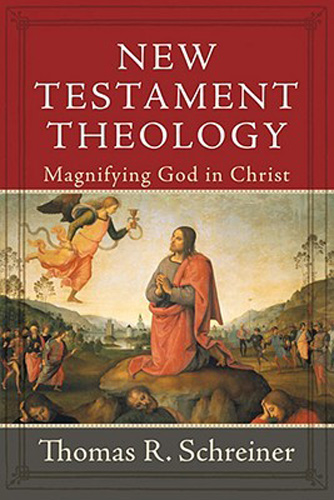
New Testament Theology: Magnifying God in Christ
In this substantial volume, Thomas Schreiner takes up the study of New Testament theology, looking for the themes that emerge from a detailed reading of the whole rather...
Downloads
About BiblicalTraining®
BiblicalTraining® wants every Christian to experience a deep and loving relationship with Jesus by understanding the life-changing truths of Scripture. To that end, we provide a high-quality Bible education at three academic levels taught by a wide range of distinguished professors, pastors, authors, and ministry leaders that moves from content to spiritual growth, all at no charge. We are a 501(c)(3) non-profit funded by gifts from our users. We currently have over 180 classes and seminars, 2,300 hours of instruction, registered users from every country in the world, and in the last two years 1.4 million people watched 257 terabytes of videos (11 million lectures).
Our goal is to provide a comprehensive biblical education governed by our Statement of Faith that leads people toward spiritual growth.