Survey of Biblical Theology - Lesson 2
Biblical vs Systematic Theology
Learn the difference between biblical theology and systematic theology, exploring how the former traces God’s revelation historically through Scripture while the latter organizes doctrine in an atemporal, worldview-shaping way. You see how biblical theology serves as a mediating discipline between exegesis and systematics, emphasizing the canonical storyline, divine and human authorship, and presuppositions of faith. You also examine how presuppositions, tradition, and the unity of the text guide interpretation, affirming the Bible as God’s authoritative Word.

I. Distinction Between Biblical & Systematic Theology
A. Systematic as atemporal
B. Biblical as historical
C. Both as allies
II. Key Definitions
A. Carson: descriptive bridge
B. Scobie: ordered study
C. Rosner: unfolding
D. Vanhoozer: divine-human Word
III. History, Tradition, Presuppositions
A. Limits of rationalism
B. Role of tradition & community
C. Risk of individualism
IV. Relationship of Disciplines
A. Systematic builds on biblical
B. Informed by church history
C. Systematic: worldview focus
D. Biblical: mediating role
V. Hermeneutics & Theology
A. Exegesis shaped by belief
B. Dialogical, not linear
C. Critique of anti-theology
D. Need for theological stance
VI. Canonical Reading
A. Divine & human Word
B. Final form authoritative
C. Old & New intertextual
D. Normative theology
Now we're going to talk about method in doing biblical theology. In systematic theology, the focus is atemporal, whereas in biblical theology, the focus is on the biblical storyline. Atemporal means we're not looking at the linear story as it progresses, at least not necessarily.
You can think of when you're looking at the doctrine of the Trinity. You look at all the texts that inform that. You're not necessarily going in a temporal order.
But in biblical theology, right, we're concerned about history. We're concerned about the story as it takes place. Michael Allen, who teaches at RTS, Reformed Theological Seminary in Orlando, he argues in recent articles, and I think this is right, that biblical theology goes astray if it thinks it can displace systematic theology.
And I think that's important, and I want to say that. Biblical theology and systematic theology, they're not enemies, but they're friends. They're allies.
We work together. We're not opposed to one another, ultimately. Both are important.
Don Carson, a famous New Testament scholar, says that biblical theology is the whole Bible descriptively and historically considered. So, you know, that goes back to Gobbler, right, and everybody we've looked at. Yes, biblical theology is concerned about history.
Biblical theology is concerned about what the Bible says, about interpreting what the author says in an objective way. Carson goes on to say that biblical theology stands as a kind of bridge discipline between responsible exegesis, interpreting the Bible right, and systematic theology, even though each of these inevitably influences the other two, right? It's not wrong our systematic theology influences how we read the Bible. That's inevitable, and that's not necessarily bad, right? As long as also our exegesis, our interpretation of the text, can influence our systematic and biblical theology.
There's a hermeneutical circle going on here. Here's Scobie. I've talked about him before.
Biblical theology may be defined as the ordered study. So, there's a pattern, right? There's a discipline, an ordered study, and of the understanding of the revelation of God contained in the canonical Scriptures of the Old and New Testaments. Scobie himself has written this whole biblical theology.
It's about a thousand pages where he tries to work that out. Brian Rosner, who teaches in Australia, says biblical theology unfolds God's revelation genetically. That's the idea of historically again, right? Step by step.
There's stages of growth and development. It lets the biblical text set the agenda, the story of the Bible, or Van Hooser. Biblical theology, so just giving you a lot of different ways of saying the same thing, right? So, we can just get in our mind what it is.
Biblical theology is the name of an interpretive approach to the Bible, which assumes, notice that word assumes, that the word of God, it's a word of God, it's God's word, it's a supernatural word, is textually mediated in the Bible, that's the text, through the diverse literary and historically conditioned words of human beings. That's really a classical evangelical view of inspiration. The words of human beings in history are also the words of God.
To state the claim more positively, biblical theology corresponds to the interests of the texts themselves. So, when we're doing theology, we're trying to understand what the Bible itself is saying, right? What's the interest of that biblical author? Now, Scobie, this next comment is going to take on people like Raissonan and Vreda, right? The claim, says Scobie, that historical criticism can bypass later Christian dogma and tradition, and in an objective and impartial way, rediscover the real Jesus, or the essence of Christianity is widely challenged. So, that's very important, right? Because a lot of what's happened in the last two, three hundred years, is people are trying to get under the Bible and say, okay, because of our view of rationalism, what really happened? And Scobie's saying, look, he's not saying Christian dogma and tradition is infallible, but he's saying that the idea that we can dispense with those is not a persuadable point of view.
And Rosner again, purely objective interpretation is not only a myth, but an inappropriate strategy for reading the Bible. For biblical theology, the primary goal of exegesis is not objectivity, but to hear Scripture is the word of God. I think that could be stated a little bit better, but I think there's a lot of truth in that, in the sense that if we think we can read the Bible without any presuppositions, I think that's a mistake.
We are all influenced by our presuppositions, but we learn from each other and we learn in community. We need each other. We need the church.
And that's why tradition can help us as well. The tradition of biblical interpretation, it's really pride, right? If we think we ourselves can understand Scripture apart from the community in which we exist. And probably you all know people who do that, right? They go off and they think, okay, they understand the Bible.
They don't need the church. They don't need anybody else. And they usually fall into some kind of heresy and error.
And it's really a manifestation of pride, isn't it? It's humility to say, yes, we need each other. We need the church. We rest on what others have done before us.
So systematic theology should build on biblical theology. Again, they're friends. It takes into account, right? Systematic theology takes into account historical theology.
So we learn from Augustine and Aquinas. Some Protestants have said, wow, basically we don't need the history of the church, but that's a minority view, right? Most Protestants, you read Calvin, Calvin quotes Augustine a lot. He is very respectful of the history of the church.
Systematic theology, second, seeks to be culturally prophetic and relevant. Biblical theology is more inductive and systematic theology more directly addresses contemporaries, right? So I teach Bible and biblical theology, but I always say to my students, the summum bonum is your systematic theology. You live out of your systematic theology.
So yeah, it's biblical theology. It's very important. But at the end of the day, it's systematic theology that puts it all together.
Now, systematic theology needs to be informed by biblical theology and Codex of Jesus. But systematic theology, as I say next, attempts worldview formation. And that's what we want.
We want the Bible to shape our worldview and biblical theology plays a big role there. In fact, biblical theology is a mediating discipline, but systematic theology is a culminating discipline. Well, surely the culminating discipline is going to be the most important, but it needs to be formed and shaped and reformed constantly by that mediating discipline, biblical theology.
So that's crucial. Against Gobbler, one does not first do one's historical homework and only then begin to do theology, right? On the contrary, one's exegesis is already affected by one's dogmatic beliefs. I don't think it's wrong.
It's not wrong. It's right to read the Bible and say, I believe in the Trinity. Your dogmatic belief is going to inform how you read Scripture.
We believe the early church came to hold to the doctrine of the Trinity because that's what the texts themselves say. The relationship between exegesis and theology is more a dialogical conversation than it is a linear or unidirectional process. This is Van Hooser here.
Hermeneutics and calling attention to the assumptions readers bring to the text reminds us that theology is involved in the task of exegesis from the outside. So there's that role of presuppositions again, right? Is it right to come to the text with certain presuppositions? Van Hooser is saying, and I say, yeah, that is right. And if you claim, oh, I'm not coming to text with any presuppositions, really what's happening is people who do that bring an alien theology to the Bible that ends up distorting the biblical teachings.
Van Hooser again, who I think is so excellent on this, modern biblical criticism while professing to study the text scientifically, in fact, this is great stuff, right? Approach the text with anti-theological presuppositions of secular reason and hence of the bias against the unity of the text and an anti-narrative hermeneutic. I think that is outstanding. That's what's going on, isn't it? It is a kind of scientific method that is informed by theological presuppositions and it's slaughter all over again, right? It's an atheistic way of reading the Bible and that's the wrong way of reading the Bible.
Reading the Testaments together, Van Hooser again, involves taking hermeneutical as well as theological positions. To read the Bible typologically, we'll talk more about that, or intertextually, letting different parts of the Bible speak to one another, is to let Christian theology transform the presuppositions one brings into the text. Again, the presupposition of the text rules.
We must read the Bible according to its truest, fullest, divine intention. Now, that's very important for how I do biblical theology. I'm not just reading what the authors were saying.
I'm not denying authorial intent, but also there's a divine intention in the Bible and we're going to see that as we read. So, the New Testament writers read, yes, the Old Testament as the Word of God, as the Word of human authors, but they also see it as God's Word. It's a human Word and a divine Word.
So, that plays a big role in reading the Scripture. For example, when we see in the New Testament, the Trinity, what role does that play in reading the Old Testament? I'm going to argue that plays a significant role. Van Hooser, here influenced by Child's, but really by the whole history of the Church, only the final form of the text displays the divine communicative act and its completeness.
Hence, the final form is the best evidence for determining what the authors, human and divine, are ultimately doing. So, we read the whole Bible, right? We read the Old Testament in light of the New and we read the New Testament in light of the Old. The Bible speaks intertextually, that final form of the text.
That's complex. That's not an easy task. Then Van Hooser again, you can see I'm very influenced by him.
The suggestion of the present article, these are all from the New Dictionary of Biblical Theology, by the way. That's what NDBT stands for. The suggestion of the present article is that having a theological interest, far from being arbitrary, is rather required if one is to do justice to the nature of the Bible itself.
So, coming to the Bible with a theological presupposition is important. The Bible is taken not only as a collection of human speech acts, but also as a unified canonical act. The whole canon.
To limit Biblical theology to a historical description, that's Vreda, that's Raistlin, that's Stendhal, is to abandon the attempt to read the Bible as theologically normative for the church and to reject the notion of divine inspiration and divine authorship and thus to refuse to read the Bible as the Word of God. Again, I love that when we're doing Biblical theology, we're reading it as God's Word, as God's normative, authoritative Word. That's the only way to do Biblical theology.
Otherwise, it's not theology. It's just a description of what people believed. So, that's the method we're going to use, right? We come to it with presuppositions that the Bible is God's Word, it's authoritative, it's a divinely inspired book, it's harmonious, it's coherent, it belongs together, and that's how we ought to read the Bible.
- Explore how biblical theology developed through figures from Irenaeus to Bultmann, learning how debates over history, reason, and revelation shaped its methods, authority, and lasting influence on theology and the church.0% Complete
- Study how biblical theology traces God’s revelation historically while systematic theology organizes doctrine, seeing how both disciplines work together with presuppositions of faith to interpret Scripture as God’s authoritative Word.0% Complete
- Creation, covenant, and conflict reveal humanity’s sin and God’s judgment, showing the garden as sanctuary, Adam’s priest-king role, the serpent’s opposition, and God’s plan to bring salvation and victory through His promises.0% Complete
- God’s covenant with Abraham promises land, offspring, and blessing to all nations, showing both unconditional divine fulfillment and conditional obedience, while God preserves His plan through threats and fulfills His promises in surprising ways.0% Complete
- The Exodus shows God redeeming Israel by grace, giving the law and sacrifices, and dwelling in the tabernacle, all pointing to Christ’s final sacrifice and God’s presence with His people in the new creation.0% Complete
- Watch Israel’s unbelief, partial fulfillment of God’s promises, the cycle of sin without a king, and the rise of David as God’s chosen ruler who anticipates the true king to lead His people.0% Complete
- God’s covenant with David points to an eternal King, Israel’s failure reveals the need for renewal, and the prophets promise a new covenant, Exodus, creation, and David—all fulfilled in Jesus, the true King bringing worldwide blessing.0% Complete
- Israel’s identity forms through unfulfilled promises, foreign domination, Jewish factions, and rising messianic hopes, which fuel anticipation of a Messiah and set the stage for the New Testament.0% Complete
- Matthew shows Jesus as Emmanuel, true Israel, Son of David, and Son of God, fulfilling promises through a new Exodus, atonement, and divine authority, so that all God’s covenants find their fulfillment in him.0% Complete
- Dr. Schreiner reveals Jesus as the divine Son, true Israel, greater Moses, and eternal King who fulfills God’s promises, reveals the kingdom in hidden yet present power, and builds his church as the new people of God drawn from all nations.0% Complete
- Mark proclaims Jesus as the Son of God and true King whose suffering secures forgiveness, while discipleship means following his example of humility and obedience despite weakness.0% Complete
- John portrays Jesus as the eternal Logos and Son whose I AM sayings and signs grant believers the present possession of eternal life through faith.0% Complete
- John presents Jesus’ work as his lifting up and glorification, fulfilling Scripture. Life comes through true believing—receiving, coming, hearing, drinking, eating, entering, abiding—while false belief, darkness, and human glory block it.0% Complete
- Dr. Schreiner highlights divine sovereignty: the Father gives believers to the Son, the Spirit gives life, and all who truly believe are preserved, and glorifies Christ, showing Jesus’ death and resurrection as God’s sovereign plan.0% Complete
- In John’s epistles, he teaches that assurance rests on the apostolic witness, confession of sin, obedience, love, and doctrinal truth, while false teachers deny Christ.0% Complete
- Acts shows God’s plan through Christ and the Spirit, fulfilling covenant promises, spreading the gospel, empowering witnesses, and forming the church as restored Israel united in salvation.0% Complete
- Paul’s “already but not yet” theology shows God’s promises fulfilled in Christ yet awaiting completion, shaping Christian life, doctrine, and practice in areas like adoption, redemption, sanctification, and practical living.0% Complete
- In this lesson, Paul shows that Spirit-led believers still need commands, which guide holiness and love without legalism, uniting word and Spirit to shape Christian life, protect love from distortion, and call for discernment in obedience.0% Complete
- Learn how the New Perspective reinterprets Judaism and Paul, how Sanders and Stendhal shifted focus from justification to covenant and inclusion, and how Paul’s own words confirm his Damascus road conversion.0% Complete
- Paul uses “works of the law” to mean all deeds of the law, not just Jewish boundary markers, and teaches that justification comes by faith in Christ because human disobedience makes works powerless to save.0% Complete
- Learn that justification is God’s declarative act of counting believers righteous through Christ’s atonement, not human works, and see why imputation, not transformation, secures assurance and preserves the heart of the gospel.0% Complete
- Hebrews teach the Son as God’s final revelation and superior Melchizedekian priest whose one sacrifice fulfills typological promise.0% Complete
- James emphasizes authentic faith that produces obedience, wisdom, and care for others, showing that faith without works is dead while affirming God’s goodness and calling believers to endurance, humility, and practical godliness.0% Complete
- In 1 Peter, see how believers as exiles endure suffering with hope, live as God’s priestly people, rest in Christ’s atoning work and victory, and anticipate the inheritance of the new creation as fulfillment of God’s promises.0% Complete
- Revelation’s symbolism portrays Satan, the beast, false religion, and Babylon while teaching to persevere in suffering, trust God’s sovereignty, and hope in Christ’s victory and the new creation.0% Complete
- Dr. Schreiner teaches how Revelation portrays Christ’s full deity, the Lamb’s redeeming work, with victory grounded in the cross and fellowship with God as the ultimate goal.0% Complete
Lessons
- Explore how biblical theology developed through figures from Irenaeus to Bultmann, learning how debates over history, reason, and revelation shaped its methods, authority, and lasting influence on theology and the church.0% Complete
- Study how biblical theology traces God’s revelation historically while systematic theology organizes doctrine, seeing how both disciplines work together with presuppositions of faith to interpret Scripture as God’s authoritative Word.0% Complete
- Creation, covenant, and conflict reveal humanity’s sin and God’s judgment, showing the garden as sanctuary, Adam’s priest-king role, the serpent’s opposition, and God’s plan to bring salvation and victory through His promises.0% Complete
- God’s covenant with Abraham promises land, offspring, and blessing to all nations, showing both unconditional divine fulfillment and conditional obedience, while God preserves His plan through threats and fulfills His promises in surprising ways.0% Complete
- The Exodus shows God redeeming Israel by grace, giving the law and sacrifices, and dwelling in the tabernacle, all pointing to Christ’s final sacrifice and God’s presence with His people in the new creation.0% Complete
- Watch Israel’s unbelief, partial fulfillment of God’s promises, the cycle of sin without a king, and the rise of David as God’s chosen ruler who anticipates the true king to lead His people.0% Complete
- God’s covenant with David points to an eternal King, Israel’s failure reveals the need for renewal, and the prophets promise a new covenant, Exodus, creation, and David—all fulfilled in Jesus, the true King bringing worldwide blessing.0% Complete
- Israel’s identity forms through unfulfilled promises, foreign domination, Jewish factions, and rising messianic hopes, which fuel anticipation of a Messiah and set the stage for the New Testament.0% Complete
- Matthew shows Jesus as Emmanuel, true Israel, Son of David, and Son of God, fulfilling promises through a new Exodus, atonement, and divine authority, so that all God’s covenants find their fulfillment in him.0% Complete
- Dr. Schreiner reveals Jesus as the divine Son, true Israel, greater Moses, and eternal King who fulfills God’s promises, reveals the kingdom in hidden yet present power, and builds his church as the new people of God drawn from all nations.0% Complete
- Mark proclaims Jesus as the Son of God and true King whose suffering secures forgiveness, while discipleship means following his example of humility and obedience despite weakness.0% Complete
- John portrays Jesus as the eternal Logos and Son whose I AM sayings and signs grant believers the present possession of eternal life through faith.0% Complete
- John presents Jesus’ work as his lifting up and glorification, fulfilling Scripture. Life comes through true believing—receiving, coming, hearing, drinking, eating, entering, abiding—while false belief, darkness, and human glory block it.0% Complete
- Dr. Schreiner highlights divine sovereignty: the Father gives believers to the Son, the Spirit gives life, and all who truly believe are preserved, and glorifies Christ, showing Jesus’ death and resurrection as God’s sovereign plan.0% Complete
- In John’s epistles, he teaches that assurance rests on the apostolic witness, confession of sin, obedience, love, and doctrinal truth, while false teachers deny Christ.0% Complete
- Acts shows God’s plan through Christ and the Spirit, fulfilling covenant promises, spreading the gospel, empowering witnesses, and forming the church as restored Israel united in salvation.0% Complete
- Paul’s “already but not yet” theology shows God’s promises fulfilled in Christ yet awaiting completion, shaping Christian life, doctrine, and practice in areas like adoption, redemption, sanctification, and practical living.0% Complete
- In this lesson, Paul shows that Spirit-led believers still need commands, which guide holiness and love without legalism, uniting word and Spirit to shape Christian life, protect love from distortion, and call for discernment in obedience.0% Complete
- Learn how the New Perspective reinterprets Judaism and Paul, how Sanders and Stendhal shifted focus from justification to covenant and inclusion, and how Paul’s own words confirm his Damascus road conversion.0% Complete
- Paul uses “works of the law” to mean all deeds of the law, not just Jewish boundary markers, and teaches that justification comes by faith in Christ because human disobedience makes works powerless to save.0% Complete
- Learn that justification is God’s declarative act of counting believers righteous through Christ’s atonement, not human works, and see why imputation, not transformation, secures assurance and preserves the heart of the gospel.0% Complete
- Hebrews teach the Son as God’s final revelation and superior Melchizedekian priest whose one sacrifice fulfills typological promise.0% Complete
- James emphasizes authentic faith that produces obedience, wisdom, and care for others, showing that faith without works is dead while affirming God’s goodness and calling believers to endurance, humility, and practical godliness.0% Complete
- In 1 Peter, see how believers as exiles endure suffering with hope, live as God’s priestly people, rest in Christ’s atoning work and victory, and anticipate the inheritance of the new creation as fulfillment of God’s promises.0% Complete
- Revelation’s symbolism portrays Satan, the beast, false religion, and Babylon while teaching to persevere in suffering, trust God’s sovereignty, and hope in Christ’s victory and the new creation.0% Complete
- Dr. Schreiner teaches how Revelation portrays Christ’s full deity, the Lamb’s redeeming work, with victory grounded in the cross and fellowship with God as the ultimate goal.0% Complete
Class Resources
Recommended Books
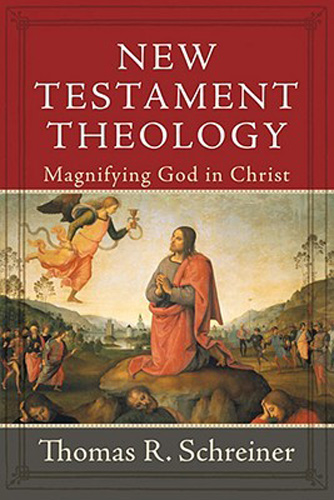
New Testament Theology: Magnifying God in Christ
In this substantial volume, Thomas Schreiner takes up the study of New Testament theology, looking for the themes that emerge from a detailed reading of the whole rather...
Downloads
About BiblicalTraining®
BiblicalTraining® wants every Christian to experience a deep and loving relationship with Jesus by understanding the life-changing truths of Scripture. To that end, we provide a high-quality Bible education at three academic levels taught by a wide range of distinguished professors, pastors, authors, and ministry leaders that moves from content to spiritual growth, all at no charge. We are a 501(c)(3) non-profit funded by gifts from our users. We currently have over 180 classes and seminars, 2,300 hours of instruction, registered users from every country in the world, and in the last two years 1.4 million people watched 257 terabytes of videos (11 million lectures).
Our goal is to provide a comprehensive biblical education governed by our Statement of Faith that leads people toward spiritual growth.