Survey of Biblical Theology - Lesson 16
Acts
In Acts, see God’s plan unfold through the risen and exalted Christ and the empowering Spirit. The book highlights the fulfillment of the Abrahamic and Davidic covenants as the gospel spreads from Jerusalem to the nations. Jesus reigns as the God-man and Lord of all, while the Spirit empowers bold proclamation of the word, bringing salvation and forming the church as restored Israel. Assurance of God’s promises is shown as the Spirit’s gift marks the new covenant age and unites Jews and Gentiles in one body.

I. Introduction
A. Acts as Trinitarian: Father’s plan, Son’s reign, Spirit’s power
B. Central mission: witnesses to the ends of the earth (Acts 1:8)
II. Christ Exalted
A. Resurrection as central proclamation
B. Jesus as Davidic King, Servant, & exalted Lord
C. Divine appearances & prayers to Jesus
III. Spirit’s Work
A. Spirit poured out after Christ’s exaltation
B. Key terms: filling, receiving, pouring, giving, baptizing
C. Spirit as fulfillment of new covenant
IV. Redemptive Events
A. Pentecost: church inaugurated
B. Samaritans: unity under apostles
C. Cornelius: Gentile inclusion
D. Ephesians 12: Jesus over John the Baptist
V. Word and Salvation
A. Spirit empowers preaching
B. Word spreads, saves, forms church
VI. Church as Restored Israel
A. Believing Jews and Gentiles as one people
B. Ongoing witness to nations
VII. Practical Notes on Spirit
A. Filling for proclamation, sealing at conversion
B. Assurance of belonging to God
So we come to the Book of Acts, and again, I just have to say, we're surveying, we can't do everything. So, you know, I'm just doing kind of big picture here, touching on a few things. Now, so this little diagram in the notebook that you see is from my son, Patrick, shameless plug again, right? He's written a theology of the Book of Acts, Brian Rosner and I, Brian is an Australian New Testament scholar.
We are editing a biblical theology series of every book of the New Testament. So we're very excited about that series, and Patrick did Acts, and I so love this diagram because I think it captures in a very nice way what Acts is about. And so we're going to do it quickly, and I'll talk about these different headings, but it's a nice little diagram because it begins here, when God the Father orchestrates his plan in Acts, but he does it through Christ, the risen and enthroned one.
So God, so what is Acts about? It's about God's plan, and he does it through the spirit. So we immediately see Acts is a very Trinitarian book, right? The Father's plan, which is affected through Christ, really we could say his death, right? His resurrection, his ascension, then the pouring out of the spirit, the spirit is poured out, that activates the word, that is the people, the apostles and others, proclaim the word, that word brings salvation, which creates the church, which becomes witnesses, and then the process begins again, right? So I think that's a very nice way of just thinking of the book as a whole, about we're going to look in some details. So begin, God the Father orchestrates.
So when we talk about that, we focus on the will of God. Many have said, you know, Acts is about the plan of God. Well, that fits with our whole course, right? This whole course is about what's God's plan, beginning from Genesis 3.15, that the offspring of the woman will conquer the serpent and the serpent's offspring, that the Greek word that is used as day often in Acts, it's necessary, this is God's plan.
And then often he talks about fulfillment. So we've seen this often in this course, haven't we? But what we see in Acts is God's plan. What's the plan? To bring the gospel to the ends of the earth, Acts 1.8, right? I agree that that's the theme of Acts.
You'll be my witnesses, right? In Jerusalem, in Judea and Samaria, and then to the very ends of the earth, that's the plan. That's the Abrahamic covenant, isn't it, right? The blessing is gonna come to all nations. Now it's happening, 2,000 years later, and it's no longer come and see, right? It's go and tell.
And now we can say 2,000 years later, well, we can say this has been fulfilled in glorious ways. We have more work to do. There's always more work to do, isn't there? But this has happened.
The gospel has gone to the ends of the earth in remarkable ways. And of course, that begins in the book of Acts. The mission is carried out on the basis of the ministry, the death and the resurrection of Jesus.
And the focus in the book of Acts, though, on his resurrection. Now, why is that? Why do they focus on his resurrection? Because he's conquered. He's the king.
So here, we talked about the Davidic covenant. I mean, I'm sorry. We talked about the Abrahamic covenant.
Now we talk about the Davidic covenant. He reigns right now. What's Jesus doing right now? He reigns as the God-man on David's throne.
I was in a Bible study recently with a very lovely, faithful believer. And she said, Jesus, now that he's resurrected, is no longer a man. She just didn't know, right? No, no, he remains the God-man forever, doesn't he? And what's he doing? He's reigning on David's throne, on high, right? On the throne of God as well.
So we read that Jesus appeared to the disciples during 40 days, and he spoke of what the kingdom of God. Well, that's a major theme of this course, right? It's God's people under God's rule and God's place. And Jesus is saying, hey, that kingdom, that kingdom is going forth now through you, through the witness of the church.
That's how Acts begins. And it ends with Paul in prison in Rome, but what's he talking about? The kingdom of God. So biblical authors, what they do at the beginning and end of books is important, isn't it? So we see the kingdom, the kingdom, and that kingdom, that kingdom is about Jesus Christ.
I mean, we'll look at, let's look at one verse, Acts 8, 12, it's about the king. When the Samaritans believe, Philip, as he proclaimed the good news about the kingdom of God and the name of Jesus Christ. See that? The kingdom is about Jesus.
So when we talk about Jesus, we're talking about the kingdom and we're talking about the kingdom, we're talking about Jesus. There are other verses that say that. I want to recommend another book on Acts.
I mentioned Patrick's, but I want to mention this book by Alan Thompson called The Acts of the Risen Jesus. That's a nice, fairly short little book published by Inner Varsity. Right now, at least they have these great covers.
Don Carson's the editor. Alan's a New Testament scholar from Australia. That's an excellent, very accessible book.
One of my favorite books on the book of Acts. So I love the title, don't you? The Acts. You know, is it really The Acts of the Apostles? You know, the only apostles that really do anything in the book are Peter and Paul, right? John's with Peter, but he doesn't end up saying a word in the book.
So that's not a great title for the book, but I like this title. It's The Acts of the Risen Jesus. That's what's happening in the book of Acts.
When thinking about Jesus a little bit, Jesus is called the Pius, which is the servant. God has glorified His servant. And remember, we talked about earlier in the course, Isaiah 52, 13, that the servant will be, well, it wasn't in the English, right? But it was in the Greek.
The servant will be doxothesitai, if you know the Greek, but I'll just translate it, that the servant will be glorified. So I think that's very interesting. God has glorified His servant, Jesus.
How has He glorified Him? By raising Him from the dead, which is the big theme in Acts, right? Jesus is truly the Messiah. And just the fulfillment of prophecy. All the prophets who have spoken from Samuel and those who came after Him also proclaim these days.
So how does that fit with this course? I gave you kind of a quick survey of the Old Testament. What is Acts saying? Everything's coming to fulfillment now. You're the sons of the prophets and of the covenant, right? We talked a lot about covenants that God made with your father, Saint Abraham.
And in your offspring, all the families of the earth shall be blessed. Remember, we talked about that promise. Many times.
Now that promise is being fulfilled. God has raised up His servant, Jesus, and sent Him to you Jews first, blessing you by turning each one of you from your wickedness. So Jesus is that servant of the Lord, fulfilling the covenant promises.
We read later that they gathered against your holy servant, Jesus, whom you anointed with signs and wonders. So Jesus is the servant of the Lord. Jesus is the Lord in Christ.
God made Him, He says in Acts 2.36, God made Him Lord and Christ, this Jesus whom you crucified. Yes, He was Lord and Christ before, wasn't He? What does He mean He made Him Lord and Christ? That is not adoptionistic Christology, right? That doesn't mean He's only made Lord and Christ at the resurrection. What He means is He's now the exalted Lord and Christ at His resurrection.
On earth, He was Lord and Christ, but He wasn't the exalted Lord and Christ. So Acts is very important, isn't it? There's a new stage in redemptive history. Now He's the exalted Lord and the exalted Christ as the God-man.
Of course, as God, He reigns forever and ever and ever, right, as the second person of the Trinity. But now He reigns, what a remarkable thing, right? Now He reigns as the God-man forever and ever. And yes, yes, is He God? And we've seen in the synoptic gospels and the Gospel of John, He's divine, but we see it in a very interesting passage in Acts when Jesus appears to Paul on the Damascus road.
Paul says, who are you, Lord? You know, what a shock. What a shock Paul received, right? When he said, I am Jesus whom you're persecuting. And this is a theophany like we see in the Old Testament, right? This is an appearance of God.
Paul saw Jesus as the exalted Lord, sort of like the transfiguration scene, right? Paul sees Him in all His glory. Paul sees that He's God, you know, His whole life has basically been devoted to resisting Jesus but now He recognizes as an instant who Jesus is. And we see that Jesus is also fully divine.
We see this as well in Acts 18, verse nine. The Lord says to Paul in a vision, don't be afraid, but keep on speaking and don't be silent for I'm with you and no one will lay a hand on you to hurt you because I have many people in this city. As Buck Walter, a New Testament scholar remarks, Jesus appears to Paul in a vision and encourages him in language reminiscent of an Old Testament theophany and prophetic calling.
You know, another indication that Jesus is the divine Lord now, the resurrected Lord. So again, what do I want to emphasize? That we have the fulfillment of the Davidic covenant and the Abrahamic covenant with the universal blessing. These two covenants are coming together here in Acts through whom? Through this human being who is also God, Jesus Christ.
We're told in Acts 10, 36, Jesus is Lord of all. By the way, sometimes, I don't know if you've heard these debates. Some people argue that it's only right to pray to God the Father and not right to pray to Jesus.
I don't know if you've ever been part of these debates but they're out there. But I think it is, you know, the normal pattern is to pray to the Father through the Son by the Spirit. But we do have a prayer.
We do have prayers to Jesus in the New Testament. And Stephen's prayer is one example. As he's dying, he says, Lord Jesus, receive my spirit and don't charge a sin against them.
Well, that's a prayer and it's voiced to Jesus. It's not wrong to pray to Jesus. That's clearly a biblical thing.
So we see, if we're looking at the whole, right? God the Father orchestrates, the exalted Christ rules. So I just dropped down a little bit and said a little more about Christ but the exalted Christ rules at the right end of God. And the Spirit, now the third, the Spirit empowers.
So it's a Trinitarian work. The Father, the Son and the Spirit. The Spirit empowers after Jesus is exalted.
Remember we saw in John's gospel, the Spirit doesn't work separately from the Son, right? The Spirit is only poured out after this, after Jesus' ministry, death and resurrection and Jesus is exalted and then the Spirit is poured out. But now I'm gonna drop down and I'm gonna say some, we're gonna look a little more at the Spirit and I'm gonna do that by looking at particular words. And this is what I call donkey work.
But donkey work, donkey work is, what I mean by that is this is a little bit boring, right? That now finally God's word isn't boring, but you know, we're just, we're just gonna, I'm gonna just talk about particular words in Greek and verses and then I'm gonna draw some conclusions. So be patient. Here we go.
We're gonna just talk about these words but I think it helps to see it in the text because I don't wanna just give you conclusions without giving you evidence. So that's the donkey work, giving you the evidence, here's what it says and then we'll draw some conclusions. So here we go.
The filling of the Spirit. The Greek word there is pimple me. That's the word that means fill.
So what are the examples? The apostles are filled with the Spirit and they speak in tongues, Acts 2.4. Acts 4.8, Peter is filled with the Spirit and he testifies to Jewish leaders, talks about the gospel, who arrested him. In Acts 4.31, all the disciples are filled with the Holy Spirit and when they are, they speak the word boldly, even though they're threatened by the religious leaders. Acts 9.17, Ananias, when Paul is converted, right? He tells Paul, you're gonna be filled with the Spirit and when you are, you're gonna speak the word to the Gentiles.
And then in Acts 13.9, Paul is filled with the Spirit and he prophesies against Elimas. So you know, just notice, right? Filling with the Spirit is always connected with speaking something, tongues, testifying to the gospel, speaking the word boldly, speaking the word to the Gentiles, prophesying. Every case, there's a speaking that goes on.
Then receiving the Spirit, the rambano, that word means receive in Greek, Jesus says to the disciples in Acts 1.8, after he's raised from the dead, but before Pentecost, you're gonna receive power when the Holy Spirit comes. Acts 2.33 says that Jesus received the promise of the Holy Spirit. So Jesus received the Spirit as a man, right? Probably thinking of Jesus' baptism where he's receiving the Spirit.
It's not saying, of course, that Jesus was sinning before that or anything like that. Then Peter on the day of Pentecost says to the crowd that's listening, you shall receive the gift of the Holy Spirit upon repentance. Then in a very interesting story, the apostles prayed that the Samaritans might receive the Holy Spirit.
So remember the Samaritans, when they first believed, do not receive the Spirit. Do you remember that story? They believe, but they don't receive the Spirit. Philip preaches to them.
By the way, that's not Philip the apostle, right? That's Philip 1 of the seven. How do we know it's not Philip the apostle? Because we're told, this is Acts 8, we're told in Acts 8.3 that the apostles stayed in Jerusalem. So this is Philip 1 of the seven.
Philip, for some reason, can't give them the Spirit. Peter and John have to come down and lay their hands on them. So the apostles, Peter and John, prayed that the Samaritans might receive the Spirit.
Then we're told in Acts 8.17 and 19, they did. After Peter and John prayed, they did receive the Spirit. Cornelius, that Roman centurion, received the Holy Spirit, Peter says, Acts 10.47. He says, well, Cornelius, and really his friends too, they received the Holy Spirit as we did.
And then we have the Ephesians 12 that Paul runs across in Ephesus. And when Paul meets them, he says, did you receive the Holy Spirit when you believed? So those are the references to that word. Then we have the idea of the Holy Spirit being poured out.
That's the word ekao or ekouno in Greek. The idea of something being poured out. We have the prophecy from Joel is cited twice.
Joel chapter two, where we have that promise. God says, I will pour out my Spirit on all flesh. And then in Acts 2.33, Peter says he poured out what you've seen and heard on Pentecost.
So Peter's saying, okay, that prophecy from Joel is fulfilled on the day of Pentecost. And then with reference to Cornelius and his friends, we're told that the gift of the Holy Spirit has been poured out upon them, upon the Gentiles. Then the Holy Spirit is given.
That's the Greek word didomi, which means give. The Spirit is given in Samaria through the laying out of hands. Remember, we've already seen that story.
Peter and John lay their hands on the Samaritans. Remember, Philip can't do it. They lay their hands on the Samaritans and the Spirit is given to them.
Then Peter in Acts 11.17 says God gave to them the same gift as he gave to us. And Peter's talking about Cornelius and his friends who received the Spirit in Caesarea when Peter came and preached to them. In Acts 15, verse eight, Peter refers again to that Cornelius story.
And he says, God accepted the Gentiles because he gave his Spirit to Cornelius and his friends. So those are the three references to giving. Then in a couple of times, we have the idea of the Spirit coming, Erecham I come or Ep Erecham I come upon.
So we have this idea of coming. And Acts 1.8, very famous verse, right? The Holy Spirit will come upon you and you're gonna be my witnesses in Jerusalem and Judea and Samaria and to the ends of the earth. But we're also told in Acts 19, verse six, that the Holy Spirit came upon the Ephesians 12.
So remember, Paul said, did you receive the Holy Spirit when you believe? They say we've not even heard whether there's a Holy Spirit. And then Paul lays his hands on them and the Holy Spirit comes upon them. Then also the Holy Spirit falls upon some people.
And there we see the word epipypto, to fall upon. And here, this is used in Acts 10.44. And actually I left out the other verse, it's Acts 11. Can I find that really quick? Maybe I can.
I think it's Acts 11.15. I actually gotta look at the Greek there really fast. No, that isn't the one, is it? Yeah, it is. Okay, there it is, epipypto, right? So it's Acts 11.15, didn't put the verse in there.
Let's correct that notebook. This notebook, unlike the scriptures, is not infallible. It has errors in it.
Anyway, the Holy Spirit falls upon Cornelius and his friends, Acts 10.44. And then Peter reports how the Holy Spirit fell on Cornelius and his friends. So you see, we have all these different verbs that are used, right? Reference to the Holy Spirit. But we also have the very interesting verb, baptize in the spirit, baptizo.
I pointed out to you earlier, you know, the word baptizo is not, when we use the word baptize, we're not translating really. We're just transliterating the Greek word. As you can see, if you don't know any Greek, you now know some Greek.
You know the word baptizo, that's easy, right? There you go. It means I baptize. But as I said earlier, I think a nice translation is the word immerse, Luke 3.16. John the Baptist says about Jesus, he'll baptize you, he'll immerse you.
He'll drench you with the Holy Spirit. Acts 1.5, Jesus recalls that promise. And he says, John baptized you with water, but you will be baptized.
You'll be immersed with the Holy Spirit. Clearly he's referring to Pentecost. Acts 11.16, Peter quotes Jesus' words in Acts 1.5. And he relates it to Cornelius.
We also see Cornelius and his friends were baptized in the Spirit. So there's our donkey work. We've done it pretty fast.
Just wanting to look at text. Then I just want to draw some conclusions. By the way, this matter is controversial.
Good Christians disagree. You make up your mind, but be driven by the word, not just by what you prefer, hopefully. But what are the conclusions? Well, you know, big picture.
We have the fulfillment of the Old Testament promises since the Spirit is poured out on all flesh. This is a fulfillment of the new covenant promise that we saw that the Spirit would be given to God's people, Ezekiel 36. You know, that's a verse we pointed out earlier, verses 26 and 27.
I'm going to give you my Spirit and you're going to have a heart of flesh. And that Spirit, what is a gift of the risen and exalted Jesus. So this is a key theme in New Testament theology.
The gift of the Spirit is always tied to Jesus, right? The Spirit glorifies Jesus. The Spirit is only given after the ministry, death and resurrection of Jesus. So the Spirit's not disconnected from Jesus, working in separation from Jesus.
And the Spirit is the sign that the age to come has arrived. You know, the new covenant being here, that means God's eschatological promises are being fulfilled. The new covenant has come, right? The new Exodus has come.
The new creation has come. The new David has come. When the Spirit has come, that means the end days have come.
Well, as John says, we're in the last hour, right? We're in the last days. All these things have come now with the Spirit. So now back toward the main point.
In Luke, the following phrases are closely associated. Now I say baptism, but it's really, I should say baptizing with the Spirit because it's not a noun, right? It's a verb. Baptism of the Spirit, receiving the Spirit, falling onto the Spirit, coming onto the Spirit, giving of the Spirit, pouring out of the Spirit, right? So what's interesting, and maybe you noticed this, but all those verbs are used to forming events and acts, right? When we looked at all those passages, it's used a Pentecost where the church is inaugurated.
I think Pentecost is kind of an anticipation of the new creation. It's a reversal of the Tower of Babel, right? Because everybody can understand one another as they speak in tongues. So that's very interesting.
The Spirit being given here, it's what? Why does he use the language of baptism? Because baptism is the language of inauguration here, right? The baptism is the language of initiation. And this is the initiation, the beginning of the church, a new eschatological thing is going on. Then these verbs are used of Acts 8, the Samaritans receiving the Spirit.
I think that fulfills Ezekiel 37. Ezekiel 37 says that the people of God, the Northern and Southern kingdoms will be reunited in Ezekiel 37. I think Luke sees a fulfillment of that in the Samaritans believing.
Alan Thompson, by the way, argues this in his book, The Acts of the Risen Jesus, if you want to read more about that. So you have the unification of the church. Israel, so to speak, is united again under the gospel.
Of course, there's many Jews who don't believe, but now we could say the restored Israel, the true Israel, the true Israelites, they believe. Then in the Cornelius event, we see the coming in of the Gentiles when they receive the Spirit. Again, the fulfillment of the promise to Abraham.
And then in Acts 19, these 12, in Acts 19, these Ephesians 12, they're disciples of John the Baptist. And I think the point of the story is that Jesus is superior to John the Baptist. I mean, nobody thinks about this today, right? But John the Baptist was a big deal.
And did you know, last I heard, there are still very, very few, there's still a few people in the world who are disciples only of John the Baptist. Isn't that interesting? That there's a few left. You know, we even read about this in the gospels, right? Some wanted to follow the Baptist.
And John's gospel especially emphasizes this, doesn't he? There came a man sent from God, whose name was John. He came for a witness. He's not the guy.
He came for a witness, to bear witness to life in order that all might believe through him. He was not the light, but came to bear witness. And what does John say, the Baptist say later in the gospel? He's the bridegroom.
I'm the friend of the bridegroom. He must increase and I must decrease. But actually some of John's followers had a problem with that.
They thought John was a huge deal, right? They thought John was the deal. And so this passage shows Jesus is superior to the Baptist. So another thing I'm arguing here is, right? Speaking in tongues, it's not necessary for the baptism of the spirit, right? It occurs at key events in redemptive history.
The inauguration of the church, the folding into the Samaritans, into the people of God. Now I want to say a word about that. Why didn't the Samaritans receive the spirit right when they believed? Many people have argued this, even charismatics.
You can read Michael Greene's book. I believe in the Holy Spirit. Michael Greene was an Anglican charismatic, but he agrees with what I'm about to say.
The reason the Samaritans did not receive the spirit when they believed is because of the cultural breach between Jews and Samaritans. The Samaritans had really established a rival religion. We see that with the Samaritan woman in John four, they worshiped on Mount Gerizim.
They only held to the Pentateuch as scripture. We see some conflicts with the Samaritans in Jesus and Luke's gospel. You know, even in the story of the Good Samaritan, the parable of the Good Samaritan, we see the differences.
God did not want the Samaritan church to be a separate entity. He made it clear that the Samaritan church had to come under the rule of the apostles. The apostles are the fount of the church.
Therefore, he withheld the spirit from them until Peter and John came down. Remember, Philip can't give them the spirit. He's not an apostle.
That shows the Samaritans, they're under the authority of the apostles. They are not a separate body, a separate church. So why is this important theologically? This text should not be used to say that there are people who believe in Jesus today who don't receive the spirit when they first believe.
Now, this is a one-time unique event in redemptive history. He's bringing together the Samaritans and the Jews who believe in Christ into one body. So I think the Samaritans probably spoke in tongues too.
We're not told they did, but we're told that Simon saw what happened. He probably saw them speaking in tongues. So I think the speaking in tongues uniquely testified to the inclusion of the Samaritans in the people of God, because also the Jews could doubt the Samaritans were truly believers.
Cornelius and his friends, they speak in tongues to show Gentiles are now coming in without circumcision. Peter mentions that in Acts 15. Remember in Acts 11, when Peter goes back to Jerusalem, the Jews are upset that Peter has eaten with Cornelius and hung out with them and baptized them.
He hasn't kept the law. And Peter says, look, God gave them the spirit. Well, how do we know God gave them the spirit? And Peter's like, they spoke in tongues just like we did, guys.
This is undeniable. So the inclusion of the Samaritans, the inclusion of the Gentiles without the law, these were both unique events in salvation history. And then the Ephesians 12, I've already said, right? It's proving here that Jesus is superior to the Baptist once again.
So that's a significant event. So yes, I think all these things happen at conversion. I would argue that the filling of the spirit, if we look at the text, the filling of the spirit is the one thing that is, in Lukean language, repeated.
The rest of these all, I think, take place at conversion. The baptism, the receiving, the following, the coming, the giving, the pouring out. I think Luke uses this particular language, I'm talking about Luke here, of what happens at conversion.
Filling, the filling of the spirit, that continues to take place. We're filled with the spirit over and over again. Of course, we're filled with the spirit when we're converted, but we continue to be filled with the spirit.
So we just lingered, what's the engine for the church growth? It's the spirit. So we go on to the next. So God the Father orchestrates, right? That's point one.
Through the ministry, death, resurrection of Jesus, empowered by the spirit. What does the spirit empower them to do? The spirit empowers them to preach the word, right? So the spirit empowers the apostles on mission to spread what Luke calls either the word or the word of God and the Lord, and I've given you many verses there. The centrality of the word can be seen not only in the emphasis on this theme, but in the form Acts was written.
About one third of the text is comprised of speeches or evangelistic preaching. And when the spirit comes, he gives speech. So yeah, there's just so many references to the word.
Maybe not even all the ones I've written here, but I'm just thinking. So the word of God spread, Acts 6, 7. So there's an example, right? So the word has kind of an inherent power. It's very similar to Paul, right? I'm not ashamed of the gospel for the gospel is the power of God resulting in salvation.
That's how Luke conceives of the word. The word has an inherent power and it spreads and it multiplies and it increases and it has a great effect in the lives of others. So what is Acts about? I mean, no surprise here, right? I'm not saying anything that's surprising.
God, through his spirit based on the ministry of Jesus empowers his people, still empowering his people today to proclaim his word because his word, right? How does God save people? Through his word. What did the early apostles believe? What did people need to hear to be saved? They needed to hear his word. That has motivated the missionary effort of the church all through history, right? When William Carey went out, why did he go out to India? Because he believed the Indians needed to hear God's word.
Because how does salvation come? Through God's word. And that's clearly what's true in the book of Acts. The word brings salvation to all flesh.
So the word saves, right? What is salvation? The word delivers. The word rescues people from wrath. And many more things I could say there, but we're going to go on.
Time is passing. And through the word, and as it is preached, the church is established. The church is formed.
And the church, in my view, now this is controversial. Not everybody holds this view. So you make up your mind, but I would say the church should be described as the restored Israel.
And the restored Israel is made up both of believing Jews and Gentiles, the one people of God, the church of Jesus Christ. And then the church in turn, witnesses to the ends of the earth. So the church, and this has happened now for 2000 years.
Now the church is the means of God's witness. And that whole circle keeps going, right? And it's just going to go to the end until the fulfillment of all of God's promises. So Acts is really important in our story, isn't it? Because we see now the fulfillment of the covenants in a very dramatic way, because the spirit is being poured out.
Now that universal blessing promised to Abraham, now the new covenant has been established with the gift of the spirit. Now this blessing is going to all nations. Now believers have the spirit on their hearts.
So God's fulfilling his promises in remarkable ways. Can I have a follow-up question to that issue on the filling of the spirit? And it's kind of more like a practical question. So filling is a repeated event.
It's tied into speech. So they're filled and they spoke. What does that actually mean in practical terms? Why would the spirit fill someone so they would say something? Why do you need the spirit to say something? Yeah, that's a great question.
I mean, the first thing I want to say is, of course, Paul also speaks of the filling of the spirit. And there, I think Paul speaks of the filling of the spirit in broader terms, right? It's not just speech, but I would argue in Ephesians, it's giving praise to God. It's submitting to one another.
And then I would argue having good family relationships between husbands and wives, parents and children, masters and slaves. So the filling of the spirit relates to all of life. But Luke, Luke wants to concentrate on the filling of the spirit for the proclamation of the gospel because that's what Luke's about, right? So he kind of isolates this one thing because he wants to say, God fills the spirit.
I would argue he still does this today, right? We pray, we prayed before I taught today. We pray when we preach and teach and speak God's word that God would use that word to affect the lives of others. So God fills us, strengthens us afresh and anew when we're speaking the gospel, I think is what Luke has in mind.
I don't know if that answered your question, no. In Ephesians one, we hear about the sealing of the spirit, which sounds like a not repeated event. Is there a difference between the sealing and the filling? Yeah, well, I think the sealing of the spirit, and I don't think I'm going to talk about this later.
So that's a great question. The sealing of the spirit, I think is another picture of what happens at conversion. So at conversion, what does a seal indicate? It authenticates that we belong to God.
It ratifies that we belong to God. It documents that we are his, so to speak. Interestingly, some of you may know, Martin Lloyd-Jones argued that the sealing of the spirit was subsequent to conversion and that not all believers receive it.
And, but Lloyd-Jones argued this with the baptism of the spirit as well, and the witness of the spirit. Lloyd-Jones put those, and I love Lloyd-Jones, but I disagree with him here. So he argued the sealing of the spirit, the witness of the spirit, and the baptism of the spirit are subsequent to conversion.
He did not say they are the evidence of such as speaking in tongues. He argued you just pray to receive it and you may never receive it, but maybe God will give that to you. But I actually think he misunderstands all these verses.
I think it's clear in Ephesians one that the seal of the spirit, that we belong to God, that we are his, is given to us at conversion. Same with the baptism, that's given to all believers at conversion. Same with the witness of the spirit.
And I just, I bring up Lloyd-Jones because he's had a lot of influence and I love him in so many ways, but I don't like this teaching because I think if you're exposed to Lloyd-Jones and you believe it, it throws a lot of believers in the, oh, I don't, what's wrong with me? I don't have the sealing of the spirit, I don't have the witness of the spirit, I don't have the baptism of the spirit, I'm an inferior Christian. And I think all those texts are designed to do just the opposite. The sealing of the spirit is meant to comfort you and the witness of the spirit and the baptism of the spirit, you've got these things.
So I think in every case what we're being taught there is you belong to God, rejoice. And as great as Lloyd-Jones was, and John Stott disagreed with him on all these things, I think Stott was right. No, no, these things are ours now.
- Explore how biblical theology developed through figures from Irenaeus to Bultmann, learning how debates over history, reason, and revelation shaped its methods, authority, and lasting influence on theology and the church.0% Complete
- Study how biblical theology traces God’s revelation historically while systematic theology organizes doctrine, seeing how both disciplines work together with presuppositions of faith to interpret Scripture as God’s authoritative Word.0% Complete
- Creation, covenant, and conflict reveal humanity’s sin and God’s judgment, showing the garden as sanctuary, Adam’s priest-king role, the serpent’s opposition, and God’s plan to bring salvation and victory through His promises.0% Complete
- God’s covenant with Abraham promises land, offspring, and blessing to all nations, showing both unconditional divine fulfillment and conditional obedience, while God preserves His plan through threats and fulfills His promises in surprising ways.0% Complete
- The Exodus shows God redeeming Israel by grace, giving the law and sacrifices, and dwelling in the tabernacle, all pointing to Christ’s final sacrifice and God’s presence with His people in the new creation.0% Complete
- Watch Israel’s unbelief, partial fulfillment of God’s promises, the cycle of sin without a king, and the rise of David as God’s chosen ruler who anticipates the true king to lead His people.0% Complete
- God’s covenant with David points to an eternal King, Israel’s failure reveals the need for renewal, and the prophets promise a new covenant, Exodus, creation, and David—all fulfilled in Jesus, the true King bringing worldwide blessing.0% Complete
- Israel’s identity forms through unfulfilled promises, foreign domination, Jewish factions, and rising messianic hopes, which fuel anticipation of a Messiah and set the stage for the New Testament.0% Complete
- Matthew shows Jesus as Emmanuel, true Israel, Son of David, and Son of God, fulfilling promises through a new Exodus, atonement, and divine authority, so that all God’s covenants find their fulfillment in him.0% Complete
- Dr. Schreiner reveals Jesus as the divine Son, true Israel, greater Moses, and eternal King who fulfills God’s promises, reveals the kingdom in hidden yet present power, and builds his church as the new people of God drawn from all nations.0% Complete
- Mark proclaims Jesus as the Son of God and true King whose suffering secures forgiveness, while discipleship means following his example of humility and obedience despite weakness.0% Complete
- John portrays Jesus as the eternal Logos and Son whose I AM sayings and signs grant believers the present possession of eternal life through faith.0% Complete
- John presents Jesus’ work as his lifting up and glorification, fulfilling Scripture. Life comes through true believing—receiving, coming, hearing, drinking, eating, entering, abiding—while false belief, darkness, and human glory block it.0% Complete
- Dr. Schreiner highlights divine sovereignty: the Father gives believers to the Son, the Spirit gives life, and all who truly believe are preserved, and glorifies Christ, showing Jesus’ death and resurrection as God’s sovereign plan.0% Complete
- In John’s epistles, he teaches that assurance rests on the apostolic witness, confession of sin, obedience, love, and doctrinal truth, while false teachers deny Christ.0% Complete
- Acts shows God’s plan through Christ and the Spirit, fulfilling covenant promises, spreading the gospel, empowering witnesses, and forming the church as restored Israel united in salvation.0% Complete
- Paul’s “already but not yet” theology shows God’s promises fulfilled in Christ yet awaiting completion, shaping Christian life, doctrine, and practice in areas like adoption, redemption, sanctification, and practical living.0% Complete
- In this lesson, Paul shows that Spirit-led believers still need commands, which guide holiness and love without legalism, uniting word and Spirit to shape Christian life, protect love from distortion, and call for discernment in obedience.0% Complete
- Learn how the New Perspective reinterprets Judaism and Paul, how Sanders and Stendhal shifted focus from justification to covenant and inclusion, and how Paul’s own words confirm his Damascus road conversion.0% Complete
- Paul uses “works of the law” to mean all deeds of the law, not just Jewish boundary markers, and teaches that justification comes by faith in Christ because human disobedience makes works powerless to save.0% Complete
- Learn that justification is God’s declarative act of counting believers righteous through Christ’s atonement, not human works, and see why imputation, not transformation, secures assurance and preserves the heart of the gospel.0% Complete
- Hebrews teach the Son as God’s final revelation and superior Melchizedekian priest whose one sacrifice fulfills typological promise.0% Complete
- James emphasizes authentic faith that produces obedience, wisdom, and care for others, showing that faith without works is dead while affirming God’s goodness and calling believers to endurance, humility, and practical godliness.0% Complete
- In 1 Peter, see how believers as exiles endure suffering with hope, live as God’s priestly people, rest in Christ’s atoning work and victory, and anticipate the inheritance of the new creation as fulfillment of God’s promises.0% Complete
- Revelation’s symbolism portrays Satan, the beast, false religion, and Babylon while teaching to persevere in suffering, trust God’s sovereignty, and hope in Christ’s victory and the new creation.0% Complete
- Dr. Schreiner teaches how Revelation portrays Christ’s full deity, the Lamb’s redeeming work, with victory grounded in the cross and fellowship with God as the ultimate goal.0% Complete
Lessons
- Explore how biblical theology developed through figures from Irenaeus to Bultmann, learning how debates over history, reason, and revelation shaped its methods, authority, and lasting influence on theology and the church.0% Complete
- Study how biblical theology traces God’s revelation historically while systematic theology organizes doctrine, seeing how both disciplines work together with presuppositions of faith to interpret Scripture as God’s authoritative Word.0% Complete
- Creation, covenant, and conflict reveal humanity’s sin and God’s judgment, showing the garden as sanctuary, Adam’s priest-king role, the serpent’s opposition, and God’s plan to bring salvation and victory through His promises.0% Complete
- God’s covenant with Abraham promises land, offspring, and blessing to all nations, showing both unconditional divine fulfillment and conditional obedience, while God preserves His plan through threats and fulfills His promises in surprising ways.0% Complete
- The Exodus shows God redeeming Israel by grace, giving the law and sacrifices, and dwelling in the tabernacle, all pointing to Christ’s final sacrifice and God’s presence with His people in the new creation.0% Complete
- Watch Israel’s unbelief, partial fulfillment of God’s promises, the cycle of sin without a king, and the rise of David as God’s chosen ruler who anticipates the true king to lead His people.0% Complete
- God’s covenant with David points to an eternal King, Israel’s failure reveals the need for renewal, and the prophets promise a new covenant, Exodus, creation, and David—all fulfilled in Jesus, the true King bringing worldwide blessing.0% Complete
- Israel’s identity forms through unfulfilled promises, foreign domination, Jewish factions, and rising messianic hopes, which fuel anticipation of a Messiah and set the stage for the New Testament.0% Complete
- Matthew shows Jesus as Emmanuel, true Israel, Son of David, and Son of God, fulfilling promises through a new Exodus, atonement, and divine authority, so that all God’s covenants find their fulfillment in him.0% Complete
- Dr. Schreiner reveals Jesus as the divine Son, true Israel, greater Moses, and eternal King who fulfills God’s promises, reveals the kingdom in hidden yet present power, and builds his church as the new people of God drawn from all nations.0% Complete
- Mark proclaims Jesus as the Son of God and true King whose suffering secures forgiveness, while discipleship means following his example of humility and obedience despite weakness.0% Complete
- John portrays Jesus as the eternal Logos and Son whose I AM sayings and signs grant believers the present possession of eternal life through faith.0% Complete
- John presents Jesus’ work as his lifting up and glorification, fulfilling Scripture. Life comes through true believing—receiving, coming, hearing, drinking, eating, entering, abiding—while false belief, darkness, and human glory block it.0% Complete
- Dr. Schreiner highlights divine sovereignty: the Father gives believers to the Son, the Spirit gives life, and all who truly believe are preserved, and glorifies Christ, showing Jesus’ death and resurrection as God’s sovereign plan.0% Complete
- In John’s epistles, he teaches that assurance rests on the apostolic witness, confession of sin, obedience, love, and doctrinal truth, while false teachers deny Christ.0% Complete
- Acts shows God’s plan through Christ and the Spirit, fulfilling covenant promises, spreading the gospel, empowering witnesses, and forming the church as restored Israel united in salvation.0% Complete
- Paul’s “already but not yet” theology shows God’s promises fulfilled in Christ yet awaiting completion, shaping Christian life, doctrine, and practice in areas like adoption, redemption, sanctification, and practical living.0% Complete
- In this lesson, Paul shows that Spirit-led believers still need commands, which guide holiness and love without legalism, uniting word and Spirit to shape Christian life, protect love from distortion, and call for discernment in obedience.0% Complete
- Learn how the New Perspective reinterprets Judaism and Paul, how Sanders and Stendhal shifted focus from justification to covenant and inclusion, and how Paul’s own words confirm his Damascus road conversion.0% Complete
- Paul uses “works of the law” to mean all deeds of the law, not just Jewish boundary markers, and teaches that justification comes by faith in Christ because human disobedience makes works powerless to save.0% Complete
- Learn that justification is God’s declarative act of counting believers righteous through Christ’s atonement, not human works, and see why imputation, not transformation, secures assurance and preserves the heart of the gospel.0% Complete
- Hebrews teach the Son as God’s final revelation and superior Melchizedekian priest whose one sacrifice fulfills typological promise.0% Complete
- James emphasizes authentic faith that produces obedience, wisdom, and care for others, showing that faith without works is dead while affirming God’s goodness and calling believers to endurance, humility, and practical godliness.0% Complete
- In 1 Peter, see how believers as exiles endure suffering with hope, live as God’s priestly people, rest in Christ’s atoning work and victory, and anticipate the inheritance of the new creation as fulfillment of God’s promises.0% Complete
- Revelation’s symbolism portrays Satan, the beast, false religion, and Babylon while teaching to persevere in suffering, trust God’s sovereignty, and hope in Christ’s victory and the new creation.0% Complete
- Dr. Schreiner teaches how Revelation portrays Christ’s full deity, the Lamb’s redeeming work, with victory grounded in the cross and fellowship with God as the ultimate goal.0% Complete
Class Resources
Recommended Books
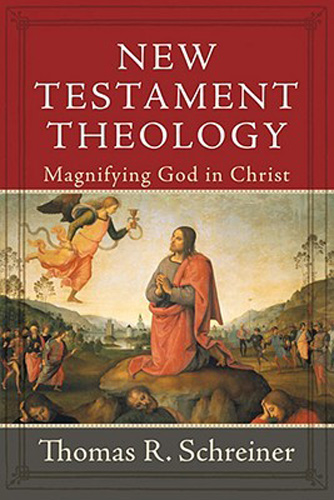
New Testament Theology: Magnifying God in Christ
In this substantial volume, Thomas Schreiner takes up the study of New Testament theology, looking for the themes that emerge from a detailed reading of the whole rather...
Downloads
About BiblicalTraining®
BiblicalTraining® wants every Christian to experience a deep and loving relationship with Jesus by understanding the life-changing truths of Scripture. To that end, we provide a high-quality Bible education at three academic levels taught by a wide range of distinguished professors, pastors, authors, and ministry leaders that moves from content to spiritual growth, all at no charge. We are a 501(c)(3) non-profit funded by gifts from our users. We currently have over 180 classes and seminars, 2,300 hours of instruction, registered users from every country in the world, and in the last two years 1.4 million people watched 257 terabytes of videos (11 million lectures).
Our goal is to provide a comprehensive biblical education governed by our Statement of Faith that leads people toward spiritual growth.