The Historical Reliability of the Gospels
About This Class
An in-depth look at the charges against the historicity of the gospels, and the evangelical answers.
About the Professor
Craig Blomberg
Craig Blomberg is one of the most highly respected evangelical scholars in the United States. He has authored fifteen books as well as co-authored/edited ten more, with over 150 journal articles to his credit. A Distinguished Professor of New Testament at Denver Seminary in Littleton, Colorado, Craig also serves on the Committee on Bible Translation for the New International Version.

Lessons
- This lesson teaches you to critically assess myths, legends, and misleading claims about the historical reliability of the New Testament Gospels, highlighting the importance of skepticism towards new discoveries.0% Complete
- Gain insight into the historical process that led to the canonization of the New Testament, focusing on how the Gospels of Matthew, Mark, Luke, and John became universally recognized as authoritative texts based on their apostolic origin.0% Complete
- Dr. Blomberg explores the apocryphal and Gnostic Gospels, showing how their fantastical accounts, such as Jesus performing miracles as a child, differ from the canonical Gospels.0% Complete
- The New Testament Gospels are highly reliable, while textual variants may be numerous, most involve minor details that do not affect the meaning of the texts, reinforcing the Gospels’ historical authenticity.0% Complete
- Dr. Blomberg explains the reliability of Bible translations, detailing different approaches like formally equivalent, dynamically equivalent, and optimally equivalent.0% Complete
- Explore the historical reliability of the New Testament Gospels by analyzing their authorship and dating. Dr. Blomberg provides insights into how close they are to eyewitness accounts based on evidence from early church writings.0% Complete
- Oral tradition and theological motivations shaped the Gospels, which likely present reliable historical accounts despite theological biases, maintaining consistency with early Christian teachings.0% Complete
- Three recent areas of study encourage us to accept the reliability of oral tradition. They are studies in the nature of an oral culture, how the Gospels follow an informal controlled tradition, and the effect of social memory.0% Complete
- Discussion of the literary dependence among the gospels, formally known as the “Synoptic Problem.” Argues that Mark was the first written source, and Matthew and Luke borrow from him, and from a common document (‘Q’) plus used their own material.0% Complete
- The Gospels are ancient biographies focusing on key events in Jesus’ life, particularly his death and resurrection. Their style and structure differ from modern biographies, influencing how we assess their reliability and literary genre.0% Complete
- Gain insight into how archaeology supports the reliability of the New Testament Gospels, confirming details about Jesus’ teachings, ministry sites, and significant events through recent and ancient discoveries.0% Complete
- Learn about the non-Christian historical sources that attest to Jesus’ existence, including testimonies from Roman and Jewish writers, and despite their bias, they validate aspects of the Gospels, confirming Jesus’ life, teachings, and crucifixion.0% Complete
- Using the same criteria that historians used to judge the reliability of ancient documents, Dr. Blomberg uses to judge the apocryphal and Gnostic gospels’ historical reliability with twelve specific criteria.0% Complete
- This lesson highlights the evolution of scholarly quests to understand the historical Jesus, from early 19th century theories to the present, examining different portraits based on his actions and teachings.0% Complete
- Why do so many different scholars have such different views of Jesus? There is more similarity than is expected at first, but the differences are due to things such as scholar’s presuppositions.0% Complete
- Gain insight into authentic portions of the Synoptic gospels based on the previous criteria for historical reliability, including key aspects of Jesus’ life and his teachings on the Kingdom of God.0% Complete
- Looking at Jesus’ self-understanding as the Divine Messiah, his unique authority, and inviting people to follow him in God’s restorative rule, reveals the historical reliability of the Gospels.0% Complete
- The variations in the Synoptic Gospels often reflect the theological and literary aims of their writers, not contradictions, and interpreting these differences within the first-century historical context is key.0% Complete
- Dr. Blomberg looks at harmonization problems between the Synoptics and the Gospel of John, exploring John’s unique content and theological focus, chronological differences, and distinct writing style.0% Complete
- By examining the overall features of John, you’ll gain insight into its connections to the Synoptic Gospels, focusing on details such as authorship, narrative style, and theological themes.0% Complete
- This lesson helps you understand the historical reliability of John’s Gospel, focusing on key passages and their connection to the Synoptic Gospels, offering evidence for their authenticity and significance.0% Complete
- John’s Gospel offers valuable historical insights, especially through themes like purification and Jesus’ unique ministry, providing a clearer picture of events and their theological significance in comparison to the Synoptic Gospels.0% Complete
- Dr. Blomberg reveals how the early New Testament epistles, particularly Paul’s letters, contain significant references to the teachings of Jesus, showing a well-established oral tradition that predates the written Gospels and supports their historical reliability.0% Complete
- Key themes of justification and the Kingdom of God in Paul’s teachings parallel Jesus’ life, though these epistles served distinct purposes within the early Christian communities.0% Complete
- Learn about the miracles in the Gospels and their relationship to a supernatural God, which argue for God’s existence and challenge atheistic views.0% Complete
- This lesson contrasts miracles in the Bible with ancient myths and traditions, defending their authenticity through literary and historical evidence.0% Complete
- Dr. Blomberg discusses the Gospel accounts of Jesus’ virginal conception and nativity, analyzing scriptural details, supernatural phenomena, and possible contradictions in the accounts of Matthew and Luke.0% Complete
- Explore various theories about the resurrection of Jesus, including “swoon theory” and “body theft,” and examine early Christian testimony, gaining insight into why the resurrection story endures despite challenges.0% Complete
- Does a defense of biblical reliability lead to any new insights about Jesus himself? Or does it simply bring us back to the status quo of historical Christian orthodoxy? This lesson strives to reveal a fuller picture of Jesus.0% Complete
- Dr. Blomberg summarizes his main points by reviewing textual integrity, the role of ancient sources, and archaeological evidence. He also provides an authentic picture of Jesus’ life, teachings, and the miraculous aspects of his ministry.0% Complete
Class Resources
Recommended Books
The Historical Reliability of the Gospels
For over twenty years, Craig Blomberg's The Historical Reliability of the Gospels has provided a useful antidote to many of the toxic effects of skeptical criticism of the...

The Historical Reliability of John's Gospel: Issues & Commentary

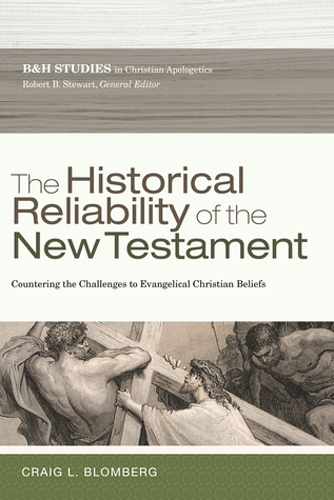
The Historical Reliability of the New Testament: Countering the Challenges to Evangelical Christian Beliefs (B&h Studies in Christian Apologetics)
Questions about the reliability of the New Testament are commonly raised today both by biblical scholars and popular media. Drawing on decades of research, Craig Blomberg...
About BiblicalTraining.org
BiblicalTraining.org wants every Christian to experience a deep and loving relationship with Jesus by understanding the life-changing truths of Scripture. To that end, we provide a high-quality Bible education at three academic levels taught by a wide range of distinguished professors, pastors, authors, and ministry leaders that moves from content to spiritual growth, all at no charge. We are a 501(c)(3) non-profit funded by gifts from our users. We currently have over 180 classes and seminars, 2,300 hours of instruction, registered users from every country in the world, and in the last two years 1.4 million people watched 257 terabytes of videos (11 million lectures).
Our goal is to provide a comprehensive biblical education governed by our Statement of Faith that leads people toward spiritual growth.