The Historical Reliability of the Gospels - Lesson 5
Translations of the Bible
Are the translations of the Bible reliable? Do they faithfully convey the meaning of the Greek? Why are they different and do they disagree on the essentials of the Christian faith?

I. HISTORY OF ENGLISH BIBLES
A. Prior to the KJV
B. KJV (1611) and NKJV
II. MODERN TRANSLATIONS
A. Formal equivalent (ASV – NASB, RSV – NRSV, ESV)
B. Dynamic equivalence (LB – NLT)
C. Optimal equivalence (NIV, CSB, NAB, CEB)
III. DIFFERENCES ILLUSTRATED
A. Luke 1:1–4
B. All basically agree
IV. CONCLUSION
A. Remember how similar all translations are, despite their covers
B. Sufficiency and clarity of Scripture for all things necessary for salvation and Christian living
C. No translation is 100% formal, optimal, or dynamic
D. Inclusive language often sheds more heat than light
This is the course on the historical reliability of the New Testament Gospels. This is segment number five entitled The Translation of the New Testament and especially of the Gospels. We said at the end of our last segment that we were finally ready to look at the question of the reliability of the text. Now that we know it is accurate, now that we know we have chosen the right gospels, the right sources in general for the life of Jesus. And that's true. As long as you can read Greek. But since some of you, maybe most of you taking this class will not be going directly from the Greek. There is one question that may well come to mind. Can I trust my translation in English or Chinese or Arabic or Spanish? And I'm not an expert on Chinese or Arabic. I can't read either language. I can manage in Spanish, but. I've been asked to deal with the English text. Which translation? Should I use? Are they all equally good? Are some better than others? Even just in the English language. If we go back. In history. To the earliest English Bible translations. We discover a number that were produced without the authorization of any ecclesiastical body. And one of the most famous of those was produced by John Wickliffe, whose name today attaches to a major international Bible translating society who had to go into exile from his native England as a result of his efforts. But even in the Roman Catholic world of the 16th century, of the 1500s contemporary with the Protestant Reformation, increasingly European languages were being used for Bible translations, even in Catholic circles. There was, in the English speaking part of Europe, a work called the Bishop's Bible. There was another one known as the Geneva Bible, still a third one called the Great Bible.
And in fact, much of the language of the King James translation of the Bible, which would soon become by far the best known of the English translations, was borrowed from these and also from John Wick Clift's work. It was, however, in 1611 that an amazing milestone took place. The production of what in Great Britain to this day is usually called the authorized Bible. The A.V.. And in the United States, often predominantly called the King James version. Not because James, the Sex of Scotland, who became James the first of England, wrote any of it or translated any of it, but because he commissioned a team of several dozen of the finest English language scholars of ancient Hebrew and Greek, that he could identify a very tedious and time consuming labor of love based on several dozen of the best manuscripts that were available of the ancient languages and written in Elizabethan English, written in the vernacular well known to modern people, not just from the King James Bible, but from the plays of William Shakespeare, whose zenith was at approximately the same time just a decade or two earlier. Elizabethan English sounds very strange to us today. We do not go around greeting people, saying, Hail fair maiden. How. Dust the prosper. On this merry occasion. But that's how Shakespearean language functioned and that's how much of the language of the King James Bible appeared. The King James translators did the very best. They knew how to with the very best scholarship of their day. And the result was a magnificent translation in the common vernacular of the. English speaking people in the early 1600s. It was so successful that although various other English language translations appeared usually by individual scholars, none had much of an effect on the world until into the 19th century.
Even today, there is a definable portion of the Bible reading public that so values the language of the King James that the translation, called the new King James version, was published in order to preserve as much of that language as possible. But update words that simply meant nothing in modern English or were actually misleading because they had come to mean something different, like the word conversation, meaning conduct, or the words suffer meaning aloud. When Jesus said in King James, English, Suffer, the little children do come unto me. He was merely asking that they be permitted to come. And there wasn't anything like we mean by suffering in modern English. But there are many. 20th and now 21st century translations. Perhaps too many. Given the number of languages in the world that still lack a translation of the Bible and the number of languages in the world that may have only one or at most, two options. But the English speaking world is a huge market and a capitalist world for production and sales of Bibles. And. We can today identify three main approaches. To Bible translation. That refer. First of all. To a formerly equivalent translation like the King James was in its day. Trying to prioritize the preservation of the meaning of the text, of the structure of the original language when English. Could be rendered in the same word order and still be meaningful. A high degree of accuracy. One of the advantages of. Elizabethan English was the ability to distinguish between a second person singular and plural form. In. Academic English. We use you to mean both use singular and you plural. There are slang ways to differentiate. Of course you can talk about your. You talk about all y'all. Uns use guys.
And so forth. But King James had vow and the. And other forms for other sentence structures. Those have been lost in modern English. Those have been lost, thankfully, even in the new King James. But there are a variety of translations, beginning with what was called the American Standard version in 1901. That was updated in the sixties to the new American Standard Bible, which itself has an updated edition that was published in 1995. The major ecumenical translation just after World War Two, known as the revised Standard version, which has been revised in two different directions in more recent years, the new revised Standard version continuing the ecumenical tradition and the English standard version produced by an exclusively evangelical publishing house. All of these translations prioritize meaning structure, accuracy, precision. Over at times when there is a trade off, such features as clarity, ease of understanding and intelligibility. In the 1960s as well. A major change occurred in the publishing of English language Bibles, especially in the United States, with a man named Ken Taylor, who produced something called the Living Bible. Paraphrased. It was acknowledged to be a paraphrase of the old American standard version. Taylor said he did not know Greek or Hebrew. He took what was the most highly literal and at times almost unintelligible translation of the old ASV and did his best to render it into English that would interest his teenage kids. And it was wildly successful. As an autobiographical note, one I became a believer through is for Christ. At age 15, it was brand new. Completed. The entire Bible had just been finished and I devoured it and it actually made Bible reading interesting to me, which neither the King James nor the RSV, the only options of my childhood ever had.
So I will be forever grateful for the living Bible paraphrased, but it was not a bonafide translation. There are places that it took too much liberty with the text to be justifiable as an accurate rendering. And so Ken Taylor's son, Mark, who happens to be my age and has been the president of Tindale House Publishers and Carroll Stream, Illinois for a number of years now in the 1990s, commissioned a team of 90, all in New Testament scholars, to produce an accurate translation, but leave his father's wording intact any place where it could be justified from the original languages. The result was what is now called the New Living translation, and it is one of many, but really by far the most successful of many translations that are dynamically equivalent. Dynamic equivalent seeks to prioritize clarity. Intelligibility. Ease of understanding. Even if at times that means using simplified language that doesn't capture quite all of the nuances that a more technical term might capture in rendering something in Greek and Hebrew, even if at times it means rearranging the word order in a sentence or even in a paragraph to avoid what sounds somewhat stilted in a formerly equivalent translation. For ease of understanding. More recently, there have been other translations, such as the contemporary English version, the CV, the New Century version, the NSC V in mainline Protestant circles, a little bit older than the new Living, but not as old as the living Bible. Paraphrase is the good news Bible. And all of this have, to their credit, gained readership that had never previously before been interested in or even very successful in trying to read the Bible with understanding. A third approach. And of course, there are points on a spectrum. Not every translation fits perfectly into any one of these slots.
But a third major position on a spectrum is what some have dubbed an optimally equivalent translation. That is to say they try to prioritize meaning and accuracy on the one hand and clarity and intelligibility. On the other hand. Not intentionally giving either one of those two the consistent upper hand. The result is that in general the translation will seldom be quite as precise as the formally equivalent translation, and it will seldom be quite as fresh or arresting as the fully dynamically equivalent translation. But hopefully it will be most useful in the broadest cross-section of circles in ministry and for the broadest cross-section of the population. Or someone who is very well educated, has the ability to use Bible reference works, perhaps does not have access to or a desire or ability to learn the biblical languages. A formerly equivalent translation can be extremely useful. For the person learning English as a second language, or someone who has not had the access to education that many English speakers have, or for someone who is just so familiar with the Bible in all their translations that they want a very fresh rendering, dynamically equivalent translation can be very useful. But for the broadest cross-section of contexts, one probably wants something like the new international version, or in more recent years, the common Christian standard Bible or the in Roman Catholic circles, New American Bible, or now a quite recent new mainline Protestant edition called the Common English Bible. Somebody by now should be asking, can you illustrate this with actual passages? Thank you for asking. Luke. One, one, two, four. The opening Prolog to Luke's gospel is in the Greek one long, convoluted sentence, a paragraph length sentence. If we start with the classic standard, the gold standard, a formal equivalence, the King James version.
Luke one 1 to 4 reads as follows Inasmuch as many have taken in hand to set forth in order a declaration of those things which are most surely believed among us, even as they delivered them onto us, which from the beginning were eyewitnesses and ministers of the word. It seemed good to me also, having had perfect understanding of all things from the very first to write unto Thee in order. Most excellent Theophilus that thou might know the certainty of those things who are in Thou hast been instructed. Got that. And maybe you do. If you are familiar with King James English. If you're not, you probably struggled at some place. Let's turn. By way of contrast to a. Dynamically you covalent translation. And the gold standard of dynamic equivalent translations the multi. Many people have set out to write accounts about the events that have been fulfilled among us. They used the eyewitnesses reports circulating among us from the early disciples, having carefully investigated every thing from the beginning. I also decided to write a careful account for you, most honorable Theophilus, so you can be certain of the truth of everything you were taught. One sentence has become three, but I trust most listeners will agree it was easier to understand. What happens if we turn to an optimally equivalent translation? Like the new international version, many have undertaken to drop an account of the things that have been fulfilled among us. Just as they were handed down to us by those who from the first were eyewitnesses and servants of the word. With this in mind, since I myself have carefully investigated everything from the beginning. I too decided to write an orderly account for you most excellent Theophilus, so that you may know the certainty of the things you have been taught.
Not one sentence, not three, but two in between the other two. Probably closer in terms of intelligibility in the 21st century to the new living. But in terms of structure and word order closer to the King James, in terms of meaning. It is an attempt to prioritize the best of both. Tasks that translators have before them, recognizing that it will never be quite as outstanding in either. Hopefully, however you recognized. That the same Greek surely underlay all three of those translations. It was the same content. There wasn't any uncertainty as to what Luke was trying to say, even in English translation. The differences were very minor compared to everything that they had in common. Sometimes as Christians engage in what some have dubbed the translation wars. This fact is lost sight of. Sometimes when Christian publishers take one single version of the scriptures and market it with dozens of different covers. So that we have the busy moms Bible and the teenage boys backpacking Bible and the golfer's Bible and the chunky Bible shaped like a cube and the flexi Bible, which looks like it has a Lego cover. Only the dots are squishy and on and on and on. The non Christian, whether it's searching on Amazon or going into the rare still standing Bible bookstore. Says, How do I know which of these to take? Can a golfer's Bible really have preserved the same text as a busy mom's Bible? What do they have to do with each other? And the uninitiated think that we are talking about separate translations. Rather than separate covers, sidebars, footnotes, pictures, illustrations of the identical text. We need to be clear about the difference between an edition of a single version like the King James, the New International, The New Living, or whichever, and different versions.
It's great that. There is always a niche market that will buy and read a Bible. Because of its cover. But let's not lose sight of the difference between the cover. And the insides. Let's remind ourselves of how similar all translations are. Especially if you want to get the big picture. The Protestant reformers consistently spoke about the sufficiency of Scripture, the clarity of Scripture, not to solve every last doctrinal debate. But to be clear enough in any moderately decent translation into a language other than Greek or Hebrew, with all things necessary for salvation and Christian living. Let's never lose sight of that fact. And let's also be aware that although we can place the various translations generally into one of these three categories, there will always be specific texts that are exceptions that for one reason or another were translated much less literally than in a translation that is otherwise highly literal or that were translated highly literally. In a version which is otherwise more dynamically and equivalent. And let's also not lose sight of the fact. That debates over inclusive language. Has often shed more heat than light. Inclusive language is the use in English of language that does not sound like it is specifying one gender or the other. When the original Greek or Hebrew was not specified one gender or the other. English was simpler 100 years ago. Perhaps even 50 years ago. You could walk into a room and say, Let him, who is without sin, cast the first stone. And most women would understand that they want to be throwing stones either. You could talk about. Sons. You could talk about the generic use of he. You could say brothers. And people understood that men and women alike were included. Some segments of the English speaking population still do, but they are increasingly in a small minority.
And especially for a non churched population. It would be extremely odd for. A speaker to address a mixed audience. And say, Good evening, brothers. Women would wonder why they were being excluded. And so across the spectrum of translations, there are different ways of dealing with this issue as well. But they don't affect the meaning of the text. They don't affect what is being taught the doctrine, the ethics. They don't affect, for purposes of this series, our ability to understand what the gospel writers wrote, what Jesus was teaching. And. How we are to interpret it and apply it in our lives today. So now. Not merely for those who. Can read Greek. We are indeed ready, even in any one of the English translations just discussed. Even the living Bible paraphrased even Eugene Peterson's The Message, which is a much wilder paraphrase than the living Bible ever was. Not a paraphrase to derive detailed doctrine from, but even from it we can gain the main contours of the gospel writers claims about the life and teaching of Jesus. And now we must ask the question we've all been waiting for. Can we believe it?
- This lesson teaches you to critically assess myths, legends, and misleading claims about the historical reliability of the New Testament Gospels, highlighting the importance of skepticism towards new discoveries.0% Complete
- Gain insight into the historical process that led to the canonization of the New Testament, focusing on how the Gospels of Matthew, Mark, Luke, and John became universally recognized as authoritative texts based on their apostolic origin.0% Complete
- Dr. Blomberg explores the apocryphal and Gnostic Gospels, showing how their fantastical accounts, such as Jesus performing miracles as a child, differ from the canonical Gospels.0% Complete
- The New Testament Gospels are highly reliable, while textual variants may be numerous, most involve minor details that do not affect the meaning of the texts, reinforcing the Gospels’ historical authenticity.0% Complete
- Dr. Blomberg explains the reliability of Bible translations, detailing different approaches like formally equivalent, dynamically equivalent, and optimally equivalent.0% Complete
- Explore the historical reliability of the New Testament Gospels by analyzing their authorship and dating. Dr. Blomberg provides insights into how close they are to eyewitness accounts based on evidence from early church writings.0% Complete
- Oral tradition and theological motivations shaped the Gospels, which likely present reliable historical accounts despite theological biases, maintaining consistency with early Christian teachings.0% Complete
- Three recent areas of study encourage us to accept the reliability of oral tradition. They are studies in the nature of an oral culture, how the Gospels follow an informal controlled tradition, and the effect of social memory.0% Complete
- Discussion of the literary dependence among the gospels, formally known as the “Synoptic Problem.” Argues that Mark was the first written source, and Matthew and Luke borrow from him, and from a common document (‘Q’) plus used their own material.0% Complete
- The Gospels are ancient biographies focusing on key events in Jesus’ life, particularly his death and resurrection. Their style and structure differ from modern biographies, influencing how we assess their reliability and literary genre.0% Complete
- Gain insight into how archaeology supports the reliability of the New Testament Gospels, confirming details about Jesus’ teachings, ministry sites, and significant events through recent and ancient discoveries.0% Complete
- Learn about the non-Christian historical sources that attest to Jesus’ existence, including testimonies from Roman and Jewish writers, and despite their bias, they validate aspects of the Gospels, confirming Jesus’ life, teachings, and crucifixion.0% Complete
- Using the same criteria that historians used to judge the reliability of ancient documents, Dr. Blomberg uses to judge the apocryphal and Gnostic gospels’ historical reliability with twelve specific criteria.0% Complete
- This lesson highlights the evolution of scholarly quests to understand the historical Jesus, from early 19th century theories to the present, examining different portraits based on his actions and teachings.0% Complete
- Why do so many different scholars have such different views of Jesus? There is more similarity than is expected at first, but the differences are due to things such as scholar’s presuppositions.0% Complete
- Gain insight into authentic portions of the Synoptic gospels based on the previous criteria for historical reliability, including key aspects of Jesus’ life and his teachings on the Kingdom of God.0% Complete
- Looking at Jesus’ self-understanding as the Divine Messiah, his unique authority, and inviting people to follow him in God’s restorative rule, reveals the historical reliability of the Gospels.0% Complete
- The variations in the Synoptic Gospels often reflect the theological and literary aims of their writers, not contradictions, and interpreting these differences within the first-century historical context is key.0% Complete
- Dr. Blomberg looks at harmonization problems between the Synoptics and the Gospel of John, exploring John’s unique content and theological focus, chronological differences, and distinct writing style.0% Complete
- By examining the overall features of John, you’ll gain insight into its connections to the Synoptic Gospels, focusing on details such as authorship, narrative style, and theological themes.0% Complete
- This lesson helps you understand the historical reliability of John’s Gospel, focusing on key passages and their connection to the Synoptic Gospels, offering evidence for their authenticity and significance.0% Complete
- John’s Gospel offers valuable historical insights, especially through themes like purification and Jesus’ unique ministry, providing a clearer picture of events and their theological significance in comparison to the Synoptic Gospels.0% Complete
- Dr. Blomberg reveals how the early New Testament epistles, particularly Paul’s letters, contain significant references to the teachings of Jesus, showing a well-established oral tradition that predates the written Gospels and supports their historical reliability.0% Complete
- Key themes of justification and the Kingdom of God in Paul’s teachings parallel Jesus’ life, though these epistles served distinct purposes within the early Christian communities.0% Complete
- Learn about the miracles in the Gospels and their relationship to a supernatural God, which argue for God’s existence and challenge atheistic views.0% Complete
- This lesson contrasts miracles in the Bible with ancient myths and traditions, defending their authenticity through literary and historical evidence.0% Complete
- Dr. Blomberg discusses the Gospel accounts of Jesus’ virginal conception and nativity, analyzing scriptural details, supernatural phenomena, and possible contradictions in the accounts of Matthew and Luke.0% Complete
- Explore various theories about the resurrection of Jesus, including “swoon theory” and “body theft,” and examine early Christian testimony, gaining insight into why the resurrection story endures despite challenges.0% Complete
- Does a defense of biblical reliability lead to any new insights about Jesus himself? Or does it simply bring us back to the status quo of historical Christian orthodoxy? This lesson strives to reveal a fuller picture of Jesus.0% Complete
- Dr. Blomberg summarizes his main points by reviewing textual integrity, the role of ancient sources, and archaeological evidence. He also provides an authentic picture of Jesus’ life, teachings, and the miraculous aspects of his ministry.0% Complete
Lessons
- This lesson teaches you to critically assess myths, legends, and misleading claims about the historical reliability of the New Testament Gospels, highlighting the importance of skepticism towards new discoveries.0% Complete
- Gain insight into the historical process that led to the canonization of the New Testament, focusing on how the Gospels of Matthew, Mark, Luke, and John became universally recognized as authoritative texts based on their apostolic origin.0% Complete
- Dr. Blomberg explores the apocryphal and Gnostic Gospels, showing how their fantastical accounts, such as Jesus performing miracles as a child, differ from the canonical Gospels.0% Complete
- The New Testament Gospels are highly reliable, while textual variants may be numerous, most involve minor details that do not affect the meaning of the texts, reinforcing the Gospels’ historical authenticity.0% Complete
- Dr. Blomberg explains the reliability of Bible translations, detailing different approaches like formally equivalent, dynamically equivalent, and optimally equivalent.0% Complete
- Explore the historical reliability of the New Testament Gospels by analyzing their authorship and dating. Dr. Blomberg provides insights into how close they are to eyewitness accounts based on evidence from early church writings.0% Complete
- Oral tradition and theological motivations shaped the Gospels, which likely present reliable historical accounts despite theological biases, maintaining consistency with early Christian teachings.0% Complete
- Three recent areas of study encourage us to accept the reliability of oral tradition. They are studies in the nature of an oral culture, how the Gospels follow an informal controlled tradition, and the effect of social memory.0% Complete
- Discussion of the literary dependence among the gospels, formally known as the “Synoptic Problem.” Argues that Mark was the first written source, and Matthew and Luke borrow from him, and from a common document (‘Q’) plus used their own material.0% Complete
- The Gospels are ancient biographies focusing on key events in Jesus’ life, particularly his death and resurrection. Their style and structure differ from modern biographies, influencing how we assess their reliability and literary genre.0% Complete
- Gain insight into how archaeology supports the reliability of the New Testament Gospels, confirming details about Jesus’ teachings, ministry sites, and significant events through recent and ancient discoveries.0% Complete
- Learn about the non-Christian historical sources that attest to Jesus’ existence, including testimonies from Roman and Jewish writers, and despite their bias, they validate aspects of the Gospels, confirming Jesus’ life, teachings, and crucifixion.0% Complete
- Using the same criteria that historians used to judge the reliability of ancient documents, Dr. Blomberg uses to judge the apocryphal and Gnostic gospels’ historical reliability with twelve specific criteria.0% Complete
- This lesson highlights the evolution of scholarly quests to understand the historical Jesus, from early 19th century theories to the present, examining different portraits based on his actions and teachings.0% Complete
- Why do so many different scholars have such different views of Jesus? There is more similarity than is expected at first, but the differences are due to things such as scholar’s presuppositions.0% Complete
- Gain insight into authentic portions of the Synoptic gospels based on the previous criteria for historical reliability, including key aspects of Jesus’ life and his teachings on the Kingdom of God.0% Complete
- Looking at Jesus’ self-understanding as the Divine Messiah, his unique authority, and inviting people to follow him in God’s restorative rule, reveals the historical reliability of the Gospels.0% Complete
- The variations in the Synoptic Gospels often reflect the theological and literary aims of their writers, not contradictions, and interpreting these differences within the first-century historical context is key.0% Complete
- Dr. Blomberg looks at harmonization problems between the Synoptics and the Gospel of John, exploring John’s unique content and theological focus, chronological differences, and distinct writing style.0% Complete
- By examining the overall features of John, you’ll gain insight into its connections to the Synoptic Gospels, focusing on details such as authorship, narrative style, and theological themes.0% Complete
- This lesson helps you understand the historical reliability of John’s Gospel, focusing on key passages and their connection to the Synoptic Gospels, offering evidence for their authenticity and significance.0% Complete
- John’s Gospel offers valuable historical insights, especially through themes like purification and Jesus’ unique ministry, providing a clearer picture of events and their theological significance in comparison to the Synoptic Gospels.0% Complete
- Dr. Blomberg reveals how the early New Testament epistles, particularly Paul’s letters, contain significant references to the teachings of Jesus, showing a well-established oral tradition that predates the written Gospels and supports their historical reliability.0% Complete
- Key themes of justification and the Kingdom of God in Paul’s teachings parallel Jesus’ life, though these epistles served distinct purposes within the early Christian communities.0% Complete
- Learn about the miracles in the Gospels and their relationship to a supernatural God, which argue for God’s existence and challenge atheistic views.0% Complete
- This lesson contrasts miracles in the Bible with ancient myths and traditions, defending their authenticity through literary and historical evidence.0% Complete
- Dr. Blomberg discusses the Gospel accounts of Jesus’ virginal conception and nativity, analyzing scriptural details, supernatural phenomena, and possible contradictions in the accounts of Matthew and Luke.0% Complete
- Explore various theories about the resurrection of Jesus, including “swoon theory” and “body theft,” and examine early Christian testimony, gaining insight into why the resurrection story endures despite challenges.0% Complete
- Does a defense of biblical reliability lead to any new insights about Jesus himself? Or does it simply bring us back to the status quo of historical Christian orthodoxy? This lesson strives to reveal a fuller picture of Jesus.0% Complete
- Dr. Blomberg summarizes his main points by reviewing textual integrity, the role of ancient sources, and archaeological evidence. He also provides an authentic picture of Jesus’ life, teachings, and the miraculous aspects of his ministry.0% Complete
Class Resources
Recommended Books
The Historical Reliability of the Gospels
For over twenty years, Craig Blomberg's The Historical Reliability of the Gospels has provided a useful antidote to many of the toxic effects of skeptical criticism of the...

The Historical Reliability of John's Gospel: Issues & Commentary

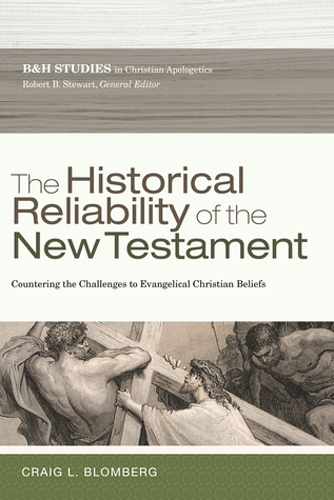
The Historical Reliability of the New Testament: Countering the Challenges to Evangelical Christian Beliefs (B&h Studies in Christian Apologetics)
Questions about the reliability of the New Testament are commonly raised today both by biblical scholars and popular media. Drawing on decades of research, Craig Blomberg...
About BiblicalTraining®
BiblicalTraining® wants every Christian to experience a deep and loving relationship with Jesus by understanding the life-changing truths of Scripture. To that end, we provide a high-quality Bible education at three academic levels taught by a wide range of distinguished professors, pastors, authors, and ministry leaders that moves from content to spiritual growth, all at no charge. We are a 501(c)(3) non-profit funded by gifts from our users. We currently have over 180 classes and seminars, 2,300 hours of instruction, registered users from every country in the world, and in the last two years 1.4 million people watched 257 terabytes of videos (11 million lectures).
Our goal is to provide a comprehensive biblical education governed by our Statement of Faith that leads people toward spiritual growth.