The Historical Reliability of the Gospels - Lesson 24
Knowledge of the Jesus Tradition in the Early Epistles (Part 2/2)
Dr. Blomberg continues by pointing out the similarities of key themes between Jesus and Paul, including justification by faith, the Kingdom of God, and Christology. He emphasizes the unique purpose of Paul’s letters, focusing on practical matters within early Christian communities, rather than recounting Jesus’ life events. The session concludes by addressing the challenges some people face in accepting the miraculous stories in the Gospels.

I. A SUMMARY OF THE KEY ITEMS
II. OTHER POSSIBLE DETAILS
III. A COMPARISON OF KEY THEMES
A. Justification by faith and the Kingdom of God
B. The role of the law
C. Gentile women
D. The Church
E. Christology
F. Eschatology
IV. KEY REASONS FOR THE REMAINING SILENCE
A. Epistolary audiences
B. Absence from later letters by other NT authors
C. Genre of epistles
D. Centrality of death and resurrection
E. Presuppositions of letter writers’theology
F. Role of inspiration
G. Paul’s tension with Jerusalem apostles?
This is a class on the historical reliability of the New Testament Gospels. Session 24 and a continuation of what we began in our last segment on the knowledge of the Jesus tradition in the early epistles, especially the major letters of the Apostle Paul. Widely agreed upon to have been written in the fifties and therefore before any of the written gospels appeared in the sixties. So that when Paul betrays awareness of Jesus teaching and life and ministry, he didn't just ask his friend Dr. Luke to pull his scrawl out of his chariot. He had access to oral tradition that obviously was preserving things fairly reliably. We looked at the most obvious examples of knowledge of the Jesus tradition in Paul in our previous lecture. We can turn to. A summary of the key events in Jesus life that are disclosed. They tend to focus on Jesus birth. Is there an allusion in Galatians four four to. The virgin birth when Paul speaks of Jesus, born a woman only. That's uncertain. Certainly an awareness of the Last Supper and repeated focus on Jesus death and on his resurrection. But there is not a lot that is disclosed about events in Jesus life apart from the knowledge of his teachings. There are other possible details. That we could look at. And in a class. Of considerably greater length than this we could. Turned to the question of his miracles. There was little tradition in the background of Pharisees to expect miracles to attach to their ministry. And yet it seems to be a significant feature, as Paul discloses in Galatians three and in other places, second Corinthians 12 of his ministry. Is he aware that this was a significant part of Jesus own ministry and therefore open to the Spirit doing similar things in his life? What about his teaching on prophecy and preferring prophecy to tongues? Is he aware of the significant dimension muted or submerged in later Christian thought of Jesus as prophet? Muted because there were more exalted titles that Christians felt more worthy to apply more consistently to Christ.
There are other possible details we could look at, but what I want to do primarily in this segment. Is focus on a comparison of key themes. In Jesus, and particularly the Synoptic Jesus and Paul. Themes which sometimes are said to point out more the differences between Jesus and Paul than any similarities. But I think wrongly so. It's hardly debated. That justification by faith is a central theme in Paul's letters, especially in Galatians and Romans, and that the Kingdom of God, especially for the Synoptic Gospels occurring more than 80 times, is a major topic for Jesus conversation. But aren't they radically different central topics? There are differences, to be sure. Part of it has to do with English wording. Justification comes from the same root as justice. Righteousness. DICKERSON. The Greek noun de kiro, the Greek cognate verb. And sometimes we are so used to thinking of justification. As a declaration of human righteousness through no merit of our own, bringing us into rights, standing before God, that we forget the root connection with the theme. Of justice or righteousness. Jesus in the Sermon on the Mount in Matthew six, in a very famous passage. Says seek first his kingdom and his chaos soon his righteousness. At least that's how Matthew's Greek reads. And all these things will be given to you as well. What if that had been translated? Seek first his kingdom and his justification. It could have been same Greek word. With the two. Authors and figures be seen as closer together. What about the little parable of the Pharisee and the tax collector in live Chapter 18, F.F. Bruce once said, This is the most Pauline passage in all of the gospels. That is Paul like in its contents. To some who are confident.
Writes Luke in 1809 of their own righteousness. What if we translated that justification? And looked down on everyone else. Jesus told this parable. And you know the story. Two men pray the Pharisees expected to be the hero, the tax collector, the goat. To borrow a language from Charlie Brown. But it's the other way around. The one man is abject in his repentance. The other is supercilious. And at the end of the passage, verse 14 declares that Jesus rendered the verdict. That the tax collector, rather than the Pharisee, went home. Justified the chaos before God. You know, married of his own. Suddenly, Paul and Jesus don't look quite so far apart. Both are ways of describing salvation. Salvation that Paul acknowledges is present. But not yet. Not yet completed. Exactly the two prongs that Jesus regularly teaches about the kingdom. And a fascinating and telling passage dealing with the kingdom found in each of the three Synaptics. We can read it from Matthew 19, is the story of Jesus and the rich young ruler. This even brings the Gospel of John into the mix and some of its distinctive voice. A man came up to Jesus and asked teacher, What good thing must I do to get eternal life? Usually it's John's gospel that talks about eternal life. Paul is a close second. You don't get that expression often in the synoptic, but here you do. The dialog ensues. Jesus makes strong demand. The man goes away sorrowful. And then Jesus in verse 23 says to his disciples, Truly, I tell you, it's hard for someone who is rich to enter the kingdom of heaven. He says it again in verse 24, only this time he talks about entering the kingdom of God. A clear sign that these are synonymous terms.
And finally the disciples reply in verse 25 Who then can be saved? The broadest term of all for salvation. Not every passage that uses all of these terms means exactly the same thing. But at least in this context, Matthew shows that salvation. Which Paul so often represents with justification, can also be equated with entering the kingdom of heaven, entering the kingdom of God and having eternal life. Let's not drive quite so deep a wedge between all of these concepts. Here's one that is much more straightforward. Matthew 517 quotes Jesus as saying He came not to abolish the law but to fulfill it. And he proceeds to illustrate with a half a dozen quotations of the Old Testament and his interpretations of them. And Paul in Galatians five, likewise says the law is fulfilled. In the command to love one's neighbor. The very quotation of the law with which Jesus ends. Extending it even to loving one's enemies. In the Sermon on the Mount. What is. Jesus. Roll to the outcast. What is Jesus roll toward women and Gentiles and Gentile women. We wish perhaps in our modern world. He had come out and made an absolute full, clear cut declaration of their utter equality with everyone else. And instead he banters with the side of an Asian woman in Mark seven and parallels and finally extraordinarily grants her wish to heal her daughter. But not before reminding her that as a Gentile. She is second in the sequence of God bringing salvation to the Jew first. Paul has some statements which, at least in the first century, make it clear that there were certain leadership roles in home and family that he reserved for men. But in Galatians 328, speaking about the division between Jew and Gentile, between male and female, between the free person and the slave, she is certainly for salvation.
An absolute equality. That was not clear in the Judaism or in the Greco-Roman world that preceded him. Some striking parallels. Did Jesus intend to establish a church? Some scholars have said no. The word church appears only three times. Only in Matthew. And only in Jesus discourses in chapters 16 and 18. It's all over the writings of the Apostle Paul. But Jesus certainly envisioned a community of his followers. The 12 that he called that we saw in earlier lectures are regularly acknowledged as an accepted and authentic part of the synoptic tradition, even by many outside of evangelical circles. And he expected that movement to outlive him and to go through persecution and tribulation and to be diminished in its size and power immediately before his return, which would then come to vindicate. His teaching and the community he established. And all of those themes likewise pervade the writings of the Apostle Paul. Even as significant a theme as the Christology. The titles. Not just the non titular Christology we discussed in a previous lecture, but the very titles applied to Christ Messiah. Son of God, Lord. There are four titles in the Gospels that far outnumber any others that are used for Jesus on his lips or on the narrator's speech. And those are the four son of man, his favorite form of self address, which does not appear in Paul at all. But the other three do. Lord Christ or Messiah. Son of God. Are also the three most central Christological titles. In Paul's writings. Eschatology. We already touched on some of this. We can expand. Paul imagining a time when believers would be caught up to meet the Lord in the air. Jesus talking about. Two women grinding at a meal. Grinding meal at a mill.
Two men working in a field, one cake and one left. The doctrine that has come to be called the rapture based on the the word for seizing or snatching. Believers from the Earth in Paul's writings, a recognition of a time of suffering and tribulation before Christ's return, a recognition of a visible, world wide public coming of the Lord on the clouds of heaven. You find it in Matthew 24 and parallels. You find it in first Thessalonians five and finally a giving way to an eternal state. Which, John, in the Book of Revelation. Well, borrowing language from Isaiah, expanding his teaching to new heavens and new Earth. So. Why still not more? Granted all of those points of contact someone who has just read the Gospels, who shortly thereafter works through the major letters of Paul. Can still be. Excused for responding. I expected even more than that. I expected more direct quotations. I, I expected more events from Jesus life. I think there are a number of key factors that come into play here. Who are the Epistles written to? Christians. Individuals or churches who are already believers. They know the gospel story. The reason for the writing of the letters is specific issues that have emerged in those congregations. That's what letter writers address. A gospel was written to tell the story of the life of Jesus. There are different purposes. There are different audiences. Consider John as a gospel writer. We also have three letters attributed to him First John, Second John and third John near the end of the New Testament. That are virtually silent. About the life. And teachings of Jesus. And yet there's no debate here. Even those who aren't convinced that the Apostle John wrote the gospel are are convinced that whoever wrote the Gospel also wrote the three epistles.
With rare exception. Someone who knew all the information in the Gospel of John wrote three letters to the same effusion Christian communities without saying anything explicit from Jesus earthly life. But it doesn't mean he didn't know them. It meant letters served different purposes, even when they were addressed to the same audiences, which is closely tied up with the fact that they are different literary genre. They are what students of hermeneutics or principles of interpreting scripture call occasional literature written to specific occasions. Much more so than the Gospels tend to be. The Corinthian congregation had asked Paul a series of pointed questions in a letter, and he had found out more information from members from the household of Chloe, and he's addressing those topics. Where they tie in with something from Jesus teaching. He does allude to it. But the point is not to rehearse the life of Christ. That's for a different literary genre. And then we do have to remember what we've stressed several times in these lectures that the main feature of Jesus life as early Christians came to understand him was his death and resurrection. Not each of the miracles or teachings as significant as they were. That preceded the end of his life. Paul assumes knowledge of these events. The other Epistle writers know that their audiences have already heard the gospel story. That's why they're Christians. They are doing something else. And they are doing it, as we have seen, and quoting first Corinthians seven with the knowledge of the spirit guiding them, inspiring them. Which also gives them a freedom not to feel that they have to quote Jesus. As a credible authority to support what they're saying. The reason Jesus is still speaking through his spirit to them.
And finally, at least in the case of the Apostle Paul. There is. What some have perceived to be a tension or at least a potential tension, thanks to those who have come from the Jerusalem apostles claiming their authority, rightly or wrongly, and preaching what Paul in Galatians calls Judea missing the need to keep the law for salvation. Probably not what the apostles themselves were teaching, but the apostles were. Closer to traditional Judaism in their lifestyle, then it seems Paul has become as the apostle to the Gentile world most prominently. And those who are coming from these apostles are at least claiming. A more legitimate, higher authority based on their association with the 12 then Paul can claim. If Paul regularly grounds what he has to say in Jesus. He's playing the same game as it were that the apostles are. We walked with Jesus. We can report it his way. And Paul repeatedly says, I am in no way inferior to those apostles. He had his appearance. Of Jesus on the road to Damascus. And he has had the risen Lord communicate with him consistently ever since. We are three quarters. More than three quarters. We are 5/6 of the way through our series. But there is a topic that has. Been touched on, but only in passing. That needs now to get much more serious attention. There are many people in the history of the church who have said I would be willing in principle to grant you everything you have spoken of in these first 24 segments. I might disagree with this or that statement, but for the sake of discussion, let's say you're right in everything you've said thus far. The problem is the gospels are just so permeated with stories of the miraculous.
That our incredible. That. I can't believe the Gospels. As a whole package. And that issue is perhaps as urgent in a 21st century. Scientific world as ever. What shall we say to these things? Tune in again.
- This lesson teaches you to critically assess myths, legends, and misleading claims about the historical reliability of the New Testament Gospels, highlighting the importance of skepticism towards new discoveries.0% Complete
- Gain insight into the historical process that led to the canonization of the New Testament, focusing on how the Gospels of Matthew, Mark, Luke, and John became universally recognized as authoritative texts based on their apostolic origin.0% Complete
- Dr. Blomberg explores the apocryphal and Gnostic Gospels, showing how their fantastical accounts, such as Jesus performing miracles as a child, differ from the canonical Gospels.0% Complete
- The New Testament Gospels are highly reliable, while textual variants may be numerous, most involve minor details that do not affect the meaning of the texts, reinforcing the Gospels’ historical authenticity.0% Complete
- Dr. Blomberg explains the reliability of Bible translations, detailing different approaches like formally equivalent, dynamically equivalent, and optimally equivalent.0% Complete
- Explore the historical reliability of the New Testament Gospels by analyzing their authorship and dating. Dr. Blomberg provides insights into how close they are to eyewitness accounts based on evidence from early church writings.0% Complete
- Oral tradition and theological motivations shaped the Gospels, which likely present reliable historical accounts despite theological biases, maintaining consistency with early Christian teachings.0% Complete
- Three recent areas of study encourage us to accept the reliability of oral tradition. They are studies in the nature of an oral culture, how the Gospels follow an informal controlled tradition, and the effect of social memory.0% Complete
- Discussion of the literary dependence among the gospels, formally known as the “Synoptic Problem.” Argues that Mark was the first written source, and Matthew and Luke borrow from him, and from a common document (‘Q’) plus used their own material.0% Complete
- The Gospels are ancient biographies focusing on key events in Jesus’ life, particularly his death and resurrection. Their style and structure differ from modern biographies, influencing how we assess their reliability and literary genre.0% Complete
- Gain insight into how archaeology supports the reliability of the New Testament Gospels, confirming details about Jesus’ teachings, ministry sites, and significant events through recent and ancient discoveries.0% Complete
- Learn about the non-Christian historical sources that attest to Jesus’ existence, including testimonies from Roman and Jewish writers, and despite their bias, they validate aspects of the Gospels, confirming Jesus’ life, teachings, and crucifixion.0% Complete
- Using the same criteria that historians used to judge the reliability of ancient documents, Dr. Blomberg uses to judge the apocryphal and Gnostic gospels’ historical reliability with twelve specific criteria.0% Complete
- This lesson highlights the evolution of scholarly quests to understand the historical Jesus, from early 19th century theories to the present, examining different portraits based on his actions and teachings.0% Complete
- Why do so many different scholars have such different views of Jesus? There is more similarity than is expected at first, but the differences are due to things such as scholar’s presuppositions.0% Complete
- Gain insight into authentic portions of the Synoptic gospels based on the previous criteria for historical reliability, including key aspects of Jesus’ life and his teachings on the Kingdom of God.0% Complete
- Looking at Jesus’ self-understanding as the Divine Messiah, his unique authority, and inviting people to follow him in God’s restorative rule, reveals the historical reliability of the Gospels.0% Complete
- The variations in the Synoptic Gospels often reflect the theological and literary aims of their writers, not contradictions, and interpreting these differences within the first-century historical context is key.0% Complete
- Dr. Blomberg looks at harmonization problems between the Synoptics and the Gospel of John, exploring John’s unique content and theological focus, chronological differences, and distinct writing style.0% Complete
- By examining the overall features of John, you’ll gain insight into its connections to the Synoptic Gospels, focusing on details such as authorship, narrative style, and theological themes.0% Complete
- This lesson helps you understand the historical reliability of John’s Gospel, focusing on key passages and their connection to the Synoptic Gospels, offering evidence for their authenticity and significance.0% Complete
- John’s Gospel offers valuable historical insights, especially through themes like purification and Jesus’ unique ministry, providing a clearer picture of events and their theological significance in comparison to the Synoptic Gospels.0% Complete
- Dr. Blomberg reveals how the early New Testament epistles, particularly Paul’s letters, contain significant references to the teachings of Jesus, showing a well-established oral tradition that predates the written Gospels and supports their historical reliability.0% Complete
- Key themes of justification and the Kingdom of God in Paul’s teachings parallel Jesus’ life, though these epistles served distinct purposes within the early Christian communities.0% Complete
- Learn about the miracles in the Gospels and their relationship to a supernatural God, which argue for God’s existence and challenge atheistic views.0% Complete
- This lesson contrasts miracles in the Bible with ancient myths and traditions, defending their authenticity through literary and historical evidence.0% Complete
- Dr. Blomberg discusses the Gospel accounts of Jesus’ virginal conception and nativity, analyzing scriptural details, supernatural phenomena, and possible contradictions in the accounts of Matthew and Luke.0% Complete
- Explore various theories about the resurrection of Jesus, including “swoon theory” and “body theft,” and examine early Christian testimony, gaining insight into why the resurrection story endures despite challenges.0% Complete
- Does a defense of biblical reliability lead to any new insights about Jesus himself? Or does it simply bring us back to the status quo of historical Christian orthodoxy? This lesson strives to reveal a fuller picture of Jesus.0% Complete
- Dr. Blomberg summarizes his main points by reviewing textual integrity, the role of ancient sources, and archaeological evidence. He also provides an authentic picture of Jesus’ life, teachings, and the miraculous aspects of his ministry.0% Complete
Lessons
- This lesson teaches you to critically assess myths, legends, and misleading claims about the historical reliability of the New Testament Gospels, highlighting the importance of skepticism towards new discoveries.0% Complete
- Gain insight into the historical process that led to the canonization of the New Testament, focusing on how the Gospels of Matthew, Mark, Luke, and John became universally recognized as authoritative texts based on their apostolic origin.0% Complete
- Dr. Blomberg explores the apocryphal and Gnostic Gospels, showing how their fantastical accounts, such as Jesus performing miracles as a child, differ from the canonical Gospels.0% Complete
- The New Testament Gospels are highly reliable, while textual variants may be numerous, most involve minor details that do not affect the meaning of the texts, reinforcing the Gospels’ historical authenticity.0% Complete
- Dr. Blomberg explains the reliability of Bible translations, detailing different approaches like formally equivalent, dynamically equivalent, and optimally equivalent.0% Complete
- Explore the historical reliability of the New Testament Gospels by analyzing their authorship and dating. Dr. Blomberg provides insights into how close they are to eyewitness accounts based on evidence from early church writings.0% Complete
- Oral tradition and theological motivations shaped the Gospels, which likely present reliable historical accounts despite theological biases, maintaining consistency with early Christian teachings.0% Complete
- Three recent areas of study encourage us to accept the reliability of oral tradition. They are studies in the nature of an oral culture, how the Gospels follow an informal controlled tradition, and the effect of social memory.0% Complete
- Discussion of the literary dependence among the gospels, formally known as the “Synoptic Problem.” Argues that Mark was the first written source, and Matthew and Luke borrow from him, and from a common document (‘Q’) plus used their own material.0% Complete
- The Gospels are ancient biographies focusing on key events in Jesus’ life, particularly his death and resurrection. Their style and structure differ from modern biographies, influencing how we assess their reliability and literary genre.0% Complete
- Gain insight into how archaeology supports the reliability of the New Testament Gospels, confirming details about Jesus’ teachings, ministry sites, and significant events through recent and ancient discoveries.0% Complete
- Learn about the non-Christian historical sources that attest to Jesus’ existence, including testimonies from Roman and Jewish writers, and despite their bias, they validate aspects of the Gospels, confirming Jesus’ life, teachings, and crucifixion.0% Complete
- Using the same criteria that historians used to judge the reliability of ancient documents, Dr. Blomberg uses to judge the apocryphal and Gnostic gospels’ historical reliability with twelve specific criteria.0% Complete
- This lesson highlights the evolution of scholarly quests to understand the historical Jesus, from early 19th century theories to the present, examining different portraits based on his actions and teachings.0% Complete
- Why do so many different scholars have such different views of Jesus? There is more similarity than is expected at first, but the differences are due to things such as scholar’s presuppositions.0% Complete
- Gain insight into authentic portions of the Synoptic gospels based on the previous criteria for historical reliability, including key aspects of Jesus’ life and his teachings on the Kingdom of God.0% Complete
- Looking at Jesus’ self-understanding as the Divine Messiah, his unique authority, and inviting people to follow him in God’s restorative rule, reveals the historical reliability of the Gospels.0% Complete
- The variations in the Synoptic Gospels often reflect the theological and literary aims of their writers, not contradictions, and interpreting these differences within the first-century historical context is key.0% Complete
- Dr. Blomberg looks at harmonization problems between the Synoptics and the Gospel of John, exploring John’s unique content and theological focus, chronological differences, and distinct writing style.0% Complete
- By examining the overall features of John, you’ll gain insight into its connections to the Synoptic Gospels, focusing on details such as authorship, narrative style, and theological themes.0% Complete
- This lesson helps you understand the historical reliability of John’s Gospel, focusing on key passages and their connection to the Synoptic Gospels, offering evidence for their authenticity and significance.0% Complete
- John’s Gospel offers valuable historical insights, especially through themes like purification and Jesus’ unique ministry, providing a clearer picture of events and their theological significance in comparison to the Synoptic Gospels.0% Complete
- Dr. Blomberg reveals how the early New Testament epistles, particularly Paul’s letters, contain significant references to the teachings of Jesus, showing a well-established oral tradition that predates the written Gospels and supports their historical reliability.0% Complete
- Key themes of justification and the Kingdom of God in Paul’s teachings parallel Jesus’ life, though these epistles served distinct purposes within the early Christian communities.0% Complete
- Learn about the miracles in the Gospels and their relationship to a supernatural God, which argue for God’s existence and challenge atheistic views.0% Complete
- This lesson contrasts miracles in the Bible with ancient myths and traditions, defending their authenticity through literary and historical evidence.0% Complete
- Dr. Blomberg discusses the Gospel accounts of Jesus’ virginal conception and nativity, analyzing scriptural details, supernatural phenomena, and possible contradictions in the accounts of Matthew and Luke.0% Complete
- Explore various theories about the resurrection of Jesus, including “swoon theory” and “body theft,” and examine early Christian testimony, gaining insight into why the resurrection story endures despite challenges.0% Complete
- Does a defense of biblical reliability lead to any new insights about Jesus himself? Or does it simply bring us back to the status quo of historical Christian orthodoxy? This lesson strives to reveal a fuller picture of Jesus.0% Complete
- Dr. Blomberg summarizes his main points by reviewing textual integrity, the role of ancient sources, and archaeological evidence. He also provides an authentic picture of Jesus’ life, teachings, and the miraculous aspects of his ministry.0% Complete
Class Resources
Recommended Books
The Historical Reliability of the Gospels
For over twenty years, Craig Blomberg's The Historical Reliability of the Gospels has provided a useful antidote to many of the toxic effects of skeptical criticism of the...

The Historical Reliability of John's Gospel: Issues & Commentary

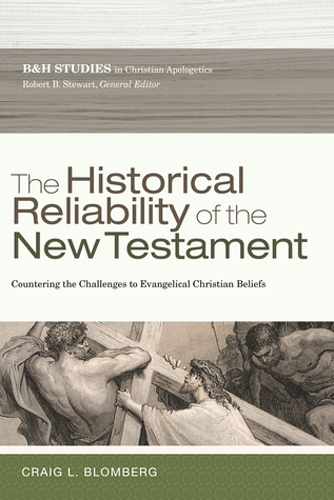
The Historical Reliability of the New Testament: Countering the Challenges to Evangelical Christian Beliefs (B&h Studies in Christian Apologetics)
Questions about the reliability of the New Testament are commonly raised today both by biblical scholars and popular media. Drawing on decades of research, Craig Blomberg...
About BiblicalTraining.org
BiblicalTraining.org wants every Christian to experience a deep and loving relationship with Jesus by understanding the life-changing truths of Scripture. To that end, we provide a high-quality Bible education at three academic levels taught by a wide range of distinguished professors, pastors, authors, and ministry leaders that moves from content to spiritual growth, all at no charge. We are a 501(c)(3) non-profit funded by gifts from our users. We currently have over 180 classes and seminars, 2,300 hours of instruction, registered users from every country in the world, and in the last two years 1.4 million people watched 257 terabytes of videos (11 million lectures).
Our goal is to provide a comprehensive biblical education governed by our Statement of Faith that leads people toward spiritual growth.