The Historical Reliability of the Gospels - Lesson 27
The Virginal Conception: Nativity or Naiveté
The Gospels’ accounts of Jesus’ virginal conception and nativity lack strong parallels in ancient texts, debunking the idea that early Christians fabricated the story. Exploring the key similarities and differences in Matthew and Luke’s birth narratives, such as angelic revelations, the guiding star, and events like the census and Herod’s massacre, bring deeper understanding into their historical credibility.

I. GENERAL ISSUES
A. The comparative religions question
1. Alexander
2. Caesar
3. Myths
B. The illegitimacy of Jesus
C. Is Matthew a midrash?
D. Commonalities between Matthew and Luke
II. SPECIFIC PROBLEMS
A. The specific supernatural phenomena in the narratives besides the conception
B. The flight to Egypt
C. Nazareth vs. Bethlehem
D. Herod’s pogrom
E. Quirinius’ census
III. POSITIVE SUPPORT
A. Historical verisimilitude
B. Luke 1:1-4 vs. the rest of chapters 1–2
C. The restrained nature of the predictions
D. Lack of later theological use in NT
E. Anti-Christian polemic in 2nd—5th centuries
This is a class on the historical reliability of the New Testament Gospels Session 27 the Virginal conception, Nativity or Naivete. Can we believe the Christian claim that Jesus was born? From the young Jewish woman, Mary. Of Nazareth. Apart from the normal biological processes. Of an involvement of any man. And certainly her betrothed, Joseph. Once again, as with miracles, more generally, there are questions that emerge from the study of comparative religions. In 1930, the old Princeton scholar J. Gresham Mason published an amazing compendium of all the known traditions from the ancient Mediterranean world in Jewish, as well as in Greek and Roman circles, about anything that might remotely be considered a virginal conception, or more popularly, though slightly inaccurately, a virgin birth. And showed that there are no close parallels. No one has found new texts in the last 80 plus years. Mason's work has often been ignored, but it has never been refuted. What are some of these so called parallels? A famous one involves Alexander the Great's birth to Philip of Macedon, who, at least in later biographers conspicuously absent from his earliest ones, is said to have not been able to his approach his wife on their wedding night because of a giant. Divine python encircling her body and that. Is where the baby Alexander came from. Yes, technically a virginal conception. But is that a parallel? Later, legends about Augustus Caesar also spoke of a virgin birth but again not in. His earliest biographers. Or maybe we need to imagine some of those purely mythical stories of the gods or goddesses disguising themselves. In human farm. And coming to Earth. And having sex with young women who may or may not have. Been virgins. But there is no account in Matthew or Luke.
Of God appearing in human form. Ah, perhaps were to think of a parallel in that very sensitive and delicate story of one of the Greek gods descending to earth with a glorious, bejeweled knife. On which tip was balanced. The Divine Holy Seed. Ever so carefully impregnated. Let's hope it was carefully in the woman's body. A true parallel. Seriously. It is interesting that there is widespread support. For understanding Jesus to have been born out of wedlock. When we talked about non-Christian testimony to the birth of Jesus, we saw that claim repeatedly emerge. We also saw the conviction that it must have been some Roman soldiers stationed in Nazareth whose name was alternately called Parthians or Panthera, or some words similar to the Greek word for Virgin. An easy corruption and easily understandable corruption of the tradition. Jesus would have gone through his life in Orthodox Jewish circles with the stigma for anyone who did not believe in Mary's outrageous story. Of being illegitimate. What Christian author would have made that up, even thinking it would somehow exalt Jesus, making him like one of the gods or Alexander or Augustus. Knowing the downside. Knowing the difficulty of then commending this Jesus as anybody worthy of adoration. If you went through life to use the Aramaic term of the day as a mom's hair. As one who was born out of wedlock. Is Matthew a midrash? Is the story in chapters one and two that so consistently is said to fulfill various Old Testament scriptures, merely a partly legendary composition based on those Old Testament scriptures as a kind of commentary, a midrash on them. Five separate quotations appear in Matthew one and two. Surrounding the. Conception and birth and early months of Jesus life. Isaiah 714, a virgin shall conceive and give birth to a son and they will call his name Emmanuel.
Micah five two. But you, Bethlehem, in the land of Judah, are by no means least among the rulers of Judah. Four out of you will come. A ruler who will shepherd my people. Israel. Hozier, 11 one out of Egypt. I called my son Jeremiah, 3115. A voice is heard in Rama, weeping and greeting and great morning Rachael, weeping for her children, refusing to be comforted because they are no more. And then a statement that's not attributed to a specific text, but through the prophets more generally that he would be called a Nazarene. And it's true. The narrative of Matthew 1 to 2 is comprised entirely of information. That amplifies that. Those five fulfillment quotations. Did Matthew find the texts that prophesied about Jesus and then create his story on their basis, as has been charged in some circles? If so, why did he pick? This precise collection of texts. There is a forward looking direction to Isaiah seven, to Micah five, but not to Hosea 11 out of Egypt. I have called my son is a past tense statement, not a prediction. And in context, it refers to God's calling of Israel collectively. As his spiritual offspring at the time of the Exodus and bringing them into the promised land. If Matthew was freely selecting Old Testament texts and building his story around them, why not pick texts that were all predictive? This is typology. This is recognizing patterns of God acting in history that are recurring. Why pick a text like Jeremiah 31? There is present tense rather than future. A voice is heard in Rama Rachel, weeping for her children, referring to the mothers in Israel at the time of the Babylonian exile. Already type illogically reapplying the story of Rachel's day, collectively personifying the mothers in Israel as like Rachel weeping for her children.
When the sons of Jacob went down to Egypt. If Matthew was making this up, he could make history and prophecy match much more clearly. It's true. Matthew and Luke both have two chapters surrounding Christ's infancy and early years, and much that is different. Luke focuses on the experiences of two women, Elizabeth and Mary, and how their lives become intertwined and the prophecies surrounding the birth of their two very special sons. But there are also our key commonalities, despite literary independence. Both gospels, the two that describe Jesus birth. Know the names of all the main characters. Mary. Joseph. Jesus. Know that supernatural revelation. Explained. A virginal conception. A divine son. Nazareth. Bethlehem. Both are involved in both accounts. The core is there in common. But it's not just the virginal conception. You say. There are other supernatural phenomena. Those angelic revelations to Joseph and Mary. The star. A celestial sign. That's the match I saw and came and then it somehow moved supernaturally to guide them to the very home. Where are the Christ Child Lay? Many attempts have been made to identify that star with some special astronomical phenomenon of the day. And it is possible that we should make such an equation. But at the very least, the movement from Jerusalem to Bethlehem had to be some kind of supernatural event. It can't just be explained naturalistically, coinciding with providential timing. Once we have an acceptance of other miracles in the gospels. Is there some insuperable problem? With this one. What about? The flight to Egypt narrated only in Matthew. It's sometimes alleged that not only is it not in Luke, but there is no place in Luke for it to have even happened. But we do read. In Luke, chapter two. And verse 39, when Joseph and Mary had done everything required by the law of the Lord.
Everything. The only thing that's been narrated is Jesus circumcision and the sacrifice offered in accompaniment with that. Then we're told about how the ancient prophets, Simeon and the Prophetess, Anna, speak about the significance of this child. But 238 brings that episode to an end. There could be easily a gap at this point for other things to have happened that Luke. Does not record just as there is a gap after verse 42, when Luke writes in verse 41 every year, Jesus parents went to Jerusalem and then jumps in verse 42 to when he was 12 years old. Of course, as we've seen in previous talks, the gospel writers are selective, but there's no necessary contradiction here. What about John's gospel that in Chapter seven and other places involves the the debate that Jesus can't be the Messiah because there's no scripture that says that the Messiah will come from from Galilee and certainly not from an out of the way town like Nazareth in Galilee. But John knows. Jesus was born in Bethlehem. He presents this story to point out the ignorance of some in the crowds of Jesus origin. Not. That Jesus truly was born in Nazareth. Rather than in Bethlehem. What about the massacre of the innocent children? Josephus itemized us in great detail many of the atrocities perpetrated by Herod the Great and not a hint of this one. Could it really have happened? An escaped Josephus notice. Or been so insignificant that Josephus not record it. Perhaps Bethlehem was estimated to be a city of maybe no more than 500. In Jesus day, even in a community, even in a culture that valued large families, How many children at any given moment would there have been age two and under? Couple dozen.
For generous. And the massacres Josephus describes involve considerably greater numbers of individuals than that. And usually adults. In a world that didn't value infants the way we do certainly didn't value recording historical events involving. Primarily or exclusively infants. Can we accept? Luke Chapter two. With its apparently inaccurate reference to the census when Berenice was governor of Syria. Which from Josephus we know to have occurred in A.D. six. Not early enough to have anything to do with Christ's birth. The updated NIV reminds us of what a reader of Greek can recognize, however, that in Luke two two, another legitimate translation of this verse would be that this census took place before. Queerness was governor of Syria, the much better known census. And maybe that's the solution to that oft mentioned problem. From specific issues that seem to weigh against the virginal conception, we turn to more positive support. Matthew One, two, two. Luke wanted to breathe the very air of. Jewish customs and history and practices in the early part of the first century. Whether it's circumcision on the eighth day. Whether it's the sacrifice for the poor. Which Mary and Joseph apparently were at that time, so that they were allowed to offer a turtle dove or pigeons. Whether it's. Matthew's reference to a house. Not. A manger seen any longer? Because by the time Magi would have come from Arabia or Persia, it would have been weeks, months. Or maybe more than a year later. Is that why Herod killed all of the babies up to the age of two that he could lay his hands on? There is historical verisimilitude. There is also a very fascinating change in style between Luke's very classical and elegant Greek in his Prolog, in his opening four verses and his reasonably good Greek style throughout most of his gospel.
Not quite as elegant because he's often echoing his sources. Mark and perhaps Q. And a very sanitized form of Greek that pervades the rest of chapters one and two, dominated by the perspective of Mary. Did Luke interview Mary during that period between 57 and 59 A.D. when he was in Judea as a free man while Paul was imprisoned under Felix and Festus, hoping soon to be freed to carry on his ministry. Is Luke one and two primarily? Mary's perspective? And perhaps Joseph more responsible for Matthew wanting to. That would suggest some eyewitness history. And back to the supposed issue of parallels. What exactly do we learn about virginal conception? From these opening chapters of Matthew and Luke. The angel appears to marry the Angel Gabriel in Luke one and says, You will conceive. And give birth. To a son. And you are to call him Jesus. He will be great. He will be called the son of the most high. The Lord God will give him the throne of his father, David, and he will reign over Jacob's descendants forever. His kingdom will never end, Mary says. How will this be since I am a virgin? Here is. The glorious physiological detail. Of what is about to happen. Not for the squeamish. The angel answered. The Holy Spirit will come on you. And the power of the most high. We'll overshadow you. It's not squeamish at all. It's not physiological at all. Doesn't satisfy any of our curiosity in our sexually charged world. Holy Spirit will make it happen. Well, then, maybe Matthew. Well, give us the juicy detail, Matthew. Chapter one. Here. The angel appears in a dream to Joseph and says Joseph, son of David. Matthew 120. Do not be afraid to take Mary home as your wife, because what is conceived in her is from the Holy Spirit.
She will give birth to a son. And you are to give him the name Jesus because he will save his people from their sins. Not even the statement of the Holy Spirit will overshadow her, just that He is from him. How. We're not told. Not any interest. The most restrained description possible. Of what will happen. There may be an allusion in Galatians four four to the virgin birth, as we discussed in an earlier lecture, but if so, it is the only one. The virgin birth is never listed in any series of fundamental Christian truths or teachings. It was embarrassing. It was potentially counterproductive. Which suggests it wasn't invented. But it also suggests. It wasn't invented because no one made very much of it. Later on. And those who did were those who fought against Christianity. Origins reference to Celsus polemic against Christianity. Irenaeus his description of the heresies that denied various teachings of Christianity. Jewish rhetoric and the rabbinic traditions. It was embarrassing. It was awkward. Would not have been invented. It was used against Christians. By outsiders. And what's more, it doesn't even solve the theological issues that it sometimes claimed to solve. How could Jesus be fully God and fully human? It is consistent. With those convictions. But if Jesus was born even of one human parent's DNA, unless one adopts the later Roman Catholic doctrine of the sensuousness of Mary, you still have the problem of. Sinful human. Progeny. And if you do adopt the later Roman Catholic doctrine, then all you do is push the question back one generation. How was Mary conceived? Sinless. And you have to answer. With the apocryphal proto evangelism of James. Her mother's parents. HONORE And you walk him. Had the one sexual encounter in the history of the world.
In which no lustful thought ever drove it. But where in the Bible? Is desire for one's duly married spouse called lustful. That reflect reflects a very negative view of sex in and of itself that cannot have sprung from Judaism. Could only have come at a later date. When. That strand of Hellenistic or Greek thought that devalued the material world inherently had begun to corrupt early Christianity. Seems that there is very good support historically for the virginal conception of Christ. But what about the other end of his life? What about the resurrection? We must turn to that in our next lecture.
- This lesson teaches you to critically assess myths, legends, and misleading claims about the historical reliability of the New Testament Gospels, highlighting the importance of skepticism towards new discoveries.0% Complete
- Gain insight into the historical process that led to the canonization of the New Testament, focusing on how the Gospels of Matthew, Mark, Luke, and John became universally recognized as authoritative texts based on their apostolic origin.0% Complete
- Dr. Blomberg explores the apocryphal and Gnostic Gospels, showing how their fantastical accounts, such as Jesus performing miracles as a child, differ from the canonical Gospels.0% Complete
- The New Testament Gospels are highly reliable, while textual variants may be numerous, most involve minor details that do not affect the meaning of the texts, reinforcing the Gospels’ historical authenticity.0% Complete
- Dr. Blomberg explains the reliability of Bible translations, detailing different approaches like formally equivalent, dynamically equivalent, and optimally equivalent.0% Complete
- Explore the historical reliability of the New Testament Gospels by analyzing their authorship and dating. Dr. Blomberg provides insights into how close they are to eyewitness accounts based on evidence from early church writings.0% Complete
- Oral tradition and theological motivations shaped the Gospels, which likely present reliable historical accounts despite theological biases, maintaining consistency with early Christian teachings.0% Complete
- Three recent areas of study encourage us to accept the reliability of oral tradition. They are studies in the nature of an oral culture, how the Gospels follow an informal controlled tradition, and the effect of social memory.0% Complete
- Discussion of the literary dependence among the gospels, formally known as the “Synoptic Problem.” Argues that Mark was the first written source, and Matthew and Luke borrow from him, and from a common document (‘Q’) plus used their own material.0% Complete
- The Gospels are ancient biographies focusing on key events in Jesus’ life, particularly his death and resurrection. Their style and structure differ from modern biographies, influencing how we assess their reliability and literary genre.0% Complete
- Gain insight into how archaeology supports the reliability of the New Testament Gospels, confirming details about Jesus’ teachings, ministry sites, and significant events through recent and ancient discoveries.0% Complete
- Learn about the non-Christian historical sources that attest to Jesus’ existence, including testimonies from Roman and Jewish writers, and despite their bias, they validate aspects of the Gospels, confirming Jesus’ life, teachings, and crucifixion.0% Complete
- Using the same criteria that historians used to judge the reliability of ancient documents, Dr. Blomberg uses to judge the apocryphal and Gnostic gospels’ historical reliability with twelve specific criteria.0% Complete
- This lesson highlights the evolution of scholarly quests to understand the historical Jesus, from early 19th century theories to the present, examining different portraits based on his actions and teachings.0% Complete
- Why do so many different scholars have such different views of Jesus? There is more similarity than is expected at first, but the differences are due to things such as scholar’s presuppositions.0% Complete
- Gain insight into authentic portions of the Synoptic gospels based on the previous criteria for historical reliability, including key aspects of Jesus’ life and his teachings on the Kingdom of God.0% Complete
- Looking at Jesus’ self-understanding as the Divine Messiah, his unique authority, and inviting people to follow him in God’s restorative rule, reveals the historical reliability of the Gospels.0% Complete
- The variations in the Synoptic Gospels often reflect the theological and literary aims of their writers, not contradictions, and interpreting these differences within the first-century historical context is key.0% Complete
- Dr. Blomberg looks at harmonization problems between the Synoptics and the Gospel of John, exploring John’s unique content and theological focus, chronological differences, and distinct writing style.0% Complete
- By examining the overall features of John, you’ll gain insight into its connections to the Synoptic Gospels, focusing on details such as authorship, narrative style, and theological themes.0% Complete
- This lesson helps you understand the historical reliability of John’s Gospel, focusing on key passages and their connection to the Synoptic Gospels, offering evidence for their authenticity and significance.0% Complete
- John’s Gospel offers valuable historical insights, especially through themes like purification and Jesus’ unique ministry, providing a clearer picture of events and their theological significance in comparison to the Synoptic Gospels.0% Complete
- Dr. Blomberg reveals how the early New Testament epistles, particularly Paul’s letters, contain significant references to the teachings of Jesus, showing a well-established oral tradition that predates the written Gospels and supports their historical reliability.0% Complete
- Key themes of justification and the Kingdom of God in Paul’s teachings parallel Jesus’ life, though these epistles served distinct purposes within the early Christian communities.0% Complete
- Learn about the miracles in the Gospels and their relationship to a supernatural God, which argue for God’s existence and challenge atheistic views.0% Complete
- This lesson contrasts miracles in the Bible with ancient myths and traditions, defending their authenticity through literary and historical evidence.0% Complete
- Dr. Blomberg discusses the Gospel accounts of Jesus’ virginal conception and nativity, analyzing scriptural details, supernatural phenomena, and possible contradictions in the accounts of Matthew and Luke.0% Complete
- Explore various theories about the resurrection of Jesus, including “swoon theory” and “body theft,” and examine early Christian testimony, gaining insight into why the resurrection story endures despite challenges.0% Complete
- Does a defense of biblical reliability lead to any new insights about Jesus himself? Or does it simply bring us back to the status quo of historical Christian orthodoxy? This lesson strives to reveal a fuller picture of Jesus.0% Complete
- Dr. Blomberg summarizes his main points by reviewing textual integrity, the role of ancient sources, and archaeological evidence. He also provides an authentic picture of Jesus’ life, teachings, and the miraculous aspects of his ministry.0% Complete
Lessons
- This lesson teaches you to critically assess myths, legends, and misleading claims about the historical reliability of the New Testament Gospels, highlighting the importance of skepticism towards new discoveries.0% Complete
- Gain insight into the historical process that led to the canonization of the New Testament, focusing on how the Gospels of Matthew, Mark, Luke, and John became universally recognized as authoritative texts based on their apostolic origin.0% Complete
- Dr. Blomberg explores the apocryphal and Gnostic Gospels, showing how their fantastical accounts, such as Jesus performing miracles as a child, differ from the canonical Gospels.0% Complete
- The New Testament Gospels are highly reliable, while textual variants may be numerous, most involve minor details that do not affect the meaning of the texts, reinforcing the Gospels’ historical authenticity.0% Complete
- Dr. Blomberg explains the reliability of Bible translations, detailing different approaches like formally equivalent, dynamically equivalent, and optimally equivalent.0% Complete
- Explore the historical reliability of the New Testament Gospels by analyzing their authorship and dating. Dr. Blomberg provides insights into how close they are to eyewitness accounts based on evidence from early church writings.0% Complete
- Oral tradition and theological motivations shaped the Gospels, which likely present reliable historical accounts despite theological biases, maintaining consistency with early Christian teachings.0% Complete
- Three recent areas of study encourage us to accept the reliability of oral tradition. They are studies in the nature of an oral culture, how the Gospels follow an informal controlled tradition, and the effect of social memory.0% Complete
- Discussion of the literary dependence among the gospels, formally known as the “Synoptic Problem.” Argues that Mark was the first written source, and Matthew and Luke borrow from him, and from a common document (‘Q’) plus used their own material.0% Complete
- The Gospels are ancient biographies focusing on key events in Jesus’ life, particularly his death and resurrection. Their style and structure differ from modern biographies, influencing how we assess their reliability and literary genre.0% Complete
- Gain insight into how archaeology supports the reliability of the New Testament Gospels, confirming details about Jesus’ teachings, ministry sites, and significant events through recent and ancient discoveries.0% Complete
- Learn about the non-Christian historical sources that attest to Jesus’ existence, including testimonies from Roman and Jewish writers, and despite their bias, they validate aspects of the Gospels, confirming Jesus’ life, teachings, and crucifixion.0% Complete
- Using the same criteria that historians used to judge the reliability of ancient documents, Dr. Blomberg uses to judge the apocryphal and Gnostic gospels’ historical reliability with twelve specific criteria.0% Complete
- This lesson highlights the evolution of scholarly quests to understand the historical Jesus, from early 19th century theories to the present, examining different portraits based on his actions and teachings.0% Complete
- Why do so many different scholars have such different views of Jesus? There is more similarity than is expected at first, but the differences are due to things such as scholar’s presuppositions.0% Complete
- Gain insight into authentic portions of the Synoptic gospels based on the previous criteria for historical reliability, including key aspects of Jesus’ life and his teachings on the Kingdom of God.0% Complete
- Looking at Jesus’ self-understanding as the Divine Messiah, his unique authority, and inviting people to follow him in God’s restorative rule, reveals the historical reliability of the Gospels.0% Complete
- The variations in the Synoptic Gospels often reflect the theological and literary aims of their writers, not contradictions, and interpreting these differences within the first-century historical context is key.0% Complete
- Dr. Blomberg looks at harmonization problems between the Synoptics and the Gospel of John, exploring John’s unique content and theological focus, chronological differences, and distinct writing style.0% Complete
- By examining the overall features of John, you’ll gain insight into its connections to the Synoptic Gospels, focusing on details such as authorship, narrative style, and theological themes.0% Complete
- This lesson helps you understand the historical reliability of John’s Gospel, focusing on key passages and their connection to the Synoptic Gospels, offering evidence for their authenticity and significance.0% Complete
- John’s Gospel offers valuable historical insights, especially through themes like purification and Jesus’ unique ministry, providing a clearer picture of events and their theological significance in comparison to the Synoptic Gospels.0% Complete
- Dr. Blomberg reveals how the early New Testament epistles, particularly Paul’s letters, contain significant references to the teachings of Jesus, showing a well-established oral tradition that predates the written Gospels and supports their historical reliability.0% Complete
- Key themes of justification and the Kingdom of God in Paul’s teachings parallel Jesus’ life, though these epistles served distinct purposes within the early Christian communities.0% Complete
- Learn about the miracles in the Gospels and their relationship to a supernatural God, which argue for God’s existence and challenge atheistic views.0% Complete
- This lesson contrasts miracles in the Bible with ancient myths and traditions, defending their authenticity through literary and historical evidence.0% Complete
- Dr. Blomberg discusses the Gospel accounts of Jesus’ virginal conception and nativity, analyzing scriptural details, supernatural phenomena, and possible contradictions in the accounts of Matthew and Luke.0% Complete
- Explore various theories about the resurrection of Jesus, including “swoon theory” and “body theft,” and examine early Christian testimony, gaining insight into why the resurrection story endures despite challenges.0% Complete
- Does a defense of biblical reliability lead to any new insights about Jesus himself? Or does it simply bring us back to the status quo of historical Christian orthodoxy? This lesson strives to reveal a fuller picture of Jesus.0% Complete
- Dr. Blomberg summarizes his main points by reviewing textual integrity, the role of ancient sources, and archaeological evidence. He also provides an authentic picture of Jesus’ life, teachings, and the miraculous aspects of his ministry.0% Complete
Class Resources
Recommended Books
The Historical Reliability of the Gospels
For over twenty years, Craig Blomberg's The Historical Reliability of the Gospels has provided a useful antidote to many of the toxic effects of skeptical criticism of the...

The Historical Reliability of John's Gospel: Issues & Commentary

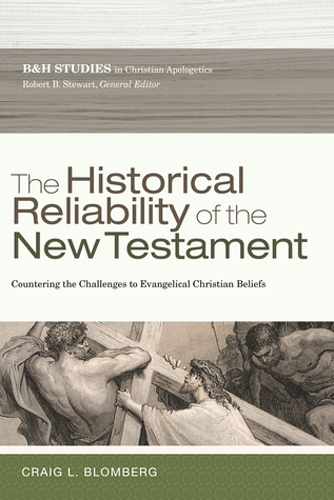
The Historical Reliability of the New Testament: Countering the Challenges to Evangelical Christian Beliefs (B&h Studies in Christian Apologetics)
Questions about the reliability of the New Testament are commonly raised today both by biblical scholars and popular media. Drawing on decades of research, Craig Blomberg...
About BiblicalTraining.org
BiblicalTraining.org wants every Christian to experience a deep and loving relationship with Jesus by understanding the life-changing truths of Scripture. To that end, we provide a high-quality Bible education at three academic levels taught by a wide range of distinguished professors, pastors, authors, and ministry leaders that moves from content to spiritual growth, all at no charge. We are a 501(c)(3) non-profit funded by gifts from our users. We currently have over 180 classes and seminars, 2,300 hours of instruction, registered users from every country in the world, and in the last two years 1.4 million people watched 257 terabytes of videos (11 million lectures).
Our goal is to provide a comprehensive biblical education governed by our Statement of Faith that leads people toward spiritual growth.