The Historical Reliability of the Gospels - Lesson 19
Problems of Harmonization between the Synoptics and John
This lesson highlights the differences between the Synoptic Gospels and the Gospel of John, explaining how John’s Gospel uniquely complements the Synoptics with significant theological emphases, such as the resurrection of Lazarus and Jesus’ exalted self-identification. It also discusses possible harmonizations between the Gospels, including the chronological differences and temple cleansing, and addresses the distinctive style of John, underscoring his historical authenticity.

I. OMISSIONS AND SINGLY ATTESTED MATERIAL
A. Only 20& of John’s materials parallels the Synoptics
B. John did not want to duplicate commonly-known information
II. THEOLOGICAL DIFFERENCES
A. Christology (“I AM” sayings)
B. Other themes (e.g., presence of eternal life)
III. CHRONOLOGICAL PROBLEMS
A. Overall outline of John
3 year ministry and the 46 years to rebuild the temple
B. Specific (“apparent”) dislocations
“Let us leave”
C. Passion Narrative
Was Jesus crucified on the Day of Preparation (Thursday) or Passover (Friday)?
IV. ALLEGED HISTORICAL DISCREPANCIES
Temple cleansing (2 options)
V. JOHANNINE STYLE
A. Extended discourses
1. Kernel teaching reminiscent of a Synoptic saying
2. “Johannine Thunderbolt” (Matt 11:25–27)
3. Abbreviations with careful structure
4. Conceptual parallels
B. Language indistinguishable throughout
1. Role of Holy Spirit/Paraclete
2. John’s years of preaching in his own idiom
This is a class on historical reliability of the New Testament Gospels. This is session 19 and a continuation of our last segment that began discussing representative examples of the handful of somewhat more difficult problems that are often pointed out about harmonizing one gospel with another. In our last segment, we looked at a representative cross-section of problems among the three synoptic gospels. In this segment, we want to look at a representative cross-section of problems between the Synaptics and the Fourth Gospel. The Gospel of John. Only about 20% of John's gospel is paralleled in Matthew, Mark or Luke. So logically, a good starting point is to deal with the question of his omissions and therefore the 80% or so of John that is unique to his gospel. It is thus singly rather than multiple be attested. Of course, as we talked about in our discussion of the criteria, single attestation by itself should not make someone suspicious because so much evidence from the ancient world has been lost. John presumably did not want to duplicate frequently material that was already well covered by one or more of his predecessors. And he presumably wanted to add information that for whatever reason, the previous three had left out. But sometimes the question can be framed in a fairly pointed way. Take, for example, the resurrection of Lazarus in John 11. Surely the most dramatic of all of Jesus miracles. Four days after the man had died. Would not have been left out by any gospel writer. That it's only in John that it's. So hard to believe. Must make it suspect. But then one has to pay attention to. The structures that the gospel writers are using. Mark chooses to describe. Jesus ministry outside Jerusalem, primarily in Galilee, occasionally outside of Israel altogether.
But Mark has only one trip of Jesus to Jerusalem that for the final Passover of his life. Matthew and Luke amplify many segments of Jesus life, but they preserve that basic framework from Mark. And have a record of only one visit to Jerusalem by Jesus as an adult man. For the final and fateful Passover. Where does the resurrection of Lazarus occur? Just outside Bethany, his hometown on Jesus. Penultimate second to the last visit to Jerusalem for John is the gospel from which we learn that Jesus ministry approximated three years in length and that, like every good Jewish man who was healthy and living close enough to Jerusalem for the three main annual festivals of Passover and the Day of Atonement and the Feast of Tabernacles, he was in attendance at Jerusalem. That's very plausible. Mark, Matthew and Luke have been more selective. Any miracle, no matter how spectacular it was, will not have a place in them. If it occurred. In or around Jerusalem. But not during Jesus final visit. And after all, there are people raised from the dead in those other gospels. It's not as if they leave out that dimension of Jesus ministry altogether. As we saw with this in optics, there are times when there are theological differences between the Synaptics and John, most dramatically with their very exalted view of Jesus. Only in John do we have the seven I am sayings on the lips of Christ that He is the bread of life and the way and the truth and the life and the the gate for the sheep and the good Shepherd and the the resurrection and the life and so forth. Only in Johnny. 858 do we have Jesus saying before Abraham was I am alluding to the divine name of Exodus 314.
Can we believe? That picture of Jesus that is utterly absent from the Synaptics. Well, not utterly. After all, Jesus does say as he walks on the water and is seen by his followers. Fear not. I am and it can be translated. I am here, but the words are ego in me. The same as in John 858 the same as in Exodus 314. And it is Matthew and Luke who tell the story of the virginal conception. Not John. Which makes Jesus. A divine. Human. Every bit as much as the fourth Gospel does. There are other themes. John's emphasis on. The presence of eternal life is much more dramatic than in the Synaptics. But both recognize a present and future dimension. What about chronological problems? It's true. Only John gives. A three year outline. But. Early in John's gospel. Jesus is in the temple, John 219 And he says, Destroy this temple and I will rebuild it in three days. The authorities don't understand. They say it's taken 46 years to rebuild the temple. And then John clarifies that Jesus was speaking of the temple of his body. But even his disciples didn't understand until after he was raised from the dead. 46 years if we do the math. According to Josephus, that first century Jewish historian, the temple began to be rebuilt under orders from Herod the Great. In 20 or 19 B.C., as we would date it today, depending on whether you count inclusively or exclusively the dates in Josephus 46 years. Remembering that there was no year zero as we would use the calendar today. Gets you at the very latest to 27 or 28 A.D.. The earliest possible date for the crucifixion when the new moon of Passover fell on a Friday is 30 A.D..
This can't be the year of Jesus death. It's true that all of the details of Matthew, Mark, and Luke put together could have transpired. If nobody ever slept in about three months. But is that what one would expect of an itinerant, popular messianic claimant? Is there corroborating evidence to suggest that John's chronology does mesh with the picture of the Synaptics? I think there is. What about specific dislocations or apparent dislocations? The last night of Jesus life, He's in the upper room. He has spoken to his disciples after dinner. The words are recorded in John 14 and at the end of John 14, he says, Come now, let us leave. And then apparently carries on talking. For another two chapters. And then looks toward heaven and prays what has often been called his high priestly prayer in chapter 17 and only in John 18, verse one, do we read when he had finished praying. Jesus laughed with his disciples and crossed the Kidron Valley. Left where the upper room possibly Jesus wouldn't be the only person in the history of the world. I've known quite a few preachers. Who have said it now from my last point. And 10 minutes later. One wonders how long that point is. In fact, I have had guests who have virtually said, Come now, let us leave. And continued talking for up to a half an hour. But maybe. They did leave. At the end of Chapter 14, the topic switches abruptly to Jesus teaching about being the true vine. On the temple in the first century. On the walls surrounding it. Visible from the outside was a large insignia of a grape vine, and there were grape vines that Jesus would have passed in root. Is this when they left the upper room? And is it what was outside as they walked down the slopes into the Kidron Ravine to go to the garden at guest Simone that inspired his next topic.
John, 18 doesn't say. Where they left doesn't say he left the upper room. It says he left and they crossed the Kidron Valley. If they had already been passing the southern side of the the Temple Mount, then that's what they would have left and the Kidron Valley would be the very next item they would have come to. So there's more than one way to skin a cat. Or harmonize the gospel. We don't have to say separate teachings of Jesus. God combined together in an awkward way that makes little sense. One of the most famous examples in the Gospel of John is the apparent contradiction of the dating of Jesus last Passover and therefore of his crucifixion. It is frequently claimed. That Jesus in John's gospel is crucified on Passover eve. On the afternoon before the evening in which people would have eaten the main initial celebratory meal of the weeklong Passover feast. And therefore contradicts the synoptic Gospels that very clearly have him celebrating his last supper as a Passover meal. On that first night of the festival. And the rationale that is usually given for this is that John is concerned to portray Jesus as the LAMB of God, as the one who would take away the sins of the world, just as John the Baptist in John Chapter one. Repeatedly called him the LAMB of God. Chapter 19, verse 14. Of John's gospel says that pilot brought Jesus to the stone pavement known in Aramaic as Gabbar tha. And it was the day of preparation. Of the Passover. And about the sixth hour, about noon. Well, which was it? Passover, the day before. You can't have it both ways. It's got to be one or the other. At least one of the gospels is wrong.
Is it? If we flip back a few chapters. We read in John 13 that it was just before the Passover Festival. Jesus knew that the hour had come for him to leave this world and go to the father having loved his own, who were in the world. He loved them to the end. And then John says the evening meal was in progress. Why do evening meal? The only one that's been mentioned is the Passover. And it had been just before the Passover. Isn't the most natural way of taking John 13 two as a reference to the Passover meal. After all, although there are very distinctive features such as the foot washing scene, this is the context in which Jesus predicts Judas would betray him and Peter would deny him exactly as on Thursday night in Matthew, Mark and Luke. Surely John is trying to portray this as the Passover meal. What can he possibly mean? Then in chapter 19, verse 14, when he says, it was the preparation. Of the Passover. The word for preparation. Paris QE. Even to this day is the Greek word for Friday. Preparation of the Passover can mean the preparation day. During the festival of the Passover. That is Friday of Passover week. Is there any way to choose between these two options? For what 1914 could mean. We keep reading. In John's gospel. And we see this expression. For the preparation for the Passover. We see it as well in Mark's gospel and we see. That they didn't want to leave Jesus body on the cross. Because the next day was the Sabbath. A Saturday. So it had to be a Friday. It had to be preparation of Passover week. Ah, but somebody says, What about chapter 18? Verse 28.
Then the Jewish leaders took Jesus from campus to the palace of the Roman governor. By now it was early morning and to avoid ceremonial and cleanness, they did not enter the palace because they wanted to be able to eat the Passover. Passover was a week long festival. They wanted to be able to eat later that day. The special meals. That were throughout Passover week. What then? About. The six hour. The time when the. Sacrifices were being prepared. Doesn't John want to show Jesus as the LAMB of God? Well, he did in chapter one. But that title hasn't appeared in 18 chapters. And besides, John, 1914 doesn't put Jesus death at the time of the slaughter of the Passover lambs. It puts his trial before pilot at that time. And would his primarily Gentile audience pick up such a passing allusion? It was about a sixth hour. Would they even know that that was the time? The Killing of the Lambs. It seems like this notion. Of a contradictory chronology is somewhat exaggerated. What about alleged historical. Discrepancies. And these categories are not mutually exclusive. You can put different ones in different places, depending on. How you view them. What about? At passage. We alluded to already in John 219, part of a temple cleansing. But in Mark and Matthew, this occurs at the end of Jesus life. When did Jesus cleanse the temple? Early or late. Is it a ridiculous notion to suggest he did it twice, once at the beginning of his ministry and once at the end? Some have said he could never have done something like that without being arrested. Well, he did it without being arrested. Even in Mark and Matthew at the end of his ministry, although the authorities began to plot his arrest at that moment.
Part of it depends on what you picture. A massive riot throughout the whole Temple Mount. No. A small protest in one corner with some tables overturned, some animals driven out. The people in the other corner of the temple may never even known about and business as usual again. The next day it would have caught the authorities attention. It would have meant they were watching him very closely. But then if even two or three years later he did it a second time, it would show he he could not be trusted that he was dangerous. But then on the other hand, maybe he only cleared the temple once. And this is an example like Luke for. Of putting the Nazareth Synagogue sermon earlier in the gospel record. It's interesting that the opening chapter and one half of John's gospel strictly follows chronological sequence so that we read what happens on the next day and 129 on the next day after that, and 135 on the next day after that. In 143 on the third day after that in two one. And then simply when it was almost time for the Jewish Passover in 313 and in three one. Now there was a Pharisee, a man named Nicodemus. Nothing requires these to be in chronological order. And maybe this also is a headline that John deliberately puts early as a way to show Jesus as the one fulfilling the rituals and practices and festivals of Judaism, because he will be the new temple and he will be the new Sabbath, and he will be the new Tabernacles and he will be the new feast of dedication, as we see in successive chapters. Of course. John writes in a very uniform style throughout his gospel. Sometimes it's hard to know where one of the character's words stop and the narrator's word starts extended discourses.
Longer at times than we find in the Synaptics often. With a kernel teaching or metaphor reminiscent of a synoptic saying. Jesus dialog with Nicodemus centering on being. Born of water and the spirit being born afresh like a little child going back into his mother's womb. Although Nicodemus misunderstands that literally. And Jesus in the Synaptics does teach on more than one occasion that unless a person becomes like a little child, they cannot enter the kingdom of God. The style is different, but the contents are very reminiscent. There is a very significant passage in Matthew 11. And it has a parallel in Luke. Towards the end of that chapter. Matthew 11, verse 25. At that time, Jesus said, I praise you, Father, Lord of Heaven and Earth. Because you have hidden these things from the wise and learned and revealed them to little children. Yes, Father, for that is what you are pleased to do. All things have been committed to me by my father. No one knows the son except the father. And no one knows the father except the son and those to whom the son chooses to reveal him language that is extraordinarily like language that recurs in John's extended sermons of Jesus. It's been called the Johannine Thunderbolt. It just sort of dropped from the sky in to the middle of the Synoptic Gospels. But it's a reminder that the Jesus of history was much more versatile. The two use the hyperbole with which the Gospel of John ends. If everything had been written about him, the whole world couldn't have contained the books that would have had to been written. We have to remember that even the longest sermons in John, even the longest uninterrupted discourses, are probably very drastic abbreviations of much longer addresses to the crowds.
And many of them are very carefully structured around scripture with parallelism and inverse parallelism in ways that suggest they all hang together as the product of one mind. If there. Our colonel sayings that sound like teachings of Jesus in the Synaptics then. Perhaps they all. Our authentic teachings. Students who have gone through a synopsis, even where John has no formal parallels to the synoptic and simply looked for teachings in Matthew, Mark and Luke that conceptually are similar. Fine. Many, many examples. A recent work by a European scholar named Philip Bartolomé has cataloged these in great detail. And one of the ways of explaining. The fact that Jesus words and John's words as narrator are often uniform in style. Is to recognize John's understanding of the role of the Holy Spirit, the parakeet, the advocate we quoted in our discussion of the canon, his teaching that the Spirit would lead them to remember everything he had taught. And if John, perhaps more so than Luke functioning purely as a historian, did have some sense of the Spirit's direct guidance as he penned his gospel, then he probably felt the freedom. To put things in his own words with an even greater degree of confidence. Let's not forget that if John was written the last and latest, perhaps as late as the nineties, he had years of his own preaching of the gospel in which to put Jesus words and his significance into his own idiom. Harmonization has exist. And yet. John still is different. Are there reasons for believing in the reliability of John? More generally. Most of what we've talked about in previous segments has pertained primarily to the Synaptics. It's time now to spend a couple of sessions focusing entirely on the Gospel of John.
And on his very unique nature.
- This lesson teaches you to critically assess myths, legends, and misleading claims about the historical reliability of the New Testament Gospels, highlighting the importance of skepticism towards new discoveries.0% Complete
- Gain insight into the historical process that led to the canonization of the New Testament, focusing on how the Gospels of Matthew, Mark, Luke, and John became universally recognized as authoritative texts based on their apostolic origin.0% Complete
- Dr. Blomberg explores the apocryphal and Gnostic Gospels, showing how their fantastical accounts, such as Jesus performing miracles as a child, differ from the canonical Gospels.0% Complete
- The New Testament Gospels are highly reliable, while textual variants may be numerous, most involve minor details that do not affect the meaning of the texts, reinforcing the Gospels’ historical authenticity.0% Complete
- Dr. Blomberg explains the reliability of Bible translations, detailing different approaches like formally equivalent, dynamically equivalent, and optimally equivalent.0% Complete
- Explore the historical reliability of the New Testament Gospels by analyzing their authorship and dating. Dr. Blomberg provides insights into how close they are to eyewitness accounts based on evidence from early church writings.0% Complete
- Oral tradition and theological motivations shaped the Gospels, which likely present reliable historical accounts despite theological biases, maintaining consistency with early Christian teachings.0% Complete
- Three recent areas of study encourage us to accept the reliability of oral tradition. They are studies in the nature of an oral culture, how the Gospels follow an informal controlled tradition, and the effect of social memory.0% Complete
- Discussion of the literary dependence among the gospels, formally known as the “Synoptic Problem.” Argues that Mark was the first written source, and Matthew and Luke borrow from him, and from a common document (‘Q’) plus used their own material.0% Complete
- The Gospels are ancient biographies focusing on key events in Jesus’ life, particularly his death and resurrection. Their style and structure differ from modern biographies, influencing how we assess their reliability and literary genre.0% Complete
- Gain insight into how archaeology supports the reliability of the New Testament Gospels, confirming details about Jesus’ teachings, ministry sites, and significant events through recent and ancient discoveries.0% Complete
- Learn about the non-Christian historical sources that attest to Jesus’ existence, including testimonies from Roman and Jewish writers, and despite their bias, they validate aspects of the Gospels, confirming Jesus’ life, teachings, and crucifixion.0% Complete
- Using the same criteria that historians used to judge the reliability of ancient documents, Dr. Blomberg uses to judge the apocryphal and Gnostic gospels’ historical reliability with twelve specific criteria.0% Complete
- This lesson highlights the evolution of scholarly quests to understand the historical Jesus, from early 19th century theories to the present, examining different portraits based on his actions and teachings.0% Complete
- Why do so many different scholars have such different views of Jesus? There is more similarity than is expected at first, but the differences are due to things such as scholar’s presuppositions.0% Complete
- Gain insight into authentic portions of the Synoptic gospels based on the previous criteria for historical reliability, including key aspects of Jesus’ life and his teachings on the Kingdom of God.0% Complete
- Looking at Jesus’ self-understanding as the Divine Messiah, his unique authority, and inviting people to follow him in God’s restorative rule, reveals the historical reliability of the Gospels.0% Complete
- The variations in the Synoptic Gospels often reflect the theological and literary aims of their writers, not contradictions, and interpreting these differences within the first-century historical context is key.0% Complete
- Dr. Blomberg looks at harmonization problems between the Synoptics and the Gospel of John, exploring John’s unique content and theological focus, chronological differences, and distinct writing style.0% Complete
- By examining the overall features of John, you’ll gain insight into its connections to the Synoptic Gospels, focusing on details such as authorship, narrative style, and theological themes.0% Complete
- This lesson helps you understand the historical reliability of John’s Gospel, focusing on key passages and their connection to the Synoptic Gospels, offering evidence for their authenticity and significance.0% Complete
- John’s Gospel offers valuable historical insights, especially through themes like purification and Jesus’ unique ministry, providing a clearer picture of events and their theological significance in comparison to the Synoptic Gospels.0% Complete
- Dr. Blomberg reveals how the early New Testament epistles, particularly Paul’s letters, contain significant references to the teachings of Jesus, showing a well-established oral tradition that predates the written Gospels and supports their historical reliability.0% Complete
- Key themes of justification and the Kingdom of God in Paul’s teachings parallel Jesus’ life, though these epistles served distinct purposes within the early Christian communities.0% Complete
- Learn about the miracles in the Gospels and their relationship to a supernatural God, which argue for God’s existence and challenge atheistic views.0% Complete
- This lesson contrasts miracles in the Bible with ancient myths and traditions, defending their authenticity through literary and historical evidence.0% Complete
- Dr. Blomberg discusses the Gospel accounts of Jesus’ virginal conception and nativity, analyzing scriptural details, supernatural phenomena, and possible contradictions in the accounts of Matthew and Luke.0% Complete
- Explore various theories about the resurrection of Jesus, including “swoon theory” and “body theft,” and examine early Christian testimony, gaining insight into why the resurrection story endures despite challenges.0% Complete
- Does a defense of biblical reliability lead to any new insights about Jesus himself? Or does it simply bring us back to the status quo of historical Christian orthodoxy? This lesson strives to reveal a fuller picture of Jesus.0% Complete
- Dr. Blomberg summarizes his main points by reviewing textual integrity, the role of ancient sources, and archaeological evidence. He also provides an authentic picture of Jesus’ life, teachings, and the miraculous aspects of his ministry.0% Complete
Lessons
- This lesson teaches you to critically assess myths, legends, and misleading claims about the historical reliability of the New Testament Gospels, highlighting the importance of skepticism towards new discoveries.0% Complete
- Gain insight into the historical process that led to the canonization of the New Testament, focusing on how the Gospels of Matthew, Mark, Luke, and John became universally recognized as authoritative texts based on their apostolic origin.0% Complete
- Dr. Blomberg explores the apocryphal and Gnostic Gospels, showing how their fantastical accounts, such as Jesus performing miracles as a child, differ from the canonical Gospels.0% Complete
- The New Testament Gospels are highly reliable, while textual variants may be numerous, most involve minor details that do not affect the meaning of the texts, reinforcing the Gospels’ historical authenticity.0% Complete
- Dr. Blomberg explains the reliability of Bible translations, detailing different approaches like formally equivalent, dynamically equivalent, and optimally equivalent.0% Complete
- Explore the historical reliability of the New Testament Gospels by analyzing their authorship and dating. Dr. Blomberg provides insights into how close they are to eyewitness accounts based on evidence from early church writings.0% Complete
- Oral tradition and theological motivations shaped the Gospels, which likely present reliable historical accounts despite theological biases, maintaining consistency with early Christian teachings.0% Complete
- Three recent areas of study encourage us to accept the reliability of oral tradition. They are studies in the nature of an oral culture, how the Gospels follow an informal controlled tradition, and the effect of social memory.0% Complete
- Discussion of the literary dependence among the gospels, formally known as the “Synoptic Problem.” Argues that Mark was the first written source, and Matthew and Luke borrow from him, and from a common document (‘Q’) plus used their own material.0% Complete
- The Gospels are ancient biographies focusing on key events in Jesus’ life, particularly his death and resurrection. Their style and structure differ from modern biographies, influencing how we assess their reliability and literary genre.0% Complete
- Gain insight into how archaeology supports the reliability of the New Testament Gospels, confirming details about Jesus’ teachings, ministry sites, and significant events through recent and ancient discoveries.0% Complete
- Learn about the non-Christian historical sources that attest to Jesus’ existence, including testimonies from Roman and Jewish writers, and despite their bias, they validate aspects of the Gospels, confirming Jesus’ life, teachings, and crucifixion.0% Complete
- Using the same criteria that historians used to judge the reliability of ancient documents, Dr. Blomberg uses to judge the apocryphal and Gnostic gospels’ historical reliability with twelve specific criteria.0% Complete
- This lesson highlights the evolution of scholarly quests to understand the historical Jesus, from early 19th century theories to the present, examining different portraits based on his actions and teachings.0% Complete
- Why do so many different scholars have such different views of Jesus? There is more similarity than is expected at first, but the differences are due to things such as scholar’s presuppositions.0% Complete
- Gain insight into authentic portions of the Synoptic gospels based on the previous criteria for historical reliability, including key aspects of Jesus’ life and his teachings on the Kingdom of God.0% Complete
- Looking at Jesus’ self-understanding as the Divine Messiah, his unique authority, and inviting people to follow him in God’s restorative rule, reveals the historical reliability of the Gospels.0% Complete
- The variations in the Synoptic Gospels often reflect the theological and literary aims of their writers, not contradictions, and interpreting these differences within the first-century historical context is key.0% Complete
- Dr. Blomberg looks at harmonization problems between the Synoptics and the Gospel of John, exploring John’s unique content and theological focus, chronological differences, and distinct writing style.0% Complete
- By examining the overall features of John, you’ll gain insight into its connections to the Synoptic Gospels, focusing on details such as authorship, narrative style, and theological themes.0% Complete
- This lesson helps you understand the historical reliability of John’s Gospel, focusing on key passages and their connection to the Synoptic Gospels, offering evidence for their authenticity and significance.0% Complete
- John’s Gospel offers valuable historical insights, especially through themes like purification and Jesus’ unique ministry, providing a clearer picture of events and their theological significance in comparison to the Synoptic Gospels.0% Complete
- Dr. Blomberg reveals how the early New Testament epistles, particularly Paul’s letters, contain significant references to the teachings of Jesus, showing a well-established oral tradition that predates the written Gospels and supports their historical reliability.0% Complete
- Key themes of justification and the Kingdom of God in Paul’s teachings parallel Jesus’ life, though these epistles served distinct purposes within the early Christian communities.0% Complete
- Learn about the miracles in the Gospels and their relationship to a supernatural God, which argue for God’s existence and challenge atheistic views.0% Complete
- This lesson contrasts miracles in the Bible with ancient myths and traditions, defending their authenticity through literary and historical evidence.0% Complete
- Dr. Blomberg discusses the Gospel accounts of Jesus’ virginal conception and nativity, analyzing scriptural details, supernatural phenomena, and possible contradictions in the accounts of Matthew and Luke.0% Complete
- Explore various theories about the resurrection of Jesus, including “swoon theory” and “body theft,” and examine early Christian testimony, gaining insight into why the resurrection story endures despite challenges.0% Complete
- Does a defense of biblical reliability lead to any new insights about Jesus himself? Or does it simply bring us back to the status quo of historical Christian orthodoxy? This lesson strives to reveal a fuller picture of Jesus.0% Complete
- Dr. Blomberg summarizes his main points by reviewing textual integrity, the role of ancient sources, and archaeological evidence. He also provides an authentic picture of Jesus’ life, teachings, and the miraculous aspects of his ministry.0% Complete
Class Resources
Recommended Books
The Historical Reliability of the Gospels
For over twenty years, Craig Blomberg's The Historical Reliability of the Gospels has provided a useful antidote to many of the toxic effects of skeptical criticism of the...

The Historical Reliability of John's Gospel: Issues & Commentary

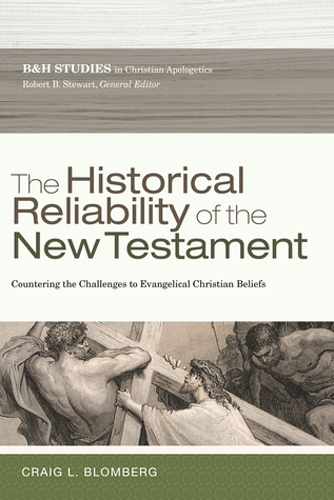
The Historical Reliability of the New Testament: Countering the Challenges to Evangelical Christian Beliefs (B&h Studies in Christian Apologetics)
Questions about the reliability of the New Testament are commonly raised today both by biblical scholars and popular media. Drawing on decades of research, Craig Blomberg...
About BiblicalTraining.org
BiblicalTraining.org wants every Christian to experience a deep and loving relationship with Jesus by understanding the life-changing truths of Scripture. To that end, we provide a high-quality Bible education at three academic levels taught by a wide range of distinguished professors, pastors, authors, and ministry leaders that moves from content to spiritual growth, all at no charge. We are a 501(c)(3) non-profit funded by gifts from our users. We currently have over 180 classes and seminars, 2,300 hours of instruction, registered users from every country in the world, and in the last two years 1.4 million people watched 257 terabytes of videos (11 million lectures).
Our goal is to provide a comprehensive biblical education governed by our Statement of Faith that leads people toward spiritual growth.