The Historical Reliability of the Gospels - Lesson 30
Summary and Conclusions
This concluding lesson provides assurance into the textual integrity of the Gospels, reinforced through historical, archaeological, and literary evidence. It discusses the relevance of ancient sources, including apocryphal and Gnostic texts. Additionally, it tackles the key aspects of the life of Jesus, his teachings, and the supernatural elements in the Gospels.

I. ANCIENT SOURCES FOR A KNOWLEDGE OF JESUS
II. GOSPELS
A. The reliability of the text of the Gospels
B. The Aaccuracy of translations of the Gospels
C. First-Century, First- or Second-Hand authors and dates
D. A sufficiently reliable oral tradition
E. The composition of the Gospels
F. The literary genre of ancient biography
III. EXTERNAL ISSUES
A. The significance of archaeology
B. Ancient non-Christian testimony to Jesus
IV. QUESTS FOR THE HISTORIC JESUS
A. The diverse quests of the historical Jesus
B. The most authentic parts of the Gospels
C. The Jesus who emerges from these parts
D. Can the Gospels be harmonized?
V. OUTSIDE THE SYNOPICS
A. Distinctive issues with John’s Gospel
B. The Jesus tradition in Paul (and James)
VI. MIRACLES
A. Good reasons for believing the Gospel miracles
B. Unique issues surrounding the virginal conception and the resurrection
C. A Jesus who challenges everyone
This is a course in the historical reliability of the New Testament gospels, and this is session 30 and the last one. Summary and conclusions. What are the key takeaway points that we have tried to make over the previous 29 segments? We have examined. A multiplicity of ancient sources. For knowledge of Jesus. We have looked in apocryphal gospels, we have looked in Gnostic gospels. We have looked in a variety of historical sources that have made brief reference to. Jesus of Nazareth. We have seen that there are sources outside the New Testament that corroborate Jesus existence and that corroborate. A bare outline of the events recorded in the Gospels, but not much beyond that. The apocryphal and Gnostic texts contain fanciful teachings and behavior. That are very unlikely to represent the first century. Jesus only. The Gnostic or Coptic Gospel of Thomas even potentially. Contains perhaps a handful of sayings. That may go back to Jesus not found in the New Testament canon. But for all intents and purposes, for any detailed understanding of this preeminent historical figure, we must look at Matthew, Mark, Luke and John. Can we believe that what we have in modern Greek editions of the New Testament corresponds to what these individuals first wrote? This led us to look at the issue of the reliability of the text of the Gospels. And our answer was overwhelmingly positive. More than 99% of the text is secure beyond any reasonable doubt. And even in the places where there is serious question, what was originally written is almost certainly one of the textual variants in existence. We're just not always certain which one compared to any other known document from antiquity, from any part of the world. The amount of textual evidence and the quality of it with respect to the New Testament gospels is unsurpassed.
But what about those of us who don't read Greek? We have so many good up to date English translations of the Gospels following roughly into three philosophies of translation. Those that prioritize meaning structure. Precision and accuracy. Over. Clarity, intelligibility, freshness of reading and those that do the reverse. Wanting to be absolutely clear to the greatest number of people, even if small nuances of meaning at times are lost. And then thirdly, those who attempt to optimize both tasks while recognizing that in so doing a little tiny bit will be lost in each area. But pick a passage. Experiment for yourself. Look up in the representative translations we have outlined for each of the translation philosophy and you will have no question that you're reading the same text. Our translations are accurate. Our text is reliable. But can we believe the content that results? Classical historians early on in such an undertaking of any ancient document will ask. Do we know the authors? Do we know the dates? And we see a diversity of opinion. Depending on where scholars fall to the more conservative or more liberal ends of the spectrum. But what's important in this summary review is where virtually all scholars agree the New Testament gospels are first century documents written between 40 and 70 years after the events. They narrate at the latest. At most they are two individuals removed. From eyewitnesses of the life of Christ. And at best. They reflect eyewitness testimony. Extraordinarily good situations by ancient standards. And if we can write large tomes on the history of world civilization. From sources far less well attested. Then we should have great confidence about our ability to understand who the historical Jesus was. Still. There is a period of 30 or 40 years.
Between the events narrated and the earliest existing sources. In which circulation of information about Jesus was entirely by word of mouth. Can we trust such an oral tradition in an oral culture? By people who deemed that tradition to be sacred, who revered the teacher, whose words and deeds that tradition taught about. The answer? Yes. People had the ability, both through verbatim memorization and through more informal but controlled oral tradition, to pass along for centuries and to master five times the amount of information found in even the longest of the gospels. We have every reason to believe the first Christians would have wanted to do this. And I would have had the ability to do it. The actual composition of the four gospels reinforces these convictions. If the first complete written gospel was not for 30 or 40 years after the events narrated, there were earlier written sources. We may not be able to define them in great detail, but Luke refers to many. Who preceded him. There is that persisting tradition in the early church that Matthew wrote something in Hebrew. Before the finalizing of the Greek text of the gospel that bears his name. If the first Christians did what other disciples of other religious and philosophical leaders did, there is every reason to believe that smaller source documents collecting together key teachings and deeds of Jesus would have circulated at a still earlier date. And therefore that the gospel writers were not in any way like modern novelists sitting down and making things up from scratch. But were editors piecing together numerous written and oral sources preceding them? When we examine the literary form or genre of Matthew, Mark and Luke and look at all of the proposals, we find that ancient historical and theological biography is the closest parallel, not written with the precision and the conventions and the exactness of quotation and the comprehensiveness of modern biography.
But written, well, satisfying the criteria in the ancient Mediterranean world for what was considered trustworthy, reliable and accurate. Literary genre involves history. It involves theology and it involves literary artistry. And none of these needs be in conflict with any other. All can work in the service of magnifying and commending the Jesus that they describe. The Gospel of John. Contains more dramatic stylization, but is still much more like Matthew, Mark and Luke than any other ancient document that we know of and therefore well within the range of ancient biography. Turn to rock solid evidence, The evidence of the rocks, the evidence of archeology and large tomes can and have been written. About. Customs. Places, characters. Events, artifacts. That illuminate the teaching of the gospels, that corroborate the history of the gospels that correlate. What's the customs of the gospels? Archeology cannot. Prove that Jesus spoke the words attributed to him in the Sermon on the Mount. But the kinds of things that archeology can corroborate over and over and over again have done so. And even the handful of puzzles that remain have at least plausible, possible solutions so that we are well beyond the threshold at which, as historians, we should give the text the benefit of the doubt. One, there simply is no comparative evidence to either corroborate or contradict. Ancient non-Christian testimony is modest in its amount. But by no means as absent as some have claimed. If we review what we discussed author by author earlier on, we discover that without looking at a single Christian document, we have evidence that Jesus. Did indeed live. A human Jewish male living in the first third of the first century who was born out of wedlock, whose adult ministry intersected with that of a man named John who baptized people and called them to repent for their sins.
From their sins, we discover that Jesus had a brother by the name of James and that he was the so called. Messiah or Christ believed to be. By his followers. We learn the names of five followers, four disciples and Nicodemus. We learned that he regularly got in conflict with Jewish authorities over legal interpretations, that he was crucified under Pontius Pilot, which limits the timeframe to somewhere between 26 and 36 A.D. and that despite this ignominious form of execution, people continued. To follow in his train and began to sing hymns to him as if he were a God. That may not seem like much, but in a world that had no reason to believe or imagined the extent of the religious following that would come in subsequent centuries. It's about what one might have expected. We believe we hear evidence as well of his miracles. Just attributed to a different source. When we turn to the various quests for the figure of Jesus that emerges from the material that can be corroborated by this, these previous bulleted points, we discover a great diversity. But we also discover that we have made progress. And today, more so than ever, we can place Jesus well within a credible early first century Jewish milieu. Albeit with significant distinctive twists along the way. We can reconstruct a picture of the Christ that is in continuity. It's the movement that he burst. Though, again. Because of who he was with distinctive twists that were not always well replicated. The most authentic parts of the Gospels have also formed one of our topics and even limiting ourselves to them. That which can be most authenticated on historical grounds alone without presupposing Christian faith. We can say a lot about the Jesus of history, the Jesus who announced the breaking of the Kingdom of God.
But if a kingdom of God was present, then. A king. Must have been present. A Jesus who spoke in parables about the need to love God, to need the need to love one's fellow human. But. Much more. The need for repentance from sin. God's overwhelming, gracious, loving kindness, eager to welcome every prodigal back. At the slightest sign of genuine repentance. But one who easily rebuked the complacent or intolerant religious insider who begrudged God's generosity. To the way we're. The picture of Jesus that emerges from the most authentic parts of the gospels, from the most implicit Christology, without even turning to the more direct labels and claims that Jesus made. Is still one with remarkable self-understanding Authority. Transcendent power. And mercy. It's a Jesus Who? Without any fanfare simply claims. To be able to interpret the immutable law of God and explain what parts continue on without change and what ones don't and how they change. Who can describe and delineate who is the greatest and the least in the kingdom of heaven. Who, without any credentialing or commissioning, can describe everything wrong with the greatest power brokers of his day. Little wonder some finally executed him. Can we go beyond these broad contours of the gospel and defend the reliability of various specific details, especially when there appear to be apparent contradictions? We looked at a representative cross-section. Categorize them into various kinds of differences and suggested that there are plausible harmonization. The ones we didn't discuss have all been dealt with in scholarly and popular literature, in commentaries across many theological traditions. The one thing that listeners to this series should realize is that any topic we have not discussed, along with the topics we have discussed that impinge on this debate. Is not a new one.
There's nothing new under the sun, although there are interesting new discoveries now and then and sensationalized claims that come out of them. That her later toned down. But before any one's faith begins to feel threatened, before anyone becomes too complacent in their skepticism because they find a problem. That I haven't addressed or a problem. They feel that my answers have not adequately addressed in this rapid race through a whole plethora of issues. Make sure you look in the best literature, which often is not online. You may have to get real books, but make sure you delve into the best of evangelical commentaries on whatever passages are involved. And if you then reject the best of our arguments, Fair enough. But make sure you've discovered them. First of all. There are distinctive issues with John's gospel. They don't come and do a play, come into play or don't come into play nearly as often. With the Synaptics, and we've looked at a representative cross-section of them. There are more good treatments of John in the so-called new look on John in the John Jesus in History seminar and other studies it has spawned. Which we discussed. There are ways to hear John in his uniqueness. That do not require us to take him as later on historical. Legend or fiction involving the Christ. We turn to the Jesus tradition in Paul. And ever so briefly in James and saw that despite a superficial absence of lots of direct quotations and references to details from his life, there was a surprising number of allusions, especially to his teachings on ethical. And on eschatological issues, a reference and a recognition of the major. Broadest contours of his life. And an understanding that epistles were not the main place to expect a rehearsal.
Of details about the life of Jesus. So that we should put these observations in their proper perspective. We shifted gears and looked at the problem of the supernatural, of the miraculous, and suggested that if there are reasons to believe in God and there are, then there are reasons to believe that He would work supernaturally at times of his sovereign choice. And the affairs of humanity that there are. Hundreds and in fact, thousands of occasions. Even just in the modern world alone or very carefully documented events have taken place that science cannot explain, especially in the area of healing. In direct and instantaneous response to concerted Christian prayer. We see that the gospel miracles all coalesce around the theme of the arrival of the Kingdom of God. They are not random, They are not frivolous. They are not trivial. We then looked at. What for some are the two biggest stumbling blocks framing Jesus ministry, the virginal conception and the resurrection. And we suggested good reasons for believing in them as well. The result. Was not that. Traditional Christians can therefore become complacent. We've refuted the skeptics. So let's react and let's relax and. And rest. No. If one truly does take all of the gospel portrait into account, and if one majors on that which modern scholarship has majored and says is the bedrock core of the Jesus tradition, even without presupposing Christian faith. There is a Jesus who challenges everyone, challenges outsiders to his movement to repent. To believe the gospel, to give their lives for a cause that is more significant than any other in existence, and to surrender their lives to Jesus as Lord. In response to an offer of an eternal free gift of. Happiness and community beyond anything imaginable. Salvation, one preacher said, is absolutely free.
But it'll cost us our lives. And there's the paradox of a Jesus. Who challenges everyone. I hope you know that. Jesus. I hope if you know him. You're challenging yourself to follow him in the inevitable areas that none of us ever achieves more than partial success in following in this life. I hope if you are still on a path of seeking that you will keep on it, that you will realize that there are no new questions that have not been given multiple answers. If you have heard all of the answers and find all of them wanting, that's one thing. But if you simply have heard one answer or none at all or believe there are none, then. You have more research to do. Don't reject something unless you. Know the full extent and the full range of what is involved in that movement. Jesus has been called a man for all seasons, a man who fits no portrait, who bursts all boundaries, who challenges everyone in the positive sense of offering purpose and meaning for life and eternity. That will never be boring. That can empower us to overcome even the darkest of moments. I commend that Jesus to you.
- This lesson teaches you to critically assess myths, legends, and misleading claims about the historical reliability of the New Testament Gospels, highlighting the importance of skepticism towards new discoveries.0% Complete
- Gain insight into the historical process that led to the canonization of the New Testament, focusing on how the Gospels of Matthew, Mark, Luke, and John became universally recognized as authoritative texts based on their apostolic origin.0% Complete
- Dr. Blomberg explores the apocryphal and Gnostic Gospels, showing how their fantastical accounts, such as Jesus performing miracles as a child, differ from the canonical Gospels.0% Complete
- The New Testament Gospels are highly reliable, while textual variants may be numerous, most involve minor details that do not affect the meaning of the texts, reinforcing the Gospels’ historical authenticity.0% Complete
- Dr. Blomberg explains the reliability of Bible translations, detailing different approaches like formally equivalent, dynamically equivalent, and optimally equivalent.0% Complete
- Explore the historical reliability of the New Testament Gospels by analyzing their authorship and dating. Dr. Blomberg provides insights into how close they are to eyewitness accounts based on evidence from early church writings.0% Complete
- Oral tradition and theological motivations shaped the Gospels, which likely present reliable historical accounts despite theological biases, maintaining consistency with early Christian teachings.0% Complete
- Three recent areas of study encourage us to accept the reliability of oral tradition. They are studies in the nature of an oral culture, how the Gospels follow an informal controlled tradition, and the effect of social memory.0% Complete
- Discussion of the literary dependence among the gospels, formally known as the “Synoptic Problem.” Argues that Mark was the first written source, and Matthew and Luke borrow from him, and from a common document (‘Q’) plus used their own material.0% Complete
- The Gospels are ancient biographies focusing on key events in Jesus’ life, particularly his death and resurrection. Their style and structure differ from modern biographies, influencing how we assess their reliability and literary genre.0% Complete
- Gain insight into how archaeology supports the reliability of the New Testament Gospels, confirming details about Jesus’ teachings, ministry sites, and significant events through recent and ancient discoveries.0% Complete
- Learn about the non-Christian historical sources that attest to Jesus’ existence, including testimonies from Roman and Jewish writers, and despite their bias, they validate aspects of the Gospels, confirming Jesus’ life, teachings, and crucifixion.0% Complete
- Using the same criteria that historians used to judge the reliability of ancient documents, Dr. Blomberg uses to judge the apocryphal and Gnostic gospels’ historical reliability with twelve specific criteria.0% Complete
- This lesson highlights the evolution of scholarly quests to understand the historical Jesus, from early 19th century theories to the present, examining different portraits based on his actions and teachings.0% Complete
- Why do so many different scholars have such different views of Jesus? There is more similarity than is expected at first, but the differences are due to things such as scholar’s presuppositions.0% Complete
- Gain insight into authentic portions of the Synoptic gospels based on the previous criteria for historical reliability, including key aspects of Jesus’ life and his teachings on the Kingdom of God.0% Complete
- Looking at Jesus’ self-understanding as the Divine Messiah, his unique authority, and inviting people to follow him in God’s restorative rule, reveals the historical reliability of the Gospels.0% Complete
- The variations in the Synoptic Gospels often reflect the theological and literary aims of their writers, not contradictions, and interpreting these differences within the first-century historical context is key.0% Complete
- Dr. Blomberg looks at harmonization problems between the Synoptics and the Gospel of John, exploring John’s unique content and theological focus, chronological differences, and distinct writing style.0% Complete
- By examining the overall features of John, you’ll gain insight into its connections to the Synoptic Gospels, focusing on details such as authorship, narrative style, and theological themes.0% Complete
- This lesson helps you understand the historical reliability of John’s Gospel, focusing on key passages and their connection to the Synoptic Gospels, offering evidence for their authenticity and significance.0% Complete
- John’s Gospel offers valuable historical insights, especially through themes like purification and Jesus’ unique ministry, providing a clearer picture of events and their theological significance in comparison to the Synoptic Gospels.0% Complete
- Dr. Blomberg reveals how the early New Testament epistles, particularly Paul’s letters, contain significant references to the teachings of Jesus, showing a well-established oral tradition that predates the written Gospels and supports their historical reliability.0% Complete
- Key themes of justification and the Kingdom of God in Paul’s teachings parallel Jesus’ life, though these epistles served distinct purposes within the early Christian communities.0% Complete
- Learn about the miracles in the Gospels and their relationship to a supernatural God, which argue for God’s existence and challenge atheistic views.0% Complete
- This lesson contrasts miracles in the Bible with ancient myths and traditions, defending their authenticity through literary and historical evidence.0% Complete
- Dr. Blomberg discusses the Gospel accounts of Jesus’ virginal conception and nativity, analyzing scriptural details, supernatural phenomena, and possible contradictions in the accounts of Matthew and Luke.0% Complete
- Explore various theories about the resurrection of Jesus, including “swoon theory” and “body theft,” and examine early Christian testimony, gaining insight into why the resurrection story endures despite challenges.0% Complete
- Does a defense of biblical reliability lead to any new insights about Jesus himself? Or does it simply bring us back to the status quo of historical Christian orthodoxy? This lesson strives to reveal a fuller picture of Jesus.0% Complete
- Dr. Blomberg summarizes his main points by reviewing textual integrity, the role of ancient sources, and archaeological evidence. He also provides an authentic picture of Jesus’ life, teachings, and the miraculous aspects of his ministry.0% Complete
Lessons
- This lesson teaches you to critically assess myths, legends, and misleading claims about the historical reliability of the New Testament Gospels, highlighting the importance of skepticism towards new discoveries.0% Complete
- Gain insight into the historical process that led to the canonization of the New Testament, focusing on how the Gospels of Matthew, Mark, Luke, and John became universally recognized as authoritative texts based on their apostolic origin.0% Complete
- Dr. Blomberg explores the apocryphal and Gnostic Gospels, showing how their fantastical accounts, such as Jesus performing miracles as a child, differ from the canonical Gospels.0% Complete
- The New Testament Gospels are highly reliable, while textual variants may be numerous, most involve minor details that do not affect the meaning of the texts, reinforcing the Gospels’ historical authenticity.0% Complete
- Dr. Blomberg explains the reliability of Bible translations, detailing different approaches like formally equivalent, dynamically equivalent, and optimally equivalent.0% Complete
- Explore the historical reliability of the New Testament Gospels by analyzing their authorship and dating. Dr. Blomberg provides insights into how close they are to eyewitness accounts based on evidence from early church writings.0% Complete
- Oral tradition and theological motivations shaped the Gospels, which likely present reliable historical accounts despite theological biases, maintaining consistency with early Christian teachings.0% Complete
- Three recent areas of study encourage us to accept the reliability of oral tradition. They are studies in the nature of an oral culture, how the Gospels follow an informal controlled tradition, and the effect of social memory.0% Complete
- Discussion of the literary dependence among the gospels, formally known as the “Synoptic Problem.” Argues that Mark was the first written source, and Matthew and Luke borrow from him, and from a common document (‘Q’) plus used their own material.0% Complete
- The Gospels are ancient biographies focusing on key events in Jesus’ life, particularly his death and resurrection. Their style and structure differ from modern biographies, influencing how we assess their reliability and literary genre.0% Complete
- Gain insight into how archaeology supports the reliability of the New Testament Gospels, confirming details about Jesus’ teachings, ministry sites, and significant events through recent and ancient discoveries.0% Complete
- Learn about the non-Christian historical sources that attest to Jesus’ existence, including testimonies from Roman and Jewish writers, and despite their bias, they validate aspects of the Gospels, confirming Jesus’ life, teachings, and crucifixion.0% Complete
- Using the same criteria that historians used to judge the reliability of ancient documents, Dr. Blomberg uses to judge the apocryphal and Gnostic gospels’ historical reliability with twelve specific criteria.0% Complete
- This lesson highlights the evolution of scholarly quests to understand the historical Jesus, from early 19th century theories to the present, examining different portraits based on his actions and teachings.0% Complete
- Why do so many different scholars have such different views of Jesus? There is more similarity than is expected at first, but the differences are due to things such as scholar’s presuppositions.0% Complete
- Gain insight into authentic portions of the Synoptic gospels based on the previous criteria for historical reliability, including key aspects of Jesus’ life and his teachings on the Kingdom of God.0% Complete
- Looking at Jesus’ self-understanding as the Divine Messiah, his unique authority, and inviting people to follow him in God’s restorative rule, reveals the historical reliability of the Gospels.0% Complete
- The variations in the Synoptic Gospels often reflect the theological and literary aims of their writers, not contradictions, and interpreting these differences within the first-century historical context is key.0% Complete
- Dr. Blomberg looks at harmonization problems between the Synoptics and the Gospel of John, exploring John’s unique content and theological focus, chronological differences, and distinct writing style.0% Complete
- By examining the overall features of John, you’ll gain insight into its connections to the Synoptic Gospels, focusing on details such as authorship, narrative style, and theological themes.0% Complete
- This lesson helps you understand the historical reliability of John’s Gospel, focusing on key passages and their connection to the Synoptic Gospels, offering evidence for their authenticity and significance.0% Complete
- John’s Gospel offers valuable historical insights, especially through themes like purification and Jesus’ unique ministry, providing a clearer picture of events and their theological significance in comparison to the Synoptic Gospels.0% Complete
- Dr. Blomberg reveals how the early New Testament epistles, particularly Paul’s letters, contain significant references to the teachings of Jesus, showing a well-established oral tradition that predates the written Gospels and supports their historical reliability.0% Complete
- Key themes of justification and the Kingdom of God in Paul’s teachings parallel Jesus’ life, though these epistles served distinct purposes within the early Christian communities.0% Complete
- Learn about the miracles in the Gospels and their relationship to a supernatural God, which argue for God’s existence and challenge atheistic views.0% Complete
- This lesson contrasts miracles in the Bible with ancient myths and traditions, defending their authenticity through literary and historical evidence.0% Complete
- Dr. Blomberg discusses the Gospel accounts of Jesus’ virginal conception and nativity, analyzing scriptural details, supernatural phenomena, and possible contradictions in the accounts of Matthew and Luke.0% Complete
- Explore various theories about the resurrection of Jesus, including “swoon theory” and “body theft,” and examine early Christian testimony, gaining insight into why the resurrection story endures despite challenges.0% Complete
- Does a defense of biblical reliability lead to any new insights about Jesus himself? Or does it simply bring us back to the status quo of historical Christian orthodoxy? This lesson strives to reveal a fuller picture of Jesus.0% Complete
- Dr. Blomberg summarizes his main points by reviewing textual integrity, the role of ancient sources, and archaeological evidence. He also provides an authentic picture of Jesus’ life, teachings, and the miraculous aspects of his ministry.0% Complete
Class Resources
Recommended Books
The Historical Reliability of the Gospels
For over twenty years, Craig Blomberg's The Historical Reliability of the Gospels has provided a useful antidote to many of the toxic effects of skeptical criticism of the...

The Historical Reliability of John's Gospel: Issues & Commentary

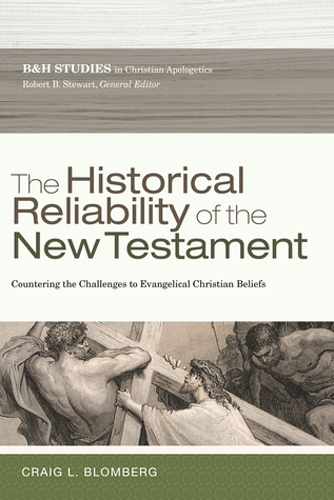
The Historical Reliability of the New Testament: Countering the Challenges to Evangelical Christian Beliefs (B&h Studies in Christian Apologetics)
Questions about the reliability of the New Testament are commonly raised today both by biblical scholars and popular media. Drawing on decades of research, Craig Blomberg...
About BiblicalTraining.org
BiblicalTraining.org wants every Christian to experience a deep and loving relationship with Jesus by understanding the life-changing truths of Scripture. To that end, we provide a high-quality Bible education at three academic levels taught by a wide range of distinguished professors, pastors, authors, and ministry leaders that moves from content to spiritual growth, all at no charge. We are a 501(c)(3) non-profit funded by gifts from our users. We currently have over 180 classes and seminars, 2,300 hours of instruction, registered users from every country in the world, and in the last two years 1.4 million people watched 257 terabytes of videos (11 million lectures).
Our goal is to provide a comprehensive biblical education governed by our Statement of Faith that leads people toward spiritual growth.