Mentoring - Lesson 6
The Mentor’s Approach
In this lesson, you explore the mentor's role in guiding mentees by evaluating their interpersonal and intrapersonal behaviors, using tools like the Coachability Index and behavior assessments. You learn to address different personality types—such as extroverts, introverts, and ambiverts—tailoring communication to fit their learning and growth preferences. The session emphasizes creating actionable plans through the SMART method, and how to build resilience, assertiveness, and openness in mentees. The lesson provides key strategies for effective mentoring, focusing on emotional intelligence, feedback, and fostering autonomy and growth in mentees.

I. Review of Previous Sessions
A. Conceptual Process of Mentoring
B. Genetic Behaviors and Interaction
C. Mentee's Priorities
D. Coachability Index and Emotional Intelligence
E. Effective Planning Process
II. Mentor’s Role and Approach
A. Importance of Humility and Feedback
B. Communication Based on Behavior Types
III. Developing a SMART Plan
A. Setting Specific, Measurable Goals
B. Communication and Behavioral Styles
IV. Case Study: Personal and Professional Goals
V. Priorities and Learning Activities
A. Establishing Priorities and Networking
VI. Skill Development
A. Assertiveness and Openness
B. Building Resilience
VII. Feedback Process
A. Immediate and Specific Feedback
B. Positive Feedback
VIII. Tips for Mentorship
A. Envisioning Goals
B. Listening and Encouraging Autonomy
IX. The "Don'ts" of Mentorship
A. Avoid Criticism and Judgment
B. Maintain Confidentiality
X. Conclusion
Hello and welcome back. We're in session six of the mentoring program and I'm excited to talk to you about this because we're really going to focus on the mentor's role in this particular session and how they need to approach the process. But let's do a quick review before we dig in.
In session one, I helped you identify the conceptual process of mentoring and the types of people who need mentoring. We talked about the differences between coaching, mentoring, and discipleship. In session two, I helped you quantify how different genetic behaviors based on Jeremiah 1.5 and Psalm 137 will impact the way people interact and respond with you during the mentorship process.
In session three, I helped you interpret your mentee's priorities and how they will approach the process. And this is based on the family, the education, the friends, and the experiences they develop during their lifetime and how they are actually going to approach the process through their own preferences. In session four, I provided you with insight on how to apply the results of their coachability index and the way that they'd like to approach interaction.
We discussed emotional intelligence and we talked about the five aspects of it and why it's so critical during the mentoring process because without that engagement, you will not achieve the results that you would hope to achieve with your mentee. And all that experience and all that knowledge could go to waste and we don't want that to happen. In session five, I provided you with an approach that will help the planning process become extremely effective and produce the best possible results 40 times better than just having something in our head.
So, what I'd like to share now is, shall we say, that secret sauce for making this process work and work not just quickly, but effectively and efficiently. So, we talked early on about using the coachability assessment to ensure you know where to focus. In that assessment, it talks about the interpersonal aspects, the intrapersonal in the application process.
Intrapersonally, inside the individual, they must be humble and be willing to be moving into this process with motivation. I did a study with DePaul University, 69.09% of success in growth and development is based on humility. And then if you have that humility, will you actually put it to work? Interpersonally, do you seek feedback and do you actually listen to it? A lot of times we're willing to listen, but we don't seek and that way we don't learn.
Also, in that session, we talked about the response to feedback. Are you actually going to do something about it and will you do something about it? So, those things can be critical to your success and knowing those ahead of time will help you mentor the person that you're working with. But the second thing was the behavior and mindset assessment, because its results will ensure you know how to communicate during the process.
Because each mentee, as we mentioned in sessions one and two, is going to be extremely different. They're going to want to proceed through the process, some more by logic, some more by feeling. And so, you want to be able to do that.
And as we focus on that, it will help us plan and process through the program. Now, last session, we focused on an action plan and we called it a SMART plan because we wanted to define the specifics, the measurables, the attainable, why it's relevant to us, and how time it's going to take us. And only then, when we complete that process, will we be able to begin to measure the success as we move along.
So, what I'd like for you to do now is I would like you to take a look at this particular slide and build a little checklist for yourself. Intrapersonally, what's the level of the humility and motivation in the Coachability Index? Do they seek feedback and are they receptive to feedback? In the application, what's their response motive and how do they actually respond to feedback? This will give you the foundation you need as you prepare for the person. You'll know exactly where to get them started.
Now, let's talk about the communication focus. You see in our top left corner, we have an objective extrovert. Very high in the dominant influence, very low in the steadiness and the compliance.
Very high individualistic, strong belief in themselves, and somewhat objective, very logical in the way that they approach things. But you can see the aesthetic, the circumstances, the surrounding, the harmony are not really that important and they only will work with a small group of people. So, the communication focus here has to be very directive, very succinct, and very logical.
Where our subjective ambivert, we have the high theoretical and the low traditional. So, what do we have here is a specific focus on learning, but open to any type of people. And so, that high social helps because their natural behavioral style, as you can see, is extremely people oriented.
So, what will happen with this person is they get lost in learning and working with other people, so they may not be as efficient as they need to be. Now, let's move on to the subjective introvert. Here you have an individual that is very compliant, very detail oriented, very analytical, and they love to build predictability into their environment.
So, when we look at their mindsets, what we see is they're very theoretical and very traditional, which means they want to follow a lot of structure and they want to do things right. But what happened to their utilitarian? It went into the proverbial toilet. There is literally none there.
So, what they have done is they have focused so much on getting it right that they never actually finished it. So, the mentor is going to have to work with this individual to make sure that they meet the timeframes and we chunk it up, probably even more detailed, so that they can have those successes along the way. Our last one is the objective ambivert.
In other words, the strong task orientation is very prominent in their behaviors and the utilitarian and theoretical is extremely strong. So, this person is so strongly task oriented that we see what suffering is the social. In other words, they only want to talk to one or two people and not interact with other people.
So, what's happening is this person is withdrawn and they're going to have a very difficult time getting out of their own space and achieving their objectives, especially if it's in networking or in some other way of interacting with other people. So, as you can see, the mentor is going to have to build some of those social skills, some of the emotional intelligence into this individual in order to help them achieve their objectives. So, let's move on after we've understood these different behaviors and mindsets to putting a plan together.
And so, we've got an individual here that has a strong people orientation and interpersonal skills, loyalty to the company, but committed to the family as well and optimistic with their ability to encourage others. But they have these very strong beliefs. That's their strengths.
Now, their weaknesses is they're not very objective about their goals and they lack a strong practicality sense. So, they may not remain on task very long, keeping them from competence at times. So, it also says that this person is oblivious to much of what is going on in the way things that may appear.
So, when we focus on the personal applications, this individual wants to improve their health. And in doing so, their specific is that they want to improve their health because it's beginning to impact their quality of life. So, what's measurable? They want to lose 20 pounds at this particular point.
And in doing that, they feel like after that weight loss, they will be able to get around better, to think better. They won't be as lethargic or whatever. So, how are they going to do that? They're going to reduce their calorie intake and exercise three times a week with a friend.
Why? Because of the strong people orientation that we see in their strengths. Oftentimes, people with that strong people orientation need somebody with them to keep them disciplined. Why is it relevant? Because attending these sessions will give them an opportunity to make more relationships and that's very important for their particular self-esteem.
And to do that, they're going to achieve their weight loss and health improvement by December 31st of this year. So, what we see is an individual who now has taken control of their personal life by bringing other people into the process to hold them accountable. And for subjective people, this is extremely important.
On the other hand, let's look at their professional application because this person happens to be an HR manager and they want to achieve their human resource designation through independent study. So, what they realize is that this is going to require a minimum of 30 hours of course instruction. So, 30 hours over a 90-day period or six-month period can be evenly divided up so that it's not such a stress factor for the individual.
So, what they decide to do is they decide to sign up for the Human Resource Institute Structured Program and put it on their schedule. And in doing that, they will be able to keep their status as a human resource manager and address their weaknesses as they plan strategically. So, they plan to have the six-month course complete, but they must finish one course per month.
That way, of the six courses, they will be able to target the 15th of each month to get those courses done. Now, let's shift to the program focus. And our first aspect is going to be on developing priorities.
Because at this point, the mentee must have a vision for their end results. They're going to have to answer questions like, where does the mentee want to be or what is the end objective? What does the mentee want to be known for? And what are the foundational principles that the mentee wants to actually stand for? And lastly, how will gaining the objective help them make a difference? You see, the mentor must be able to answer these questions in order to help the mentee. Do I have, either from experience or personal knowledge, the ability to help and find resources that is needed for the mentee? And if they don't have them, a peer or someone else is going to have to be brought into the process.
Next, their priorities and timelines have to be very focused because the specific goals, the measurable objectives are going to be the outgrowth of the driving force or the relevance that the person brings to the table. And in that mentoring relationship, they're going to have to create a pathway for the mentor and mentee to come up with learning activities and other necessary resources. Once a schedule and program results timeline are established, you have to consider what must be given to the support system needed to help the mentee along their journey for three reasons.
Once a schedule and program results timeline are established for consideration, you must give them the support systems necessary to help the mentee along their journey for these reasons. The first is that it's nice for the mentee to know they actually have someone who can coach them and not only wants them to succeed, but will help them. Where does that come from? Our word that we gave you in the last session, accountancy, that accountability factor and the intimacy of knowing where your mentee is.
The second reason is that your mentee must have someone who can hold them accountable for completing those goals. Now, let's talk about learning activities because these are actually parts of your SMART plan. You see, they can be established by referring back to your goals, your skills, and objectives.
The most successful plans are those that have a range of learning activities that actually encourage developmental aspects such as leadership skills that require reading, research, volunteering for leading projects, or even professional development workshops or conferences. Second, there's networking opportunities that your mentee is going to need to build that social network so that they can continue to grow and develop, and it will be based on your experience and your knowledge to help them identify where these are. You can always refer them to professional associations.
You can refer them to disciple groups that have a strong emphasis on CEO leadership or whatever it might be, but you also must add in those challenging experiences of learning from stretch assessments. You have to focus on projects outside of your group, department, leadership role, or wherever it might be to help them identify how to stretch themselves beyond what they're normally used to. You may also want to develop some skills in there that they don't already have.
For example, your introverts are probably not going to be extremely assertive, but assertiveness is necessary to achieve a goal. Research has shown that being assertive actually creates stronger relationships than being conciliatory because it leads to better communication and constructive change. Assertive individuals will be willing to express their ideas and opinions, and you may have to begin to pull those out of your mentee so that they can develop some pat answers when they are at a loss of words.
People with low assertiveness may be uncomfortable expressing their viewpoints and actually back down during these encounters. They're going to hesitate to speak up unless their ideas are solicited, so you're going to have to discuss the topic with them so that they know it and understand it well enough to just be open with it and communicate it in a manner of ease. You want to help them focus on the necessity of being assertive.
Your second skill is development of direction. You see, openness measures how receptive a person will be when they are presented with new ideas and alternatives. In many work environments, individuals have to interact with others and ideas and opinions.
Often you may find them sitting in a corner not saying anything because it's not the same thing they did yesterday. They have to be open, and being open means considering and being responsive to the input of other people. It's amazing what can happen when you bring multiple minds together.
That's why diversity in the workplace is so critical. It may be challenging at times because of the different personalities, and the focus needs to be on building trust of transparency and relatedness so that that trust factor can be built and you can get the impact of others because they're all headed in the same direction. And here's why mindsets are more important than behaviors, because if we are headed in the same direction, trying to do the same things, accomplish the same goals and objectives, personalities can be minimized.
They're not quite as important as long as we know we're all going in the same direction. Make sure your mentee is open. You can find that in their coachability scores.
Your mentee is also going to need to build resilience. Resilience is that ability to handle rejection and accept criticism, but they have to do it in a manner that is positive and growth oriented. And as a mentor, you have to understand their personality well enough to where they can remain engaged through the process.
This is going to help them be more resilient because when they receive negative feedback, they're going to find a way of responding without letting the criticism throw them off their game. Resilient individuals tend to be undeterred in their setbacks. They keep on going when the tough things come along in life.
They can even develop thicker skins and project more confidence. As a mentor, resilience is going to be critical for your mentee. You have to be transparent during your time together, illustrating your own faults and features.
Admit it. It's important because what you do is you become much more relatable in the process. Most people even those that are less assertive would prefer to be on the giving than the receiving end of feedback.
But receiving feedback is stressful at times because we know that getting into one or more of these triggers, they're going to get tripped and they may be challenging for the individual. One of the most important things that you can do is to create feedback windows. You see the best feedback moments are those that are in this window.
This allows your mentee to know that you'll be paying special attention to their performance in a set specific period of time. Now this could be in relationship to an issue, new responsibilities, or just a part of the routine checkup. The first time you say this, they may work extra hard or be careful to do things that won't bring about criticism.
But if you do it often enough, it'll become normal and it will provide easier opportunities to address problems and complement their strengths. Next, immediacy and specificity is critical. If you've raised children, you know that punishment cannot be delayed because if you wait too long, the kid will fail to connect the time out with the earlier misdeed.
Adults are much better at seeing these connections of course, but the psychological mechanism is still at work. Our memories are not perfect, so we learn better when feedback is immediate as opposed to delayed. Likewise, it can be tough to unpack even the very most general feedback.
Here's the key. Psychologists tell us that within 18 to 24 months of something, we remember things the way we want to remember them rather than the way they actually occurred. So keeping that in mind, if you want to hear more from your mentee at the meetings, don't just say so, but mention, I did not hear you speak up and I wanted to know what you think.
Can you try to share one new idea at every meeting from now on? I'd really love to hear from you. In doing that, when they do speak up, give them positive feedback. The best feedback artists give us much more positive feedback than they do negative.
You see, giving positive feedback is a great way to normalize the feedback process. In the context of criticism, positive feedback may mean highlighting one of your employees or staff member's strengths. You can think about how they can draw on it to make improvements everywhere, but then also mention the good positive feedback for the sake of it.
Use the sandwich method that we talked about in the previous session. Start with praise, address the issue, and end with a positive comment. Experts agree you should never fail to make a hero, and you will want to do so publicly, whether at meetings, employee recognition events, or birthdays and get-togethers.
So let's give the seven tips for application. First, help your mentee envision worthy goals and inspire them to move towards these goals. Your experience can tell you what to say to them based on their personality.
Second, listen respectively and empathetically, as well as becoming a sounding board, but you have to do that by asking and challenging them with questions. Three, help the mentee identify motivators for success as you reinforce their belief in their potential for growth. Tell them about your mistakes so they don't make the same ones, but most of all, remind them of this, there is no such thing as failure.
You either learn from experience or you succeed. If you have to use constructive criticism, do so in a non-judgmental manner based on their behaviors, because the more assertive a person is, you can be direct, but the more introverted and less assertive is, the more they're going to internalize and think it over and think it over and think it over, which oftentimes causes negative attitudes and unproductive strategies. Number five, provide non-judgmental responses.
When you provide multiple viewpoints and potential solutions, you're going to build the excitement within the individual and help them see that there are other potential answers. Number six, encourage your mentee's autonomy. This is going to have a huge impact on their self-confidence because learning opportunities and personal actions will actually help them fulfill their objectives.
And finally, encourage your mentee to explore multiple options. We've all heard Einstein's definition of insanity, doing the same thing over and over and expecting different results. However, that's our nature.
The fear of the unknown, of trying something new, is challenging for most people and with the population over 50% change averse. We know that tried and true isn't always the best path to success. So as we think about this, here's some things that I want you to take away and they're the don'ts of mentorship.
Don't be critical and judgmental. Don't tell them what to do when you're giving them advice. Talk to the mentee, not at the mentee.
Help your mentee solve problems. Use closed-end questions rather than open-ended questions. Instead of making assumptions, take actions on behalf of the mentee.
Don't interfere and intervene on behalf of the mentee. Let them learn from their mistakes. Discussing the mentee with the line manager without permission from the mentee is a no-no.
If you're working in conjunction with other people that are trying to help this person around, focus on how you can help them and you can't do that by complaining to people that are also working with them. Don't agree to do something and then not carry it through because giving false information will always have a negative agenda and results. I hope that at this point you have a much better feeling for some of the things that will allow you to bring this process together once you understand the person that you're working with.
We've developed a plan and now you have the follow-through options to work through this process. In session seven, we're going to wrap this process up. I hope that if you have questions or some of these areas are not completely clear to you, go back and look at it again.
That's why we've put it on video because we've covered a lot of space in a very short period of time and of course not all of it's going to be digestible immediately. So take your time, go back through these processes and begin to think about your role as a mentor and what you should do and shouldn't do. Thank you for sticking with us through session six.
I look forward to seeing you in session seven.
- Learn how mentoring facilitates growth in personal, professional, and spiritual development through collaboration, preparation, and effective communication.0% Complete
- Learn how to build trust, apply emotional intelligence, and adapt communication strategies based on mentee personality traits to effectively guide them toward growth in this stage of mentorship..0% Complete
- Understand how various mindsets, influenced by culture and values, affect mentoring relationships and communication, and then tailor your approach to mentees' logical, emotional, or belief-driven needs.0% Complete
- Learn how to plan interactions with your mentee, avoid common triggers, provide constructive feedback, and build trust, set clear goals, and leverage behavior insights.0% Complete
- Learn to use emotional intelligence, identify strengths and weaknesses, and apply SMART plans to structure mentoring sessions.0% Complete
- Learn how to use the Coachability Index and behavioral assessments to tailor mentoring approaches, personalized communication, and actionable SMART plans.0% Complete
- Understand the importance of planning, clarity, and spiritual growth in mentoring. The lesson offers strategies for setting goals, maintaining accountability, and guiding mentees through flexible agendas.0% Complete
Before Dr. Coker's class was released onto BiblilcalTraining.org, he joined us for a webinar. During the time, he provided an overview of the course and an opportunity for donors to ask questions.
0% Complete
Lessons
- Learn how mentoring facilitates growth in personal, professional, and spiritual development through collaboration, preparation, and effective communication.0% Complete
- Learn how to build trust, apply emotional intelligence, and adapt communication strategies based on mentee personality traits to effectively guide them toward growth in this stage of mentorship..0% Complete
- Understand how various mindsets, influenced by culture and values, affect mentoring relationships and communication, and then tailor your approach to mentees' logical, emotional, or belief-driven needs.0% Complete
- Learn how to plan interactions with your mentee, avoid common triggers, provide constructive feedback, and build trust, set clear goals, and leverage behavior insights.0% Complete
- Learn to use emotional intelligence, identify strengths and weaknesses, and apply SMART plans to structure mentoring sessions.0% Complete
- Learn how to use the Coachability Index and behavioral assessments to tailor mentoring approaches, personalized communication, and actionable SMART plans.0% Complete
- Understand the importance of planning, clarity, and spiritual growth in mentoring. The lesson offers strategies for setting goals, maintaining accountability, and guiding mentees through flexible agendas.0% Complete
Before Dr. Coker's class was released onto BiblilcalTraining.org, he joined us for a webinar. During the time, he provided an overview of the course and an opportunity for donors to ask questions.
0% Complete
Class Resources
Recommended Books
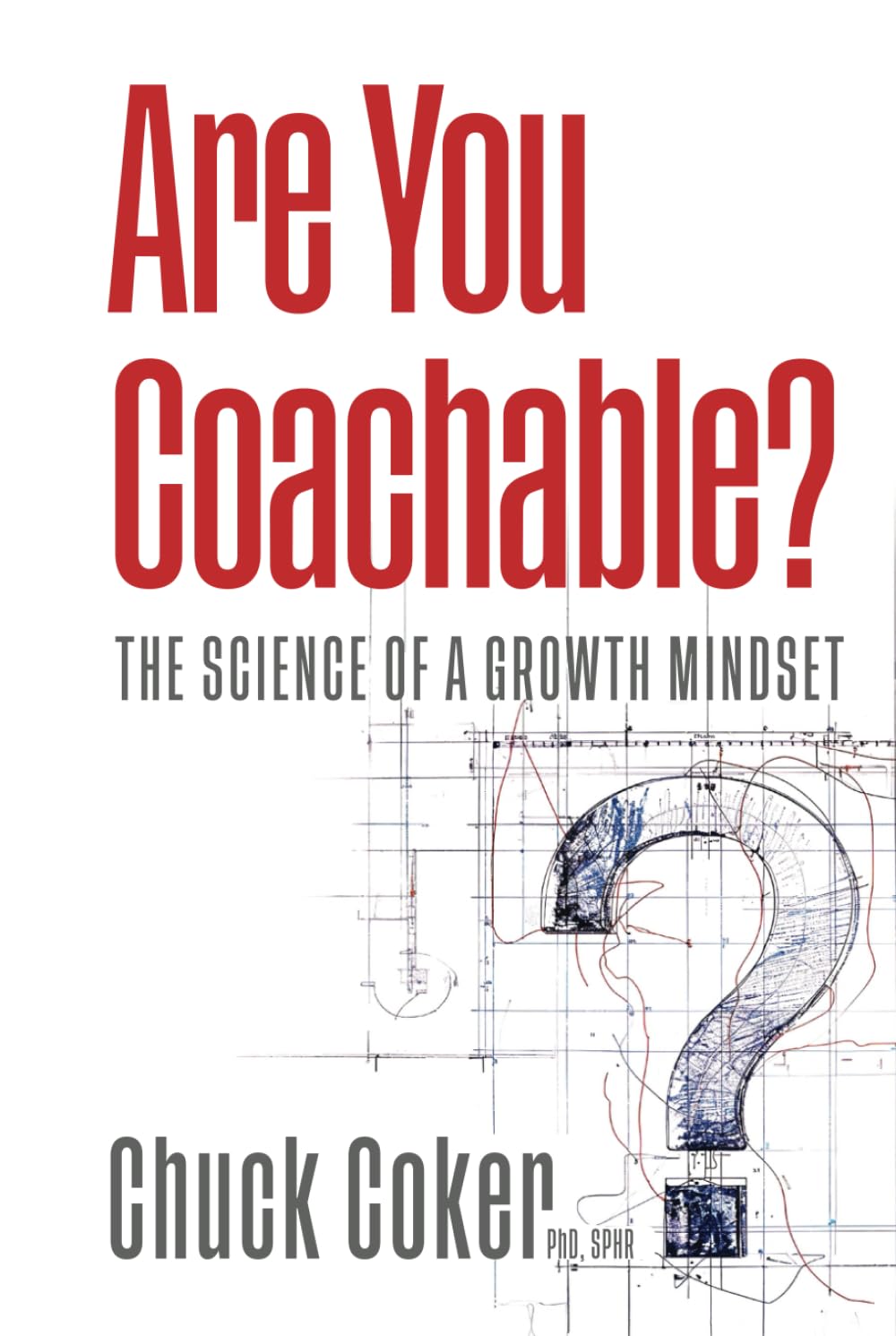
Are You Coachable?: The Science of a Growth Mindset
Do you feel stuck in your personal or professional life, struggling to reach the goals you've set for yourself? The key to achieving transformative growth and success lies...
About BiblicalTraining.org
BiblicalTraining.org wants every Christian to experience a deep and loving relationship with Jesus by understanding the life-changing truths of Scripture. To that end, we provide a high-quality Bible education at three academic levels taught by a wide range of distinguished professors, pastors, authors, and ministry leaders that moves from content to spiritual growth, all at no charge. We are a 501(c)(3) non-profit funded by gifts from our users. We currently have over 180 classes and seminars, 2,300 hours of instruction, registered users from every country in the world, and in the last two years 1.4 million people watched 257 terabytes of videos (11 million lectures).
Our goal is to provide a comprehensive biblical education governed by our Statement of Faith that leads people toward spiritual growth.