Mentoring - Lesson 3
Planning for Your Mentee’s Priorities
In this lesson, you gain knowledge about how mindsets and values shape both mentors and mentees, and how cultural factors influence communication. You explore objective mindsets like theoretical and utilitarian, focusing on logic and efficiency, alongside subjective ones such as aesthetic and social, which are driven by emotions and relationships. You also examine belief-driven mindsets like individualistic and traditional, and how understanding these diverse approaches enables mentors to guide mentees effectively, considering their unique characteristics and goals.

I. Introduction
A. Recap of Previous Sessions
B. Importance of Cultural Mindsets
II. Values and Mindsets Overview
A. Objective Mindsets
1. Theoretical: Focus on knowledge and process
2. Utilitarian: Focus on efficiency and results
B. Subjective Mindsets
1. Aesthetic: Focus on harmony and surroundings
2. Social: Focus on people and helping others
C. Belief-Driven Mindsets
1. Individualistic: Focus on control and recognition
2. Traditional: Focus on structure and order
III. Practical Engagement Strategies
A. Working with Theoretical and Utilitarian
B. Engaging Aesthetic and Social
C. Managing Individualistic and Traditional
IV. Conclusion
A. Importance of Mindset Adaptation
B. Preview of Next Session
Hello, and welcome back to the mentorship program. I'm Chuck Coker, your host, and we're in session three. In our previous sessions, I shared an overview with you.
And in the last session, we talk about the natural behaviors that God gifted us, according to Jeremiah 1.5 and Psalm 139. But there is a cultural aspect that has an impact on the way that your mentees are going to communicate. And that cultural mindset is significant because it becomes the more important part because over time things change.
You see, mindsets can change over time and they're more fluid than behaviors. You see, they help us develop a deeper understanding of what is important to both you and your mentee, because culture, environment, families, schooling, all of those things can change the difference of what we think is important. So in order to improve an individual's motivation and their ability to implement the things that are important, we have to lay a foundation for understanding how mindsets must adapt in a way that can actually maximize our performance in any specific environment that we're involved in.
You see, we need to understand the challenges that our mentees create for themselves and the potential plans to help them to develop that adaptation. Now, the graphic you see at this particular point is how do we understand values and mindsets? There's three different types of values and mindsets. First of all, the objective is the way that we look at our tasks and implement.
So the theoretical is what are the processes and the things that we are trying to accomplish in a more perfect process? And then the utilitarian talks about the efficiency in comparison to the effectiveness. However, the majority of the population in the United States as well as Europe is much more subjective. Subjective means that we are much more influenced by people and circumstances that surround us.
The aesthetic, how do the surroundings impact us? And the social mindset is how do people impact us? The beliefs mindsets are what are my feelings about myself versus what are the feelings in the traditional about the way things ought to be or the structure of the world around us? So what I'd like to do now is move you through each one of those to help better understand how they are going to impact how both you and your mentee approach the challenges that you face and the objectives that you're trying to achieve. You see the high theoretical, the first of our objective mindsets are driven by learning research and the tried and true processes that come along with it. They try to solve problems by investigating, analyzing and systematizing things.
Their goal is the truth, knowledge, understanding and mastery of how to get those things done. If you listen, you'll hear words like I think, I heard a statistic or I was reading. The challenge is that when you move outside of that objective logical mentality, they disconnect because emotions are something that they try to keep their distance from.
So if you want to actually engage them, show them what they need to know, point them to specific resources and help work through processes with logical and rational statements. Now, when you want to work with a theoretical, it's important that you lay out the processes for them and help them understand the steps that you're going to and then give them justification in the process. What you don't want to do is use words like I think and I feel because those will not gel with them.
So let's go to the second mindset in the objective category. Those are utilitarians. Those are people that love practicality and preservation and they like to solve problems with efficiency and maximization of the resource.
They just don't like to do things two times because their goal is to be useful and accumulate the things that are important to them. So when you hear them use phrases like whatever works best, let's get it done, you have hit a utilitarian square in the face. Where do they disconnect when there's low rewards or no progress? So when you think about these things, how do you actually engage them? Well, you show them what they need to know, point them to a return on investment and how something can grow.
It's important for you to think that in dealing with these individuals, make things as efficient as you possibly can. Help them understand the reasoning behind what you're doing and why this is the quickest and most efficient way to get things done. Those objective mindsets, the theoretical and the utilitarian have different ways of looking at things even though they're very logical.
You see the theoretical says I have to be effective while the utilitarian says we need to be efficient. The theoretical says it's gotta be competence. We have to focus on the truth, yet the utilitarian says let's get it done.
Let's just get it complete. The theoretical values understanding, utilitarian values acquisition. And listen for these words.
For the theoretical, I can figure this out. The utilitarian, I'll get it done. So you can see the differences, but you will also notice that there's probably arm's length distance between these people and they may seem a little cool or aloof at times.
So let's move over to the subjective group. Our first group is the aesthetic group and they are driven by form, function and harmony. They want things to run smoothly.
They actually like to solve problems by big picture thinking, creating balance so that they can achieve the potential that they believe that God has given them. So when you talk to them, you're probably gonna hear phrases like, that just doesn't look right or I feel like we should do it this way. However, you can actually disconnect with them when you get too logical or too chaotic because they like harmony.
So when you want to engage them, it's important to tell them how you feel. They need to know the feeling aspect of it. So you can focus on pain points and personal growth, but just allow them to express themselves.
The aesthetic is a person that can tend to be very sensitive. And so as you move in to working with this type of mentee, it's important that you present concepts out there, paint pictures for them, help them better understand what the end product needs to look like so that as you work through the process, then you can become more specific in the way that you're approaching the things and that bit of objectivity won't push them over the edge. So let's talk about the social mindset.
This individual is driven by people in their causes. You've heard it said many times, he would give you or she would give you the shirt off their back. This is true in a number of people.
They like to solve problems by giving without asking in return. You see, they want to help others achieve their potentials. If you listen to them, they'll use words like we, I believe, how can I help? But when you become or appear to be in a position where you're insensitive to people's needs, they will gloss over or disconnect with you.
Like the aesthetic, they need to know about how they feel. We want to focus again on pain points of other people and how to make someone's life better. Now, one of the things that I want to share with you that's very important at this point is that when you look at the social mindset, what I want you to understand is that the higher that graph and the greater the score, the more open they are to a wide group of people.
Their bandwidth for people is very wide. Now, just because someone has a low social does not mean that they don't care. What it does mean is that their group of friends and the people that they want to influence is a much smaller group.
So as you think about that and you work on notes to work with your mentee, understand that based on that social score, you'll want to focus on whether they work with big groups or small groups and how far reaching they want to be because they give so much of themselves. They may often neglect themselves and that can cause burnout. So let's compare the two.
With the aesthetic and social mindsets, there's some differences. The aesthetic is very experiential. The social is very relational.
The aesthetic is energized by the surroundings around them, but the social is energized by people. The aesthetic values harmony, the social values contributing. So you're probably gonna hear these differences in their speech.
With the aesthetic, I see your problem. With the social, I feel your pain. So let's move on now to the belief-driven mindsets because these are much more to do with the way a person expresses themselves and the power or authority that they feel during that process.
The high individualistic is driven by control and recognition. They like being out there. They will normally lead and try to solve problems either through strategy, directing, or advancing where they are in life because they literally want to be the master of their own destiny.
Words that you're gonna hear out of them is I a lot or I believe. Let's win and we have to position ourselves. What will happen though is if and when you tell them that their authority is limited, they will probably disconnect or when you take them out of a role where they feel they have expertise.
So how do you engage them? Not like the objectives that need to know something or the subjectives that need to feel something. You need to point out something to them that they can do. Give them a voice in leadership.
Recognize their efforts and contributions. And it's important that as you focus and work with them that you help them understand where their role is and how they can move up and through that role in the process because oftentimes it's not just about where they are now. It's about where they're going and how they want to get there.
So our last mindset is very important also because it describes the traditional. It is what's the world order? How are things supposed to be holistically? You see the high traditional is driven by a system of living. And in our case, that's the scriptures that direct us and focus us in a way that allows us to comply with the rules and the things that we are committed to.
Their goal is to do what they believe is right. So you're gonna hear words like they, purpose, why, what's the standard, what's right and what's acceptable. But you will cause them to disconnect if you ask them to bend the rules.
So again, if we want to engage them, we can point to something that they can do and show them why it's important as you appeal to their integrity. The higher the level of traditional, the more structured an individual needs to be. The middle scores is a little bit more collaborative and the lower the score, the more open they are to a wide group of people.
So to differentiate between these belief systems, the high individualistic is very commanding in the way that they approach things and the high traditional is very structured. So we could see someone like a seminary professor who leads but is highly structured where the low individualistic is a much more collaborative person and they are open with very few biases in the traditional realm. So as we work through these belief mindsets, let's talk about the difference in how to recognize each one of them.
The individualistic is very strategic in the way that they go. You see, if they're not on top, they're willing to strategize with someone else as long as they can achieve their objectives. But the traditional on the other hand is very structured in the way that they approach and they're gonna follow the rules.
The individualistic is very engaged in their achievement while the traditional person wants to conform, to focus on what they believe is right. The individualistic values their position, the traditional values their order. The individualistic says this, my way is best.
The traditional says, my way is right. So let's talk about these two different people that you see the graphics on the board here. Kerry on the left, his purpose statement is, my purpose is to bring glory to God, bring people to Jesus and bring vision to light.
So that individualistic says, my purpose is to bring, he's taking the lead to Jesus and bring vision to light. In other words, there's an objectivity here that he is going to accomplish something to bring people, which as you can see, the social is high, but there's no biases in the low traditional. So he wants to be known for the openness and the objective thinking.
Colin on the other hand, wants to be a loving husband and father to glorify God by developing people with gifts of leading worship. And here you can see that high individualistic partnered with the high aesthetic, there he's leading and loving and glorifying God through his worship. That aesthetic is that conceptual aspect of being able to think and envision something before he even has the whole picture.
So Colin is driven to be the best person he can be by creating and expressing the things that are important to him in his life. So as we move on, I think it's important that you focus on how to actually apply the mentee's mindsets. Ask yourself, how should you adapt to the mentee's mindsets to get your point across, to make lasting impact? What are the characteristics that are key to the success in the mentee's chosen area of ministry? And what mindset strengths do they have that will help? And what are they lacking or what did they struggle with as well as how can you help them overcome these challenges? And it's a pretty good guess that your mindsets are gonna be somewhat different, even though you are training and guiding an individual into their next steps.
So let's look at the graphics that we've placed on the board here. What we see with the person on the left, who is the mentee, with the person on the right. The person on the right has the high social, high individualistic and high traditional, which indicates that they have a servant's heart.
But what they're doing with that high theoretical on the left is that they are serving him or her through knowledge. And the utilitarian is a little bit low, but they're willing to take the time. That's the servant heart.
On the other hand, the mentee is much more people oriented and very subjective to whatever is going on around them. And you can see that that impacts their efficiency level with the low utilitarian, because they're trying to be right, they're trying to be structured. And in this particular case, this particular mentee might be a little bit hard to work with because with the high traditional, high aesthetic and the high traditional, you're going to have more of a fixed mindset.
So as you think about these, you can see that the mentor on the right is going to have to be very patient in the process in working with this individual, because the other person may have some fixed ideas that are going to take some time to work through. Now, as we finish up this session, I hope that you understand the differences between the behaviors, what we see, how a person acts, and what's important to them. Because you have to have both of them in working with the mentee to ensure that they're going to accomplish the goals and learn in a way that's appropriate.
So in talking to that subjective mentee, you're going to have to express a lot of feelings, tell a lot of stories. With the objective mentee, you're going to have to be more logical, present the data and the facts, because that's how they're going to assimilate it. But knowing both of those differences, how do we actually get things done? What's the approach that we need to take that will be somewhat universal in the approach, but be unique to each situation? We're going to cover that in session number four.
So I look forward to seeing you in session number four, and thank you for joining us.
- Learn how mentoring facilitates growth in personal, professional, and spiritual development through collaboration, preparation, and effective communication.0% Complete
- Learn how to build trust, apply emotional intelligence, and adapt communication strategies based on mentee personality traits to effectively guide them toward growth in this stage of mentorship..0% Complete
- Understand how various mindsets, influenced by culture and values, affect mentoring relationships and communication, and then tailor your approach to mentees' logical, emotional, or belief-driven needs.0% Complete
- Learn how to plan interactions with your mentee, avoid common triggers, provide constructive feedback, and build trust, set clear goals, and leverage behavior insights.0% Complete
- Learn to use emotional intelligence, identify strengths and weaknesses, and apply SMART plans to structure mentoring sessions.0% Complete
- Learn how to use the Coachability Index and behavioral assessments to tailor mentoring approaches, personalized communication, and actionable SMART plans.0% Complete
- Understand the importance of planning, clarity, and spiritual growth in mentoring. The lesson offers strategies for setting goals, maintaining accountability, and guiding mentees through flexible agendas.0% Complete
Before Dr. Coker's class was released onto BiblilcalTraining.org, he joined us for a webinar. During the time, he provided an overview of the course and an opportunity for donors to ask questions.
0% Complete
Lessons
- Learn how mentoring facilitates growth in personal, professional, and spiritual development through collaboration, preparation, and effective communication.0% Complete
- Learn how to build trust, apply emotional intelligence, and adapt communication strategies based on mentee personality traits to effectively guide them toward growth in this stage of mentorship..0% Complete
- Understand how various mindsets, influenced by culture and values, affect mentoring relationships and communication, and then tailor your approach to mentees' logical, emotional, or belief-driven needs.0% Complete
- Learn how to plan interactions with your mentee, avoid common triggers, provide constructive feedback, and build trust, set clear goals, and leverage behavior insights.0% Complete
- Learn to use emotional intelligence, identify strengths and weaknesses, and apply SMART plans to structure mentoring sessions.0% Complete
- Learn how to use the Coachability Index and behavioral assessments to tailor mentoring approaches, personalized communication, and actionable SMART plans.0% Complete
- Understand the importance of planning, clarity, and spiritual growth in mentoring. The lesson offers strategies for setting goals, maintaining accountability, and guiding mentees through flexible agendas.0% Complete
Before Dr. Coker's class was released onto BiblilcalTraining.org, he joined us for a webinar. During the time, he provided an overview of the course and an opportunity for donors to ask questions.
0% Complete
Class Resources
Recommended Books
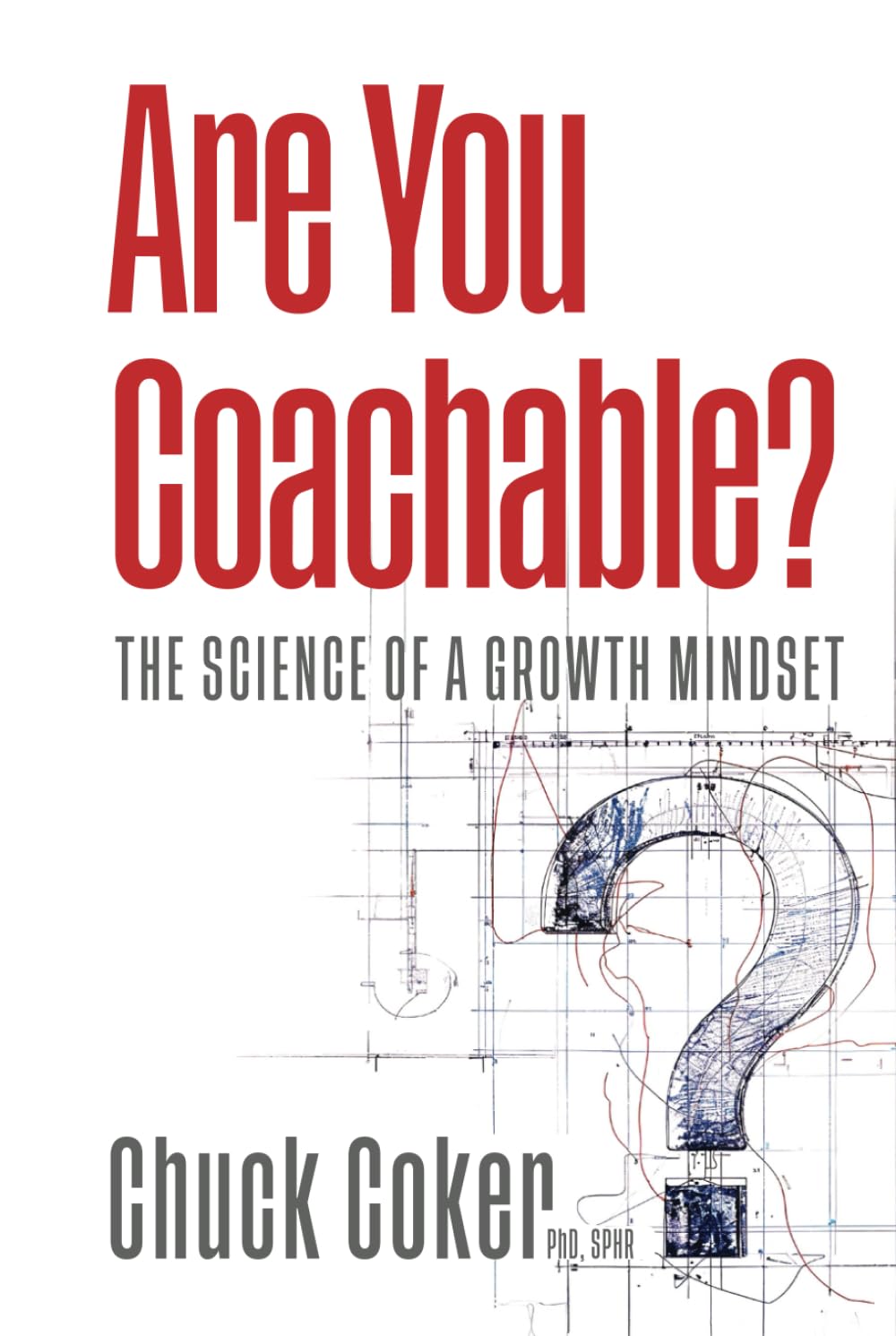
Are You Coachable?: The Science of a Growth Mindset
Do you feel stuck in your personal or professional life, struggling to reach the goals you've set for yourself? The key to achieving transformative growth and success lies...
About BiblicalTraining.org
BiblicalTraining.org wants every Christian to experience a deep and loving relationship with Jesus by understanding the life-changing truths of Scripture. To that end, we provide a high-quality Bible education at three academic levels taught by a wide range of distinguished professors, pastors, authors, and ministry leaders that moves from content to spiritual growth, all at no charge. We are a 501(c)(3) non-profit funded by gifts from our users. We currently have over 180 classes and seminars, 2,300 hours of instruction, registered users from every country in the world, and in the last two years 1.4 million people watched 257 terabytes of videos (11 million lectures).
Our goal is to provide a comprehensive biblical education governed by our Statement of Faith that leads people toward spiritual growth.