Mentoring - Lesson 5
A SMART Approach for Your Mentee
Through this lesson, you will understand the importance of developing emotional intelligence to enhance your mentoring relationships. You will explore self-awareness, self-regulation, social skills, empathy, and motivation as key components of emotional intelligence. You’ll learn to apply these skills to help mentees achieve their goals by understanding their strengths, addressing weaknesses, and using structured goal-setting methods such as SMART plans. The lesson emphasizes the value of collaboration, planning, and setting realistic, measurable objectives to guide mentees toward long-term success.

I. Introduction
A. Recap of previous sessions
B. Importance of emotional intelligence
II. Components of Emotional Intelligence
A. Self-awareness
B. Self-regulation
C. Social skills
D. Empathy
E. Internal motivation
III. Application of Emotional Intelligence
A. Identifying strengths and weaknesses
B. Developing a strategic plan
C. Setting goals
IV. Structuring the Mentoring Process
A. Time frames and deadlines
B. Giving feedback
V. Breaking Down Goals
A. Making objectives realistic
B. Prioritizing and planning
VI. Developing the SMART Plan
A. Specific, measurable goals
B. Timeliness and relevance
VII. Cooperation and Collaboration
A. Linking goals with the mentee
B. Providing support and feedback
VIII. Conclusion
A. Importance of written plans
B. Faithfulness and perseverance
Hi, welcome back. I'm Chuck Coker, your host for this mentoring session, and we're in session number five. We've talked about behaviors, mindsets, and triggers as we move through the process, and last session we focused on planning.
So what I think is critical that we stop here in session five and take a look at is the fact that we need to develop our emotional intelligence to maximize not just our potential, but to manage the potential of our mentee so that they can channel their emotions and responses. This will help us eliminate letdown during the training and the developmental processes of mentoring. So let's discuss emotional intelligence for just a minute.
There are five aspects to it. Self-awareness comes from the context of how others view you. In other words, are you able to negotiate conflict and communication in a way that's going to be helpful and beneficial to both parties? And if you can do that, you will learn to self-regulate your emotions and your responses by adopting and adapting to differing behaviors and mindsets.
You see, if we do not regulate, we are displaying the fact that we do not have self-control. And of the fruit of the spirit, that's the last one and probably summarizes the other eight in many ways. But through that self-awareness and self-regulation of our emotions, we need to develop the application process.
Self-awareness, learning about myself, self-regulation, being able to communicate. But we need an adeptness in social skills. And the only way we can gain that is through the communication and interaction with people based on what we know about ourselves and what we know about others so that we literally regulate the way that we approach those individuals and we communicate with them in their own language like we discussed in session two.
If we have those social skills, then we will display empathy through the ability to adapt to a variety of situations and circumstances. That empathy allows us to put ourselves in the other person's mindset so that they can relate to us. And if you're mentoring someone and they can't relate to you, you're not displaying the empathy necessary to help them succeed in their goals and their objectives.
Last but certainly not least, you have to have the ability to rely on your internal motivations and understanding of your strengths to order your success. And when I think about motivation, I go back to Isaiah where it says, Before their mouths were opened, I answered their prayers. What is the Lord telling us here through that scripture is that because he's omniscient and omnipresent, he can see the desires that we have in our hearts because he placed them there.
You see, if he answers our prayers before we speak them, we're releasing the power of prayer so that we can complete the desires that he placed in our hearts. And all of us have different desires and those desires are put there by the Lord to fulfill our purpose. And you see, we all have the same purpose and that's to glorify God.
But how do you as an individual glorify God? By the desires that he's put in your heart and using the motivations, the empathy, the social skills with other people due to your self-awareness and your ability to regulate with the other person. Now, how do we actually apply what we've learned? Well, we're going to use some behavior and mindset scores and in the process what we're going to do is we identify and look at the mentee's strengths so that we will know how to assist them in reaching their objectives. We also have to identify their weaknesses and what may hinder them in the process.
Now it's time to apply what you've actually learned. Let's use our behavior and mindset scores from the assessment to identify the mentee's strengths that will assist them reaching their objectives and their weaknesses that may actually hinder them from achieving what they want to achieve. In this particular case, you can see that this person is a very high IS or they're extremely people-oriented and not as strong in the task orientation.
We look at their mindsets and we see that their highest scores are in the individualistic, in the traditional, and the social. So this person has a servant's heart and they're very people-oriented. So what are their strengths? They're going to be great communicators, great listeners, and they're going to want to work with someone in a way that is extremely collaborative.
However, due to the lack of task orientation, we see that they may not get as much accomplished. We can see that with the extremely low utilitarian score. But they're doing it very altruistically, so therefore other people's needs come above their own and they may not get done what needs to be done.
So when we think about those strengths and weaknesses going into a session with this person, what's the reality that the mentor must do? They must develop a strategic plan, stick with that plan, and help the individual understand what's going to work and what's not going to work. And as they do that, they will be able to build a structure because with that high traditional score, the structure is extremely important. And if we don't give that to the individual, they will not be able to finish what they're trying to do.
So, when we think about this, we also know that because they are highly subjective and very people oriented, that they may struggle with goals. So it's important that as we focus with this individual, we remind them of what a goal really is. First of all, it's a statement of an end result.
What do we want to achieve at the end of this? And what specific time frame do we have to achieve that? And what level of quality? I'm going to give you a bit of an outline that you can use with this type of individual and come out with highly successful results. First of all, paint a big picture. Tell them what the end result is supposed to look like.
And when we begin with that end result, we're talking about the concept that Stephen Covey used in his book, Seven Habits of Highly Effective People. Begin with the end in mind. So we take that end result and now we begin to work backwards.
So painting that picture gets them conceptually at a place to where they understand what a finished product is going to look like. Second, you want to tell them specifically what they need to do. What are the steps that they can't afford to miss? What is number one, number two, number three, four, five, and so forth.
This way, they are highly directed. Because of that subjective nature, they're less likely to be disturbed if we have that structure and that specificity of what needs to be done. Now step number three is multi-tiered.
Part A, B, and C. First of all, what's the time frame? What's the deadline? Second of all, what potential problems might they face? And third, what resources are we going to give them that will be of help to them? And step four, what did I just tell you? Because of their subjectivity, there is a natural propensity for them to get a little bit distracted during this time frame. And in doing that, what you want to do, especially with your time frames in part three, is give them a little bit of a fudge factor so that you can tell them Thursday if you actually need it Friday. But during that feedback session, when they tell you what they think they heard, you're going to be able to fill in the blanks with your mentee and help them better understand how some of the things that they might have missed can actually be applied.
And it's always a good thing to do during this process to tell them where you made mistakes. Tell them where there are shortcomings. Make sure that those potential problems and potential resources are there so that they can go back and get them.
Now, major goals are a big thing, and they can be very daunting. But when you break them down into measurable chunks or a series of objectives, you can go a lot further towards making them more realistic and achievable within the time frames that you're asking them. I once had the privilege of speaking on the stage with a Zig Ziglar.
And I asked him, what is one of the secrets that you had to learn in being successive? And he said, you know, Chuck, there are never unrealistic objectives. There's just unrealistic time frames to achieve those objectives. So when we break them down into more realistic and achievable timescales, the chances of our success increase greatly.
Now, setting our goals actually creates a roadmap, regardless of whether a person is objective or subjective or belief oriented. The important thing is that there needs to be some planning. Step one, identify what has to be achieved.
Number two, establish some priorities. If you don't know how to establish priorities, go to my website. There's a download, a nine page download on how to set priorities and how to pull them into your schedule.
Why? Because only then will you be able to keep this mentee that we just discussed on track. We have to keep their progress focused and provide them a source of motivation because when they're chomped, each little success leads to the greater success. And let me give you an example.
How many times when you were going to school, whether it be a trade school, a college or a seminary, did you get a pat on the back for doing your homework? The pat on the back came when you walked on the stage and received your diploma. So there was no specific pat on the back early in the process. You had to work through that process because there's something very realistic that we all have to have an understanding of.
And that is short term positive payoffs rarely lead to long term success. It's gutting it out. It's going through the tough stuff, doing the homework, doing those things that will allow us to see that big goal at the end.
That's why we break them down into measurable chunks. So with those measurable chunks, we can actually measure the success and build the confidence of our mentee. That will help us as we begin to identify the things we need and the resources we need to be successful.
So, what you will generally need to develop is questions that help you focus on your mentee's needs. Now here's a few samples. Where do you see yourself in 3, 5 or 10 years? And I know, 10 years is almost impossible to think about.
That's why the shorter goals are the much easier goals to change because even when you set those goals, even if they're 90 days, you're going to probably change them somewhat. What are you passionate about? Because your passion will drive your desire to finish and achieve those goals. What skills do you want to pick up? In the next few months, what will help you achieve your goals? And is there anybody in your network that I could introduce you to that would help you achieve those objectives? And if so, let me know and I'll make those objectives.
You may have to do it a little differently. It may be at a group or an association meeting or it may be an individual lunch, depending on which works best for the mentee. What I've got in front of you is a graphic that illustrates how to develop a personal development plan through a SMART goals box.
You'll see at the top there's a place to summarize those strengths and summarize the weaknesses like we talked about at the very first of this session and in the session previously. We're going to put down the characteristics that are strong in our personality and our mindsets and we're going to summarize the weaknesses. Why do we need both of them right there in front of us? Is to remind us that some of these things may be a little bit more difficult than others.
And I'll go through the examples of these based on the graphic that we shared just a little while ago of the individual. Because this individual is confident with that high I and that high individualistic says that I can be powerful. I can lead because I have the ability to encourage and develop people.
But at the same time that confidence may come off as a lack of warmth to some people. And I may find it hard to relate to other people because I am out in the big crowds more so than the smaller crowds. So with those strengths and those weaknesses what am I going to do? As a leader let's say our objective is to have a positive interaction with three employees every week.
Well we can do that because we're confident and we can demonstrate our power but we may lack some warmth and an inability to relate to people. So what are we going to do? That positive interaction needs to come with questions. Tell me about the hardest part of your job.
Tell me about what you struggle with the most. And you know I used to struggle with the same thing. That's a specific goal.
Positive interaction with three employees every week. How are you going to do that? You have to be able to measure it because you cannot achieve something if you can't measure the steps in between. You see a positive interaction starts with a smile for the employee when you first meet with them.
Whether it's over a coffee break whether it's with a meeting and you want to make sure that you bring people into positive meetings because when a boss calls somebody in their office it's normally not a good sign. So use that positive interaction each time and you can jot that down. Attainable.
When are you going to do that? When is it going to be on your calendar? By connecting people at work with personal interests you can approach them at lunch or for one on ones every morning at 10 o'clock or 12 o'clock or 2 o'clock whenever it might be to use that time as an opportunity to have that positive interaction and to smile in the process. But why is that relevant? The team needs a stronger sense of warmth from me because I am the boss and I'm up in the ivory tower and they're working on the line. So as you think about that there should be motivation because statistics show us at this time according to Gallup that only 35 percent of our employees are the people that work in our ministries are actually engaged.
We also know something else too that in the faith based community there is a 70 percent turnover in five years of people working in ministry and sadly a 51 percent attrition for those who attended seminary or Bible college that are no longer in the ministry after five years. Those are strong. There should be a passion.
You need to be relevant. Why is it important that you connect is to build that engagement because statistics also show us that 85 percent of people leave their jobs because of their boss. So this is a worthwhile objective.
So timely what do we do? We achieve within three weeks those three smiles and we maintain it for the month following each week three smiles each week more engagement each week at 10 12 and two o'clock. I'm out there doing that to bring a positive reaction so that my employees understand that I'm not just their boss but I'm there to encourage them and help them achieve their objectives professionally and personally. In a survey I did a number of years ago the number one desire for employees was to have a career development process and that can only happen in the onboarding process of an organization and that in and of itself is critical because people make up their minds within the first six months of whether they're going to stay with the ministry.
So let's talk about the smart plan and the purpose you should actually keep in mind as well as allow it to be the overriding and long term focus of all your plans. Specific what exactly do you want to accomplish measurable how are you going to do it attainable where does it fit in the schedule relevant why is it important and timely when will you complete the objective. Now here's the process I want you to think about.
Specific what exactly do you want to accomplish skip to relevant why is that important to you because if it's not important to you you will not accomplish it from that relevant plug in those measurable stops of what you're going to do when you're going to do it and when you're going to finish it because if you have those aspects a smart plan will just be a matter of ticking off the boxes as you go. Now let's break it down even further. What's your goal be precise avoid ambiguity good specific statements begin with I will.
Let's take another example I want to be a good dad that's hardly specific what is a good dad a better specific goal would be I will be a good dad by reading the Bible to my children on a regular basis. Okay why is that important to you we skip to relevant because you need to know that we are going to defend this answer it's the most critical step in the process and if you struggle with it you're going to likely not achieve the objective. So why I want my children to grow up knowing Jesus I want my children to grow up with faith that they can depend on and I want my children to know that I care about them enough to spend time with them a number of years ago James Dobson wrote a book stating that the average dad spent less than six minutes a day with their children that's sad we have to help our children know why they are important to us.
So what's the measurable how are you going to achieve the goals what steps do you need to take we're going to break it down I'm going to read the Bible to my children on a regular basis but I'm going to do it on Mondays Wednesdays and Fridays three days a week I will read the Bible now where is this going to happen we're going to fit it into the schedule because if it's not on the calendar it won't happen having nine children it was a challenge to make sure that I spent time so every Saturday morning I had breakfast with the kids and took them out for a while every lunchtime my wife took one of the children out we put it on the schedule so Monday Wednesday and Friday I'm going to read my Bible to my children at 8 p.m. after they've had their baths and they're ready for bed now you see it's on the calendar we know when to do it we know how often we're going to do it and I would set a goal not exceeding 90 days the reason why is you want those little success steps along the way and remember our statement by Zig Ziegler there's no unrealistic time frames just unrealistic deadlines that we can get our first level of success maybe it's Genesis that you want to read through in 90 days well we know that in 90 days we've got to cover about 50 chapters so we have to break that down and how many chapters do we have to read three days a week that means we only have 36 sessions over a 90 day period so we've got to make sure that we get through a little more than one chapter and we can find those shorter chapters and divide those up so that they can be attainable so let's summarize this we use our summary of our strengths and weaknesses to know where we may have some challenges and we look at the repeated ideas between our behaviors mindsets and what we can actually rely on because if you go into a smart plan or a management by objective or any of these particular approaches you have to make sure that your strengths and your weaknesses do not interfere with the success of the process so you plan it ahead of time you do it ahead of time and then you just tick off the box as you go that way you can overcome your challenges now let's think about time for cooperation and collaboration you see working with a mentee you've actually got to link your goals you have to work together to prepare and strategically plan dates for when you begin the program and what the specific assignments might be during that time you're going to share different ideas and determine how you're going to work together and what processes you will use and what they're actually going to look like and don't be afraid to give homework it's okay because while your mentee is doing homework you're going to need to develop what questions to ask them as you work through the process share what paperwork and communication process is going to work for them what is the documentation and record-keeping that we want so that we can identify how we're going to support each other during this process and make sure that you clarify your role as a mentor and how you are going to personally assist the individual in the growth and development of their smart plan because they're looking to you for experience knowledge and understanding in the process use that smart plan to solve problems now here's the one thing that I will tell you it's important not to make all of your smart goals I got to fix this use your strengths in two of every three smart plans so that you can learn to achieve the success that's necessary to get on a track to where this smart plan becomes very automatic if you don't do that you'll have problems solving those problems and making decisions these are things that you both have to agree on you'll both need to work together to identify issues and problems that you're going to encounter if you know a person is highly subjective and people oriented they're going to struggle meeting deadlines you need to know that up front so that potential solutions can actually be developed during the process next you also want to consider other options and strategies that's why I encourage you to have your mentee talk with their peers and the people they work with as well as you talking with other mentors about processes that they've discovered may streamline and make the process more effective then put it into into the works implement your strategy so that after each meeting you can evaluate the results and readjust if necessary because the one thing that's common and constant is change I hope this has been helpful to you because while it may seem very simplistic for decades this type of plan has not only worked but it's improved and let me tell you how important that is a written plan is four times more likely to occur than one that remains up here if you write that plan out and put it into a smart plan it will be ten times more likely to occur than if it was just written so what we're looking at is not just a four plus ten we're looking at four times ten in other words a smart plan will bring about a 40% more likelihood of it being accomplished than if it was just up here up here it's a dream written down it's a plan in a smart format it's a very smart way to approach Paul says run the race to win I agree with Paul and I think if you make that plan and you stick with it you will succeed I'll go back to a comment made to me by a pastor over 50 years ago he said Chuck 90% of being a Christian is showing up being faithful and if you're faithful with a smart plan you'll get the results that you desire thanks for sticking with me through session 5 I look forward to seeing you next time
- Learn how mentoring facilitates growth in personal, professional, and spiritual development through collaboration, preparation, and effective communication.0% Complete
- Learn how to build trust, apply emotional intelligence, and adapt communication strategies based on mentee personality traits to effectively guide them toward growth in this stage of mentorship..0% Complete
- Understand how various mindsets, influenced by culture and values, affect mentoring relationships and communication, and then tailor your approach to mentees' logical, emotional, or belief-driven needs.0% Complete
- Learn how to plan interactions with your mentee, avoid common triggers, provide constructive feedback, and build trust, set clear goals, and leverage behavior insights.0% Complete
- Learn to use emotional intelligence, identify strengths and weaknesses, and apply SMART plans to structure mentoring sessions.0% Complete
- Learn how to use the Coachability Index and behavioral assessments to tailor mentoring approaches, personalized communication, and actionable SMART plans.0% Complete
- Understand the importance of planning, clarity, and spiritual growth in mentoring. The lesson offers strategies for setting goals, maintaining accountability, and guiding mentees through flexible agendas.0% Complete
Before Dr. Coker's class was released onto BiblilcalTraining.org, he joined us for a webinar. During the time, he provided an overview of the course and an opportunity for donors to ask questions.
0% Complete
Lessons
- Learn how mentoring facilitates growth in personal, professional, and spiritual development through collaboration, preparation, and effective communication.0% Complete
- Learn how to build trust, apply emotional intelligence, and adapt communication strategies based on mentee personality traits to effectively guide them toward growth in this stage of mentorship..0% Complete
- Understand how various mindsets, influenced by culture and values, affect mentoring relationships and communication, and then tailor your approach to mentees' logical, emotional, or belief-driven needs.0% Complete
- Learn how to plan interactions with your mentee, avoid common triggers, provide constructive feedback, and build trust, set clear goals, and leverage behavior insights.0% Complete
- Learn to use emotional intelligence, identify strengths and weaknesses, and apply SMART plans to structure mentoring sessions.0% Complete
- Learn how to use the Coachability Index and behavioral assessments to tailor mentoring approaches, personalized communication, and actionable SMART plans.0% Complete
- Understand the importance of planning, clarity, and spiritual growth in mentoring. The lesson offers strategies for setting goals, maintaining accountability, and guiding mentees through flexible agendas.0% Complete
Before Dr. Coker's class was released onto BiblilcalTraining.org, he joined us for a webinar. During the time, he provided an overview of the course and an opportunity for donors to ask questions.
0% Complete
Class Resources
Recommended Books
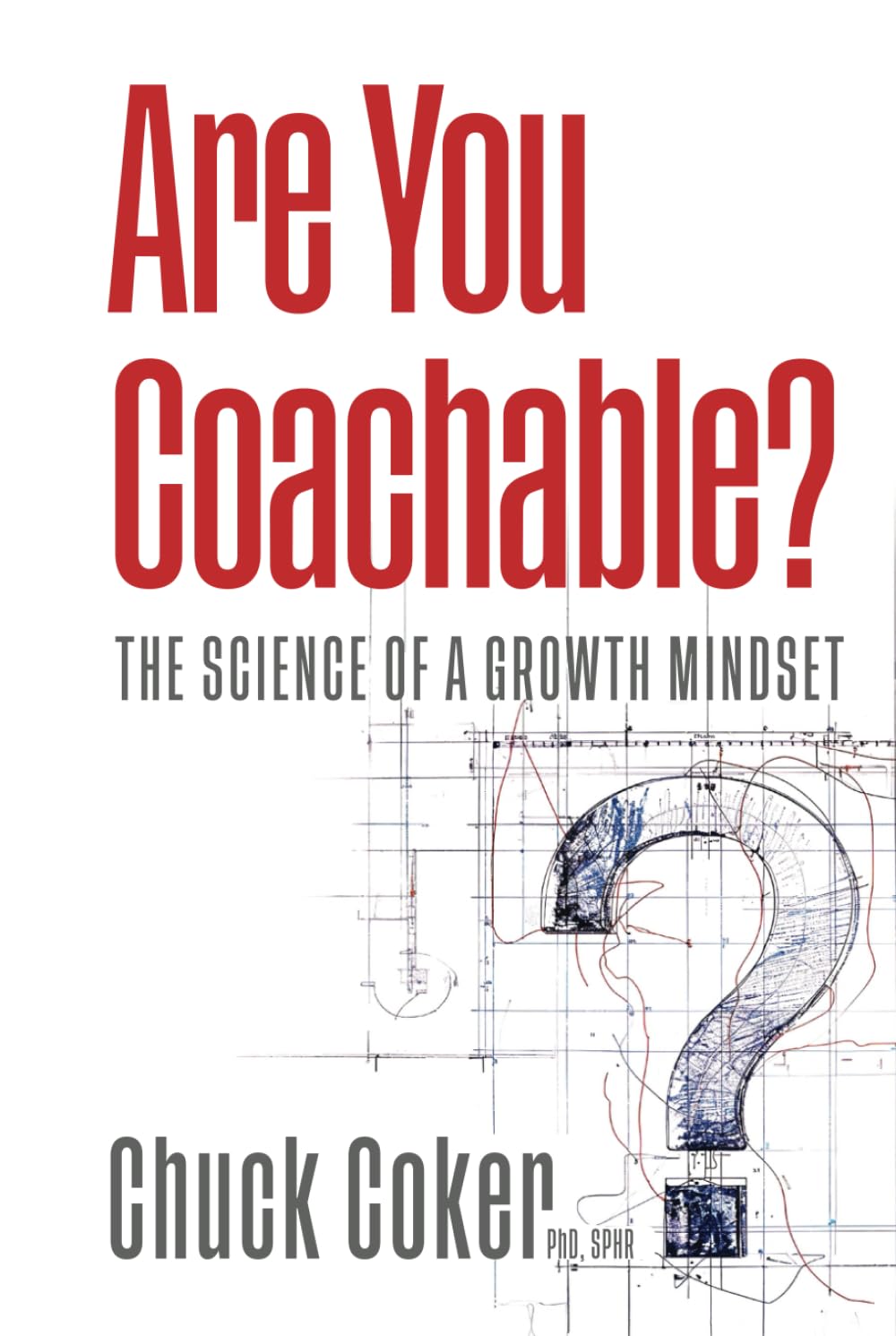
Are You Coachable?: The Science of a Growth Mindset
Do you feel stuck in your personal or professional life, struggling to reach the goals you've set for yourself? The key to achieving transformative growth and success lies...
About BiblicalTraining.org
BiblicalTraining.org wants every Christian to experience a deep and loving relationship with Jesus by understanding the life-changing truths of Scripture. To that end, we provide a high-quality Bible education at three academic levels taught by a wide range of distinguished professors, pastors, authors, and ministry leaders that moves from content to spiritual growth, all at no charge. We are a 501(c)(3) non-profit funded by gifts from our users. We currently have over 180 classes and seminars, 2,300 hours of instruction, registered users from every country in the world, and in the last two years 1.4 million people watched 257 terabytes of videos (11 million lectures).
Our goal is to provide a comprehensive biblical education governed by our Statement of Faith that leads people toward spiritual growth.