Depression: When a Member of the Flock Needs Special Care - Lesson 5
Things We Can Do To Help (Part 1)
In this lesson, you learn about the importance of addressing depression and seeking help, especially for pastors who face unique pressures in their roles. The lesson emphasizes the need for open discussions on depression within churches to overcome the stigma and support those who are struggling. You also gain insight into the complex nature of depression, which may manifest differently in various contexts, and the importance of understanding individual cases. Finally, the lesson touches on the idea of adjusting one's focus and thought life to help cope with depression.

I. Introduction
II. Prevalence of Depression among Pastors
A. Pressures faced by pastors
B. The challenge of seeking help
III. Importance of Open Discussions on Depression
A. Encouraging conversation in churches
B. Overcoming the stigma
IV. The Complex Nature of Depression
A. Examples of depression in different contexts
B. The need for understanding individual cases
V. Adjusting Focus and Thought Life
Dr. Gary Lovejoy: Action. Well, for our final session we want to talk a little bit about some of the things that you can actually do that can be helpful. I understand that a lot of times people are reluctant to seek out help for a variety of reasons. But there are some things you can do, actually without seeing a professional and other things that would be helpful to see a professional to facilitate these things. But before I say anything further concerning that, I want to just make one comment that there are many pastors that labored for many, many years in the field, and I have great respect for them. In my practice, I see a lot of pastors and missionaries and others who are working in full time in the field. And studies show that roughly 70% of all pastors are undergoing some aspect of depression. That’s an astounding figure.
And I mean, seven out of ten pastors are struggling in some way, and oftentimes they are under heavy duress. They have many things that are going on. They have events that are occurring. Sometimes they are trying to resolve conflict in the church. They have a secretary who’s telling them all the things, the appointments they’ve got to be to. And sometimes they’ve got their own issues within their own families. And there’s just a tremendous number of pressures. And I believe that the vast majority of people who attend church do not really know or even have an inkling about the level of pressures that are placed upon a pastor. It’s probably also unknown to most people that the majority of people who graduate from seminaries and go into the pastorate leave the pastorate. In fact, in one study, 90% of the respondent pastors’ response said that he had considered resignation and leaving the ministry at some point in their ministry. Now, some of them didn’t. Many of them didn’t, but they considered it. They were to that point. And over 50% of them do.
And I have some experiences of a good friend of mine who graduated from seminary, and he was literally chewed to pieces and his experience in his first pastorate. And he left the ministry altogether. He never became a pastor. He was a bright young man who could have served well. So I’m very, very sensitive to the issues of pastors who struggle and who have tremendous weight placed on their shoulders. Sometimes we like to think, “Well, a pastor works on Sunday and maybe on Wednesday if they have a midweek service. And, gee, you know, that’s pretty good.” The average pastor puts in 60 hours a week – the average pastor. That means some put in more. But that’s what the statistical average is. That’s a huge number of hours. And I’m just saying that what we’re talking about in terms of change and dealing with depression, that I speak not only to congregants, but I also speak to church leaders, and elders and to pastors who are under tremendous pressures. And pastors, above all, struggle with the idea that they could be depressed because they’re supposed to be the leader of the flock, “And I should be the paragon of mental health and spiritual health, and here I am, struggling. What kind of hypocrisy is that?’ But it isn’t hypocrisy. And that’s why I took some time in the previous video to talk about the fact that some of God’s dearest servants who served him well in the Old Testament and New struggle, likewise, with the difficulties of their ministries. And so I just want you to understand that these are common problems, far more common than you can possibly think. And I think it’s good to be aware of that so that we might nurture one another, and that we might be sensitive and open to the kinds of problems that are shared and discussed, that when we do open up, that we don’t respond negatively, but that we invite further conversation.
I remember a Sunday school class that met in Spring Mountain Bible Church, and they discussed depression, and it started out as a small group, and every week it grew larger and larger until it was filling the room. And what one person over and over and over said—over and over again, “I have always struggled with depression, but I didn’t think this was the right place to bring it up. I felt like if I did, I might be judged. But I find that I can say it and share my burdens. And other people have similar concerns as I do. And I just didn’t realize it. And I feel like they felt a camaraderie, a sense of brotherhood.” And at the same time, they were uplifted; the fact that they could actually openly discuss it. And that’s what our aim is. Our aim is that we can open up this whole realm, that we can discuss it so that the church as a whole doesn’t suffer from the fact that we have this kind of unwritten rule: “We don’t talk about those things.” Otherwise, you know, I talked earlier about the emotional, repressive family. Sometimes we become a spiritually repressive family. We can’t talk about the things that affect our spiritual life the most powerfully. And sometimes those things are physical, and spiritual, and emotional. So I wanted to preface that so that we understand that this problem is not something limited in scope. It’s large in scope.
Now, when people want to change…very oftentimes when people come into my door in counseling, it’s a mistake to always assume people want change. Many times people want pain relief. And that’s very different. They just want to be out of their pain. But when it comes to actually change, it might be threatening to them. Some people are threatened by change. In fact, it’s very well known, In fact, you’ll find it most introductory clinical psychology books, that there’s an early critical stage in therapy, and that is when a person begins to share their burden of whatever is troubling them, and they get it out, and they feel better and think “Gee, I don’t need to go any further.” But they’re on the brink of change. They’re on the threshold of change. They get right there and that’s a little threatening to them. That’s a little frightening to them. And so they back away from therapy. And so if they do that, you know, they will be back either to you or to someone else because they haven’t really faced the issues. And see, I think it’s important to keep that in mind because whatever it is that you face, you know that if you don’t face anything, nothing will happen, nothing will change. The whole idea of depression can be quite complex and be even surprising to you if you have it.
Sometimes it’s a problem of secondary gain. By that I mean that, like any behavior, depressive behavior can be reinforced by unintended consequences. Let me give you an example. A young man came into my office one day and his parents had brought him. He was in his late twenties; I think he was about 26 or 27, probably no longer eligible for health insurance from his parents. You would expect him to be well on his way in his career, but he’d never held a job for longer than six months. He had never been productive in any way. He sat at home for long periods of time, play video games, did not much of anything. And he was very, very depressed, and his parents were very concerned with him.
And when he came to my door, I was quickly informed by his parents that I was like the seventh or eighth therapist that he’d seen. And they’d trundle him round from one office to another, and they would try things like increasing his social skills or increasing his employable skills or trying to give him greater assertiveness, and various types of things. But nothing worked. Nothing took. And so he sat down in front of me and began speaking, and he had a somewhat apathetic view of life. And I started talking about different things and finding out what things he had done in past therapy and so forth. And then, in the course of conversation, I started talking about his parents and what it was like to be living still at home, and what problems that may have presented to his parents. And I picked up some clues from him. He suddenly straightened up in his chair and began talking in a more animated fashion. I picked up some clues, and so I asked him, I said, “Would you mind…” (I had a hunch.) And so I said, “Would you mind if I spoke to your parents, had a session with your parents?” And he practically threw his neck out, nodding in such agreement.
Yes, he would like me to see his parents. And so I had them come in and we talked; and of course, they talked about how their concern for their son, and one day they were going to be gone, and what’s he going to do, and he’s so completely dysfunctional, and blah, blah, blah, wringing their hands over it. And then the conversation turned to them, and I started asking him about things that had to do with their marriage, and I kind of segued that from talking about the impact of having their son still at home. And then it was what I realized in my hunch that there were major marital problems in this marriage. In fact, this marriage was hanging by a slender thread, and most likely they would be divorced, except the common thing that kept them together. The glue that held them together was the fact of their mutual concern over their son. And their son had somehow picked that message up and what he was doing…
(And this is the reason why no therapy would have ever been effective with him until this is understood.) That what he was doing was sacrificing his own life because he knew that as long as he remained dysfunctional (and therefore the focus of concern of his parents), his parents would not divorce, and he didn’t want his parents to divorce. And so he was giving up his life, sacrificing his life, his productive life, so that his parents would remain married. And so you see how complicated…so his depression was unwittingly reinforced by the fact that they were worried about him, and that’s what kept them together. But once the parents were dealt with then his depression did lifted and he became a productive human being again.
So depression can be a very complex thing. It’s not a simple one to one kind of relationship. And you have to find out what’s going on. And oftentimes when you want to intervene or involve yourself and change, and a person doesn’t change, it’s time to stop, rethink it, back up, and start coming at a different angle; because sometimes it isn’t what you think. But one of the general things that I might comment on in regard to depression is adjusting our focus on our thought life. Every single day every one of you thinks. The moment you wake up in the morning to the moment you go to sleep at night, you’re always thinking. There’s never a time when you’re not thinking. As a matter of fact, if you’ve ever asked somebody “Oh, well, what are you thinking?” “Oh, nothing.” They don’t really mean that. What they really mean is “Nothing I want to tell you or nothing that you would be interested in.” But there’s no such thing as a blank mind.
You’re thinking right now. Whatever I’m speaking, you’re thinking about something, whether it’s what I’m talking about or something about having lunch soon. But whatever it is, you’re thinking about something. We cannot not think. And why is that important? Because we have a continuous ongoing narrative in our lives about the events of our lives. It’s like we are writing a story every single day of our life, and every day we’re writing and we are responding to it. Well, as any narrative, it can be said in two different languages.
What do you mean? Well, it’s either in need language or it is in preference language. And you might ask “Well, what do you mean, giving a narrative in need language?” Well, need language is language that is related to a need. And what’s a need? A need is something that’s necessary for survival. There are very, very few needs in life. Almost everything is a want, where you live, the house you live in, the friends you have, the vacations you go on, the cars you drive, the type of work you do. All of it is a matter of preference. It’s all matter of choice. But there are a few basic things that are not, like the need for air (you don’t have a choice about if you want to live), the need for food, the need for shelter and so forth. What I’m saying is there are very, very few true needs. Almost everything else is a preference, is a desire, is a choice.
So what happens if a true need is thwarted? Let’s take, for example, the need for air. What if I got up out of my chair here and I walked over and I slammed my hand over your nose and mouth and held there tightly? What would you do? Well, the first thing you do is you desperately try to pull my hand away. And when that doesn’t work, you start punching away at me, you start kicking me, you do anything, and the longer I held my hand over your mouth and nose, the more desperate you’d become, and you’d be kicking wildly; you would be in a full fledged panic state. As a matter of fact, it’s interesting that lifeguards are trained for this when they go to save someone who is drowning. They have to be taught how to subdue a person, because if they don’t, that drowning person will grab on to the lifeguard and drag him down with him. If you’ve ever tried to save someone from water, there are many, many cases where the rescuer has gone down as well; and because they’re in full fledged panic. That’s what happens when we are deprived of a need.
So what happens then if we take what is really a want, a preference, a desire, but we psychologically convert it into a need? Let’s take an example. Let’s say I want your approval. I want your approval. But I don’t tell myself that. I tell myself I need your approval. Now I’ve converted it into a need, right, in my head. I need your approval. So now we’re talking, we’re interacting. I am getting cues that you don’t approve of me. I start to become desperate. I start to panic. I’ll do anything to get your approval. I may even start to compromise my values to get your approval. This is what happens among teenagers where peer approval is so preeminent they will engage in sexual activity. They will engage in criminal activity; they engage in drug activity. Their better nature would tell them “No, don’t go here. Don’t do this.” Then they don’t even necessarily want to do that. Most teenagers engage in these kinds of things actually have confessed to me that they don’t want to do those things, but they feel they need to in order to be accepted by the group.
That’s how powerful. Why? Because I need peer approval. Once they say they need something, they panic if they don’t get it. Well, this is what we often do. We often use that kind of need language in everyday circumstances. Let’s say, for example, I’m coming to meet you for an appointment, and I’m running on the kind of the edge, and I’m coming down the freeway, and I’m coming, rounding the corner. And all of a sudden a sea of red lights, traffic jam. “Oh, no, I’m late. What time is it? Oh, my gosh. I would be really late. I’ve got to get there. I have to get there.” And I become extremely upset and I’m pounding on the dash. I’ve seen people drive wrong way up the onramp. I’m going over the median strip, doing some crazy things because they’re desperate to get someplace and they’re so upset. And when they finally arrive at the destination, they’re in emotional upheaval. Why? Because they’re telling themselves they have to. See, need language is things like I have to. I must. I’ve got to. It’s awful. It’s terrible. I can’t stand it. I hate it. This is need language. It’s volatile, it’s emotionally volatile language. There’s no faster way to get yourself emotionally upset than to use need language.
This is what explains, you know, road rage. Somebody cuts in front of them. They say “How dare that. I can’t stand people like that.” And they do crazy things, things that their sober nature would say “Don’t go there.” But they do them because they’re in a state of high agitation, because they’re using need language, and need language is what gets us into trouble, is what exacerbates our emotional states. So then instead of responding in temperate terms to something, we respond, we overreact to things, we get very upset. And this is often at the core of our depression. And we have so learned to use need language instead of preference language. Maybe I should make a distinction here between that and preference language.
Let’s replay that situation. I’m coming to the point where I’m late, see a red light, and I say, and I’ve had actually had this experience. I start my feel of my hand squeezing the wheel. I’m getting uptight like this. And I can feel it. And I ask myself “What am I saying to myself?” Just ask yourself one question. “What am I saying to myself?” And I listen and I tap into my internal phone line. I listen. I hear “Wow, I got to get there. I’m going to be late. I’ve got to get there.” And I hear all this need language flowing. I have to ask myself just one question, just one question I’ll need to ask. The question is “Will I survive? Is my survival at stake?” When I ask that question, I start laughing. It’s my survival instinct. I’m stuck in traffic. What do you mean my survival’s at stake? At the most, it’s inconvenient. It’s a little inconvenient. I might be embarrassed a little bit. Maybe they have left and I called to reschedule, but that’s about the most of it. My life is nowhere near in jeopardy. But you see, when I use need language, I’m assuming need language is based on the idea that my life is in jeopardy. You see how out of sync the language is with the circumstance. And that’s what we often do. Let me show you how that works in depression.
Let’s say I am now unemployed. I’ve been unemployed for some time, been really looking for a job, and I’m trying to find this job. And I’ve got this great possibility. And I’m one of the finalists. I’m going in for my interview and I’m all pumped and I’m excited to go for it. And so I go and I give my best job at the interview, and I even think I do a pretty good job interview. But at the end they tell me that I’m not successful, that they have chosen someone else. Man, I’m really bummed. I’m completely depressed. I’m walking out. I’m just depressed out of my skull. Let’s say that happened to you and you’re just depressed. You thought for sure this is the job you dreamed of. You thought you would get it and you didn’t. And so you’re really depressed. And you come to me and you say “Gosh, I’m so…” And I say “Why are you so depressed?” “Well, I’m depressed because I went for the job and I didn’t get it. And I was so dependent, I was sure I was going to get that job. I didn’t get it. That’s why I’m depressed.” And I would say to you “That’s not why you’re depressed.” You’d probably get angry with me. “What do you mean that’s why I’m not depressed? If I got the job I’d be happy. I didn’t get the job. That’s why I’m depressed.” I said “No, that’s not why you’re depressed.”
“So what do you mean?” Well, because some people go through similar experiences and they don’t get depressed, do they? Now, if depression was the automatic response to not getting the job you want, that would happen to everyone, wouldn’t it? But see, what happens is this: I like to think of it as the ABC analysis of behavior. The A is the activating event. The activating event was: I went to the job interview and I failed to get the job. That’s the acting event. The emotional consequence was depression and discouragement, disappointment. But what’s in between those two is B, which is the belief about the activating event. And the B, add to my belief… I’m usually saying to myself things like “Well, I didn’t get the job, it’s my only shot at it. I really thought I was going to get a job, but since I didn’t get it, I’ll probably get nothing. I’ll probably be a burger flipper all my life and I’ll never get the job. I’ll hate the rest of my work. I had to get this job. Oh, what a miserable experience.”
In other words, if I really believe that, of course I’m going to be depressed. I believe that was my only shot at happiness in my career. Of course I may be depressed, but what if I had come at that and I didn’t get the job? And I say “Well, that’s disappointing. But there’s so many other good jobs out there, I’m going to go back with renewed hope and really work at it and try to get a job. If I hit enough places, I’m basically going to find one.” Then I’m not depressed. I may be disappointed, but I’m not depressed. So it’s not the end of the world. It’s like being stuck in that traffic. My survival is not at stake, but it’s not the end of the world. I will survive. And the same thing here. I don’t get the job. It’s disappointing but it doesn’t have to be depressing. But you see, we often interpret those things with such emotional baggage that there is depression that automatically follows it.
And, you know, this thing is a biblical principle. This is not just some principle I dreamed up. It’s a biblical principle. And we see it so beautifully displayed in 2 Corinthians 4:8-9. You know, the Apostle Paul was a man who was under tremendous duress. I mean, he was like many pastors, constantly besieged by unhappy people, and conflict, and people who rejected his message. And he had spent a lot of time being beaten up and threatened with his life and spent time in rat infested prisons. It was a tough, tough life. It would have been natural for someone to have asked him “How do you take that, Paul? How do you keep going? How do you keep your head above water in all this?” And so that would be a natural question to ask. And I’m sure he was asked that.
And so in his second letter to the Corinthians, he writes something that’s very revealing. It gives us a hint of how he keeps his head straight under such pressure. And this is what we read in 2 Corinthians 4:8-9, “We are afflicted in every way, but not crushed. We’re perplexed but not driven to despair. We’re persecuted, but we’re not forsaken. We’re struck down, (meaning we’re discouraged), but we’re not destroyed.” But what is he saying here? He’s basically saying this: he’s parlaying preference language with need language. This is not pie in the sky thinking. He said “we’re afflicted in every way” – that’s just a description of what’s going on; they are afflicted, but it’s not the end of the world. “But we’re not crushed” – being crushed is a need language term. He says “we’re perplexed” – sometimes you don’t know how God is working here. “But we’re not driven to despair” – which is a need language term. “We’re persecuted” - which is pretty obvious, they were. “But we’re not forsaken” - which is a need language term. “Or we’re struck down. We’re discouraged sometimes.” Sometimes it’s just hard to keep at top spirits all the time. “But we’re not destroyed. It’s not the end of the world” – need language, you see.
So what Paul was saying essentially this: “I don’t go there when it comes to any names. I have learned.” He was a very volatile man when he first was converted. He was known for his volatility. Look what his reaction was to the Christians. He was bound and determined to eliminate every last one of them. That’s why he was marching to Damascus, because that was a hub of international traffic. And he didn’t want Christianity to spread to Damascus because then it would spread everywhere. And he wanted to catch it, nip it in the bud. So he was out to kill and disperse every single Christian he could. And he was adamant about it. He was obsessed with it. And he was driven by the need language of it all. But when he became a Christian, it was really not so much a conversion as it was a surrender. And he went from being an intense antagonist to the Gospel to being an intense protagonist of the Gospel.
God didn’t change his personality as such; he was still intense, he was brilliant intellectually. But he began to realize over time, in the beginning of his ministry, he was an elephant in a China shop. I mean, he had a falling out with Barnabas, and with Timothy, and with Mark, and with the church at Jerusalem. I mean, he was having all sorts of conflicts and problems. But as time went on, he got more and more mellow. He got more and more at peace to the point that when he was writing to Timothy, which he was writing from Rome, so it was near the end of his life. And here he is instructing Timothy how to deal with people who are easily offended. This is the same man that was running around offending everybody in the beginning. Now he is giving instruction on how to respond to people so they’re not offended. Why? Because he’s learned how to be calm and peaceful.
He said in Philippians chapter four, he says (he’s talking to people about their anxieties and about being uptight all the time). And he says, “Try thinking about the truth. Try thinking about what really is true in this life. Stop filling your head with lies because lies will imprison you, but the truth will free you. The truth will make you free. And free is peace. Freedom is peace.” When I feel at peace with my life, I feel free. If I’m all uptight with depression, and anxiety, and anger, and upset, I’m imprisoned. I feel it. I’ve had patients tell me that: “I feel in prison.” And so whenever we feel in prison like that, most likely we’re probably telling ourselves lies to remind ourselves “What am I telling myself?” And then I’ll probably be able to identify the lies I’m telling myself.
So in this ABC analysis, I begin to realize that it’s what I’m saying to myself about the event that’s depressing me. It’s not the event itself. And once I know that, I’ve reclaimed control of my life and allowed God to work through me; because, you see, as long as I think, “Well, everything’s out of my control, if things happen to me (not because of me, and so forth), I will become helpless, and I will resign myself to whatever is, and I’ll simply give up and give in to depression.” But when I realize that I can change something, that I realize that it’s my beliefs that need to be changing. I can’t change the activating event, I can’t change the person rejecting me for the job, but I can change my response to it. You see, so often, I’ve often told patients this and they look at me rather quizzically when I tell them this, I say, “You know, there are only two mistakes people make in life…” They look at me, “Only two?” and I say “Yeah, it’s all boiled down to one or two—one of two things. The first is trying to control things that you don’t have any control over. And the other is not controlling things you do have control over. And the reason you don’t control the things you do have control over is because you’re too busy trying to control the things you don’t have control over. That’s the problem.” And what we’re talking about is reclaiming control over the things you do have control over. And that empowerment is what contradicts the helplessness of depression. And it begins to rise in that respect.
And sometimes it means changing your behavior before you even change your thinking. So what do you mean? Well, sometimes it’s hard for some people to think their way into a new way of acting. But they can act their way into a new way of thinking. I remember a psychiatrist was sharing an experience about a patient who came to him and was not improving, had very low self-esteem, hated herself. She had a very responsible position, she was a corporate executive. She kept saying “Well, I know that I’m just living a lie. They don’t know how terrible I am and how pathetic I am. And if they only saw me or got a real wind of what I do, they’d probably fire me overnight.” And she just had miserable self-esteem. And he’d been working with her for a number of weeks and getting nowhere. And finally one day she comes in and she says, “You know, I have to take time out from therapy for a month because I’m going back to New York. My company (she rolls her eyes), my company is sending me back there to represent our company in an executive meeting, and so forth. And I don’t know why they sent me. I’m going to be, you know, I’m going to be rubbing shoulders with all these titans of the great companies around the country. I’m going to be so out of place. They’re going to take one look at me and say, ‘Why are you here? Are you here to serve me, or do you want to give me hors d’oeuvres?’ ‘No, no, no, I work and I’m an executive.’” And so she said “I don’t even want to go.” But she said “I have to go because my company chose me…why, I don’t know.”
And so the psychiatrist told her “Well, here’s what I want you to do then.” He says, “What would you do if you really felt good about yourself? I know you don’t, but I mean, if you did, what would you do? And if you can’t, you have a hard time, think of somebody you know that seems to be pretty confident. And how would they respond?”
“Well, I would go there. We have an opening at the conferences, a big dinner. And so where I go in, I walk in…” And she described how she’d talk to people, how she’d introduce herself, blah, blah, blah, and then talked about the meetings that would follow, and so forth.
And he said “Well, here’s what I want you to do.” He says, “I know you don’t feel good about yourself, but don’t worry about that part.” He said “What I want you to do is I want you to do exactly what you just said. Just go and act it. Pretend. You know, it’s kind of like the power of pretending. Just try it. Just go out and just do it.”
And she said “I can’t do that.”
He says, “Yes you can. You can do it. You may not feel like it, but you can do it.”
And so finally she agreed. Well, she was gone. A month later, she comes back. The psychiatrist sees her and said “Well, how’s things going?” And she comes striding into the room and she’s a totally different person. He looks at her and he says “What happened?” And she said, “Well…” she says, “I was on a plane trip back to the conference in New York.” And she says, “Why, oh why did I agree to do this?” But, she says, “I’m a very responsible person. If I say I’m going to do something, I’m going to do it. And so I’m saying, ‘How am I going to get out of this? I’m going to make a fool of myself. People are going to say “Who are you?” Oh my gosh, why did I say that?’ But she said “I’ve got to do it.” So, she said, “I know what I’ll do.” She said “I resolved it on the first night when I get there at the big dinner, and so forth, I’ll do those behaviors, I said. And then they’ll all look at me like I was a plague or something, and I’ll start back to my room. I’ll get that embarrassment over with, and then I’ll go back to being who I am and withdraw, and I’ll just sit and listen. I’m not going to say anything, and that’s what I’ll do. And then I least have honored the request. I did. I tried. It didn’t work.”
So she said, “I did that. And I went in and I thought through all the things I would do if I were calm, and I went and did them. I didn’t feel like doing it, but I went and did them. And you know what? It was kind of weird. People started really responding to me.” And she became the star of the show. People came over and talked to her and so forth, and she had all these discussions, and she said “At the end of the first night,” she said, “Well, that went pretty well, wasn’t what I expected. Well, I’ll try it one more time tomorrow, then it’ll probably all collapse.” And so, she said, “Next day I did that…” And her response was even greater and she said day after day she did this. And she said after a while they’re all coming to her for ideas and suggestions. And she was really, really was the star of the show. And she said “I began to realize that I have something to contribute. And I never realized that before. But the first time I realized what my bosses have been telling me for years and I wouldn’t believe them.” But she says “I don’t think I would have ever thought that just on my own.” But she had thought her way into a new way of, or acted her way into a new way of thinking.
So sometimes people have a hard time thinking their way into a new way of acting. If so, they might think about reversing that process and acting their way into a new way of thinking.
- In the first lecture of the course "Depression: When a Member of the Flock Needs Special Care," you will gain insight into what depression is, how it affects people, and what causes it, as well as learn about the difference between depression and normal sadness, and how to recognize signs of depression.0% Complete
- This lesson teaches you to view depression as a warning sign, and helps you understand the various causes and risk factors, including predisposing biological factors and neurotransmitters, for a more balanced approach to addressing and managing depression.0% Complete
- In this lesson, you learn about the spiritual aspects that influence our understanding of the heart of God, examining misconceptions and stereotypes, as well as how depression affects Christians. Through biblical examples, you gain insight into God's compassionate response to those who struggle and his desire for a relationship with his followers.0% Complete
- In this lesson, you learn about the complex nature of depression and the need for a balanced approach to treatment, considering spiritual, physical, and emotional aspects while debunking misconceptions about mental illness and prayer.0% Complete
- In this lesson you will discover the importance of adjusting the focus of our thought life as part of the process of overcoming depression. You will also learn about the importance of having an open discussion about depression in the context of a church community. And finally, two common mistakes we make often make; trying to control things we don’t have control over and not controlling things we do have control over.0% Complete
- In this lesson you will learn about the importance of dealing with anger appropriately and hear suggested strategies for doing it. This lesson also covers the importance of an accurate self-concept and how scripture informs us in this area.0% Complete
Lessons
- In the first lecture of the course "Depression: When a Member of the Flock Needs Special Care," you will gain insight into what depression is, how it affects people, and what causes it, as well as learn about the difference between depression and normal sadness, and how to recognize signs of depression.0% Complete
- This lesson teaches you to view depression as a warning sign, and helps you understand the various causes and risk factors, including predisposing biological factors and neurotransmitters, for a more balanced approach to addressing and managing depression.0% Complete
- In this lesson, you learn about the spiritual aspects that influence our understanding of the heart of God, examining misconceptions and stereotypes, as well as how depression affects Christians. Through biblical examples, you gain insight into God's compassionate response to those who struggle and his desire for a relationship with his followers.0% Complete
- In this lesson, you learn about the complex nature of depression and the need for a balanced approach to treatment, considering spiritual, physical, and emotional aspects while debunking misconceptions about mental illness and prayer.0% Complete
- In this lesson you will discover the importance of adjusting the focus of our thought life as part of the process of overcoming depression. You will also learn about the importance of having an open discussion about depression in the context of a church community. And finally, two common mistakes we make often make; trying to control things we don’t have control over and not controlling things we do have control over.0% Complete
- In this lesson you will learn about the importance of dealing with anger appropriately and hear suggested strategies for doing it. This lesson also covers the importance of an accurate self-concept and how scripture informs us in this area.0% Complete
Class Resources
Recommended Books
Demystifying Depression
Feeling sad, anxious, hopeless or depressed is mystifying because there seems to be so many confusing explanations for what is causing a person to feel so bad. Instant...

A Christian's Guide To Depression & Antidepressants
This book defines depression and its' basic causes, provides the criteria for determining whether one is depressed or not, and then outlines the basic options for...

A Pastor's Guide for the Shadow of Depression (Light in the Darkness)
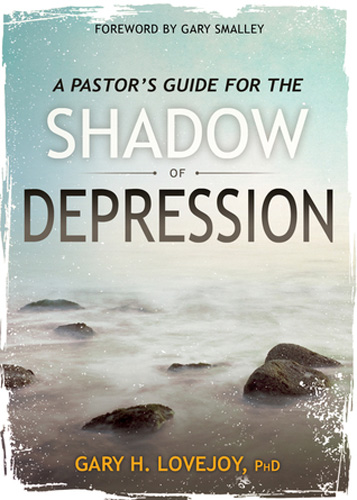
Pastors face unique challenges and unrealistic expectations that can lead to feelings of failure, deep sadness, and depression. Too often they feel no one understands, as if...
Strands of Light: Seeing Hope in the Fog of Depression
Having a strong Christian faith is certainly no guarantee against depression. But what if depression has a good purpose in Godâs plan? Strands of Light challenges readers...

Light on the Fringe: Finding Hope in the Darkness of Depression
"Light on the Fringe: Finding Hope in the Darkness of Depression" addresses the difficulty that many depressed Christians often have in understanding their...

Downloads
Recommended Readings
About BiblicalTraining.org
BiblicalTraining.org wants every Christian to experience a deep and loving relationship with Jesus by understanding the life-changing truths of Scripture. To that end, we provide a high-quality Bible education at three academic levels taught by a wide range of distinguished professors, pastors, authors, and ministry leaders that moves from content to spiritual growth, all at no charge. We are a 501(c)(3) non-profit funded by gifts from our users. We currently have over 180 classes and seminars, 2,300 hours of instruction, registered users from every country in the world, and in the last two years 1.4 million people watched 257 terabytes of videos (11 million lectures).
Our goal is to provide a comprehensive biblical education governed by our Statement of Faith that leads people toward spiritual growth.