Essentials of Christian Ethics
About This Class
Christian ethics is the branch of philosophy that deals with issues of right and wrong, true and false, and the reasons why certain behavior is right or wrong. Dr. Nash will guide you as you begin with philosophers and theologians to consider fundamental questions about how you can live with integrity.
About the Professor
Ronald Nash
Dr. Ronald H. Nash (1936-2006) taught for over 40 years, teaching in the areas of worldview, apologetics, ethics, theology, and history. He was the author of numerous books, including The Concept of God and Faith and Reason. He earned his Bachelor's degree at Barrington College, and a Master's degree at Brown University, before going on to receive his Doctorate in Doctoral Philosophy Syracuse University in 1964.

Lessons
- This lesson delves into the ethical thought of Plato, Aristotle, Augustine, and Aquinas, highlighting the similarities and differences in their perspectives on right and wrong conduct, the relationship between goodness and God, and the importance of virtues in shaping human behavior.0% Complete
- This lesson provides an in-depth analysis of the ethical theories of Saint Augustine and Thomas Aquinas, exploring their perspectives on the Christian view of God, human nature, moral laws, happiness, and virtues, and how these concepts impact human well-being and moral behavior.0% Complete
- This lesson equips you to identify and avoid the pitfalls of five mistaken ethical approaches: legalism, antinomianism, situationism, generalism, and particularism, ultimately strengthening your ethical decision-making process.0% Complete
- In this lesson, you explore hedonism and its distinction between egoistic and altruistic forms, as well as the differences between crude sensual hedonism and sophisticated hedonism. By examining Epicurus' critiques and the objections of Plato and Aristotle, you gain a comprehensive understanding of the complexities surrounding hedonistic ethical theories.0% Complete
- This lesson helps you understand the distinctions between right acts and morally good actions, the objectivity of moral laws, and how belief in God can serve as a logical presupposition for absolute morality, ultimately emphasizing the importance of virtue ethics and personal character.0% Complete
Class Resources
Recommended Books
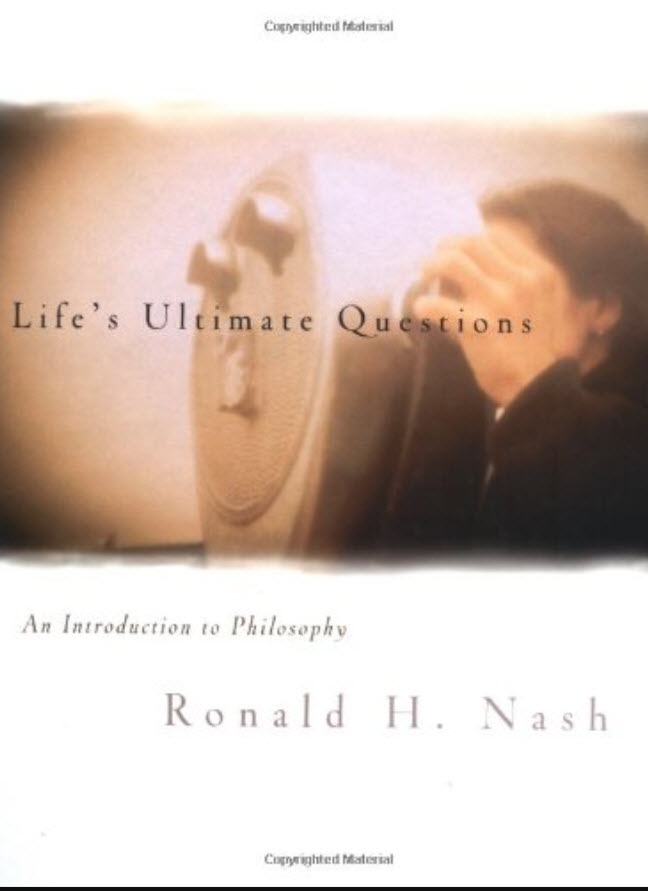
Life's Ultimate Questions: An Introduction to Philosophy
Life's Ultimate Questions is unique among introductory philosophy textbooks. By synthesizing three distinct approaches
Recommended Readings
About BiblicalTraining.org
BiblicalTraining.org wants every Christian to experience a deep and loving relationship with Jesus by understanding the life-changing truths of Scripture. To that end, we provide a high-quality Bible education at three academic levels taught by a wide range of distinguished professors, pastors, authors, and ministry leaders that moves from content to spiritual growth, all at no charge. We are a 501(c)(3) non-profit funded by gifts from our users. We currently have over 180 classes and seminars, 2,300 hours of instruction, registered users from every country in the world, and in the last two years 1.4 million people watched 257 terabytes of videos (11 million lectures).
Our goal is to provide a comprehensive biblical education governed by our Statement of Faith that leads people toward spiritual growth.