History of Philosophy and Christian Thought
About This Class
In this class, you will explore the rich history of philosophy and its relationship with Christian thought. The course begins with an introduction to the definition and importance of philosophy in Christian theology. You will then delve into the evolution of philosophical thought from the Pre-Socratic era, through the Classical Greek philosophers, and into the Hellenistic period. As you progress, you will discover how early Christian thought emerged and developed during the Patristic period, with a special focus on Augustine. The class continues with an examination of medieval Christian thinkers, such as Anselm and Thomas Aquinas, and concludes with an analysis of modern philosophers like Descartes, Kant, and Kierkegaard, and their influence on contemporary Christian thought.
Other Recommended Reading:
Confessions, Augustine
Phaedo, Plato
About the Professor
Ronald Nash
Dr. Ronald H. Nash (1936-2006) taught for over 40 years, teaching in the areas of worldview, apologetics, ethics, theology, and history. He was the author of numerous books, including The Concept of God and Faith and Reason. He earned his Bachelor's degree at Barrington College, and a Master's degree at Brown University, before going on to receive his Doctorate in Doctoral Philosophy Syracuse University in 1964.

Lessons
Introduction
0% CompleteThales and Anaximander were two philosophers in the sixth century BC that lived in Miletus.
0% CompleteHeraclitus and Pythagoras lived into the 5th century BC.
0% CompleteAny worldview addresses the subjects of God, ultimate reality, human knowledge, ethics and human persons.
0% CompleteFundamental beliefs of a naturalistic worldview is that nothing exists outside the physical universe and that all things evolved.
0% CompletePlato was a student of Socrates and lived into the fourth century BC. He opposed hedonism, empiricism, relativism, materialism, atheism and naturalism.
0% CompletePlato described the universe as having three levels: the world of particulars, the world of forms, and the form of the good.
0% CompletePlato's view of the universe was dualistic.
0% CompleteOne of Plato's fundamental arguments is that the human soul is immortal.
0% CompleteEvaluation of Plato's arguments and comparison of Plato's philosophy with biblical theology.
0% CompleteEmpiricism teaches that all human knowledge arises from sense experience. Rationalism teaches that some human knowledge does not arise from sense. experience
0% CompleteAristotle was a student of Plato and lived in the fourth century BC.
0% CompleteAristotle rejected Plato's doctrine of two worlds.
0% CompleteDiscussion of Aristotelian philosophy as it relates to the incarnation.
0% CompleteAristotle's philosophy as it relates to attributes of God and fundamental assumptions about psychology.
0% CompleteAristotle made a distinction between passive intellect and active intellect.
0% CompleteDiscussion of the strengths and weaknesses of the law of non-contradiction.
0% CompleteDiscussion of the nature and substance of matter.
0% CompleteHellenistic philosophy was an approach that was popular from the fourth century BC to the fifth century AD.
0% CompleteStoics were determinists who believed in living according to nature.
0% CompleteHedonism emphasized pleasure as the greatest good. "Eat, drink and be merry for tomorrow we might be dead."
0% CompletePhilo's philosophy was based on a synthesis of Stoicism and Platonism.
0% CompleteImplicit "Logos" Christianity is an underlying theme in the book of Hebrews.
0% CompletePlotinus lived in the third century AD and is considered the founder of Neoplatonism.
0% CompleteAugustine is a Latin church father, is considered by many to be one of the most important figures in the development of Western Christianity.
0% CompleteAugustine wrote Confessions as an autobiographical work to record his experience as a sinful youth and his experience becoming a follower of Christ.
0% CompleteAugustine wrote to refute some heresies of the day by focusing on the concepts of faith and reason.
0% CompleteAugustine writes about the problem of evil and describes evil as the absence of good.
0% CompleteAugustine writes to refute Pelagianism by focusing on the biblical teaching about sin.
0% CompleteAugustine writes to refute Donatism.
0% CompleteThe fundamental idea of skepticism is that no one can know anything. Augustine this statement contradicts itself because the skeptic is claiming that you can know that you can't know anything.
0% CompleteWhen Augustine wrote "The City of God," he had a linear view of history.
0% CompleteIn Augustine's theory of knowledge, he says that eternal reason and human reason are two different levels of reason.
0% CompleteAugustine was personally convinced of the importance of divine illumination.
0% CompleteThe intellectual background of Thomas Aquinas was influenced by the discovery of ancient manuscripts, the rise of universities, the rise of religious brotherhoods and the rise of Muslim philosophy.
0% CompleteAquinas describes faith as whatever a human can know through special revelation, and reason as whatever a human can know outside of special revelation.
0% CompleteAquinas attempts to prove God's existence.
0% CompleteAquinas describes four kinds of law as eternal, divine, natural and positive.
0% CompleteThe rationalists and empiricists set the stage for Kant and other philosophers of the modern era.
0% CompleteKant argued that moral requirements are based on a standard of rationality he dubbed the “Categorical Imperative."
0% CompleteKants two worlds are the phenomenal world and the noumenal world.
0% CompleteDiscussion of criticisms and questions about Kant's ideas.
0% CompleteSimilarities between Kant's ideas and postmodernism.
0% CompleteThe dialectic is a central idea in Hegel's philosophy.
0% CompleteIdeally, Marxism begins with class struggle, then revolution, dictatorship of the proletariat, withering away of the state, and a utopian classless society.
0% CompleteDiscussion of four faces of Marxism.
0% CompleteNietzsche proclaimed that, "God is dead." His cure was to live life knowing there is no ultimate meaning. Kierkegaard emphasized a worldview based on true faith.
0% Complete
Class Resources
Recommended Books
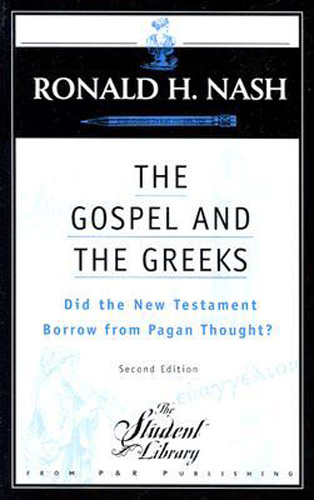
The Gospel and the Greeks: Did the New Testament Borrow from Pagan Thought?
Examines contemporary claims for Christian dependence on Hellenistic philosophy, Greco-Roman mystery religions, and Gnosticism. He finds the case for dependence in the...
The Word of God and the Mind of Man
The last two centuries of Christian theology are the record of an evolving attack on the role of knowledge in the Christian faith. The purpose of this book is to challenge...
Life's Ultimate Questions: An Introduction to Philosophy
Life's Ultimate Questions is unique among introductory philosophy textbooks. By synthesizing three distinct approaches
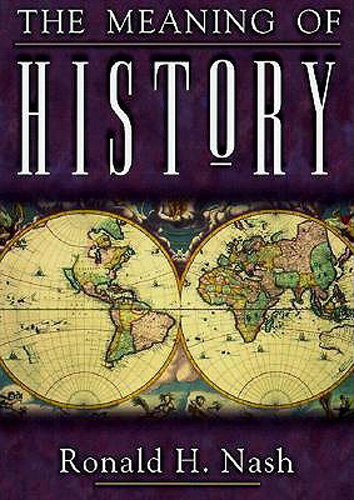
The Meaning of History
The Meaning of History is a concise look at the meaning of the history of the world from the viewpoints of major historians and philosophers. By examining the individual...
About BiblicalTraining.org
BiblicalTraining.org wants every Christian to experience a deep and loving relationship with Jesus by understanding the life-changing truths of Scripture. To that end, we provide a high-quality Bible education at three academic levels taught by a wide range of distinguished professors, pastors, authors, and ministry leaders that moves from content to spiritual growth, all at no charge. We are a 501(c)(3) non-profit funded by gifts from our users. We currently have over 180 classes and seminars, 2,300 hours of instruction, registered users from every country in the world, and in the last two years 1.4 million people watched 257 terabytes of videos (11 million lectures).
Our goal is to provide a comprehensive biblical education governed by our Statement of Faith that leads people toward spiritual growth.