History of Philosophy and Christian Thought - Lesson 3
Heraclitus, Pythagoras, Parmenides
Heraclitus and Pythagoras lived into the 5th century BC.

Pre-Socratic Philosophy
Part 2
II. Heraclitus (535-475 B.C.)
A. Lived in the city of Ephesus
B. Call "The Dark One"
C. Contempt for contemporaries as well as for mystery religions
D. Ideas
1. Everything subject to change: "Cannot step into the same river twice."
2. Basic stuff is fire (metaphor of change)
3. Everything will be consumed by fire; upward and downward paths the same
4. Doctrine of the Logos
E. Unplanned death
III. Pythagoras (ca. 572-475 B.C.) and the Pythagoreans
A. Influence of Orphic Religion
1. Immortality and reincarnation of souls
2. Mind-body dualism
3. Body is a prison-house of soul
4. Idea of religious community
5. Rejection of Orphic theology
B. Moral Views
1. Achieve purity by achieving deliverance of soul from bodily influence
2. Accomplish this by moral rules emphasizing abstinence
3. Role of philosophy, mathematics and music in purifying the soul
C. Scientific Views
D. Views about numbers
IV. Parmenides
Dr. Ronald Nash
History of Philosophy and Christian Thought
th620-03
Heraclitus, Pythagoras, Parmenides
Lesson Transcript
Let's skip down to Heraclitus. Let's go back to our map. The Maya lesions lived in Miletus. Heraclitus lived in the city of Ephesus. Oh, wow. There's that city important in the history of Christian thought. Well, you bet it is. Paul visited Ephesus. Paul wrote an epistle to the Ephesians. Anybody know the name of the first bishop of the church in Ephesus? John the beloved. Well, I assume he was the first. He certainly was the first. He was the Bishop of Ephesus near the end of the first century. Whew. Now, what was the name of this guy who lived in Ephesus? His name was Heraclitus. Let's look at our outline here. Several things we know about Heraclitus. He was called the Dark One. Now, that had nothing to do with his physical appearance. He was called the art, the dark one, because his writings were so obscure. Based on that criterion, no one will ever be able to call me the dark one. All right? Because my writings are world renowned for their clarity, their preciseness, their total lack of ambiguity. People will always know what I teach. Heraclitus had a lot of contempt for his contemporaries, and he also had contempt for one of the major forms of religion in his day, a kind of religion known as a mystery religion. You're going to become experts about the mystery religions, because part two of this book, The Gospel on the Greeks, gives you all the information you need to know about the ancient mystery religions. Heraclitus was the first person in recorded history to use the Greek word log off as a technical term.
[00:02:24] He used it in a number of different ways. His use of the term Lagos was later picked up by thinkers associated with the philosophical system known as Stoicism. Now, remember, the word Lagos was used in a number of different ways, but it does appear that one of the ways in which Heraclitus used this term was as a name for his God. But it was also used as a name for the basic order of the universe. The Stoics seem to have used the word in much the same way as a synonym for God as a name for God. But keep this in mind both the Stoics and Heraclitus seem to have been pantheistic. Now, let me explain the word pantheism. A pantheism is a person who has difficulty seeing any significant difference between his God and the world. A pantheistic is a person. There are many different kinds of pantheism, but a pantheism is a person who tends to think of the world as divine as somehow equivalent to God. As Heraclitus seems to have believed, as did the Stoics. Then the term logos will be picked up still later in the history of ideas by the first Jewish philosopher named Fellow who and 50 years ago it was very fashionable among confused liberals. That's some that's a read all liberals are confused about. That's like talking about liberal Democrats. I mean, you know, you got one more. There's one more word in there than you need. Excuse me. All right. Final use. The word logos and confused liberals began to teach about 50 to 60 years ago that the appearance of Lagos at the beginning of John's gospel was borrowed from fellow was, in fact, the presence of paganism in the New Testament. I am here to tell you that there is no pagan influence anywhere in the New Testament.
[00:04:59] Not the writers of the New Testament were not influenced by that. In fact, this is the basic thesis of this book, The Gospel in the Greeks. There is no pagan, philosophical influence on the first century Christian church. That's part one of this book. There is no influence from the pagan mystery religions of the first century on the New Testament writers. That's part two of this book. And there is no influence from any kind of pre-Christian Gnosticism on the early church. And that's part three of this book. Someday, I'll tell you the story of how I came to what what led me to write that book. So I'm going to be talking I'm going to be using a lot of information about the notion of a Lagos this semester. But I want you to know that under no under no circumstances is the important use of Lagos in the New Testament derived from some pagan source. Maybe I should give you our Becca, our second major theme song. Okay. You've got the Darth Vader theme. We might as well have some music related to what is one of the basic functions of this course, the Lagos Doctrine. If you can't wait to know what the Lagos doctrine is, you can start reading my book, the Word of God and the Mind of Man, because this whole book is about the Lagos doctrine. But let's have a musical theme here. Suppose we use the theme from the High and the Mighty, a great John Wayne movie. Okay. In the High on the mighty, John Wayne is an airplane pilot flying from Hawaii to San Francisco. His plane develops engine troubles. And then, of course, he's they have to start throwing seats and suitcases. And I guess they don't throw any people overboard because, you see, even if they reach the California coast, they have to get over that first.
[00:07:03] That first group of mountains. And so but not to spoil the movie. John Wayne lands the plane safely. Do you understand? No one else could have done that, but John Wayne did. And after the plane comes to a stop and all of the passengers get off the plane and kiss the ground and someone else, there's big fog there because it's San Francisco. And one of the mechanics comes over and he says to John Wayne, I guess you had a tough flight, didn't you? And John Wayne says, no, nothing out of the ordinary. And then he turns and he begins to walk away into the fog and he's whistling this theme. And he didn't know it, but he was whistling the theme to the Lagos doctor. Okay. So whenever we mention the Lagarde doctrine, if you want to start whistling or humming or singing that theme song, feel free to do it. It was written the music was written by a Russian composer named Dmitri Tiomkin. He wrote some other movie music. I think he may have written the movie The Music to. Well, I'll think of in 5 minutes. Okay. Now, Heraclitus believed that everything changes. Everything changes. He is famous for that doctrine. He once expressed that doctrine that everything changes in this expression. You can never step into the same river twice. And that's true, isn't it? If any of you know whether what kind of a river is. I once went canoeing on that river, tipped the canoe over, and as I was swimming in that water, waiting for a shark or an alligator to bite me. I kept thinking of these words. You can never step into the same river twice because the water is changing. If you dip your foot in and pull it out and then dip your foot back in, the water is different.
[00:09:19] Now, everything is changing in this room. The problem is that sometimes things in life change so slowly that it's not apparent to our to our senses. But everything in this room is changing right now. If you want proof, let's all agree to meet back here in 40 years. You're going to have to wheel a box in here to get me in here. We're going to meet agree to meet here in 40 years. And incidentally, I will have changed in those 40 years. Now I will have change. So don't open the box. But what will you find? You'll find that the paint is peeling, The ceiling are falling down. There may be a few things change, but they change too quickly now. When I'm here next week, I will have changed. But I will look the same by. I hope. I hope everything changes. This idea is turns out to be a an important element in the thinking of Plato. In the system of Plato that will start talking about either late today or the first thing next week. Heraclitus also taught that the basic stuff of the universe, the arc of the universe, is fire. But he may not have meant the word fire in a literal way. Heraclitus may very well have meant the word fire as the basic stuff in a kind of symbolic way. Think here of a huge bonfire or any kind of a conflagration that is out of control. A fire is a symbol of consumption, of change in which things are totally destroyed as they once were. Heraclitus seems to have believed, oh, we've got an almost red crayon here that all of the world passes through a kind of cycle. And what seems to get this cycle going is a kind of cosmic fire.
[00:11:36] And after everything passes through the fire and thus the world gets started again, you get, oh, I don't know, I don't remember the exact cycle water. And you get air and you get Earth. And what's causing all of this cycle of change is. The Lagos. And for Heraclitus, the word Lagos means the pattern of change by which everything goes through this cosmic cycle and the world seems to be destroyed and created again by fire. And don't for one moment think that that has any influence on second. Peter Chapter three. I'll deal with that later on. Okay. But Heraclitus also seems to believe that the Lagos is is both the car is the Lagos is the fire. But this whole system is kind of like a god for Heraclitus. Now, a lot of that is obscure and it's possible that we will never know exactly all that he meant. But let me close this period by telling you how Heraclitus. Well, to tell you a little bit about his life and then we'll break. You see, Heraclitus believed that fire is the essence of life. For example, a corpse is cold. A corpse is room temperature. Whereas, you know, our bodies are warm. 98.6. And so Heraclitus believed that when a human being is alive, that's because there is a spark of the fire, the divine fire within each of us. And that's the essence of life. Well haircut. Her colitis became ill with a disease that was probably dropsy. That's an accumulation of fluid in the body. And so Heraclitus said, I'm going to apply my theory to my disease and see if I can come up with a cure. So he decided that what he needed to do was increase temperature a little bit and get the fire going a little bit.
[00:13:54] Okay. So that that would get some of the excess water and fluid out of his system. So he had his disciples dig a pit in the ground, and then he climbed down in the pit so that, you know, just his neck was sticking up above the edge of the pit. And then he asked his disciples to shovel in fresh cow manure until the cow manure had him buried up to the neck. He died. Don't do this. It'll kill you. Okay. Now, we could come up with all kinds of bad jokes here. We could say that Heraclitus was the first guy to die by being buried in deep doo doo or something like that. That would not be kind. His widow would not appreciate that. But that's an example of how strange philosophers can be. Fortunately, we're not that strange. I will never be buried in deep doo doo. All right. Well, we want to we don't want to spend time on every thinker found in the Pre-socratic era. Now, in case you're wondering, what does the word pre-socratic mean? It means somebody who came before Socrates, obviously. So we're looking here at a collection of thinkers who existed or did made their major work before Socrates began his public career. And Socrates entered the scene in Athens around 450 B.C.. There is a whole lot of material about these thinkers that we have to skip. And for various reasons, they're not covered in any of our textbooks, which is of course, one of the reasons why I did urge you to do some. I used to urge students here to do some reading and other textbooks. If you do that, if you're inspired to do that, let me tell you the best book on ancient philosophy to read other than my own.
[00:16:11] I'm joking there, of course. It's a book by A.H. Armstrong, and it's called Introduction to Ancient Philosophy. And the odds are that there's only one or two copies in our library. But this is a magnificent book. It really is very short paperback. It's now about 40, 50 years old, but it's unsurpassed, really written by a Christian, incidentally, a Canadian class, a classic scholar. And just just beautifully clear, written, beautifully written, clearly written stuff. And I would recommend it if you want to know more about the Pre-socratic or if you want to know more about Socrates. There's another book out there. It's multi-volume. It's called History of Philosophy. We have several copies of this in the library. The author is Frederick Copleston. I don't know if Copleston is still alive or not. He's a Jesuit priest, although he really hasn't had too much to say about the Christian faith in recent years. He's kind of a liberal Catholic society of Jesus, S.J. But everybody admits that. And let's see, there are, I think, nine volumes in his history of philosophy. This is an unsurpassed work as well. Very detailed. Not nearly as clear. Not nearly as easy to read as Armstrong's book. But certainly one of the standard things that people ought to have. And you can buy Copleston in paperback for five, six bucks a volume. Good stuff if you if you want to read it. We're going to talk now briefly about Pythagoras and the Pythagoreans. Again, we're looking at your outline. We don't know for sure if a man named Pythagoras really did live. If he did, he was a Greek who migrated to the shores of southern Italy. Maybe I ought to just mention the migrations of the Greeks. Many of them, of course, lived on the islands of the Aegean Sea.
[00:18:26] Many of them lived on the coast. But what they did was they got on their boats and some of them traveled east to Asia minor. Those weren't Turkish communities on in Western Asia minor. Those were Greek colonies in Miletus and Ephesus. But some of them also traveled westward to the Italian peninsula. And that's what happened in the case of Pythagoras. If indeed such a man did live, if he lived, his his lifespan would be somewhere between 572 B.C. to around 475 B.C. According to legend or tradition, Pythagoras started a religious brotherhood somewhere in southern Italy. So far as I know, there were no female members of this brotherhood. Now that seems to make sense that no female members of this brotherhood. It was a very interesting group. Of people because not only did they have strong religious convictions, but they also had did a great deal to advance the cause of scientific and mathematical thinking, sometimes described as a combination of Mary Baker Eddy and Albert Einstein. In case you don't know what Mary Baker, Eddy. Mary Baker, Glover Patterson, Eddy, because she remarried several times, was the founder of Christian Science, a particularly weird American cult that still exists in some areas of the world. The pythagoreans are most important because they had an influence on Plato. We know that after Socrates was executed in 399 B.C., Plato left Athens and he began to travel. And some people think he may have traveled to Egypt, but there's not a bit of so far as I know, there's not a bit of textual evidence to support that. But we do know that there are evidences that Plato did travel to to Sicily and to southern Italy. And while on one of those journeys to southern Italy, he apparently made contact with one of these Pythagorean communities where he learned about several basic Pythagorean ideas.
[00:20:59] Let me list some of these ideas. Let's call them Pythagorean influences on Plato. One influence of the Pythagoreans on Plato was what we call mind body dualism. Now, this is an astounding advance here. If, of course, we had been looking at Israel at this time of history, there would have been nothing, nothing new about this. But among Greeks, this is an amazing advancement that a human being is not just a body, but a human being is a body and soul more. And this then came to have a great influence on Plato, although probably Socrates had something to do with this as well. Also, they believed in the immortality of the soul. The body will die, but the soul will live on forever. Thirdly, they taught that the body is a prison house of the soul. In other words, there is something. There is something bad about the presence of a human soul inside of a human body. Because the body tends to drag down the soul. The body tends to corrupt the soul for the soul to exist. And the human body is like a human being, being locked up in a prison house. Therefore, death, death releases, releases the soul from the body. And we'll see more of that coming to the fore in Plato's dialog, the FETO. And then finally, there is a doctrine of reincarnation, reincarnation or pre existence. The Pythagoreans taught that when a human being dies, the soul continues to exist and then comes back in other forms. And the forms that the soul comes back, as in the afterlife, will reflect the quality of life that the soul or the person lived during his previous existence. There is a story, no doubt mythical, that one day Pythagoras was walking along a road and he saw a dog being beaten, being beaten, and as the dog cried out, wailed.
[00:24:03] Pythagoras thought he recognized the voice of a recently departed friend. Many of you will find yourself asking, Isn't this what we find in the Indian subcontinent? Isn't this like the doctrine of karma? Do you find in some Asian religions, isn't this like the doctrine of reincarnation that you find in some Asian religions? And could there be an influence? Could there be an influence? Now, let me put my map up here. This I don't know about you, but this does fascinate me. And the similarities on many of these points are so obvious that you cannot help but wonder if there isn't some kind of causal relationship. The problem is that there is no literature that we can use to explain this similarity. What I can tell you is, Oh, my map is incomplete. That the best that I've been able to determine through my reading is that the people who inhabited the Indian subcontinent and then began to teach the doctrine of reincarnation are said to have originated in the area north of the Black Sea. That would be way up here. And a territory that today, depending upon which area they came from, would either be part of Ukraine or. Well, you go farther enough over here and you go you come, I guess, to Macedonia. Present day Macedonia. We do know that the basic ideas that the Pythagoreans borrowed originated from are a form of religion that was located in an area called Thrace just to the west of the Black Sea. So if we had written records that were the least bit complete, we might find that there was a some communication of ideas to a group of people who eventually left this territory and invaded the Indian subcontinent. So it's interesting, a lot of people, including myself, wish we knew had more information about it.
[00:26:32] I've suggested to Tom Clancy that he write a novel about these people, but he's refused because there's no military equipment that would be relevant here. You know, I suggested he write a book called The Hunt for the Black October or something else, and that that didn't work. So interesting curiosity, but we don't really know. The Pythagoreans also are also taught some very interesting moral views. In fact, it was the moral dimension of their thinking that really explains so much of what they did because they believed in reincarnation. It became very important for devotees of the Pythagorean brotherhoods to make sure that they lived their lives in a moral way that would guarantee them access to a better life after the next incarnation. See, So they had a lot of rules in their community, and I can share some of their rules with you. In fact, they were somewhat legalistic. They believe that when a person got up in the morning, he should always get out of the right side of the bed, from which no doubt we get the expression, Well, I guess you got out of the wrong side of bed today. When you put your shoes on. You should always put the right shoe on first. Get off on a right foot in the morning. Okay. I've often thought that it would make a good television comedy series to feature an absent minded Pythagorean. You know, Really? You know, the guy wakes up and he says, Now let me see. What side of bed do I get out of it? And he can't remember. The problem with this as a TV series is it would wear out pretty quickly. You know, they also had. Two other rules, one of which was don't eat beans.
[00:28:27] I'm serious. If you ate beans, you could be excommunicated from the Pythagorean brotherhood. Now, I know that some of you think you can figure out why eating beans was such a sinful deed. But, you know, this could cost you your your place in in the in the in the karma thing. Now, the reason they eat beans is because the base of the way the beans looked, they had a kind of symbolic figure and it it wasn't anything else relating to beans. You were also never to let the swallows light on your roof. Apparently the swallows were always flying to Capistrano or somewhere else. And they. And you'd go out there with a broom and you'd beat the heck out of the other. Apparently there was no recognition that these swallows could be passed by Pythagoreans. All right. Now, they also had a lot to do with music and they also had a lot to do with number. One of the reasons why the Pythagoreans paid so much attention to number is because they believed that was one way to lessen the influence of the body upon the mind. See, mathematics is so abstract that if you start focusing on numbers and start focusing on things that are abstract, it'll get your mind off of, you know, the usual bodily desires, which will tend to drag you down and lessen the likelihood that you're going to end up with a happy reincarnation. The pythagoreans divided numbers into different groups. For example, they had triangular numbers that would be three, six, ten. These were triangular numbers because if you line up, I guess I should tell you this they used stones or pebbles to represent numbers. And incidentally, the Greek name for Pebble was calculus. Mm hmm.
[00:30:41] Ooh. Although this is probably the only calculus that I'd ever be able to understand right here. So there were triangular numbers, there were oblong numbers, and there were also, let's see, four, nine, 16 square numbers. That's where that came from. If you're playing around with numbers and you've only got pebbles to play with, you're going to sooner or later, later discover square numbers. They also attached symbolic significance to different numbers. Now, let me see if I can remember this. Not that it's that important. I'm guessing here. Let's say two was the number for a woman. Three was the number of man, and five would be the number for men. And you know what? I just think there weren't any homosexuals in those Pythagorean communities. All right? They weren't playing around with the same number four men. It was number four. WOMAN Number four man. And that gives you the number of marriage. Okay, so I guess we settled that. The number seven was the number of opportunity, but the greatest number and the most important number of all for the pythagoreans was the number ten. They gave a name to this number and all. Here is another quiz question. Another quiz question. Their name for the number ten, which occupied an important place in their religious ceremonies, was the tech tractors of the decade. Surely you're saying Nash wouldn't put that on a quiz? Yeah, yeah, yeah. The tech tractors of the decade. Well, try me. Okay. And the reason why that number was so important was because if you take the first four numbers and add them together, you get the number ten. Now, because I'm somewhat of a cynic, I want to ask. Okay, guys. But why stop with the first four numbers? Why not take the first five numbers and add them together and then you get the tech tractors of the decade only it wouldn't be ten, would it? Some people think that the Pythagoreans were the first dispensation lists.
[00:33:16] Now I realize there may be dispensation list living listening to this tape. I mean, nothing could. Dave, in that statement. Okay. But they did attach great significance to certain numbers. And who knows? Who knows what they would have done if they had discovered the 17th week of Daniel. And that's that's bad. That's a bad bit of humor there. Okay. In fact, it's not funny at all. And I don't know why I say that every year. I don't know why I say that. They also had some scientific views. And once I mention these, this is the important stuff for our purposes. What they taught about the soul and life after death and so on. And believe me that when you read the fetal when you start reading Plato's fetal and it wouldn't be a bad idea for you to start reading that for our next class. You're going to see all kinds of Pythagorean ism in Plato's FETO. Maybe I also ought to mention one other thing here. With respect to Plato and the Pythagoreans. Plato went through several stages in his thinking. His ideas changed over a period of years. So what we could call the Pythagorean period in Plato's thinking may well have only existed for six months or a year. The Pythagorean theorem shows up in two of Plato's writings. One the Fito. Secondly, the Mino. And then it disappears. And there's no more attention given in Plato's thinking to reincarnation. Pre existence of the soul after after those two dialogs. And I will suggest that Plato just abandoned that thinking. The Pythagoreans taught that the Earth was not the center of the solar system, even though they believed the Earth was round. If you are ever a contestant on Jeopardy! If Alex Trebek says First Greek thinkers to recognize this the roundness of the earth, the the question would be who were the pythagoreans? You could win tens of thousands of dollars because of this course.
[00:35:44] Then you're supposed to tie that money to the professor. Okay. All right. So here is what the universe looked like for the Pythagoras. The center of the solar system was not the sun. It was something they called the central luminary, which was really the source of all light in the solar system. They believed that the sun simply reflected the light from this central luminary. All right, then you had nine heavenly bodies that rotated around the central luminary. Why? Why did there have to be just ten heavenly bodies? Because of their dispensation list? No, because the number ten was sacred. Therefore, there had to be no more. Nor no less than ten heavenly bodies. Do you understand? When you come under the control of that kind of numerology, you're not free to change the significance of these numbers. So the Earth, the Earth is one of these. And then the sun is another one. And the moon. And then, of course, there would be Venus. No. Now they ended they had a total of nine heavenly bodies that they could identify. So they needed to find another one because you got to make ten. Ten is the sacred number here. So what they did was they came up with the notion of a counter earth, a counter earth, which is which they thought is exactly like the Earth, but it is on the other side of the central luminary, and thus it's never visible from our our part of the earth that's shown up, that that idea of a counter earth has shown up on some old sci fi television programs. And none of that information is the is worth anything at all. But I'm just telling it to you. Okay, so there are the pythagoreans.
[00:37:58] Very fascinating. And of course, one of their greatest discoveries was the Pi Tiger Ryan Theorem. Let me just remind you what that is in the case of a right triangle. Here's the hypotenuse. We're going to take the two sides of the right triangle so that a squared plus. B squared equals C squared. A significant discovery, which when utilized by Egyptians, helped them discover the height of the pyramids, among other things. Now we're going to talk about a man named PA Amenities. He's a member of an important school of thinking known as the Iliad. PA Amenities died around 450 B.C.. There are several things that are important about poor amenities. I'll just mention them in passing, and then we'll move on. First of all, he is known as the first rationalist. You see, for the most part, all of the other pre-socratic. And in fact, most human beings are what we call empiricists. That is as pre-socratic or in terms of ourselves. Today, with the exception of me, most human beings tend to rely upon information we get through our bodily senses. Now, since information is important, but for people who think that sense information is the only way in which we can obtain knowledge, we call people like that empiricists. There's a very real sense in which Heraclitus, for example, was an empiricist. A real important sense in which the Malaysians were empiricists. But not so for palm entities. Palm entities tended to discredit information through the senses and tended to exaggerate the importance of the mind. Human thinking. Perhaps because of that role as the first empiricist, Plato regarded palm entities as the greatest of all the philosophers before Socrates. So if I ever ask you a question, as I may well do, whom did Plato regard as the greatest philosopher before Socrates? It would be communities. But we don't have time to go into the details of amenities. And frankly, his understanding of things was so confused and so bizarre that if I went into the details, you would forever think that every subsequent rationalist must be an idiot or a whacko.
Introduction
0% CompleteThales and Anaximander were two philosophers in the sixth century BC that lived in Miletus.
0% CompleteHeraclitus and Pythagoras lived into the 5th century BC.
0% CompleteAny worldview addresses the subjects of God, ultimate reality, human knowledge, ethics and human persons.
0% CompleteFundamental beliefs of a naturalistic worldview is that nothing exists outside the physical universe and that all things evolved.
0% CompletePlato was a student of Socrates and lived into the fourth century BC. He opposed hedonism, empiricism, relativism, materialism, atheism and naturalism.
0% CompletePlato described the universe as having three levels: the world of particulars, the world of forms, and the form of the good.
0% CompletePlato's view of the universe was dualistic.
0% CompleteOne of Plato's fundamental arguments is that the human soul is immortal.
0% CompleteEvaluation of Plato's arguments and comparison of Plato's philosophy with biblical theology.
0% CompleteEmpiricism teaches that all human knowledge arises from sense experience. Rationalism teaches that some human knowledge does not arise from sense. experience
0% CompleteAristotle was a student of Plato and lived in the fourth century BC.
0% CompleteAristotle rejected Plato's doctrine of two worlds.
0% CompleteDiscussion of Aristotelian philosophy as it relates to the incarnation.
0% CompleteAristotle's philosophy as it relates to attributes of God and fundamental assumptions about psychology.
0% CompleteAristotle made a distinction between passive intellect and active intellect.
0% CompleteDiscussion of the strengths and weaknesses of the law of non-contradiction.
0% CompleteDiscussion of the nature and substance of matter.
0% CompleteHellenistic philosophy was an approach that was popular from the fourth century BC to the fifth century AD.
0% CompleteStoics were determinists who believed in living according to nature.
0% CompleteHedonism emphasized pleasure as the greatest good. "Eat, drink and be merry for tomorrow we might be dead."
0% CompletePhilo's philosophy was based on a synthesis of Stoicism and Platonism.
0% CompleteImplicit "Logos" Christianity is an underlying theme in the book of Hebrews.
0% CompletePlotinus lived in the third century AD and is considered the founder of Neoplatonism.
0% CompleteAugustine is a Latin church father, is considered by many to be one of the most important figures in the development of Western Christianity.
0% CompleteAugustine wrote Confessions as an autobiographical work to record his experience as a sinful youth and his experience becoming a follower of Christ.
0% CompleteAugustine wrote to refute some heresies of the day by focusing on the concepts of faith and reason.
0% CompleteAugustine writes about the problem of evil and describes evil as the absence of good.
0% CompleteAugustine writes to refute Pelagianism by focusing on the biblical teaching about sin.
0% CompleteAugustine writes to refute Donatism.
0% CompleteThe fundamental idea of skepticism is that no one can know anything. Augustine this statement contradicts itself because the skeptic is claiming that you can know that you can't know anything.
0% CompleteWhen Augustine wrote "The City of God," he had a linear view of history.
0% CompleteIn Augustine's theory of knowledge, he says that eternal reason and human reason are two different levels of reason.
0% CompleteAugustine was personally convinced of the importance of divine illumination.
0% CompleteThe intellectual background of Thomas Aquinas was influenced by the discovery of ancient manuscripts, the rise of universities, the rise of religious brotherhoods and the rise of Muslim philosophy.
0% CompleteAquinas describes faith as whatever a human can know through special revelation, and reason as whatever a human can know outside of special revelation.
0% CompleteAquinas attempts to prove God's existence.
0% CompleteAquinas describes four kinds of law as eternal, divine, natural and positive.
0% CompleteThe rationalists and empiricists set the stage for Kant and other philosophers of the modern era.
0% CompleteKant argued that moral requirements are based on a standard of rationality he dubbed the “Categorical Imperative."
0% CompleteKants two worlds are the phenomenal world and the noumenal world.
0% CompleteDiscussion of criticisms and questions about Kant's ideas.
0% CompleteSimilarities between Kant's ideas and postmodernism.
0% CompleteThe dialectic is a central idea in Hegel's philosophy.
0% CompleteIdeally, Marxism begins with class struggle, then revolution, dictatorship of the proletariat, withering away of the state, and a utopian classless society.
0% CompleteDiscussion of four faces of Marxism.
0% CompleteNietzsche proclaimed that, "God is dead." His cure was to live life knowing there is no ultimate meaning. Kierkegaard emphasized a worldview based on true faith.
0% Complete
Lessons
Introduction
0% CompleteThales and Anaximander were two philosophers in the sixth century BC that lived in Miletus.
0% CompleteHeraclitus and Pythagoras lived into the 5th century BC.
0% CompleteAny worldview addresses the subjects of God, ultimate reality, human knowledge, ethics and human persons.
0% CompleteFundamental beliefs of a naturalistic worldview is that nothing exists outside the physical universe and that all things evolved.
0% CompletePlato was a student of Socrates and lived into the fourth century BC. He opposed hedonism, empiricism, relativism, materialism, atheism and naturalism.
0% CompletePlato described the universe as having three levels: the world of particulars, the world of forms, and the form of the good.
0% CompletePlato's view of the universe was dualistic.
0% CompleteOne of Plato's fundamental arguments is that the human soul is immortal.
0% CompleteEvaluation of Plato's arguments and comparison of Plato's philosophy with biblical theology.
0% CompleteEmpiricism teaches that all human knowledge arises from sense experience. Rationalism teaches that some human knowledge does not arise from sense. experience
0% CompleteAristotle was a student of Plato and lived in the fourth century BC.
0% CompleteAristotle rejected Plato's doctrine of two worlds.
0% CompleteDiscussion of Aristotelian philosophy as it relates to the incarnation.
0% CompleteAristotle's philosophy as it relates to attributes of God and fundamental assumptions about psychology.
0% CompleteAristotle made a distinction between passive intellect and active intellect.
0% CompleteDiscussion of the strengths and weaknesses of the law of non-contradiction.
0% CompleteDiscussion of the nature and substance of matter.
0% CompleteHellenistic philosophy was an approach that was popular from the fourth century BC to the fifth century AD.
0% CompleteStoics were determinists who believed in living according to nature.
0% CompleteHedonism emphasized pleasure as the greatest good. "Eat, drink and be merry for tomorrow we might be dead."
0% CompletePhilo's philosophy was based on a synthesis of Stoicism and Platonism.
0% CompleteImplicit "Logos" Christianity is an underlying theme in the book of Hebrews.
0% CompletePlotinus lived in the third century AD and is considered the founder of Neoplatonism.
0% CompleteAugustine is a Latin church father, is considered by many to be one of the most important figures in the development of Western Christianity.
0% CompleteAugustine wrote Confessions as an autobiographical work to record his experience as a sinful youth and his experience becoming a follower of Christ.
0% CompleteAugustine wrote to refute some heresies of the day by focusing on the concepts of faith and reason.
0% CompleteAugustine writes about the problem of evil and describes evil as the absence of good.
0% CompleteAugustine writes to refute Pelagianism by focusing on the biblical teaching about sin.
0% CompleteAugustine writes to refute Donatism.
0% CompleteThe fundamental idea of skepticism is that no one can know anything. Augustine this statement contradicts itself because the skeptic is claiming that you can know that you can't know anything.
0% CompleteWhen Augustine wrote "The City of God," he had a linear view of history.
0% CompleteIn Augustine's theory of knowledge, he says that eternal reason and human reason are two different levels of reason.
0% CompleteAugustine was personally convinced of the importance of divine illumination.
0% CompleteThe intellectual background of Thomas Aquinas was influenced by the discovery of ancient manuscripts, the rise of universities, the rise of religious brotherhoods and the rise of Muslim philosophy.
0% CompleteAquinas describes faith as whatever a human can know through special revelation, and reason as whatever a human can know outside of special revelation.
0% CompleteAquinas attempts to prove God's existence.
0% CompleteAquinas describes four kinds of law as eternal, divine, natural and positive.
0% CompleteThe rationalists and empiricists set the stage for Kant and other philosophers of the modern era.
0% CompleteKant argued that moral requirements are based on a standard of rationality he dubbed the “Categorical Imperative."
0% CompleteKants two worlds are the phenomenal world and the noumenal world.
0% CompleteDiscussion of criticisms and questions about Kant's ideas.
0% CompleteSimilarities between Kant's ideas and postmodernism.
0% CompleteThe dialectic is a central idea in Hegel's philosophy.
0% CompleteIdeally, Marxism begins with class struggle, then revolution, dictatorship of the proletariat, withering away of the state, and a utopian classless society.
0% CompleteDiscussion of four faces of Marxism.
0% CompleteNietzsche proclaimed that, "God is dead." His cure was to live life knowing there is no ultimate meaning. Kierkegaard emphasized a worldview based on true faith.
0% Complete
Class Resources
Recommended Books
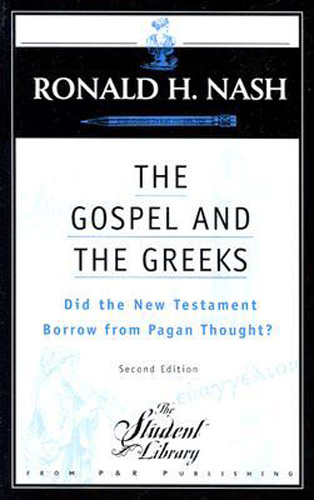
The Gospel and the Greeks: Did the New Testament Borrow from Pagan Thought?
Examines contemporary claims for Christian dependence on Hellenistic philosophy, Greco-Roman mystery religions, and Gnosticism. He finds the case for dependence in the...
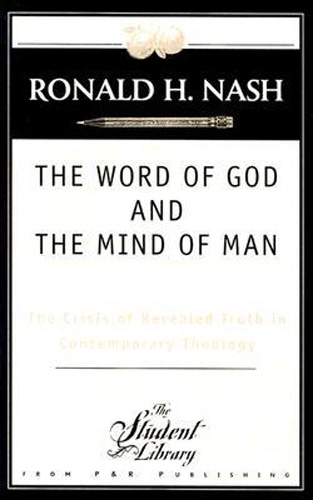
The Word of God and the Mind of Man
The last two centuries of Christian theology are the record of an evolving attack on the role of knowledge in the Christian faith. The purpose of this book is to challenge...
Life's Ultimate Questions: An Introduction to Philosophy
Life's Ultimate Questions is unique among introductory philosophy textbooks. By synthesizing three distinct approaches
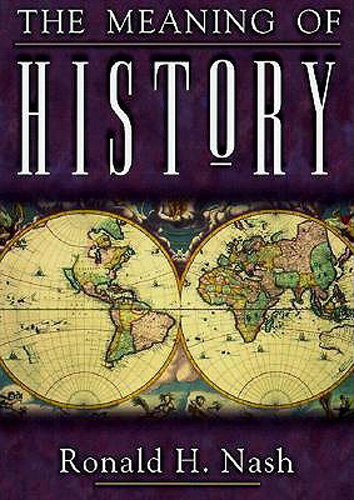
The Meaning of History
The Meaning of History is a concise look at the meaning of the history of the world from the viewpoints of major historians and philosophers. By examining the individual...
About BiblicalTraining.org
BiblicalTraining.org wants every Christian to experience a deep and loving relationship with Jesus by understanding the life-changing truths of Scripture. To that end, we provide a high-quality Bible education at three academic levels taught by a wide range of distinguished professors, pastors, authors, and ministry leaders that moves from content to spiritual growth, all at no charge. We are a 501(c)(3) non-profit funded by gifts from our users. We currently have over 180 classes and seminars, 2,300 hours of instruction, registered users from every country in the world, and in the last two years 1.4 million people watched 257 terabytes of videos (11 million lectures).
Our goal is to provide a comprehensive biblical education governed by our Statement of Faith that leads people toward spiritual growth.